BioChemistry > AQA Question Papers > Final Questions in BioChem (All)
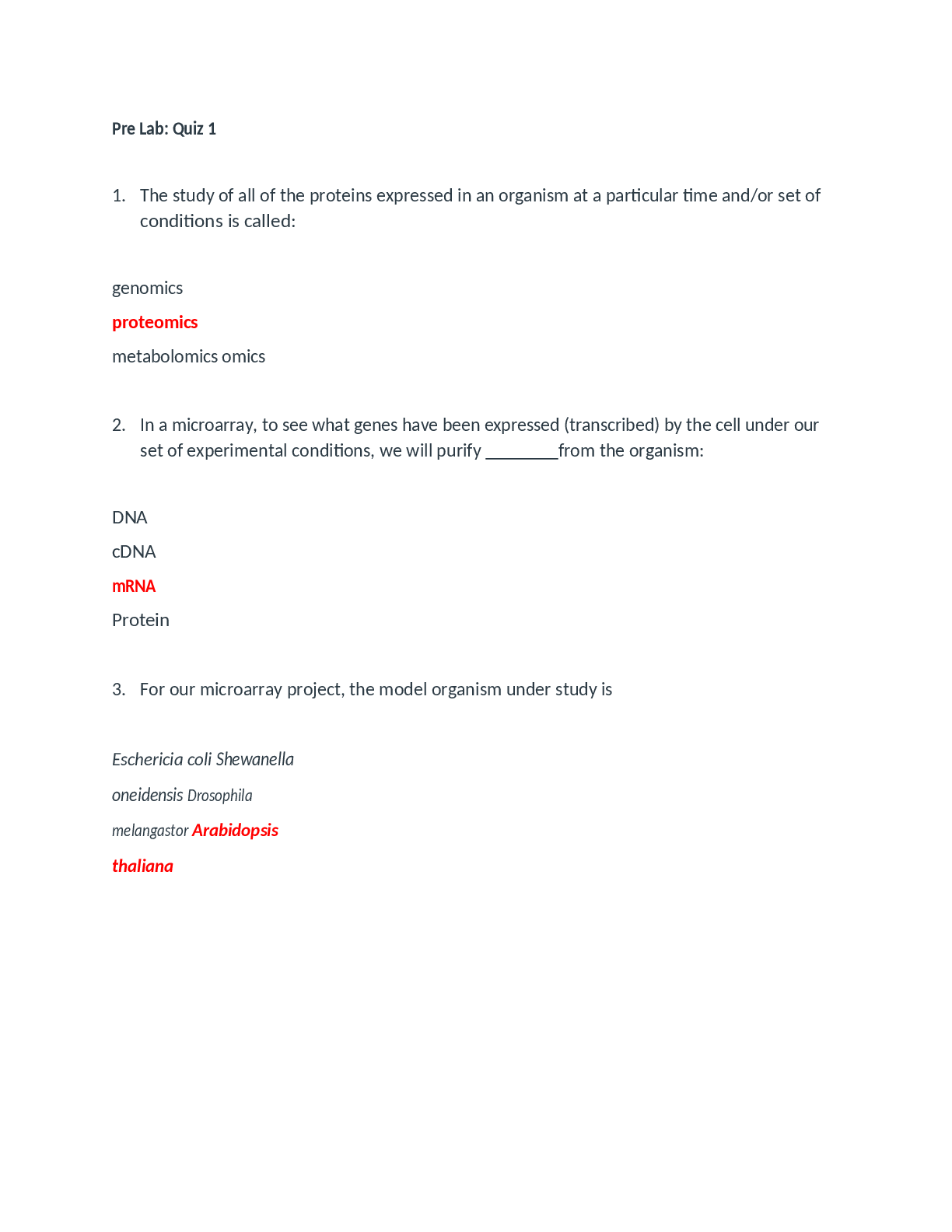
Final Questions in BioChem
Document Content and Description Below
Last updated: 3 years ago
Preview 1 out of 12 pages
Instant download
Buy this document to get the full access instantly
Instant Download Access after purchase
Reviews( 0 )
$2.50
Document information
Connected school, study & course
About the document
Uploaded On
May 23, 2023
Number of pages
12
Written in
All

Additional information
This document has been written for:
Uploaded
May 23, 2023
Downloads
0
Views
107
Document Keyword Tags
Recommended For You
Get more on AQA Question Papers »
TEST BANK for Biochemistry A Short Course, 4e by John Tymoczko...

Lehninger Principles of Biochemistry 8th Edition by David Nels...
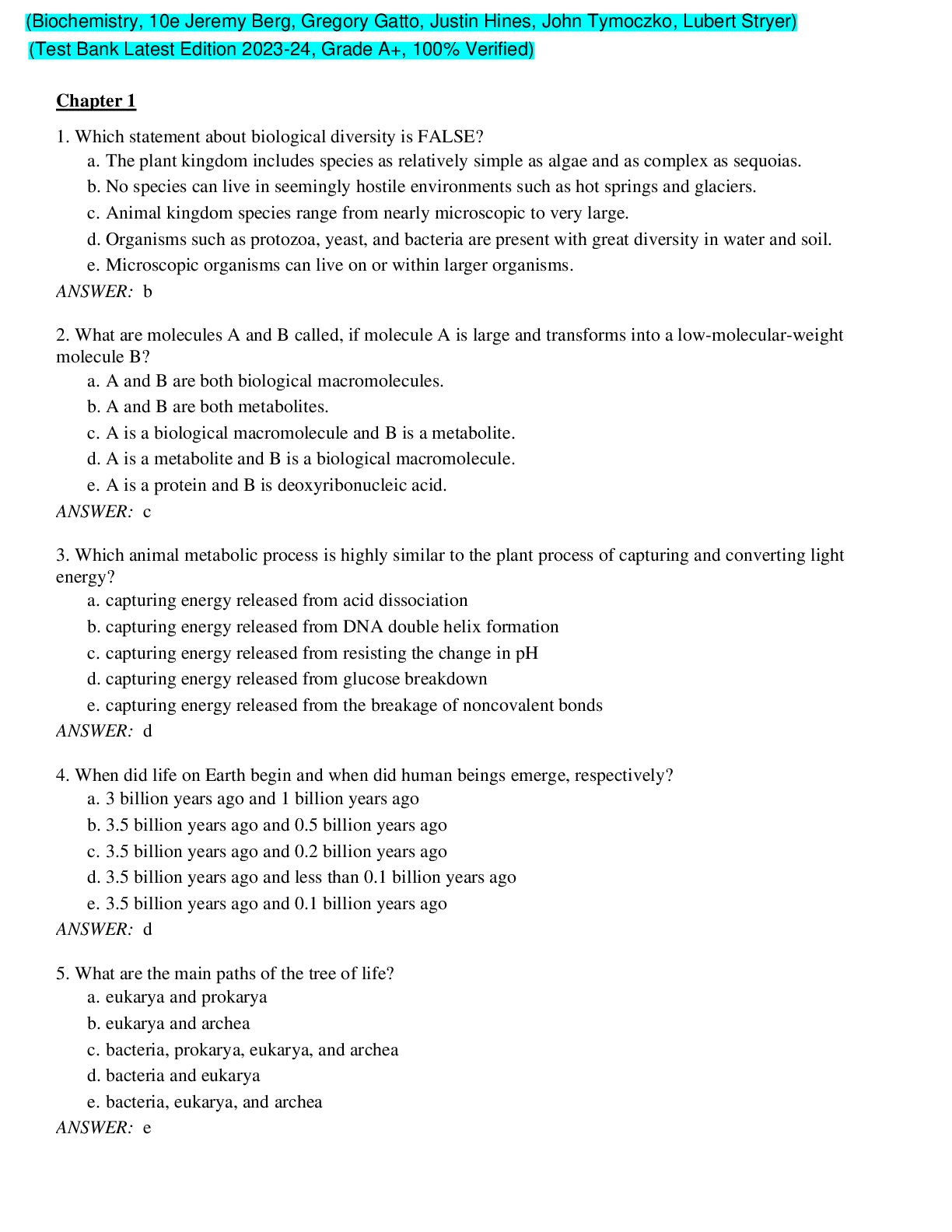
Biochemistry 10th Edition By Berg, Gatto, Hines, Tymoczko, Str...
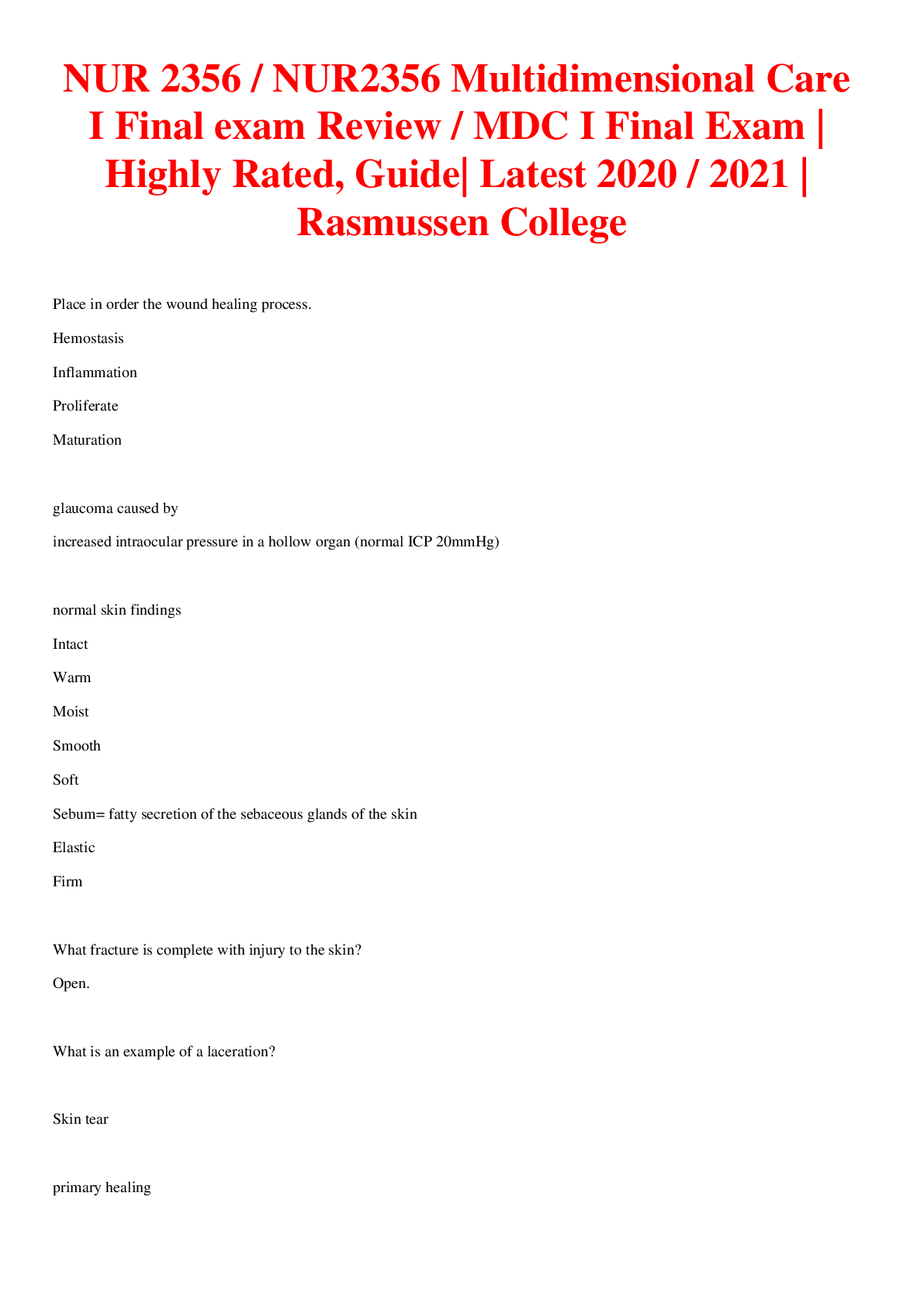
NUR 2356 - NUR2356 Multidimensional Care I Final exam Review /...
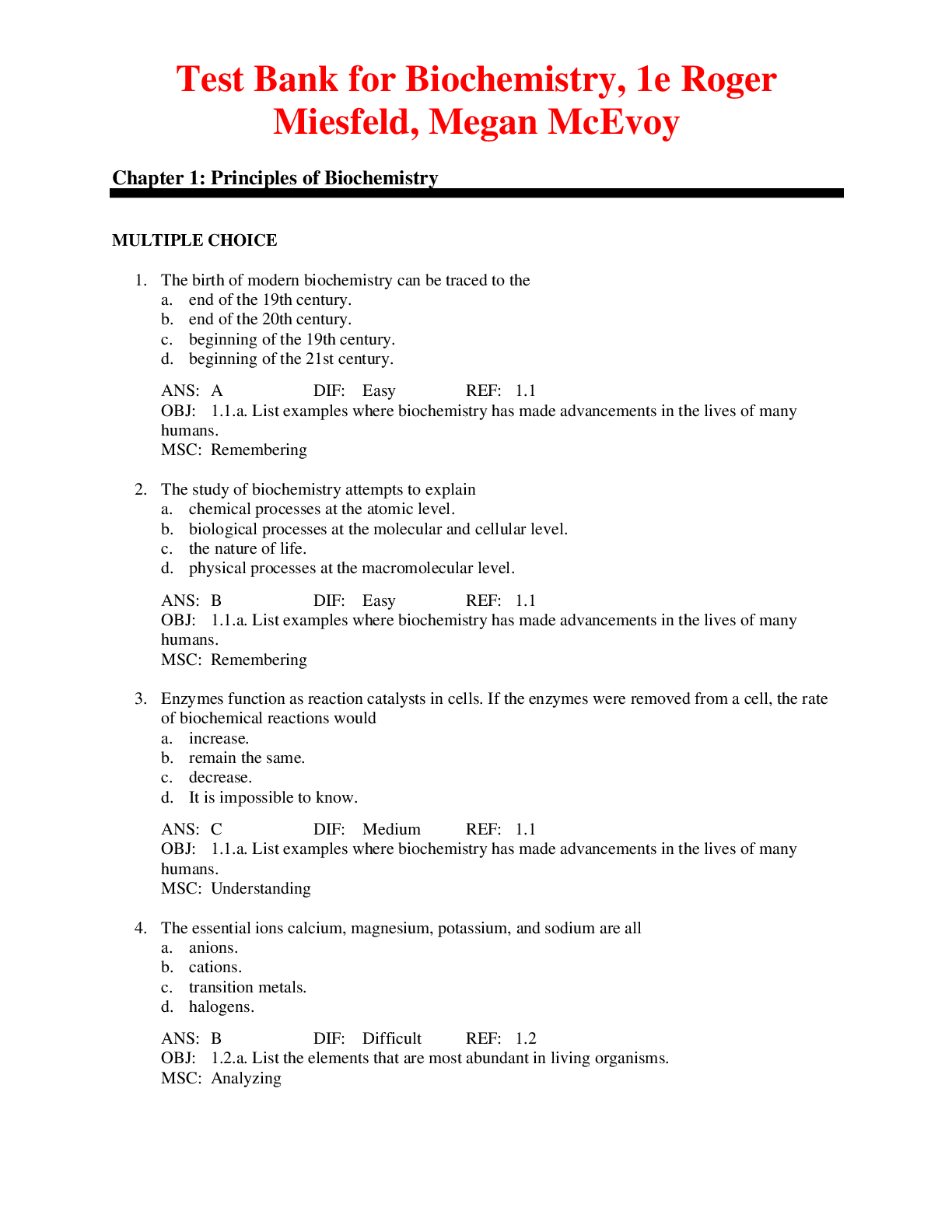
Test Bank for Biochemistry 1st Edition By Roger Miesfeld, Mega...

Test Bank for Lehninger Principles of Biochemistry 7th Edition...
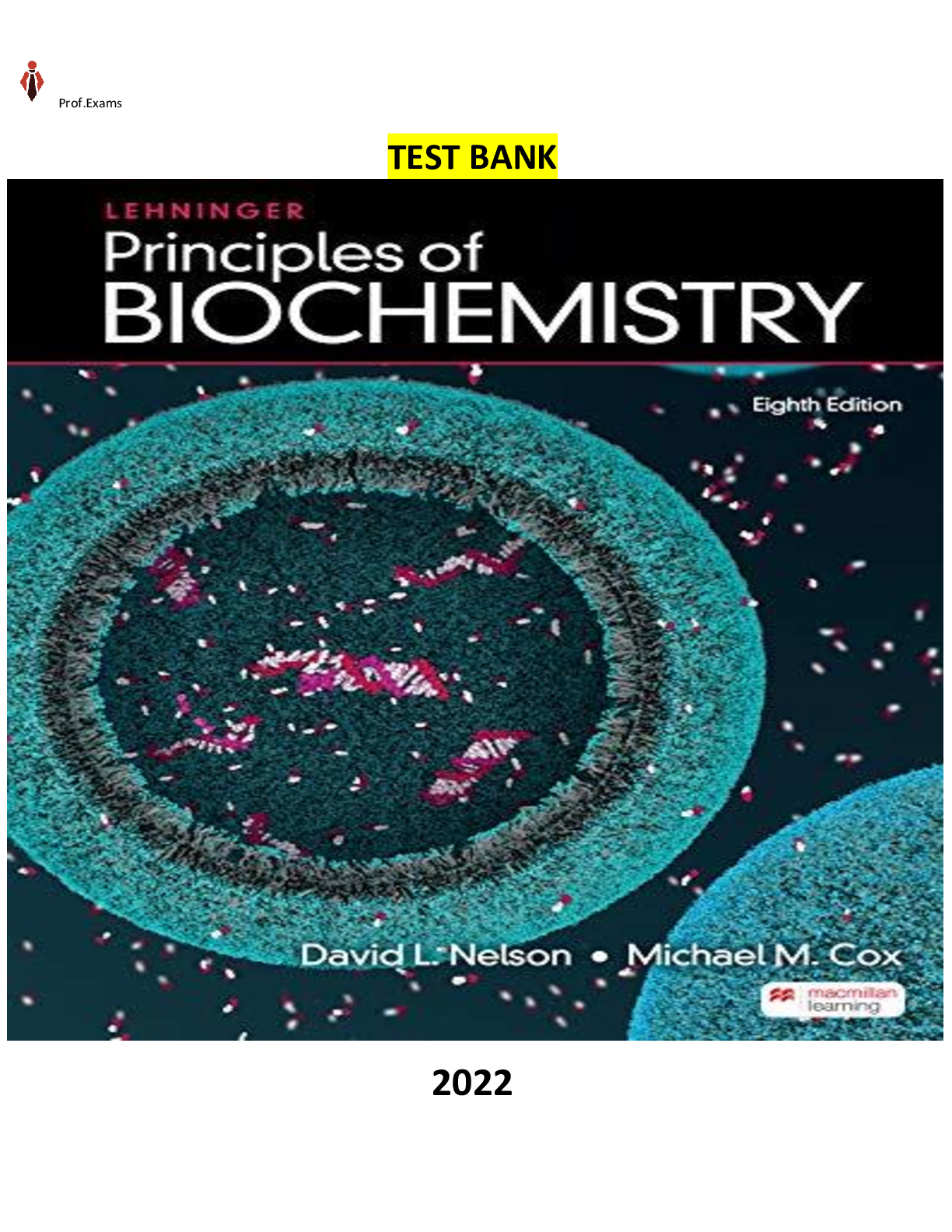
Test Bank for Lehninger Principles of Biochemistry 8th Edition...

Exam #3 PN 2 Know what the left temporal lobe of brain affects...

Summary PN 2 STUDY REVIEW FOR FINAL EXAM (complete solution gu...


SOLUTIONS MANUAL for Biochemistry 1st Edition by Roger Miesfel...


BIOCHEM C785 Kaleys Comprehensive Study Guide final (Completed...
BIOCHEM C785 Kaleys Comprehensive Study Guide final (Completed...