Bundle > NR 566 Week 1 - 7 Study Guide {2022} - Chamberlain College of Nursing | PM for a custom Bundle
NR 566 Week 1 - 7 Study Guide {2022} - Chamberlain College of Nursing | PM for a custom Bundle
NR566 Week 1 Study Outline Chapter 21: Drugs Affecting the Endocrine System Bisphosphonates Drugs: etidronate (Didronel), pamidronate (Aredia), risedronate (Actonel) alendronate (Fosamax), til... udronate (Skelid), zoledronic acid (Zometa), ibandronate (Boniva) Used for bone support, most commonly used Pharmacodynamics Adhere to bone, inhibit osteoclastic activity, potent inhibitors of both normal and abnormal bone resorption o Etidronate (Didronel): reduces both bone resorption and bone formation because formation is coupled with resorption o Pamidronate (Aredia) (available as IV only) o and risedronate (Actonel): inhibit bone resorption with out inhibiting bone formation and mineralization o Alendronate (Fosamax): highly selective inhibitor of bone resorption 1 100 to 500 time more potent than the other drugs Does not interfere with osteoclastic recruitment or attachment but does inhibit osteoclastic activity o Tiludronate (Skelid): inhibits protein-tyrosine-phosphatease, results in detachment of osteoclasts from the bone surface Inhibits the osteoclastic proton pump o Zoledronic acid (Zometa): inhibits osteoclastic activity and induces osteoclast apoptosis Also inhibits the increased osteoclastic activity and skeletal calcium release induced by various stimulatory factors release by tumors Only available as IV formulation o Ibandronate (Boniva): inhibits osteoclast activity and reduces bone resorption and turnover based on its affinity for hydroxyapatite (part of the bone matrix) All drugs in this class reduce vertebral fracture however, o Only alendronate, risedronate, and zoledronic acid have demonstrated nonvertebral fracture reduction o Pamidronate and zoledronic acid: only for parenteral use Pharmacotherapeutics o Contraindication: uncorrected hypocalcemia, documented Barrett’s esophagus, and renal insufficiency o Caution: patient with GI disorders o R/F severe esophageal adverse reactions is greater in patients who lie down after taking these drugs or fail to take with a full glass of water o Etidronate has been withheld from patients with enterocolitis r/t diarrhea particularly at high doses Associated with fracture in patients with Paget’s disease when given high doses or when therapy lasted longer than 6 months Monitor with x-rays and lab work to assess for lesions Rare femur fracture in non-Paget’s patients using bisphosphonates o IV formulations associated with higher renal toxicity risk especially with rapid infusion Check crt prior to every dose is required, force fluids before and after infusion Clinical Use (Page 546 Dosing Chart) o Osteoporosis Prevention and treatment of osteoporosis and its risk for fracture in men and postmenopausal women (especially vertebral fractures) First line drugs: Alendronate, risedronate, and zolendronic acid with hip fracture reductions, FDA approved for this indication Second-line drug: Ibandronate Ibandronate and zoledronic acid come in IV form Alendronate PO solution (Binosto) and PO tablets Zoledronic acid: only alternative form that shows evidence of hip fracture reduction Prophylactic use in patients with early osteopenia r/t long term use of medications that contribute to bone loss Includes (thyroid hormone, aromatase inhibitors, and glucocorticoids, PPIs, SSRIs) It is recommended that all adults taking more than 7.5 mg of prednisone or its equivalent for more than 3 weeks be given alendronate or risedrone In very high risk patients, maximum 2-year use of teriparatide (Forteo) (bone mass benefit disappears after d/c) a parathyroid hormone, may be more efficacious Bisphosphonates: bone mass benefit does not decline for 5 years Alendronate and risedronate initial doses for prevention of bone loss: 5mg/day or 35mg/week For existing osteoporosis: alendronate 10mg/day or 70mg/week Risedronate: 75mg for 2 days or 150mg once a month o Paget’s Disease (Osteitis Deformans) All bisphosphonates are used to treat Paget’s disease when the alkaline phosphatase is at least twice the upper limit of normal Asymptomatic or at risk for future complications from their disease Symptomatic Paget’s best treated with etidronate Etidronate slows accelerated bone turnover in pagetic lesions and to a lesser extend in normal bone Reduced turnover causes symptomatic improvement: less bone pain and decreased fractures 5-10 mg/kg daily for up to 6 months or 11 to 20 mg/kg daily for 3 months For all drugs indications for retreatment are evidence of active disease or failure to normalize alkaline phosphatase levels Supplemental calcium and vitamin D if dietary intake is not adequate Space calcium supplements and bisphosphonates to prevent reduced bioavailability o Heterotopic Ossification Complications of THR Etidronate: first line Heterotopic ossification r/t spinal cord injury Use as soon as possible after injury Drug Interactions o Adverse GI reactions, interact with drugs that affect the GI tract Histamine 2 blocking agents double alendronate bioavailability but the impact with unknow o Calcium supplements and antacids interfere with bisphosphonate absorption when taken within 1 hr o R/F GI bleeding is increased when ASA and NSAIDs are concomitantly taken o ASA may decrease the bioavailability of tiludronate by up to 50% when taken 2 hrs after the tiludronate o Indomethacin increases the bioavailability of tiludronate by 2- to 4- fold Diclofenac does not significantly alter bioavailability therefore each NSAID must be evaluated individually o Concurrent use of bisphosphonates and other drugs known to build bone density (estrogens and SERMs) have additive bone density however fracture reduction potential is unknown ADRs o All bisphosphonates: musculoskeletal pain More common in Paget’s disease More common in those taking risedronate High doses of etidronate Rare reports of osteonecrosis of the jaw in active dental disease, invasive procedure, especially in CA patients Can occur without dental issues in those receiving frequent high IV doses R/F A-fib Bioavailability of bisphosphonate drugs and appropriate patient education o Absorption and bioavailability of oral doses are significantly reduced by the presence of food in the gut or other preparations containing divalent cations o To enhance absorption take with 8 oz of water, no other food or drink and remain upright for at least half an hr (1 hour with ibandronate) o Histamine 2 blocking agents double alendronate bioavailability but the impact with unknow o ASA may decrease the bioavailability of tiludronate by up to 50% when taken 2 hrs after the tiludronate o Indomethacin increases the bioavailability of tiludronate by 2- to 4- fold Diclofenac does not significantly alter bioavailability therefore each NSAID must be evaluated individually o Patient education: Take oral drugs first thing in the morning at least 30 minutes prior to other medications, beverages, or food (60 minutes for ibandronate) o Etidronate and tiludronate take 2 hours before food o Alendronate, ibandronate, risedronate, and tiludronate should be taken with 8 oz of plain water o Mineral water, coffee, OJ, and other drinks greatly reduce absorption o Supplemental calcium or antacids take the bisphosphonate at least 1 hr before these drugs o Skip missed daily doses and resume the next morning o Sit up for at least 30 mins after taking to decrease risk of esophageal irritation (1hr for ibandronate) Adverse effects associated with long-term use o Etidronate: Fractures in patients with Paget’s disease when given high doses or when therapy lasted longer than 6 months o Oral drugs in this class: rare osteonecrosis of the jaw after 3 years of use (higher risk in IV drugs) Growth hormones Drugs: somatropin (Nutropin and Nutropin AQ, Gentropin, Humatrope, Norditropin, Nutropin, Accretropi9n, Saizen, Serostim) and somatrem (Protropin) Dosage of the various forms of somatropin varies by manufacturer Pharmacodynamics o GHRH secreted by hypothalamus in response to decreased serum glucose o GHRH then binds to receptors in the anterior pituitary, secrets GH (somatotropin) o Passes through cell membrane, fosters proteins synthesis, fat breakdown, and tissue growth o Causes hyperglycemia by decreasing glucose utilization by cells and increases rate by which glycogen is broken down into glucose o Both GHRH and GH have been synthesized by recombinant DNA technology Synthetic hormones o Administration results in an insulin like effect o Increased growth of organs and skeletal, increased cellular protein synthesis o Children with GH deficiency sometimes experience hypoglycemia and it is improved by admin of these drugs o Reduction in fat store, increased lean muscle mass, and decreased mean cholesterol o Treats lipodystrophy in HIV patients – helps to reduce wasting and cachexia o In over abundance of GH, surgical intervention is primary intervention however recurrence may require use of somatostatin analogues such as octreotide or lancreotide GH suppressive agents Pharmacotherapeutics o Contraindication: patients with closed epiphyses and those with evidence of active tumore growth o Caution: o intracranial tumors increased r/f tumor growth o Patients with coexisting adrenocorticotropic hormone deficiency may experience increased symptoms o Increased serum levels of inorganic phosphorus, alkaline phosphatase, and parathyroid hormone o TH level changes have occurred Makes managing thyroid disorders more difficult Untreated hypothyroidism prevents optimal response to GH therapy o May induce insulin resistance o Use cautiously with diabetic patients, those with glucose intolerance, or risk for metabolic syndrome Lipid benefits may nega [Show More]
Last updated: 4 years ago
Bundle contains 7 items

This Bundle Contains 7 Items
NURSING> STUDY GUIDE > NR 566 Week 1 Study Guide {2022} | Chapter 21: Drugs Affecting the Endocrine System (All)

NR 566 Week 1 Study Guide {2022} | Chapter 21: Drugs Affecting the Endocrine System
NR566 Week 1 Study Outline Chapter 21: Drugs Affecting the Endocrine System Bisphosphonates Drugs: etidronate (Didronel), pamidronate (Aredia), risedronate (Actonel) alendronate (Fosamax), tilud...
By Nutmegs
STUDY GUIDE
$14
0
NURSING> STUDY GUIDE > NR 566 Week 2 Study Guide {2022} | Chapter 17: Drugs Affecting the Respiratory System (All)

NR 566 Week 2 Study Guide {2022} | Chapter 17: Drugs Affecting the Respiratory System
NR566 Week 2 Study Outline Chapter 17: Drugs Affecting the Respiratory System Bronchodilators: Beta 2 Receptor Agonists (B2RA): Short and long acting beta agonists • B2RA widely used in all ages t...
By Nutmegs
STUDY GUIDE
$14
0
NURSING> STUDY GUIDE > NR 566 Week 3 Study Guide {2022} | Chapter 16: Drugs Affecting the Cardiovascular & Renal Systems Angiotensin converting enzyme inhibitors (ACEI or ACE Inhibitors) (All)

NR 566 Week 3 Study Guide {2022} | Chapter 16: Drugs Affecting the Cardiovascular & Renal Systems Angiotensin converting enzyme inhibitors (ACEI or ACE Inhibitors)
NR566 Week 3 Study Outline Chapter 16: Drugs Affecting the Cardiovascular & Renal Systems Angiotensin converting enzyme inhibitors (ACEI or ACE Inhibitors) o Drugs: benazepril, captopril, enalapri...
By Nutmegs
STUDY GUIDE
$14
0
NURSING> STUDY GUIDE > NR 566 Week 4 Study Guide {2022} | Chapter 25: Drugs Used in Treating Inflammatory Processes (All)
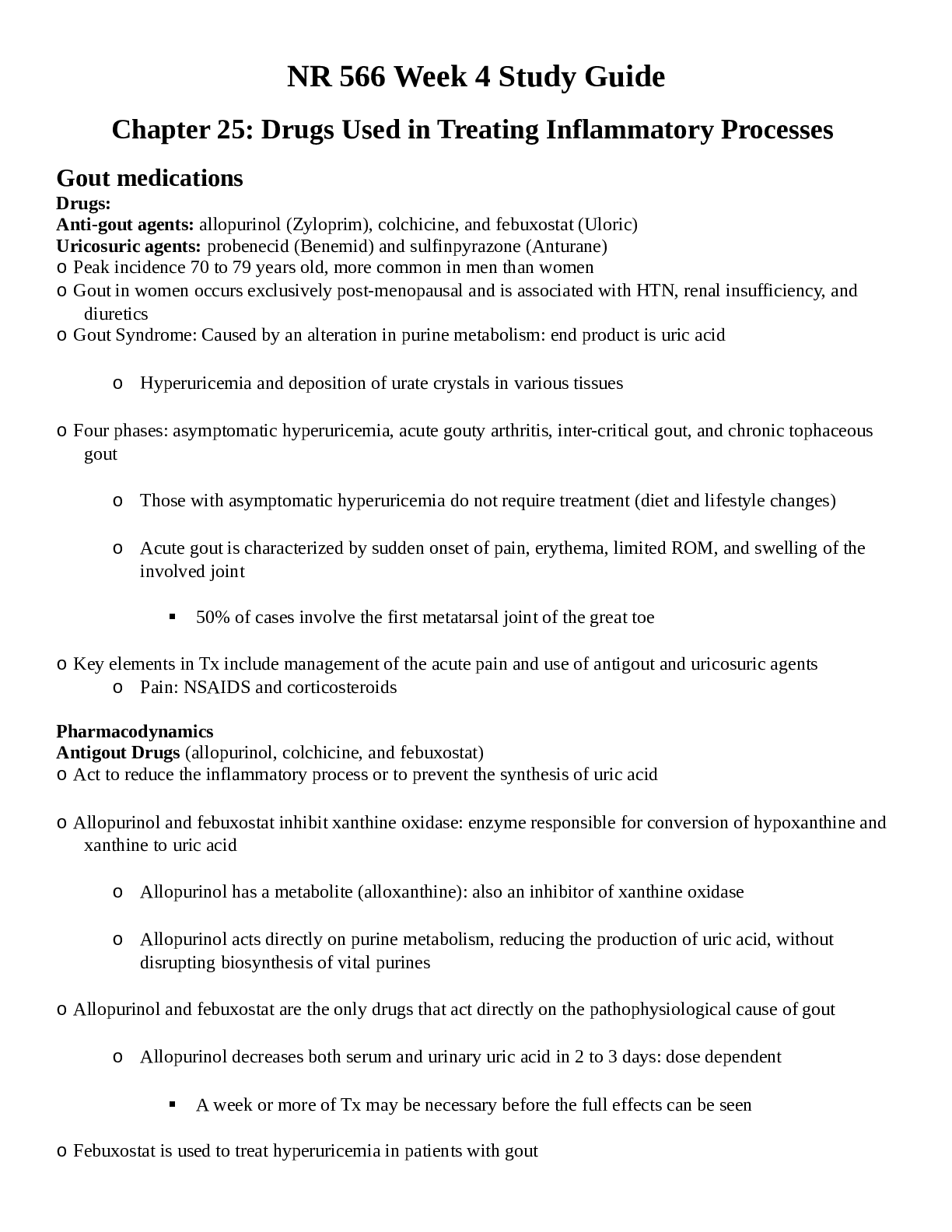
NR 566 Week 4 Study Guide {2022} | Chapter 25: Drugs Used in Treating Inflammatory Processes
NR 566 Week 4 Study Guide Chapter 25: Drugs Used in Treating Inflammatory Processes Gout medications Drugs: Anti-gout agents: allopurinol (Zyloprim), colchicine, and febuxostat (Uloric) Uricosuri...
By Nutmegs
STUDY GUIDE
$13
0
NURSING> STUDY GUIDE > NR 566 Week 5 Study Guide {2022} | Chapter 18: Drugs Affecting the Hematopoietic System (All)

NR 566 Week 5 Study Guide {2022} | Chapter 18: Drugs Affecting the Hematopoietic System
NR566 Week 5 Study Outline Chapter 18: Drugs Affecting the Hematopoietic System • Know the pharmacodynamics, pharmacotherapeutics clinical use, drug interactions and adverse drug reactions for: An...
By Nutmegs
STUDY GUIDE
$14
0
NURSING> STUDY GUIDE > NR 566 Week 6 Study Guide {2022} | Chapter 22: Drugs Affecting the Reproductive System (All)
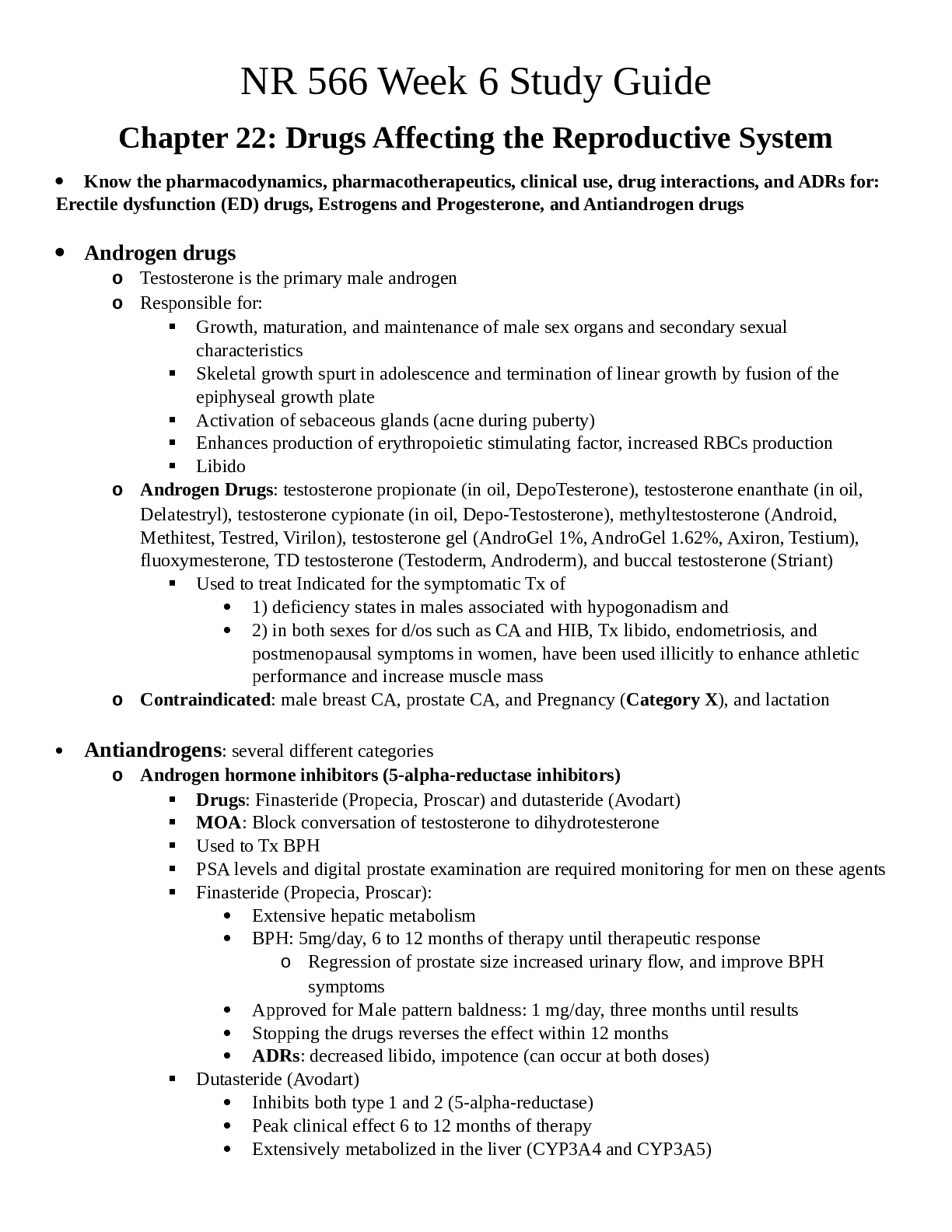
NR 566 Week 6 Study Guide {2022} | Chapter 22: Drugs Affecting the Reproductive System
NR 566 Week 6 Study Guide Chapter 22: Drugs Affecting the Reproductive System Know the pharmacodynamics, pharmacotherapeutics, clinical use, drug interactions, and ADRs for: Erectile dysfunction...
By Nutmegs
STUDY GUIDE
$14
0
NURSING> STUDY GUIDE > NR 566 Week 7 Study Guide {2022} | Chapter 48: Women as Patients (All)

NR 566 Week 7 Study Guide {2022} | Chapter 48: Women as Patients
NR 566 Week 7 Study Guide Chapter 48: Women as Patients Pharmacokinetic gender differences between men and women These three medications have shown differences that are clearly significant betwee...
By Nutmegs
STUDY GUIDE
$13
0
Reviews( 0 )
More information
Uploaded On
Apr 15, 2022
Language
English
Type
Bundle
Number of Documents:
7


