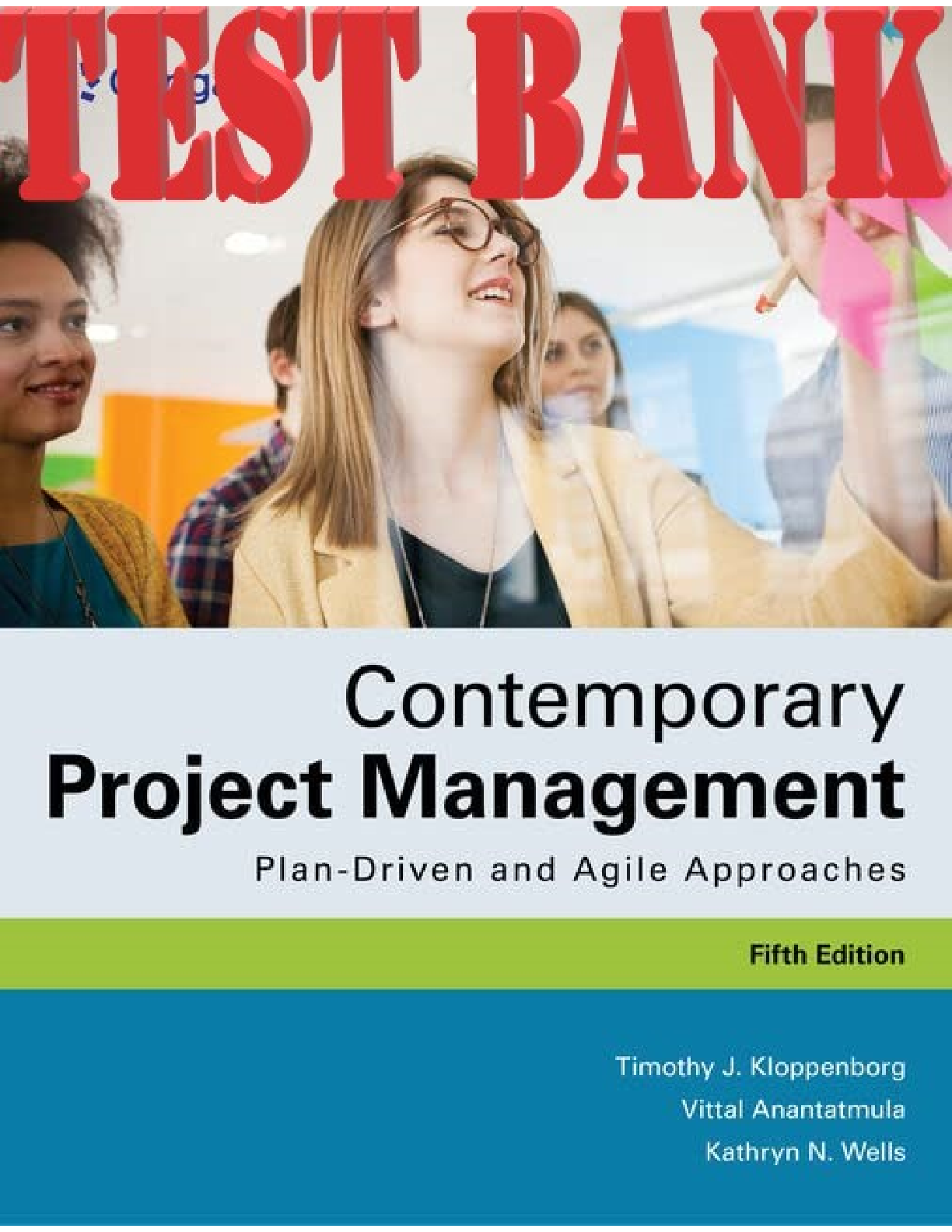
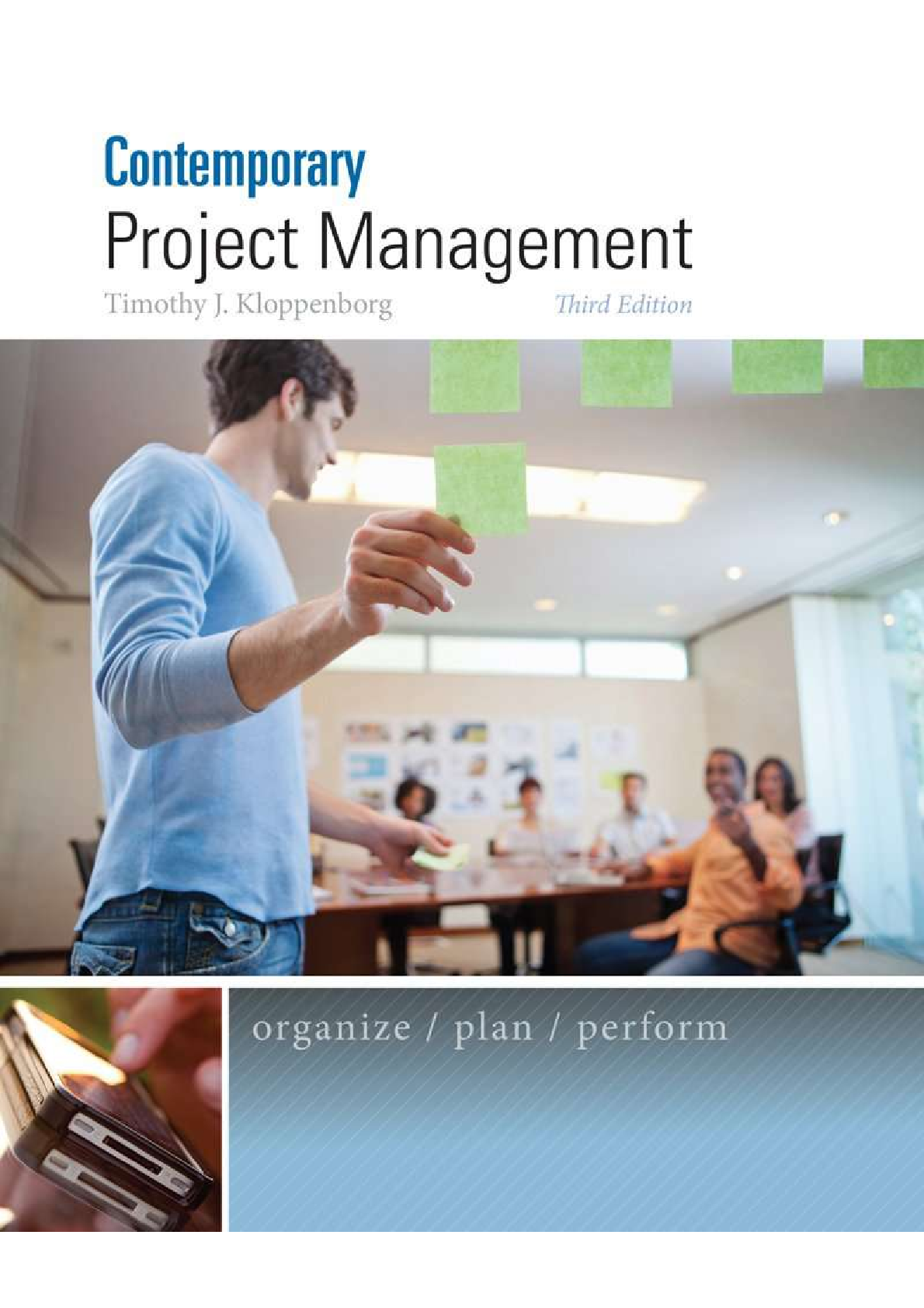
TESTBANK for Contemporary Project Management 4th Edition By: Timothy Kloppenborg (Complete Download) Part 1: Organizing Projects
Ch 1: Introduction to Project Management
1.1: What is a Project?
1.2: History of Projec
...
TESTBANK for Contemporary Project Management 4th Edition By: Timothy Kloppenborg (Complete Download) Part 1: Organizing Projects
Ch 1: Introduction to Project Management
1.1: What is a Project?
1.2: History of Project Management
1.3: How Can Project Work Be Described?
1.4: Understanding Projects
1.5: Project Roles
1.6: Overview of the Book
Summary
Ch 2: Project Selection and Prioritization
2.1: Strategic Planning Process
2.2: Portfolio Management
2.3: Securing Projects
Summary
Ch 3: Organizational Capability: Structure, Culture, and Roles
3.1: Types of Organizational Structures
3.2: Organizational Culture and Its Impact on Projects
3.3: Project Life Cycles
3.4: Agile Project Management
3.5: Project Executive Roles
3.6: Project Management Roles
3.7: Project Team Roles
Summary
Ch 4: Chartering Projects
4.1: What is a Project Charter?
4.2: Why is a Project Charter Used?
4.3: When is a Charter Needed?
4.4: Typical Elements in a Project Charter
4.5: Constructing a Project Charter
4.6: Ratifying the Project Charter
4.7: Starting a Project Using Microsoft Project
Summary
Part 2: Planning Projects
Ch 5: Stakeholder Analysis and Communication Planning
5.1: Develop the Project Management Plan
5.2: Identify Stakeholders
5.3: Build Relationships
5.4: Plan Communications Management
5.5: Project Meeting Management
5.6: Communications Needs of Global and Virtual Project Teams
5.7: Communications Technologies
Summary
Ch 6: Scope Planning
6.1: Plan Scope Management
6.2: Collect Requirements
6.3: Define Scope
6.4: Work Breakdown Structure (WBS)
6.5: Establish Change Control
6.6: Using MS Project for Work Breakdown Structures (WBS)
Summary
Ch 7: Scheduling Projects
7.1: Plan Schedule Management
7.2: Purposes of a Project Schedule
7.3: Historical Development of Project Schedules
7.4: How Project Schedules are Limited and Created
7.5: Define Activities
7.6: Sequence Activities
7.7: Estimate Activity Duration
7.8: Develop Project Schedules
7.9: Uncertainty in Project Schedules
7.10: Show the Project Schedule on a Gantt Chart
7.11: Using Microsoft Project for Critical Path Schedules
Summary
Ch 8: Resourcing Projects
8.1: Abilities Needed When Resourcing Projects
8.2: Estimate Resource Needs
8.3: Plan Human Resource Management
8.4: Project Team Composition Issues
8.5: Assign a Resource to Each Activity
8.6: Dealing with Resource Overloads
8.7: Compress the Project Schedule
8.8: Alternative Scheduling Methods
8.9: Using MS Project for Resource Allocation
Summary
Ch 9: Budgeting Projects
9.1: Plan Cost Management
9.2: Estimate Cost
9.3: Determine Budget
9.4: Establishing Cost Control
9.5: Using MS Project for Project Budgets
Summary
Ch 10: Project Risk Planning
10.1: Plan Risk Management
10.2: Identify Risks
10.3: Risk Analysis
10.4: Plan Risk Responses
Summary
Ch 11: Project Quality Planning and Project Kickoff
11.1: Development of Contemporary Quality Concepts
11.2: Core Project Quality Concepts
11.3: Plan Quality Management
11.4: Project Quality Tools
11.5: Develop Project Management Plan
11.6: Kickoff Project
11.7: Baseline and Communicate Project Management Plan
11.8: Using MS Project for Project Baselines
Summary
Part 3: Performing Projects
Ch 12: Project Supply Chain Management
12.1: Introduction to Project Supply Chain Management
12.2: Plan Procurement Management
12.3: Conduct Procurements
12.4: Contract Types
12.5: Control Procurements
12.6: Improving Project Supply Chains
Summary
Ch 13: Leading and Managing Project Teams
13.1: Acquire Project Team
13.2: Develop Project Team
13.3: Manage Project Team
13.4: Manage and Control Stakeholder Engagement
13.5: Managing Project Conflicts
Summary
Ch 14: Determining Project Progress and Results
14.1: Project Balanced Scorecard Approach
14.2: Internal Project Issues
14.3: Customer Issues
14.4: Financial Issues
14.5: Using MS Project to Monitor and Control Projects
14.6: Replanning If Necessary
Summary
Ch 15: Finishing the Project and Realizing the Benefits
15.1: Validate Scope
15.2: Close Procurements
15.3: Close Project
15.4: Post-Project Activities
15.5: Using MS Project for Project Closure
[Show More]
Preview 1 out of 1100 pages