Mathematics > EXAM > Graded Quiz Unit 8; MATH 1280 Introduction to Statistics 100% correct answers aid grade ‘A’ (All)
Graded Quiz Unit 8; MATH 1280 Introduction to Statistics 100% correct answers aid grade ‘A’
Document Content and Description Below
Last updated: 3 years ago
Preview 1 out of 7 pages
Instant download

Buy this Document to get the Full Access Instantly
Provided by Students Who Aced it
We Verify Document Content to Gurantee Accuracy
Reviews( 0 )
Document information
Connected school, study & course
About the document
Uploaded On
Aug 06, 2021
Number of pages
7
Written in
All

Additional information
This document has been written for:
Uploaded
Aug 06, 2021
Downloads
0
Views
736
Topic Tags
Recommended For You
Get more on EXAM »
Math 1280 Introduction to Statistics NEW 2021 ready tested exa...

University of the PeopleMATH 1280Graded Quiz Unit 3 MATH 1280...

Math 1280 final review Introduction to Statistics (Chamberlain...

Math 1280 self-test quiz for the Introduction to Statistics pr...

Math 1280 self-test quiz for the Introduction to Statistics
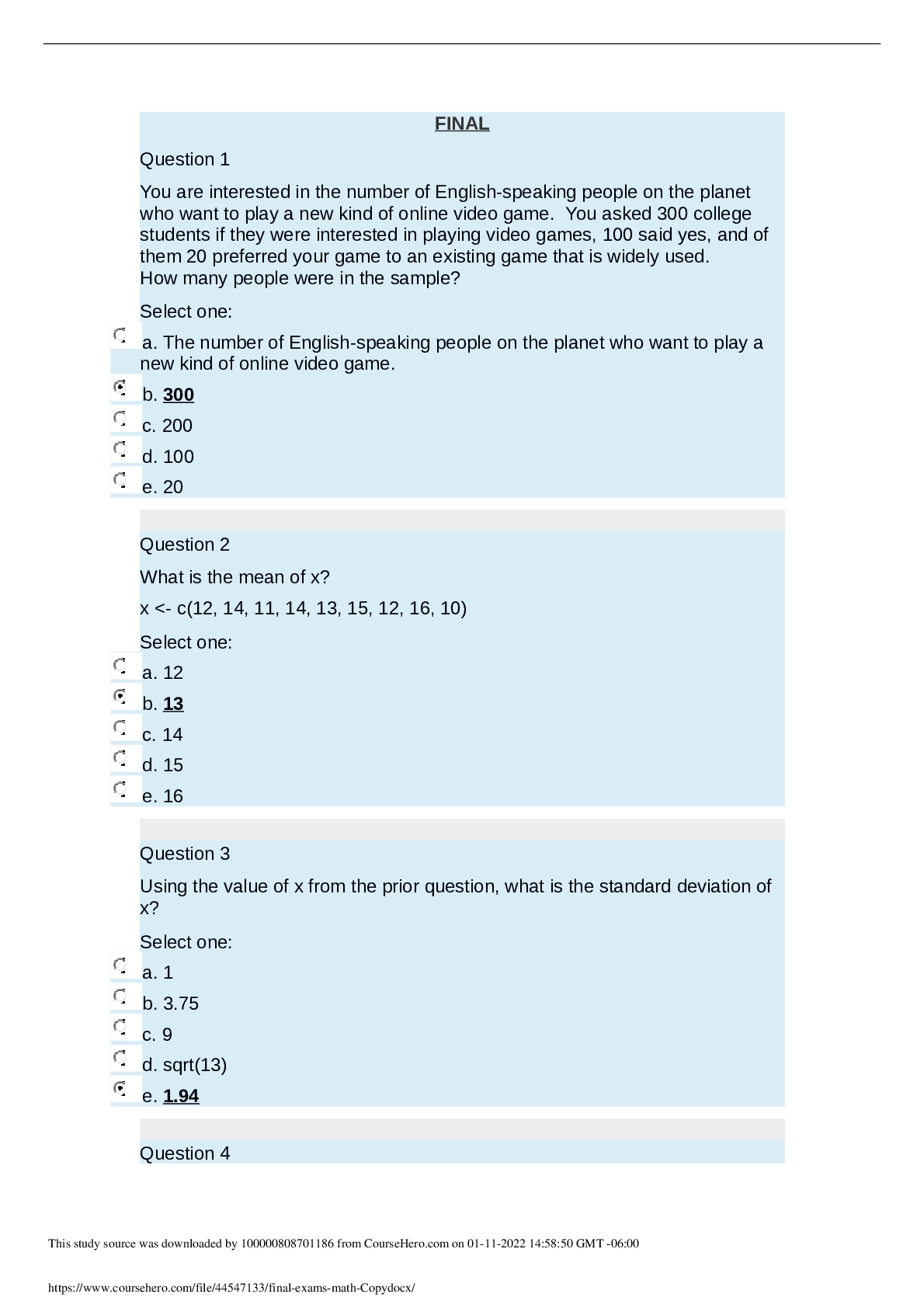
University of the People - MATH 1280 MATH 1280final exams math...
MATH 1280 Milestone 3_Introduction to Statistics (2020) – Grad...
MATH 1280 Introduction to Statistics - Term 4, 2018-2019 Unive...
MATH 1280 Milestone 3_Introduction to Statistics (2020) – Grad...

Unit 1 Challenge 3 Introduction to Statistics Sophia. MATH 128...
 – University of the People.png)
MATH 1280 Practice Milestone UNIT 1 Introduction to Statistics...
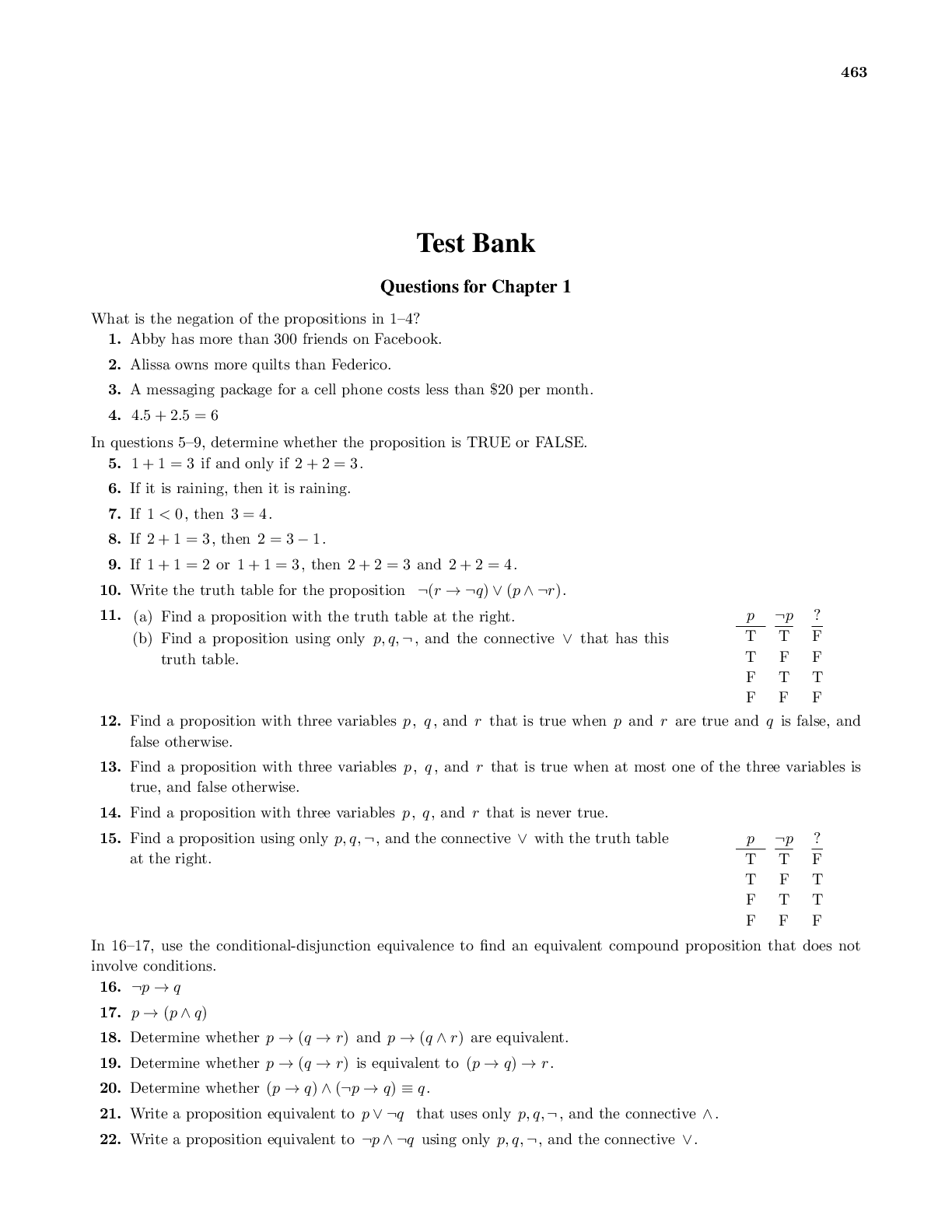
Discrete Mathematics and Its Applications 8th Edition by Kenne...