NR 224: Fundamentals Skills
Exam 2 Review
Chapter 41: Oxygenation
Know alterations in breathing pattern/ alterations in respiratory functioning. o
The three primary alterations are hypoventilation, hyperventilation,
...
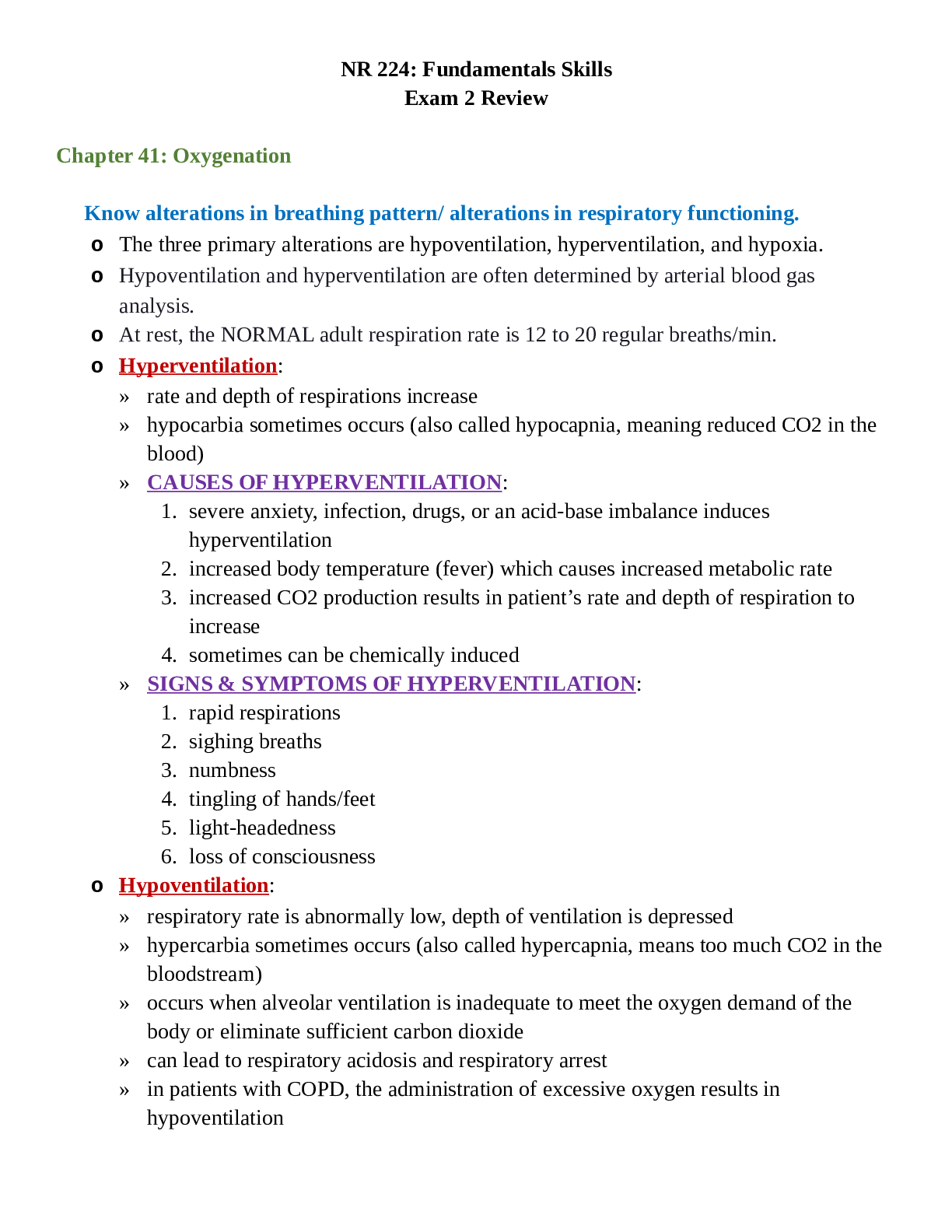
NR 224: Fundamentals Skills
Exam 2 Review
Chapter 41: Oxygenation
Know alterations in breathing pattern/ alterations in respiratory functioning. o
The three primary alterations are hypoventilation, hyperventilation, and hypoxia.
o Hypoventilation and hyperventilation are often determined by arterial blood gas
analysis.
o At rest, the NORMAL adult respiration rate is 12 to 20 regular breaths/min.
o Hyperventilation:
» rate and depth of respirations increase
» hypocarbia sometimes occurs (also called hypocapnia, meaning reduced CO2 in the
blood)
» CAUSES OF HYPERVENTILATION:
1. severe anxiety, infection, drugs, or an acid-base imbalance induces
hyperventilation
2. increased body temperature (fever) which causes increased metabolic rate
3. increased CO2 production results in patient’s rate and depth of respiration to
increase
4. sometimes can be chemically induced
» SIGNS & SYMPTOMS OF HYPERVENTILATION:
1. rapid respirations
2. sighing breaths
3. numbness
4. tingling of hands/feet
5. light-headedness
6. loss of consciousness
o Hypoventilation:
» respiratory rate is abnormally low, depth of ventilation is depressed
» hypercarbia sometimes occurs (also called hypercapnia, means too much CO2 in the
bloodstream)
» occurs when alveolar ventilation is inadequate to meet the oxygen demand of the
body or eliminate sufficient carbon dioxide
» can lead to respiratory acidosis and respiratory arrest
» in patients with COPD, the administration of excessive oxygen results in
hypoventilation» for patients with atelectasis, a collapse in the alveoli prevents the normal exchange
between oxygen and carbon dioxide, which results in less of the lung being
ventilated, and hypoventilation occurs
» SIGNS & SYMPTOMS OF HYPOVENTILATION:
1. mental status changes
2. dysrhythmias
3. potential cardiac arrest
4. in untreated, patient’s status rapidly declines, leading to convulsions,
unconsciousness, and death
o Hypoxia:
» is inadequate tissue oxygenation at the cellular level.
» it results from a deficiency in oxygen delivery or oxygen use at the cellular level. It is
a life-threatening condition.
» Untreated it produces possibly fatal cardiac dysrhythmias.
» CAUSES OF HYPOXIA:
1. a decreased hemoglobin level and lowered oxygen-carrying capacity of the
blood
2. a diminished concentration of inspired oxygen, which occurs at high altitudes
3. the inability of the tissues to extract oxygen from the blood, as with cyanide
poisoning,
4. decreased diffusion of oxygen from the alveoli to the blood, as in pneumonia,
5. poor tissue perfusion with oxygenated blood, as with shock
6. impaired ventilation, as with multiple rib fractures or chest trauma
» SIGNS & SYMPTOMS OF HYPOXIA:
1. apprehension
2. restlessness
3. inability to concentrate
4. decreased level of consciousness
5. dizziness
6. behavioral changes
7. unable to lie flat and appears both fatigued and agitated
8. VITAL SIGN CHANGES INLCUDE:
— an increased in pulse rate
— increase rate and depth of respiration
— in early stages, blood pressure is elevated unless caused by shock
— when worsens, respiratory rate declines as a result of respiratory muscle
fatigue9. in a late sign of hypoxia, cyanosis, blue discoloration of the skin and mucous
membranes caused by the presence of desaturated hemoglobin in capillaries
would be present
10. central cyanosis observed in the tongue, soft palate, and conjunctiva of the eye
where blood flow is high
o Hypoxemia:
[Show More]