Financial Accounting > TEST BANKS > CONTROL AND ACCOUNTING INFORMATION SYSTEMS SUGGESTED ANSWERS TO DISCUSSION QUESTIONS (All)
CONTROL AND ACCOUNTING INFORMATION SYSTEMS SUGGESTED ANSWERS TO DISCUSSION QUESTIONS
Document Content and Description Below
Last updated: 3 years ago
Preview 1 out of 59 pages
Instant download
.png)
Buy this Document to get the Full Access Instantly
Provided by Students Who Aced it
We Verify Document Content to Gurantee Accuracy
Reviews( 0 )
Document information
Connected school, study & course
About the document
Uploaded On
Aug 07, 2021
Number of pages
59
Written in
All

Additional information
This document has been written for:
Uploaded
Aug 07, 2021
Downloads
0
Views
256
Topic Tags
Recommended For You
Get more on TEST BANKS »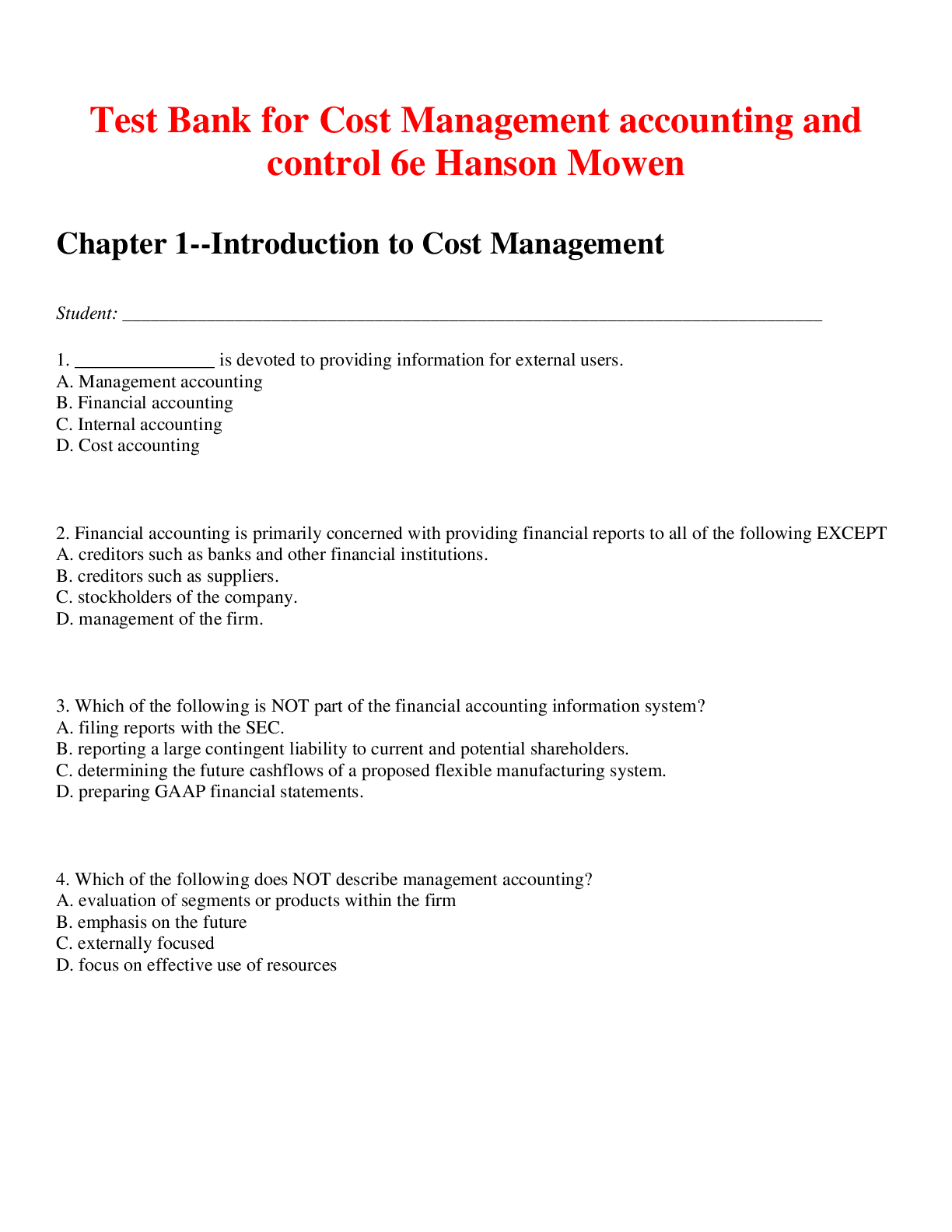
Cost Management accounting and control 6e Hanson Mowen (Test B...

Advanced Accounting 4th Edition By Hamlen, Huefner, Largay (Te...
 1e Gail Fayerman.png)
Advanced Accounting, Canadian Edition (Updated Version) 1st Ed...
.png)
Test Bank for Advanced Accounting, 14th Edition by Joe Ben Hoy...
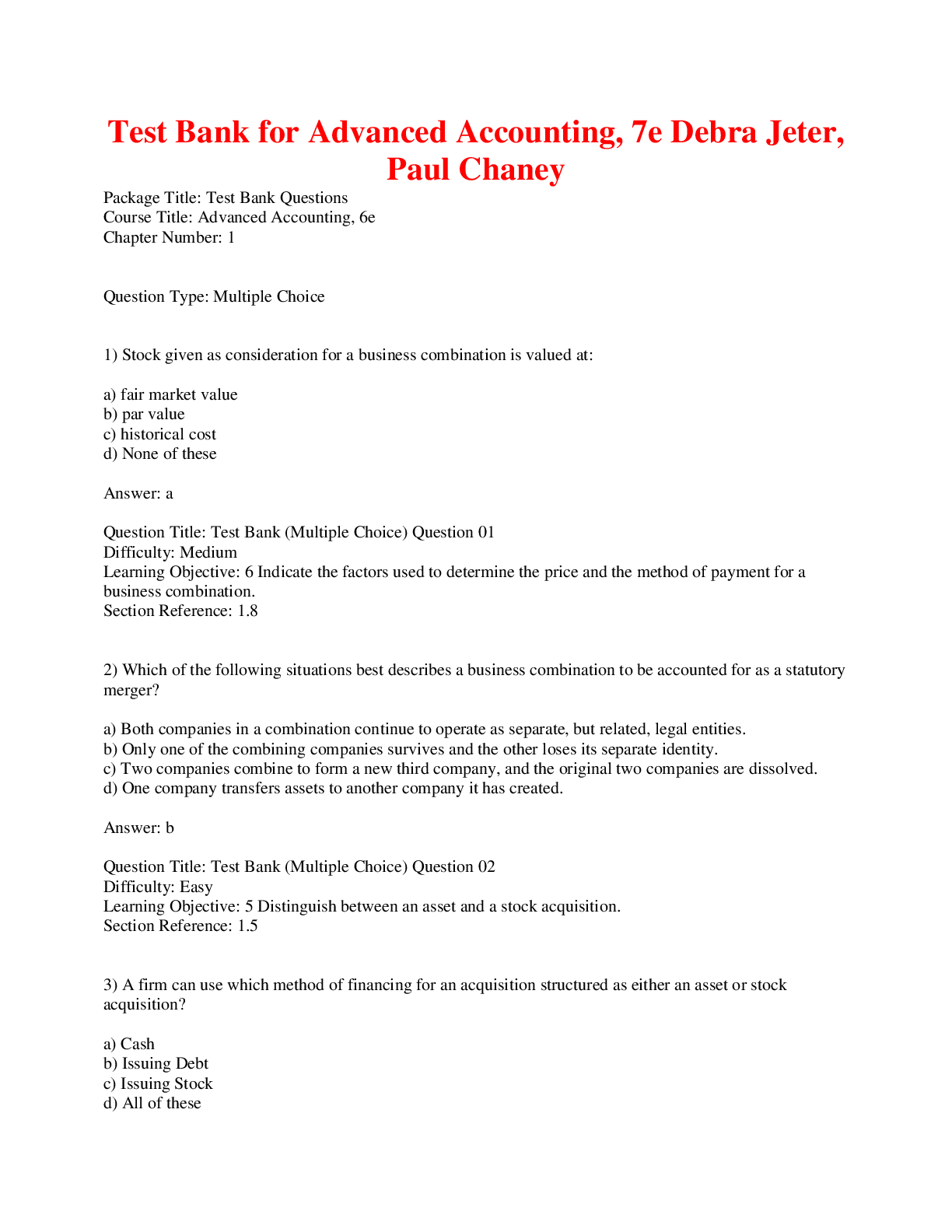
Advanced Accounting 7th Edition By Debra Jeter, Paul Chaney (T...
Advanced Accounting 5th Edition By Susan Hamlen - TEST BANK [A...

Income Tax Fundamentals 2023, 41e Gerald Whittenburg, Steven G...
Advanced Accounting 5th Edition By Susan Hamlen TEST BANK | A...

Management and Cost Accounting, 11e Colin Drury, Mike Tayles (...

Horngren's Cost Accounting, A Managerial Emphasis, 16e Srikant...

Horngren's Cost Accounting, 17e Srikant Datar, Madhav Rajan (...
 Srikant Datar, Madhav Rajan.png)
Horngren's Cost Accounting, 17e (Global Edition) Srikant Datar...
Test Bank for Fundamentals of Cost Accounting, 6th Edition by...

Financial & Managerial Accounting for MBAs, 5e Easton, Halsey,...

Test Bank for Advanced Accounting, 13th Edition by Floyd Beam...

Test Bank for Advanced Accounting, 12th Edition by Paul Fische...
Test Bank for Advanced Accounting in Canada 1st Edition By Nat...
Test Bank for Advanced Accounting 9th Edition By Fisher taylor...

Test Bank for Advanced Accounting 6th Edition By Debra Jeter P...


.png)

.png)

.png)


.png)

