*NURSING  >  NCLEX  >  NCLEX_SG_MARK_KLEMIK (All)

NCLEX_SG_MARK_KLEMIK

Document Content and Description Below

MARK KLEMIK: NCLEX SG Lab Values A: abnormal (do nothing, not as important) B: be concerned (assess/monitor) C: Critical (priority/Do something) D: Dangerous (Highest priority/Do something NOW) S ... erum Creatinine: do nothing  Best indicator for what_____?  therapeutic range____?  Kidney Function (^Serum Cr.=kidney disease)  0.6-1.2 (same as Lithium range) INR (International Normalized Ratio)  Monitors what____?  Therapeutic range___?  Coumadin (Warfarin Therapy)  2 – 3  >4 (Critical priority) o Hold/Stop all warfarin o Assess for bleeding (focused assess.) o Prepare to administer Vit. K (antidote) o Notify/Call HCP Potassium:  Therapeutic range___?  What to do for K+ <3.5?  What to do for K+ >5.3?  3.5 – 5.3  <3.5 (DO SOMETHING) o Assess heart o Prepare to administer K+ o Call HCP  5.4-5.9 (DO SOMETHING) o Hold K+ o Assess heart o Prepare to administer Kayexelate & d5W regular insulin o Call/Notify HCP  >6 (DEADLY DANGEROUS/NOW) o Do steps simultaneously (STAT) o Stay with your patient (Deadly patient) pH:  Ref. Range___?  What  What to do for pH <6?  7.35 – 7.45 (drop in pH = patient drops as well)  pH in the 6’s (Deadly = severe acidosis) o Assess VS (to make sure they are alive) o Call/notify HCP if VS is bad (call Rapid Response team) o TX the underlying cause (HCP responsibility) BUN (Blood Urea Nitrogen)  Ref. Range  8-25 (Bun‟s come in 8/pack)  Elevated BUN o Assess for dehydration  Blood value goes up b/c concentration. HgB (Hemoglobin)  Ref. range  12-18 (people)  8-11 (do nothing) o Assess for anemia/malnutrition (low hgb)  <8 (do something) o Assess for bleedingo Prepare to administer blood o Call HCP HCO3 (Bicarb)  Ref. range___?  22 – 26  Abnormal not an issue CO2 (Carbon Dioxide)  receive it from where__?  ref. range___?  Arterial Blood Gas  35 – 45  CO2 in 50’s: (Critical / Do something people without COPD) o Assess Respiratory status o Pursed lip breathing (candle blow out)  prolonging exhalation = gets out CO2  Effective treatment = breathe easier  CO2 in 60‟s: (Respiratory Failure) o Medical emergency/ HIGH PRIORITY o Stay with patient o Assess Respiratory status o If symptomatic call RAPID RESPONSE o Prepare to INTUBATE/ VENTILATE o Call HCP/Respiratory therapist Hct (Hematocrit)  ref. range____?  36 – 54% (3x the hgb. ie, 12x3 = 36 & 18x3=54)  Elevated Hct o Assess for dehydration PO2:  Oxygen level in blood;  obtained from ABG.  ref. range____?  Respiratory Failure range__?  78 – 100  Low PO2 in the 70’s (Critical/Priority) o Assess Respiratory o Provide Oxygen [Show More]

Last updated: 3 years ago

Preview 1 out of 47 pages

Buy Now

Instant download

We Accept:

Payment methods accepted on Scholarfriends (We Accept)
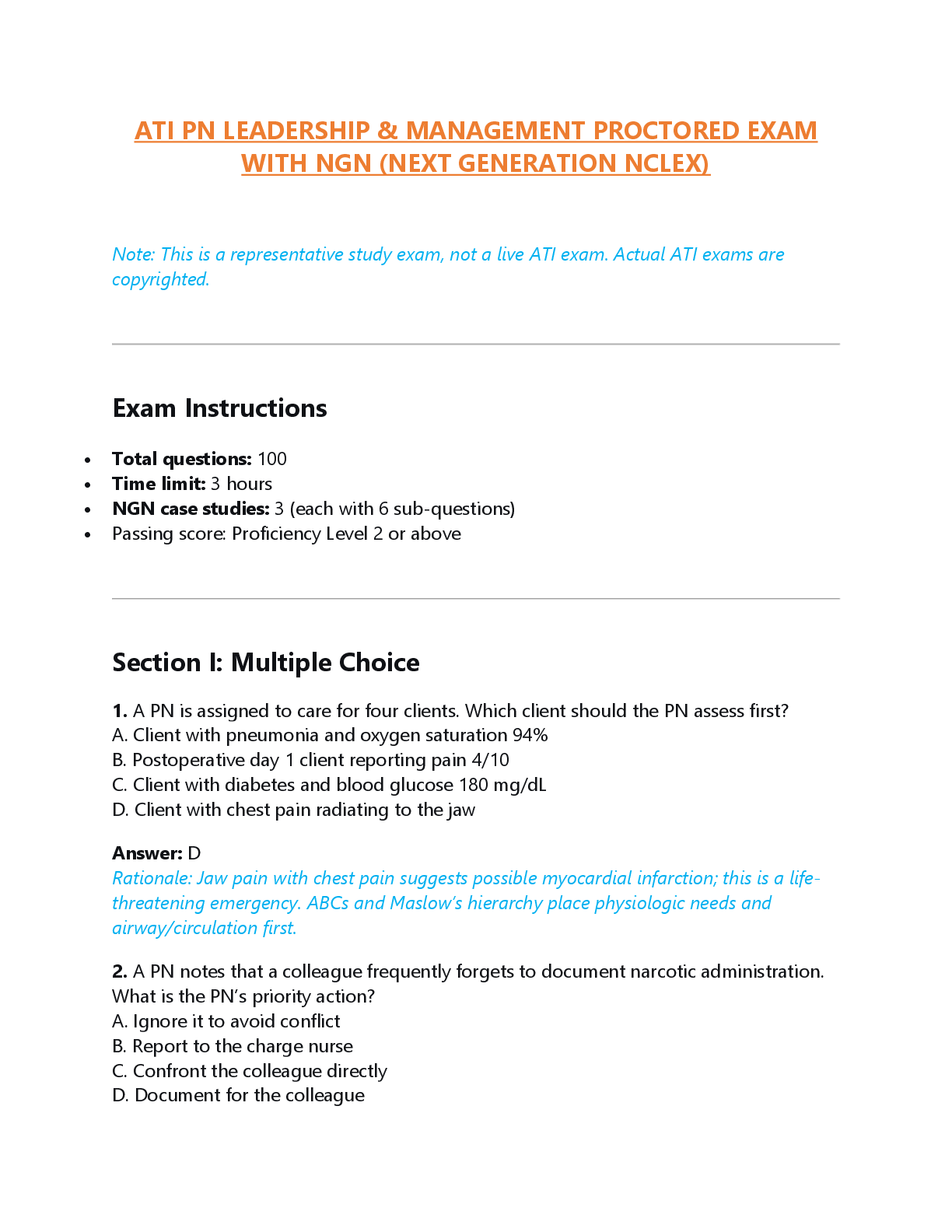
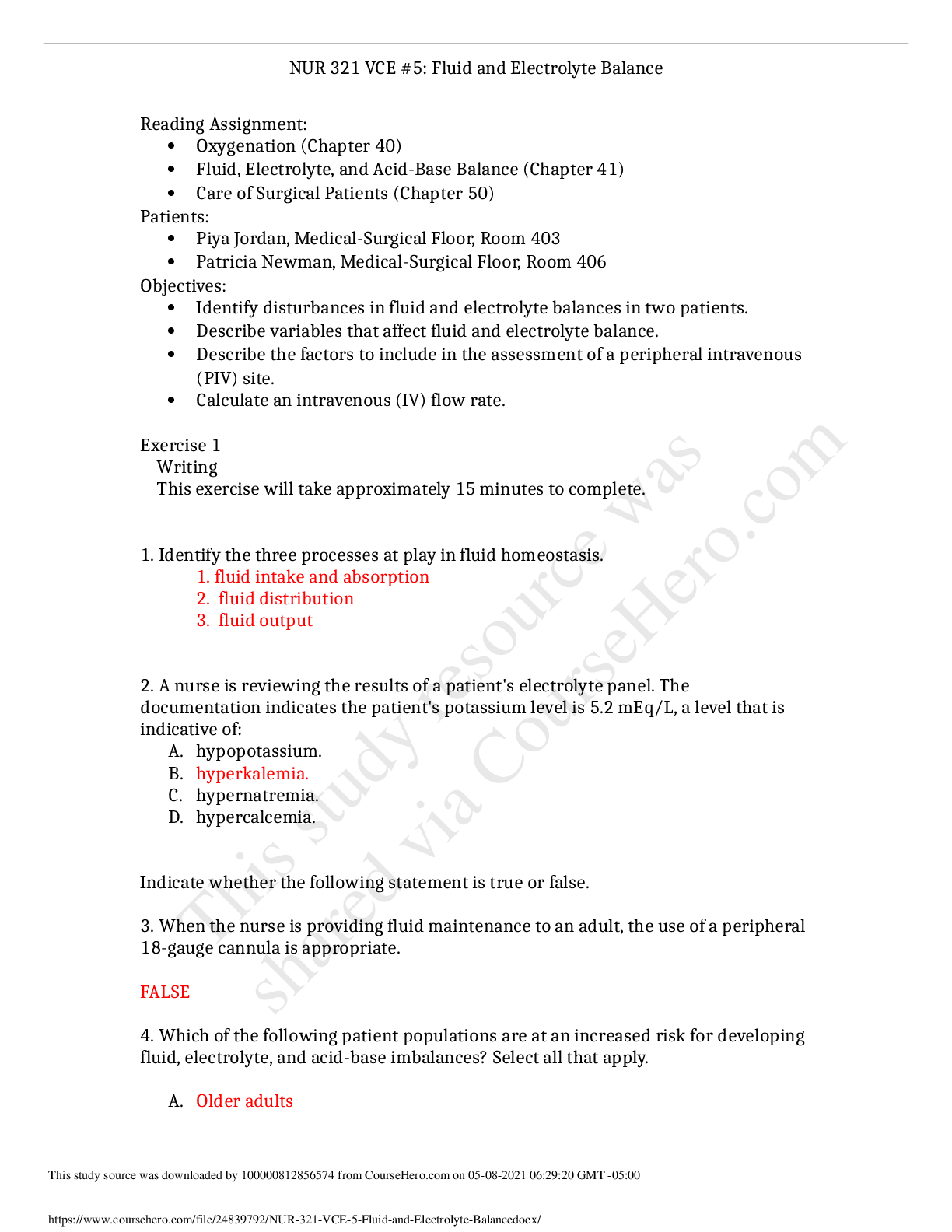
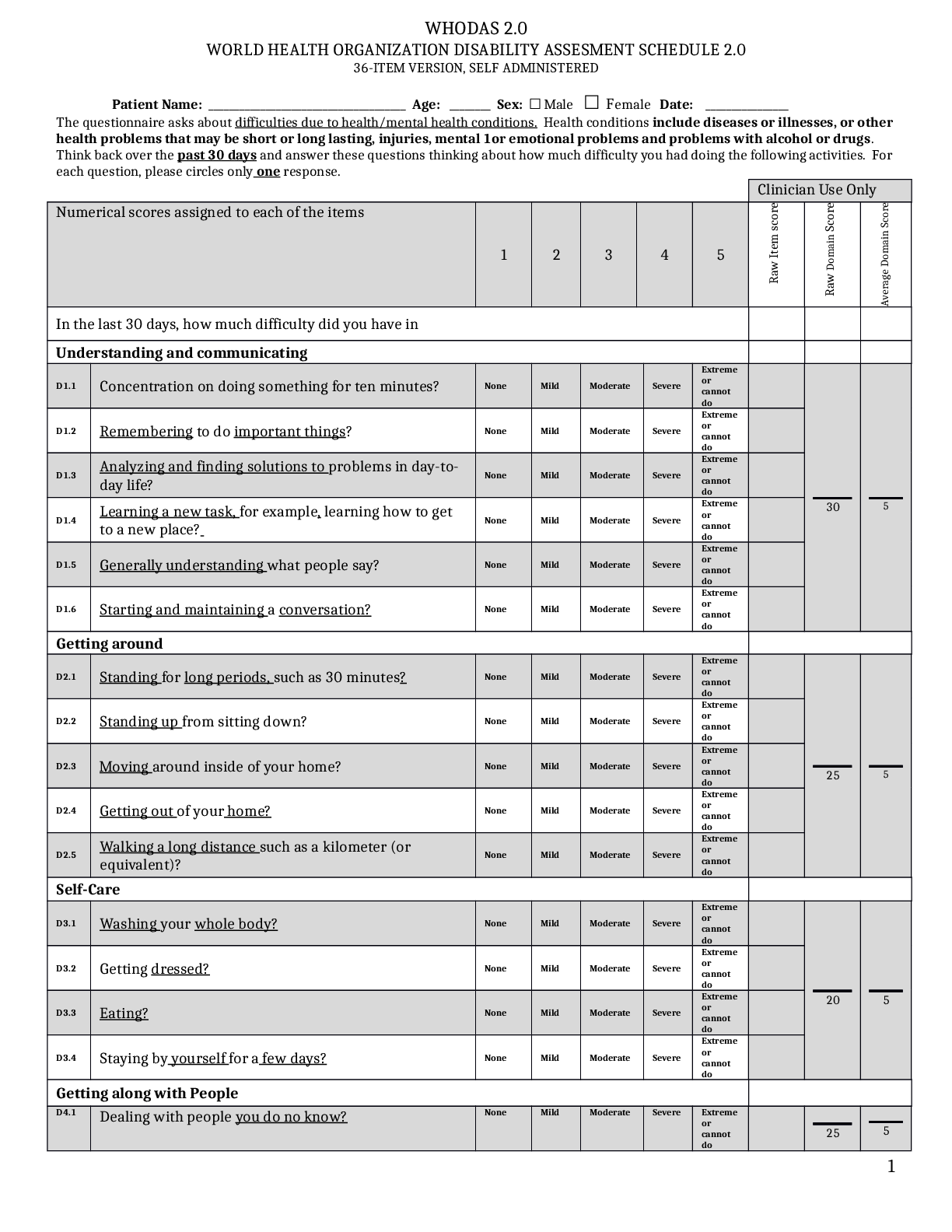
Preview image of NCLEX_SG_MARK_KLEMIK document

Buy this document to get the full access instantly

Instant Download Access after purchase

Buy Now

Instant download

We Accept:

Payment methods accepted on Scholarfriends (We Accept)

Reviews( 0 )

$6.00

Buy Now

We Accept:

Payment methods accepted on Scholarfriends (We Accept)

Instant download

Can't find what you want? Try our AI powered Search

97
0

Document information


Connected school, study & course


About the document


Uploaded On

Aug 11, 2021

Number of pages

47

Written in

All

Seller


Profile illustration for A-PLUS GUIDENOTES
A-PLUS GUIDENOTES

Member since 4 years

108 Documents Sold

Reviews Received
19
2
1
0
0
Additional information

This document has been written for:

Uploaded

Aug 11, 2021

Downloads

 0

Views

 97

Document Keyword Tags

More From A-PLUS GUIDENOTES

View all A-PLUS GUIDENOTES's documents »

Recommended For You

Get more on NCLEX »
$6.00
What is Scholarfriends

Scholarfriends.com Online Platform by Browsegrades Inc. 651N South Broad St, Middletown DE. United States.

We are here to help

We're available through e-mail, Twitter, and live chat.
 FAQ
 Questions? Leave a message!


Copyright © Scholarfriends · High quality services·