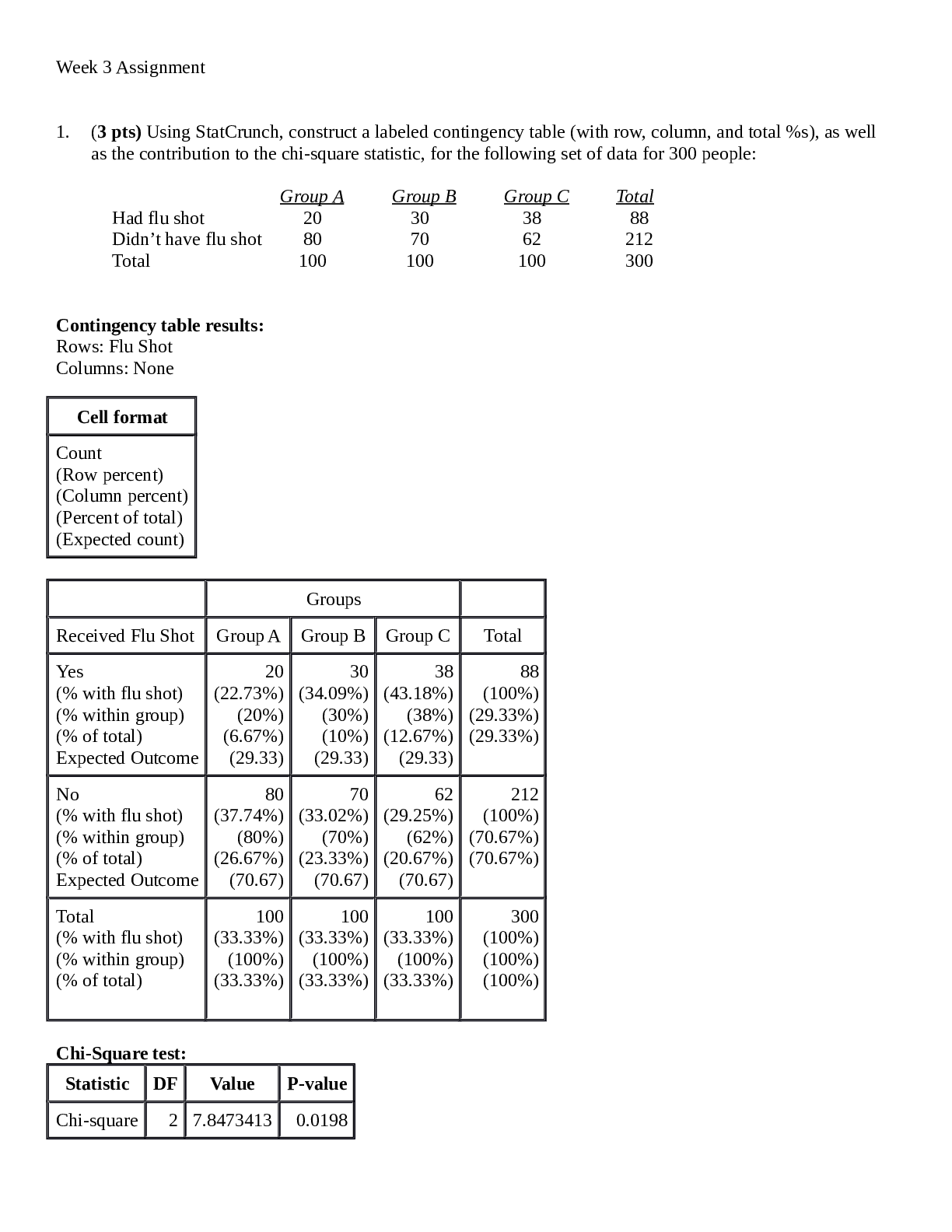
BST 322 Week3Assignment
Document Content and Description Below
7. (1 pt) Using the information provided, indicate which statistical test you think should be
used for each of the following situations (a-d):
y.
a. Independent variable: normal birth weight vs. low birth weight infan
...
[Show More]
Last updated: 3 years ago
Preview 1 out of 11 pages
Instant download
Buy this Document to get the Full Access Instantly
Provided by Students Who Aced it
We Verify Document Content to Gurantee Accuracy
Reviews( 0 )
Document information
Connected school, study & course
About the document
Uploaded On
Aug 11, 2021
Number of pages
11
Written in
All

Additional information
This document has been written for:
Uploaded
Aug 11, 2021
Downloads
0
Views
75
Topic Tags
Related Subjects & Courses
Explore similar study resources and related concepts.
Recommended For You
Get more on EXAM »

$15
7 Pages
BST 322 / BST 322 Final Exam 2 - Latest Version, 100% Correct

$15
7 Pages
BST 322 / BST 322 Final Exam - Latest Version, 100% Correct

$11
7 Pages
BST 322 / BST322 Introduction to Business (SOPHIA MILESTONE- P...
$11
9 Pages
BST 322 / BST322 Introduction to Business (SOPHIA )Milestone 4...
$11
7 Pages
BST 322 / BST322 Introduction to Business (SOPHIA )Milestone 3...
$8.5
17 Pages
BST 322-BST Final Exam 2-with 100% verified solutions-2023-202...

$12
9 Pages
NATIONAL UNIVERSITY BST 322 QUIZ 3-with verified answers-2022

$15
18 Pages
NATIONAL UNIVERSITY BST 322 Final Examwith verified answers-20...

$23
45 Pages
Solution Manual For Business Marketing Management B2B, 13th Ed...


More related documents below