NURS 231/ BIO 231Final Exam VERSION 2 PRACTICE TEST EXAM QUESTIONS AND ANSWERS SOLUTION 2021 Portage Learning
True/False:
Metaplastic cells are not better prepared to survive under stressful circumstances.
True F
...
NURS 231/ BIO 231Final Exam VERSION 2 PRACTICE TEST EXAM QUESTIONS AND ANSWERS SOLUTION 2021 Portage Learning
True/False:
Metaplastic cells are not better prepared to survive under stressful circumstances.
True False
True/False:
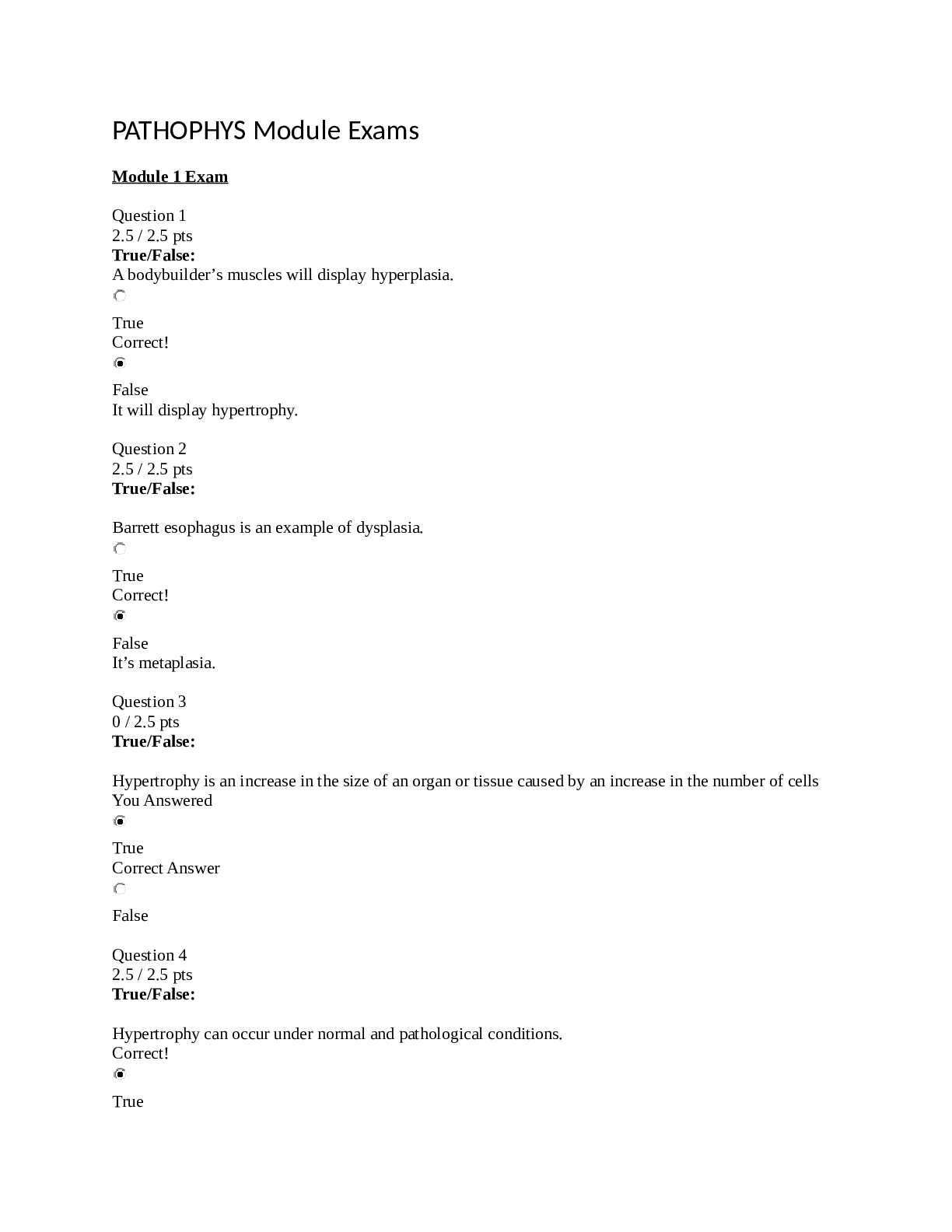
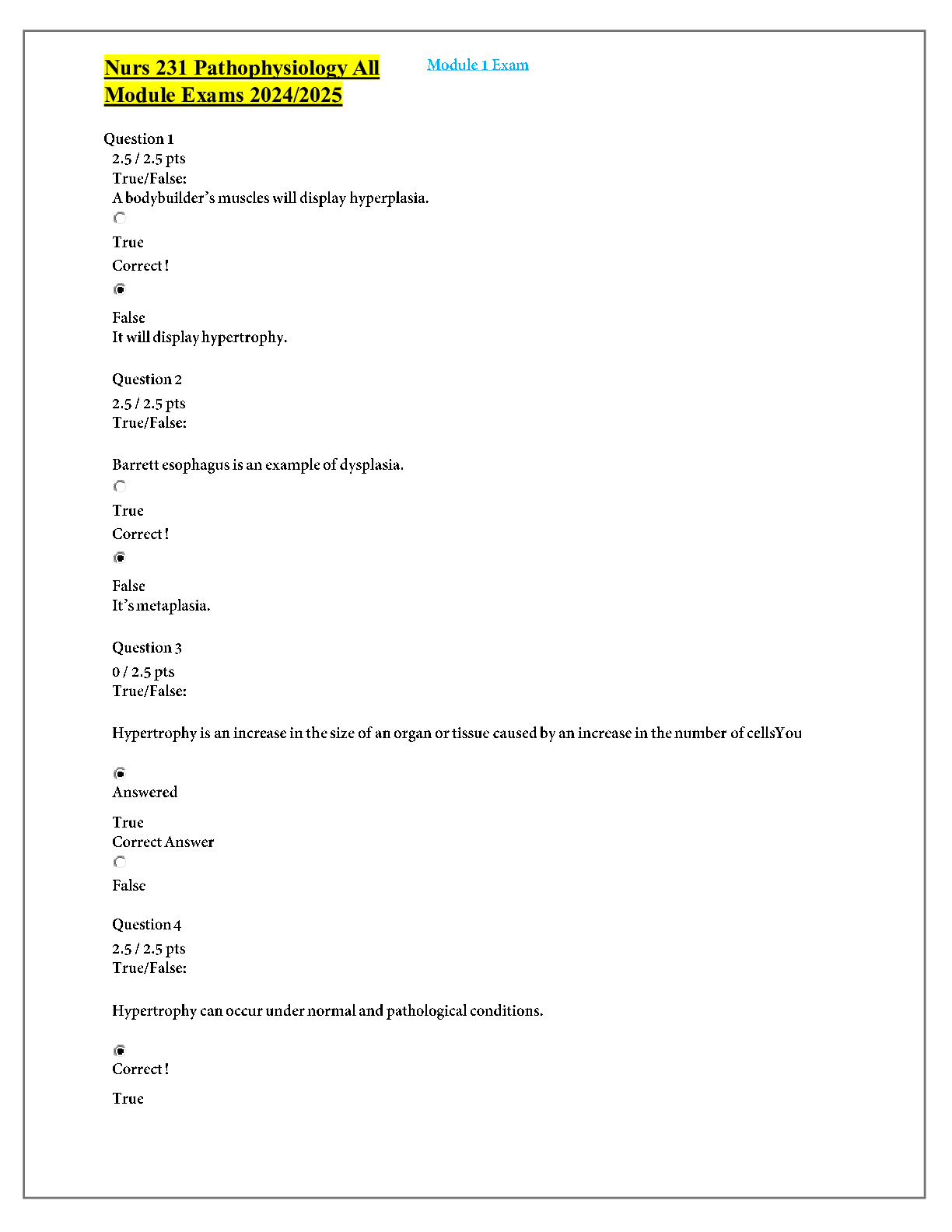
Hypertrophy can occur under normal and pathological conditions.
True False
Multiple Choice
Which is NOT true of the cytoskeleton?
It controls shape and movement
Cilia and flagella are microtubule-filled cellular extensions
It includes peroxisomes and proteasomes
Peroxisomes and proteasomes are not part of the cytoskeleton.
Which are true of the cell membrane? Select all that apply.
Controls the transport of materials from the outside fluids to within The main structural component is made of proteins
Helps with the conduction of electrical currents in nerve and muscle cells
Aids in the regulation of cell growth and proliferation
Compare and contrast the two types of gangrenous necrosis.
True/False:
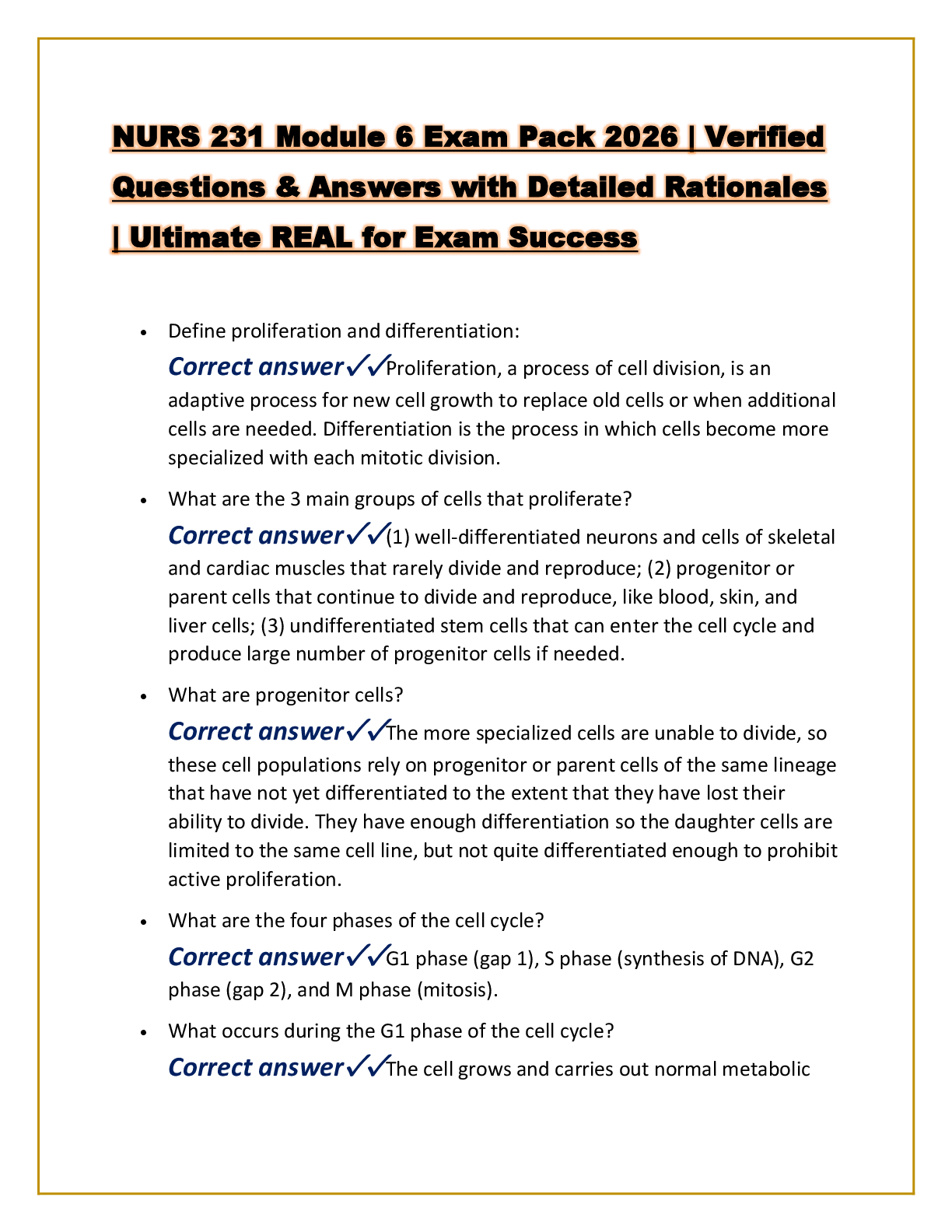
Cell proliferation is the process in which proliferating cells become more specialized cell types.
True False
False, cell differentiation
True/False:
Cell differentiation is the process of increasing cell numbers by mitotic cell division.
True False
False, cell proliferation
This type of cell remains incompletely differentiated throughout life:
Which of the following are most likely to have arisen from an adult stem cell?
Muscle Bone Epithelial
Epithelial cells like the skin are constantly being replaced.
1. is a systemic treatment that enables drugs to reach the site of the tumor as well as other
distant sites.
2. The profound weight loss and wasting of fat and tissue that accompany cancer is known as
.
Short answer
Explain how the skin’s physical barrier makes it inhospitable to microorganisms.
True/False:
The T cells that display the host’s MHC antigens and T-cell receptors for a nonself-antigen are allowed to mature, a process termed positive selection.
True False
Multiple Choice:
Which cell in the blood provides primary hemostasis?
Platelets Endothelial cells Histamine Macrophages
A 12-year-old female presents with itchy eyes, nasal congestion and drainage, and sneezing every spring when the pollen count is high. (1) Explain the immunologic mechanisms that are responsible for her symptoms. (2) What type(s) of treatment might be used to relieve her symptoms?
Multiple Choice:
The patient is found to be a severely malnourished alcoholic. The most likely cause of his anemia is:
Folate deficiency Pernicious anemia Iron deficiency anemia
Anemia of chronic inflammation
Multiple Choice:
Which of the following is NOT true of vitamin B12 deficiency anemia?
Vitamin B12 is bound to intrinsic factor
Peripheral neuropathy can be a result of deficiency Dietary deficiencies are common
MCV is elevated
Multiple Choice:
Each of the following are risk factors for secondary hyperlipidemia except?
Obesity
Diabetes mellitus High cholesterol diet
Autosomal dominant disorder of LDL receptor
Multiple Choice:
Risk factors for coronary heart disease include each of the following except: HDL > 60
Smoking Hypertension
Family history of heart disease
Patient is found to have the above:
1. What risk factors mostly led to this disease state?
2. What is this person at risk for developing?
3. What lifestyle modifications would you suggest for them?
is the flow of gases into and out of the alveoli of the lungs.
Multiple Choice:
Someone with COPD would exhibit each of the following characteristics except: Polycythemia
Increased pulmonary artery pressure Increased D-dimer levels
Decreased FVC & FEV
Short answer:
A 10-year-old boy who is having an acute asthma attack is brought to the ER. He is observed to be sitting up and struggling to breathe. His breathing is accompanied by use of accessory muscles, a weak cough, and audible wheezing sounds. His pulse is rapid and weak, and both heart and breath sounds are distant on auscultation. His parents relate that his asthma began to worsen after he developed a “cold,” and now he doesn’t get relief from his albuterol inhaler.
Explain the changes in physiologic function underlying his signs and symptoms.
T/F – Make true if False
Astrocytes help to form the blood-brain barrier which prevents toxins from the blood from entering the brain.
T/F – Make true if False
Someone in the early stages of Alzheimer’s disease requires assistance for their activities of daily living.
Long Answer Essay
A 75-year-old male is brought to the emergency department by their spouse at 8 pm. The spouse reports that they were cleaning up after dinner at approximately 6:30 pm, and she noticed that her husband’s speech was very unclear. When she asked him what was going on, he said that he didn’t know and that the entire right side of his face felt numb. She reports that he is very active, but he has a past medical history of atrial fibrillation. Based upon these symptoms and past medical history, what do you suspect this patient is experiencing? How would you confirm this diagnosis? What treatment should be administered? Explain why you chose that treatment.
Multiple Choice:
Complications of gallstones include each of the following EXCEPT: Cirrhosis
Biliary obstruction Pancreatitis Cholecystitis
Multiple choice
Each of the following factors are associated with increased incidence of peptic ulcer EXCEPT: Dietary history
Corticosteroid use pylori infection Aspirin therapy Cigarette smoking
Short answer
Which GI hormone has strong growth hormone-releasing activity and stimulates food intake and digestive function?
Your Answer:
CCK is the GI hormone that is released during food digestion and stimulates the gallbladder
True/False:
Antibiotics should be used to treat all types of diarrhea.
True False
Which of the following is characteristic of acute transplant rejection?
Occurs months to years after transplant Involves increased T lymphocytes
It does not respond well to immunosuppressive therapy
A patient is said to be in stage 4 kidney disease. What would you expect their GFR to be?
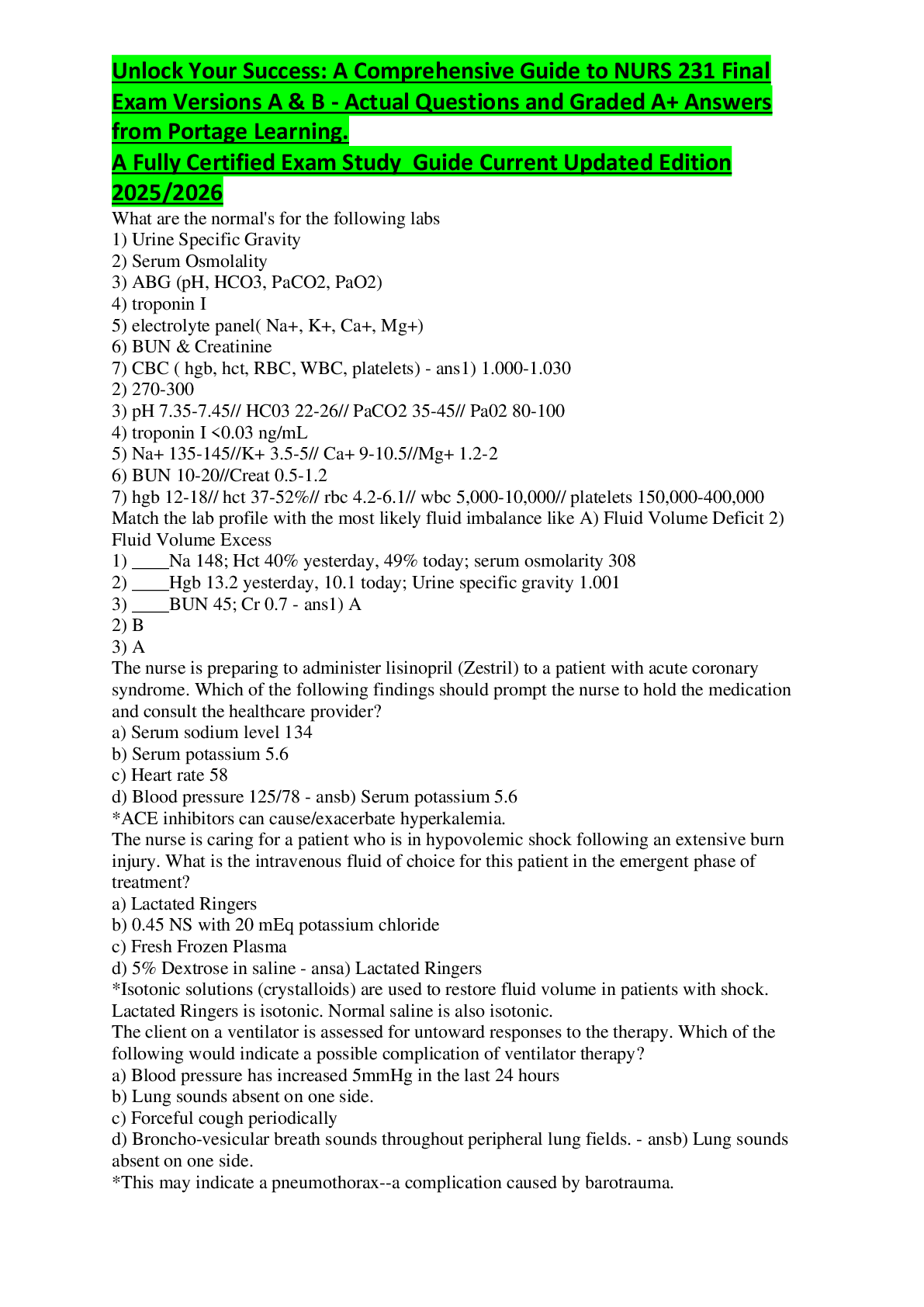
A. 25 mL/min/1.73m2
B. 42 mL/min/1.73m2
C. 70 mL/min/1.73m2
D. 14 mL/min/1.73m2
Short Answer:
Explain how the kidney can maintain a constant GFR despite variations in the arterial blood pressure of the rest of the body.
A patient is admitted to the hospital with pneumonia. The following are the results of their blood
work: pH = 6.9, PCO2 = 52 mm, and HCO3- = 30 mEq/L. Based upon these results, what type of acid-base disorder are they experiencing? Is compensation occurring? Describe a treatment intervention for this disorder. Normal values are as follows: pH = 7.35-7.45, PCO2 = 35-45 mm, HCO3- = 22-26 mEq/L.
.
Multiple Choice:
Signs and symptoms of Addison’s disease include each of the following EXCEPT: Hyperpigmentation
Weight loss Muscle weakness
Hyperglycemia
Question 35
2.5 / 2.5 pts
An endocrine hormone is released into circulation to act on a target organ.
True False
Hormones work through receptors, and the speed of this action varies.
True False
A 45-year-old woman presents with fatigue, weight gain, and cold intolerance. Lab findings show a low serum T4 and elevated TSH.
1. What diagnosis would her history and lab findings indicate?
2. What type of treatment should be given?
Hypothyroidism is caused by each of the following EXCEPT:
Autoimmune causes
Surgery, radiation therapy, or both Iodine deficiency
Thyroid adenoma
Hereditary or developmental abnormalities
Multiple Choice:
Which of the following would a patient likely report if you suspect they have OA?
Stiffness in the morning that lasts longer than 30 minutes Pain that is alleviated with activity
A “grinding feel” with movement Pain in their MCP joint
Multiple Choice:
Cancellous bone receives its blood supply by what means?
Arteries branching from the medullary cavity
Arteries branching inward from the periosteal arteries
Diffusion through the endosteal surface of the bone and the canaliculi
If someone loses their balance when walking on uneven terrain, explain how tendons and ligaments
work to protect the joint and structures within it.
A 72-year-old male is said to be in phase 3 of gout. He is obese and has a history of alcohol abuse.
Develop a treatment plan including specific pharmacologic intervention and a non-pharmacologic recommendation to manage his disease.
[Show More]





.png)