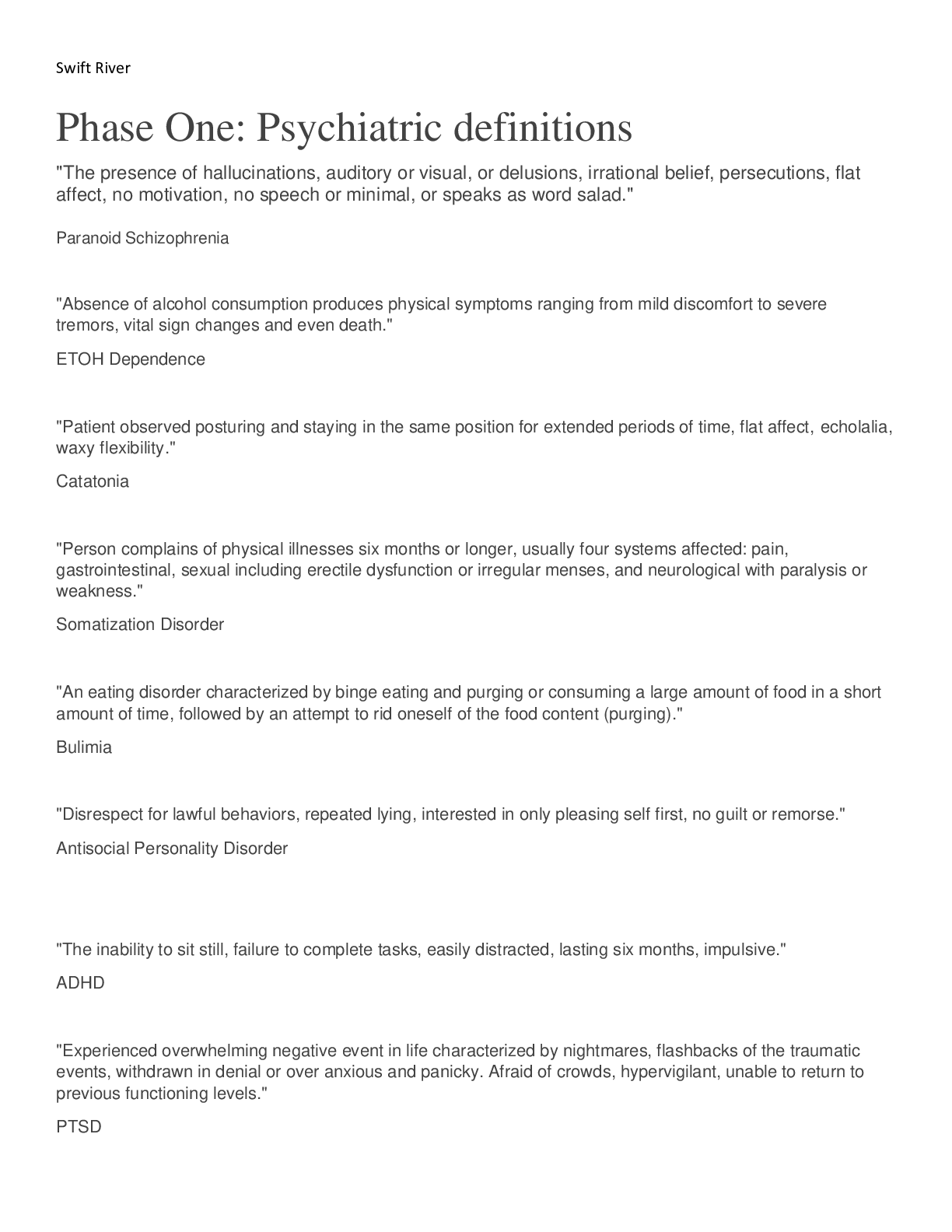
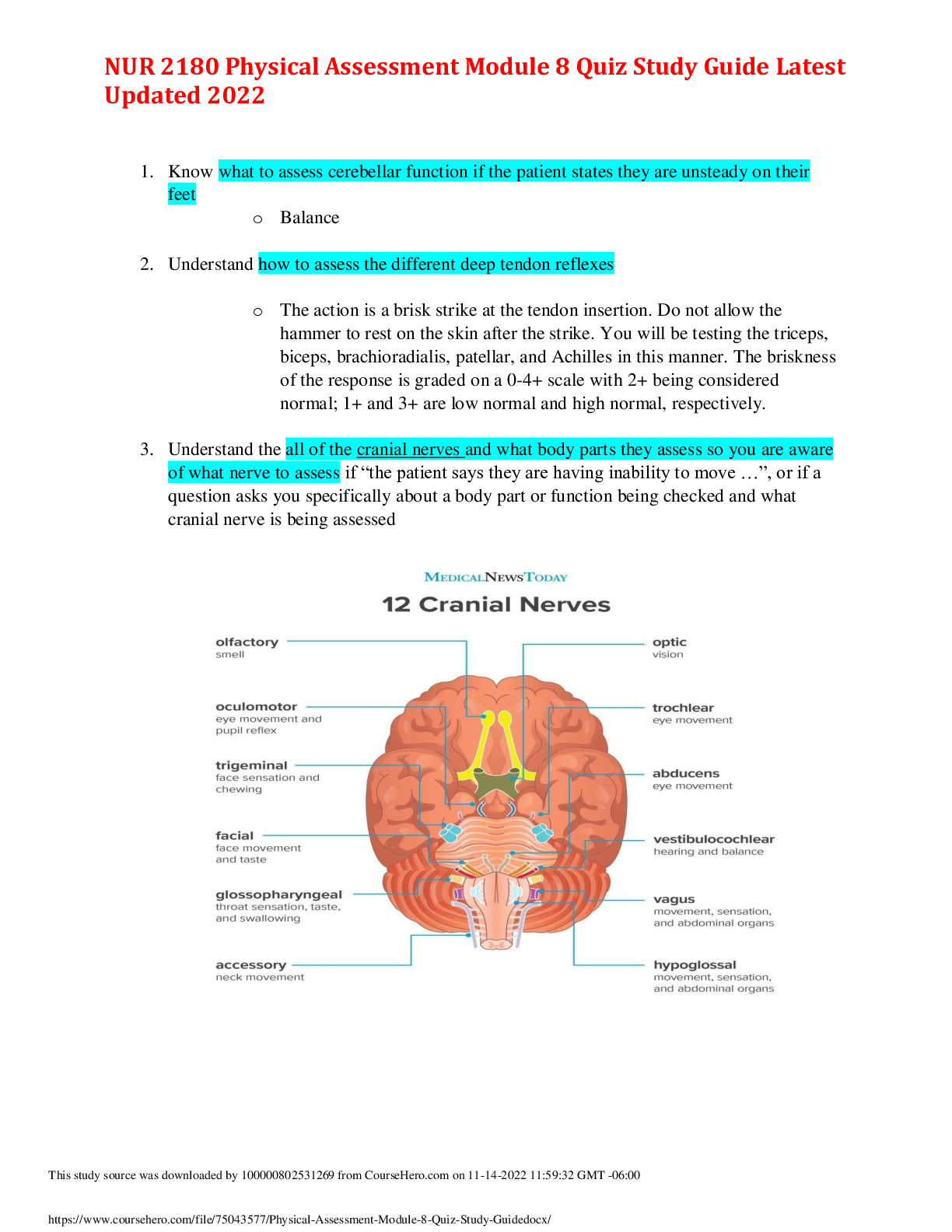
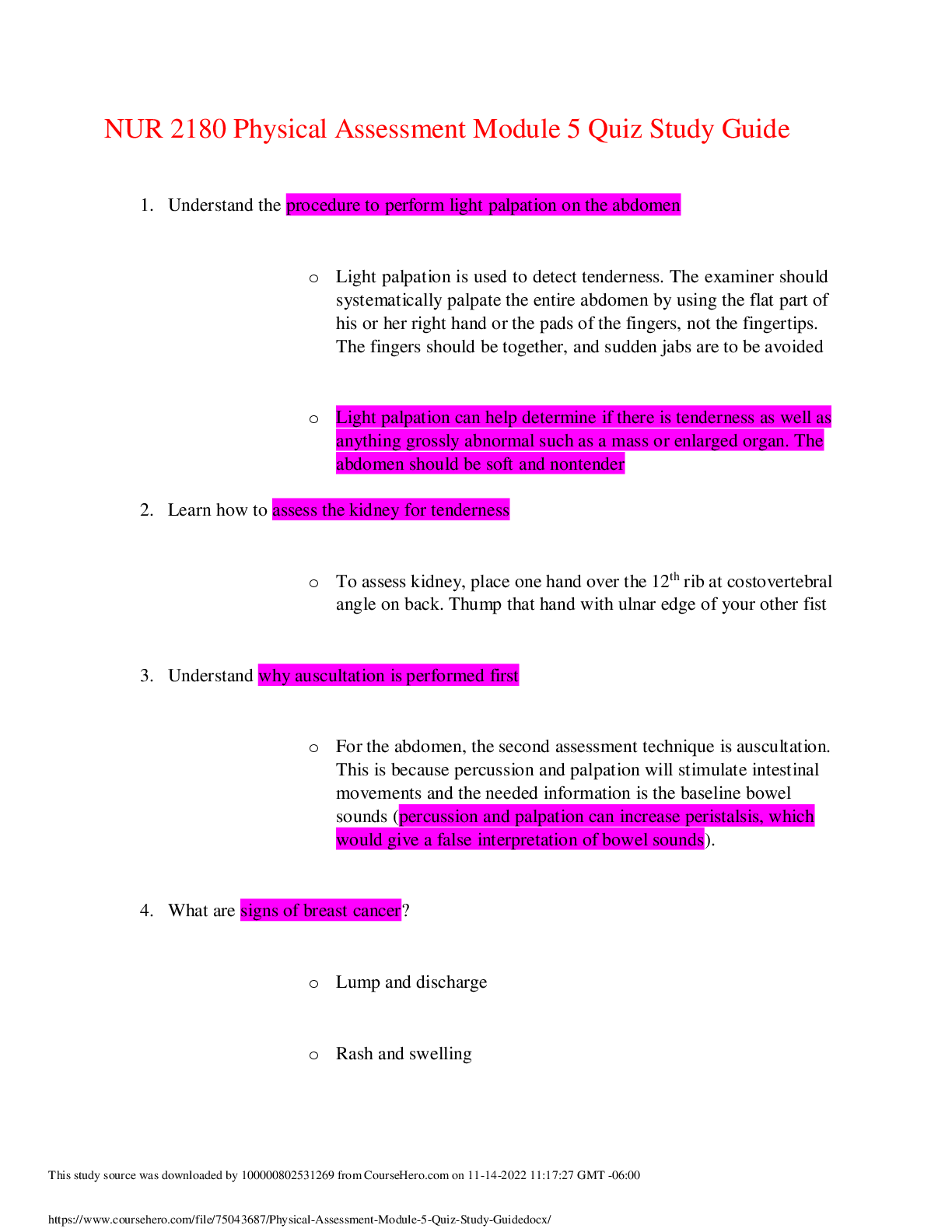
NURSING > QUESTIONS & ANSWERS > NSG 6430 FINAL EXAM - WOMEN'S HEALTH FINAL 2021 LATEST STUDY GUIDE A+ GRADED (All)
NSG 6430 FINAL EXAM - WOMEN'S HEALTH FINAL 2021 LATEST STUDY GUIDE A+ GRADED
Document Content and Description Below
Last updated: 3 years ago
Preview 1 out of 46 pages
Instant download

Buy this Document to get the Full Access Instantly
Provided by Students Who Aced it
We Verify Document Content to Gurantee Accuracy
Reviews( 0 )
Document information
Connected school, study & course
About the document
Uploaded On
Aug 16, 2021
Number of pages
46
Written in
All

Additional information
This document has been written for:
Uploaded
Aug 16, 2021
Downloads
0
Views
149
Topic Tags
Recommended For You
Get more on QUESTIONS & ANSWERS »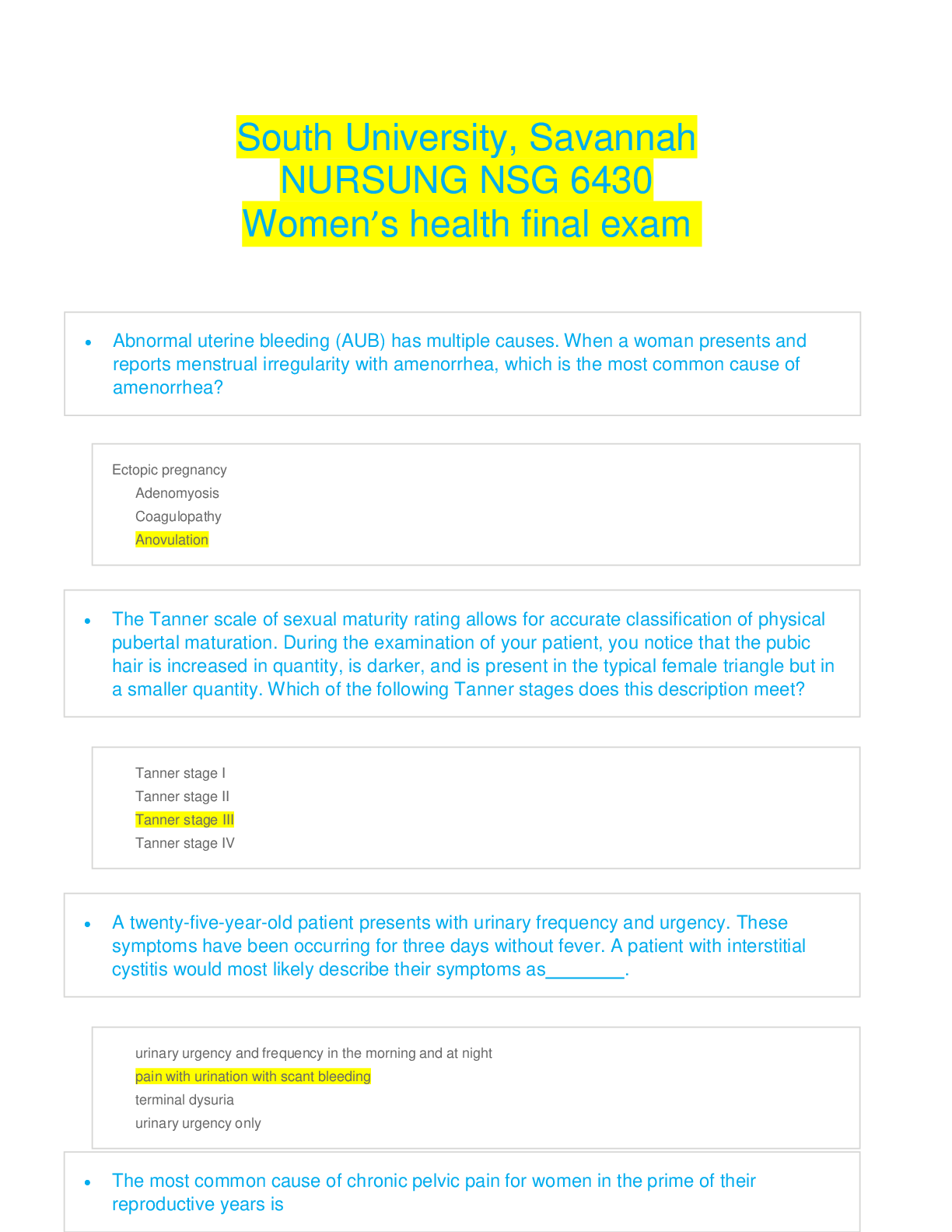
NSG 6430 Women’s health Final Exam. | South University, Sava...

NSG6430 WEEK 10 FINAL EXAM / NSG 6430 WEEK 10 FINAL EXAM (GRAD...
NSG 6430 midterm Womens Gynecological Health Questions & Answ...

NSG 6430 - Women's health exam study guide > South University,...

NSG 6430 WOMEN'S HEALTH FINAL EXAM(REVISED AND GRADED A): Sout...
NSG 6430 WOMEN'S HEALTH FINAL EXAM(REVISED AND GRADED A): Sout...

NSG 6430 / NSG 6430: Women’s Health Final Exam | LATEST 2020/2...

NSG6430 APEA ORTHO / NSG 6430 APEA Test (Ortho): South Univers...


NSG6430_ APEA_ GI SOUTHERN UNIVERSITY QUESTIONS AND ANSWERS LA...

Women_s health exam study guide (GUARANTEED A+) ALL ANSWERS CO...


NSG6430 Week 7 Discussion iHuman Case Study-Erin Davis Latest...

NSG6430_ ADVANCED PRACTICE EDUCATION ASSOCIATES APEA_ORTHO QUE...