Film Studies > TEST BANKS > FINANCE 3321 Chapter 6—Money Markets (All)
FINANCE 3321 Chapter 6—Money Markets
Document Content and Description Below
Last updated: 3 years ago
Preview 1 out of 13 pages
Instant download

Buy this Document to get the Full Access Instantly
Provided by Students Who Aced it
We Verify Document Content to Gurantee Accuracy
Reviews( 0 )
Document information
Connected school, study & course
About the document
Uploaded On
Aug 18, 2021
Number of pages
13
Written in
All

Additional information
This document has been written for:
Uploaded
Aug 18, 2021
Downloads
0
Views
99
Topic Tags
Recommended For You
Get more on TEST BANKS »
![Preview of eBook [PDF] Film Art An Introduction 13th Edition By David Bordwell, Kristin Thompson, Jef](https://browseimages.nyc3.digitaloceanspaces.com/paper-images/2024/Aug/29/oFxv2LMK2024-08-29-10-2466d02226612b3.png)
eBook [PDF] Film Art An Introduction 13th Edition By David Bor...
(ISE) Film Art An Introduction 13th Edition By David Bordwel...
eBook Emotion in Animated Films (Routledge Advances in Film St...
Women and Film Animation A Feminist Corpus at the National F...

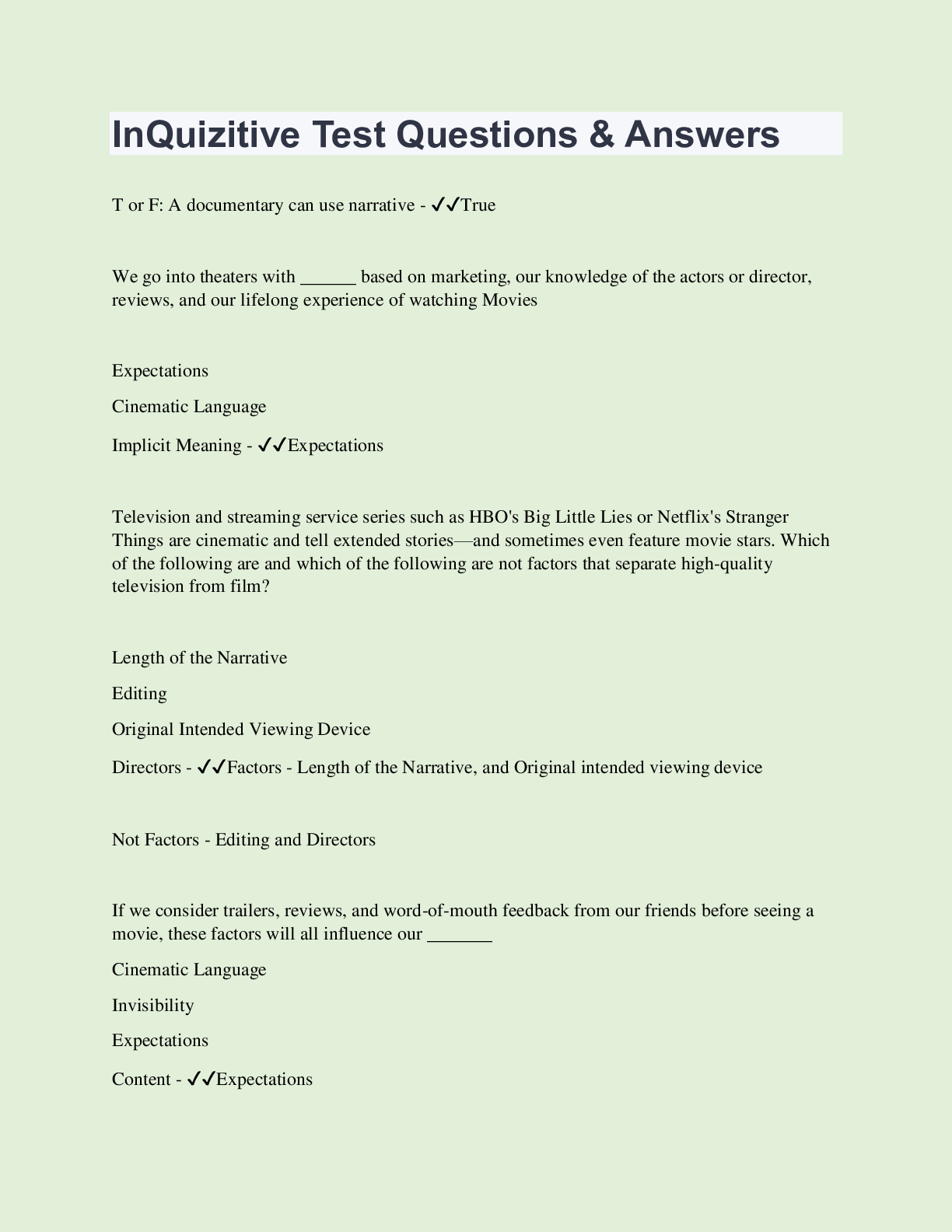
InQuizitive Test Questions & Answers | 80 Questions with 100%...

Film Studies H410/02: Critical approaches to film Advanced GCE...
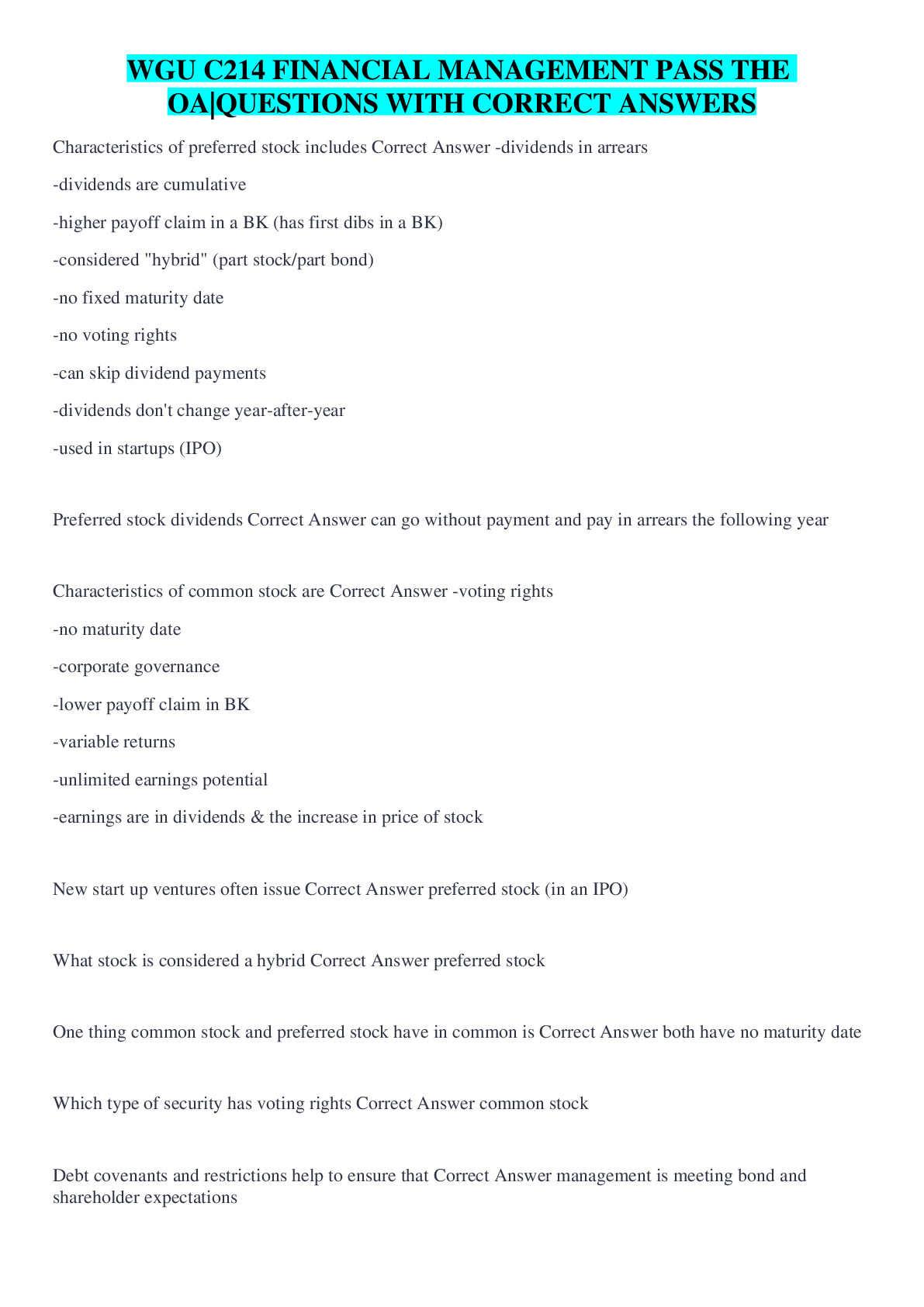
WGU C214 FINANCIAL MANAGEMENT PASS THE OA|QUESTIONS WITH CORRE...

AXIS NETWORK VIDEO CERTIFICATION EXAM PRACTICE|QUESTIONS WITH...
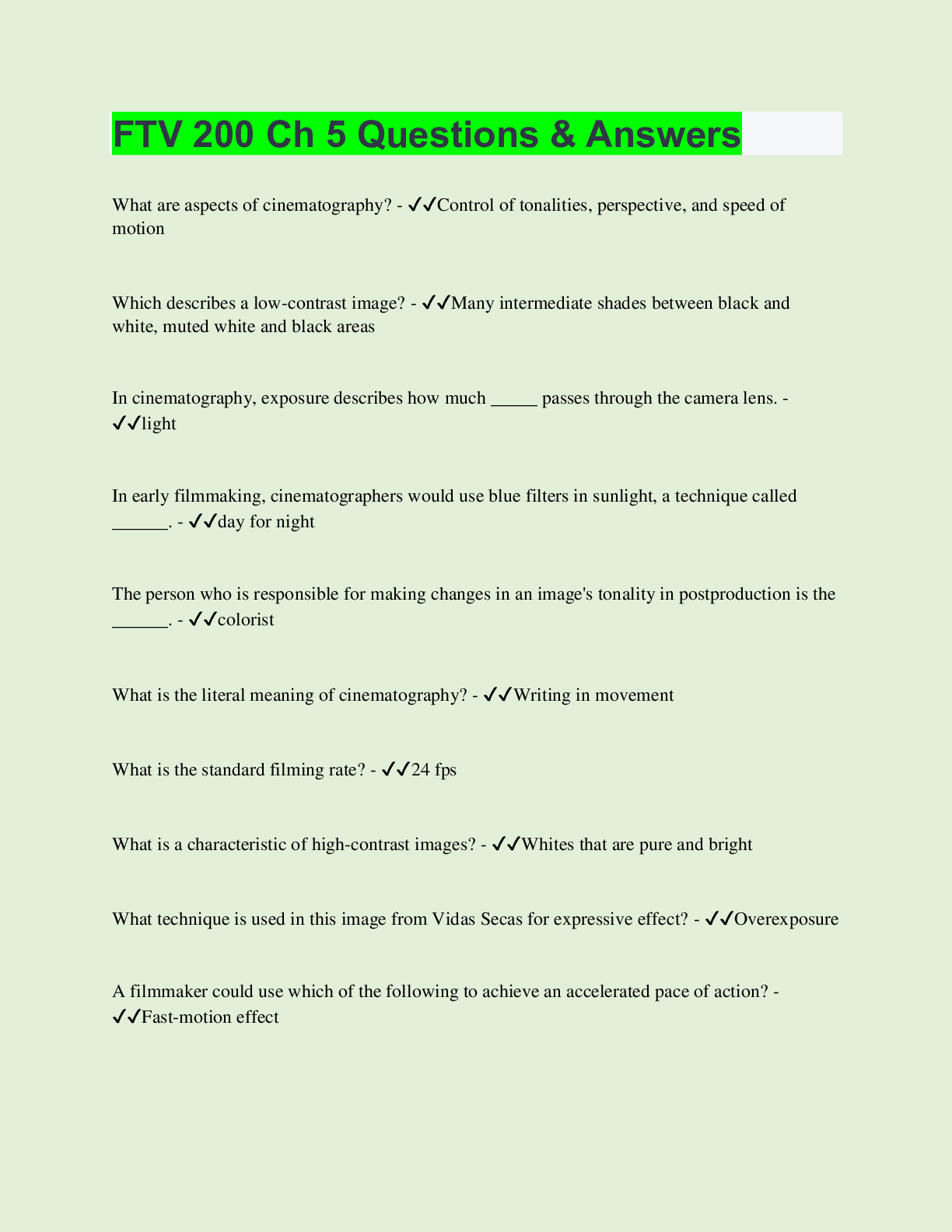
FTV 200 Ch 5 Questions & Answers | 50 Questions with 100% Corr...
Test Bank For Small Business Management Launching & Growing En...

Lehninger Principles of Biochemistry 8th Edition by David Nels...
TEST BANK for The Leadership Experience 8th Edition by Richard...

TEST BANK for Biochemistry 10th Edition by Berg,Gregory Gatto...
Test Bank For Labor Economics 9th Edition by George Borjas (Al...
Film Exam 3 – Comprehensive Study Guide with Verified Question...