NR 601 Week 2 Quiz Review-2021
Document Content and Description Below
All questions will come from reading (Goroll, Kennedy), Lessons and Presentations – you should have
received the PPTs
Week 1
Kennedy
• Know the physical and physiological changesin the elderly
*Appendix A pgs 643-65
...
[Show More]
Last updated: 3 years ago
Preview 1 out of 4 pages
Instant download

Buy this Document to get the Full Access Instantly
Provided by Students Who Aced it
We Verify Document Content to Gurantee Accuracy
Reviews( 0 )
Document information
Connected school, study & course
About the document
Uploaded On
Aug 18, 2021
Number of pages
4
Written in
All

Additional information
This document has been written for:
Uploaded
Aug 18, 2021
Downloads
0
Views
56
Topic Tags
Recommended For You
Get more on EXAM »
$12.5
36 Pages
NR 601 Midterm Exam - Chamberlain College of Nursing Questi...
 GRADE A SOLUTION.png)
$14.5
22 Pages
NR 601 MIDTERM EXAM 1 QUESTIONS WITH (LATEST) GRADE A+ SOLUTIO...

$10
57 Pages
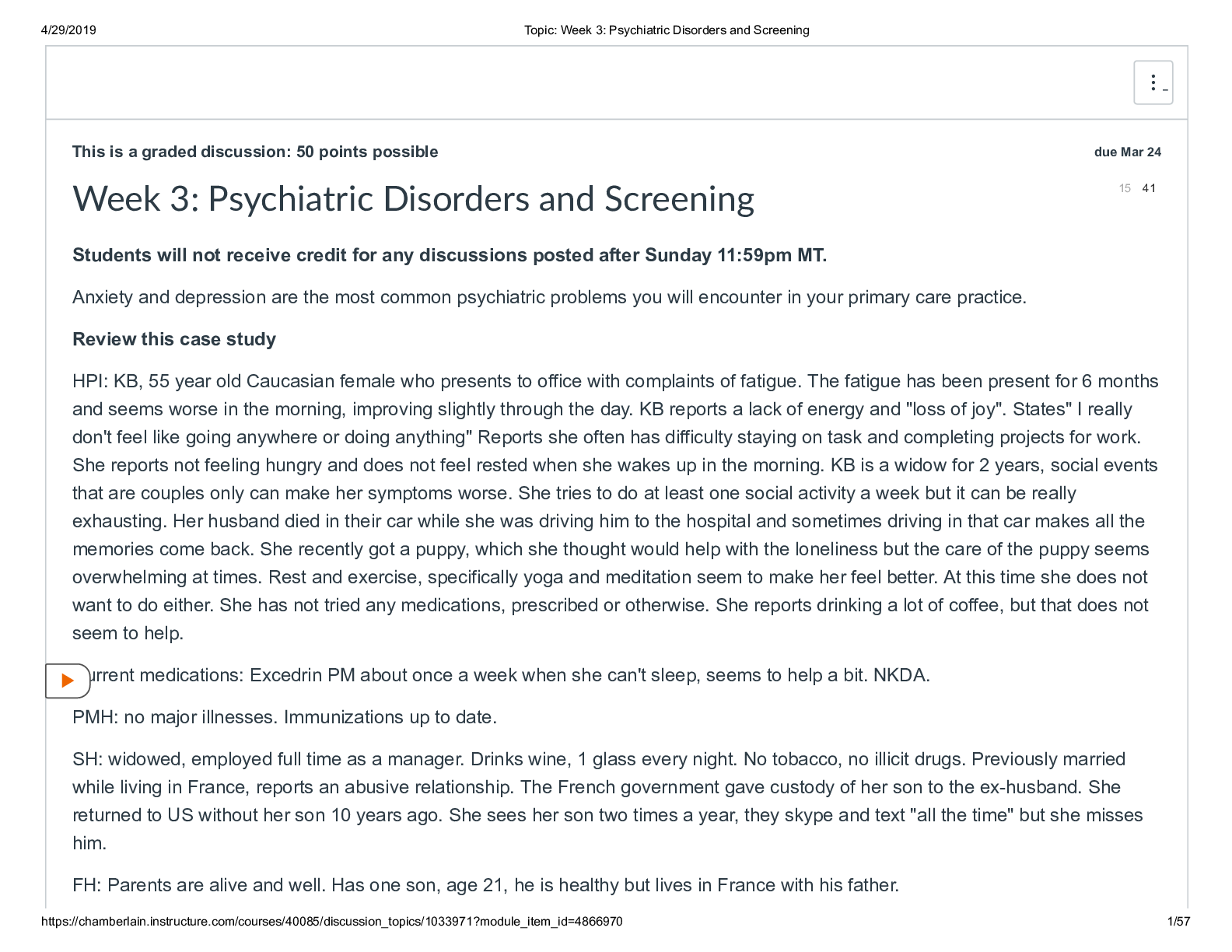
NR 601 Week 3 Psychiatric Disorders and Screening Discussion

$26
345 Pages
eBook [PDF] Barash, Cullen, and Stoelting's Clinical Anesthesi...

$29
1067 Pages
eBook [PDF] Burns' Pediatric Primary Care 7th Edition BY Dawn...

$16
137 Pages
Test Bank for Burns' Pediatric Primary Care 7th Edition by Daw...
$15
135 Pages
Burns Pediatric Primary Care 7th Edition All Chapters Complete...
$26
209 Pages
Burns' Pediatric Primary Care, 7th Edition by Garzon, Barber S...
$15
835 Pages
Complete Test Bank Emergency Care 14th Edition Daniel Limmer Q...
More related documents below