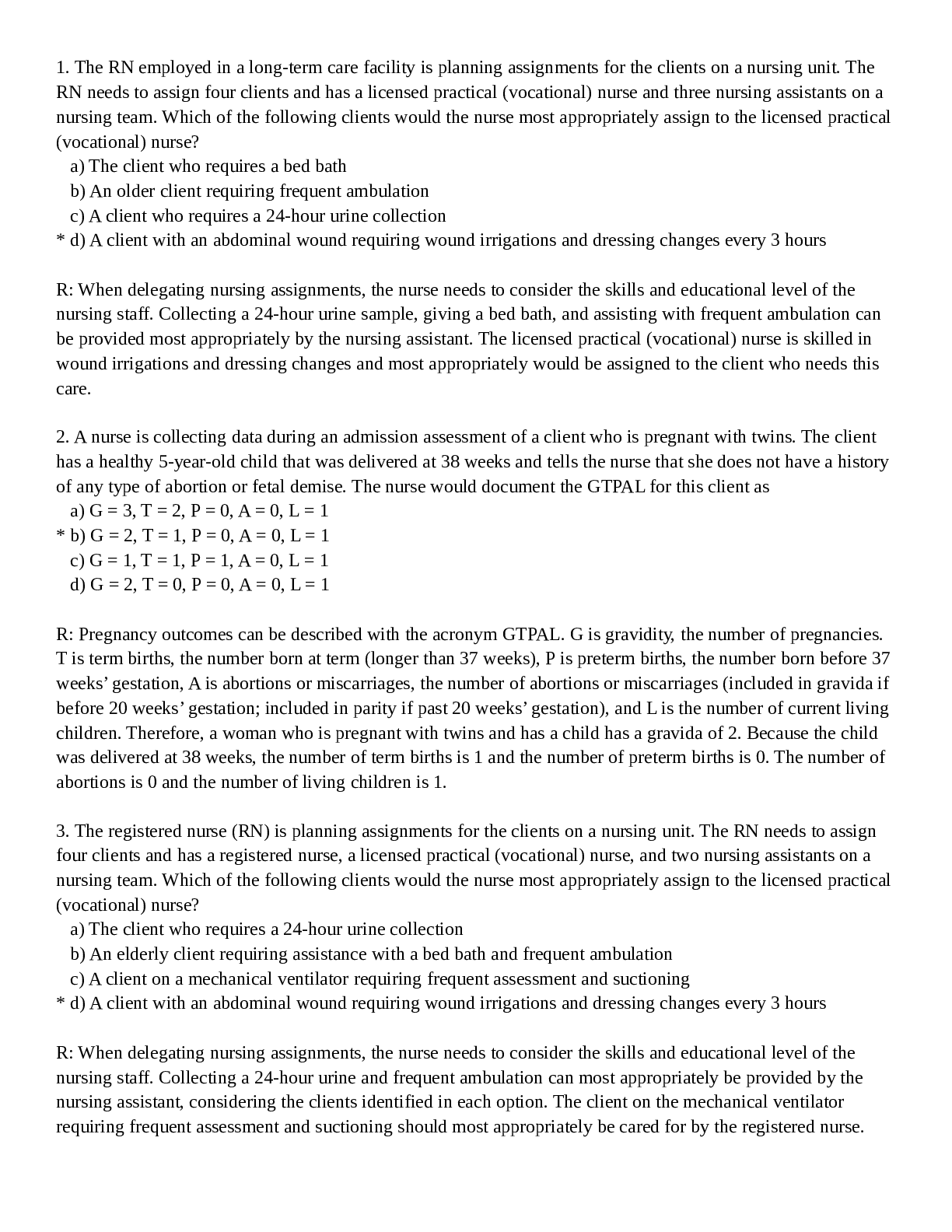
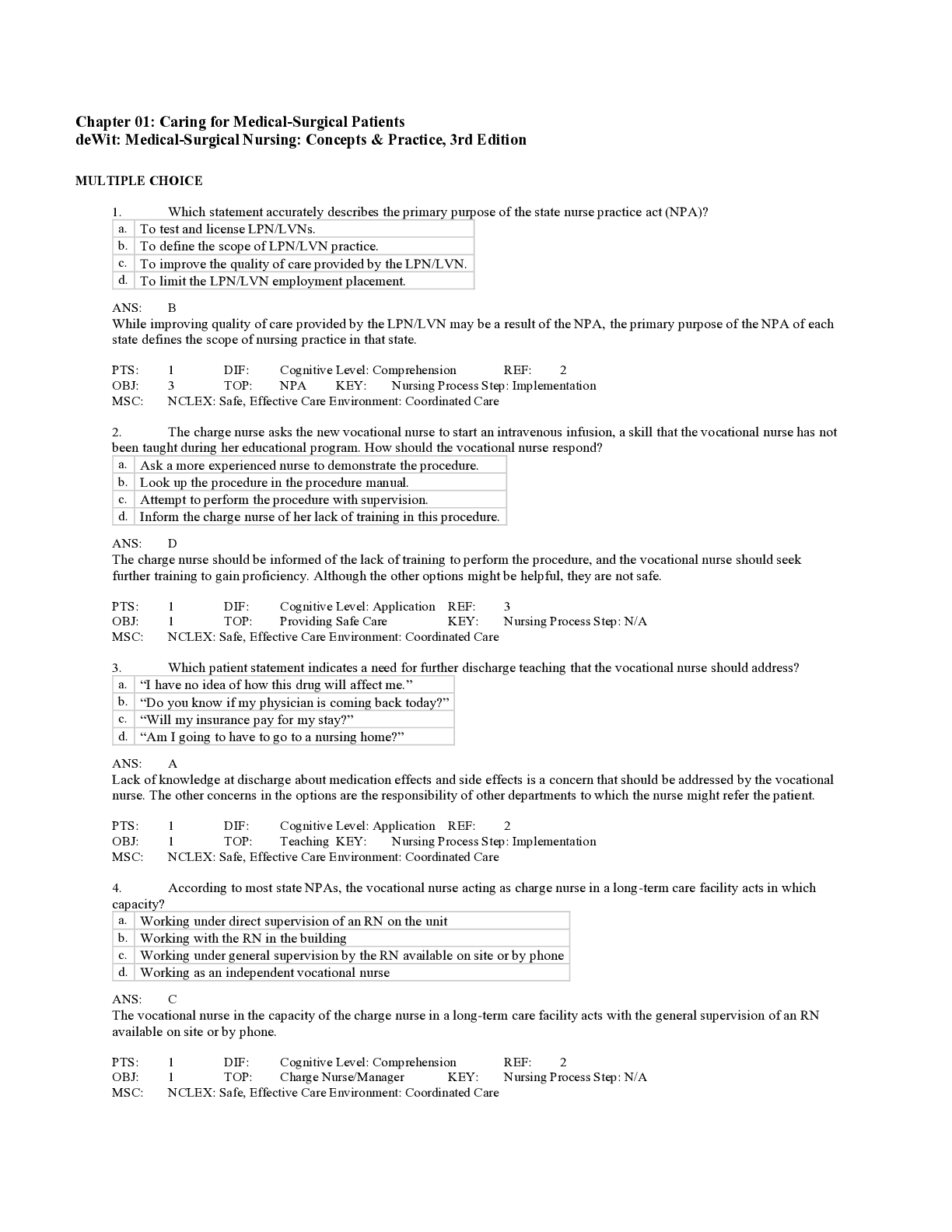
Finance > TEST BANKS > Chapter 04 Long-Term Financ FIN 3716 (All)
Chapter 04 Long-Term Financ FIN 3716
Document Content and Description Below
Last updated: 3 years ago
Preview 1 out of 133 pages
Instant download
Buy this Document to get the Full Access Instantly
Provided by Students Who Aced it
We Verify Document Content to Gurantee Accuracy
Reviews( 0 )
Document information
Connected school, study & course
About the document
Uploaded On
Aug 18, 2021
Number of pages
133
Written in
All

Additional information
This document has been written for:
Uploaded
Aug 18, 2021
Downloads
0
Views
101
Topic Tags
Recommended For You
Get more on TEST BANKS ».png)
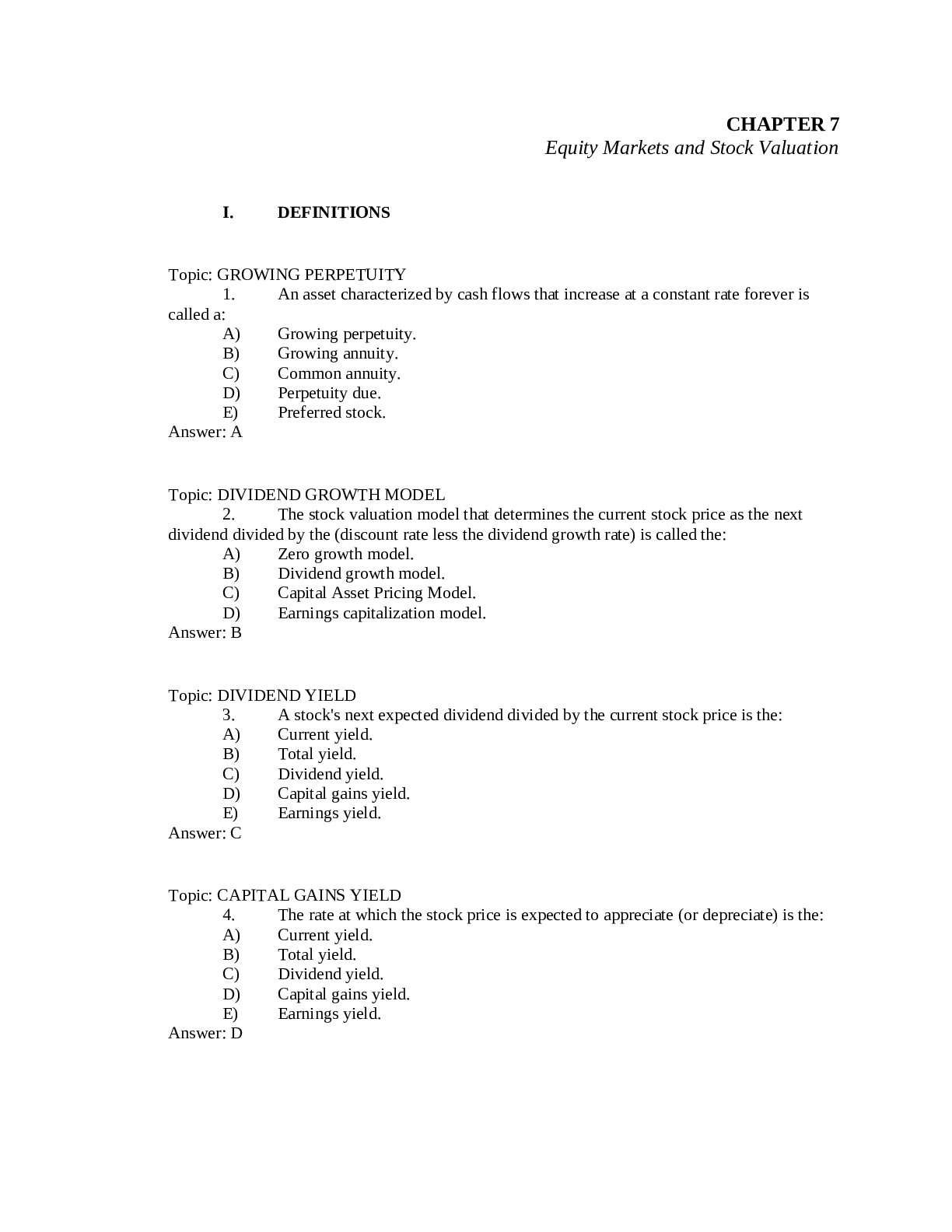
Equity Markets and Stock Valuation Louisiana State UniversityF...

FIN 3716 FINAL EXAM QUESTIONS ND ANSWERS FREQUENTLY TESTED

TEST BANK FOR ECGS MADE EASY 6TH EDITION BY BARBARA Chapter 04...

Chapter 04: Nursing Process and Critical Thinking Test Bank /...
TEST BANK FOR NURSING RESEARCH 9TH EDITION BY LOBIONDO-WOOD C...

NURSING TEST BANK. COMPLETE. Chapter 01- Introduction to Nursi...
FINANCE 4303Chap004Chapter 04 Discounted Cash Flow Valuation
Defining the Project-Chapter 04 Business. 89 Questions and An...
Chapter 04: Communicating with Children and Families McKinney:...
.png)
Chapter 04: The Complete Health History Jarvis_: Physical Exam...

PHYSICAL EXAMINATION AND HEALTH ASSESMENT BY JARVIS:Chapter 04...
 Med Surg test questions Chapter 04 Health Education and Promotion.png)
Adult Nursing (NUR 105) Med Surg test questions Chapter 04 Hea...
ATI Chapter 04 Carbohydrates, Grodner and Escott-Stump Nutriti...
 Med SurgTest Questions and Answers with Explanations Chapter 04 Health Education and Promotion.png)
ATI Adult Nursing (NUR 105) Med Surg test questions Chapter 04...
ATI Adult Nursing (NUR 105) Med SurgTest Questions and Answers...
Chamberlain College of Nursing - NR 228 - Chapter 04, Carbohyd...

.png)
.png)