Maternal Child Nursing Test Bank
Document Content and Description Below
1.The United States ranks 50th in the world for maternal mortality and 41st among
industrialized nations for infant mortality rate. When developing programs to assist in
decreasing these rates, which factor would most
...
[Show More]
Last updated: 3 years ago
Preview 1 out of 6 pages
Instant download
.png)
Buy this Document to get the Full Access Instantly
Provided by Students Who Aced it
We Verify Document Content to Gurantee Accuracy
Reviews( 0 )
Document information
Connected school, study & course
About the document
Uploaded On
Aug 19, 2021
Number of pages
6
Written in
All

Additional information
This document has been written for:
Uploaded
Aug 19, 2021
Downloads
0
Views
85
Topic Tags
Recommended For You
Get more on EXAM »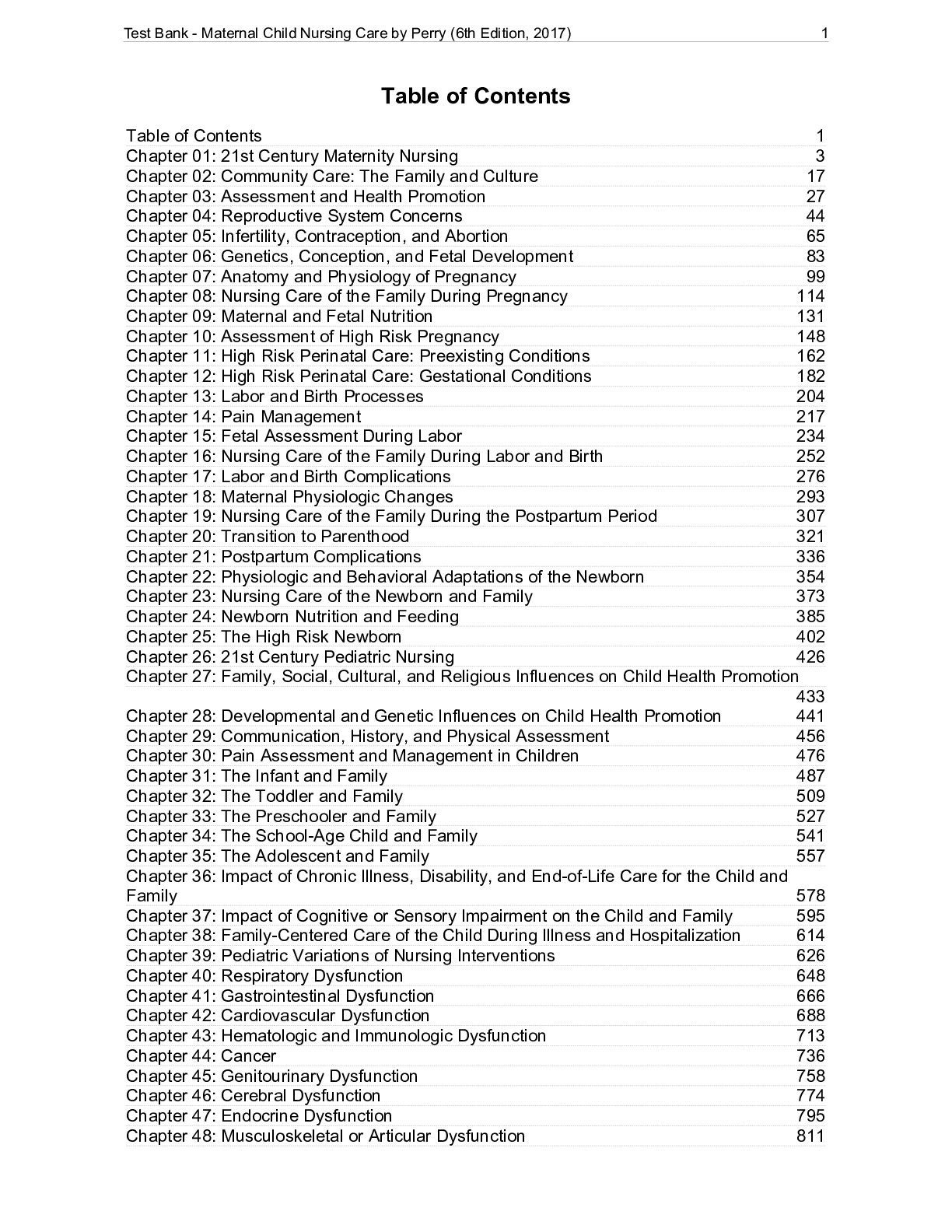
$11.5
837 Pages
Test Bank - Maternal Child Nursing Care by Perry (6th Edition)

$15.5
838 Pages
Maternal Child Nursing Care by Perry Test Bank (6th Edition,20...
$25
6 Pages
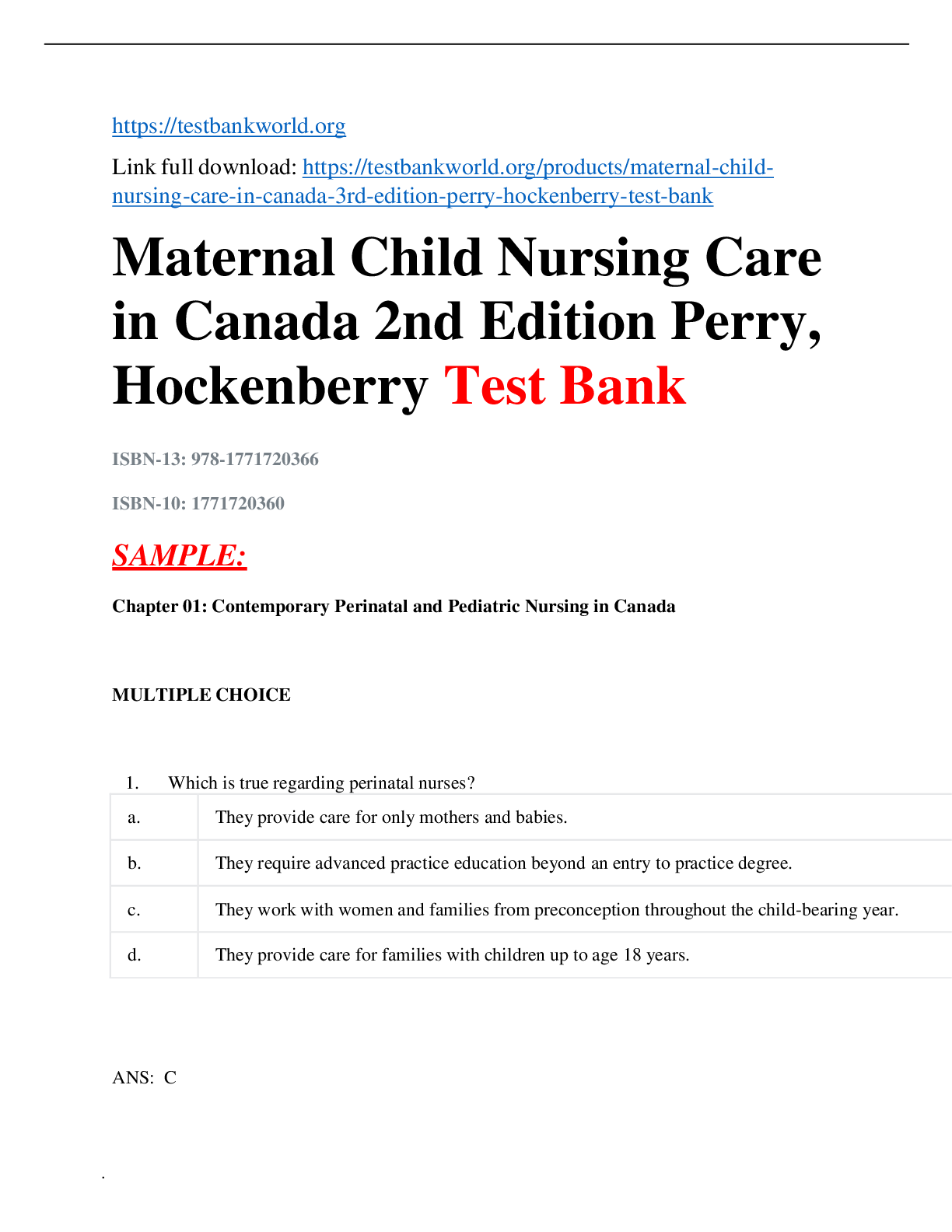
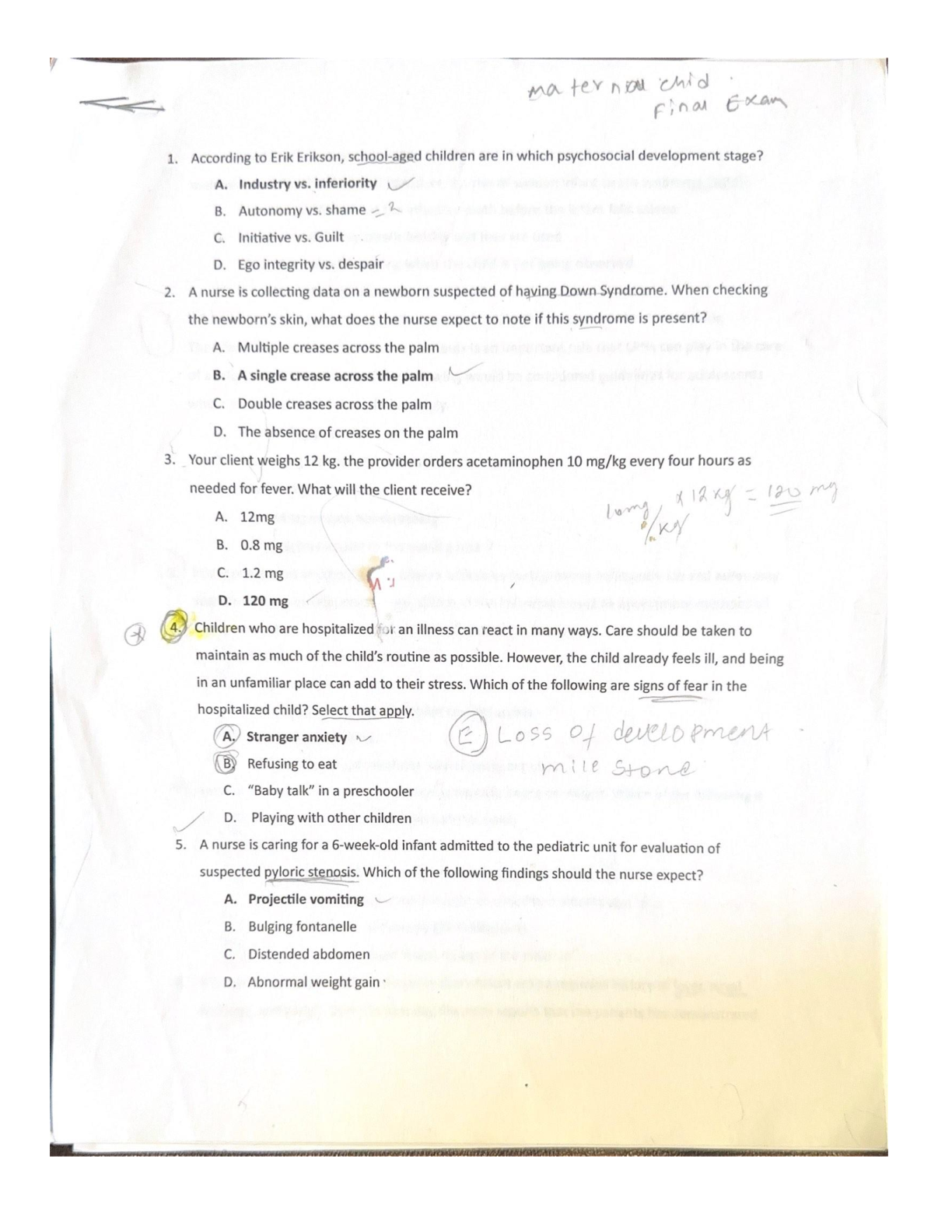
Maternal Child Nursing Care in Canada 2nd Edition Perry, Hocke...


$12
12 Pages
NUR 2513 / NUR2513 Final Exam (Latest Update): Maternal Child...

$12
43 Pages
NUR 2513 / NUR2513 Maternal Child Nursing Exam 2 Updated: - Ra...
$8.5
55 Pages
NR 331 Maternal Child Nursing Care- Chapter 13-16 Uncomplicate...
$8.5
18 Pages
NR 331 Maternal Child Nursing Care Chapter 13 Labor and Birth...
$25
521 Pages
Maternal Child Nursing Care in Canada, 1e Shannon Perry, Maril...
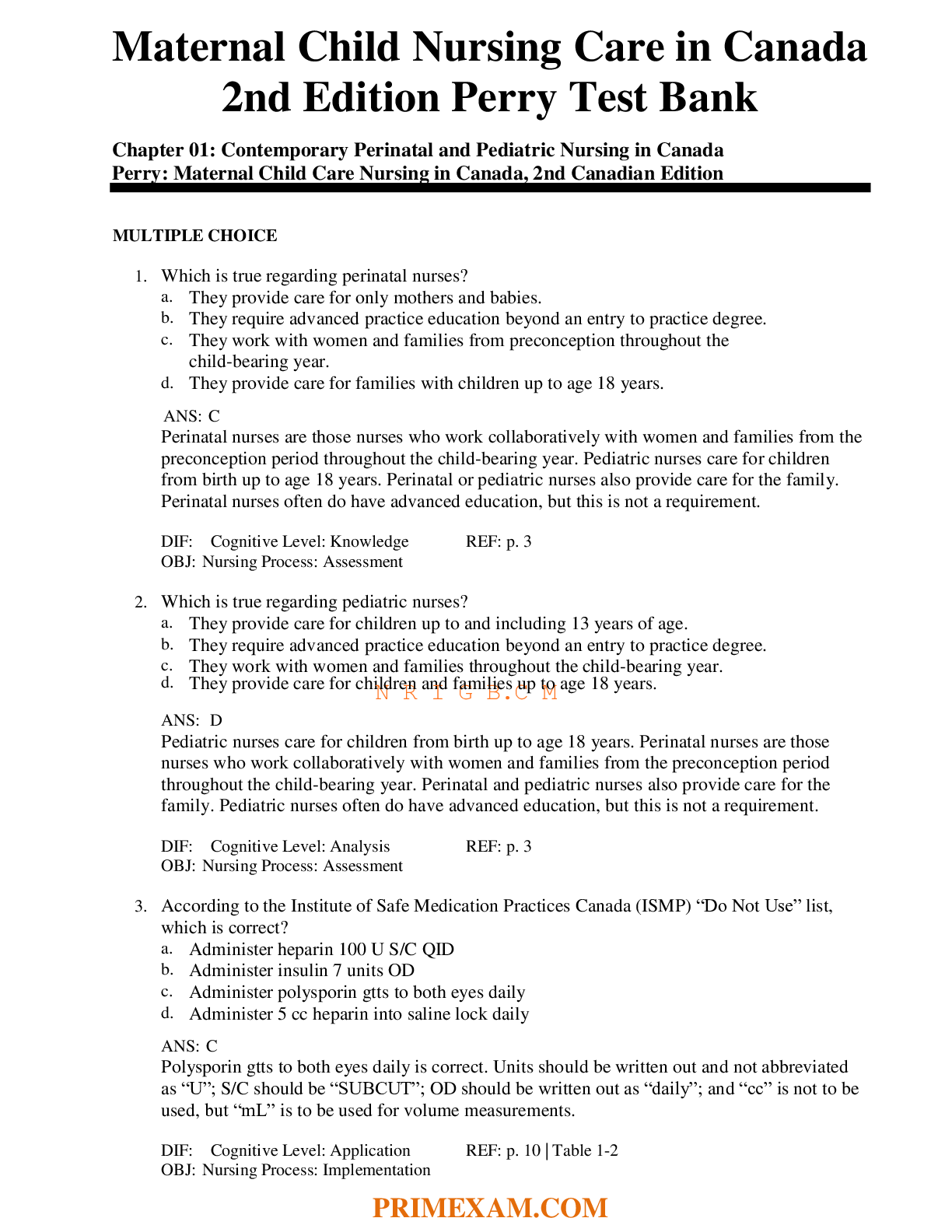
$12.5
521 Pages
Maternal Child Nursing Care in Canada 2nd Edition Perry Test B...
$17
838 Pages
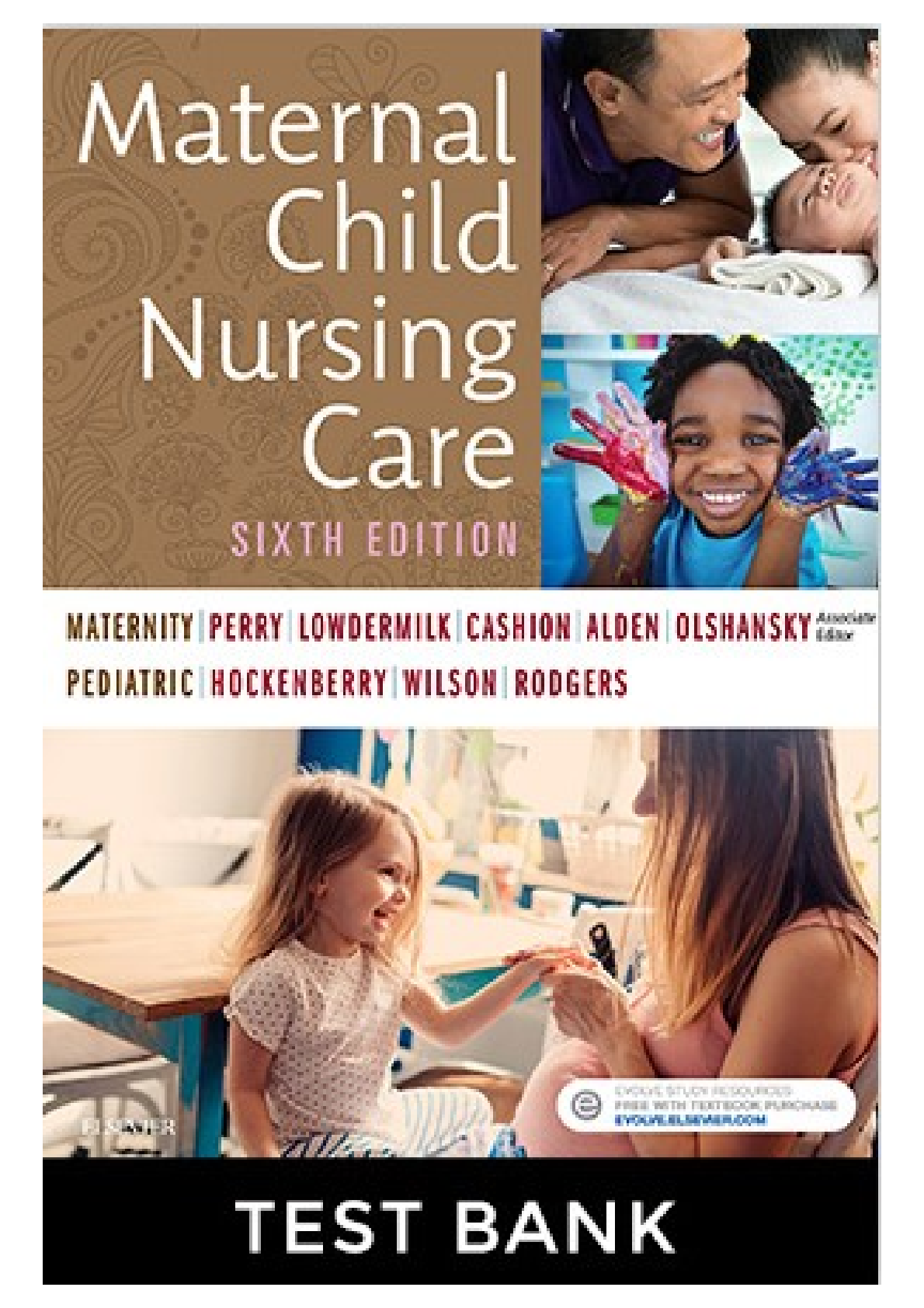
TEST BANK FOR MATERNAL CHILD NURSING CARE 6TH EDITION BY PERRY
![Preview of [eBook] [PDF] Clinical Nursing Calculations 3rd Edition By Susan Sienkiewicz, Sandra Meg](https://browseimages.nyc3.digitaloceanspaces.com/paper-images/2025/Jul/04/4jF14r9I2025-07-04-05-586867ec3011731.png)
$25
1116 Pages
[eBook] [PDF] Clinical Nursing Calculations 3rd Edition By S...


More related documents below


 Complete solutions.png)
 NURS 3247Pharmacology - Proctored Assessment,.png)