Historical Essay 2.docx
Document Content and Description Below
he war to end all wars often referred to as the Great War, was the most important event of
the twentieth century. The World War I marked the commencement of the kind of conflict in
the twentieth century, in that, the
...
[Show More]
Last updated: 3 years ago
Preview 1 out of 6 pages
Instant download
.png)
Buy this Document to get the Full Access Instantly
Provided by Students Who Aced it
We Verify Document Content to Gurantee Accuracy
Reviews( 0 )
Document information
Connected school, study & course
About the document
Uploaded On
Aug 21, 2021
Number of pages
6
Written in
All

Additional information
This document has been written for:
Uploaded
Aug 21, 2021
Downloads
0
Views
169
Topic Tags
Recommended For You
Get more on ESSAY »
$25
486 Pages
America A Narrative History 9e Brown Tindall Emory Shi (Test B...

$20
833 Pages
A People and a Nation A History of the United States 10th Edit...
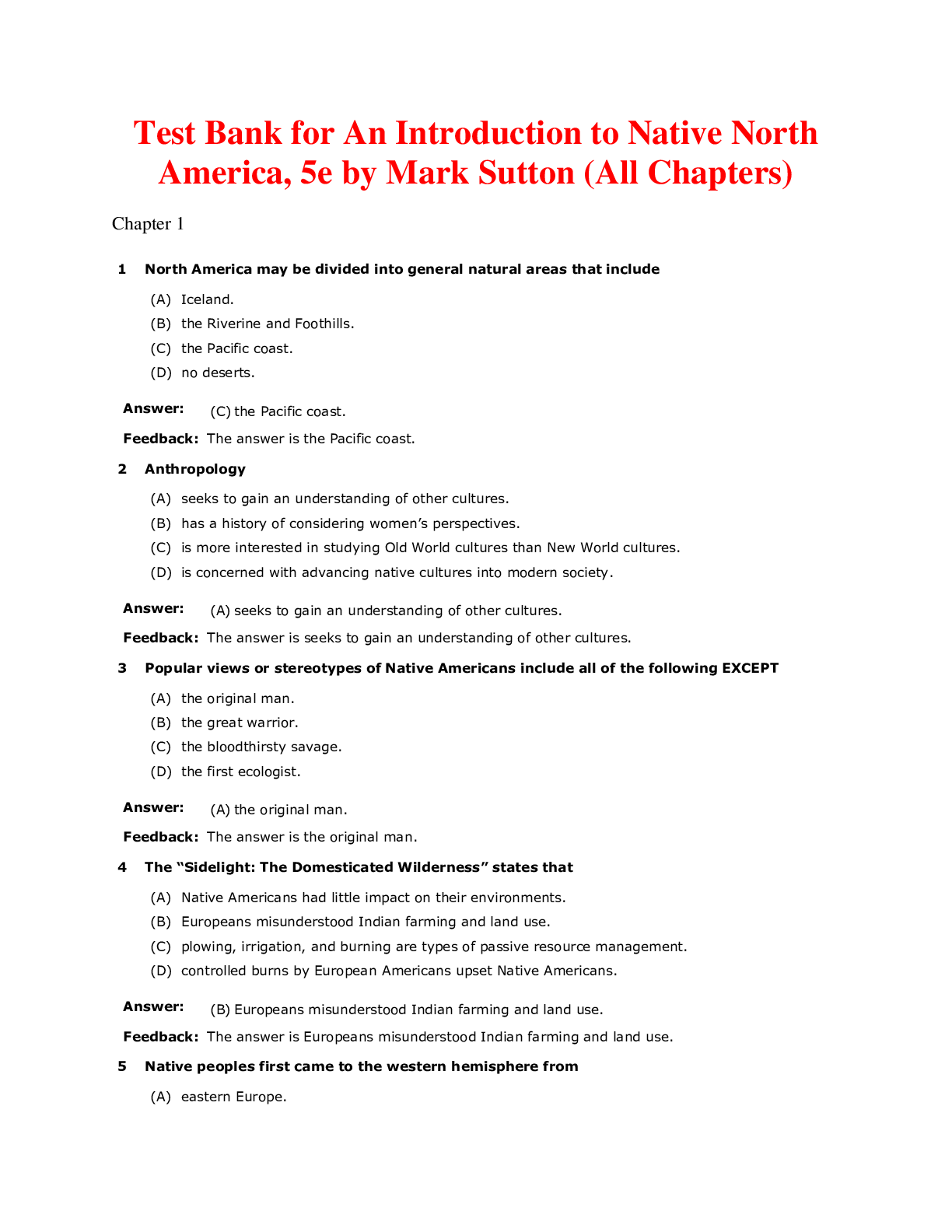
$20
65 Pages
An Introduction to Native North America 5th Edition By Mark Su...

$25
105 Pages
Ancient Lives An Introduction to Archaeology and Prehistory 7t...
$19
31 Pages
Test Bank for A House Divided The Civil War and Nineteenth-Cen...

More related documents below

