A client who has been diagnosed with gastroesophageal reflux disease (GERD) complains of heartburn.
To decrease the heartburn, the nurse should instruct the client to eliminate which of the following items
from the die
...
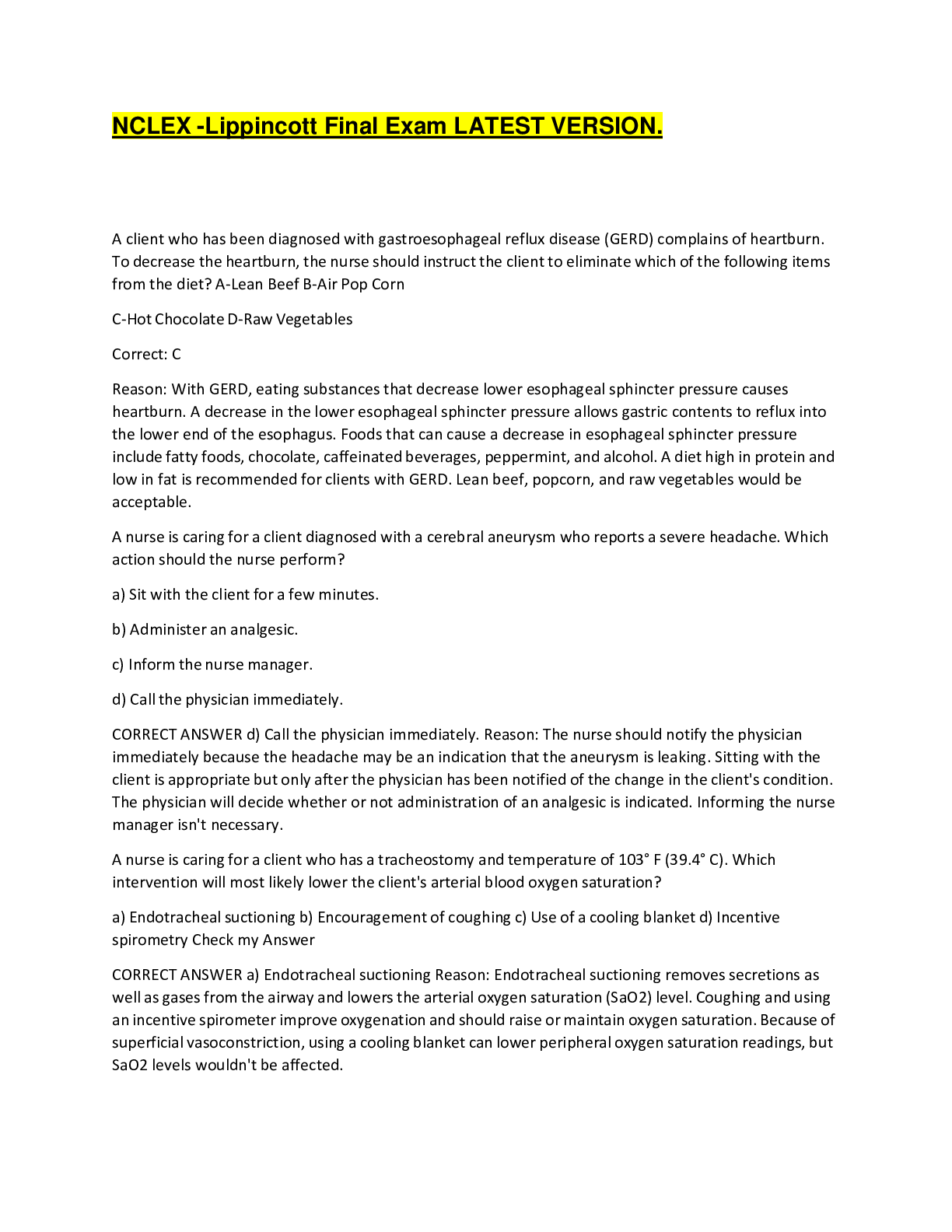
A client who has been diagnosed with gastroesophageal reflux disease (GERD) complains of heartburn.
To decrease the heartburn, the nurse should instruct the client to eliminate which of the following items
from the diet? A-Lean Beef B-Air Pop Corn
C-Hot Chocolate D-Raw Vegetables
Correct: C
Reason: With GERD, eating substances that decrease lower esophageal sphincter pressure causes
heartburn. A decrease in the lower esophageal sphincter pressure allows gastric contents to reflux into
the lower end of the esophagus. Foods that can cause a decrease in esophageal sphincter pressure
include fatty foods, chocolate, caffeinated beverages, peppermint, and alcohol. A diet high in protein and
low in fat is recommended for clients with GERD. Lean beef, popcorn, and raw vegetables would be
acceptable.
A nurse is caring for a client diagnosed with a cerebral aneurysm who reports a severe headache. Which
action should the nurse perform?
a) Sit with the client for a few minutes.
b) Administer an analgesic.
c) Inform the nurse manager.
d) Call the physician immediately.
CORRECT ANSWER d) Call the physician immediately. Reason: The nurse should notify the physician
immediately because the headache may be an indication that the aneurysm is leaking. Sitting with the
client is appropriate but only after the physician has been notified of the change in the client's condition.
The physician will decide whether or not administration of an analgesic is indicated. Informing the nurse
manager isn't necessary.
A nurse is caring for a client who has a tracheostomy and temperature of 103° F (39.4° C). Which
intervention will most likely lower the client's arterial blood oxygen saturation?
a) Endotracheal suctioning b) Encouragement of coughing c) Use of a cooling blanket d) Incentive
spirometry Check my Answer
CORRECT ANSWER a) Endotracheal suctioning Reason: Endotracheal suctioning removes secretions as
well as gases from the airway and lowers the arterial oxygen saturation (SaO2) level. Coughing and using
an incentive spirometer improve oxygenation and should raise or maintain oxygen saturation. Because of
superficial vasoconstriction, using a cooling blanket can lower peripheral oxygen saturation readings, but
SaO2 levels wouldn't be affected.
[Show More]