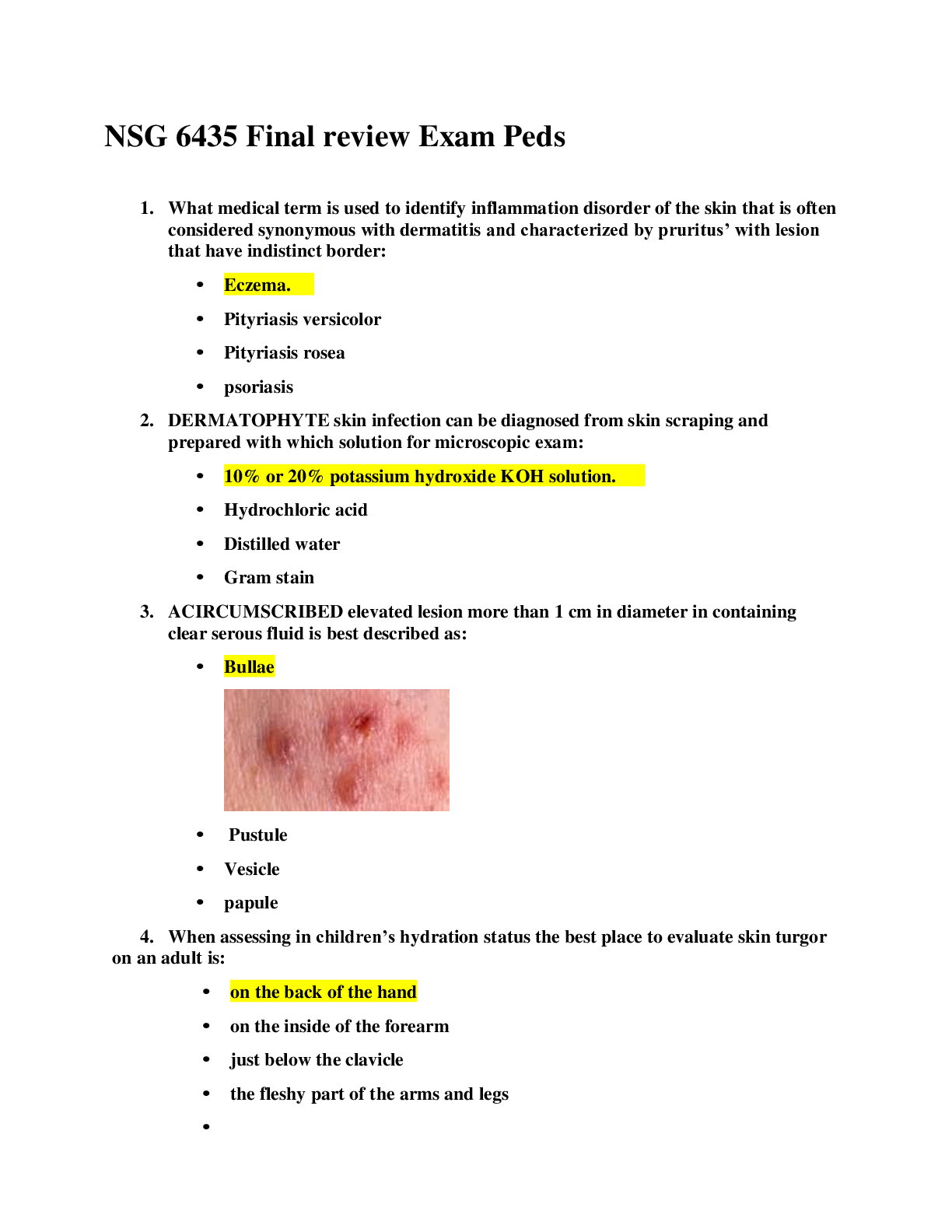
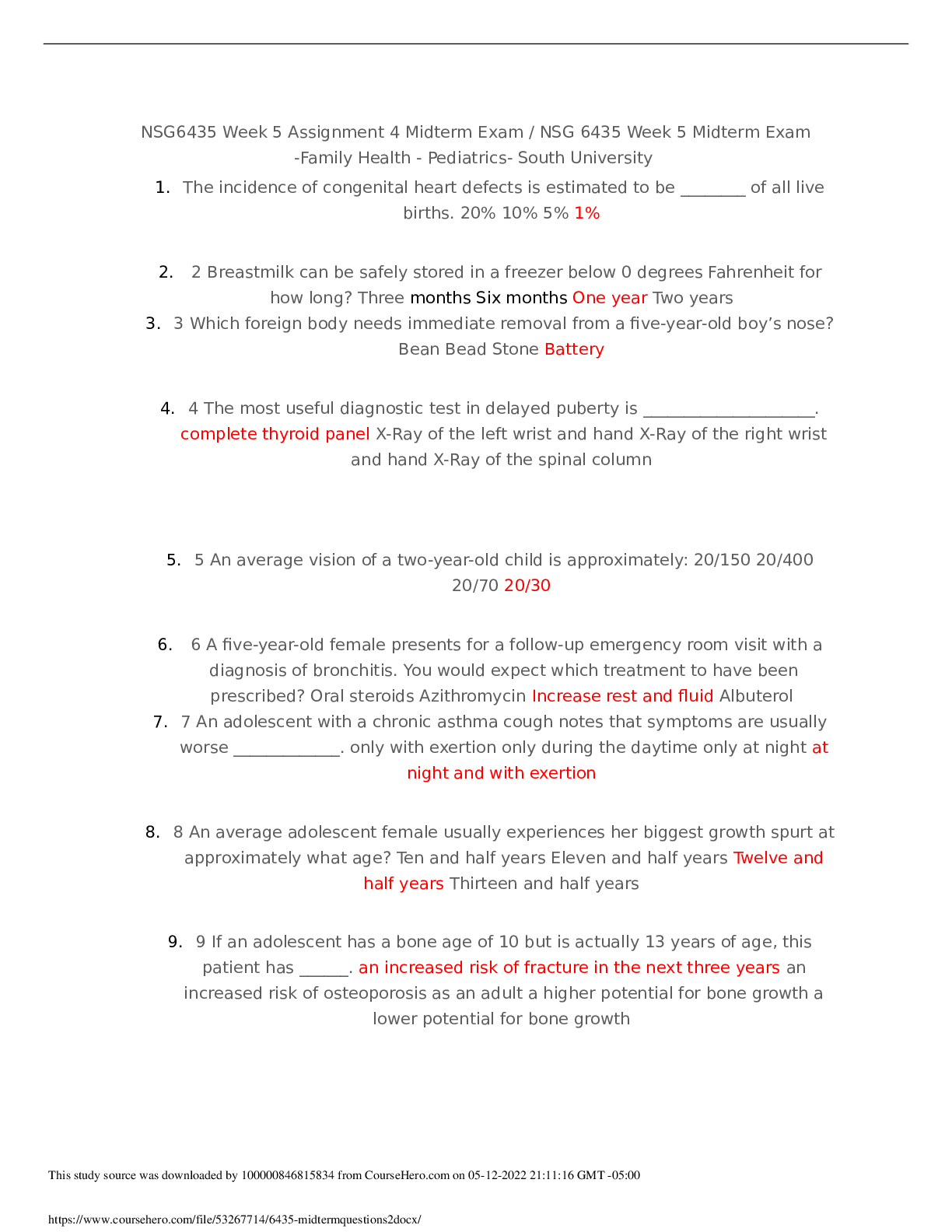
NURSING > QUESTIONS & ANSWERS > Chapter 38: Care of Patients with Vascular Problems Test Bank (All)
Chapter 38: Care of Patients with Vascular Problems Test Bank
Document Content and Description Below
Last updated: 3 years ago
Preview 1 out of 15 pages
Instant download
.png)
Buy this Document to get the Full Access Instantly
Provided by Students Who Aced it
We Verify Document Content to Gurantee Accuracy
Reviews( 0 )
Document information
Connected school, study & course
About the document
Uploaded On
Aug 23, 2021
Number of pages
15
Written in
All

Additional information
This document has been written for:
Uploaded
Aug 23, 2021
Downloads
0
Views
82
Topic Tags
Recommended For You
Get more on QUESTIONS & ANSWERS »
ATI Chapter 38 Assessment of Gastrointestinal System, Lewis Me...
 Correct Study Guide, Download to Score A.png)
Florida Atlantic University - NUR MISC, Chapter 38 Vascular Di...
ALL GI BANKS EXAM 1 MS2_ Chamberlain College of Nursing_Nursin...

Sophia Milestone Adult Nursing (NUR 105) Med Surg test Latest...

Chapter 38: Providing Wound Care and Treating Pressure Ulcers...

ALL GI BANKS EXAM1 MS2_ Chamberlain College of Nursing_Nursing...

Primary Care Art and Science of Advanced Practice Nursing - Te...
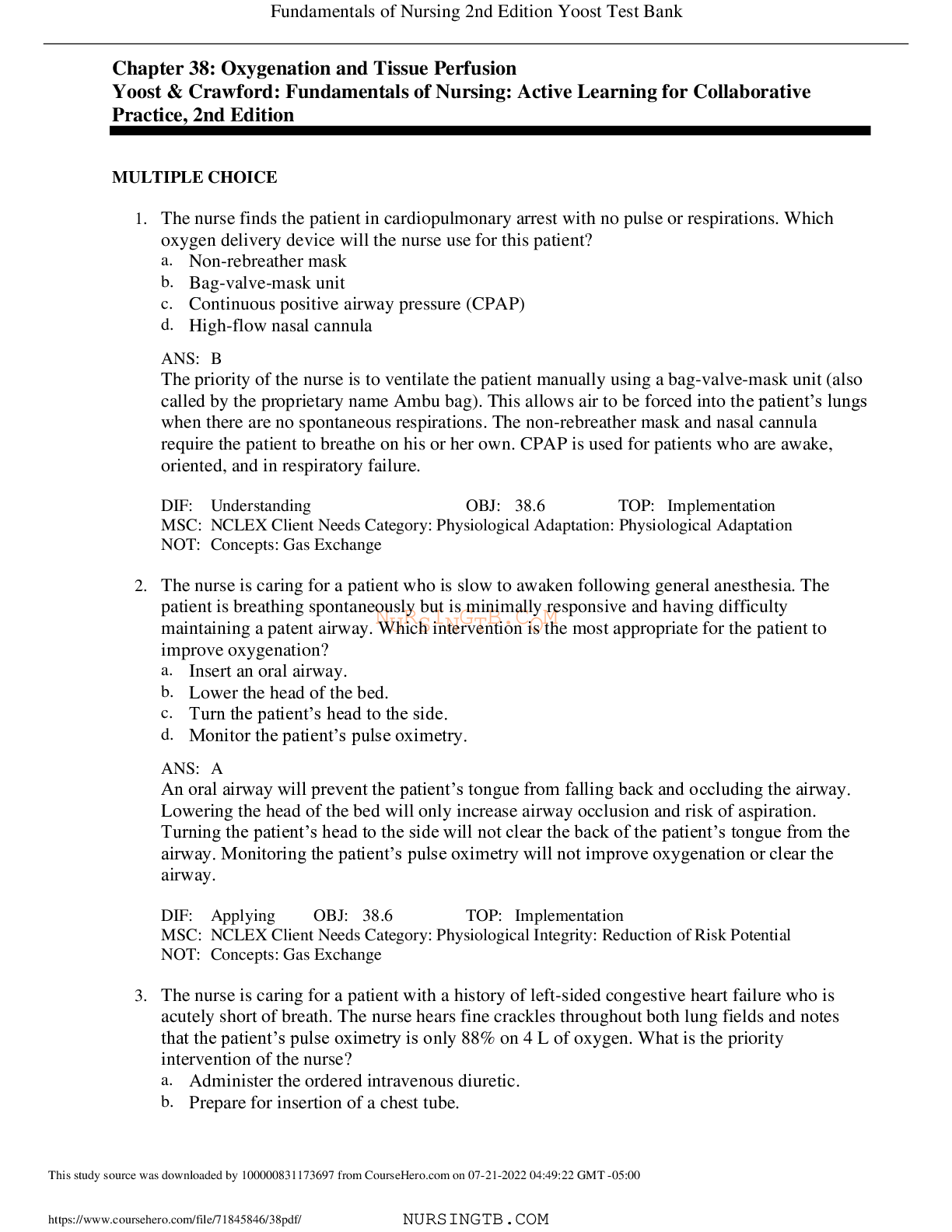
Chapter 38:Care of Patients with Vascular Problems Test Bank,1...
.png)
Milestone Chapter 38 Care of Patients with Acute Coronary Synd...

CHAPTER 38 - 44: Test Bank Maternity and Pediatric Nursing 3rd...
Florida Atlantic University - NUR MISC, Chapter 38 Vascular Di...
, Latest Questions and Answers with Explanations.png)
Case Study Ignatavicius Medical-Surgical Nursing, 8th Edition...
.png)
NR 566 Exam Preparation: Week 6 Chapter 38: Hormone Replacemen...

NURSING MISC CHAPTER 38 Prep U (GRADED A) Questions and Answer...


NR566 / NR 566: Advanced Pharmacology for Care of the Family W...

NR511 / NR 511: Differential Diagnosis & Primary Care Practicu...

NR511 / NR 511: Differential Diagnosis & Primary Care Practicu...