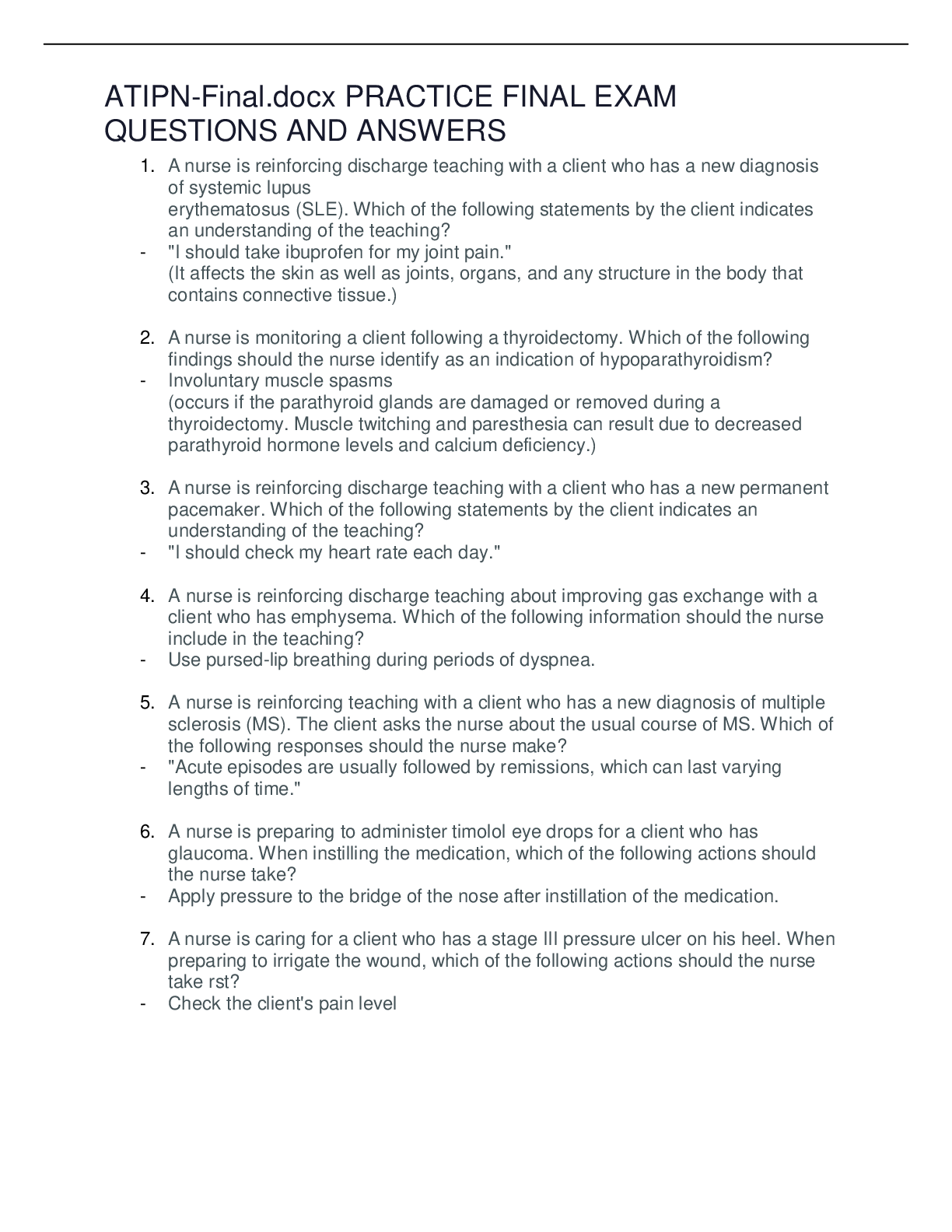
ATIPN-Final.docx PRACTICE FINAL EXAM QUESTIONS AND ANSWERS
1. A nurse is reinforcing discharge teaching with a client who has a new diagnosis of systemic lupus
erythematosus (SLE). Which of the following statements by
...
ATIPN-Final.docx PRACTICE FINAL EXAM QUESTIONS AND ANSWERS
1. A nurse is reinforcing discharge teaching with a client who has a new diagnosis of systemic lupus
erythematosus (SLE). Which of the following statements by the client indicates an understanding of the teaching?
2. A nurse is monitoring a client following a thyroidectomy. Which of the following findings should the nurse identify as an indication of hypoparathyroidism?
3. A nurse is reinforcing discharge teaching with a client who has a new permanent pacemaker. Which of the following statements by the client indicates an understanding of the teaching?
4. A nurse is reinforcing discharge teaching about improving gas exchange with a client who has emphysema. Which of the following information should the nurse include in the teaching?
5. A nurse is reinforcing teaching with a client who has a new diagnosis of multiple sclerosis (MS). The client asks the nurse about the usual course of MS. Which of the following responses should the nurse make?
6. A nurse is preparing to administer timolol eye drops for a client who has glaucoma. When instilling the medication, which of the following actions should the nurse take?
7. A nurse is caring for a client who has a stage III pressure ulcer on his heel. When preparing to irrigate the wound, which of the following actions should the nurse take rst?
8. A nurse is caring for a client who begins having a tonic-clonic seizure while sitting in a chair at the bedside. Which of the following actions should the nurse take first?
9. A nurse is caring for a client who has type 1 diabetes mellitus and a capillary blood glucose reading of 48 mg/dL. Which of the following findings should the nurse expect?
10. A nurse is reinforcing teaching with a client who is scheduled for a sigmoid colon resection with colostomy. Which of the following statements by the client indicates a need for further teaching?
11. A nurse is reviewing a client's laboratory report. The client's ABG levels are pH 7.5, PaCO 32 mm HG, and HCO 24 mEq/L. The nurse should determine that the client has which of the following acid-base imbalances?
12. A nurse in an urgent care clinic is collecting data from a client who sustained a fall. Which of the following findings should the nurse identify as an indication of a skull fracture?
13. A nurse is reinforcing teaching with a client about preventing the transmission of hepatitis A. The nurse should identify that hepatitis A is transmitted by which of the following routes?
14. A nurse is reinforcing teaching with a client who has tuberculosis (TB) and a prescription for isoniazid. Which of the following instructions should the nurse include?
15. A nurse is collecting data from a client who develops a fruity breath odor, dry mouth, and extreme thirst. Which of the following additional data should the nurse collect?
16. A nurse is contributing to the plan of care for a client who is 72 hr postoperative following an above-the-knee amputation. Which of the following actions should the nurse recommend?
17. A nurse is assisting with the care of a client who has a chest tube in place following a thoracotomy. Which of the following actions should the nurse take?
18. A nurse is contributing to the plan of care for a client who has thrombocytopenia due to chemotherapy. Which of the following interventions should the nurse include?
19. A nurse is reinforcing teaching about a low-cholesterol diet with a client who had a myocardial infarction. Which of the following meal selections by the client indicates an understanding of the teaching?
20. A nurse is caring for a client who is to have his chest tube removed. Which of the following actions should the nurse take?
21. A nurse is reinforcing teaching with a client about how to perform a breast self exam (BSE). The nurse should identify which of the following findings as an indication of breast cancer?
22. A nurse in an urgent care clinic is collecting data from a client who has extensive burns, including on her face. Which of the following data should the nurse collect first?
23. A nurse is contributing to the plan of care for a client during a sickle cell crisis. Which of the following interventions should the nurse recommend?
24. A nurse is working with an assistive personnel (AP) who is assigned to bathe a client who has herpes zoster. The AP asks the nurse if herpes zoster is contagious. Which of the following responses should the nurse make?
25. A nurse is caring for a client who is scheduled to receive intermittent peritoneal dialysis. Which of the following actions should the nurse take?
26. A nurse in a provider's office is caring for a client who has blepharitis. Which of the following actions should the nurse take first?
27. A nurse is obtaining a weekly weight for a client who has obesity and osteoarthritis and is on a weight management program. The nurse determines that the client gained 1.36 kg (3 lb) in the past week. Which of the following statements should the nurse make?
28. A home health nurse enters a client's home and finds a used insulin syringe, without a cap, on the table. Which of the following actions should the nurse take?
29. A nurse is collecting data from a client who has asthma and reports several food allergies. Which of the following actions should the nurse take first?
30. A community health nurse is reinforcing teaching about melanoma with a group of clients. Which of the following characteristics of lesions associated with melanoma should the nurse include in the teaching?
31. A nurse is preparing to care for a group of clients after receiving change-of-shift report. From which of the following clients should the nurse collect data first?
32. A nurse is caring for a male client who is undergoing screening tests for atherosclerosis. Which of the following laboratory findings should the nurse identify as an increased risk for this disorder?
33. A nurse is caring for a client who has continuous bladder irrigation following a transurethral resection of the prostate (TURP). Which of the following actions should the nurse take?
34. A nurse is caring for a client who has thrombocytopenia and develops epistaxis. Which of the following actions should the nurse take?
35. A nurse is contributing to the plan of care for a client who has cancer and is scheduled to receive internal radiation therapy. Which of the following actions should the nurse recommend?
36. A nurse is reinforcing teaching with a client who has gout and urolithiasis. The client asks how to prevent future uric acid stones. Which of the following suggestions should the nurse make?
(Select all that apply.)
37. A nurse is collecting data from a client who has encephalitis due to West Nile virus. Which of the following findings should the nurse expect?
(Select all that apply.)
38. A nurse is caring for a client who is receiving continuous enteral feedings. Which of the following actions should the nurse take?
39. A nurse is assisting with the care of a client who is to receive a transfusion of packed red blood cells (RBCs). Which of the following actions should the nurse take? (Select all that apply.)
40. A nurse is preparing to change the bed linens of a client who has AIDS and is incontinent of stool. Which of the following personal protective equipment (PPE) should the nurse don prior to providing client care? (Select all that apply.)
41. A nurse is contributing to the plan of care for a client who had a stroke. The client has hemiplegia and occasional urinary incontinence. Which of the following interventions should the nurse recommend?
42. A nurse is reinforcing teaching with a client who has stomatitis due to chemotherapy. Which of the following statements by the client indicates a need for further instructions?
43. A nurse is reinforcing teaching with a client who has tuberculosis and a prescription for rifampin. The nurse should identify which of the following findings as a harmless and expected adverse effect of rifampin?
44. A nurse is collecting data from a client who has a fractured left femur and is in skeletal traction. Which of the following findings should the nurse identify as an indication of fat emboli to report to the provider?
45. A nurse is reinforcing dietary teaching with a client who has diabetes mellitus. Which of the following actions should the nurse take first?
46. A nurse is reinforcing discharge teaching with a client who has AIDS. Which of the following statements should the nurse include?
47. A nurse is contributing to the plan of care for a client who has thrombophlebitis. Which of the following actions should the nurse recommend for the plan of care?
48. A nurse is caring for a client following a hip arthroplasty. The nurse should place an abduction pillow on the client for which of the following purposes?
49. A nurse is reinforcing teaching with a client who has a history of tonic-clonic seizures and is scheduled for a standard electroencephalogram (EEG). Which of the following instructions should the nurse include in the teaching?
50. A nurse is reinforcing discharge teaching with a client who has infective endocarditis about how to prevent recurrence. Which of the following statements by the client indicates an understanding of the teaching?
[Show More]





 answers.png)


