NURSING > MEDICAL STUDY RESOURCES > NU 308 WK 5 - Oxygenation (All)
NU 308 WK 5 - Oxygenation
Document Content and Description Below
Last updated: 3 years ago
Preview 1 out of 28 pages
Instant download

Buy this Document to get the Full Access Instantly
Provided by Students Who Aced it
We Verify Document Content to Gurantee Accuracy
Reviews( 0 )
Document information
Connected school, study & course
About the document
Uploaded On
Aug 25, 2021
Number of pages
28
Written in
All

Additional information
This document has been written for:
Uploaded
Aug 25, 2021
Downloads
0
Views
147
Topic Tags
Recommended For You
Get more on MEDICAL STUDY RESOURCES »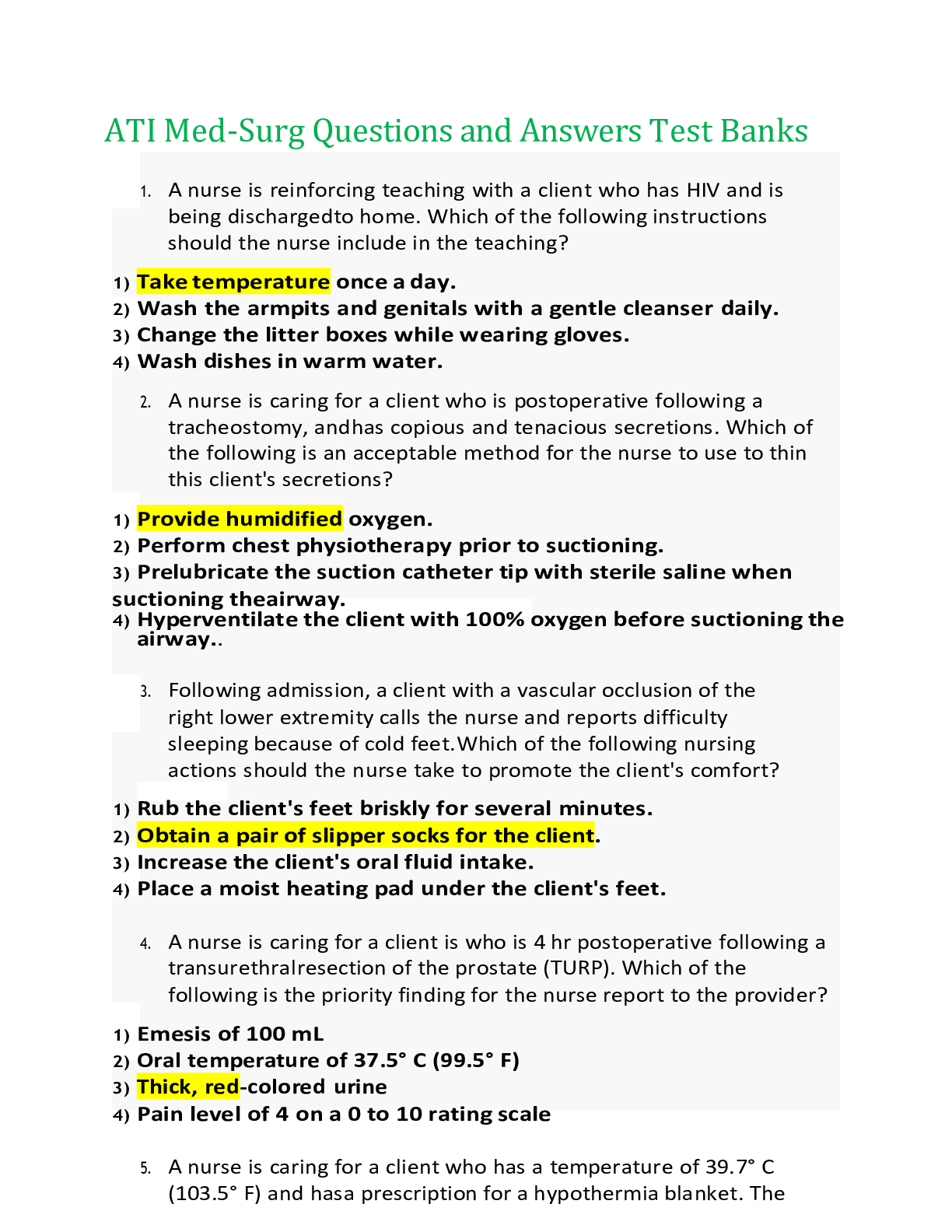
ATI Med-Surg Test Bank<NURSING LP N 100>134 Questions WITH ANS...
 Adult Medical Surgical.png)
(PN Medical-Surgical) Adult Medical Surgical Test Bank_ Answer...
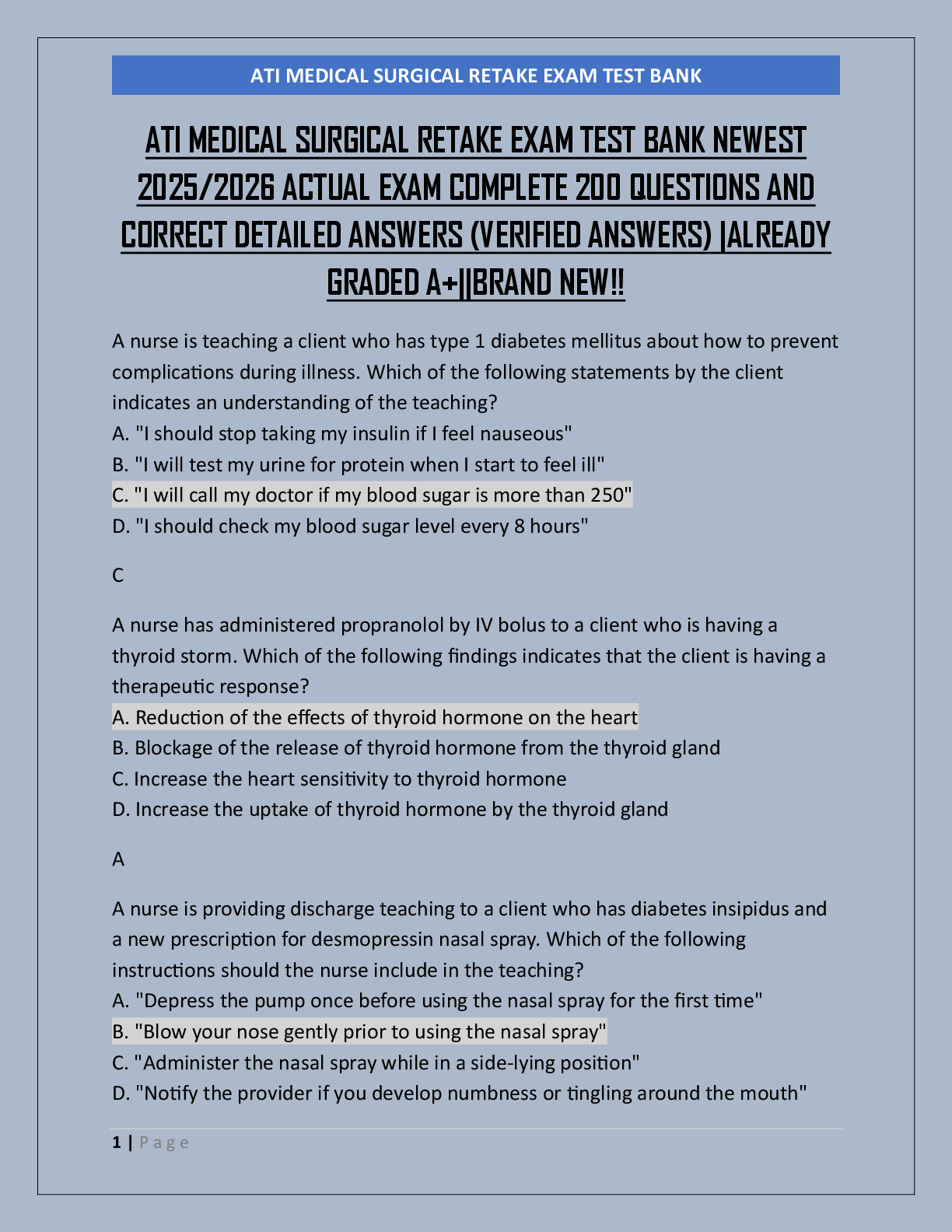
ATI MEDICAL SURGICAL RETAKE EXAM TEST BANK NEWEST 2025/2026 A...

![Preview of ATI MED SURG 2 EXAM | MED SURG 2 ACTUAL EXAM QUESTIONS AND ANSWERS [RATED A 2024 UPDATED]](https://scholarfriends.com/storage/88QwpFN32024-07-16-11-176696d571c0d42.png)
ATI MED SURG 2 EXAM | MED SURG 2 ACTUAL EXAM QUESTIONS AND ANS...
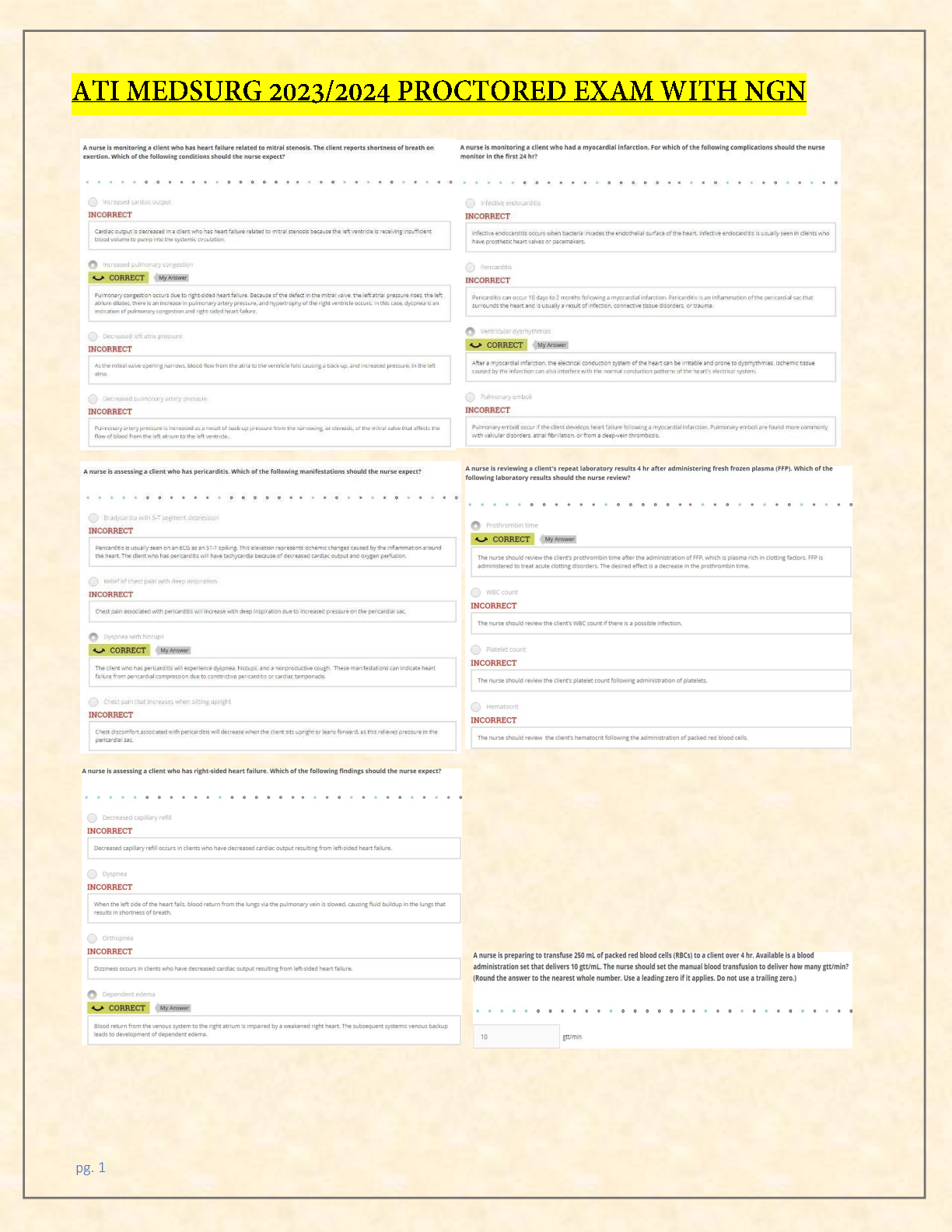

ATI MED-SURG PART A EXAM (Questions and Answers) LATEST 2020 |...
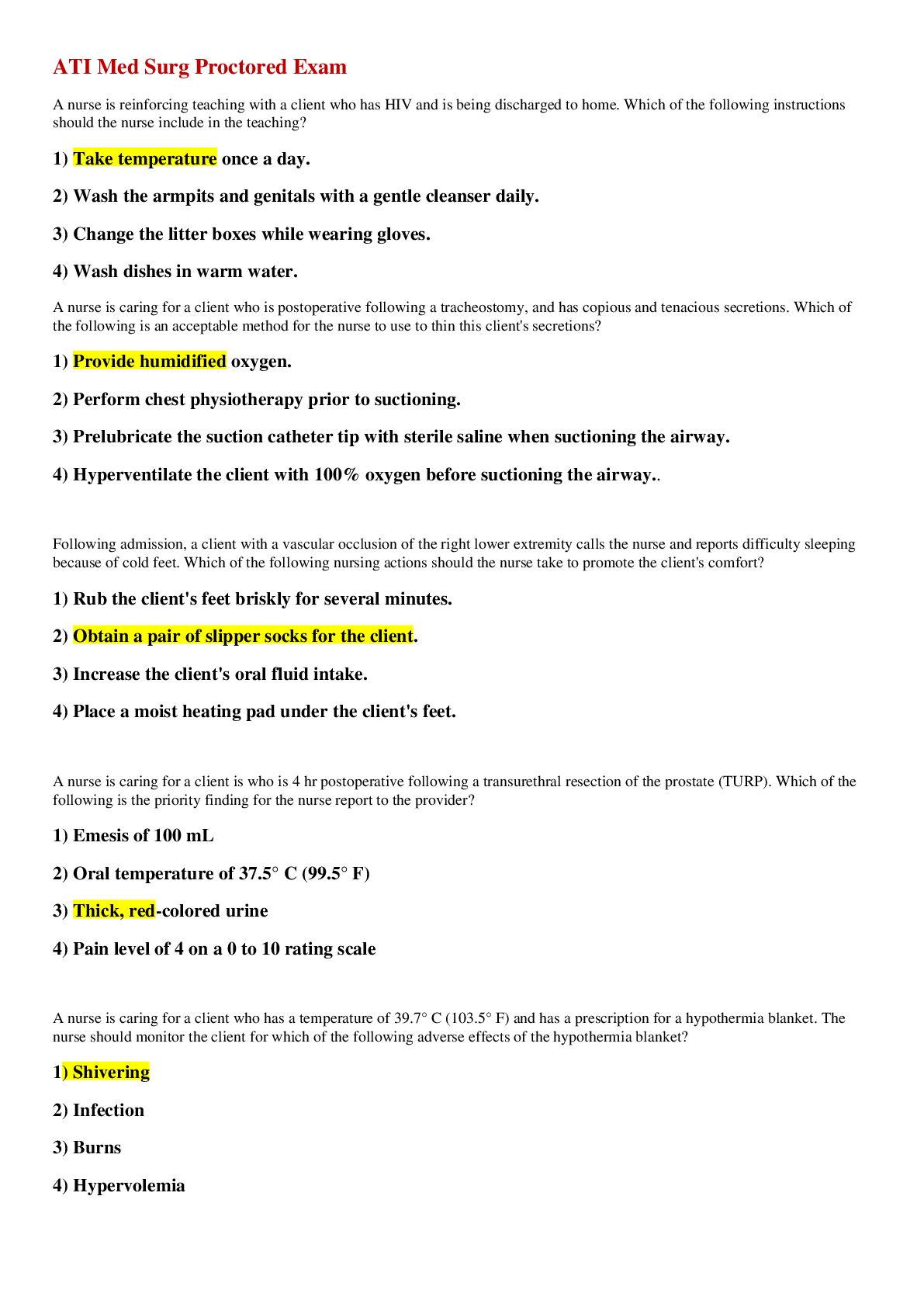
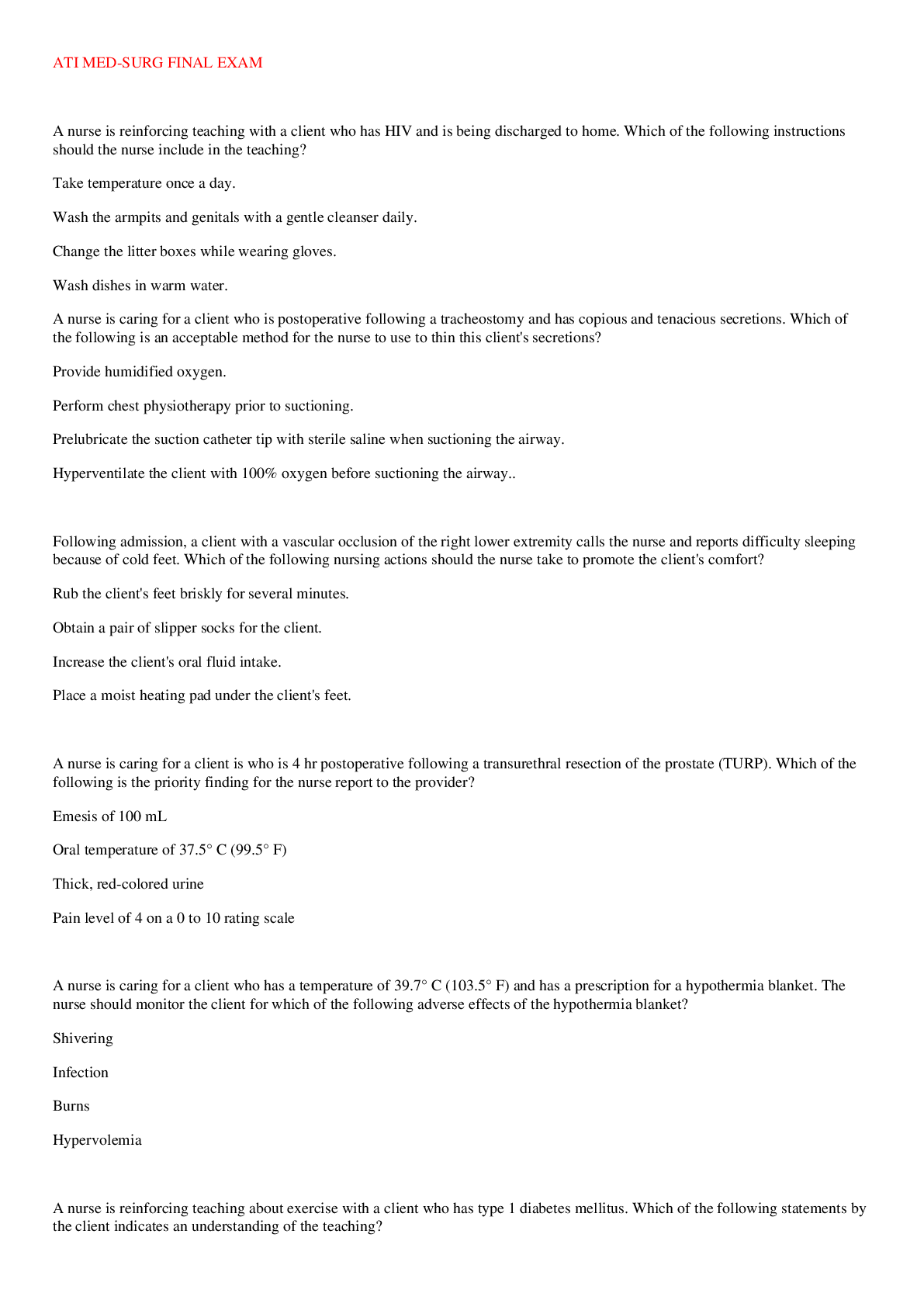
ATI Med-Surg proctored Exam LATEST UPDATED QUESTIONS AND ANSWE...
![Preview of [eBook] [PDF] Clinical Nursing Calculations 3rd Edition By Susan Sienkiewicz, Sandra Meg](https://browseimages.nyc3.digitaloceanspaces.com/paper-images/2025/Jul/04/4jF14r9I2025-07-04-05-586867ec3011731.png)
[eBook] [PDF] Clinical Nursing Calculations 3rd Edition By S...
ATI RN Medical-Surgical 2026 (NGN) Study Guide: Comprehensive...