History > QUESTIONS & ANSWERS > Sophia ANCIENT GR 301, Philosophers Practice Milestone 1, Questions with Complete Answers (All)
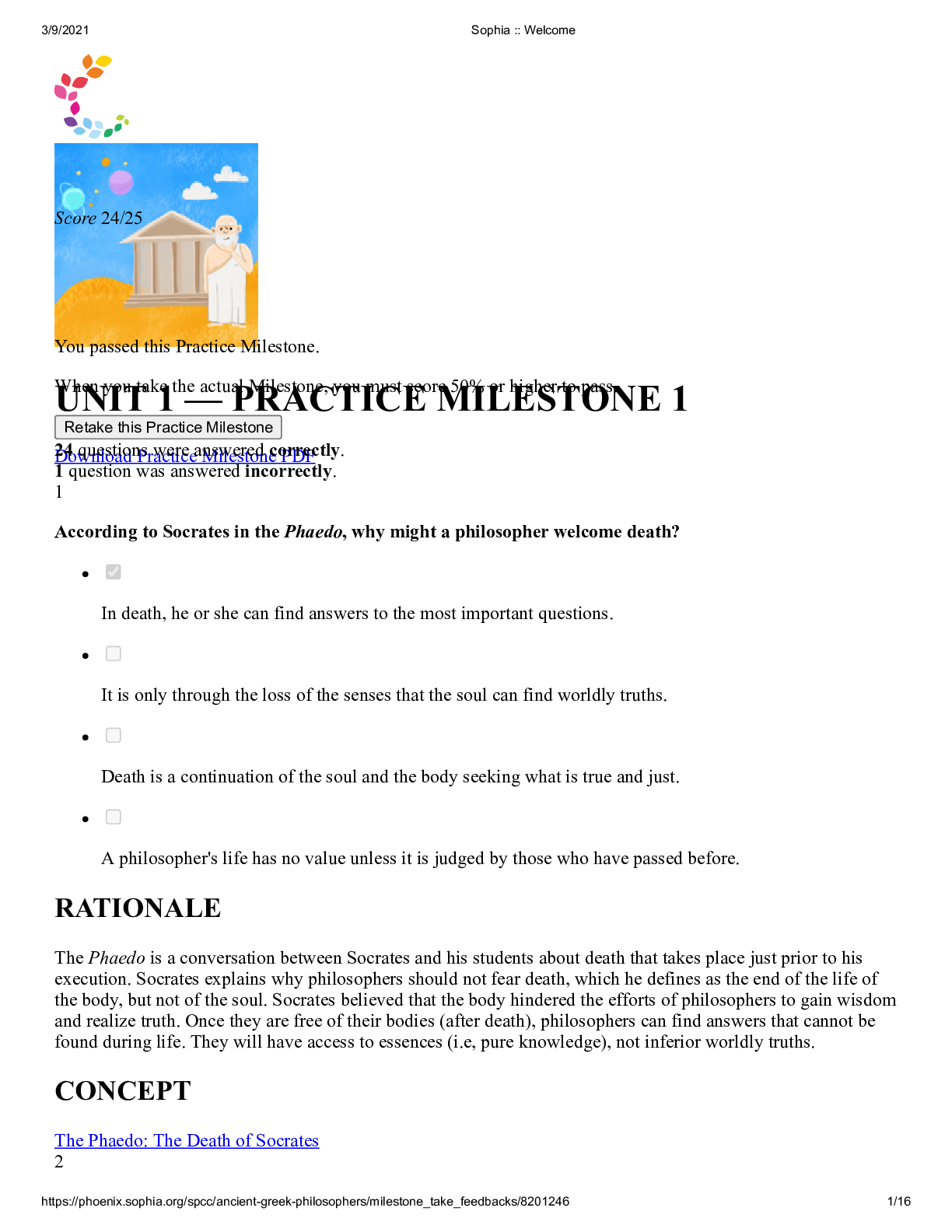
Sophia ANCIENT GR 301, Philosophers Practice Milestone 1, Questions with Complete Answers
Document Content and Description Below
Last updated: 4 years ago
Preview 1 out of 16 pages
Instant download
Buy this Document to get the Full Access Instantly
Provided by Students Who Aced it
We Verify Document Content to Gurantee Accuracy
Reviews( 0 )
Document information
Connected school, study & course
About the document
Uploaded On
Aug 30, 2021
Number of pages
16
Written in
All

Additional information
This document has been written for:
Uploaded
Aug 30, 2021
Downloads
0
Views
189
Topic Tags
Recommended For You
Get more on QUESTIONS & ANSWERS »
Sophia ANCIENT GR 301, Philosophers Practice Milestone 1, Ques...

Sophia ANCIENT GR 301 Practice Milestone Answers, Questions wi...
Sophia ANCIENT GR 301, Philosophers Practice Milestone 1, Ques...

Sophia ANCIENT GR 301 Exam Elaborations Practice Milestone Ans...
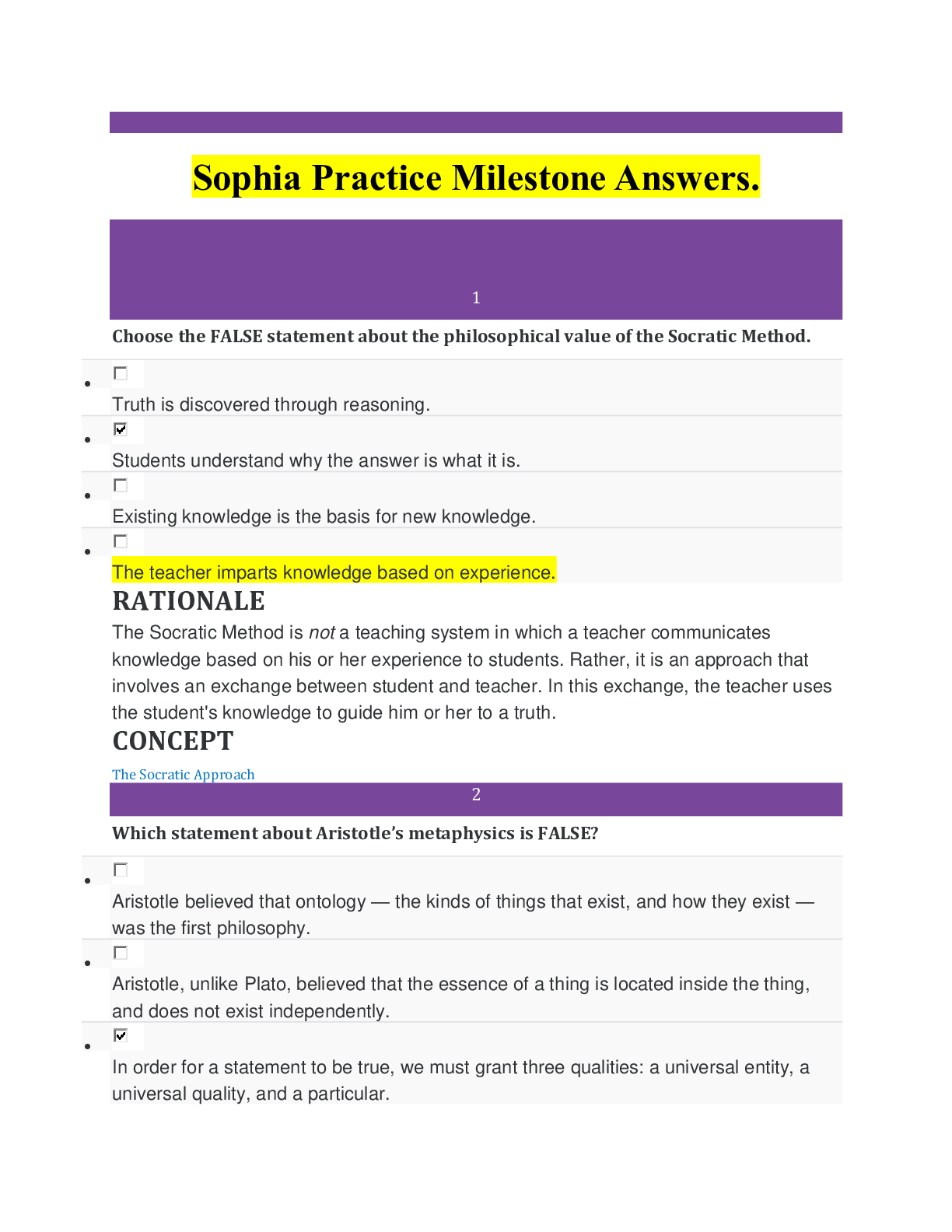
ANCIENT GR 301Practice Milestone 25 Q&A. Answers include ratio...


 3RD EDITION.png)
 FINAL DPT Exam Elaborations Questions with Complete Answers.png)
 Exam Elaborations Questions with Complete Answers.png)
 Exam Elaborations Questions and Answers.png)

 RN ATI Community Health Exam Elaborations Questions & Answers Graded.png)


