A nurse in the emergency department is implementing a plan of care for a conscious client who has a suspected cervical cord injury. Which of the following immediate interventions should the nurse implement? (Select all t
...
A nurse in the emergency department is implementing a plan of care for a conscious client who has a suspected cervical cord injury. Which of the following immediate interventions should the nurse implement? (Select all that apply.)
A. Hypotension
B. Polyuria
C. Hyperthermia
D. Absence of bowel sounds
E. Weakened gag reflex
A nurse is performing discharge teaching for a client who has seizures and a new prescription for phenytoin. Which of the following statements by the client indicates a need for further teaching?
F. "I will notify my doctor before taking any other medications."
Rationale: Many medication interactions can occur with phenytoin; therefore, the client's provider should be notified that the client is taking phenytoin.
G. "I have made an appointment to see my dentist next week."
Rationale: The client understands that phenytoin causes an overgrowth of the gums that makes dental monitoring important.
H. "I know that I cannot switch brands of this medication."
Rationale: The client understands that bioavailability varies with different brands, so no substitutions should be made.
I. "I'll be glad when I can stop taking this medicine."
Rationale: Phenytoin is an anticonvulsant used to treat various types of seizures. Clients on anticonvulsant medications commonly require them for lifetime administration, and phenytoin should not be stopped without the advice of the client's provider.
A nurse at an ophthalmology clinic is providing teaching to a client who has open angle glaucoma and a new
prescription for timolol eye drops. Which of the following instructions should the nurse provide?
J. The medication is to be applied when the client is experiencing eye pain.
Rationale: The client needs to take the medications daily to reduce intraocular pressure and preserve remaining eyesight.
K. The medication will be used until the client's intraocular pressure returns to normal.
Rationale: Treatment for open-angle glaucoma is to continue for life. Abrupt discontinuation can worsen the client's condition.
L. The medication should be applied on a regular schedule for the rest of the client's life.
Rationale: Medications prescribed for open angle glaucoma are intended to enhance aqueous outflow, or decrease its production, or both. The client must continue the eye drops on an uninterrupted basis for life to maintain intraocular pressure at an acceptable level.
M. The medication is to be used for approximately 10 days, followed by a gradual tapering off.
Rationale: Treatment for open-angle glaucoma is to continue for life.
A nurse is in a client's room when the client begins having a tonic-clonic seizure. Which of the following actions should the nurse take first?
N. Turn the client's head to the side.
Rationale: The first action the nurse should take when using the airway, breathing, circulation approach to client care is to turn the client's head to the side. This action keeps the client's airway clear of secretion to prevent aspiration.
O. Check the client's motor strength.
Rationale: The nurse should check the client's motor strength as part of a neurovascular assessment following the seizure; however, there is another action the nurse should take first.
P. Loosen the clothing around the client's waist.
Rationale: The nurse should loosen the clothing around the client's waist to protect the client from injury; however, there is another action the nurse should take first.
Q. Document the time the seizure began.
Rationale: The nurse should document the time the seizure began and ended to provide information to the provider about the severity of the seizure; however, there is another action the nurse should take first.
A nurse is caring for a client following cataract surgery. Which of the following comments from the client should the nurse report to the client's provider?
R. "My eye really itches, but I'm trying not to rub it."
Rationale:
Itching is common after cataract surgery. The nurse should remind the client not to rub or place pressure on the eyes.
S. "I need something for the pain in my eye. I can't stand it."
Rationale: Following cataract surgery, the client should expect only mild pain and should immediately report any pain, decrease in vision, or increase in discharge from the eye. Severe eye pain after surgery might indicate increased intraocular pressure or hemorrhage.
T. "It's hard to see with a patch on one eye. I'm afraid of falling."
Rationale: Clients who wear an eye patch lose their depth perception and part of their peripheral vision, temporarily decreasing visual acuity.
U. "The bright light in this room is really bothering me."
Rationale: The client may find that exposure to bright light is uncomfortable after cataract surgery. Wearing sunglasses can prevent most of the client's discomfort.
2. A nurse is caring for a client who is 1 day postoperative following a transsphenoidal hypophysectomy. While assessing the client, the nurse notes a large area of clear drainage seeping from the nasal packing. Which of the following should be the nurse’s initial action?
A. Document the amount of drainage.
Rationale: The nurse should document the amount of drainage along with the clarity to determine the extent of the cerebral spinal fluid (CSF) leakage and the presence of blood or pus; however there is another action that is priority.
B. Obtain a culture of the drainage.
Rationale: Although infection is a potential complication of the procedure, there is another action that is priority.
C. Check the drainage for glucose.
Rationale: A potential complication of hypophysectomy is cerebral spinal fluid (CSF) leakage. Fluid leakage from the nose is a sign that this complication has occurred. The first action the nurse should take using the nursing process is to assess the drainage for the presence of glucose, which would indicate that the drainage is CSF.
D. Notify the client's provider.
Rationale: Although the provider should be notified of the findings, there is another action that is priority.
3. A nurse is caring for a client who has expressive aphasia following a cerebrovascular accident (CVA). Which of the following parameters should the nurse use first in order to assess the client's pain level?
A. pulse and blood pressure findings
Rationale: The nurse should assess the client's pain level routinely along with vital signs. A pain
assessment should also be completed if the client has a change in condition, such as a new onset of chest pain, or following a procedure which can be uncomfortable for the client, such as x-rays which require the client to lay on a hard surface for extended periods of time. A hierarchical method of pain assessment is recommended when caring for clients who may have difficulty expressing themselves. Although vital signs can be used as a physiologic indicator, monitoring them is an objective method of evaluating pain and may not be a reliable means of assessing pain levels. Evidence-based practice indicates the nurse should use a different parameter first.
B. behavioral indicators and effect
Rationale: A hierarchical method of pain assessment is recommended when caring for clients who may have difficulty expressing themselves. Although behavioral indicators can be used, the nurse should recognize that pain behaviors are unique to each patient. Evidence-based practice indicates the nurse should use a different parameter first.
C. scheduled treatments and client illness
Rationale: A hierarchical method of pain assessment is recommended when caring for clients who may have difficulty expressing themselves. Although treating a client based upon the client’s condition or based upon the client’s scheduled, potentially painful procedure will yield effective results at assessing pain levels, evidence-based practice indicates the nurse should use a different parameter first.
D. a self-report pain rating scale
Rationale: Expressive aphasia results from damage to an area of the frontal lobe and is a motor speech problem. The client who has expressive aphasia is able to understand what is said but is unable to communicate verbally. However, this does not necessarily mean that a client is unable to reliably report pain. Evidence-based practice indicates the nurse should first attempt to obtain the client’s self- report of pain. When assessing a client for pain, the nurse should utilize the hierarchy of pain measures which begins with self-report. It is always better to use a subjective method, such as a client report, instead of an objective method, such as something that is observable by the nurse, which is much less reliable.
4. A nurse is caring for a client who reports a throbbing headache after a lumbar puncture. Which of the following actions is most likely to facilitate resolution of the headache?
A. Administer pain medication.
Rationale: A spinal headache following a lumbar puncture develops due to a leaking of the cerebrospinal fluid (CSF) which depletes the amount of circulating CSF and results in insufficient fluid to maintain the mechanical stability of the brain. While a medication for pain may help control the symptoms, it doesn't facilitate resolution of the headache.
B. Darken the client's room and close the door.
Rationale: The client who has a spinal headache experiences a throbbing headache that worsens with sitting or standing and is the result of a decreased amount of circulating CSF. Darkening the room and closing the door may assist in controlling the pain for the client who has a migraine, but it is not useful in the client who has a spinal headache.
C. Increase fluid intake.
Rationale:
The client who has had a lumbar puncture is at risk for continued leaking of CSF from the puncture site. This results in a decreased amount of circulating CSF. Increasing fluids is helpful in quickly replacing the cerebrospinal fluid that was removed during the procedure and increasing fluids will facilitate resolution of the headache. The client should also be instructed to remain in a prone position for 6 hours to prevent leaking of CSF fluid.
D. Elevate the head of the bed to 30º.
Rationale: The client who has a spinal headache experiences a throbbing headache that worsens with sitting or standing and is the result of a decreased amount of circulating CSF. Resolution of the discomfort will occur by placing the client in a prone position. A client who has increased intracranial pressure would be placed in a position with the head of the bed at 30º.
5. A nurse is teaching a class of older adults about the expected physiologic changes of aging. Which of the following changes should the nurse include in the discussion? (Select all that apply.)
A. More difficulty seeing due to a greater sensitivity to glare
B. Decreased cough reflex
C. Decreased bladder capacity
D. Decreased systolic blood pressure
E. Dehydration of intervertebral discs
Rationale: More difficulty seeing due to a greater sensitivity to glare is correct. Older adults have an increased susceptibility to glare, greater difficulty in seeing at low levels of illumination, and alterations in color perception.
Decreased cough reflex is correct. Older adults have a decreased cough reflex, increased airway resistance, fewer alveoli, and a greater risk for respiratory infections.
Decreased bladder capacity is correct. Older adults have a decreased bladder capacity and a reduction in renal blood flow.
Decreased systolic blood pressure is incorrect. Older adults have increased systolic blood pressure, thickening of blood-vessel walls, and decreased peripheral circulation.
Dehydration of intervertebral discs is correct. Older adults have dehydration of intervertebral discs, decreased muscle strength and mass, and decalcification of bones.
6. A nurse enters a client's room and finds the client on the floor having a seizure. Which of the following actions should the nurse take?
A. Insert a tongue blade in the client's mouth.
Rationale: The nurse should never force anything into the mouth of a client who is having a seizure. Doing so can obstruct the client's airway or chip the client's teeth.
B. Place the client on his side.
Rationale: The nurse should place the client on his side. This position drops the tongue to the side of the client's mouth and prevents the client's airway from being obstructed.
C. Hold the client's arms and legs from moving.
Rationale:
The nurse should not try to restrain the client from moving because this could injure the client.
D. Place the client back in bed.
Rationale: The nurse should remove all furniture out of the way from the client during the seizure and place the client‘s head on a pillow or lap. However, the nurse should avoid moving the client back into bed until the seizure is completed.
11. A nurse is instructing the caregiver of a toddler who has bacterial conjunctivitis and a new prescription for an ophthalmic ointment. Which of the following instructions should the nurse provide?
A. "Apply the ointment in a thin line into the conjunctival sac."
Rationale: The medication should be administered (in a thin line) into the conjunctival sac, rather than being placed directly on the globe of the eye. This ensures that more of the medication comes in contact with the surfaces of the eye when the child blinks. If applied to the globe of the eye, most of the medication will end up in the child's lashes when the child closes her eye.
B. "Ask the child to look down before applying the ointment."
Rationale: The caregiver should position the child with the head extended, and ask the child to look up before applying the ointment.
C. "Always wipe from the outer to the inner canthus when wiping away secretions."
Rationale: The caregiver should be taught to wipe from the inner canthus (closer to the nose) to the outer canthus (closer to the ear) to avoid cross-contamination of the unaffected eye and lacrimal duct with secretions.
D. "Use a sterile glove and applicator to apply the antibiotic ointment."
Rationale: Use of a sterile glove and applicator is not necessary. Ophthalmic ointments are applied directly from the tube, using clean technique. The first bead of ointment should be discarded, as it is considered to be contaminated. The tube should not be allowed to touch the eye, and it should be recapped as soon as the ointment has been dispensed.
12.A A nurse is caring for a client who has a bacterial infection and is receiving gentamicin. Which of the following actions should the nurse take to minimize the risk of an adverse effect of the medication?
A. Limit the client's fluid intake.
Rationale: The client's fluid intake should not be limited while on gentamicin, as dehydration and renal damage are adverse effects. Fluid intake should be at least 2 to 3 L daily unless contraindicated.
B. Instruct the client to report agitation.
Rationale: Agitation is not an adverse effect of gentamicin.
C. Monitor the serum medication levels.
Rationale:
A disadvantage of gentamicin, an aminoglycoside, is the association with nephrotoxicity and ototoxicity, both of which are a result of elevated trough levels. Monitoring the serum medication levels is an important action to minimize the risk of an adverse effect of gentamicin.
D. Administer the medicine with food.
Rationale: Gentamicin is given by IV or IM routes, and may be administered without regard to food.
13.A A nurse is caring for a client who was admitted to the facility in critical condition following a cerebrovascular accident. The client's son says to the nurse, "I wish I could stay, but I need to go home to see how my children are doing. I really hate to leave." Which of the following responses should the nurse make?
A. "Perhaps you could call your children to see how they are doing."
Rationale: This response illustrates the nontherapeutic communication block of giving advice rather than the therapeutic response of focusing on the son's feelings.
B. "Don't worry. We'll take good care of your parent while you are gone."
Rationale: This response illustrates the nontherapeutic communication blocks of devaluing feelings and using a cliché, rather than the therapeutic response of focusing on the son's feelings.
C. "You are feeling drawn in two separate directions."
Rationale: This response illustrates the therapeutic communication technique of restatement. This open-ended statement encourages further communication by the son.
D. "There's nothing you can do here. You should go home to your children."
Rationale: This response illustrates the nontherapeutic communication block of giving advice rather than the therapeutic response of focusing on the son's feelings.
14.A A nurse is caring for a client who has a traumatic brain injury. Which of the following findings should the nurse identify as an indication of increased intracranial pressure (ICP)?
A. Tachycardia
Rationale: Alterations in vital signs, including increased systolic pressure, widening pulse pressure and bradycardia (termed Cushing’s triad) are signs of increased ICP.
B. Amnesia
Rationale: The client who has a traumatic brain injury may experience a loss of consciousness along with a lack of memory of events prior to or following the injury, but does not indicate an increase in ICP.
C. Hypotension
Rationale: Alterations in vital signs, including increased systolic pressure, widening pulse pressure and bradycardia (termed Cushing’s triad) are signs of increased ICP.
D. Restlessness
Rationale: Increased intracranial pressure is a condition in which the pressure of the cerebrospinal fluid or brain matter within the skull exceeds the upper limits for normal. Signs of increasing ICP include restlessness, irritability and confusion along with a change in level of consciousness, or a change in speech pattern.
15.A A nurse is caring for an older adult client who was alert and oriented at admission, but now seems increasingly restless and intermittently confused. Which of the following actions should the nurse take to address the client's safety needs?
A. Call the family and ask them to stay with the client.
Rationale: It is the nurse's responsibility, not the family's, to ensure the client's during his time in the facility.
B. Move the client to a room closer to the nurses' station.
Rationale: This will make it easier for the staff to observe the client, should the client behave in an unsafe manner.
C. Apply wrist and leg restraints to the client.
Rationale: Restraints are a last resort, plus they can increase the client's risk for injury.
D. Administer medication to sedate the client.
Rationale: Sedating an older adult client can worsen confusion.
16. A nurse is caring for a client who is postoperative following a laminectomy with spinal fusion. Which of the following actions should the nurse take?
A. Monitor sensory perception of the lower extremities.
Rationale: The nurse should perform neurologic assessments focusing on sensory perception of the lower extremities every 4 hr. Any decrease in sensation by the client requires immediate notification of the provider.
B. Assist the client into a knee-chest position to manage postoperative discomfort.
Rationale: A client who is postoperative following a laminectomy needs to maintain a straight back.
C. Maintain strict bed rest for the first 48 hr postoperative.
Rationale: The nurse should assist the client to get out of bed with assistance in the evening following surgery.
D. Position the client in a high-Fowler's position if clear drainage is noted on the dressing.
Rationale: The nurse should place a client who has clear drainage on the surgical dressing in a supine position and notify the provider immediately.
17. A nurse on a medical unit is caring for a client who suddenly becomes confused and drowsy. Additional data includes pulse 100/min, respiratory rate 24/min, BP 132/76 mm Hg, and temperature 36.8º C (98.2º F). Which of the following actions should the nurse perform?
A. Complete a neurological check.
Rationale: Neurological assessment is an appropriate nursing intervention when a client displays sudden confusion. Sensory alterations can occur when a client is experiencing multiple sensory stimuli and can result in inappropriate sensory responses. Tolerance to stimuli may be affected by fatigue and emotional and physical well-being.
B. Administer the prescribed PRN antihypertensive medication.
Rationale: There is no indication that the client is experiencing hypertension.
C. Increase the client's fluid intake.
Rationale: There is no indication that the client is experiencing fluid volume deficit.
D. Hold the client's evening dose of digoxin.
Rationale: There is no indication that the client is experiencing bradycardia.
18.A A nurse suspects that a client admitted for treatment of bacterial meningitis is experiencing increased intracranial pressure (ICP). Which of the following assessment findings by the nurse supports this suspicion?
A. Photophobia
Rationale: Meningitis is an infection (bacterial, fungal, or viral) involving the meninges which cover the brain and spinal cord. The manifestations seen are the result of meningeal irritation and include a sensitivity to light (photophobia) and to sound (phonophobia).
B. Nuchal rigidity
Rationale: Nuchal rigidity is an expected finding in the client who has meningitis.
C. Positive Kernig’s sign
Rationale: A positive Kernig’s sign is an indication of the presence of meningeal irritation. It is assessed by having the client flex the hip and then instructing the client to extend the leg. The test is positive of the client is unable to fully extend the leg.
D. Restlessness
Rationale: Clients who have meningitis can be at risk for developing increased ICP. The nurse should monitor the client's vital signs and neurological status at least every four hours. Indications of increased ICP include increased restlessness and confusion, a decreased level of consciousness, and the presence of Cushing's triad (severe hypertension, widened pulse pressure, and bradycardia).
19.A A nurse is caring for the client who has Ménière's disease and asks if he is allowed to ambulate independently. Which of the following responses should the nurse make?
A. "Yes, you are free to move around as you wish."
Rationale: This response creates a safety concern for a client who is at risk of falling.
B. "No, you are on strict bedrest and must not be up."
Rationale: This response is not appropriate because the client is not on strict bed rest and should be able to move around with assistance.
C. "Please ring for assistance when you wish to get out of bed."
Rationale: This response is appropriate. With assistance, the client can ambulate safely. Tinnitus, one-sided hearing loss, and vertigo are all manifestations of Ménière's disease that can increase the client's risk of falls when ambulating.
D. "We will have to get a prescription from your provider."
Rationale: The nurse can make judgments and decisions regarding safety and fall risk without a prescription from the provider.
20.A A nurse is caring for a child who is having a tonic-clonic seizure and vomiting. Which of the following actions is the nurse's priority?
A. Place a pillow under the child's head.
Rationale: There is another action that the nurse should perform first.
B. Position the child side-lying.
Rationale: This is the priority nursing action. To prevent aspiration due to vomiting, the nurse should place the child in a side-lying position.
C. Loosen restrictive clothing.
Rationale: There is another action that the nurse should perform first.
D. Clear the area of hazards.
Rationale: There is another action that the nurse should perform first.
21.A A nurse observes an adolescent client who has paraplegia sitting in a wheelchair crying. The client says, “Go away; no one can help me.” Which of the following responses should the nurse make?
A. “Everything will be okay.”
Rationale: This response creates a communication barrier by giving the client false reassurance, which can block further communication.
B. “I will come back later and we can talk.”
Rationale: With this response, the nurse offers herself to the client, which encourages open communication.
C. “Why are you crying?”
Rationale: With this response, the nurse creates a communication barrier by probing, which can make the client become defensive.
D. “Do you think crying will help?”
Rationale: With this response, the nurse creates a communication barrier by passing judgment on the client’s feelings, which can block further communication.
22. A nurse is caring for an older adult client who had a cerebrovascular accident and has right-sided paralysis and aphasia. The client's son tells the nurse it is his fault because he did not insist that his mother live with him. Which of the following responses should the nurse make?
A. "So, it seems that you feel responsible for what happened to your mother."
Rationale: This response demonstrates the therapeutic communication technique of reflecting. It directs feelings back to the son in a way that shows interest and caring and encourages further communication.
B. "Your mother will be fine. You shouldn't worry so much."
Rationale: With this response, the nurse illustrates the nontherapeutic communication technique of falsely reassuring.
C. "Why do you blame yourself? You could not have prevented the stroke."
Rationale: This response demonstrates the nontherapeutic communication technique of disagreeing or disapproving and also asking "why" questions, thus negating or disregarding the client's feelings.
D. "You are not responsible for your mother's stroke, but many people in your situation feel this way."
Rationale: This response demonstrates the nontherapeutic communication technique of disagreeing or disapproving and comparing his situation to others, thus negating or disregarding the client's feelings.
23. A nurse is caring for an older adult client who had a cerebrovascular accident and has left-sided weakness. The client’s partner tells the nurse she is worried about the next steps of treatment for her partner. Which of the following responses should the nurse make?
A. "We have begun plans to send your partner to a rehabilitation facility as soon as he is stable."
Rationale: This response illustrates the therapeutic communication technique of giving information. It directly addresses the partner's concern and demonstrates that discharge and rehabilitation planning begin on admission.
B. "Your partner is too critical to consider what tomorrow will bring. Let's just concentrate on today."
Rationale: This response illustrates the nontherapeutic communication technique of giving an aggressive response. By stating that he is too critical to plan not only dismisses the partner but also instills fear unnecessarily.
C. "Don't worry. Most clients like your partner start making progress after a few days of rest."
Rationale: This response illustrates the nontherapeutic communication technique of giving false reassurance.
D. "You will have to speak to the provider for that information. I can arrange that for you."
Rationale: This response passes the client's question on to another without offering any information to help address her concerns.
24.A A nurse at an outpatient surgery center is providing discharge teaching to a client and his spouse following surgical removal of a cataract. Which of the following should the nurse include in the teaching?
A. Take ibuprofen for eye discomfort.
Rationale: The nurse should instruct the client to avoid NSAIDs, such as ibuprofen, as these can cause bleeding at the surgical site. The client should use acetaminophen, along with cool compresses, to treat discomfort.
B. Creamy white drainage is an indication of infection.
Rationale: The nurse should instruct the client that creamy white drainage is an expected finding following cataract surgery. Drainage that is green or yellow in color should be reported to the provider immediately.
C. Notify the provider immediately if the operative eye itches.
Rationale: The nurse should remind the client that mild itching is a normal occurrence following cataract surgery. The client should be instructed to contact the provider if eye pain occurs with nausea and vomiting as this can indicate an increase in intraocular pressure.
D. The client should wear dark glasses while outdoors.
Rationale: The nurse should instruct the client and his spouse that he should wear dark glasses when outside or in bright light until pupil reaction returns.
25.A A nurse is caring for a client who is unconscious following a cerebral hemorrhage. Which of the following nursing interventions is of highest priority?
A. Perform passive range of motion on each extremity.
Rationale: The nurse should perform passive range of motion for the client who is unconscious, to help prevent complications of impaired physical mobility; however, this is not the highest priority intervention according to the safety and risk reduction priority setting framework.
B. Monitor the client’s electrolyte levels.
Rationale: The nurse should monitor the electrolyte levels for the client who is unconscious, to help identify complications of increased intracranial pressure and to limit the risk of cardiac dysrhythmia; however, this is not the highest priority intervention according to the safety and risk reduction priority setting framework.
C. Suction saliva from the client’s mouth.
Rationale: The unconscious client is unable to independently maintain a clear airway and is at risk for ineffective airway clearance. According to the safety and risk reduction priority setting framework, maintaining the client’s airway, breathing, and circulation is the highest priority.
D. Record the client’s intake and output.
Rationale: The nurse should record the intake and output for the client who is unconscious, to help identify complications of altered neurological status and increased intracranial pressure; however, this is not the highest priority intervention according to the safety and risk reduction priority setting framework.
26.A A nurse enters a client’s room and finds him on the floor in the clonic phase of a tonic–clonic seizure. Which of the following actions should the nurse take?
A. Insert a padded tongue blade into the client’s mouth.
Rationale: The nurse should avoid placing anything in the client’s mouth during a seizure due to the risk for injury and airway occlusion.
B. Place a pillow under the client’s head.
Rationale: The nurse should place a small pillow or other soft padding under the client’s head to protect the client from injury during the seizure, and turn his head to the side to keep the airway clear.
C. Gently restrain the client’s extremities.
Rationale: The nurse should avoid restraining the client’s extremities during a seizure due to the risk for injury.
D. Apply a face mask for oxygen administration.
Rationale: The nurse should avoid placing anything on the client during a seizure due to the risk for injury.
During the postictal phase the nurse should assess the client’s oxygenation status and administer supplemental oxygen if necessary.
27.A A nurse is caring for a client who has quadriplegia from a spinal cord injury and reports having a severe headache. The nurse obtains a blood pressure reading of 210/108 mm Hg and suspects the client is experiencing autonomic dysreflexia. Which of the following actions should the nurse take first?
A. Administer a nitrate antihypertensive.
Rationale: The client who is experiencing autonomic dysreflexia is at risk for a cerebrovascular accident
resulting from severe hypertension. The nurse should administer a nitrate antihypertensive as prescribed; however, this is not the first action the nurse should take according to the safety and risk reduction priority setting framework.
B. Assess the client for bladder distention.
Rationale: The client who is experiencing autonomic dysreflexia is at risk for a cerebrovascular accident resulting from severe hypertension. One of the common causes of autonomic dysreflexia is a distended bladder. The nurse should check for and relieve bladder distention; however, this is not the first action the nurse should take according to the safety and risk reduction priority setting framework.
C. Place the client in a high-Fowler’s position.
Rationale: The client who is experiencing autonomic dysreflexia is at risk for a cerebrovascular accident resulting from severe hypertension. According to the safety and risk reduction priority setting framework, the nurse’s initial action should be to place the client in a high-Fowler’s position to assist in providing immediate reduction in blood pressure and intracranial pressure.
D. Obtain the client’s heart rate.
Rationale: The client who is experiencing autonomic dysreflexia is at risk for a cerebrovascular accident resulting from severe hypertension. The nurse should monitor the client’s blood pressure and heart rate every 10 – 15 min during the episode; however, this is not the first action the nurse should take, according to the safety and risk reduction priority setting framework.
28.A A nurse is caring for a client who has an intracranial aneurysm and requires aneurysm precautions. Which of the following interventions should the nurse take?
A. Place the client in protective isolation.
Rationale: Protective isolation is for clients who are at high risk for infection. This client is at risk for rupture of the aneurysm.
B. Minimize environmental stimuli.
Rationale: A client who has a cerebral aneurysm is at risk for rupture and should avoid any stimulation that could cause anxiety, such as noise or bright lights.
C. Elevate the head of the client's bed 45°.
Rationale: The nurse should elevate the head of the client's bed 15° to 30° to promote venous return and to reduce intracranial pressure.
D. Limit the client's ambulation to once a day.
Rationale: A client who has a cerebral aneurysm should remain on bed rest.
29.A A nurse is caring for a client 4 hr following evacuation of a subdural hematoma. Which of the following assessments is the nurse's priority?
A. Intracranial pressure
Rationale: Assessing intracranial pressure is important to determine if the client's intracranial pressure is increased as a result of cerebral edema or bleeding following intracranial surgery; however, another assessment is the priority.
B. Serum electrolytes
Rationale: Assessing the client's serum electrolytes is important to determine if the client is retaining sodium. This can be a risk following intracranial surgery; however, another assessment is the priority.
C. Temperature
Rationale: Assessing the client's temperature is important to determine if the client is experiencing hyperthermia. This can occur due to infection and also from damage to the hypothalamus following intracranial surgery. However, another assessment is the priority.
D. Respiratory status
Rationale: When using the airway, breathing, circulation approach to client care, the nurse should place the priority on assessing the client's respirations, noting the rate and pattern, and evaluating arterial blood gases. Following intracranial surgery, even slight hypoxia can worsen cerebral ischemia.
30. A nurse is preparing to administer an osmotic diuretic IV to a client with increased intracranial pressure. Which of the following should the nurse identify as the purpose of the medication?
A. Reduce edema of the brain.
Rationale: An osmotic diuretic is used to decrease intracranial pressure by moving fluid out of the ventricles into the bloodstream.
B. Provide fluid hydration.
Rationale: An osmotic diuretic is used to rapidly reduce intracranial edema and is not used to provide fluid hydration.
C. Increase cell size in the brain.
Rationale: An osmotic diuretic is used to rapidly reduce brain size, not increase the cell size of the brain.
D. Expand extracellular fluid volume.
Rationale: An osmotic diuretic is used to rapidly reduce extracellular fluid volume to decrease brain edema.
31.A A nurse is providing postoperative teaching to a client who is scheduled for cataract surgery. Which of the following information should the nurse include?
A. "Bloodshot eyes on the day of surgery should be reported to the provider."
Rationale:
Bloodshot eyes are an expected finding on the day of surgery.
B. "Warm compresses should be applied to the eye three times daily."
Rationale: Cold compresses should be applied to the eye.
C. "Photophobia is expected for 2 to 3 days."
Rationale: Photophobia is not an expected finding and should be immediately reported to the provider.
D. "Vision will be greatly improved on the day of surgery."
Rationale: Vision should be greatly improved on the day of surgery. This information should be included in the teaching.
32.A A nurse is shopping and finds a woman who has collapsed with right-sided weakness and slurred speech. Which of the following action should the nurse take?
A. Provide the client with water to test the gag reflex.
Rationale: The nurse should not give the client anything to eat or drink in case the client's gag reflex is impaired, as this could cause aspiration. Assessment of swallowing ability can be performed when the client is stable and equipment to suction the client's airway is available.
B. Perform carotid massage.
Rationale: The nurse should understand carotid massage is used to correct atrioventricular tachycardia.
The technique will not improve the client's condition and could cause harm if the client has carotid stenosis.
C. Notify emergency management services.
Rationale: The client is exhibiting manifestations of a stroke and a rapid diagnosis is vital to administering appropriate treatment; therefore, the nurse should call the emergency management services.
D. Drive the client to the nearest medical facility.
Rationale: The nurse should not attempt to drive the client away from the scene. The nurse should position the client to maintain an open airway.
33. A nurse is creating a plan of care for a client who has a history of tonic-clonic seizure disorder. Which of the following interventions should the nurse include? (Select all that apply.)
A. Provide a suction setup at the bedside.
B. Elevate the side rails near the head when the client is in bed.
C. Place the bed in the lowest position.
D. Keep an oxygen setup at the bedside.
E. Furnish restraints at the bedside.
Rationale: Provide a suction setup at the bedside is correct. The nurse should provide a suction setup at the bedside to provide oral suctioning as needed following the seizure to prevent aspiration.Elevate the side rails near the head when the client is in bed is correct. The nurse should raise the side rails near the head of the bed to help keep the client in the bed. The nurse should check the facility policy for specific guidelines because raising all side rails can be considered a restraint. Elevate the rails of the bed to prevent a fall during a seizure.Place the bed in the lowest position is correct. The nurse should place the bed in the lowest position to prevent injury if a fall should occur during a seizure.Keep an oxygen setup at the bedside is correct. The nurse should monitor the client's oxygen saturation during a seizure and provide supplemental oxygen as prescribed.Furnish restraints at the bedside is incorrect. The nurse should not plan to restrain a client during a seizure, as this can cause harm to the client's muscles and limbs.
34.A A nurse is instructing a client's family members about feeding safety for a client who has dysphagia following a stroke. Which of the following instructions should the nurse include?
A. Encourage brief exercise before meals to promote appetite.
Rationale: The nurse should instruct the family members to have the client rest for 30 min before meals to preserve energy for appropriate eating and swallowing.
B. Place food in the affected side of the mouth.
Rationale: The nurse should instruct the family members to place food on the client's unaffected or stronger side of the mouth to facilitate appropriate swallowing.
C. Encourage the client to take small bites.
Rationale: The family members should encourage the client to take small bites and chew food thoroughly in order to prevent choking.
D. Place the client with the head reclined back to facilitate swallowing.
Rationale: The nurse should instruct the family members to have the client sit upright at 90°, and to place the chin in a downward position to facilitate swallowing.
35.A A nurse is monitoring a client who had a cerebral aneurysm rupture. Which of the following findings should the nurse identify as a manifestation of increased intracranial pressure?
A. Hypotension
Rationale: The nurse should identify hypertension as a manifestation of increased intracranial pressure.
B. Tachycardia
Rationale: The nurse should identify bradycardia as a manifestation of increased intracranial pressure.
C. Irritability
Rationale:
D. Tinnitus
The nurse should monitor the client for behavioral changes, such as confusion, restlessness, and irritability as manifestations of increased intracranial pressure.
Rationale: The nurse should identify changes in pupillary response as a manifestation of increased intracranial pressure.
36. A nurse is caring for a client who has right-sided acoustic neuroma resulting in impairment of cranial nerves IX and
X. Which of the following actions should the nurse take?
A. Place suction equipment at the client's bedside.
Rationale: Cranial nerves IX (glossopharyngeal) and X (vagus) innervate the muscles of the soft palate, larynx, and pharynx. Impairment of these nerves places the client at risk for aspiration, making it necessary for the nurse to have access to suction for the client.
B. Apply an eye patch to the client's right eye.
Rationale: Cranial nerve III (Oculomotor) is responsible for eye movement, pupil constriction, and eyelid elevation. It is not affected by an acoustic neuroma.
C. Avoid the use of warm water to wash the client's face.
Rationale: The temperature of the water does not affect clients with an acoustic neuroma and impairment of cranial nerves IX and X. The nurse should bathe the client with water at a temperature that promotes client comfort.
D. Provide range-of-motion exercises to the client's neck and shoulders.
Rationale: Cranial nerve XI (Accessory) innervates the sternocleidomastoid and trapezius muscles. It is not affected by an acoustic neuroma.
37.A A nurse is receiving a transfer report for a client who has a head injury. The client has a Glasgow Coma Scale (GCS) score of 3 for eye opening, 5 for best verbal response, and 5 for best motor response. Which of the following is an appropriate conclusion based on this data?
A. The client can follow simple motor commands.
Rationale: The client's ability to follow commands would require a score of 6 for best motor response.
B. The client is unable to make vocal sound.
Rationale: The inability of the client to make vocal sounds would result in a score of 1 for best verbal response.
C. The client is unconscious.
Rationale: The unconscious client would have a score of 1 for eye opening and a 1 for best verbal response.
D. The client opens his eyes when spoken to.
Rationale: A GCS of 3-5-5 indicates that the client opens his eyes in response to speech, is oriented, and is able to localize pain.
38.A A nurse is assessing the reflexes of a client who has an unrepaired femur fracture and has suddenly become stuporous. For which of the following findings should the nurse identify that the client exhibits Babinski's sign?
A. Pinpoint pupils
Rationale: The nurse should include pupil size as part of an assessment of the cranial nerves during a neurological examination. Pinpoint pupils may occur as the result of opioid intoxication or a late sign of neurologic deterioration.
B. Jerking contractions of the head and neck
Rationale: The client who exhibits clonus, or sudden, brief jerking motions of a muscle or group of muscles, would indicate that the client might be experiencing a seizure.
C. Pronation of the arms
Rationale: Pronation of the arms along with extension of the arms and legs with plantar flexion is identified as decerebrate posturing and is an indication of injury to the client's brainstem.
D. Dorsiflexion of the great toe
Rationale: Dorsiflexion of the great toe and fanning of the other toes when the plantar reflex is assessed is an indication of a Babinski's sign, an abnormal response that indicates CNS pathology.
39.A A nurse is caring for a client who has increased intracranial pressure. Which of the following interventions should the nurse take?
A. Teach controlled coughing and deep breathing.
Rationale: The nurse should instruct the client to avoid coughing which increases intracranial pressure.
B. Provide a brightly lit environment.
Rationale: The nurse should provide the client with a nonstimulating environment to limit the risk of seizure activity.
C. Elevate the head of the bed 20°.
Rationale: The nurse should elevate the head of the bed less than 25° to promote reduction of intracranial pressure.
D. Encourage a minimum intake of 2000 mL (67.6 oz) of clear fluids per day.
Rationale: The nurse should place the client on a fluid restriction to avoid increasing intracranial pressure.
40. A nurse at a community health clinic is caring for a client who reports a headache and stiff neck. Which of the following actions should the nurse take first?
A. Evaluate the client's neurological status.
Rationale: Manifestations of a headache and stiff neck (nuchal rigidity) are indications that the client might have meningitis. The greatest risk to the client is injury from increased intracranial pressure, which can lead to brain herniation and death. Therefore, the nurse should complete a neurological assessment as a baseline. If the client does have meningitis, neurological checks should be completed every 2 to 4 hr.
B. Perform a complete blood count.
Rationale: The nurse should obtain a venous sample for a complete blood count from clients who report symptoms of meningitis in order to evaluate the white blood cell count, which is elevated in clients who have meningitis, and the electrolyte values to determine whether any imbalances exist. However, there is another action that is the nurse's priority.
C. Check the client's temperature.
Rationale: Clinical manifestations of meningitis include fever, photophobia, phonophobia (noise sensitivity), myalgia, and nausea and vomiting in addition to the headache and stiff neck. The nurse should check the client's temperature and other vital signs because hyperthermia and tachycardia can occur and should be treated. However, there is another action that is the nurse's priority.
D. Administer an oral analgesic.
Rationale: The nurse should administer prescribed analgesics for clients who report symptoms of meningitis in order to provide relief of symptoms. However, there is another action that is the nurse's priority.
41.A A nurse in the emergency department is caring for a client who has an epidural hematoma following a motor-vehicle crash. Which of the following is an expected finding for this client?
A. Narrowing pulse pressure
Rationale: The client who has an epidural hematoma can exhibit a widening pulse pressure as a result of increasing intracranial pressure.
B. Drainage of clear fluid from the ears
Rationale: Drainage of clear fluid from the ears can indicate a leak of cerebrospinal fluid but is not an indication of an epidural hematoma.
C. Alternating periods of alertness and unconsciousness
Rationale: Alternating periods of alertness and unconsciousness is a common manifestation of an epidural hematoma.
D. Extensive bruising in the mastoid area
Rationale:
Extensive bruising in the mastoid area, also known as "battle sign," is a possible manifestation of a skull fracture rather than an epidural hematoma.
42.A A nurse in the emergency department is caring for a client following an automobile crash in which the client was unrestrained and thrown from the vehicle. When assessing the client, the nurse observes clear fluid draining from the client's nose. Which of the following interventions should the nurse take?
A. Obtain a culture of the specimen using sterile swabs.
Rationale: The collection of a culture specimen using any type of swab or suction is contraindicated because the clear drainage may be an indication of a basilar skull fracture with a leakage of cerebrospinal fluid. Introducing anything into the nose may cause further injury or infection.
B. Allow the drainage to drip onto a sterile gauze pad.
Rationale: The nurse should allow the drainage to drip onto a sterile gauze pad in order to assess for the presence of cerebrospinal fluid. This intervention allows for the collection of data without increasing the risk for further injury.
C. Suction the nose gently with a bulb syringe.
Rationale: Suctioning the nose is contraindicated because the clear fluid may be cerebrospinal fluid indicating the presence of a basilar skull fracture. Suctioning can result in further trauma to the brain from aspirating more fluid, or may cause infection of the meninges.
D. Insert sterile packing into the nares.
Rationale: The nurse should avoid placing anything into the nares due to the risk of causing further injury.
43.A A nurse is teaching the family of a client who is receiving treatment for a spinal cord injury with a halo fixation device. Which of the following statements should the nurse make?
A. "Turn the screws on the device once each day."
Rationale: The nurse should instruct the client and family that the screws are not to be adjusted except by the provider. Pin loosening is a complication and should be reported to the provider immediately.
B. "The purpose of this device is to immobilize the cervical spine."
Rationale: A client who has an injury to the cervical spine can have a halo fixation device to provide immobilization of the head and neck for a period of 8 to 12 weeks.
C. "Apply talcum powder under the vest to limit friction."
Rationale: The nurse should instruct the client and family to avoid placing powder under the vest because this can result in skin breakdown.
D. "The purpose of this device is to allow for neck movement during the healing process."
Rationale: A client who has a halo fixation device in place is unable to move or rotate the neck in order to
prevent further injury.
44. A nurse suspects a client who has myasthenia gravis is experiencing a myasthenic crisis. Which of the following interventions should the nurse take?
A. Prepare the client for mechanical ventilation.
Rationale: The client who is experiencing a myasthenic crisis is at risk for loss of adequate respiratory function. The nurse should closely monitor the client's respiratory status and prepare for possible mechanical ventilation.
B. Administer an anticholinesterase medication.
Rationale: The client who is experiencing a myasthenic crisis should not receive anticholinesterase medications during a myasthenic crisis. These medications are often ineffective during a crisis and may increase respiratory secretions.
C. Instruct the client to perform the pursed lip breathing.
Rationale: Myasthenia gravis is an autoimmune illness that results in progressive muscular weakness. A client who is experiencing myasthenic crisis is at risk for respiratory failure and will not benefit from pursed lip breathing.
D. Prepare to administer a vasoconstrictor.
Rationale: A client who is experiencing myasthenic crisis will be hypertensive rather than hypotensive.
45. A nurse is caring for a client following surgical treatment for a supratentorial brain tumor. Which of the following interventions should the nurse take?
A. Elevate the head of the bed to 30°.
Rationale: The client who has surgery to treat a supratentorial brain tumor is at risk for increased intracranial pressure (ICP). Elevation of the head of the bed to 30° assists in promoting venous and CNS fluid drainage from the head to prevent increased ICP.
B. Notify the provider for drainage greater than 80 mL/8hr.
Rationale: The nurse should notify the provider of drainage greater than 50 mL/8hr because this can indicate a cerebrospinal fluid leak requiring surgical repair.
C. Place the client in a flat, lateral position.
Rationale: The client who has had surgery to treat an infratentorial brain tumor is placed flat in a side-lying position to avoid placing pressure on the incision site at the back of the neck and on the surgical site from the higher brain structures.
D. Provide passive range-of-motion exercises to the neck.
Rationale: The client who has surgery to treat a supratentorial brain tumor is at risk for increased intracranial pressure (ICP). Extreme neck and hip flexion can cause Increases in ICP. The
head should be kept in a midline, neutral position.
46. A nurse is assessing a client who has Bell's palsy. Which of the following findings should the nurse expect? (Select all that apply.)
A. Muscle distortion
B. Pain behind the ear
C. Hearing loss
D. Facial twitching
E. Impaired taste
Rationale: Muscle distortion is correct. Bell's palsy, which is facial paralysis that stems from one-sided inflammation of cranial nerve VII, causes muscle distortion that gives the affected
side a drooping appearance.
Pain behind the ear is correct. Bell's palsy, which is facial paralysis that stems from one-sided inflammation of cranial nerve VII, causes pain behind the ear, in the face, and in the eye on the affected side.
Hearing loss is incorrect. Bell's palsy, which is facial paralysis that stems from one-sided inflammation of cranial nerve VII, causes tinnitus, but not hearing loss, on the affected side.
Facial twitching is incorrect. Bell's palsy, which is facial paralysis that stems from one-sided inflammation of cranial nerve VII, causes facial paralysis, not twitching, on the affected side.
Impaired taste is correct. Bell's palsy, which is facial paralysis that stems from one-sided inflammation of cranial nerve VII, causes impaired taste, as well as difficulties with speech and eating.
47. A nurse in the emergency department is caring for a client who has myasthenia gravis and is in crisis. Which of the following factors should the nurse identify as a possible cause of myasthenic crisis?
A. Developing a respiratory infection
Rationale: The most common triggers of myasthenic crises are respiratory infection, not taking, or taking too little, of the prescribed medication, surgery, and high environmental temperatures.
B. Taking too much prescribed medication
Rationale: Not taking, or taking too little, of the prescribed medication is more likely to trigger a myasthenic crisis. Taking an excess amount of medication can cause a cholinergic crisis.
C. Diet high in protein
Rationale: A diet high in protein should be avoided in the client who has renal failure; however, there is no correlation between dietary intake and the development of myasthenic crisis.
D. Not exercising enough
Rationale: Vigorous physical activity, such as exercising excessively, can trigger a myasthenic crisis.
48.A A nurse is talking with a client who is scheduled for surgery to repair retinal detachment. Which of the following preoperative instructions should the nurse include?
A. Keep both eyes patched.
Rationale: With retinal detachment, the client should wear an eye patch over the affected eye to limit its movement.
B. Restrict head movement.
Rationale: The client should restrict head and eye movement to prevent further detachment prior to surgery.
C. Eye drops to constrict the pupils will be prescribed.
Rationale: Topical medications are administered preoperatively to prevent pupil constriction and accommodation.
D. Apply cool compresses.
Rationale: Retinal detachment is painless, so there is no need for comfort measures like cool compresses.
49.A A nurse is planning care for a client who had a traumatic brain injury and is emerging restlessly from a coma. Which of the following interventions should the nurse include in the plan?
A. Apply restraints.
Rationale: The nurse should pad the rails of the bed and apply mitts to the client's hands if needed to protect the client from self-injury. The nurse should avoid applying restrains, which can increase the client's intracranial pressure.
B. Administer opioids.
Rationale: The nurse should avoid administering opioids because they can suppress respiratory rate, constrict pupillary reaction, and alter responsiveness.
C. Darken the room.
Rationale: The nurse should provide adequate lighting in the client's room to prevent visual hallucinations.
D. Reduce stimuli.
Rationale: The nurse should reduce stimuli by decreasing the number of visitors, speaking calmly, and creating a quiet environment.
50.A A nurse is admitting a young adult client who has suspected bacterial meningitis. The nurse should closely monitor the client for increased intracranial pressure (ICP) as indicated by which of the following findings?
A. Nuchal rigidity
Rationale:
Neck stiffness or nuchal rigidity, along with myalgia and altered reflexes, is a manifestation of meningeal inflammation.
B. Pupils reactive to light
Rationale: Cranial nerve III is responsible for pupil constriction, so changes in pupillary reaction is a definite cause for concern, but reactivity does not indicate increased ICP.
C. Head turns to follow light
Rationale: Cranial nerve VI is responsible for lateral eye movement. If the client needs to turn his head to see light, there is a defect in this function, which indicates an excessive accumulation of CSF around the nerve and the development of increased ICP.
D. Elevated temperature
Rationale: Fever, sometimes accompanied by chills, is a manifestation of bacterial infection.
51.A A nurse is presenting discharge instructions to a client who has multiple sclerosis (MS). The client reports symptoms of diplopia, dysmetria, and sensory change. Which of the following nursing statements are appropriate?
A. “Wear an eye patch on the right eye at all times.”
Rationale: The nurse should instruct the client to alternate every two hours an eye patch to improve diplopia, not leave on the right eye continually.
B. "Plan to relax in a hot tub spa each day."
Rationale: The nurse should instruct the client to avoid extreme temperature changes because they can exacerbate the manifestations of MS.
C. "Engage in a vigorous exercise program."
Rationale: The nurse should instruct the client to develop a tolerable exercise program. A vigorous exercise program can exacerbate the manifestations of MS.
D. "Implement a schedule to include periods of rest."
Rationale: The nurse should assist the client in developing a schedule that includes periods of exercise followed by periods of rest to maintain muscle strength and coordination.
52.A A nurse is assessing a client who has a suspected diagnosis of Guillain-Barré syndrome (GBS). Which of the following questions should the nurse ask the client?
A. "Do have a history of chronic alcohol abuse?"
Rationale: Chronic alcohol abuse has not been associated with GBS.
B. "Have you had a recent influenza infection?"
Rationale: The nurse should ask the client about a recent Haemophilus influenzae infection. The cause of
GBS is unknown, but it usually follows a viral infection.
C. "Have traveled overseas recently?"
Rationale: Traveling overseas is not associated with GBS.
D. "Are you taking a multivitamin?"
Rationale: Taking a multivitamin is not associated with GBS.
53. A nurse is assessing a client who has meningitis. Which of the following findings should the nurse expect?
A. Severe headache
Rationale: The nurse should expect a client who has meningitis to manifest a severe headache due to meningeal inflammation.
B. Bradycardia
Rationale: The nurse should expect a client who has meningitis to manifest tachycardia.
C. Blurred vision
Rationale: The nurse should expect a client who has meningitis to manifest photosensitivity.
D. Oriented to person, place, and year
Rationale: The nurse should expect a client who has meningitis to manifest disorientation to person, place and year.
54.A A nurse is caring for a client who has a spinal cord injury and suspects the client is developing autonomic dysreflexia. Which of the following actions should the nurse take first?
A. Check the client for a fecal impaction.
Rationale: The nurse might have to check the client for fecal impaction, which can precipitate autonomic dysreflexia. However, the nurse should use a less invasive intervention first.
B. Examine the client for areas of skin breakdown.
Rationale: The nurse might have to examine the client's skin for areas of skin breakdown or pressure, which can trigger autonomic dysreflexia. However, the nurse should use a less invasive intervention first.
C. Check the client's bladder for distention.
Rationale: The nurse might have to check the client for bladder distention, which can precipitate autonomic dysreflexia. However, the nurse should use a less invasive intervention first.
D. Place the client in a sitting position.
Rationale:
The nurse should use the least invasive intervention first. Therefore, the nurse should place the client in a sitting position to decrease the manifestation of hypertension.
55.A A nurse is assessing a client who has a concussion from a sports injury. Which of the following manifestations should the nurse expect?
A. Loss of consciousness lasting 30 to 60 min
Rationale: The nurse should expect a client who has a mild traumatic brain injury, such as a concussion, to have a loss of consciousness lasting 30 min or less.
B. Glasgow Coma Scale score of 11
Rationale: The nurse should expect a client who has a mild traumatic brain injury, such as a concussion, to have Glasgow Coma Scale score greater than 12. Scores between 9 and 12 indicate a moderate traumatic brain injury. Scores between 3 and 8 indicate a severe traumatic brain injury.
C. Nuchal rigidity
Rationale: Nuchal rigidity is an expected finding for a client who has meningitis.
D. Sensitivity to light
Rationale: The nurse should expect a client who has a mild traumatic brain injury, such as a concussion, to have sensitivity to light and noise.
56. A nurse is caring for a client who has an epidural hematoma. Which of the following manifestations should the nurse expect?
A. A lucid period followed by an immediate loss of consciousness
Rationale: The nurse should expect the client who has an epidural hematoma to have a lucid period followed by an immediate loss of consciousness, which is caused by arterial bleeding into the space between the dura and skull.
B. A change in the level of consciousness that develops over 48 hr
Rationale: The nurse should expect a client who has an acute subdural hematoma to have a gradual decrease in alertness that develops over 48 hr.
C. Neurologic deficits that increase up to 2 weeks post-injury
Rationale: The nurse should expect a client who has a subacute subdural hematoma to have neurologic deficits that increase up to 2 weeks after the initial head injury.
D. Cognitive perception that decreases over several months post-injury
Rationale: The nurse should expect a client who has a chronic subdural hematoma to have decreases in cognitive perception over several months after the initial head injury.
57. A nurse is caring for a client who has a mild traumatic brain injury (TBI). Which of the following manifestations should the nurse immediately report to the provider?
A. A change in the Glasgow Coma Scale score from 13 to 11
Rationale: In a client who has mild TBI, a decrease of 2 points on the Glasgow Coma Scale indicates a decrease in level of consciousness and that the client is risk of a deteriorating neurologic status. Therefore, this finding is the priority to report to the provider.
B. Diplopia
Rationale: In a client who has mild TBI, diplopia indicates a risk for damage to the optic tract and should be reported to the provider; however, another finding is the priority to report.
C. A drop in heart rate from 76 to 70/min
Rationale: In a client who has mild TBI, a decrease in heart rate indicates that the client is at risk for increasing intracranial pressure, but this client's heart rate has not dropped below 60/min. Therefore, another finding is the priority to report.
D. Ataxia
Rationale: In a client who has mild TBI, ataxia indicates a risk for brainstem or cerebellar injury and should be reported to the provider; however, another finding is the priority.
58.A A nurse caring for a client who had a right-sided stroke and is exhibiting homonymous hemianopsia when eating. Which of the following actions should the nurse take?
A. Provide a nonskid mat to alleviate plate movement.
Rationale: The nurse should provide a nonskid mat to alleviate plate movement, but this action does not resolve the problem of homonymous hemianopsia.
B. Encourage the client to use his right hand when feeding himself.
Rationale: The nurse should encourage the client to use his right hand when feeding himself, but this action does not resolve the problem of homonymous hemianopsia.
C. Remind the client to look for food on the left side of the tray.
Rationale: The nurse's action to remind the client to look for food on the left side of the tray will train the client to scan the tray by moving his head and eyes, which will help to resolve the problem of homonymous hemianopsia.
D. Encourage the use of the wide grip utensils.
Rationale: The nurse should encourage the client to use wide grip utensils, but this action does not resolve the problem of homonymous hemianopsia.
59. A nurse is assessing a client who has a traumatic head injury to determine motor function response. Which of the following client responses to painful stimulus is expected?
A. Pushes the painful stimulus away
Rationale: Pushing away a painful stimulus is an expected response.
B. Extends her body toward the painful stimulus
Rationale: A client who extends her body toward the stimulus is manifesting increased intracranial pressure and is not displaying an expected response.
C. Shows no reaction to the painful stimulus
Rationale: A client who shows no reaction to the painful stimulus is not displaying an expected response and might have a neurologic impairment.
D. Flexes the upper and extends the lower extremities in response to the painful stimulus
Rationale: A client who flexes the upper and extends the lower extremities in response to the painful stimulus is displaying decorticate or decerebrate posturing, which is not an expected response.
60.A A nurse is developing a plan of care for a client who has a spinal fracture and complete spinal cord transection at the level of C5. Which of the following rehabilitation goals should the nurse add to the client's plan of care?
A. Ability to achieve independent transfer from bed to wheelchair
Rationale: A client who has a transection at the level of C6 or lower should be able to transfer from a bed to a chair independently.
B. Independent control of bowel and bladder function
Rationale: A client who has a transection in the sacral area might have full or partial bowel and bladder control; a client who has a cervical transection will not.
C. Use of a wheelchair with a chin or mouth stick
Rationale: A client who has a transection at the level of C5 can use an electric or modified manual wheelchair.
D. Ability to self-feed with the use of adaptive equipment
Rationale: A client who has a spinal cord transection at the level of the fifth cervical vertebrae should have full neck, partial shoulder, back, biceps, and gross elbow movements. A realistic rehabilitation goal for the client is the ability to feed himself with the use of adaptive equipment.
61.A A nurse is caring for a client who has a suspected diagnosis of myasthenia gravis. The provider prescribes a Tensilon test. Which of the following findings indicates a positive test?
A. A pill-rolling tremor appears.
Rationale:
A pill-rolling tremor is a manifestation of Parkinson's disease.
B. Muscle contractions become progressively stronger.
Rationale: A positive Tensilon test is indicated by a 4 to 5 min period of improved muscle tone and strength.
C. Electrical charge in a muscle increases in intensity.
Rationale: Electromyography measures the electrical charge in a muscle.
D. Muscle strength shows no change.
Rationale: No change in muscle strength indicates a negative Tensilon test.
62. A nurse is planning care for a client who has a halo fixation device. Which of the following actions should the nurse include in the plan of care?
A. Monitor the client for an elevated temperature.
Rationale: A halo fixation device is used to stabilize a cervical fracture on a client. The device is secured with four screws inserted directly into the client's skull to promote cervical alignment.
Complications include loose pins, local infection, and scarring. More serious complications include osteomyelitis, subdural abscess, and instability. The nurse should monitor and report manifestations of infection, such as fever and purulent drainage from pin sites.
B. Provide range of motion to the client's neck.
Rationale: A halo fixation device is used to stabilize the head and neck following a cervical fracture or dislocation. Performing range of motion to the client's neck increases the risk for injury to the client's spinal cord.
C. Remove the vest daily to inspect the client's skin integrity.
Rationale: The nurse should monitor skin integrity under the halo fixation device without removing it. The nurse should be able to insert one finger between the vest and the client's skin. The vest is not removed, except for emergencies, because removal would disrupt the traction and possibly cause cervical cord damage.
D. Check that the halo jacket is snug against the client's skin.
Rationale: The nurse should be able to insert one finger easily between the halo jacket and the client's skin to reduce the risk for a pressure sore.
63.A A nurse is reviewing the medication administration records of four clients who have a prescription for morphine PRN. Which of the following findings should the nurse identify as a contraindication to this medication?
A. The client is experiencing a myocardial infarction.
Rationale: Morphine sulfate is routinely used for clients experiencing a myocardial infarction to decrease oxygen demand and the workload on the heart. A history of recent MI is not a contraindication
to the administration of morphine.
B. The client who is 24 hr postoperative following hip arthroplasty.
Rationale: Morphine sulfate is used for preoperative and postoperative pain by mimicking the actions of endogenous opioid peptides at the mu receptors.
C. The client who has bronchitis pleurisy.
Rationale: The client who is experiencing bronchitis with pleurisy is not a contraindication for administering morphine, but may help to suppress the cough reflex when administered to treat the pain from the pleurisy.
D. The client has a paralytic ileus.
Rationale: Morphine is contraindicated in clients who have a paralytic ileus because morphine suppresses the propulsive contractions of the intestinal tract and inhibits secretion of fluids into the intestinal tract.
64. A nurse is caring for a client who has an intracranial pressure (ICP) reading of 40 mm Hg. Which assessment should the nurse recognize as a late sign of ICP? (Select all that apply.)
A. Confusion
B. Tachycardia
C. Hypotension
D. Nonreactive dilated pupils
E. Slurred speech
Rationale: Confusion is correct. Following a stroke a client's neurological status can deteriorate.
Confusion can be a sign of edema in the brain.Tachycardia is incorrect. Bradycardia is one of three findings of Cushing's triad, which is a late sign of increased intracranial pressure. A client who has hypovolemic shock is more likely to have tachycardia.Hypotension is incorrect. Severe hypertension is one of three findings of Cushing's triad, which is a late sign of increased intracranial pressure. A client who has hypovolemic shock is more likely to have hypotension.Nonreactive dilated pupils is correct. Increased intracranial pressure can lead to nonreactive dilated pupils or constricted nonreactive pupils.Slurred speech is correct. Following a stroke a client's neurological status can deteriorate, affecting speech patterns.
65. A nurse is admitting a client who has a serum calcium level of 12.3 mg/dL and initiates cardiac monitoring. Which of the following findings should the nurse expect during the initial assessment?
A. Lethargy
Rationale: A serum calcium level of 12.3 mg/dL is above the expected reference range. The nurse should monitor the client for lethargy, generalized weakness, and confusion.
B. Hyperactive deep tendon reflexes
Rationale: A client who has a serum calcium level below the expected reference range is more likely to have hyperactive deep tendon reflexes. The nurse should expect this client to have depressed deep tendon reflexes.
C. Prolonged ST segment
Rationale: Calcium plays a role in the electrical conduction of the heart by controlling depolarization and action potentials within cells. A client who has a serum calcium level below the expected reference range is more likely to have a shortened ST segment and shortened QT intervals.
D. Hyperactive bowel sounds
Rationale: A client who has a serum calcium level below the expected reference range is more likely to have hyperactive bowel sounds and diarrhea. The nurse should expect this client to have constipation, anorexia, nausea, vomiting, and abdominal distention.
66.A A nurse is assessing a client following a head injury and a brief loss of consciousness. Which of the following findings should the nurse report to the provider?
A. Edematous bruise on forehead
Rationale: A bruised area on the forehead might be evidence of skin trauma from the head injury, but it is indicative only of soft tissue damage to the epidermis and superficial blood vessels and would not need to be reported to the provider.
B. Small drops of clear fluid in left ear
Rationale: Clear fluid in the ear canal might be cerebrospinal fluid (CSF) and indicates a basilar skull fracture. CSF drainage is a serious problem because meningeal infection can occur if organisms gain access to the cranial contents. This finding should be reported to the provider.
C. Pupils are 4 mm and reactive to light
Rationale: Normal pupils are characterized by size that is not pinpoint or dilated, and that react bilaterally to light stimulation and accommodation. This is an expected finding.
D. Glasgow Coma Scale (GCS) score of 12
Rationale: A GCS score between 3 and 8 is considered to be an indication of severe head injury. A score of 12 would not need to be reported to the provider.
67.A A nurse is caring for a client who reports a severe headache following a lumbar puncture. Which of the following actions should the nurse take?
A. Provide a low-sodium diet.
Rationale: The most common complication following a lumbar puncture is a spinal headache. This is caused by leakage of cerebral spinal fluid (CSF) from the puncture hole in the dura mater and subsequent tension on the brain, which can cause a severe headache. Treatment for a spinal
headache includes placing the client on flat bed rest to decrease tension on the brain and increasing the client’s fluid intake to replenish the volume of CSF. There is no need to encourage the client to decrease sodium intake.
B. Administer sumatriptan.
Rationale: Sumatriptan is a medication used to treat migraine headaches. It is not administered to clients experiencing a headache following a lumbar puncture.
C. Place in high-Fowler’s position.
Rationale: A spinal headache is the most common complication following a lumbar puncture (LP). The headache is caused by leakage of cerebral spinal fluid. A spinal headache usually occurs within 12 to 24 hr following an LP. Sitting upright causes more tension on the brain and therefore makes the headache worse. Clients are encouraged to maintain flat bed rest as much as possible for the first 24 hr after this procedure to decrease the risk of a spinal headache. If the client does experience a spinal headache, he should not be placed in the high-Fowler’s position because this would increase the tension on the brain and exacerbate pain.
D. Encourage oral fluids.
Rationale: A lumbar puncture (LP) is a diagnostic test of the cerebral spinal fluid. During an LP, a needle is inserted through the dura mater that surrounds the spinal cord. Cerebral spinal fluid (CSF) is aspirated and sent to a lab for diagnostic testing. The most common complication following an LP is a spinal headache. This is caused by leakage of CSF from the puncture hole in the dura mater and subsequent tension on the brain. A spinal headache usually occurs within 12 to 24 hr following an LP. Treatment for a spinal headache includes placing the client in a flat position to decrease tension on the brain and increasing the client’s fluid intake to replace CSF volume.
68.A A nurse is assessing a client who is postoperative following a craniotomy. Which of the following findings requires intervention by the nurse?
A. PaC02 35 mm Hg
Rationale: A PaC02 level of 35 mm Hg is within the expected reference range of 35 to 45 mm Hg.
B. Intracranial pressure (ICP) 18 mm Hg
Rationale: This client's ICP level is above the expected reference range of 10 to 15 mm Hg. ICP increases with suctioning, coughing, sneezing, straining, and frequent positioning.
C. Pulse oximetry 96%
Rationale: The client's SpO2 is within the expected reference range.
D. Blood pressure 140/82 mm Hg
Rationale: Although client who is postoperative following a craniotomy is at risk for hypovolemic shock, this client's blood pressure is not indicative of shock and requires no intervention.
69. A nurse is caring for a client who has increased intracranial pressure (ICP) following a closed-head injury. Which
of the following actions should the nurse take?
A. Instruct the client to cough and deep breathe.
Rationale: A client who has increased ICP is at risk for brain herniation, a potentially life-threatening condition. Actions, such as deep breathing, coughing, and blowing the nose, can increase ICP. The nurse should take measures to maintain or reduce the client's ICP.
B. Place the client in a supine position.
Rationale: An important intervention for ICP is positioning the client in a neutral position with the head of the bed elevated to 30° to 45°. This placement allows the cerebral spinal fluid to flow freely through the brain and spinal cord, minimizes pressure within the central nervous system, and prevents aspiration.
C. Place a warming blanket on the client.
Rationale: A client who has increased ICP can develop a fever in response to systemic trauma, the presence of blood in the cranium, infection, or as a generalized inflammatory response to the brain injury. Therapeutic cooling is often initiated, even in the absence of fever, in order to slow the brain's metabolism and prevent secondary brain injury.
D. Use log rolling to reposition the client.
Rationale: Treatment of increased ICP focuses on decreasing the pressure. An important intervention includes positioning the client in a neutral position and avoiding flexion of the neck and hips. In order to avoid hip flexion, the client should be log rolled when repositioned.
70.A A nurse is teaching a client who taking benztropine to treat Parkinson’s disease. The nurse should instruct the client to report which of the following adverse effects?
A. Excess salivation
Rationale: Dry mouth is an adverse effect of benztropine, due to the anticholinergic response of the medication.
B. Difficulty voiding
Rationale: The nurse should instruct the client to report difficulty voiding, which may indicate urinary retention, as an adverse effect of benztropine. Benztropine is an anticholinergic medication that helps decrease the rigidity and tremors of Parkinson’s disease.
C. Diarrhea
Rationale: Constipation is an adverse effect of benztropine, which is due to the anticholinergic response of the medication that slows peristalsis.
D. Slow pulse
Rationale: Tachycardia is an adverse effect of benztropine, which is due to the anticholinergic response of the medication.
71. A nurse is preparing a presentation about ginkgo biloba to a group of clients. Which of the following information should the nurse include in the teaching?
A. "Ginkgo biloba can help reduce feelings of restlessness."
Rationale: Valerian may reduce feelings of restlessness by increasing the amount of gamma-aminobutyric acid (GABA) at the synapses in the CNS.
B. "Ginkgo biloba may enhance wound healing."
Rationale: Echinacea is an herbal preparation that can enhance wound healing by stimulating the T-lymphocyte proliferation and proinflammatory enzymes.
C. "Ginkgo biloba can improve senile dementia."
Rationale: Ginkgo biloba may improve senile dementia by improving blood flow due to ginkgo-induced vasodilation.
D. "Ginkgo biloba relieves pain and inflammation of the mouth."
Rationale: St. John’s wort may be beneficial in treating oral inflammation and pain.
72. A nurse is teaching the family of a client who has Alzheimer's disease about donepezil. Which of the following information should the nurse include in the teaching?
A. "Syncope episodes may occur when taking this medication."
Rationale: The nurse should inform the family to monitor for syncope, which places the client at risk for falling.
B. "This medication may cause tachycardia."
Rationale: The nurse should inform the family the medication may cause bradycardia, which places the client at risk for falling.
C. "You should administer the medication each morning."
Rationale: The nurse should instruct the family to administer the medication at bedtime, not in the morning, to avoid daytime sedation and improve effectiveness.
D. "You will need to monitor for constipation."
Rationale: The nurse should inform the family to monitor for diarrhea because of the cholinergic effect, not constipation.
73. A nurse is planning care for a client who is to receive a competitive neuromuscular blocking agent. Which of the following items should the nurse plan to have at the client's bedside?
A. Bag-valve-mask device
Rationale: Competitive neuromuscular blocking agents prevent acetylcholine from activating receptors on
the skeletal muscles and cause muscle relaxation. These agents can cause respiratory arrest due to relaxation of the respiratory muscles. The nurse should have a bag-valve-mask device, endobrachial intubation equipment, and oxygen at the bedside of a client who is receiving this medication to reduce the risk for respiratory arrest.
B. Temporary pacemaker
Rationale: A temporary pacemaker is not required for a client receiving a competitive neuromuscular blocking agent.
C. Urinary catheter insertion tray
Rationale: A urinary catheter insertion tray is not required for a client receiving a competitive neuromuscular blocking agent.
D. Central venous catheterization tray
Rationale: A central venous catheterization tray is not required for a client receiving a competitive neuromuscular blocking agent.
74.A A nurse who is off duty finds a woman who has collapsed and has right-sided weakness and slurred speech. Which of the following actions should the nurse take?
A. Obtain the telephone number of the client's provider.
Rationale: This action could delay treatment and result in further injury and disability.
B. Find a location for the client to sit.
Rationale: The nurse should support the client where she is and try to make her comfortable while ensuring airway patency. But she should not attempt to move her.
C. Call emergency services.
Rationale: The client might have had a stroke, and if she has, she needs emergency medical intervention and transport to a stroke center.
D. Drive the client to the nearest emergency department.
Rationale: The nurse should support the client where she is and try to make her comfortable while ensuring airway patency. But she should not attempt to move her, as doing so could cause additional injury and disability.
75.A A nurse is teaching the family of a client who has a new diagnosis of epilepsy about actions to take if the client experiences a seizure. Which of the following instructions should the nurse include in the teaching?
A. "Insert a padded tongue blade into the client's mouth."
Rationale: The nurse should instruct the family not to insert anything into the client's mouth during a seizure to prevent causing injuring to the client.
B. "Restrain the client."
Rationale: The nurse should instruct the family not to restrain the client to reduce the risk of causing injury to the client.
C. "Place the client on his back."
Rationale: The nurse should instruct the family to place the client on his side to decrease the risk for aspiration.
D. "Move objects away from the client."
Rationale: The nurse should instruct the family to move objects away from the client to reduce the risk of injury to the client.
76.A A nurse is providing discharge instructions for a client following cataract surgery with insertion of an intraocular lens. Which of the following instructions should the nurse include?
A. "Take aspirin for discomfort."
Rationale: The nurse should instruct the client to take acetaminophen for discomfort. Aspirin inhibits platelet aggregation and can increase the risk for bleeding.
B. "Restrict lifting objects greater than 10 pounds."
Rationale: The nurse should instruct the client to restrict lifting objects greater than 10 lb to reduce the risk for increased intraocular pressure.
C. "Expect reduced vision for 48 hours after procedure."
Rationale: The nurse should instruct the client to report a reduction of vision following the procedure.
D. "Apply warm compresses for discomfort."
Rationale: The nurse should instruct the client to apply a cool compress for discomfort.
77.A A nurse on the intensive care unit is caring for a client who has severe traumatic brain injury and a cerebral perfusion pressure (CPP) of 59 mm Hg. Which of the following actions should the nurse take?
A. Provide warming measures for the client.
Rationale: The nurse should provide cooling measures to reduce brain metabolism.
B. Hyperextend the client's neck.
Rationale: The nurse should keep the client's neck midline, in a neutral position to reduce the client's ICP.
C. Flex the client's hip.
Rationale: The nurse should avoid flexing the client’s hips to reduce the client's ICP.
D. Adjust the client's head of bed.
Rationale: The nurse should adjust the client's head of bed to keep CPP greater than 70 mm Hg.
78.A A nurse is teaching a client who has a new diagnosis of atrial fibrillation. The nurse should instruct the client to monitor for which of the following complications?
A. Bradycardia
Rationale: The client who has atrial fibrillation has an irregular heartbeat with a rapid ventricular response.
B. Pulmonary embolism
Rationale: Altered atrial contractions can cause blood pooling and thrombus formation. The client is at risk for developing a pulmonary embolism or embolic stroke. The client should monitor and report immediately manifestations, such as shortness of breath, or neurological changes.
C. Peripheral vascular disease
Rationale: The client who has atrial fibrillation is at risk for developing heart failure because of decrease ventricular filling and decreased cardiac output.
D. Hypertension
Rationale: A client who has hypertension is at risk for developing atrial fibrillation.
79.A A nurse is caring for a client who has had a hemorrhagic stroke following a ruptured cerebral aneurysm. Which of the following manifestations should the nurse expect?
A. Gradual onset of several hours
Rationale: A client who has a thrombotic (ischemic) stroke will have a gradual onset of manifestations occurring over several minutes to hours. A client who has had a hemorrhagic stroke tends to have an acute onset.
B. Manifestations preceded by a severe headache
Rationale: A hemorrhagic stroke is caused by bleeding into the brain tissues, ventricles, or subarachnoid space. It can be caused by hypertension, an aneurysm, or an arteriovenous malformation. A sudden, severe headache is an expected initial manifestation of a hemorrhagic stroke.
C. Maintains consciousness
Rationale: A client who has an ischemic stroke maintains a level of consciousness. A client who has a hemorrhagic stroke has a decreased level of consciousness, extending from stupor to coma.
D. History of neurologic deficits lasting less than 1 hr
Rationale: A client who has an ischemic stroke might have experienced transient ischemic attacks that caused neurologic deficits lasting for short periods of time before. These transient attacks are not present in a client who has had a hemorrhagic stroke.
80.A A nurse is completing discharge planning for a client who has bacterial endocarditis. The client will need to receive 12 weeks of antibiotic therapy. Which of the following venous access devices should the nurse identify as appropriate for the client?
A. Short peripheral catheter
Rationale: A short peripheral catheter provides IV access that is appropriate for short term therapy. A client who requires 12 weeks of IV antibiotic therapy would require a more permanent type of device.
B. Implanted infusion port
Rationale: These lines are preferred for clients who need long-term, intermittent intravenous therapy such as chemotherapy.
C. Peripherally inserted central catheter
Rationale: A peripherally inserted central catheter (PICC) line is the venous access device commonly used when the client needs extended, but not permanent, intravenous access. The PICC line may remain in place for weeks or months. PICC lines can also be used to draw blood samples without the need for additional venipunctures.
D. Arteriovenous fistula
Rationale: An arteriovenous fistula is used for hemodialysis access. This is not considered a venous access device for the administration of medications.
81. A nurse is admitting a client who has sustained severe burn injuries in a grease fire. The nurse shades in a diagram indicating the burned surface areas. Using the Rule of Nines, the nurse should estimate that the client has burned what percentage of body surface area? (Round the answer to the nearest tenth. Use a leading zero if it applies. Do not use a trailing zero.)
31.5 %
Correct Rationale: First, the nurse should determine the burned areas:
Entire left arm
Half of right arm
Entire front torso
Next, the nurse should use the Rule of Nines to estimate the percentage of burned surface area:
Head 9%
Torso 36% (front 18% and back 18%)
Arm 9% each
Leg 18% each
Perineum 1%
Then, the nurse should apply the Rule of Nines to the client's
he client's burns:
Left arm = 9 %
1/2 of right arm = 4.5 %
Front torso = 18 %
The total percent of the burned surface area is 9 + 4.5 + 18 = 31.5%.
InCorrect Rationale: First, the nurse should determine the burned areas:
Entire left arm
Half of right arm
Entire front torso
Next, the nurse should use the Rule of Nines to estimate the percentage of burned surface area:
Head 9%
Torso 36% (front 18% and back 18%)
Arm 9% each
Leg 18% each
Perineum 1%
Then, the nurse should apply the Rule of Nines to the client's burns:
Left arm = 9 %
1/2 of right arm = 4.5 %
Front torso = 18 %
The total percent of the burned surface area is 9 + 4.5 + 18 = 31.5%.
82.A A nurse is admitting a client who sustained severe burn injuries. The nurse refers to the rule of nines to determine the total body surface area of the burn injury. What percentage of body surface area should the nurse estimate the client has burned?
54 %
Correct Rationale: First, determine the burned areas:
1) Entire right and left leg
2) Entire rear torso
Next, refer to the Rule of Nines for estimating body surface area Rule of Nines
Head: 9%
Torso: 36% total (front 18% & back 18%)
Arm 9% each
Leg 18% each
Perineum 1%
Apply the Rule of Nines to this client: Left leg = 18%
Right leg = 18% Rear torso = 18%
Then total all the burned areas: 18 x 3 = 54%
InCorrect Rationale: First, determine the burned areas:
1) Entire right and left leg
2) Entire rear torso
Next, refer to the Rule of Nines for estimating body surface area Rule of Nines
Head: 9%
Torso: 36% total (front 18% & back 18%)
Arm 9% each
Leg 18% each
Perineum 1%
Apply the Rule of Nines to this client: Left leg = 18%
Right leg = 18% Rear torso = 18%
Then total all the burned areas: 18 x 3 = 54%
83.A A nurse is developing a plan of care for a client who is rehabilitating from major burns. Which of the following interventions should the nurse include to provide emotional support?
A. Assign assistive personnel to keep his room neat and clean.
Rationale: This intervention is important for infection control but does not address the client’s need for emotional support.
B. Rotate nursing staff so he can have varied interactions.
Rationale: This intervention inhibits the development of a trusting, nurse-client relationship, which is an important component of providing emotional support.
C. Talk with the client during wound care.
Rationale: Talking with the client while providing care assists in the development of the nurse-client relationship and demonstrates caring.
D. Keep family members aware of his condition.
Rationale: This intervention does not address the client’s need for emotional support and may violate client confidentiality.
84.A A nurse is developing a plan of care to prevent skin breakdown for a client with a spinal cord injury and paralysis. Which of the following nursing actions are appropriate? (Select all that apply.)
A. Massage over erythematous bony prominences.
B. Implement turning schedule every 4 hr.
C. Use pillows to keep heels off the bed surface.
D. Keep the client’s skin dry with powder.
E. Minimize skin exposure to moisture.
Rationale: Massage over erythematous bony prominences is incorrect. The nurse should avoid massaging bony prominences, since it may cause further skin break down.
Implement turning schedule every 4 hr is incorrect. The nurse should implement a 2 hr turning schedule to prevent skin breakdown.
Use pillows to keep heels off the bed surface is correct. The nurse should keep the heels off the bed to prevent skin breakdown on the clients heels.
Keep the clients skin dry with powder is incorrect. The nurse should apply lotion and avoid applying powder to the skin, which may cause skin breakdown.
Minimize skin exposure to moisture is correct. The nurse should minimize skin exposure to moisture to prevent skin breakdown.
85.A A nurse is caring for a client who has full-thickness burns over 75% of his body. The nurse should use which of the following methods to monitor the cardiovascular system?
A. Auscultate cuff blood pressure.
Rationale: Clients who have a large percentage of burned body surface area often do not have an area for the nurse to safely apply the cuff. Additionally, cuff blood pressures are affected by peripheral vascular changes.
B. Palpate pulse pressure.
Rationale: Clients who have a large percentage of burned body surface area require critical care and accurate monitoring. Palpation of pulse pressure does not provide data to detect subtle changes in the cardiovascular system.
C. Obtain a central venous pressure.
Rationale: Clients who have a large percentage of burned body surface area require critical care and accurate monitoring. The central venous pressure provides important data but does not accurately detect changes in left heart pressure.
D. Monitor the pulmonary artery pressure.
Rationale: Clients who have a large percentage of burned body surface area require critical care and accurate monitoring. The pulmonary artery pressure provides an accurate assessment of the cardiovascular system by detecting changes in both right and left heart pressure which can indicate possible development of pulmonary edema, as well monitor overall fluid status.
86.A A nurse is assessing the depth and extent of injury on a client who has severe burns to the face, neck, and upper extremities. Which of the following factors is the nurse’s priority when assessing the severity of the client’s burns?
A. Age of the client
Rationale: The client’s age is important in the assessment of the client’s burns, but is not the priority action by the nurse.
B. Associated medical history
Rationale: The client’s associated medical history is important in the assessment of the client’s burns, but is not the priority action by the nurse.
C. Location of the burn
Rationale: When using the urgent vs. nonurgent approach to client care, the nurse determines the priority is to assess the location of the burns that can lead to respiratory distress.
D. Cause of the burn
Rationale: The client’s cause of the burns is important in the assessment of the client’s burns, but is not the priority action by the nurse.
87.A A nurse in an emergency department is caring for a client who has burns on the front and back of both his legs and arms. Using the rule of nines the nurse should document burns to which percentage of the client’s total body surface area (TBSA)?
A. 9 percent
Rationale: The rule of nines allows for an estimation of the extent of the body that has been burned by dividing anatomical regions into multiples of nines. Each arm represents 9% of the client’s TBSA.
B. 18 percent
Rationale: Each leg (anterior and posterior) represents 18% of the client’s TBSA.
C. 36 percent
Rationale: Both legs represent 36% of the client’s TBSA.
D. 54 percent
Rationale: Each arm represents 9% of the client’s TBSA and each leg represents 18% of the client’s TBSA totaling 54%.
88.A A nurse in the emergency department is caring for a client who has a 30% burn injury to her lower extremities. Which of the following interventions should the nurse perform first?
A. Clean and dress the wound.
Rationale: It is important for the nurse to clean and dress the wound in order to prevent the wound from becoming infected and to provide pain relief. However, there is another action that the nurse should take first.
B. Administer pain medication.
Rationale: The client who has a burn injury can experience severe pain. It is important for the nurse to assess and treat the client's pain to provide comfort and make the cleansing and dressing of
the wound more tolerable. However, there is another action that the nurse should take first.
C. Administer a tetanus booster.
Rationale: The client who experiences a significant injury, such as a large burn, is at increased risk for developing an infection involving Clostridium tetani. While it is important to administer a tetanus booster to prevent infection, there is another action that the nurse should take first.
D. Administer IV fluids.
Rationale: Using the airway, breathing, circulation framework, the priority action the nurse should take is to initiate fluid resuscitation to maintain blood volume and preserve cardiac output. The nurse can utilize large bore peripheral IV cannulas. However, in extensive burns a central line should be inserted to allow for rapid infusion of fluids.
89.A A nurse in an emergency department is caring for a client who has deep partial- and full-thickness burns to his chest, abdomen, and upper arms. What is the nurse's priority intervention for this client during the resuscitation of phase of injury?
A. Initiate fluid resuscitation.
Rationale: The nurse should prepare to administer fluids to support circulation and tissue perfusion.
However, there is another intervention that the nurse should take first.
B. Medicate for pain.
Rationale: The nurse should prepare to administer an opioid medication for pain. However, there is another intervention that the nurse should take first.
C. Insert an indwelling urinary catheter.
Rationale: The nurse should prepare to insert an indwelling urinary catheter to promote accurate measurement of urinary output. However, there is another intervention that the nurse should take first.
D. Maintain the airway.
Rationale: The client is at risk for respiratory obstruction.Using the airway, breathing, circulation approach to client care is the first action the nurse should take to ensure that the client has a patent airway.
90.A A nurse is caring for a toddler who arrives at the emergency department with burns to his lower legs. Which of the following actions should the nurse take?
A. Apply ice to the burns.
Rationale: Ice can further damage burned tissue.
B. Place the child in a tub of cool water.
Rationale: A single application of tepid water is preferred. Placing the child in a tub of water can cool the
skin too rapidly causing circulatory collapse.
C. Pour tepid water over the burns.
Rationale: Tepid water reduces pain and swelling and conducts the heat of the burns away from the skin.
D. Cover the burns with a blanket.
Rationale: The nurse should cover the burns with sterile gauze if possible. A blanket contains lint, which can become embedded in the burned area.
91.A A nurse in an emergency department is reviewing the medical record of a client who has an extensive burn injury. Which of the following laboratory results should the nurse expect?
A. Metabolic alkalosis
Rationale: The nurse should expect a client who has a burn injury to experience metabolic acidosis due to fluid shift.
B. Hypervolemia
Rationale: The nurse should expect a client who has a burn injury to experience hypovolemia due to fluid shift. Plasma leaks into interstitial spaces, decreasing blood volume.
C. Hyperkalemia
Rationale: The nurse should expect a client who has a burn injury to experience hyperkalemia due to the release of potassium from damaged cells.
D. Low hemoglobin
Rationale: The nurse should expect a client who has a burn injury to experience an elevated hemoglobin level due to hemoconcentration caused by hypovolemia.
92.A A nurse in an emergency department is caring for a client who had a seizure and became unresponsive after stating she had a sudden, severe headache and vomiting. The client's vital signs are as follows: blood pressure of 198/110 mm Hg, pulse of 82/min, respirations of 24/min, and a temperature of 38.2° C (100.8° F). Which of the following neurologic disorders should the nurse suspect?
A. Transient ischemic attack (TIA)
Rationale: A client who has a TIA develops a sudden loss of motor, sensory, or visual function usually lasting less than an hour. It is caused by temporary impairment of blood flow to the brain and is often a warning sign of an impending stroke.
B. Hemorrhagic stroke
Rationale: A client who has a hemorrhagic stroke often experiences a sudden onset of symptoms including sudden onset of a severe headache, a decrease in the level of consciousness, and seizures. Hemorrhagic strokes occur when bleeding occurs in the brain caused by the rupture of an aneurysm or arteriovenous malformation, hypertension and atherosclerosis, or trauma.
C. Thrombotic stroke
Rationale: A thrombotic stroke develops gradually, over minutes to hours, and is the result of a clot (thrombus) which interrupts cerebral blood flow. Thrombotic strokes are commonly associated with atherosclerosis and manifests as numbness or loss of function of the face, arm, or leg usually on one side. The client does not lose consciousness or have seizures.
D. Embolic stroke
Rationale: An embolic stroke is caused by an emboli from another area of the body which travels to the brain and causes brain ischemia. They are commonly seen in clients who have atrial fibrillation, heart valve disease, or a recent myocardial infarction. Embolic strokes are characterized by sudden onset of neurological deficits which improve over time. The client does not have a loss of consciousness or seizures.
93.A A nurse is teaching a client who has septic shock about the development of disseminated intravascular coagulation (DIC). Which of the following statements should the nurse make?
A. "DIC is controllable with lifelong heparin usage."
Rationale: DIC is not controlled with lifelong heparin usage. Heparin is administered to minimize the formation of microthrombi, which improves tissue perfusion.
B. "DIC is characterized by an elevated platelet count."
Rationale: DIC causes bleeding in part due to a decreased platelet count, rather than an elevated platelet count.
C. "DIC is caused by abnormal coagulation involving fibrinogen."
Rationale: DIC is caused by abnormal coagulation involving the formation of multiple small clots that consume clotting factors and fibrinogen faster than the body can produce them, increasing the risk for hemorrhage.
D. "DIC is a genetic disorder involving a vitamin K deficiency."
Rationale: DIC is not a genetic disorder and does not involve vitamin K deficiency. The effect of vitamin K is to prolong bleeding time.
94.A A nurse in the emergency department is caring for a client who sustained a head injury. The nurse notes the client’s IV fluids are infusing at 125 mL/hr. Which of the following is an appropriate action by the nurse?
A. Slow the rate to 20 mL/hr.
Rationale: The nurse who slows the IV rate to 20mL/hr may compromise volume resuscitation and cause hypotension.
B. Continue the rate at 125 mL/hr.
Rationale: The nurse who continues the IV rate at 125 mL/hr may worsen the client’s condition by rapidly expanding the client’s plasma volume.
C. Slow the rate to 50 mL/hr.
Rationale: The nurse should decrease the rate to 50 mL/hr to minimize cerebral edema and prevent increased intracranial pressure.
D. Increase the rate to 250 mL/hr.
Rationale: The nurse who continues the IV rate at 250 mL/hr may worsen the client’s condition by rapidly expanding the client’s plasma volume and causing increased intracranial pressure.
95. A nurse is planning care for a client who has quadriplegia. Which of the following actions should the nurse take to prevent a pulmonary embolism (PE)? (Select all that apply.)
A. Assess legs for redness.
B. Apply elastic compression stockings.
C. Perform passive range of motion exercises.
D. Place pillows under the client's knees when in bed.
E. Massage the calves every shift.
Rationale: Assess legs for redness is correct. The nurse should assess the client's legs for redness, which would be an indication of thrombophlebitis formation, which can lead to a PE without appropriate treatment.Apply elastic compression stockings is correct. The nurse should apply elastic compression stockings to prevent thrombophlebitis formation and possible PE and improve blood return to the heart.Perform passive range of motion exercises is correct. The nurse should perform passive range of motion exercises to improve blood return to the heart and prevent thrombophlebitis formation and possible PE.Place pillows under the client's knees when in bed is incorrect. The nurse should avoid putting pillows under the client's knees or other mechanisms that would place pressure under the popliteal space.Massage calves every shift is incorrect. The nurse should never massage the client's calves, as this can dislodge a thrombus and cause a PE.
96.A A nurse is caring for a client in a critical care unit who suffered a knife wound to the chest. The nurse suspects the client is developing cardiac tamponade. Which of the following assessment findings should the nurse identify as supporting this suspicion?
A. Sudden lethargy.
Rationale: Cardiac tamponade is a condition in which fluid fills the pericardium and places pressure on the heart, limiting the ability of the blood to return to the heart and leading to a decreased cardiac output. A client who is experiencing cardiac tamponade will be increasingly restless.
B. Muffled heart sounds.
Rationale: Muffled heart sounds are a key indicator of cardiac tamponade because of the excess amount of fluid surrounding the heart.
C. Flattened neck veins.
Rationale: During cardiac tamponade, the blood from the periphery returns to the heart but is unable to fill the atria due to the compression on the heart from the pericardial fluid. This results in jugular vein distention as well as other manifestations of increasing central venous pressure.
D. Bradycardia.
Rationale: The client who has cardiac tamponade will have tachycardia as the heart works harder and faster to pump the available blood throughout the body.
97.A A nurse is caring for a client who has hypovolemic shock. Which of the following should the nurse recognize as an expected finding?
A. Hypertension
Rationale: Hypovolemic shock occurs when there is a large amount of blood loss or there is massive vasodilation resulting in decreased perfusion and oxygenation. This client would be hypotensive.
B. Flushing of the skin
Rationale: Pallor is a sign of hypovolemic shock. The client may also appear cyanotic or mottled.
C. Oliguria
Rationale: Oliguria is present in hypovolemic shock as a result of decreased blood flow to the kidneys.
D. Bradypnea
Rationale: Tachypnea is a sign of hypovolemic shock.
98.A A nurse is caring for a client who is in the compensatory stage of shock. Which of the following findings should the nurse expect?
A. Mottled skin
Rationale: Shock progresses along a continuum beginning with the compensatory stage, in which the body is still able to maintain hemodynamic stability. Vasoconstriction and shunting of blood ensures perfusion to vital organs. However, the skin becomes cool, pale, and diaphoretic. As shock progresses into the progressive stage, the skin begins to mottle.
B. Blood pressure 115/68 mmHg
Rationale: The sympathetic nervous system is stimulated, resulting in the release of epinephrine and norepinephrine. These catecholamines help maintain the client’s blood pressure remains within normal limits during the compensatory stage of shock.
C. Heart rate 160/min
Rationale: During the compensatory stage of shock, the heart and blood pressure generally remain only
slightly altered. A heart rate of 100-150/min with only a slight increase in diastolic blood pressure is seen in this stage.
D. Metabolic acidosis
Rationale: An increased respiratory rate removes large amounts of carbon dioxide from the body resulting in respiratory alkalosis.
99.A A nurse is caring for a client who is at risk for shock. Which of the following findings is the earliest indicator that this complication is developing?
A. Hypotension
Rationale: In the first stage of shock, the body is able to maintain homeostasis and blood pressure remains within normal limits. A slight increase in diastolic blood pressure may be noted.
B. Anuria
Rationale: In the compensatory (initial) stage of shock vasoconstriction and the shunting of blood supports the vital organs, the heart, brain, and lungs. Decreased perfusion to the kidneys along with the release of aldosterone and ADH results in a decrease in urine output. Anuria occurs in the last, or irreversible, stage of shock.
C. Narrowing pulse pressure
Rationale: Pulse pressure is the difference between the systolic and diastolic blood pressures. In the initial stage of shock there is a slight increase in the diastolic blood pressure, which narrows the pulse pressure.
D. Decreased level of consciousness
Rationale: The client who is in the compensatory stage of shock may feel anxious or confused. As shock progresses the client becomes lethargic and finally becomes unconscious in the irreversible stage.
100.A nurse is evaluating the laboratory report for a client who has severe diarrhea and a fever. Which of the following laboratory findings should the nurse identify as an indication that the client has a parasitic infection rather than a bacterial infection?
A. Elevated eosinophil count
Rationale: Eosinophils are a type of white blood cell which increases in the presence of parasitic infection and allergic reactions.
B. Decreased neutrophil count
Rationale: An elevated, rather than a decreased, neutrophil count is expected when a client is experiencing an infection, although it is more likely to occur with bacterial infections.
C. Elevated hemoglobin level
Rationale:
An elevated hemoglobin level is seen in clients who are dehydrated or have a chronic lung or heart condition.
D. Decreased albumin level
Rationale: A decreased albumin level is seen in clients who are malnourished.
101.A nurse assessing a client determines that he is in the compensatory stage of shock. Which of the following findings support this conclusion?
A. Confusion
Rationale: Confusion is a manifestation of the compensatory stage of shock. Other manifestations include decreased urinary output, cold and clammy skin, and respiratory alkalosis.
B. Blood pressure 84/50 mm Hg
Rationale: A decrease in the systolic blood pressure to less than 90 mm Hg is a manifestation of the progressive stage of shock.
C. Anuria
Rationale: Anuria is a manifestation of the irreversible stage of shock.
D. Petechiae
Rationale: Petechiae is a manifestation of the progressive stage of shock.
102.A nurse in the emergency department is assessing a client who has internal injuries from a car crash. The client is disoriented to time and place, diaphoretic, and his lips are cyanotic. The nurse should anticipate which of the findings as an indication of hypovolemic shock?
A. Increased heart rate
Rationale: The nurse should anticipate an increased heart rate as an early indication of shock because the body attempts to compensate for decreased circulatory volume.
B. Widening pulse pressure
Rationale: The nurse should anticipate narrowing of the pulse pressure because systolic blood pressure and diastolic blood pressure increases.
C. Increased deep tendon reflexes
Rationale: The nurse should anticipate skeletal muscle changes, including decreased tendon reflexes.
D. Pulse oximetry 96%
Rationale: A pulse of 96% is within the expected reference range. The nurse should anticipate the pulse oximetry reading to be below 95%.
103.A nurse is caring for a client who is experiencing hypovolemic shock. Which of the following blood products should the nurse anticipate administering to this client?
A. Cryoprecipitates
Rationale: Cryoprecipitates are administered to clients who have hemophilia or von Willebrand disease.
B. Platelets
Rationale: Platelets are administered to clients who have thrombocytopenia.
C. Albumin
Rationale: Albumin is administered to clients who have hypoproteinemia and burns.
D. Packed RBCs
Rationale: Packed RBCs are given to restore blood volume and replace hematocrit and hemoglobin levels in clients who have hypovolemic shock.
[Show More]


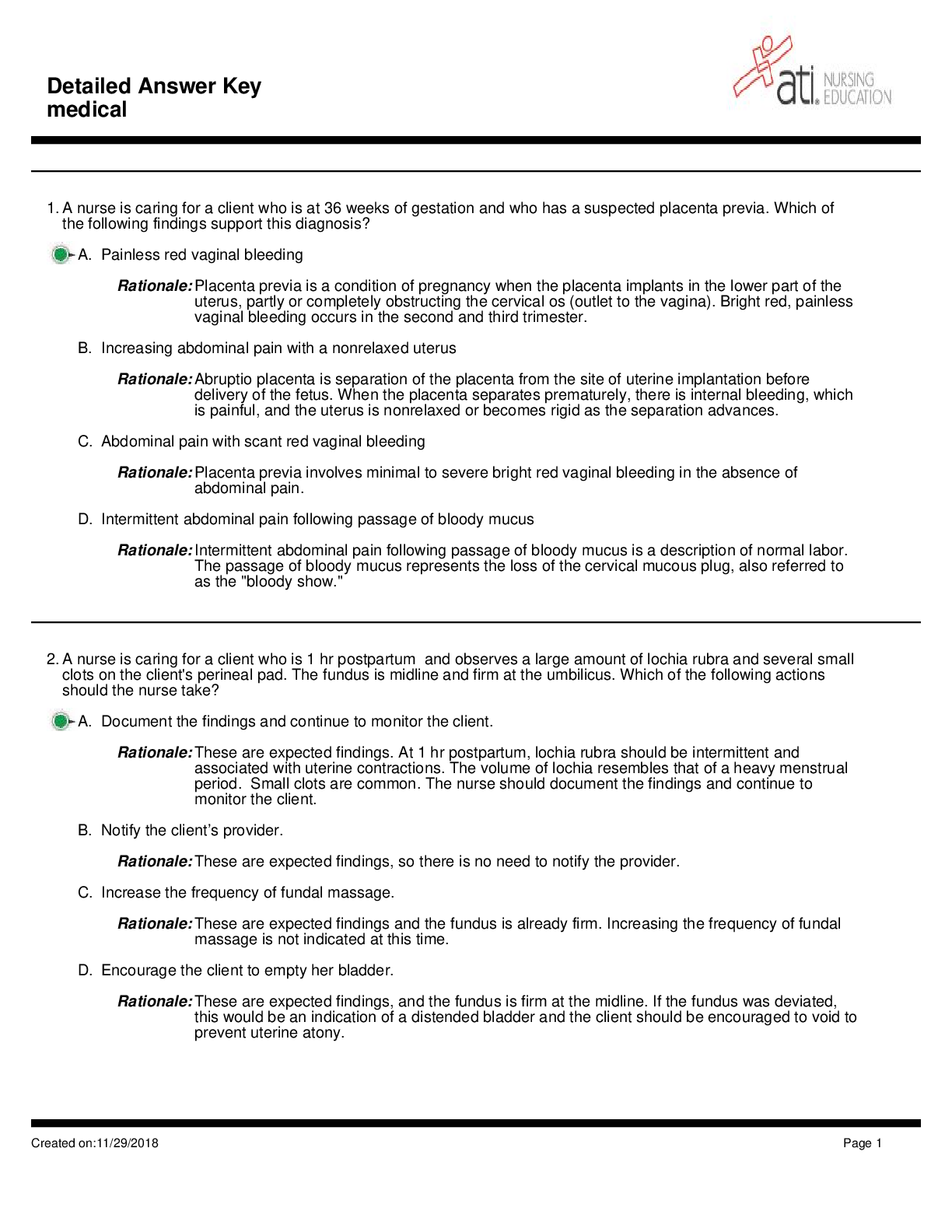
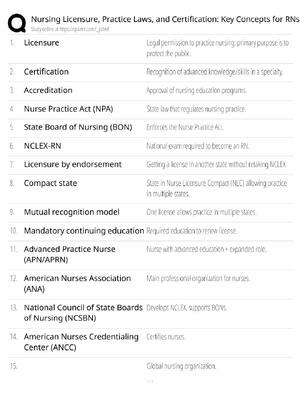



![Preview of eBook [PDF] Mosby's Textbook for Nursing Assistants 10th Edition By Sheila A. Sorrentino,](https://browseimages.nyc3.digitaloceanspaces.com/paper-images/2024/Sep/06/8JMuZ3LF2024-09-06-04-1066daff404b5f8.png)


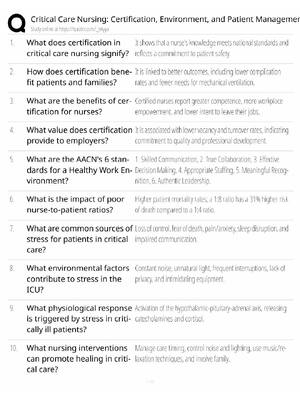



.png)
Perop.png)

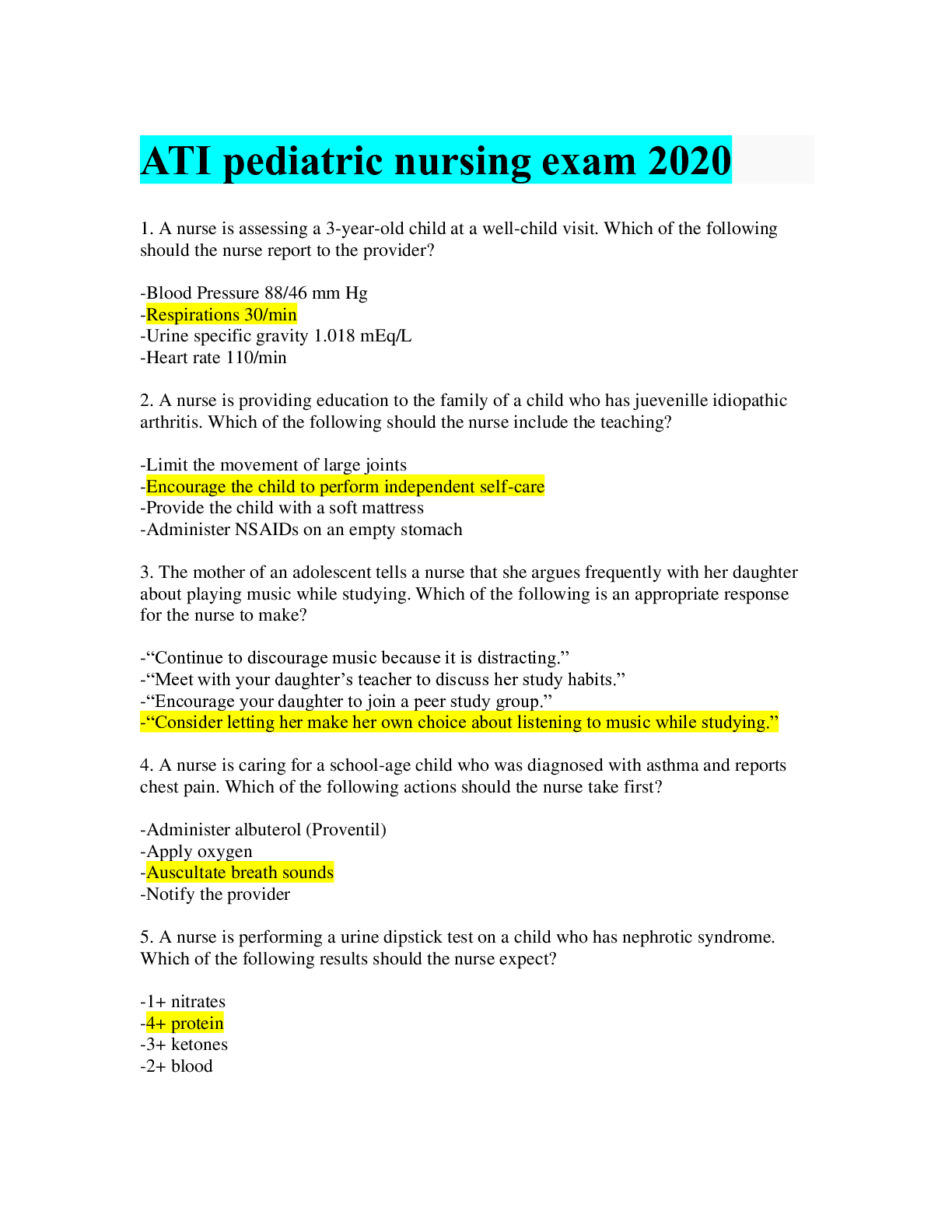
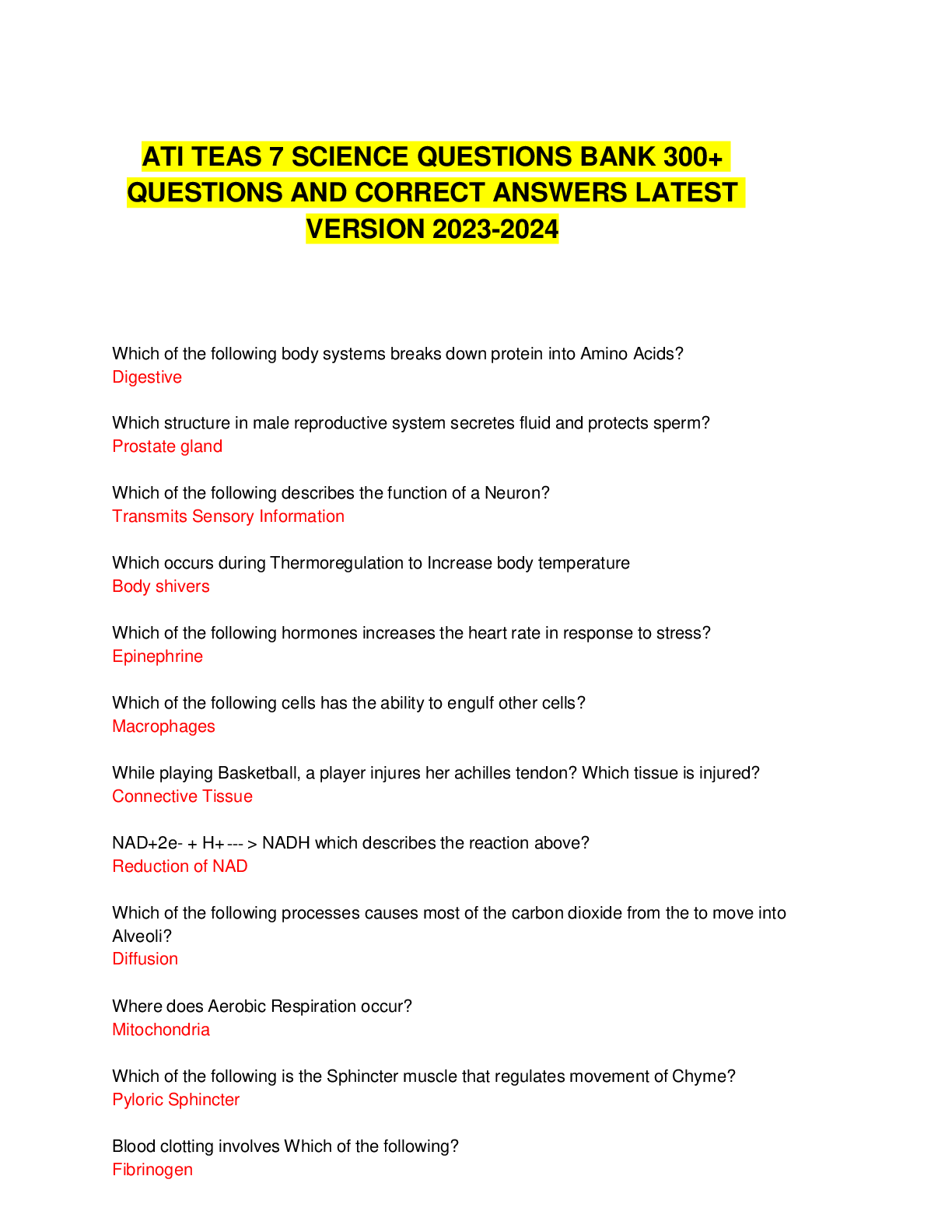
.png)

