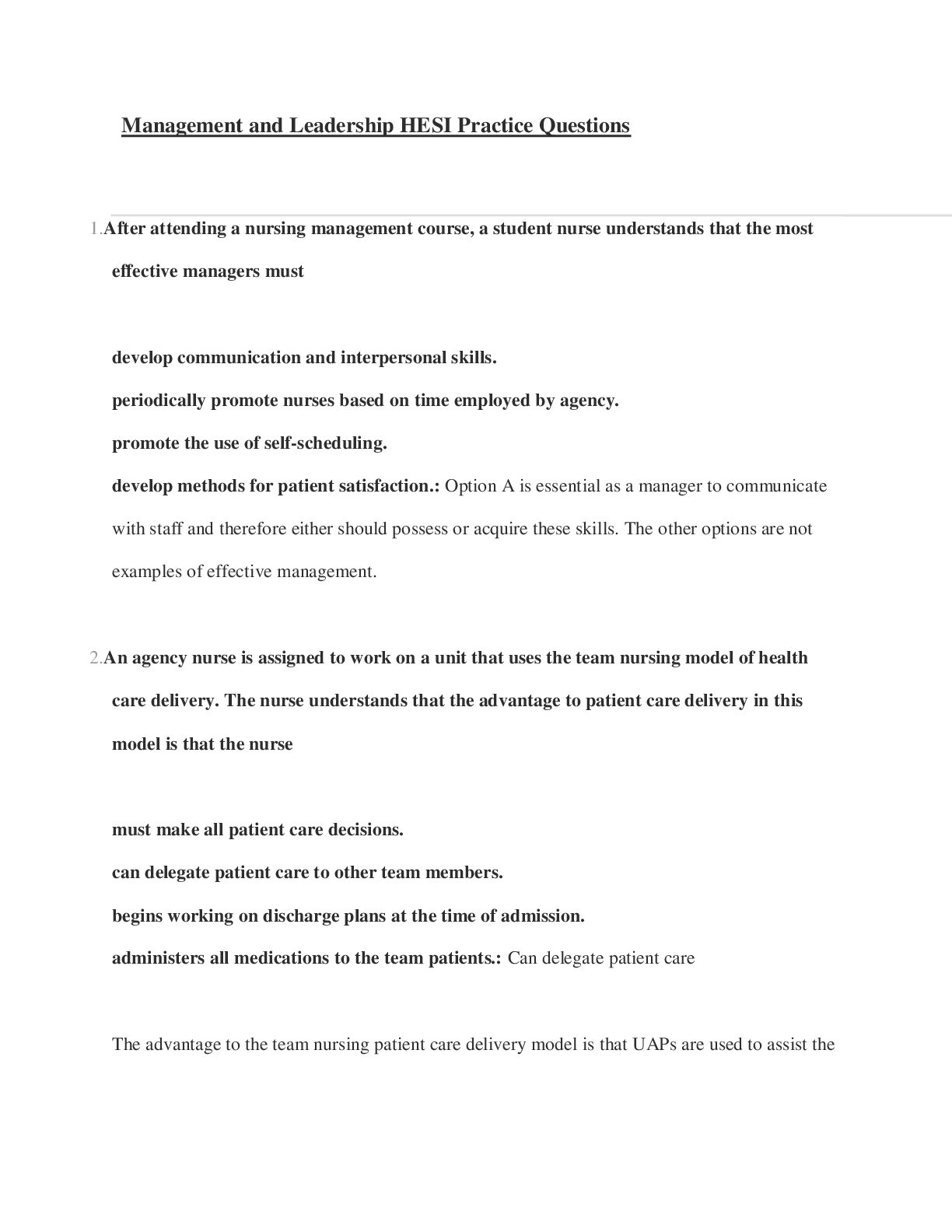
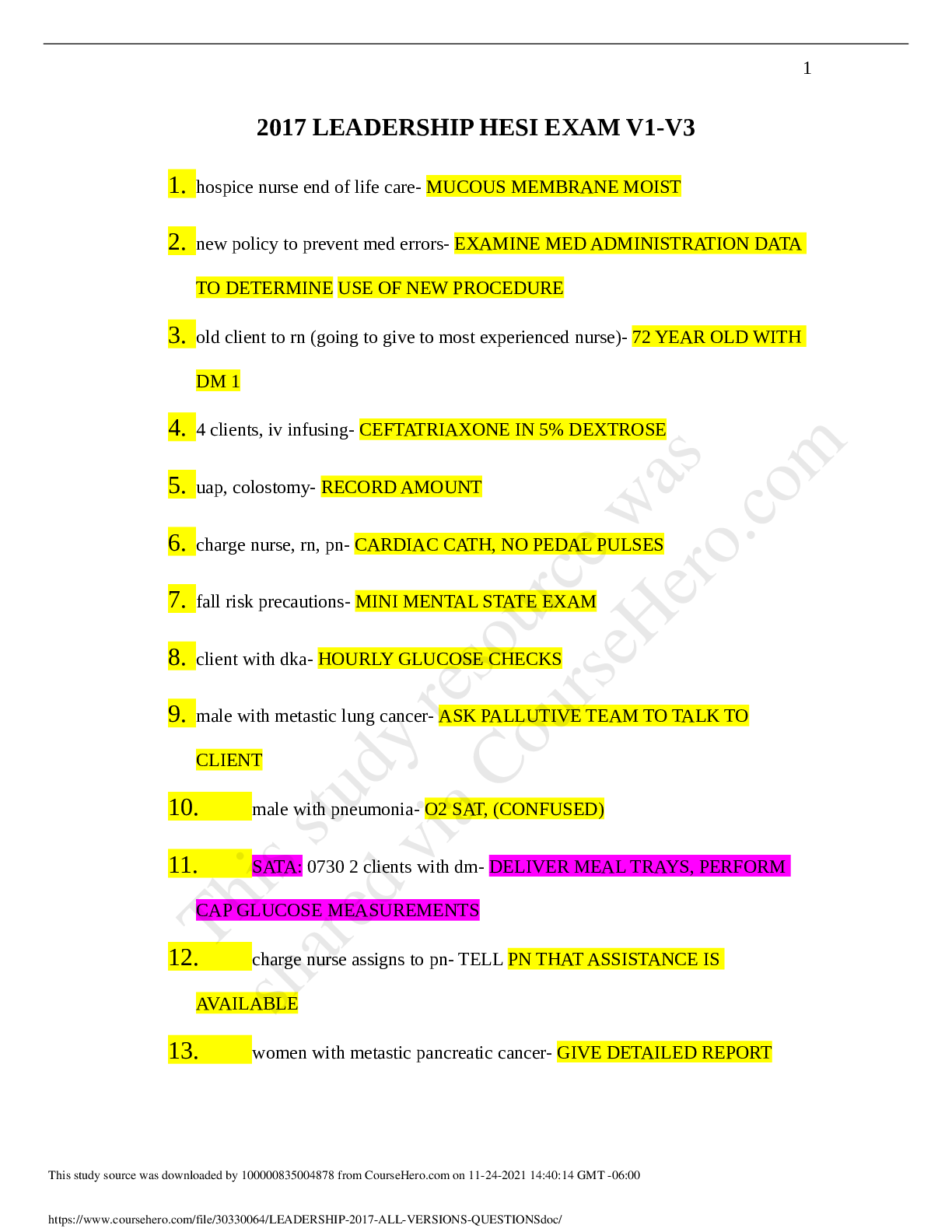
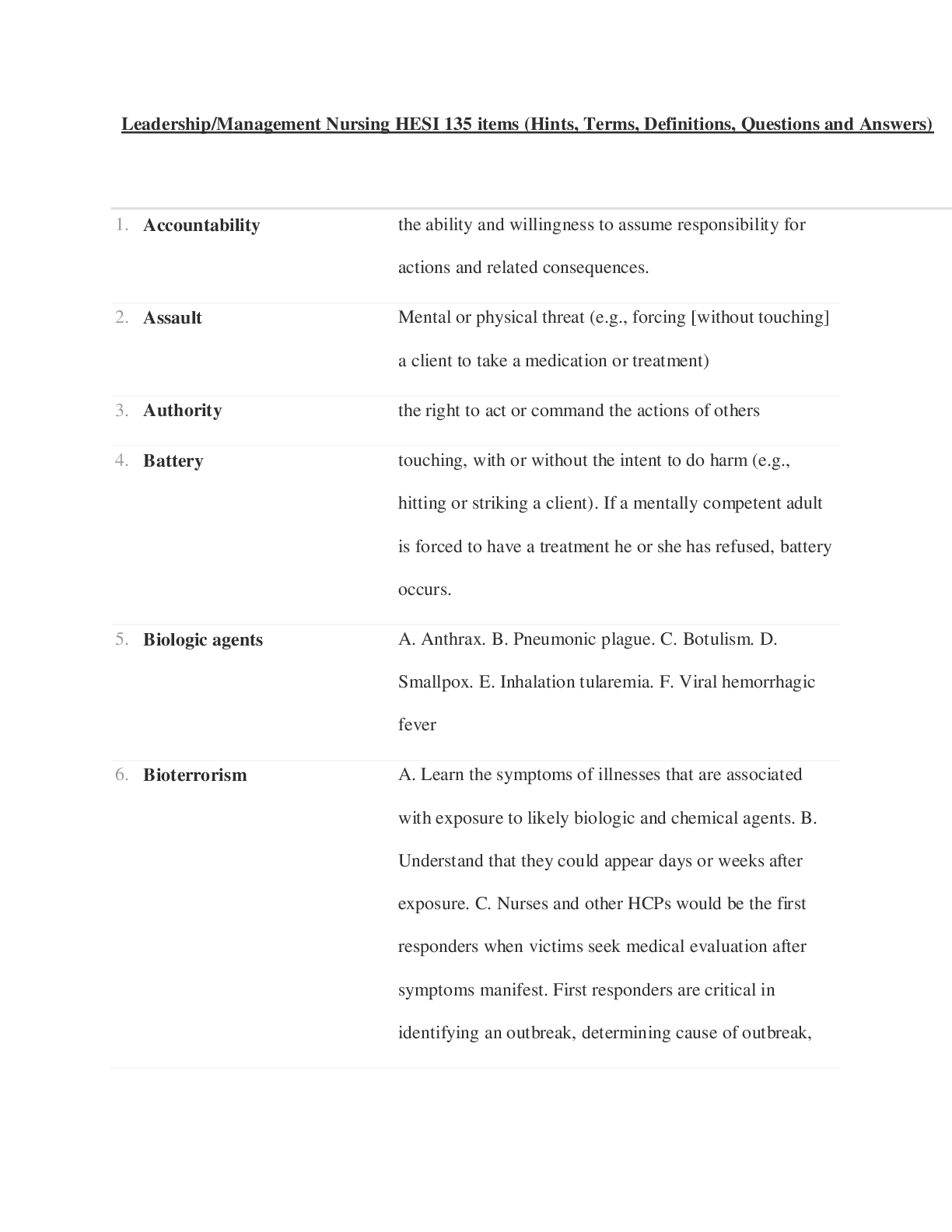
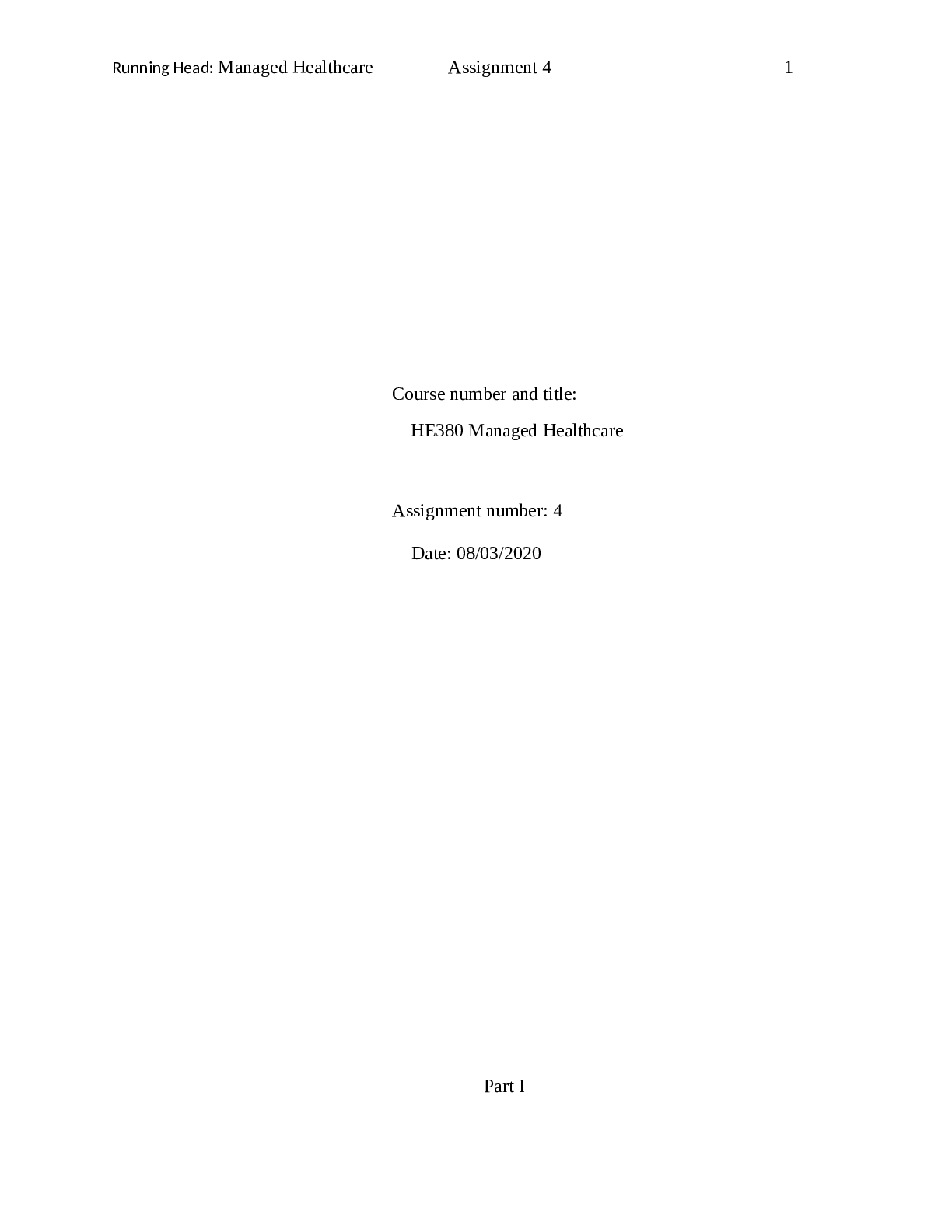
Health Care > HESI > HES380 Assignment (All)
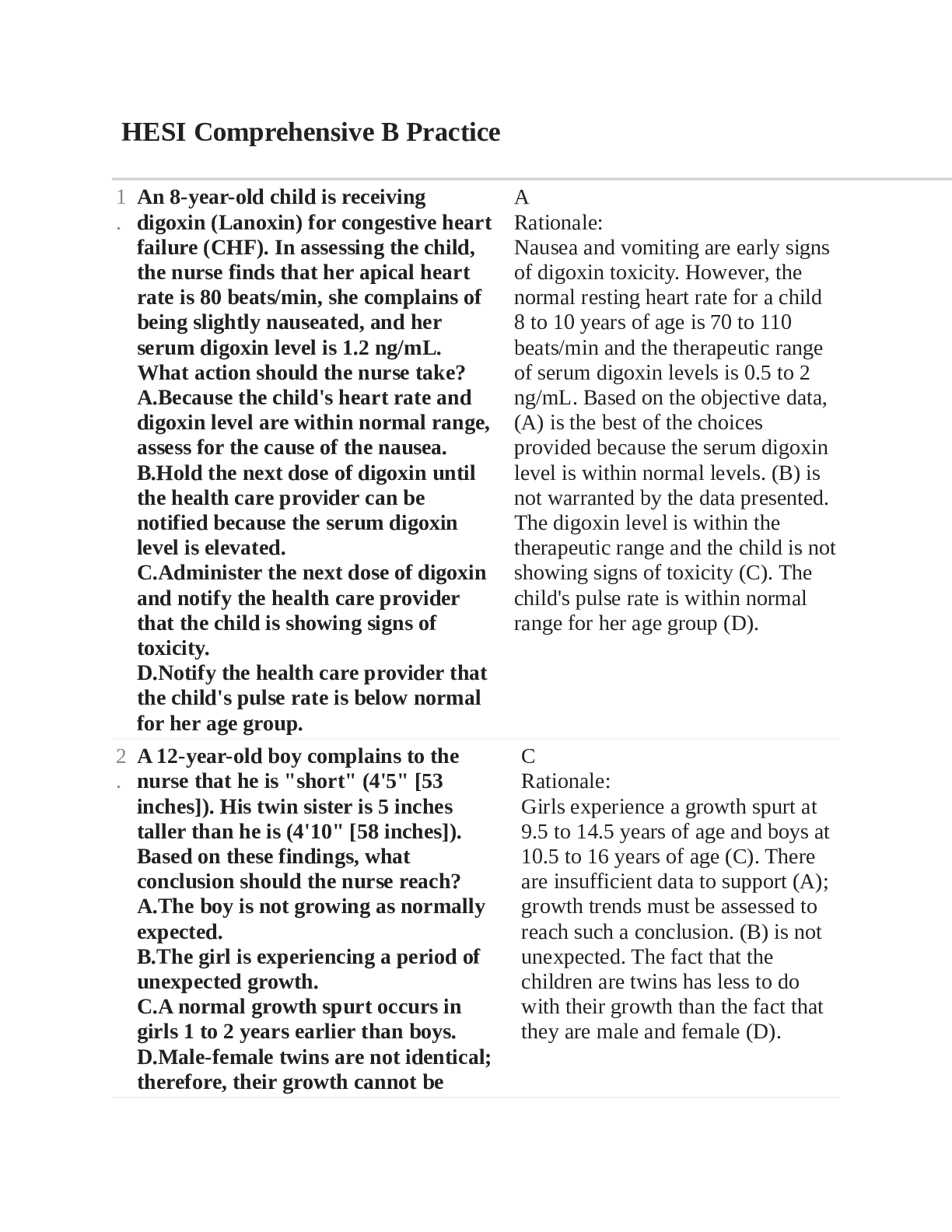
HES380 Assignment
Document Content and Description Below
Last updated: 3 years ago
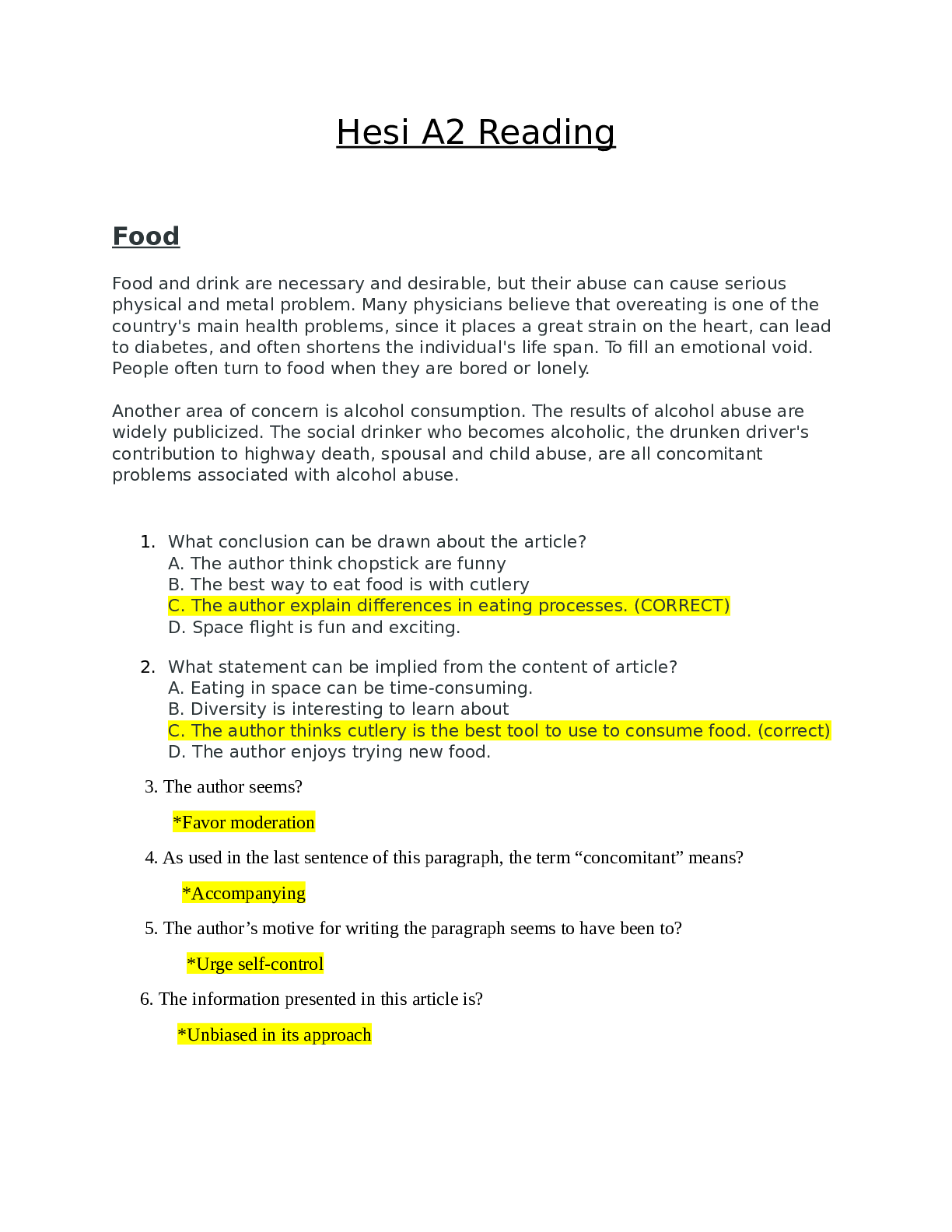
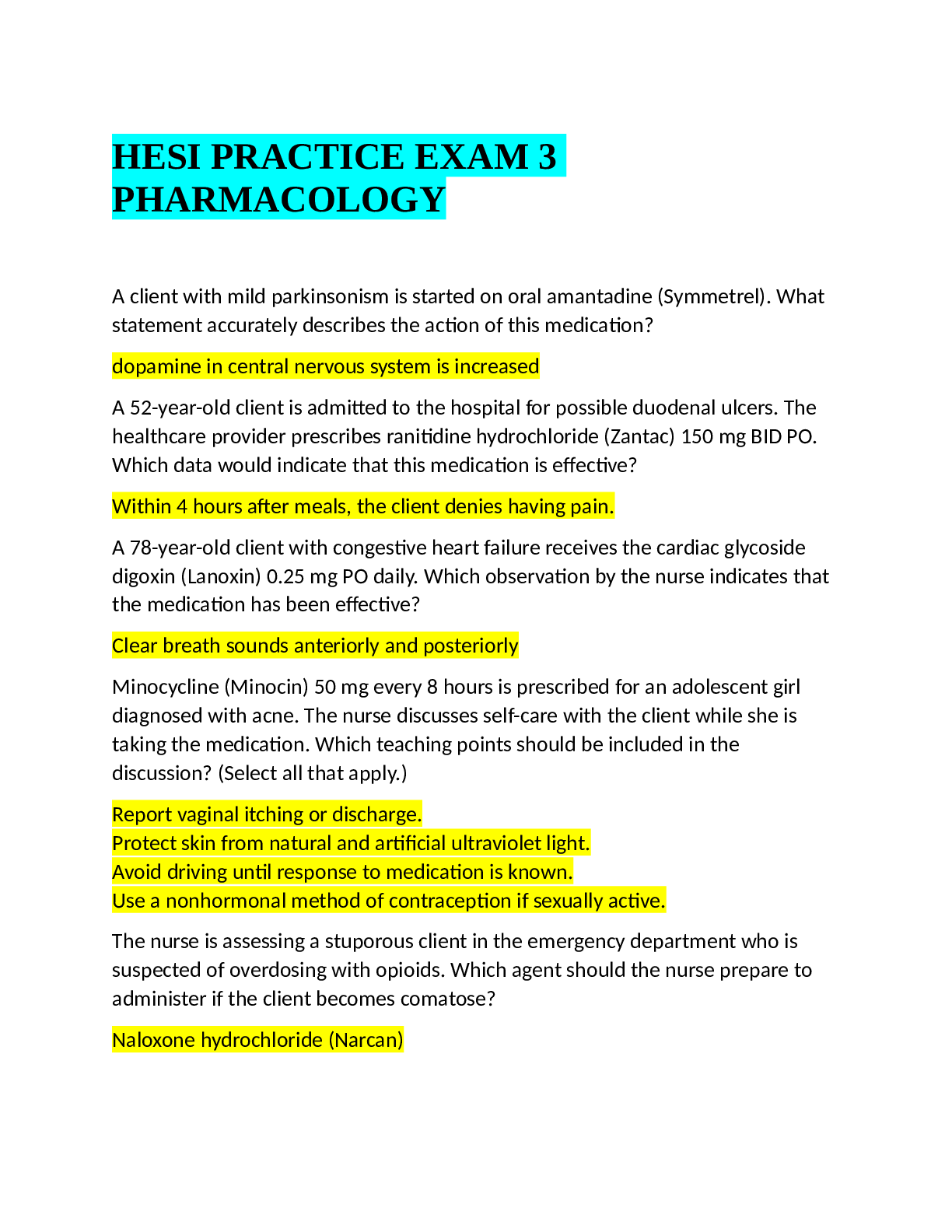
Preview 1 out of 11 pages
Instant download
Buy this Document to get the Full Access Instantly
Provided by Students Who Aced it
We Verify Document Content to Gurantee Accuracy
Reviews( 0 )
Document information
Connected school, study & course
About the document
Uploaded On
Sep 05, 2021
Number of pages
11
Written in
All

Additional information
This document has been written for:
Uploaded
Sep 05, 2021
Downloads
0
Views
131
Topic Tags
Related Subjects & Courses
Explore similar study resources and related concepts.
Recommended For You
Get more on HESI »

![Preview of HESI Critical Care TEST BANK RN 2021 [50 Questions /Answers]](https://scholarfriends.com/storage/Critical_Care_HESI_notes___.png)

Test Bank for Shah's Public Health and Preventive Health Care...


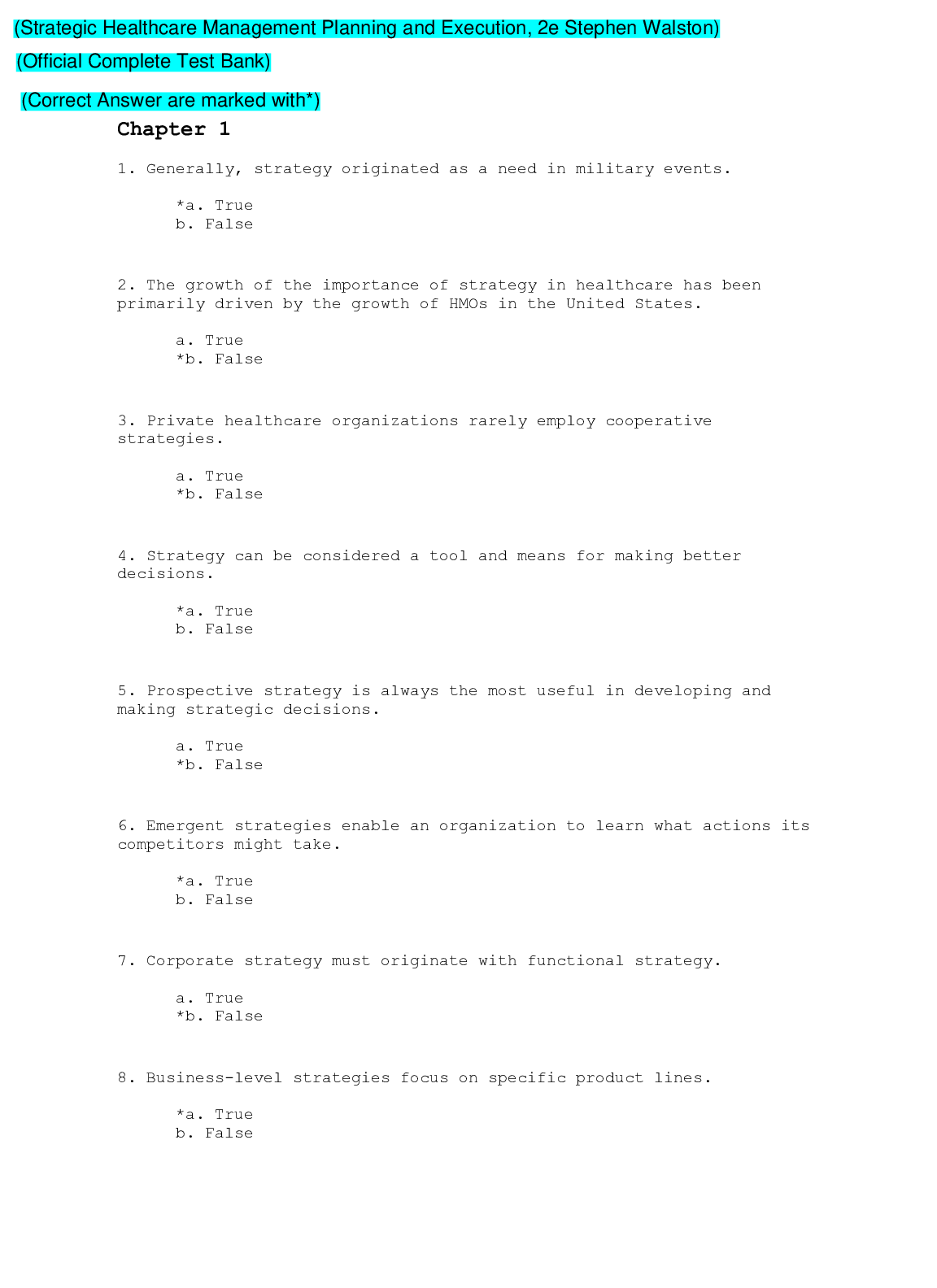
Strategic Healthcare Management Planning and Execution 2nd Edi...

Sonography 5th Edition By Reva Curry, Marilyn Prince (Test Ban...
Test bank for Medical Emergencies-Essentials for the Dental Pr...
Test Bank for Physical Examination and Health Assessment 9th E...

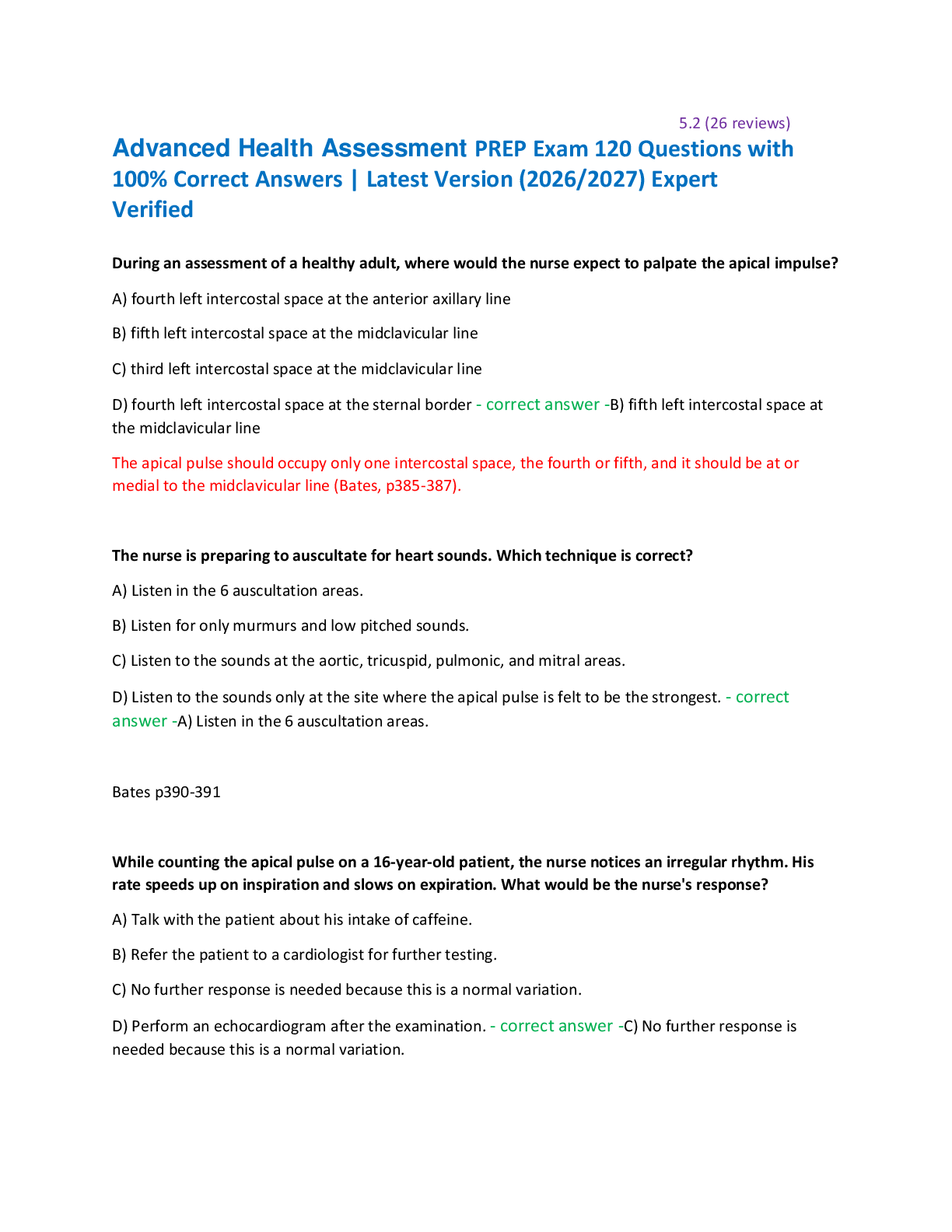
![Preview of [eTextBook] [pdf] Applied Law and Ethics in Health Care 1st Edition By Wendy Mia Pardew](https://browseimages.nyc3.digitaloceanspaces.com/paper-images/2025/Jan/08/3M0lZuqJ2025-01-08-01-47677daf165bbd2.png)

.png)