*NURSING  >  QUESTIONS & ANSWERS  >  C426 Washington University Paradigm (All)

C426 Washington University Paradigm

Document Content and Description Below

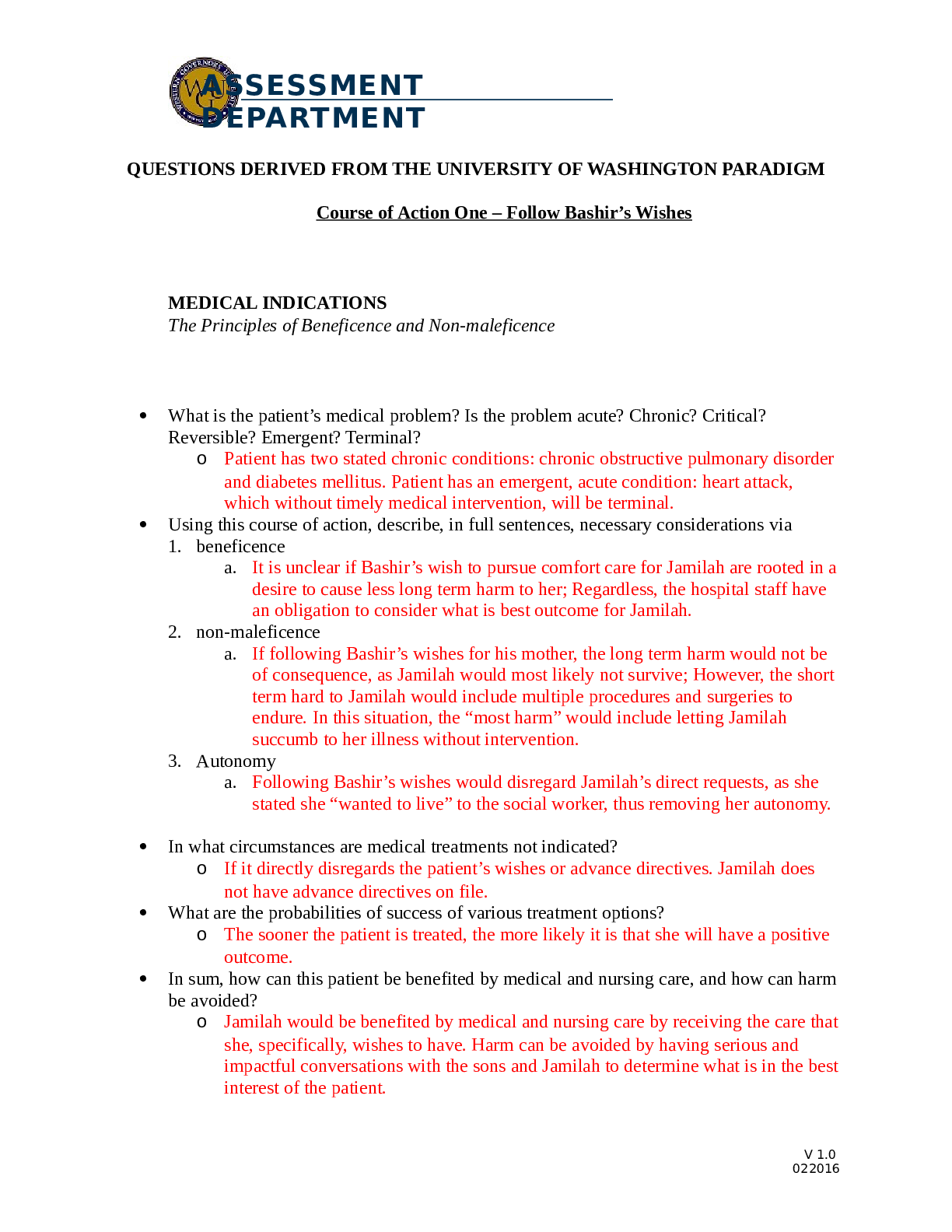
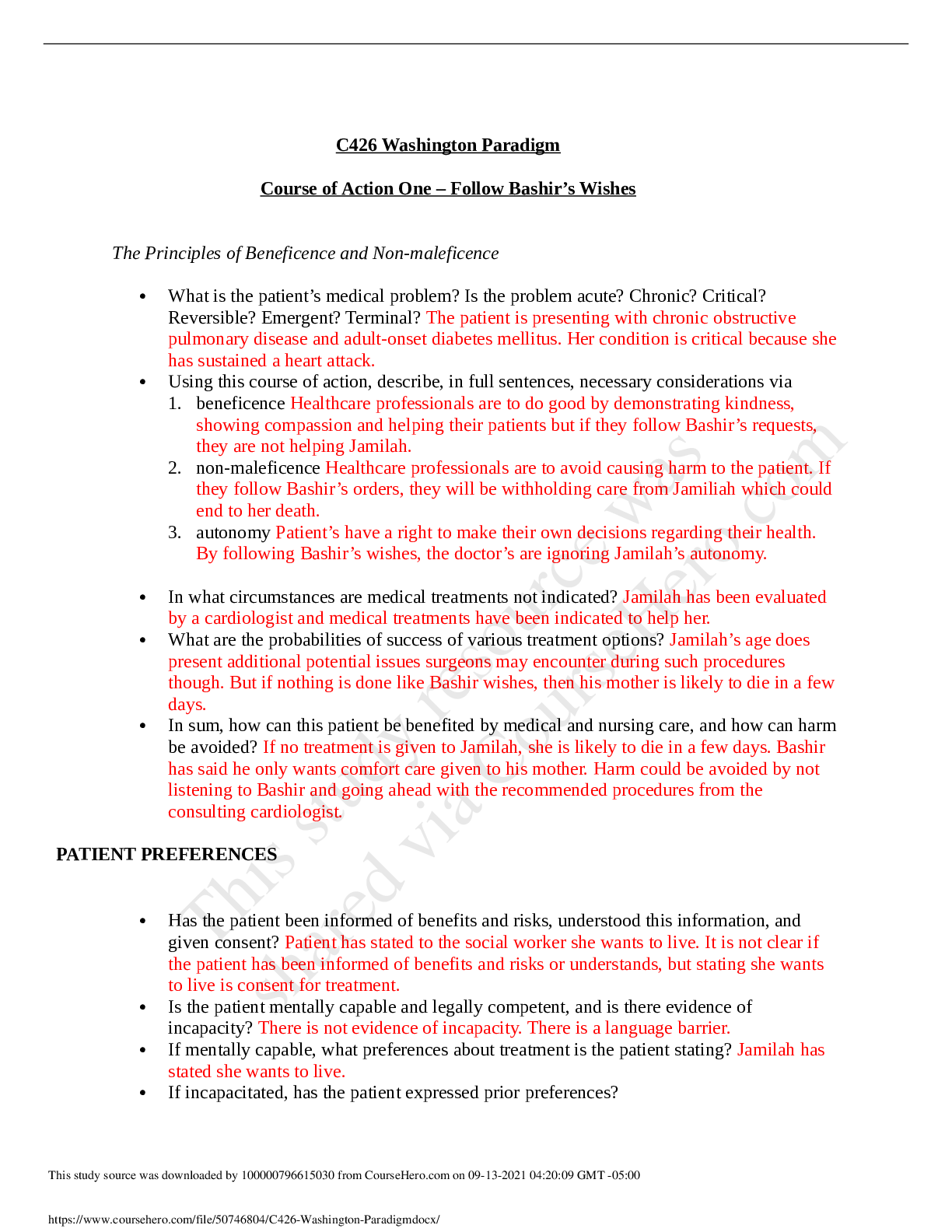
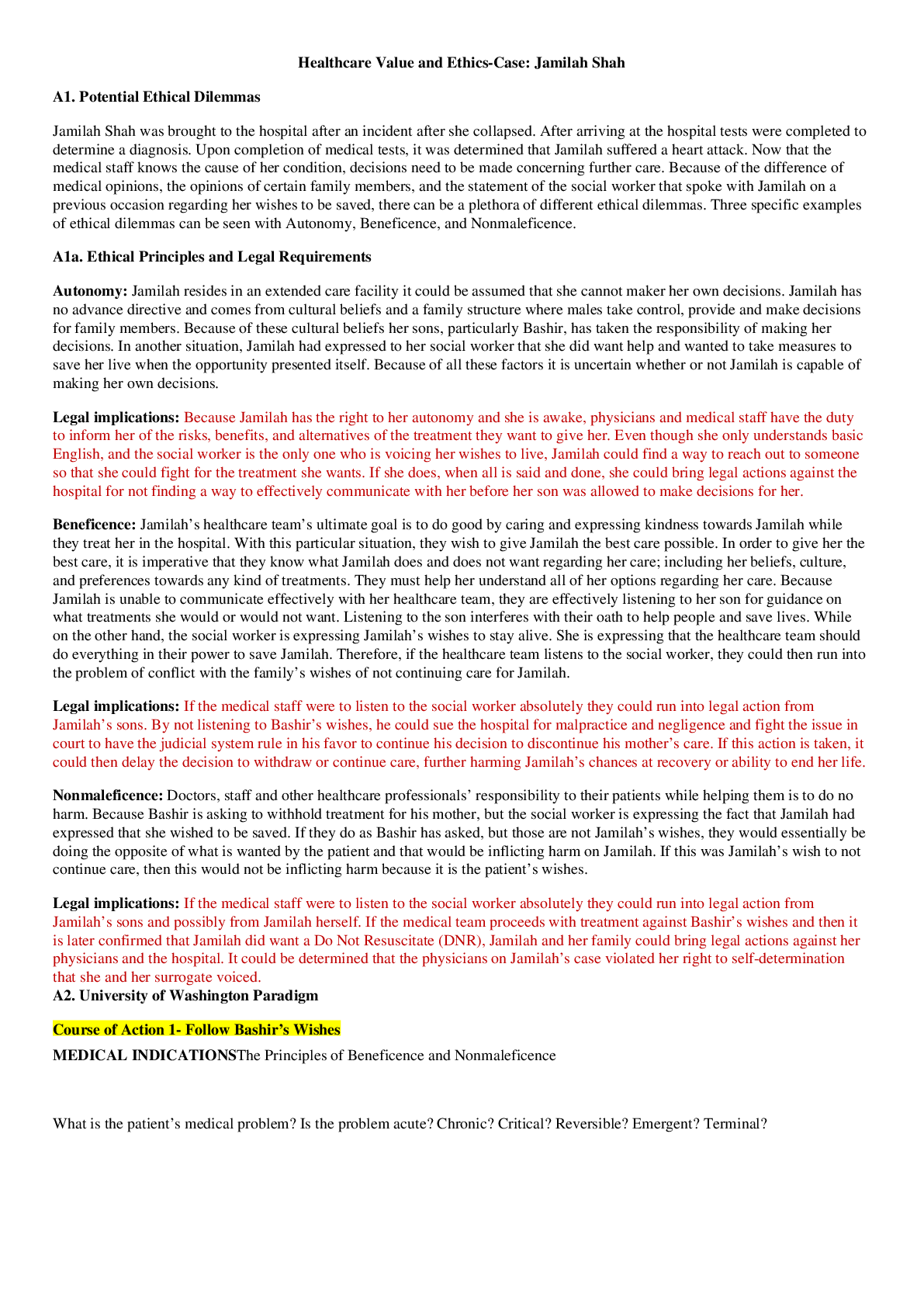
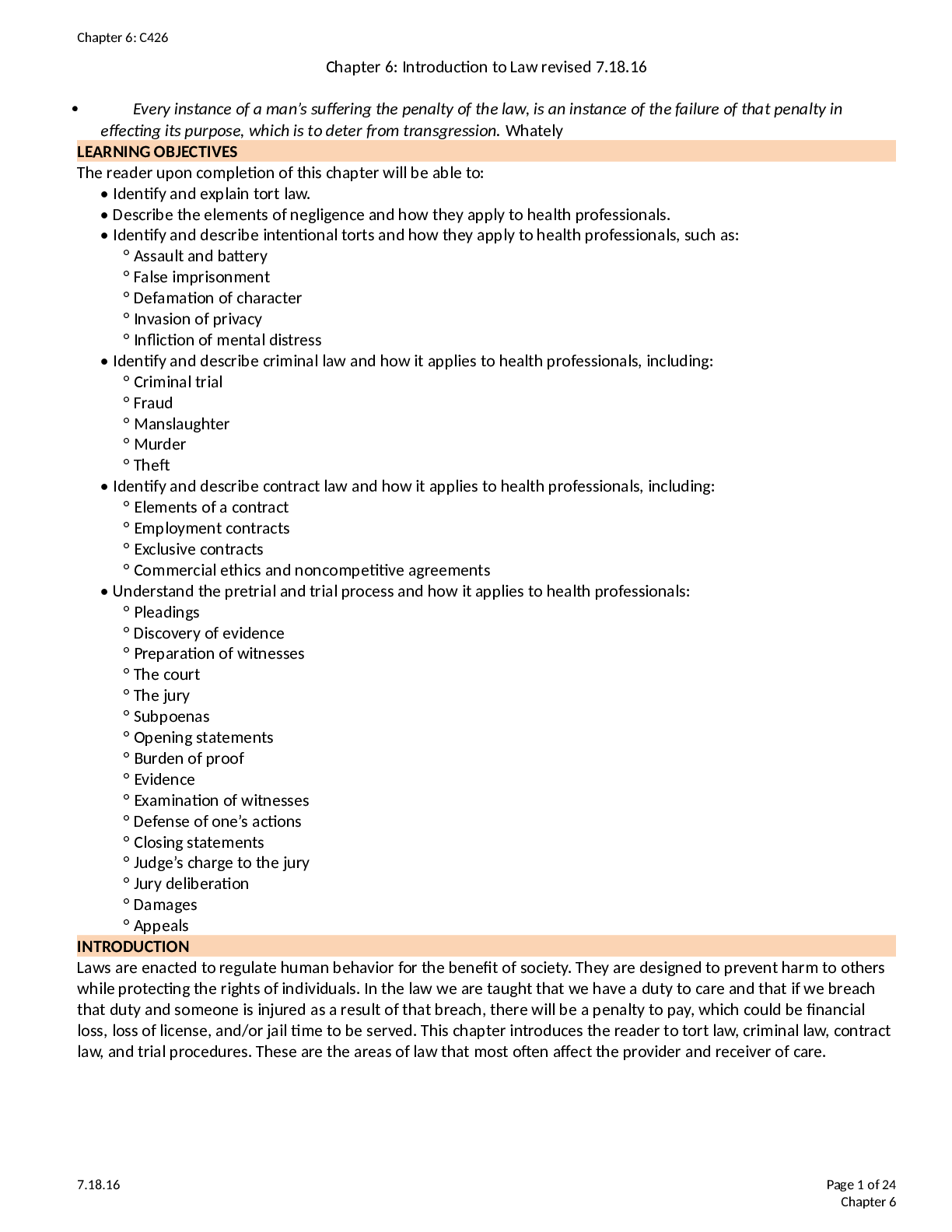
MEDICAL INDICATIONS The Principles of Beneficence and Non-maleficence  What is the patient’s medical problem? Is the problem acute? Chronic? Critical? Reversible? Emergent? Terminal? o Patien ... t has two stated chronic conditions: chronic obstructive pulmonary disorder and diabetes mellitus. Patient has an emergent, acute condition: heart attack, which without timely medical intervention, will be terminal.  Using this course of action, describe, in full sentences, necessary considerations via 1. beneficence a. It is unclear if Bashir’s wish to pursue comfort care for Jamilah are rooted in a desire to cause less long term harm to her; Regardless, the hospital staff have an obligation to consider what is best outcome for Jamilah. 2. non-maleficence a. If following Bashir’s wishes for his mother, the long term harm would not be of consequence, as Jamilah would most likely not survive; However, the short term hard to Jamilah would include multiple procedures and surgeries to endure. In this situation, the “most harm” would include letting Jamilah succumb to her illness without intervention. 3. Autonomy a. Following Bashir’s wishes would disregard Jamilah’s direct requests, as she stated she “wanted to live” to the social worker, thus removing her autonomy.  In what circumstances are medical treatments not indicated? o If it directly disregards the patient’s wishes or advance directives. Jamilah does not have advance directives on file.  What are the probabilities of success of various treatment options? o The sooner the patient is treated, the more likely it is that she will have a positive outcome.  In sum, how can this patient be benefited by medical and nursing care, and how can harm be avoided? o Jamilah would be benefited by medical and nursing care by receiving the care that she, specifically, wishes to have. Harm can be avoided by having serious and impactful conversations with the sons and Jamilah to determine what is in the best interest of the patient. V 1.0 022016 ASSESSMENT DEPARTMENTPATIENT PREFERENCES The Principle of Respect for Autonomy  Has the patient been informed of benefits and risks, understood this information, and given consent? o It is unclear if the patient has been informed, due to the language and cultural barrier. If the son is refusing medical treatment, it is unlikely the patient has given consent on any further treatment beyond comfort care.  Is the patient mentally capable and legally competent, and is there evidence of incapacity? o There is not stated evidence of incapacity.  If mentally capable, what preferences about treatment is the patient stating? o Patient’s statement was vague, but indicated that she would like to pursue treatment.  If incapacitated, has the patient expressed prior preferences? o As stated above, the patient has not expressed clear and concise preferences on how she would like treatment to proceed. The patient does not have any advance directives on file to follow.  Who is the appropriate surrogate to make decisions for the incapacitated patient? o Bashir was listed as the emergency contact at the extended care facility and has elected himself as the primary decision maker; However, it is unclear if he is the most appropriate surrogate to make decisions for Jamilah, if she is incapacitated.  Is the patient unwilling or unable to cooperate with medical treatment? If so, why? o Patient seems willing to proceed with medical treatment. QUALITY OF LIFE The Principles of Beneficence, Non-maleficence, and Respect for Autonomy  What are the prospects, with or without treatment, for a return to normal life, and what physical, mental, and social deficits might the patient experience even if treatment succeeds? o Without treatment, patient will most likely expire in less than a week. Due to Jamilah’s age and disease state(s), she may or may not regain all physical, mental, and social functionality.  On what grounds can anyone judge that some quality of life would be undesirable for a patient who cannot make or express such a judgment? o An advance directive can be used in this situation to meet a patient’s wishes. If advance directive is not file, this type of decision will most likely be made between the physician/provider and the patient’s family [Show More]

Last updated: 3 years ago

Preview 1 out of 10 pages

Buy Now

Instant download

We Accept:

Payment methods accepted on Scholarfriends (We Accept)
Preview image of C426 Washington University Paradigm document

Buy this document to get the full access instantly

Instant Download Access after purchase

Buy Now

Instant download

We Accept:

Payment methods accepted on Scholarfriends (We Accept)

Reviews( 0 )

$6.00

Buy Now

We Accept:

Payment methods accepted on Scholarfriends (We Accept)

Instant download

Can't find what you want? Try our AI powered Search

188
0

Document information


Connected school, study & course


About the document


Uploaded On

Sep 06, 2021

Number of pages

10

Written in

All

Seller


Profile illustration for Muchiri
Muchiri

Member since 4 years

209 Documents Sold

Reviews Received
19
5
1
1
6
Additional information

This document has been written for:

Uploaded

Sep 06, 2021

Downloads

 0

Views

 188

Document Keyword Tags


$6.00
What is Scholarfriends

Scholarfriends.com Online Platform by Browsegrades Inc. 651N South Broad St, Middletown DE. United States.

We are here to help

We're available through e-mail, Twitter, Facebook, and live chat.
 FAQ
 Questions? Leave a message!

Follow us on
 Twitter

Copyright © Scholarfriends · High quality services·