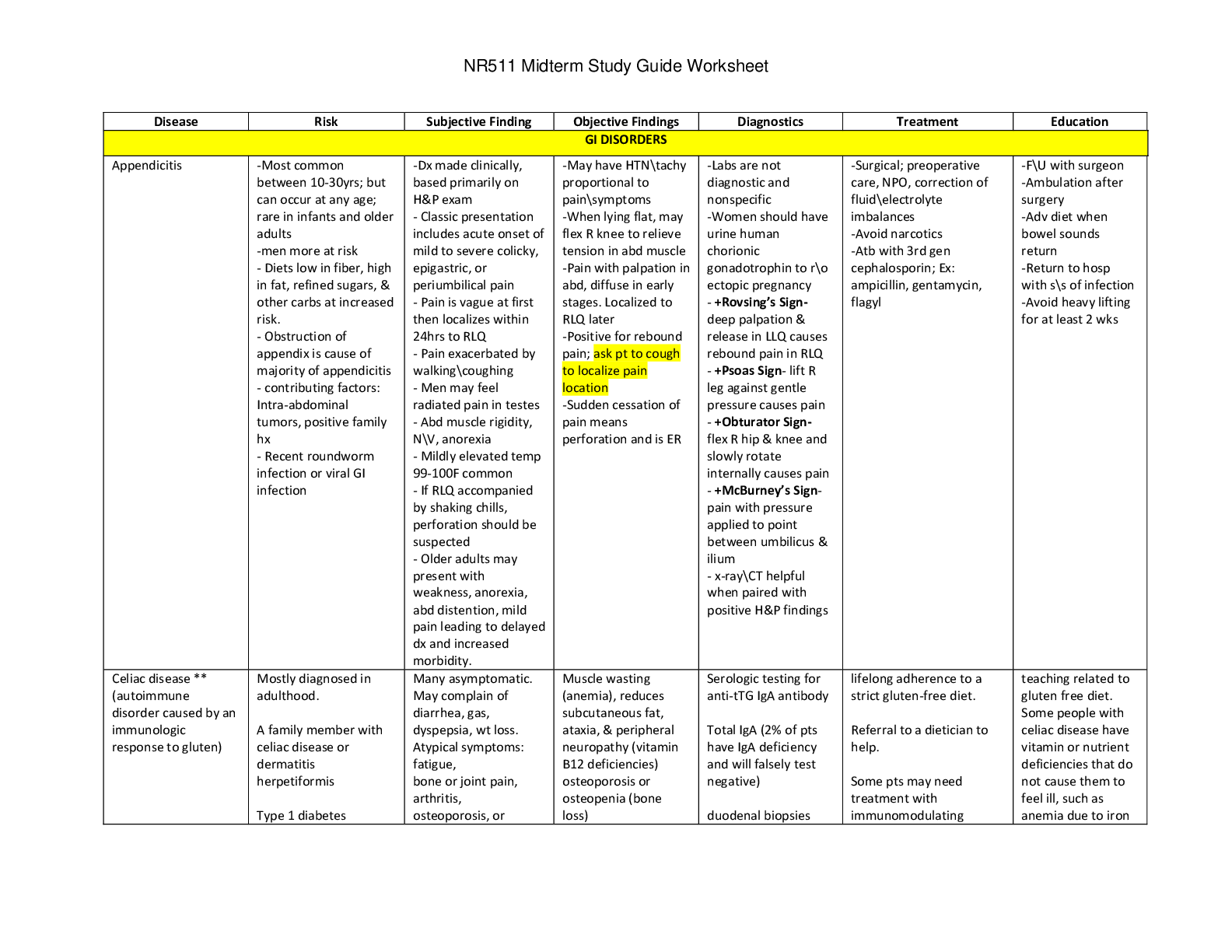
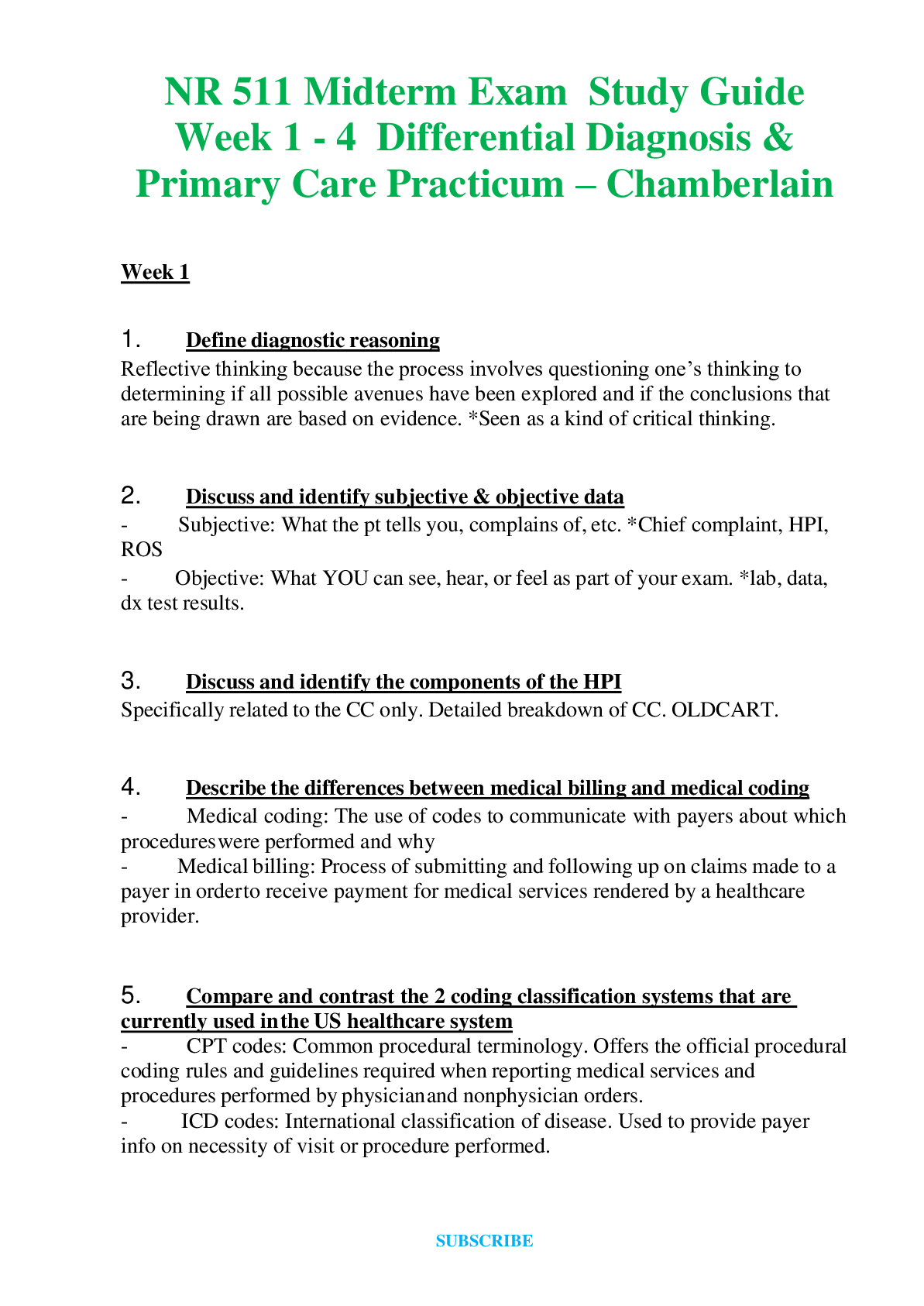
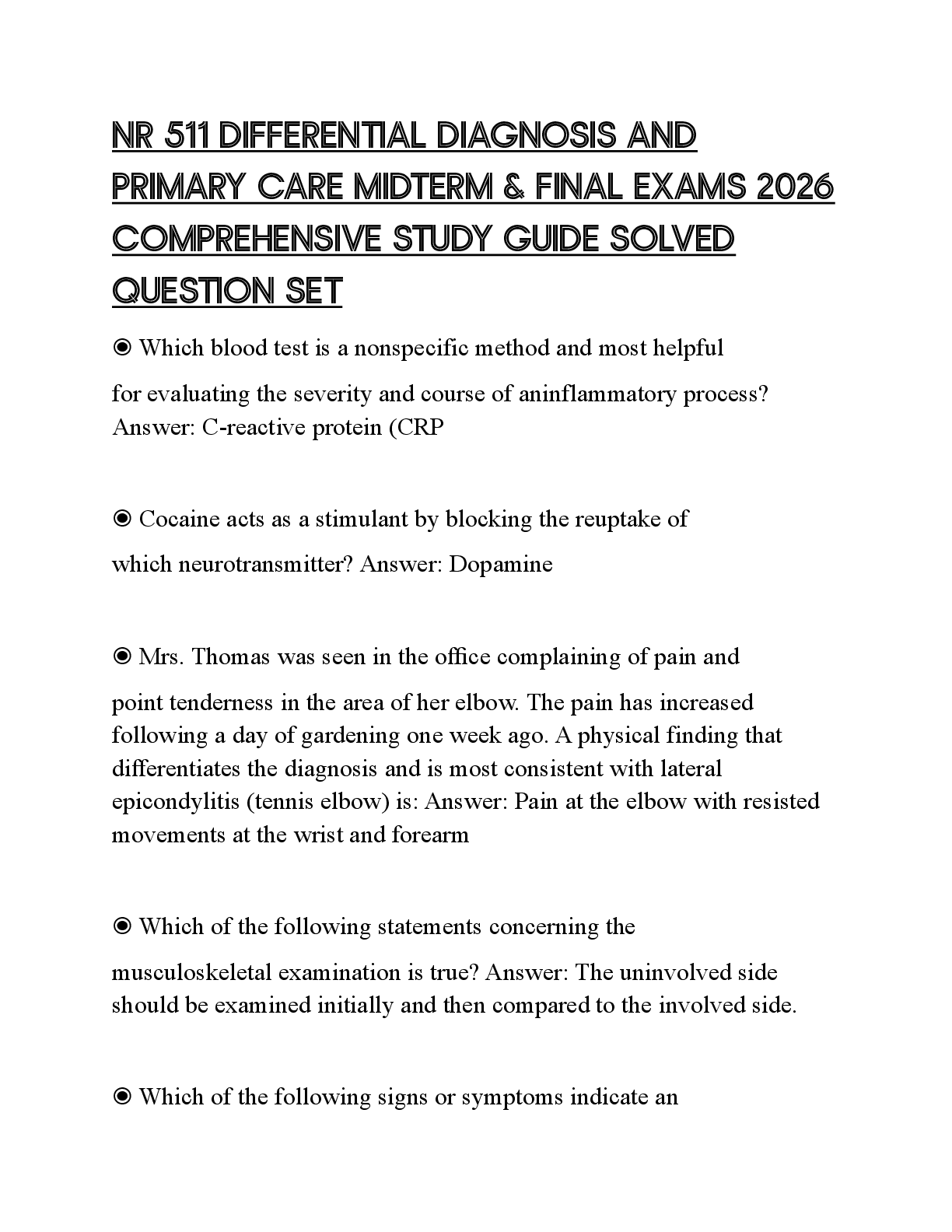
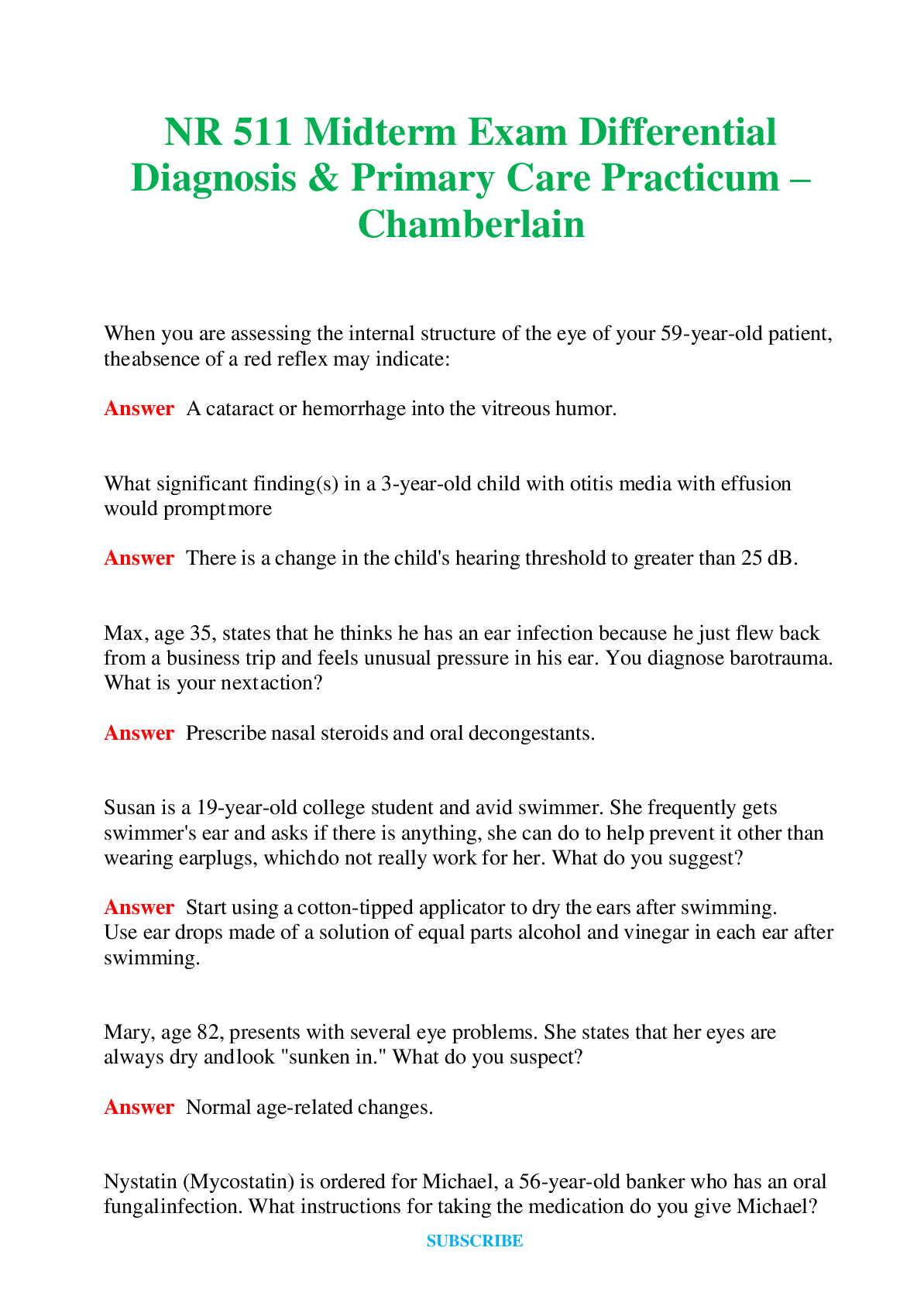
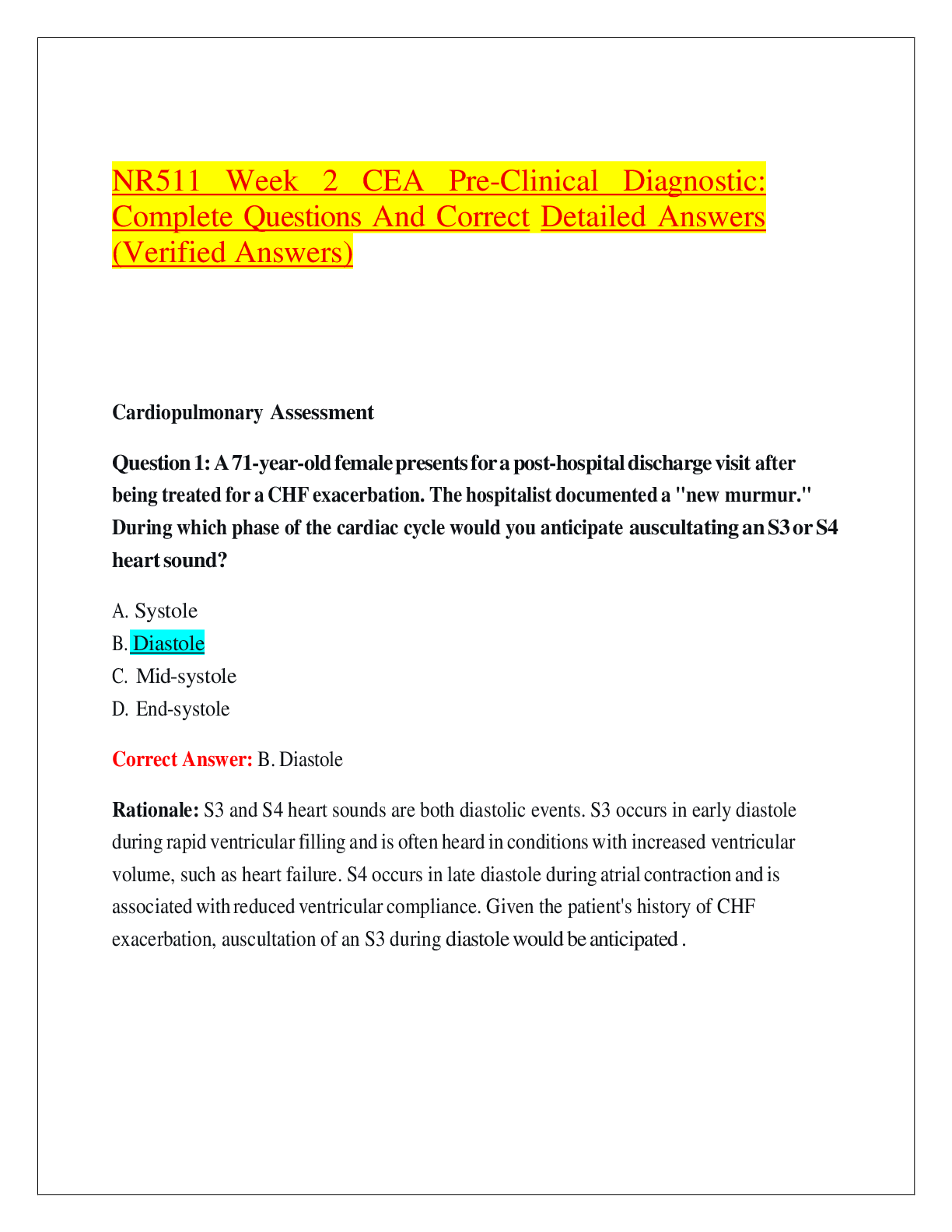
NR511 Complete midterm study guide worksheet
Appendicitis -Most common between 10-30yrs; but can occur at any age; rare in infants and older adults -men more at risk - Diets low in fiber, high in fat, refined sugars, &
...
NR511 Complete midterm study guide worksheet
Appendicitis -Most common between 10-30yrs; but can occur at any age; rare in infants and older adults -men more at risk - Diets low in fiber, high in fat, refined sugars, & other carbs at increased risk. - Obstruction of appendix is cause of majority of appendicitis - contributing factors: Intra-abdominal tumors, positive family hx - Recent roundworm infection or viral GI infection -Dx made clinically, based primarily on H&P exam - Classic presentation includes acute onset of mild to severe colicky, epigastric, or periumbilical pain - Pain is vague at first then localizes within 24hrs to RLQ - Pain exacerbated by walkingcoughing - Men may feel radiated pain in testes - Abd muscle rigidity, NV, anorexia - Mildly elevated temp 99-100F common - If RLQ accompanied by shaking chills, perforation should be suspected - Older adults may present with weakness, anorexia, abd distention, mild pain leading to delayed dx and increased morbidity. -May have HTNtachy proportional to painsymptoms -When lying flat, may flex R knee to relieve tension in abd muscle -Pain with palpation in abd, diffuse in early stages. Localized to RLQ later -Positive for rebound pain; ask pt to cough to localize pain location -Sudden cessation of pain means perforation and is ER -Labs are not diagnostic and nonspecific -Women should have urine human chorionic gonadotrophin to ro ectopic pregnancy - Rovsing’s Sign- deep palpation & release in LLQ causes rebound pain in RLQ - Psoas Sign- lift R leg against gentle pressure causes pain - Obturator Sign- flex R hip & knee and slowly rotate internally causes pain - McBurney’s Sign- pain with pressure applied to point between umbilicus & ilium - x-rayCT helpful when paired with positive H&P findings -Surgical; preoperative care, NPO, correction of fluidelectrolyte imbalances -Avoid narcotics -Atb with 3rd gen cephalosporin; Ex: ampicillin, gentamycin, flagyl Celiac disease ** (autoimmune disorder caused by an immunologic response to gluten) Mostly diagnosed in adulthood. A family member with celiac disease or dermatitis herpetiformis Type 1 diabetes Down syndrome or Turner syndrome Autoimmune thyroid disease Microscopic colitis (lymphocytic or collagenous colitis) Addison's disease Many asymptomatic. May complain of diarrhea, gas, dyspepsia, wt loss. Atypical symptoms: fatigue, bone or joint pain, arthritis, osteoporosis, or osteopenia (bone loss) liver and biliary tract disorders (transaminitis, fatty liver, primary sclerosing cholangitis, depression or anxiety peripheral neuropathy seizures or migraines missed menstrual periods infertility or recurrent miscarriage canker sores inside the mouth dermatitis herpetiformis (itchy skin rash) Muscle wasting (anemia), reduces subcutaneous fat, ataxia, & peripheral neuropathy (vitamin B12 deficiencies) osteoporosis or osteopenia (bone loss) hypothyroidism Pts with dermatitis herpetiformis found to have signs of celiac disease on intestinal biopsy. Serologic testing for anti-tTG IgA antibody Total IgA (2% of pts have IgA deficiency and will falsely test negative) duodenal biopsies Test for nutritional deficiencies associated with malabsorption of C.D. (hemoglobin, iron, folate, vit B12, Calcium, and Vitamin D.) lifelong adherence to a strict gluten-free diet. Referral to a dietician to help. Some pts may need treatment with immunomodulating agents. Cholelithiasis is the formation of gallstones and is found in 90% of patients with cholecystitis. --Risk factors--2 types of stones (cholesterol and pigmented) a. Cholesterol (most common form): female, obesity, pregnancy, increased age, drug-induced (oral contraceptives and clofibrates: cholesterol lowering agent), cystic fibrosis, rapid weight loss, spinal cord injury, Ileal disease with extensive resection, Diabetes mellitus, sickle cell anemia. b. Pigmented: hemolytic diseases, increasing age, hyperalimentation (artificial supply of nutrients, typically IV), cirrhosis, biliary stasis, chronic biliary infections. Patient complaint of indigestion, nausea, vomiting (after consuming meal high in fat), and pain in RUG or epigastrium that may radiate to the middle of the back, infrascapular area or right shoulder. Right side involuntary guarding of abdominal muscles, Positive Murphy's sign, possible palpable gallbladder, Low grade fever between 99-101 degrees. Possible jaundice from common bile duct edema and diminished bowel sounds. Mild elevation of WBC up to 15, 000 Abdominal Xray: Quick, noninvasive, reliable, and cost-effective means of identifying the presence of cholelithiasis. a. Initial management--begins with definitive diagnosis. When asymptomatic (normally an incidental finding while exploring another problem) require no further treatment except teaching s/sx of "gallbladder attack". Nonsurgical candidate can be treated with dissolution therapy or lithotripsy. Acute includes hydration (IV fluids), antibiotics, analgesics, GI rest. b. Treatment of choice for Acute cholecystitis is early surgical intervention after stabilization. Poor surgical risk may benefit from cholecystectomy operatively or percutaneously. Crohn’s ** Ages 15-25 of onset and then again at 50-80. Familial tendency, smoker Carcinoma less common in patients with CD due to treatment sometimes colectomy Mild-Four or fewer loose bowel movements per day, can have small amounts of blood and mucus in the stool, and cramping in the rectum. Moderate-4-6 loose bowel movements per day containing more blood and mucus and other sx such as tachycardia, weight loss, fever, mild edema. Severe-frequent bloody bowel movements (6-10), abd pain and tenderness, sx of anemia, hypovolemia, impaired nutrition. Most common sx are abd cramping/tenderness, fever, anorexia, wt loss, spasm, flatulence, RLQ pain or mass Tenderness in LLQ or across entire abd with guarding and abd distension. DRE performed to look for anal and perianal inflammation, rectal tenderness, and blood in stool. S/Sx of peritonitis and ileus may be found depending on severity of crohns. Tender mass in RLQ, anal fissure, perianal fissure, edematous pale skin tags. Extra intestinal finding may be episcleritis, erythema nodosum, nondeforming peripheral arthritis, and axial arthropathy Stool analysis to r/o bacterial, fungal, or parasitic infection for cause of diarrhea. CBC to check for anemia, eval for hypocalcemia, vit D deficiency., hypoalbuminemia, and steatorrhea. LFT to screen for primary sclerosis cholangitis, and other liver problems assoc with IBD. Check fluid and electrolytes. May have elevated WBC count and sed rate and prolonged prothrombin time. Barium upper GI series, colonoscopy, and CT to determine bowel wall thickening or abscess formation Glucocorticoids, there is no cure for CD and treatment is aimed at suppressing inflammation and symptomatic relief of complications. Initially oral prednisone 40-60 mg/d, tapered over 2-4 months, then can have daily maintenance dose of 5-10mg/d. Sulfasalazine for mild to moderate CD 500 mg BID, increased to 3-4 g/d. Clinical improvement in 3-4 wks, and then tapered to 2-3 g/d for 3-6 months, this medication interferes with folid acid absorption and patient must take supplements. Metronidazole effective in tx perianal disease and in controlling crohns colitis, other ABT’s such as Cipro, Ampicillin, and Tetracycline effective in controlling CD ileitis, and ileocolitis. Immunosuppressive meds when unresponsive to other treatments. Diverticulitis ** -Uncommon under 40yrs; risk rises after -Rare in pediatric; equal in menwomen -More common in developed countries -High in low fiber, high fatred meat diets -Obesity, chronic constipation, ho diverticulitis, & number of diverticula which occur in sigmoid colon. -25% develop symptoms -LLQ abd pain, worsens after eating -Pain sometimes relieved with BM or flatus -BM may alternate between diarrhea constipation -May present with bleeding wo pain or discomfort -Fever, chills, tachy; LLQ with anorexia, NV -Fistula may form causing dysuria, pneumaturia, fecaluria -LLQ abd tenderness with possible Firm, fixed mass may be identified in area of diverticula -May have rebound tenderness with guardingrigidity -Tender rectal exam; stool usually for occult blood -Abd x-ray can reveal free air, ileus, obstruction -Barium studies show sinus tracts, fistulas, obstruction -Colonoscopy to ro Ca, but less sensitive than barium for diverticula -CT with contrast -Asymptomatic cases managed with high fiber diet or fiber supplement with psyllium -Mild symptoms managed outpatient with clear liquid diet and rest -Atb should not be routinely used but can be with diverticula abscess culture -Amoxicillinclavulanate K (or) flagyl with bactrim -Symptoms usually subside quickly and diet can be advanced slowly -Pain managed with antispasmotics Ex; Levsin, Bentyl, BuSpar -Avoid morphine -NG for ileus or intractable NV -Pt can be DC’d from hosp once able to maintain adequate nutrition hydration if acute phase resolved -Colon resection may be necessary if no improvement or deterioration after 72hrs of treatment GERD ** -Can occur at any age -Risk increases with age, then decreases after 69yrs -Prevalence equal across gender, ethnic, cultural -Obesity, alcohol, caffeinated beverages, chocolate, fruit, decaf coffee, fatty foods, onions, peppermint spearmint, tomato products Anticholinergics, beta-adrenergics, CaChannel blockers, diazepam, Estrogen progesterone, Nicotine, Theophylline -Heartburn; mild to severe -Regurgitation, water brash, dysphagia, sour taste in AM, belching, coughing, odynophagia (painful swallow), hoarseness or wheezing at night -Substernal retrosternal pain -Worsens if reclined after eating, eating large meals, constrictive clothing -May present with dysphagia; dysphagia should only occur with first bite -H&P usually normal -May be for occult blood in stool -Usually Hx alone diagnoses -May manifest with atypical symptoms such as adult-onset asthma, chronic cough, chronic laryngitis, sore throat, noncardiac chest pain -If pt fails to respond to 4-8wks PPI, EGD is ordered -EGD warranted over empiric treatment when heartburn & dysphagia, bleeding, anemia, weight loss, or recurrent vomiting -EGD with Barrett’s esophagus q3-5yrs -8wk trial of PPI; weight loss, avoiding triggers -If unresponsive to once daily dosing; can increase to twice daily; if no relief EGD needed -PPI and H2-RA should not be taken together -Pt’s on long term therapy should be re-eval’d q6mos
[Show More]








 Rasmussen College.png)