Question 1
1 out of 1 points
A female patient is taking 0.125 mg of digoxin daily for heart failure. At a recent clinic visit she
reports that since she has been on the drug, she can breathe better and her heart rate
...
Question 1
1 out of 1 points
A female patient is taking 0.125 mg of digoxin daily for heart failure. At a recent clinic visit she
reports that since she has been on the drug, she can breathe better and her heart rate has been
around 74 beats per minute. The nurse weighs the patient and notices that she has gained 10
pounds since the digoxin therapy was started. The patient is concerned that the additional
weight will necessitate an increase in the medication. Which of the following is an appropriate
response by the nurse?
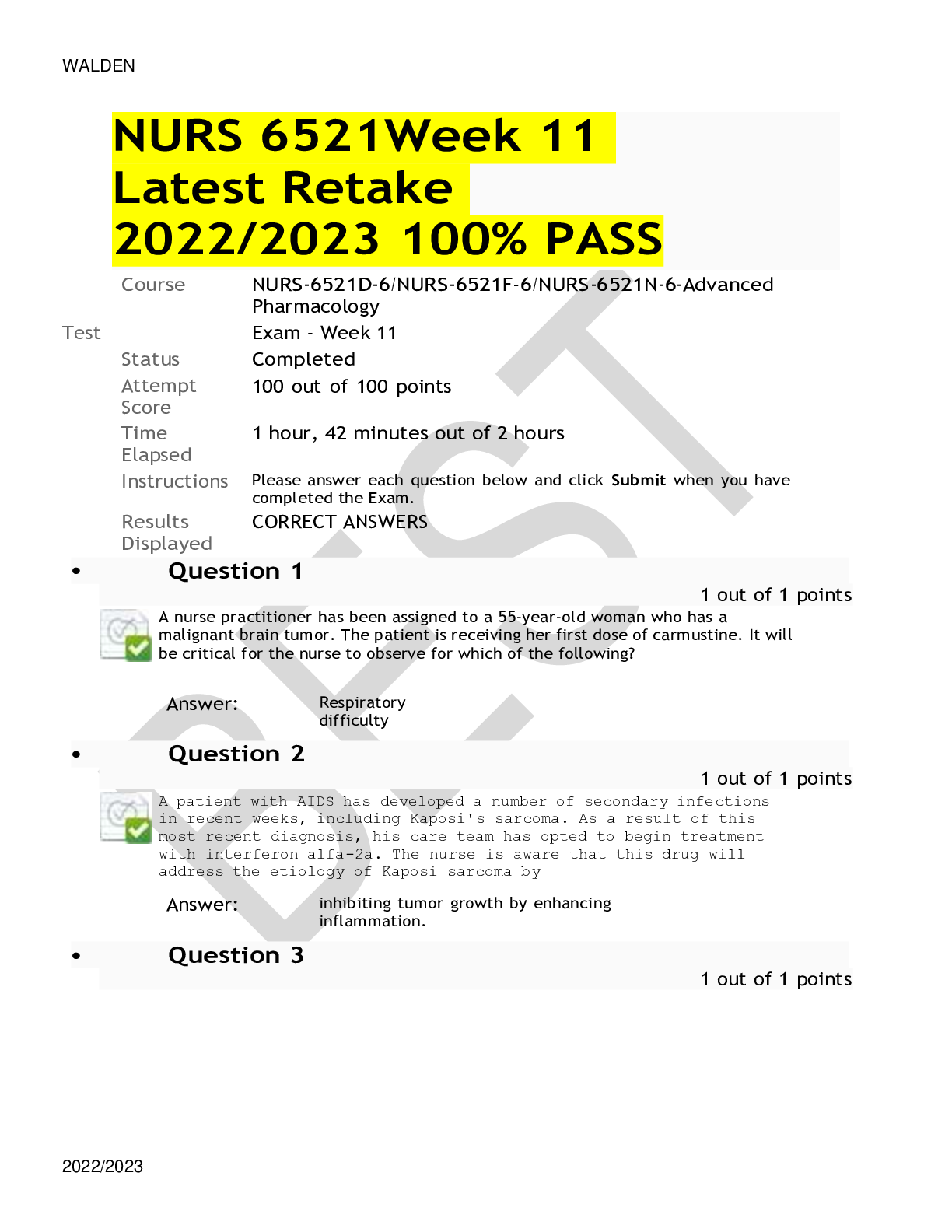
Selected Answer: "No, the drug dosage will likely stay the same."
Question 2
1 out of 1 points
A patient with seasonal allergies is exasperated by her recent nasal congestion and has
expressed her desire to treat it by using pseudoephedrine. The nurse should inform the patient
that
Selected
Answer:
she must be prepared to show identification when buying a drug that contains
pseudoephedrine.
Question 3
1 out of 1 points
A patient has been prescribed a histamine-2 (H2) receptor antagonist for the treatment of
GERD. Why are H2RAs more effective than H1 receptor antagonists in the treatment of diseases
of the upper GI tract?
Selected Answer: The parietal cells of the stomach have H2 receptors but not H1 receptors.
Question 4
1 out of 1 points
Which of the following will a Nurse Practitioner inform the patient is one of the most common
adverse effects of guaifenesin (Robitussin)?
Selected Answer: Gastrointestinal distress
Question 5
1 out of 1 points
Frequent episodes of exercise-related chest pain have caused a 79-year-old woman to use her
prescribed nitroglycerin spray several times in recent weeks. This patient's age will have what
effect on her use of nitroglycerin?
Selected Answer: The woman will be more susceptible to hypotension than a younger patient.
Question 6
1 out of 1 points
A Nurse Practitioner is teaching an older adult patient about polypharmacy. Which of the
following statements best describe this term?
Selected Answer: Taking several drugs simultaneously
Question 7
1 out of 1 points
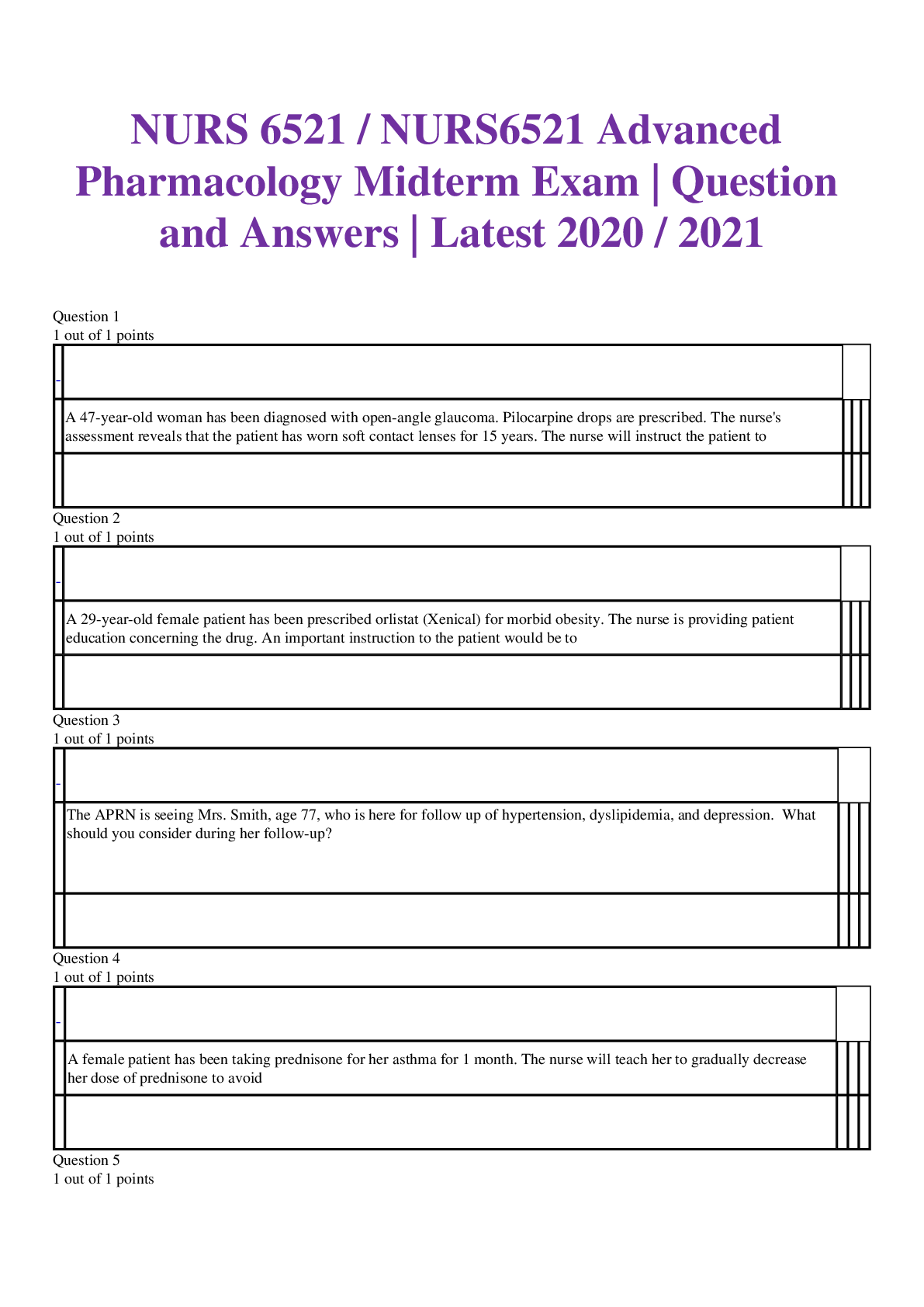
A 47-year-old woman has been diagnosed with open-angle glaucoma. Pilocarpine drops are
prescribed. The nurse's assessment reveals that the patient has worn soft contact lenses for 15
years. The nurse will instruct the patient to
Selected Answer: remove the contact lenses before applying the drops.
Question 8
1 out of 1 points
A 29-year-old female patient has been prescribed orlistat (Xenical) for morbid obesity. The nurse
is providing patient education concerning the drug. An important instruction to the patient
would be to
Selected Answer: omit the dose if the meal does not contain fat.
Question 9
1 out of 1 points
The APRN is seeing Mrs. Smith, age 77, who is here for follow up of hypertension, dyslipidemia,
and depression. What should you consider during her follow-up?
Selected
Answer:
Age-related changes in renal function are the main cause of adverse drug
reactions
Question 10
1 out of 1 points
A female patient has been taking prednisone for her asthma for 1 month. The nurse will teach
her to gradually decrease her dose of prednisone to avoid
Selected Answer: adrenal insufficiency.
Question 11
1 out of 1 points
A 24-year-old factory worker has been prescribed guaifenesin for the first time. Which of the
following will be a priority assessment by the nurse before the patient's first dose?
Selected Answer: The amount of alcohol consumption
Question 12
1 out of 1 points
A 73-year-old woman has scheduled an appointment with her nurse practitioner to discuss her
recurrent constipation. The woman states that she experiences constipation despite the fact
that she takes docusate on a daily basis and performs cleansing enemas several times weekly.
How should the nurse best respond to this patient's statements?
Selected
Answer:
"Taking too many laxatives can make your bowels dependent on them, making
you more susceptible to constipation."
Question 13
1 out of 1 points
An expected outcome for a patient who has just taken sublingual nitroglycerin should be
Selected Answer: increased heart rate and decreased blood pressure.
Question 14
1 out of 1 points
A Nurse Practitioner is caring for a patient who is taking digoxin and a loop diuretic. Which of
the following would be most important for the Nurse Practitioner to monitor?
Selected Answer: Potassium levels
Question 15
1 out of 1 points
A Nurse Practitioner who provides care on an acute medicine unit has frequently recommended
the use of nicotine replacement gum for patients who express a willingness to quit smoking
during their admission or following their discharge. For which of the following patients would
nicotine gum be contraindicated?
Selected
Answer:
A patient with a history of angina who experienced a non-ST wave myocardial
infarction
Question 16
1 out of 1 points
A patient has recently been prescribed a drug that treats his hypertension by blocking the
sympathetic receptors in his sympathetic nervous system. This action is characteristic of
Selected Answer: an adrenergic antagonist.
Question 17
0 out of 1 points
A Nurse Practitioner is caring for a 73-year-old man who is receiving drug therapy. He is
beginning to exhibit signs of decline in his renal system, yet his current serum creatinine level is
normal. The Nurse Practitioner will base the patient's plan of care on the understanding that
there is
Selected Answer: a decrease in the effectiveness of the prescribed drugs.
Question 18
0 out of 1 points
A Nurse Practitioner is caring for a male patient who has a diagnosis of coronary artery disease
(CAD). His drug therapy includes lovastatin. Because the patient has a history of severe renal
disease, the nurse will assess for which of the following?
Selected Answer: Decrease in LDL
Question 19
0 out of 1 points
A 56-year-old female patient has been admitted to the hospital with chronic muscle spasms and
has been prescribed a new medication to treat the spasms. She has a poorly documented
allergy to eggs, synthetic clothes, and perfumes. What is the priority action of the nurse to
ensure that prescribed medication does not experience an allergic reaction?
Selected
Answer:
Hold the medication for her muscle spasms until she can be treated for a
possible allergic reaction
Question 20
0 out of 1 points
Which of the following statements best defines how a chemical becomes termed a drug?
Selected Answer: A chemical must have demonstrated therapeutic value to become a drug.
Question 21
1 out of 1 points
An elderly postsurgical patient has developed postoperative pneumonia in the days following
abdominal surgery and is being treated with a number of medications. Which of the following
medications that the nurse will administer has the slowest absorption?
Selected
Answer:
An oral antidepressant that the patient has been taking daily for several
years
Question 22
1 out of 1 points
A Nurse Practitioner is providing discharge planning for a 45-year-old woman who has a
prescription for oral albuterol. The Nurse Practitioner will question the patient about her intake
of which of the following?
Selected Answer: Coffee
Question 23
1 out of 1 points
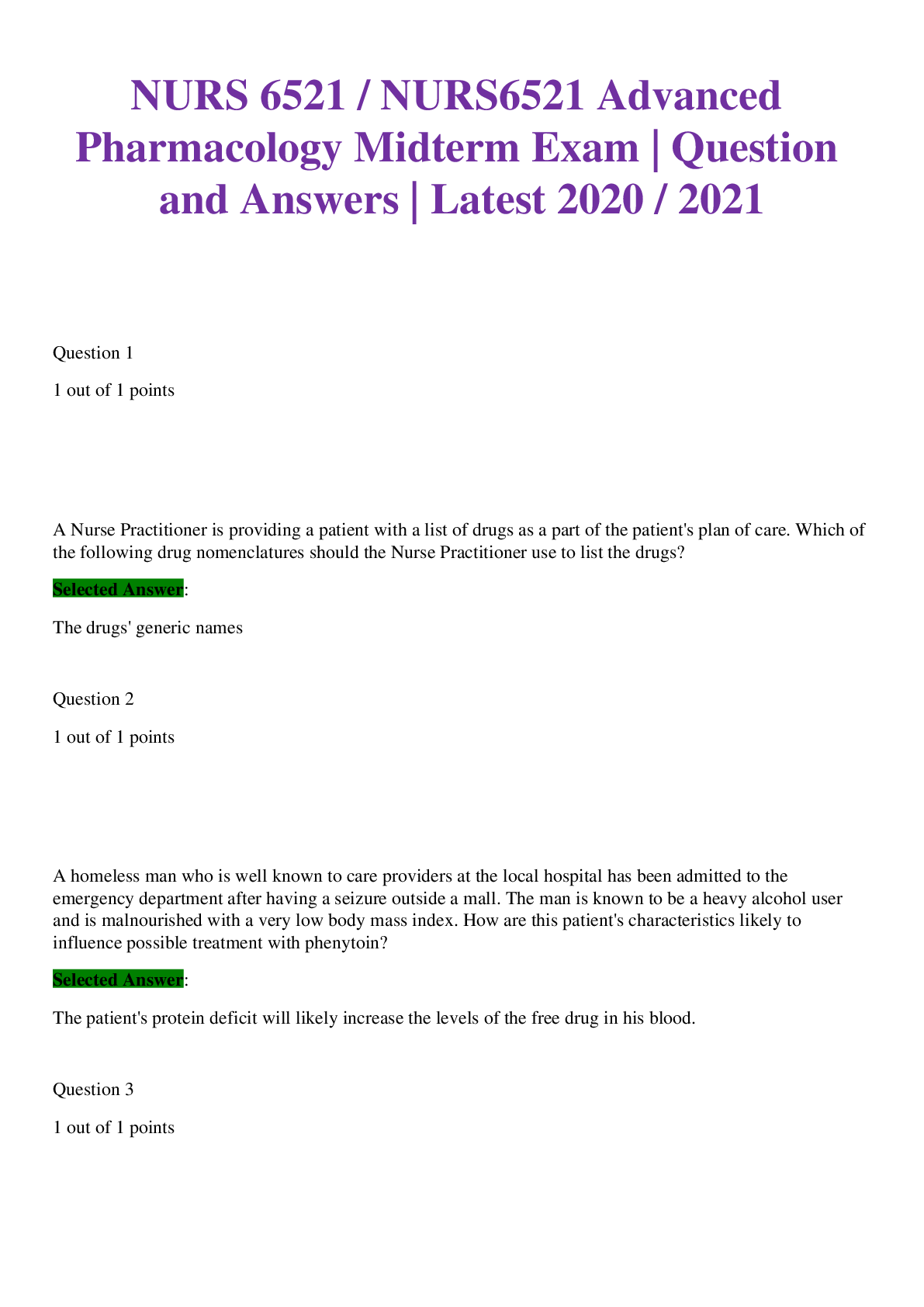
A Nurse Practitioner is providing a patient with a list of drugs as a part of the patient's plan of
care. Which of the following drug nomenclatures should the Nurse Practitioner use to list the
drugs?
Selected Answer: The drugs' generic names
Question 24
1 out of 1 points
A 79-year-old woman who takes several medications for a variety of chronic health problems
has been prescribed an oral antiplatelet aggregator that is to be taken once daily. The nurse has
encouraged the woman to take the pill at the same time of day that she takes some of her other
medications. What is the most likely rationale for the nurse's advice?
Selected
Answer:
Integrating the new drug into the patient's existing schedule promotes
adherence.
Question 25
1 out of 1 points
A teenage boy has undergone a diagnostic workup following several months of persistent,
bloody diarrhea that appears to lack an infectious etiology. The boy has also experienced
intermittent abdominal pain and has lost almost 15 pounds this year. Which of the following
medications is most likely to treat this boy's diagnosis?
Selected Answer: Mesalamine
Question 26
1 out of 1 points
An unconscious patient has been brought to the hospital, and the Nurse Practitioner has
prescribed a life-saving drug to be administered parenterally. Which of the following methods
would be the most appropriate for the nurse to use when administering the medication?
Selected Answer: Intravenous infusion.
Question 27
1 out of 1 points
A 53-year-old man has been treated for severe asthma for several years with prednisone.
Recently, his physician initiated alternate-day therapy for him. The patient tells the nurse that he
would rather take the medication every day to prevent confusion. Which of the following would
be the best response by the nurse?
Selected
Answer:
"This schedule allows rest periods so that adverse effects are decreased but the
anti-inflammatory effects continue."
Question 28
1 out of 1 points
A patient receives 25 units of NPH insulin at 7.AM. At what time of day should the nurse advise
the patient to be most alert for a potential hypoglycemic reaction?
Selected Answer: Late afternoon
Question 29
1 out of 1 points
A 62-year-old man has been prescribed lovastatin. The Nurse Practitioner will instruct the
patient to take the medication
Selected Answer: at bedtime.
Question 30
1 out of 1 points
A female patient has been taking zafirlukast for a week and is experiencing diarrhea. The nurse
should instruct her to do which of the following?
Selected Answer: Drink plenty of fluids
Question 31
1 out of 1 points
The lower respiratory system utilizes a number of different mechanisms that confer protection
and maintain homeostasis. Which of the following physiological processes protects the lower
respiratory system?
Selected
Answer:
Cilia sweep foreign material and mucus upward toward the trachea and larynx
where they can then be swallowed.
Question 32
1 out of 1 points
The parents of a 7-year-old boy who has just been diagnosed with allergic asthma are being
taught about their son's medication regimen by the nurse. The nurse is currently teaching the
parent's about the appropriate use of a "rescue drug" for acute exacerbations of their son's
asthma. Wha
[Show More]