HFL1501- PORTFOLIO : 21 SEPTEMBER 2021 (YEAR MODULE)
Document Content and Description Below
QUESTION 1
Read the following two statements regarding the constitutional development of
indigenous law and determine whether each one is true or false. Write only the
correct option as your answer.
1.1 True
1.2 Fal
...
[Show More]
Last updated: 3 years ago
Preview 1 out of 20 pages
Instant download
Buy this Document to get the Full Access Instantly
Provided by Students Who Aced it
We Verify Document Content to Gurantee Accuracy
Reviews( 0 )
Document information
Connected school, study & course
About the document
Uploaded On
Sep 20, 2021
Number of pages
20
Written in
All

Additional information
This document has been written for:
Uploaded
Sep 20, 2021
Downloads
0
Views
133
Topic Tags
Related Subjects & Courses
Explore similar study resources and related concepts.
Recommended For You
Get more on EXAM »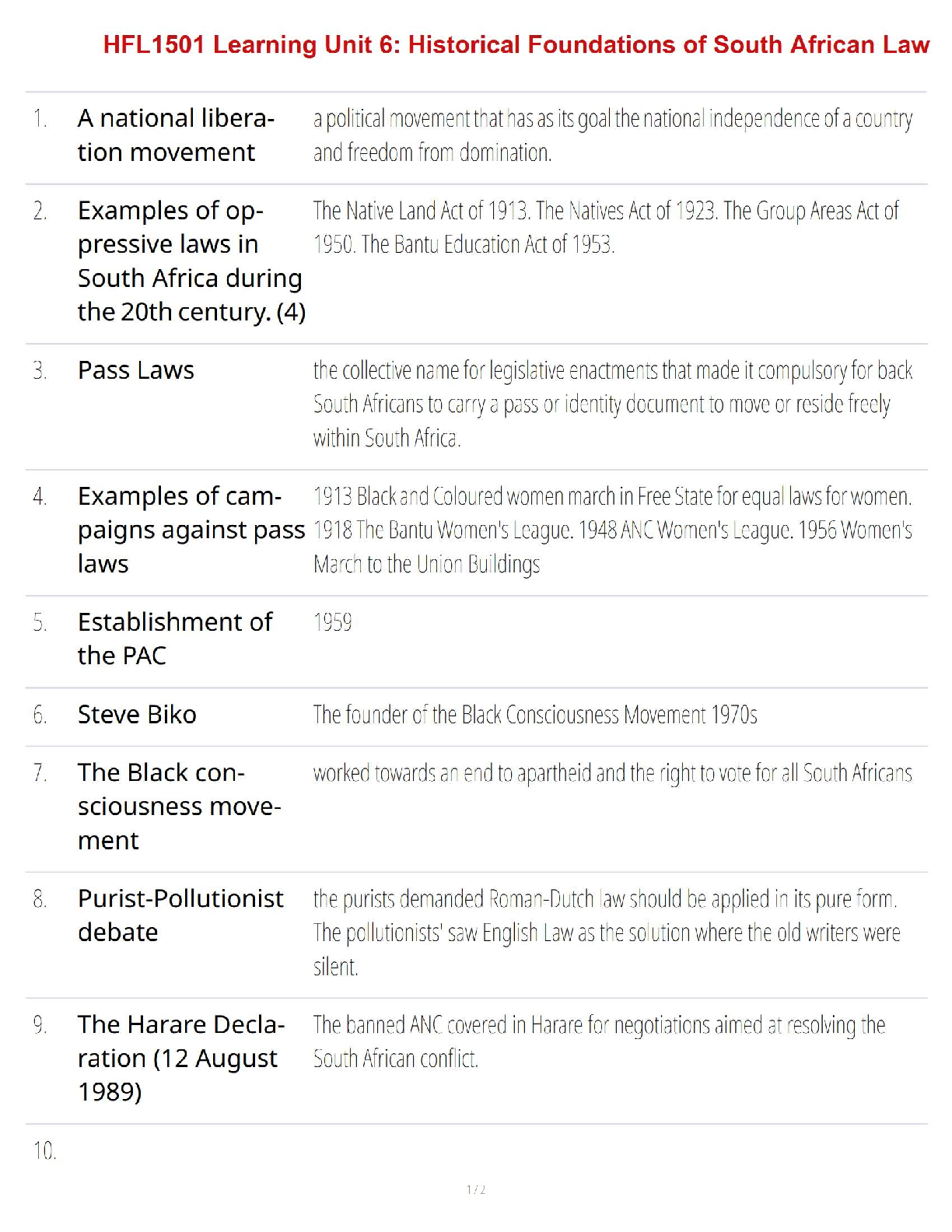
$7.5
2 Pages
HFL1501 Learning Unit 6: Historical Foundations of South Afric...
$25
107 Pages
The Law of Public Communication, 12th Edition William, Daxton...
$20
885 Pages
Test Bank for Paralegal Today The Legal Team at Work 7th Edit...
$15
69 Pages
American Constitutional Law Introductory Essays and Selected C...

$20
72 Pages
American Constitutional Law Introductory Essays and Selected C...
More related documents below