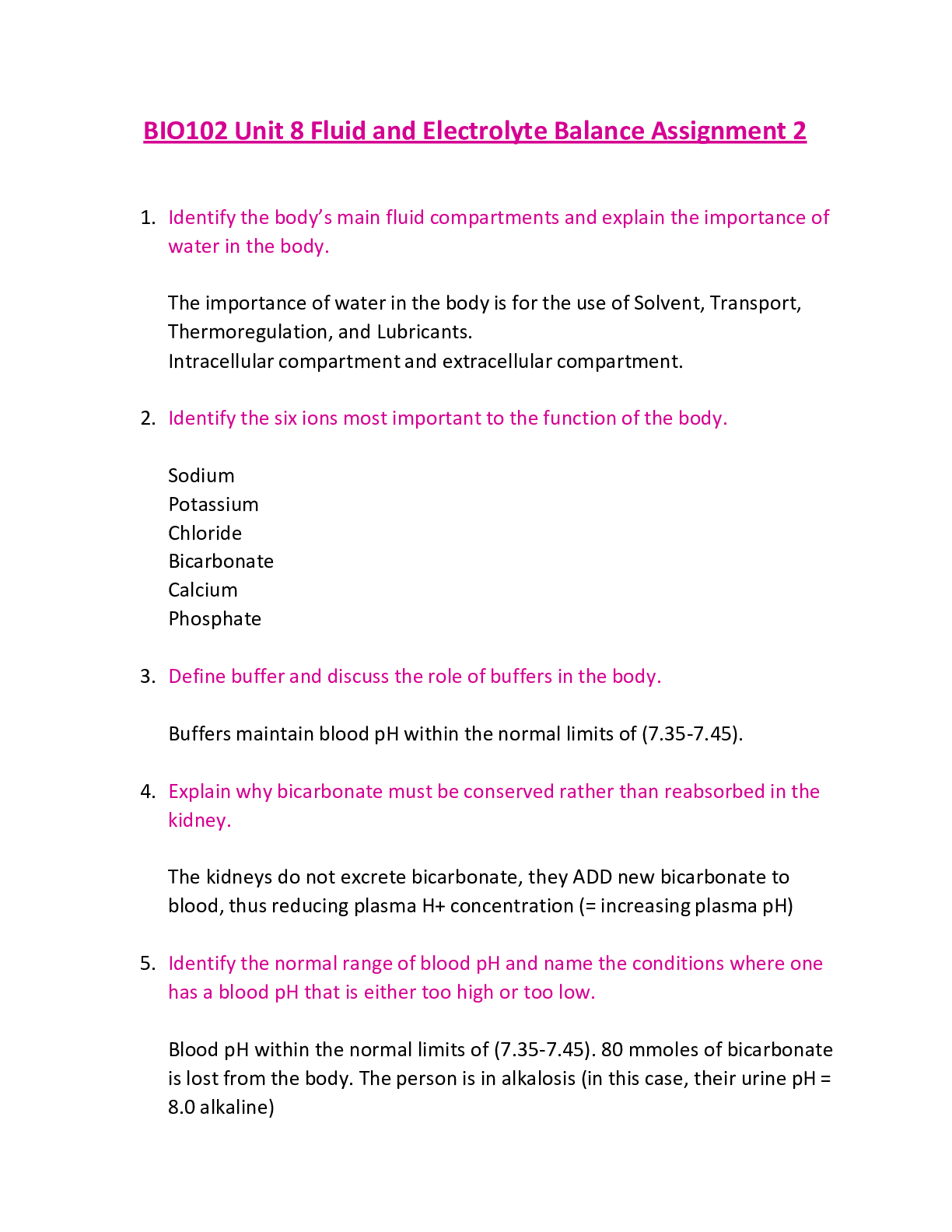
NR 601 FINAL EXAM (ASSURED A)
: NR 601
Final Exam Study Guide / NR601 Final Exam
Study Guide
Week 5: Glucose metabolism disorders
Types of DM
1. Type 1- severe insulin deficiency resulting in reduction or absence
...
NR 601 FINAL EXAM (ASSURED A)
: NR 601
Final Exam Study Guide / NR601 Final Exam
Study Guide
Week 5: Glucose metabolism disorders
Types of DM
1. Type 1- severe insulin deficiency resulting in reduction or absence of functioning beta
cells in the pancreatic islets of Langerhans. This leads to hyperglycemia due to altered
metabolism of lipids, carbs, and proteins. Initial s/s of hyperglycemia. Subjective
findings- polyuria, polydipsia,nocturnal enuresis and polyphagia with paradoxical weight
loss, visual changes and fatigue. Objective-dehydration(poor skin turgor and dry
mucous), wt loss despite normal/increase appetite, reduction in muscle mass. DKA�fatigue, cramping, abnormal breathing
2. Type 2- Type 2 DM is characterized by the abnormal secretion of insulin, resistance to
the actionof insulin in the target tissues, and/or an inadequate response at the level of
the insulin receptor. A patient may, however, present with pruritus, fatigue, neuropathic
complaints such as numbness and tingling, or blurred vision.
3. Prediabetic- fasting glucose consistently elevated above the normal range but less than 100-
125. Impaired glucose tolerance (IGT) state of hyperglycemia where 2 hr post glucose
loadglycemic level is 140-199
Diagnostic criteria- there are 4 lab-based criteria to confirm DM: A1C, random plasma glucose,
fastingplasma glucose, and 2-hr post load plasma glucose
• AIC of 6.5 or higher=diabetes
• Random plasma glucose level of 200 WITH classic symptoms of
hyperglycemia or ahyperglycemic crisis
• Fasting plasma glucose level of 126 or higher on TWO occasions(fasting is defined as
no caloricintake for at least 8 hrs
• 2-hour post load plasma glucose level of 200 or higher during an OGTT, following
consumptionof a glucose load containing the equivalent of 75g of anhydrous glucose
dissolved in water (OGTT is also used to screen for diabetes during pregnancy)
*** In the absence of unequivocal hyperglycemia results should be confirmed by repeat
testing on anew blood sample without delay, preferably using the same type of test.***
• *All above-but confirmation of type 2 diabetes mellitus requires: two fasting blood glucoses
≥126 mg/dL or two random blood glucoses ≥200 mg/dL.
• You do not screen for type 1 diabetes but you do screen for type 2 if an individual is
overweight or obese, regardless of age, and for all adults aged 45 years and older.
Tests should be repeatedat a minimum of 3 year intervals
Initial Treatment-
Type 1- FIRST LINE: INSULIN. The initial goal of treatment for type 1 DM is to
normalize the elevated blood glucose level. This is best accomplished by intensive
insulin regimens to achievethe following goals: plasma glucose levels of 80 to 130 mg/dL
before meals, peak postprandial
1
(1–2 hours after the beginning of a meal) glucose levels of less than 180 mg/dL, and an
A1C below 7% for adults with type 1 DM. A comprehensive treatment plan requires
exogenous insulin, frequent self-monitoring of blood glucose (SMBG), medical nutrition
therapy, regular exercise, continuing education in prevention and treatment of diabetic
complications, and the periodic reassessment of treatment goals. (Type 1A: insulin
dependent, Type 1B: variably insulindependent). The ADA Standards of medical care in
diabetes states that the majority of patients with type 1 DM, should be treated with
multiple daily injections of prandial insulin and daily basal insulin or with a continuous
subcutaneous insulin infusion pump. INITIATION OF INSULIN THERAPY IN NEWLY
DIAGNOSED TYPE 1 DM, SHOULD BE MANAGED BY OR IN CLOSE
COLLABORATION WITH AN ENDOCRINOLOGIST.
Type 2-FIRST LINE: LIFESTYLE MANAGEMENT. Interventions should include
treatments directed at both risk reduction and glycemic control. Lifestyle management is
an important part of treatment and comprises nutrition therapy, activity prescriptions for
exercise, decreased prolonged sitting, and in older adults, training in balance and
flexibility. Lifestyle management should focus on mental health, sleep, and smoking
cessation. Obesity management has become a high-level target in the treatment of pts
with type 2 DM. ADA states that every patient should receive diabetes self-management
education and diabetes self-management support at the timeof diagnosis.
Pharmacological therapy for type 2 DM is required when lifestyle management does not
resultin adequate blood glucose control. Drug therapy should always be considered an
adjunctive therapy to lifestyle management, as the latter is typically initiated first. The
ADA and AACE recommend metformin if there are no contraindications, such as renal
disease or abnormal creatinine clearance, acute myocardial infarction, or septicemia.
The AACE recommends adding a second agent to lifestyle treatment and metformin if
the A1C ismore than 7.5% at the time of diagnosis or after 3 months of monotherapy
without achievement of the patient’s blood glucose goals. Metformin can be used as a
monotherapy unless the patient has contraindications or intolerance. Although metformin
is the first-line medication recommended by the ADA and the AACE for DM type 2, it
should be used only in patients with adequate renal function and should not be used in
patients with an eGFR below 45mL/min/1.73 m2.
• Immediately upon diagnosis of type 2 DM, begin lifestyle therapy with medically
assistedobesity treatment.
• If glycemic goals are still not met 3 months later, begin single-agent or dual therapy
with oralantidiabetic agents, depending on whether A1C is less than or greater than
7.5%.
• If glycemic goals are not met in 3 months, initiate triple therapy.
• If after 3 additional months (or at the time of diagnosis) A1C is 9.0% or higher and
the patientis symptomatic, add insulin therapy.
• A1c-Gyycemic level over 2-3months and is helpful is documenting
control andcontinuing care.
• A1c less than 7% indicate strong control
• 6.5%or less decrease occurrence of complications achieved w/o hypoglycemia
or otheradverse effect.
[Show More]

 GRADE A SOLUTION.png)