NR-511 Differential Diagnosis & Primary Care Practicum - WK 3 Quiz
Document Content and Description Below
NR-511 Differential Diagnosis & Primary Care Practicum - WK 3 Quiz
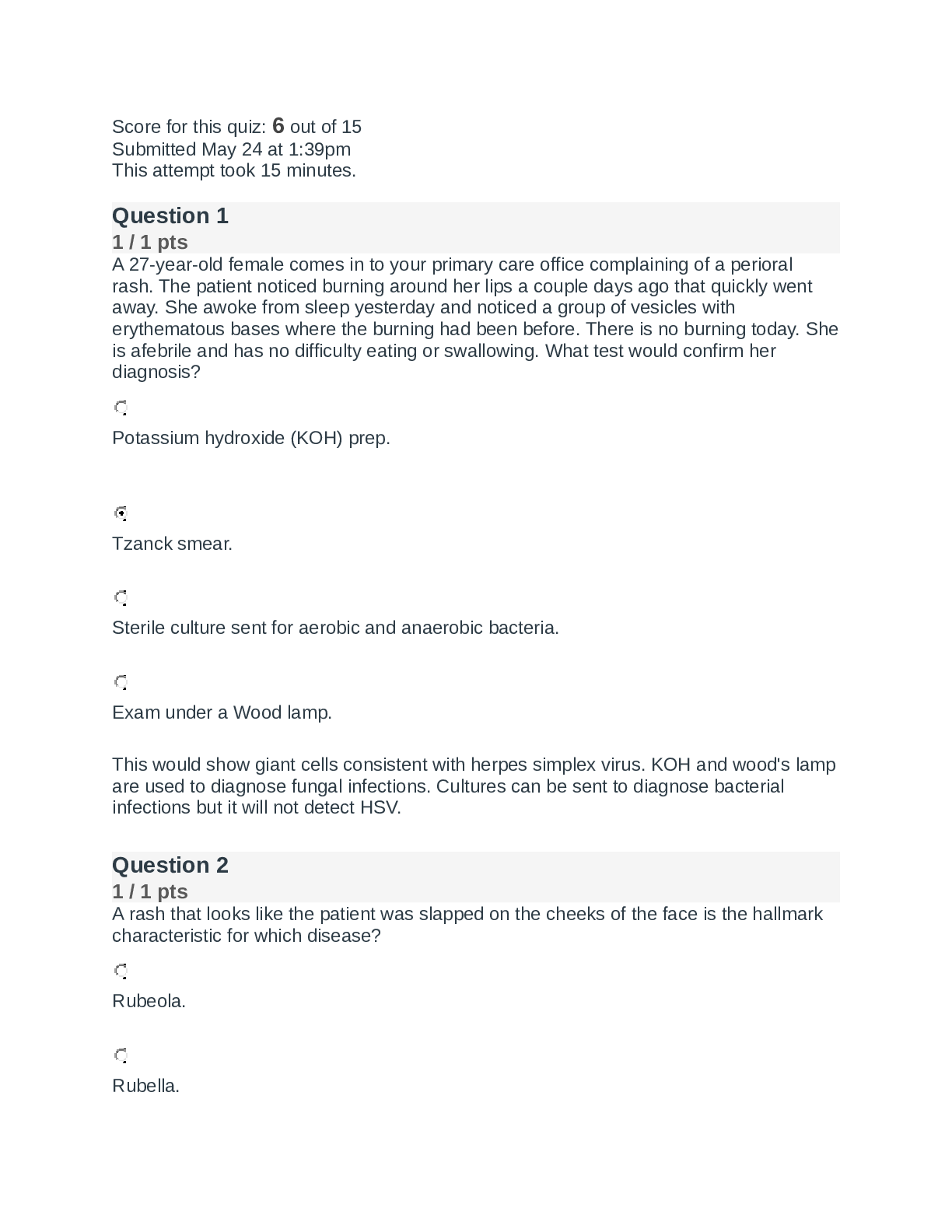
A 27-year-old female comes in to your primary care office complaining of a perioral rash. The patient noticed burning around her lips a couple days ag
...
[Show More]
Last updated: 3 years ago
Preview 1 out of 10 pages
Instant download
Buy this Document to get the Full Access Instantly
Provided by Students Who Aced it
We Verify Document Content to Gurantee Accuracy
Reviews( 0 )
Document information
Connected school, study & course
About the document
Uploaded On
Sep 23, 2021
Number of pages
10
Written in
All

Additional information
This document has been written for:
Uploaded
Sep 23, 2021
Downloads
0
Views
69
Topic Tags
Recommended For You
Get more on EXAM »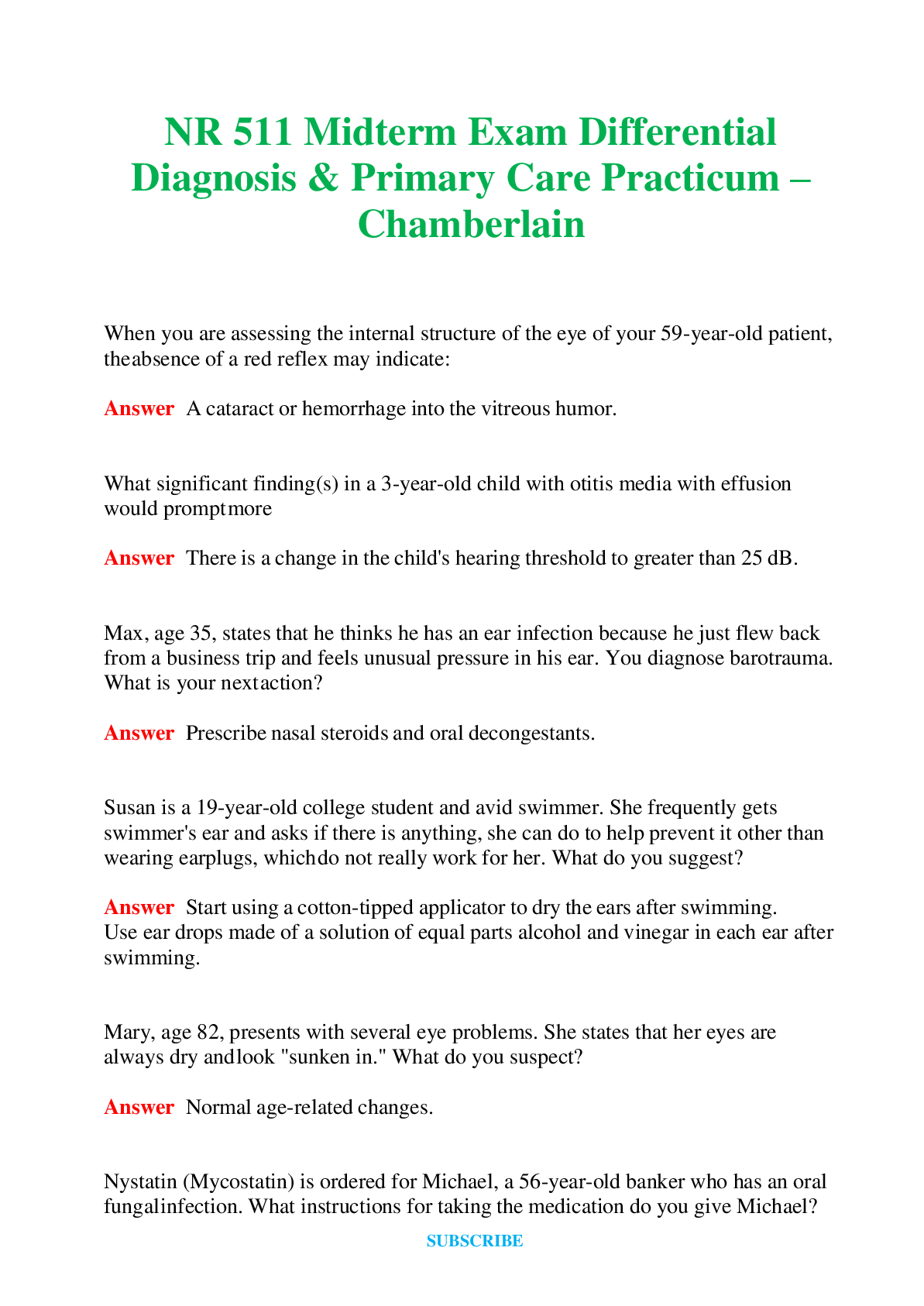
$12.5
39 Pages
NR 511 Midterm Exam Differential Diagnosis & Primary Care Pr...
$12.5
19 Pages
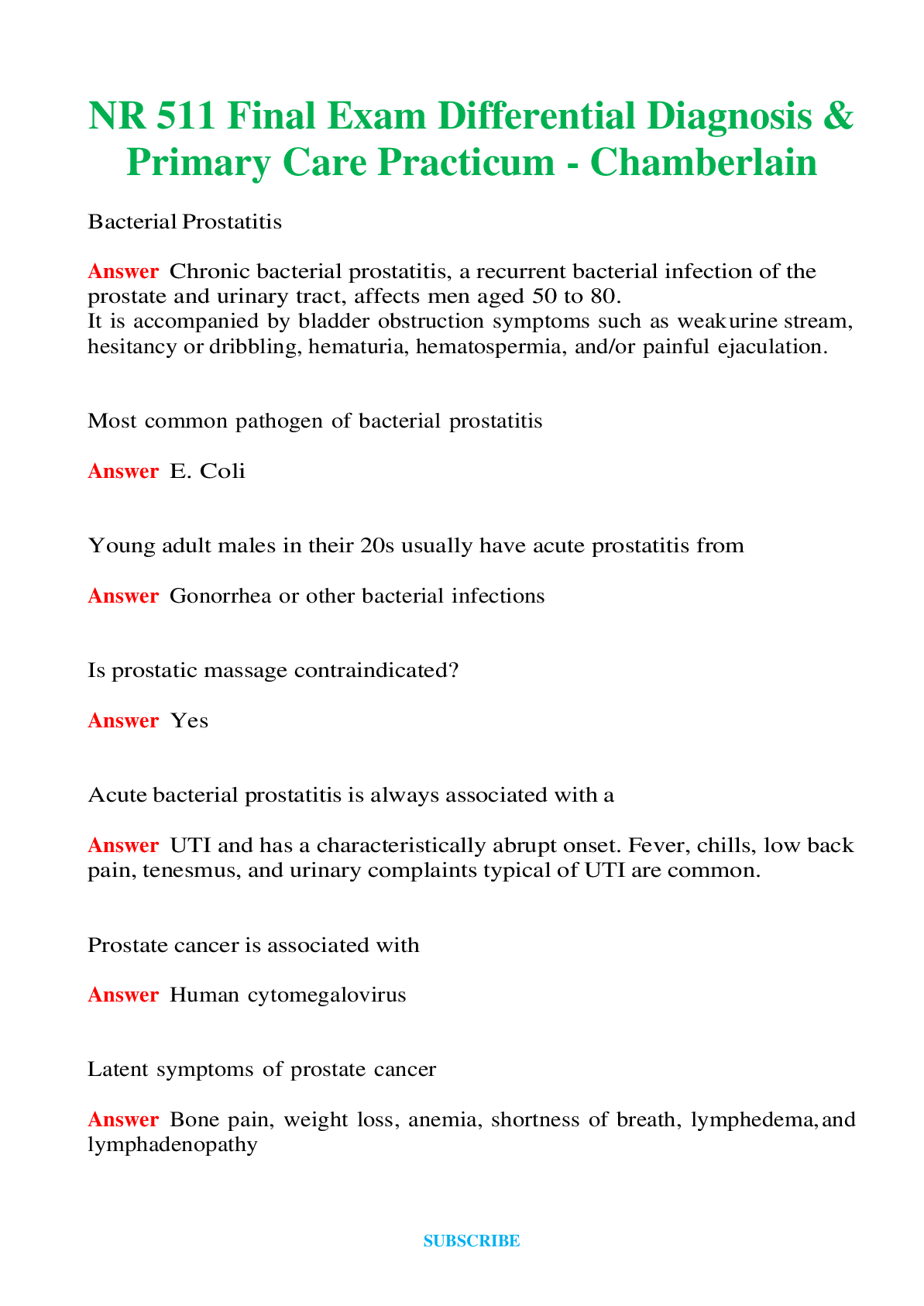
NR 511 Final Exam Differential Diagnosis & Primary Care Pra...
$12.5
19 Pages
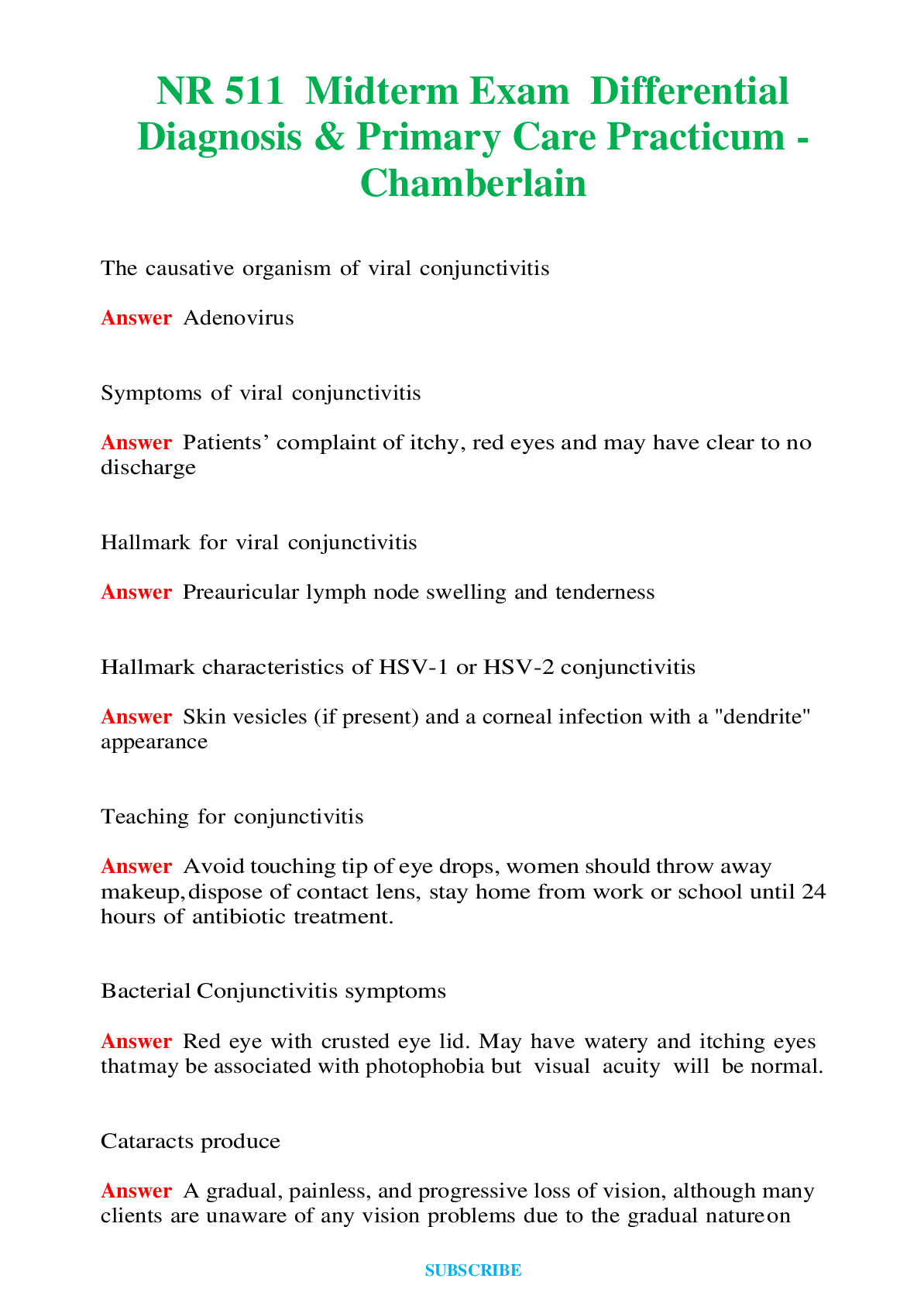
NR 511 Midterm Exam Differential Diagnosis & Primary Care...
$10
17 Pages
NR511 / NR 511 Midterm Exam : Differential Diagnosis & Primar...
 F21.png)
$10.5
21 Pages
NR511 / NR 511 Final Exam : Differential Diagnosis & Primary...
$10
111 Pages
NR511 / NR 511 Midterm Exam Study Guide Updated: Differential...
$29
99 Pages
NR 511 Week 1-7 Assignments, Case Study Discussion Solutions,...
$13
23 Pages
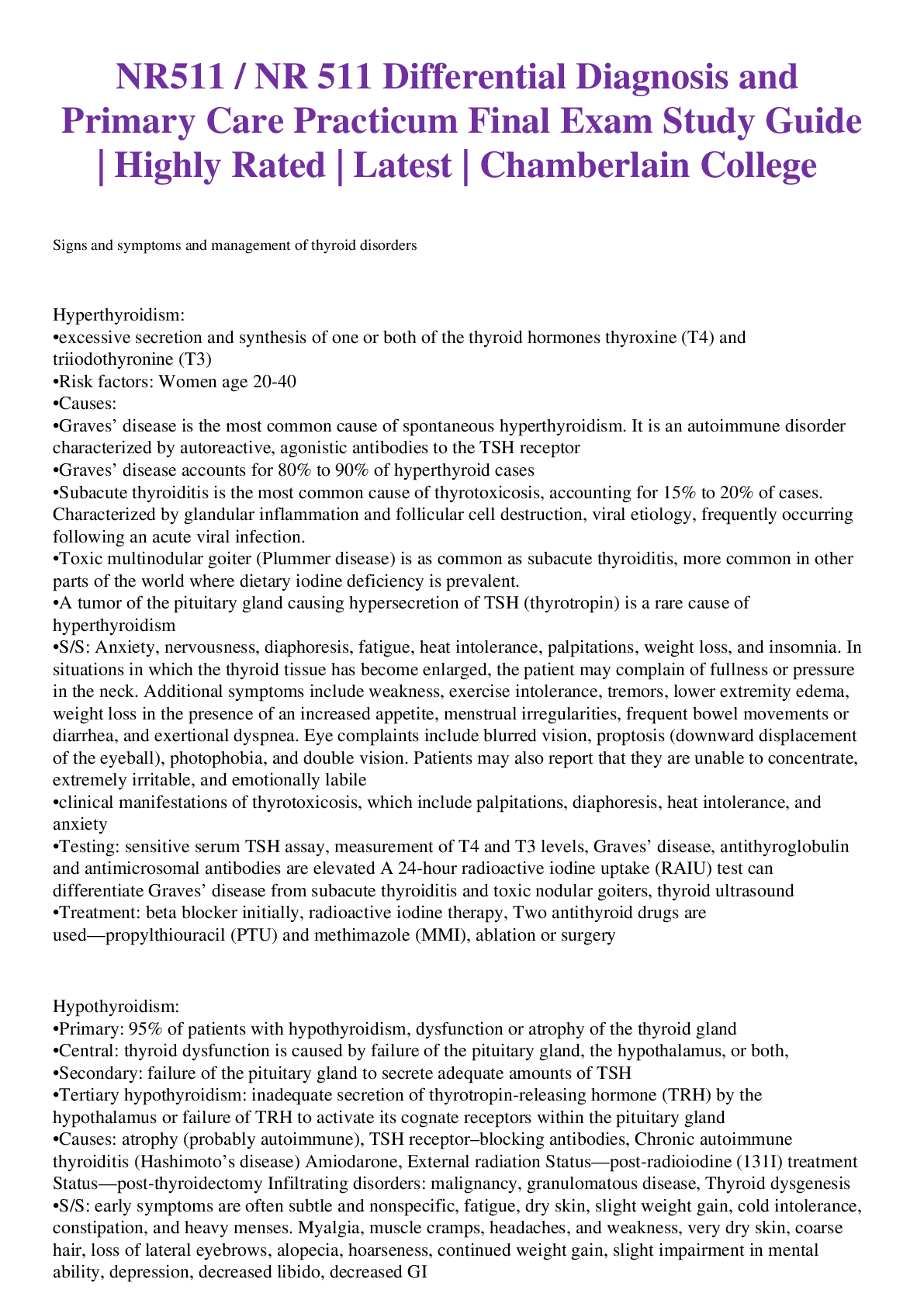
NR511 / NR 511 Differential Diagnosis and Primary Care Practic...

$15
74 Pages