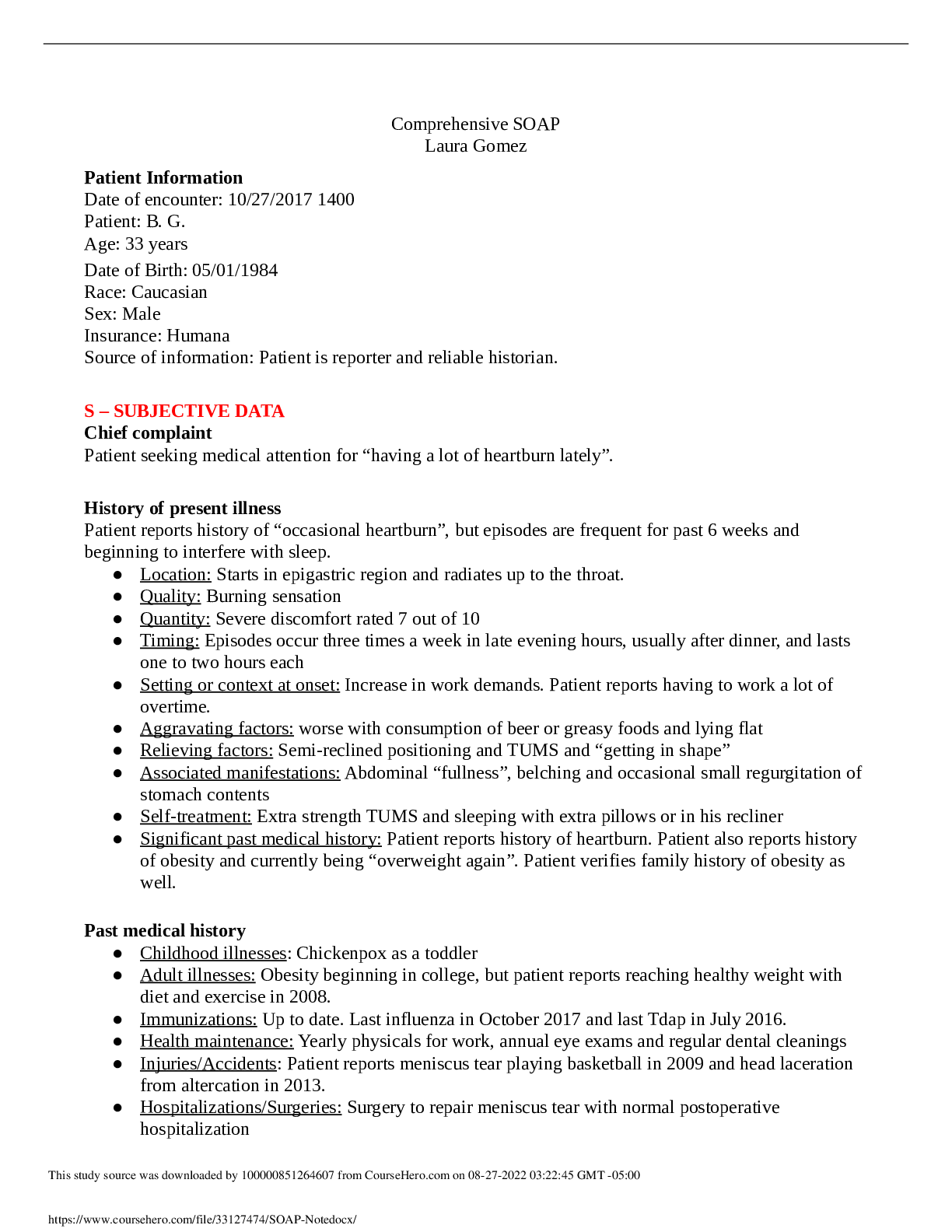
SCIENCE 101 > SOAP NOTE > University of FloridaSCIENCE 275soap note 2. (All)
University of FloridaSCIENCE 275soap note 2.
Document Content and Description Below
Last updated: 3 years ago
Preview 1 out of 11 pages
Instant download

Buy this Document to get the Full Access Instantly
Provided by Students Who Aced it
We Verify Document Content to Gurantee Accuracy
Reviews( 0 )
Document information
Connected school, study & course
About the document
Uploaded On
Sep 29, 2021
Number of pages
11
Written in
All

Additional information
This document has been written for:
Uploaded
Sep 29, 2021
Downloads
0
Views
261
Topic Tags
Related Subjects & Courses
Explore similar study resources and related concepts.
Recommended For You
Get more on SOAP NOTE »
Test Bank for The Cell A Molecular Approach 8th Edition By Geo...

Test Bank for Neuroscience 6th Edition Dale Purves, George Aug...
Exploring Psychology, 12th Edition by David Myers, Nathan DeWa...

Test Bank (Downloadable Product) for The Sciences: An Integrat...

Solutions Manual for Complexity Science The Study of Emergence...



Instructor Solution Manual for Category Theory for the Scienc...


SCIN 130 / SCIN130, Quiz 1 Questions and Answers(100%) Latest...
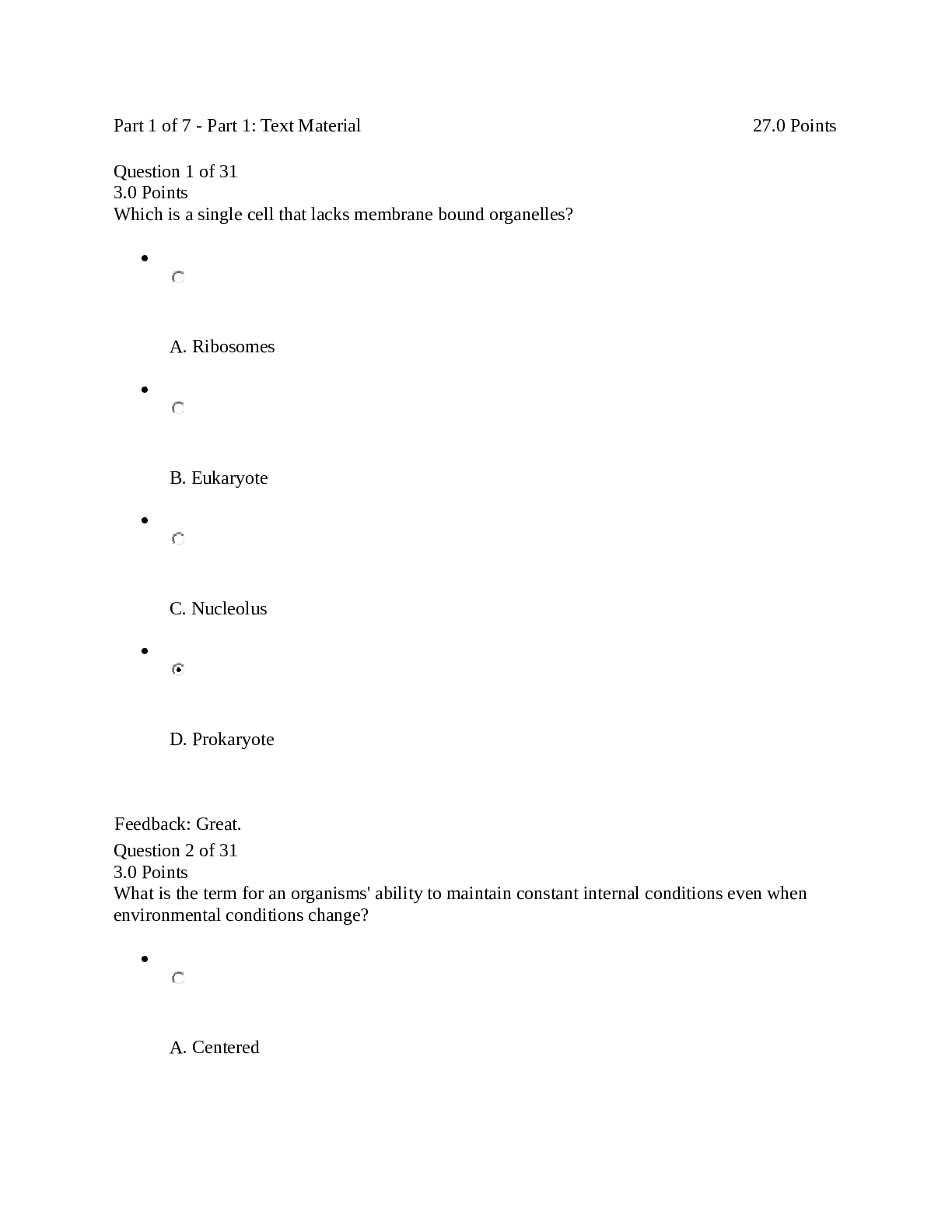
SCIN 130 / SCIN130, Week 1 Questions and Answers(100%) Latest...

American Public University SCIN 130 Questions and Answers Rate...

DeVry University, HendersonSCI 228WEEK 8 final exam nutrition...
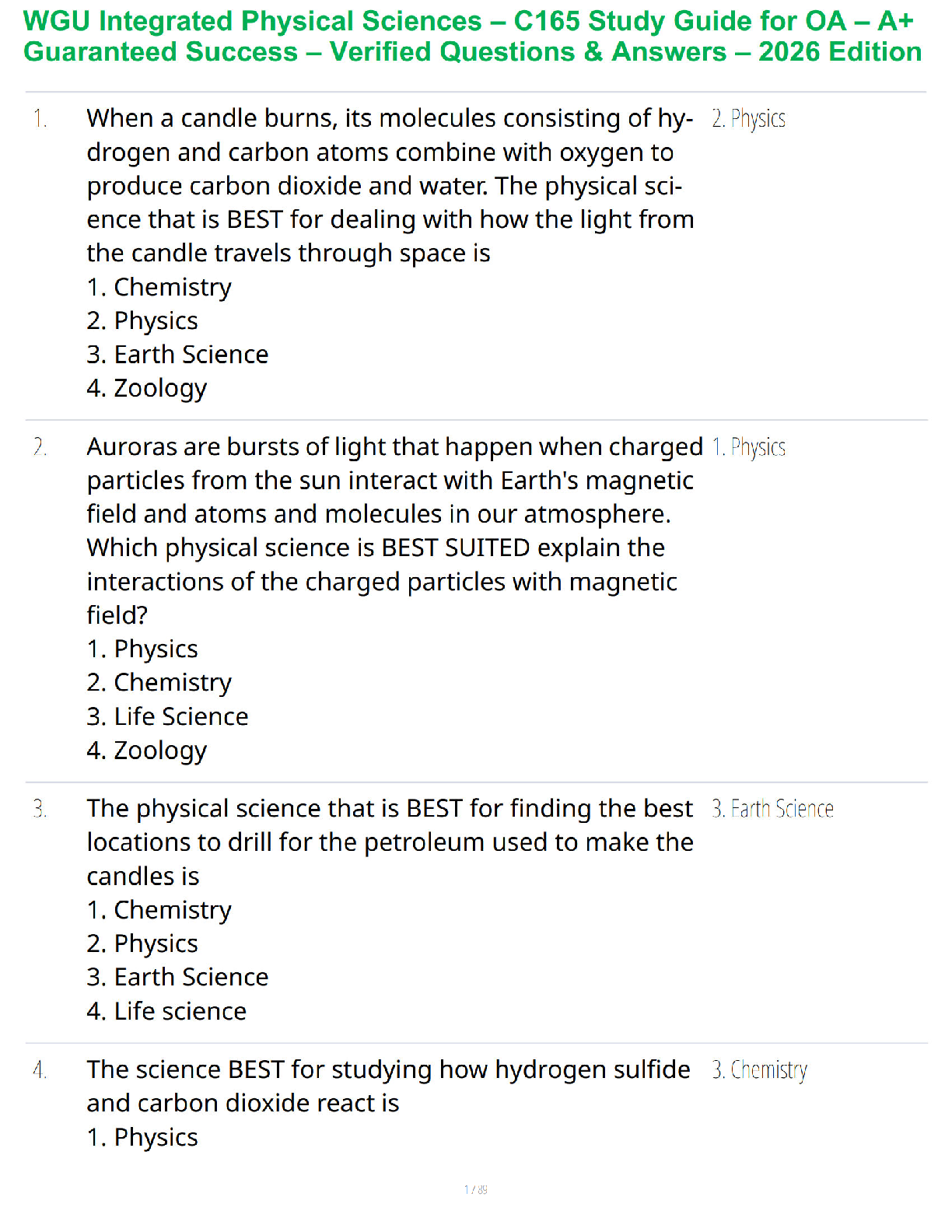
WGU Integrated Physical Sciences – C165 Study Guide for OA – A...

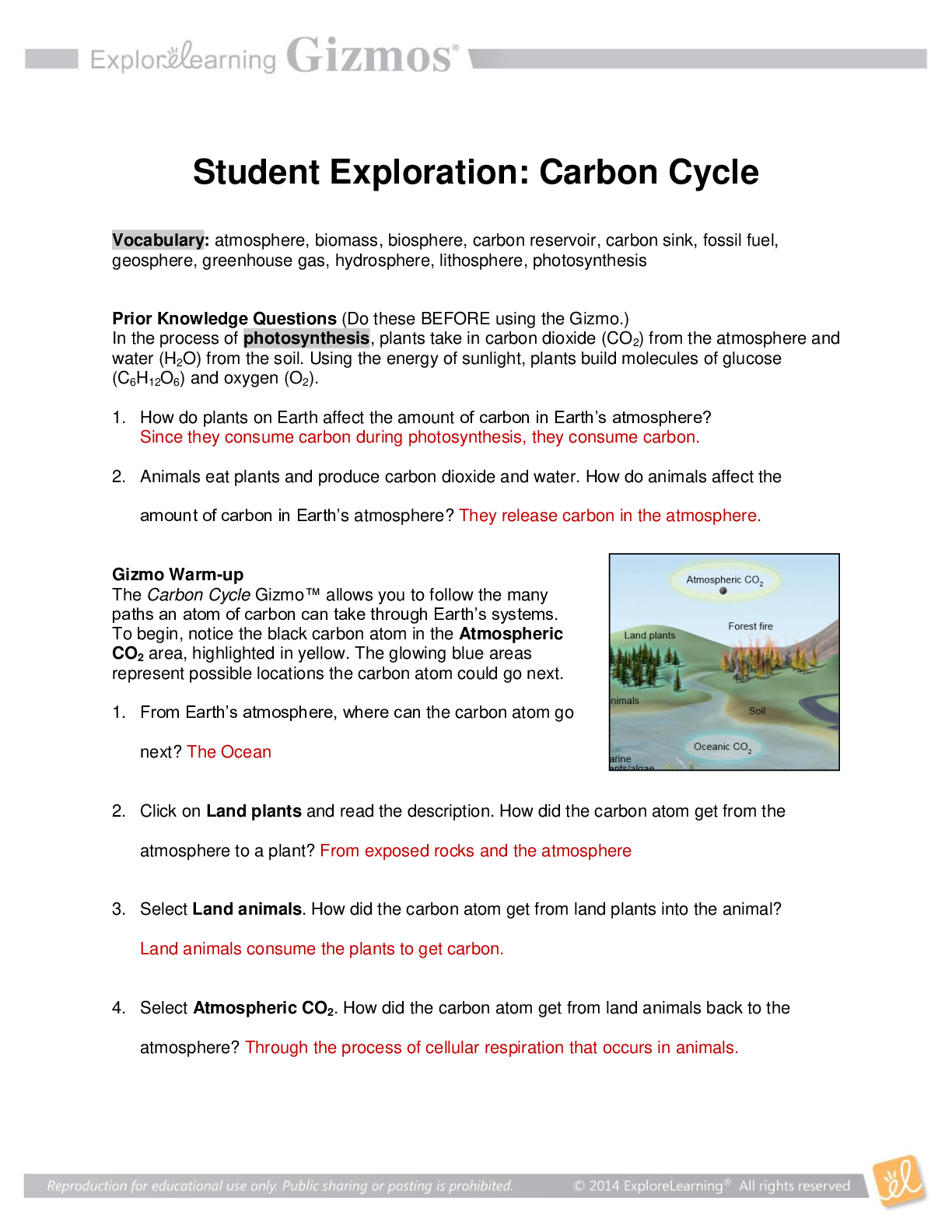
Gizmos Carbon Cycle SE_Student Exploration | All Answers Indi...
.png)
NATIONAL CENTER FOR CASE STUDY TEACHING IN SCIENCE A Trip to t...
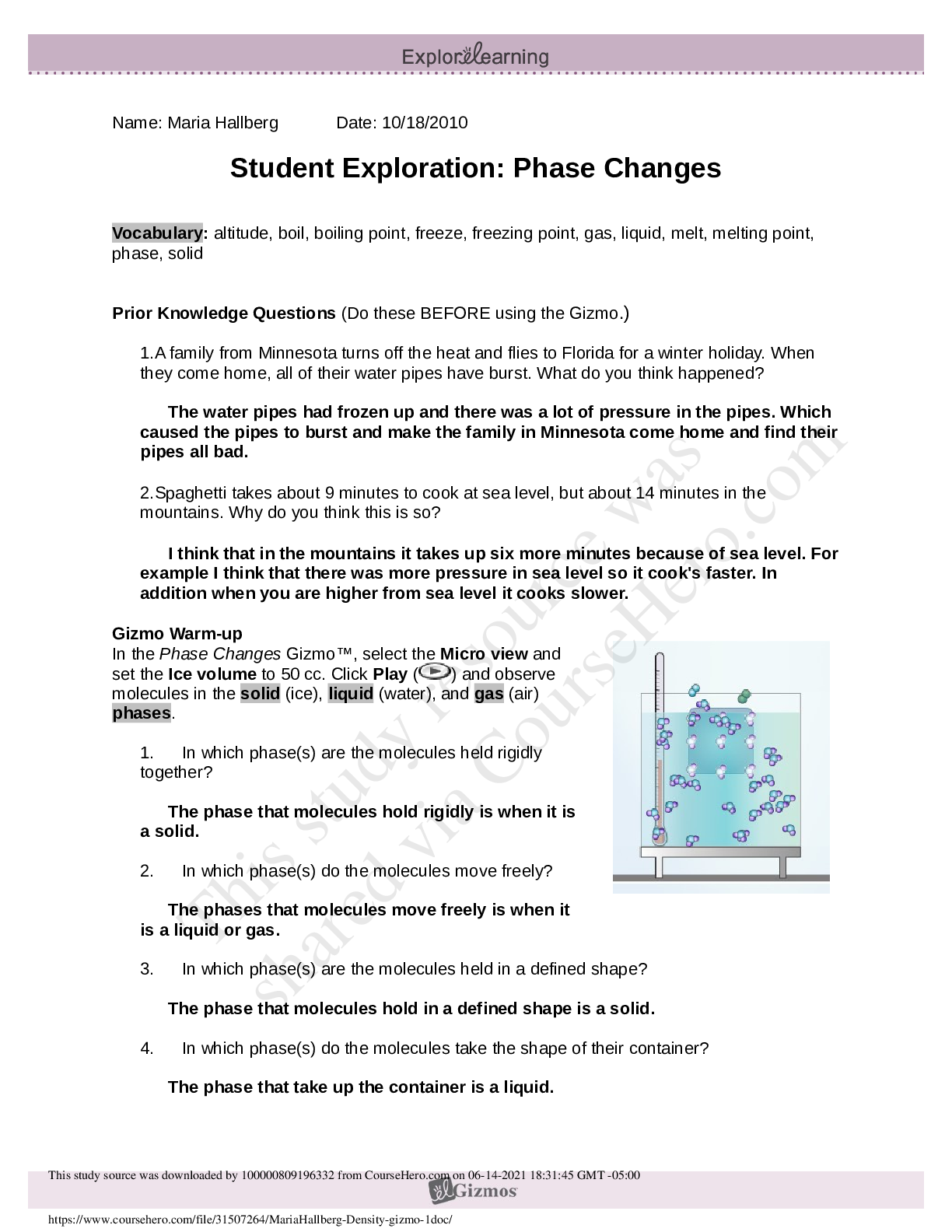
.png)