Hematologic Alterations:
❖ Blood:
➢ Erythrocytes (RBCs):
■ 1. Have a biconcave shape, optimal for gas diffusion in and out of the cell
■ 2. Have the micro capacity to be reversibly deformed
● Can squeeze through the
...
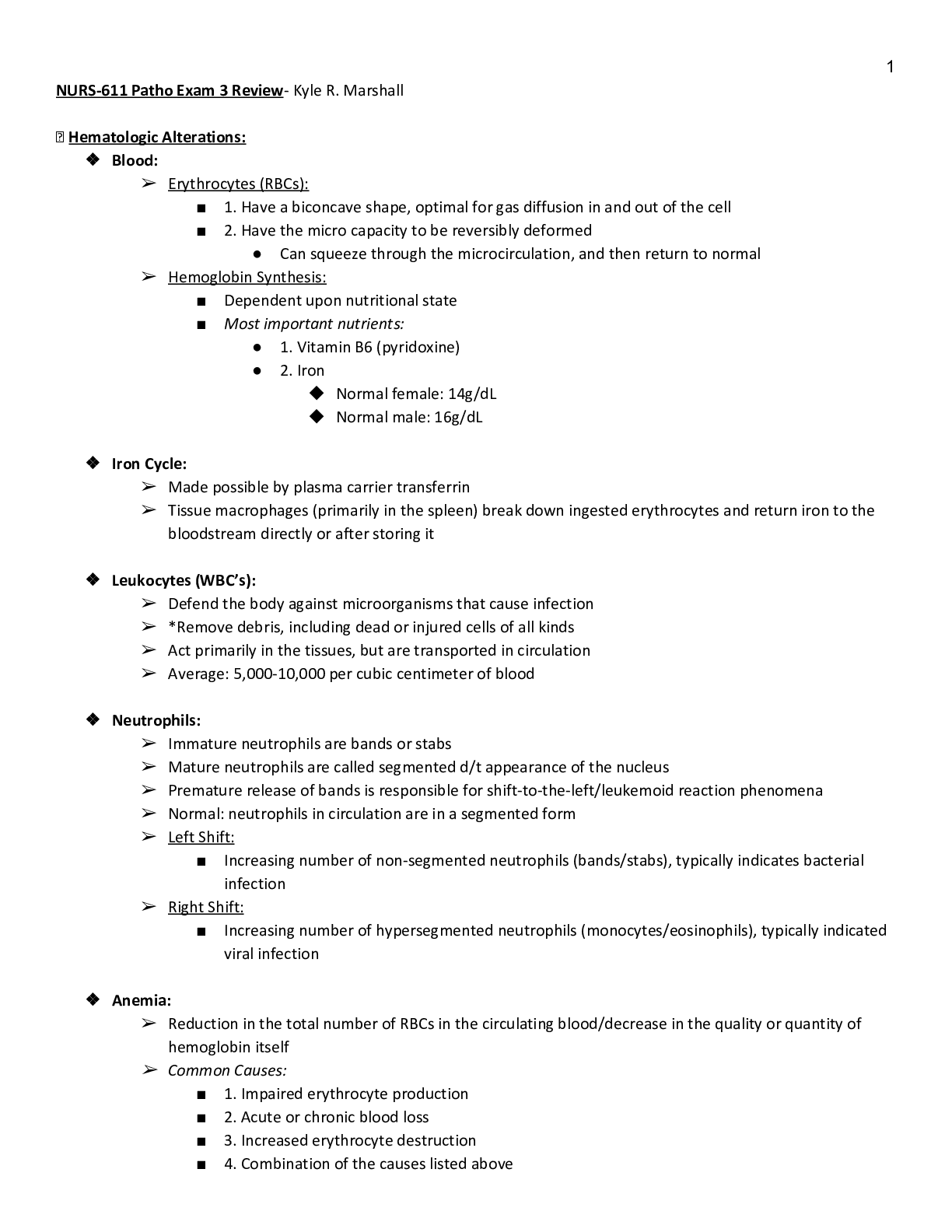
Hematologic Alterations:
❖ Blood:
➢ Erythrocytes (RBCs):
■ 1. Have a biconcave shape, optimal for gas diffusion in and out of the cell
■ 2. Have the micro capacity to be reversibly deformed
● Can squeeze through the microcirculation, and then return to normal
➢ Hemoglobin Synthesis:
■ Dependent upon nutritional state
■ Most important nutrients:
● 1. Vitamin B6 (pyridoxine)
● 2. Iron
◆ Normal female: 14g/dL
◆ Normal male: 16g/dL
❖ Iron Cycle:
➢ Made possible by plasma carrier transferrin
➢ Tissue macrophages (primarily in the spleen) break down ingested erythrocytes and return iron to the
bloodstream directly or after storing it
❖ Leukocytes (WBC’s):
➢ Defend the body against microorganisms that cause infection
➢ *Remove debris, including dead or injured cells of all kinds
➢ Act primarily in the tissues, but are transported in circulation
➢ Average: 5,000-10,000 per cubic centimeter of blood
❖ Neutrophils:
➢ Immature neutrophils are bands or stabs
➢ Mature neutrophils are called segmented d/t appearance of the nucleus
➢ Premature release of bands is responsible for shift-to-the-left/leukemoid reaction phenomena
➢ Normal: neutrophils in circulation are in a segmented form
➢ Left Shift:
■ Increasing number of non-segmented neutrophils (bands/stabs), typically indicates bacterial
infection
➢ Right Shift:
■ Increasing number of hypersegmented neutrophils (monocytes/eosinophils), typically indicated
viral infection
❖ Anemia:
➢ Reduction in the total number of RBCs in the circulating blood/decrease in the quality or quantity of
hemoglobin itself
➢ Common Causes:
■ 1. Impaired erythrocyte production
■ 2. Acute or chronic blood loss
■ 3. Increased erythrocyte destruction
■ 4. Combination of the causes listed above2
❖ Megaloblastic Anemia:
➢ Cells struggle to make DNA, however RNA production proceeds as normal
➢ Cells have slow-maturing nuclei, but normal maturing cytoplasm
➢ Megaloblastic erythroid precursors grow large before the larger nuclei becomes mature enough to
signal division, thus causing the cell to be larger than normal
❖ Pernicious Anemia:
➢ This is a type of megaloblastic anemia
➢ Principal problem is lack of intrinsic factor (IF)
➢ IF is secreted by gastric parietal cells and creates a complex with dietary B12 in the small intestine
➢ Deficiency can lead to a wide spectrum of hematologic and neuropsychiatric disorders that can often be
reversed with early diagnosis and treatment
➢ Increase in age and use of gastric-blocking agents increase prevalence
➢ Develops slowly (over 20-30 years)
➢ Average age of diagnosis is 60
➢ Due to slow onset, PA is usually severe by the time treatment is sought
➢ When hgb level is significantly decreased (7~8), individual experiences classic symptoms of anemia:
■ Weakness
■ Fatigue
■ Paresthesias of feet and fingers
■ Difficulty walking
■ Loss of appetite
■ Abdominal pain
■ Weight loss
■ Sore tongue- smooth and beefy red secondary to atrophic glossitis
[Show More]