Chamberlain College of Nursing NR 283 PATHO FINAL EXAM- ROK.
Document Content and Description Below
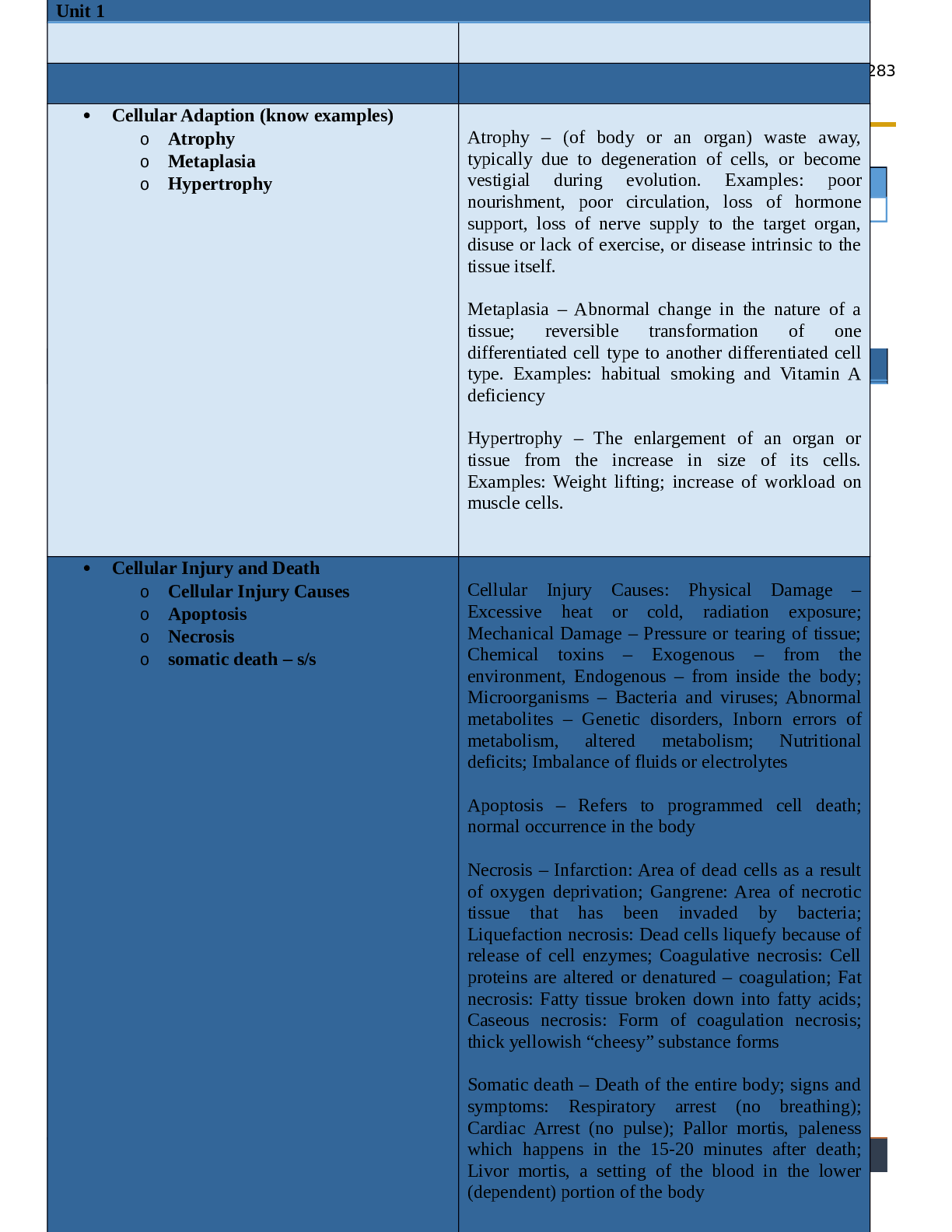
Unit 1
Cellular Adaption (know examples)
o Atrophy
o Metaplasia
o Hypertrophy
Atrophy – (of body or an organ) waste away,
typically due to degeneration of cells, or become
vestigial during evolution. Examples: p
...
[Show More]
Last updated: 4 years ago
Preview 1 out of 26 pages
Instant download
Buy this Document to get the Full Access Instantly
Provided by Students Who Aced it
We Verify Document Content to Gurantee Accuracy
Reviews( 0 )
Document information
Connected school, study & course
About the document
Uploaded On
Oct 04, 2021
Number of pages
26
Written in
All

Additional information
This document has been written for:
Uploaded
Oct 04, 2021
Downloads
0
Views
291
Topic Tags
Recommended For You
Get more on EXAM »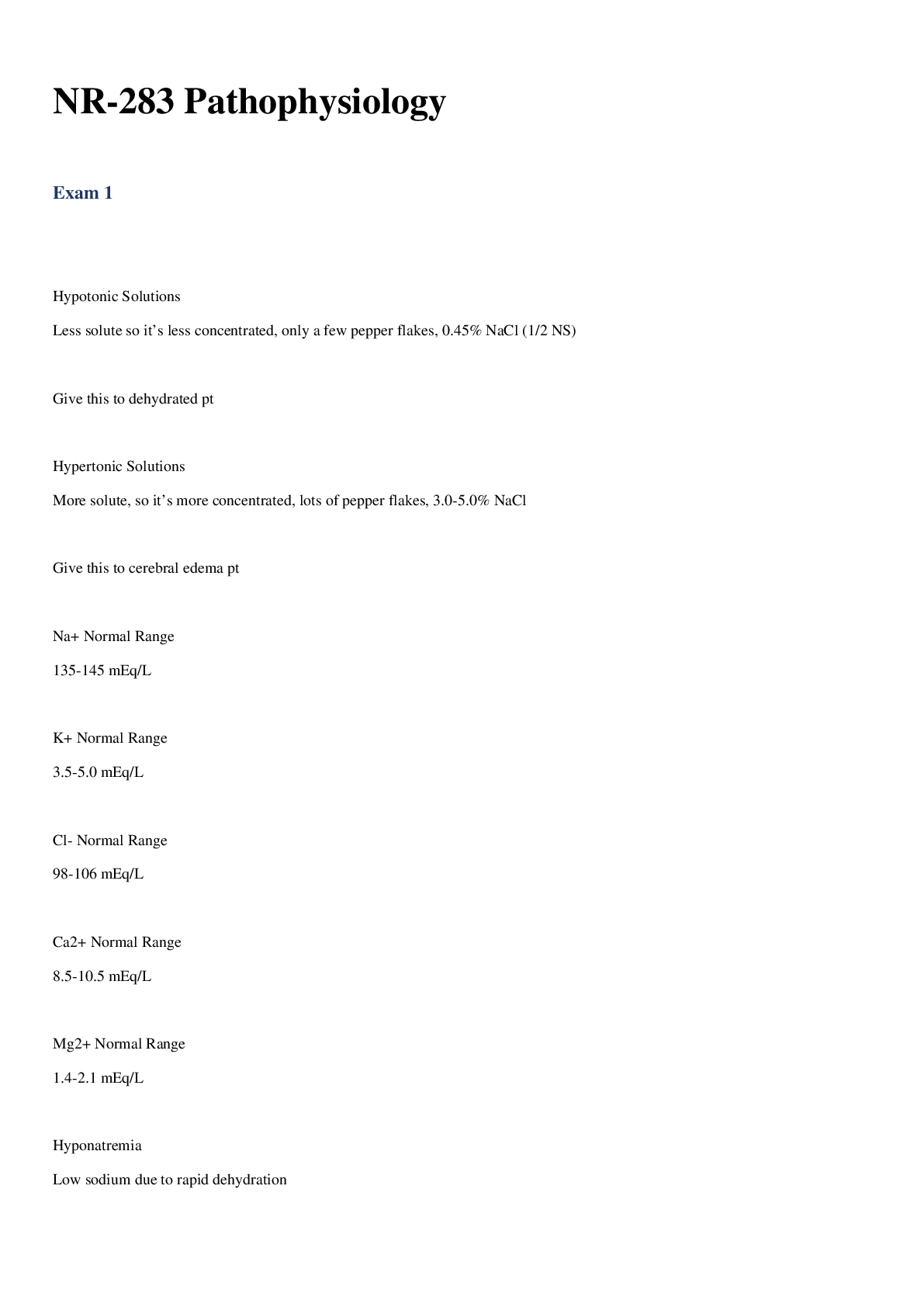
$9
8 Pages
NR283 / NR 283: Pathophysiology Exam 1 Review (Latest, 2020 /...

$8
8 Pages
NR 283 / NR283: Pathophysiology Exam 1 Latest Update Chamberla...

$16
351 Pages
NR 283 Pathophysiology Test Question Bank / NR283 Test Questio...
$12.5
7 Pages
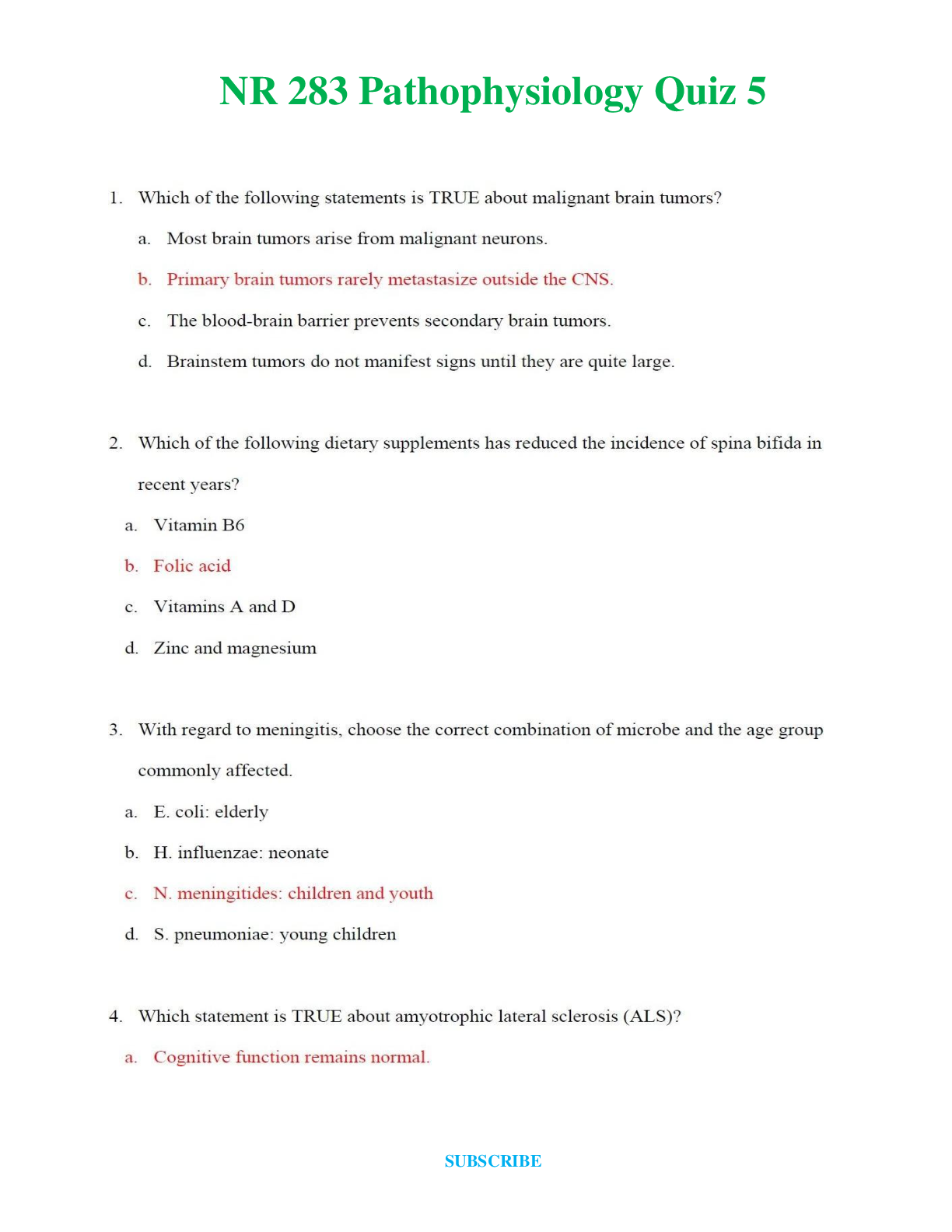
NR 283 Pathophysiology Quiz 5 Questions and Answers (Verifi...
$12.5
6 Pages
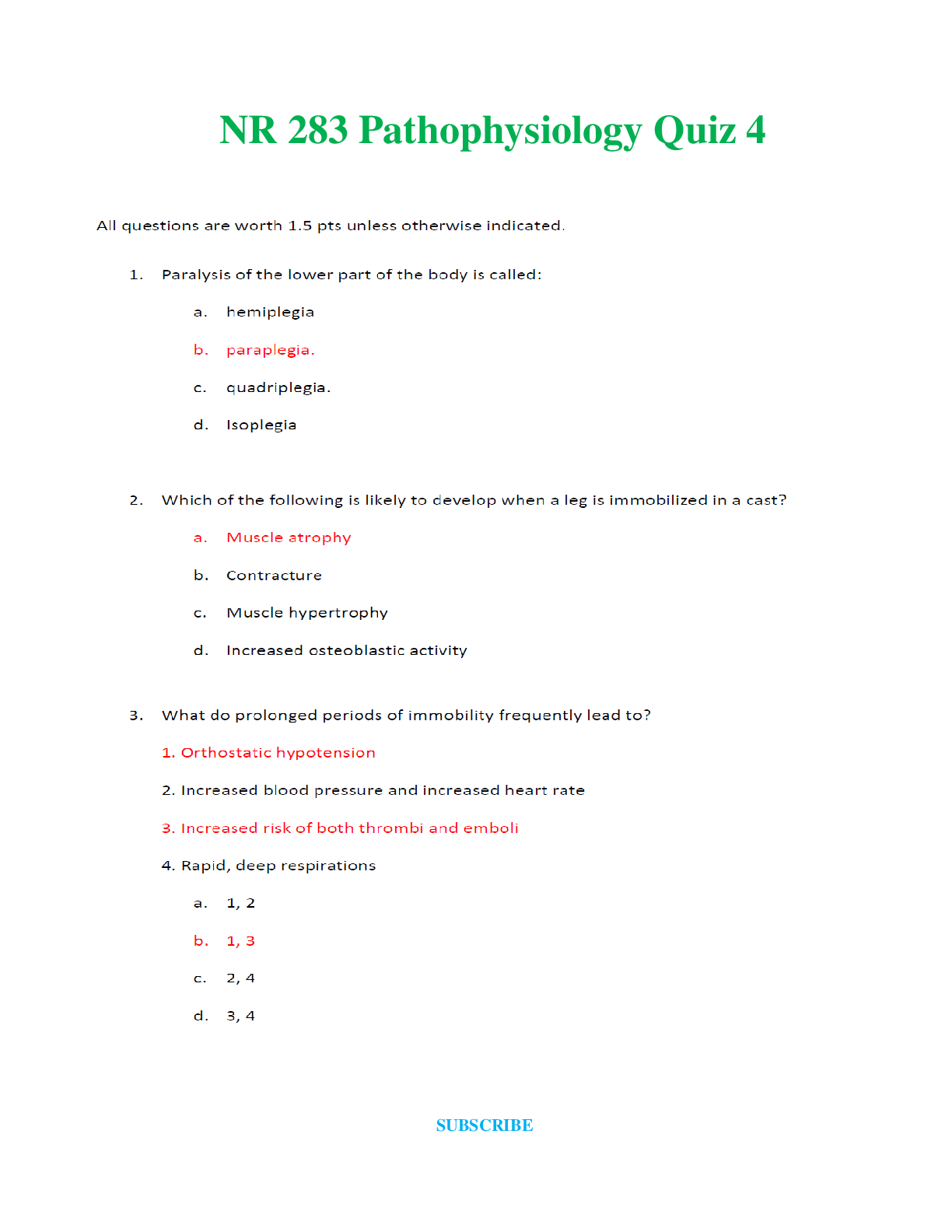
NR 283 Pathophysiology Quiz 4 Questions and Answers (Verifi...
$12.5
6 Pages
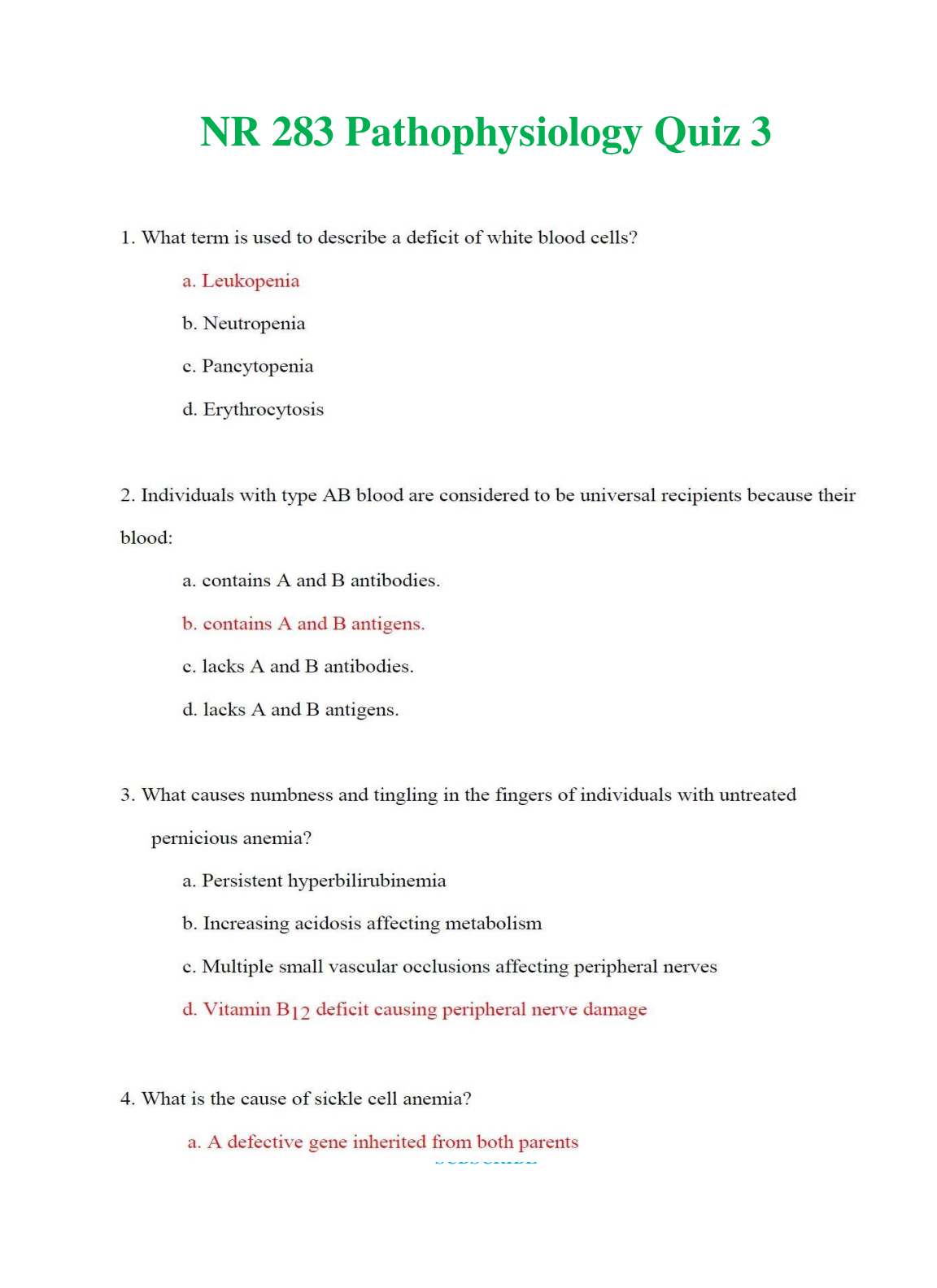
NR 283 Pathophysiology Quiz 3 Questions and Answers (Verifie...
.png)
$9
19 Pages
Chamberlain College Of Nursing-NR 283 Exam 1 (Units 1 and 2)/N...
 J21.png)
$7.5
19 Pages
NR 283 / NR283: Pathophysiology Final Exam Study Guide (2) (La...
$15
8 Pages
NR 283 Pathophysiology Exam 1 Study Guide | Key Concepts & Det...

$12.5
0 Pages
NR283 Pathophysiology Week 1 eDapt Review | | New Version /...
$12.5
16 Pages
NR283 Pathophysiology Week 1 eDapt Review | | New Version /...
More related documents below
.png)