Chamberlain College of Nursing PATHOPHYSI NR283 Patho Exam 2.
Document Content and Description Below
Patho Exam 2
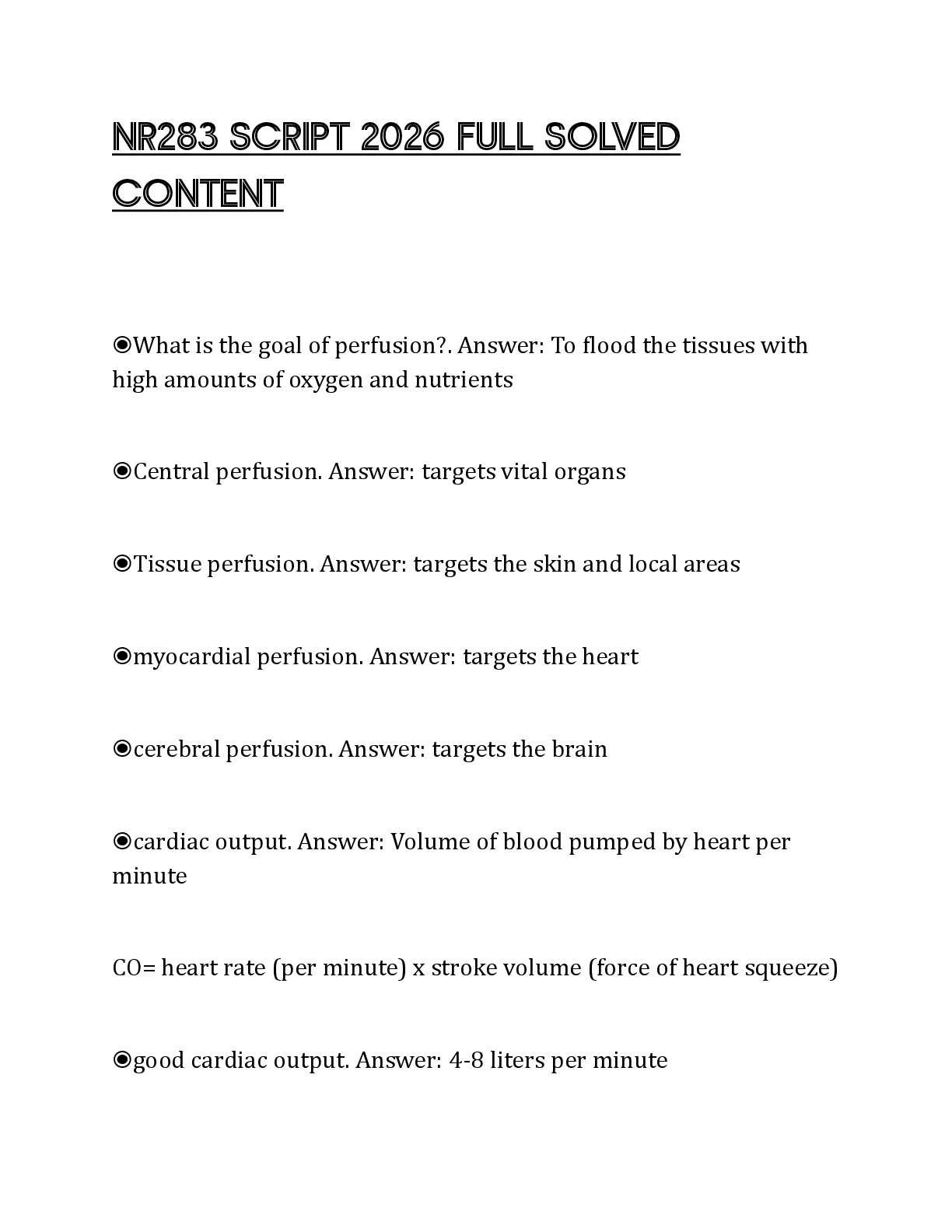
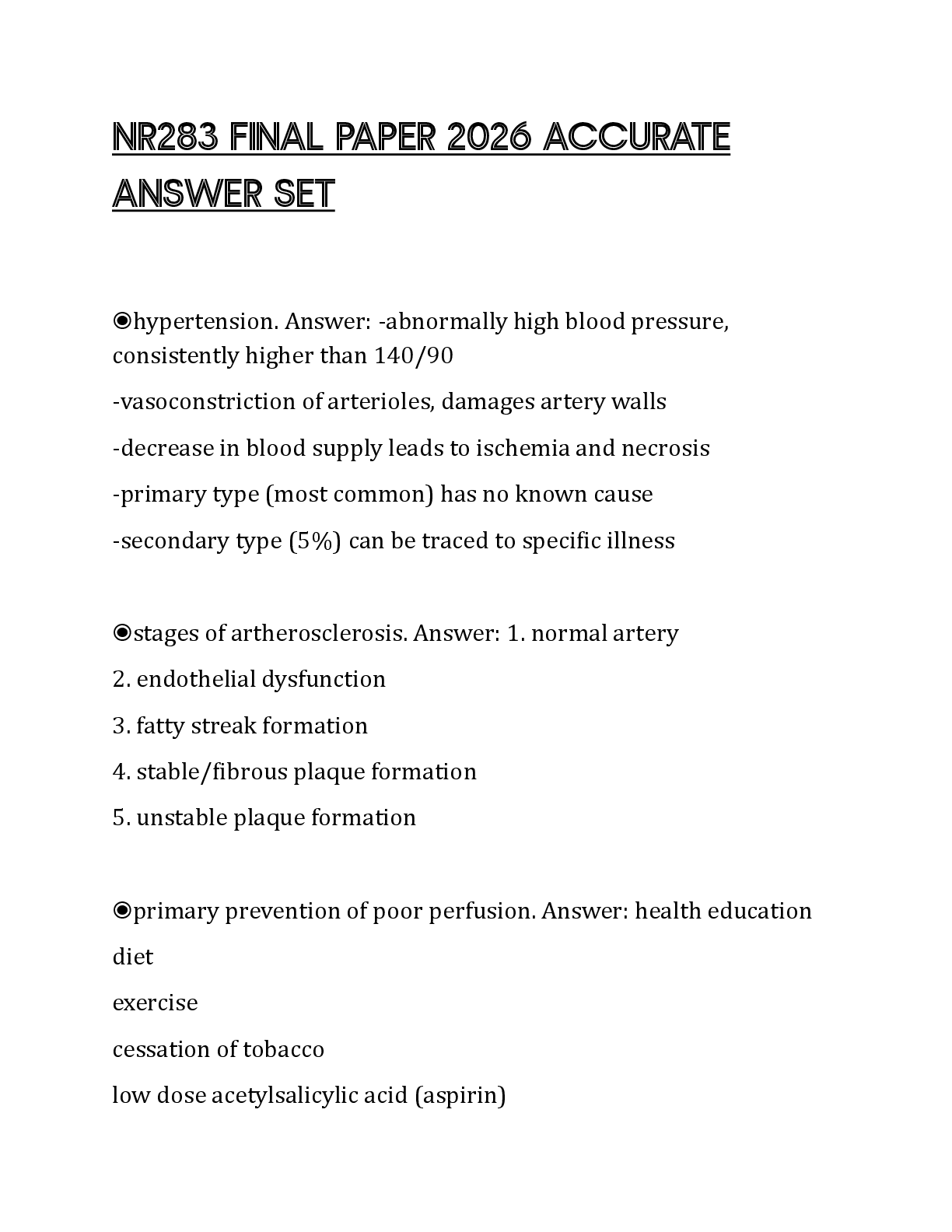
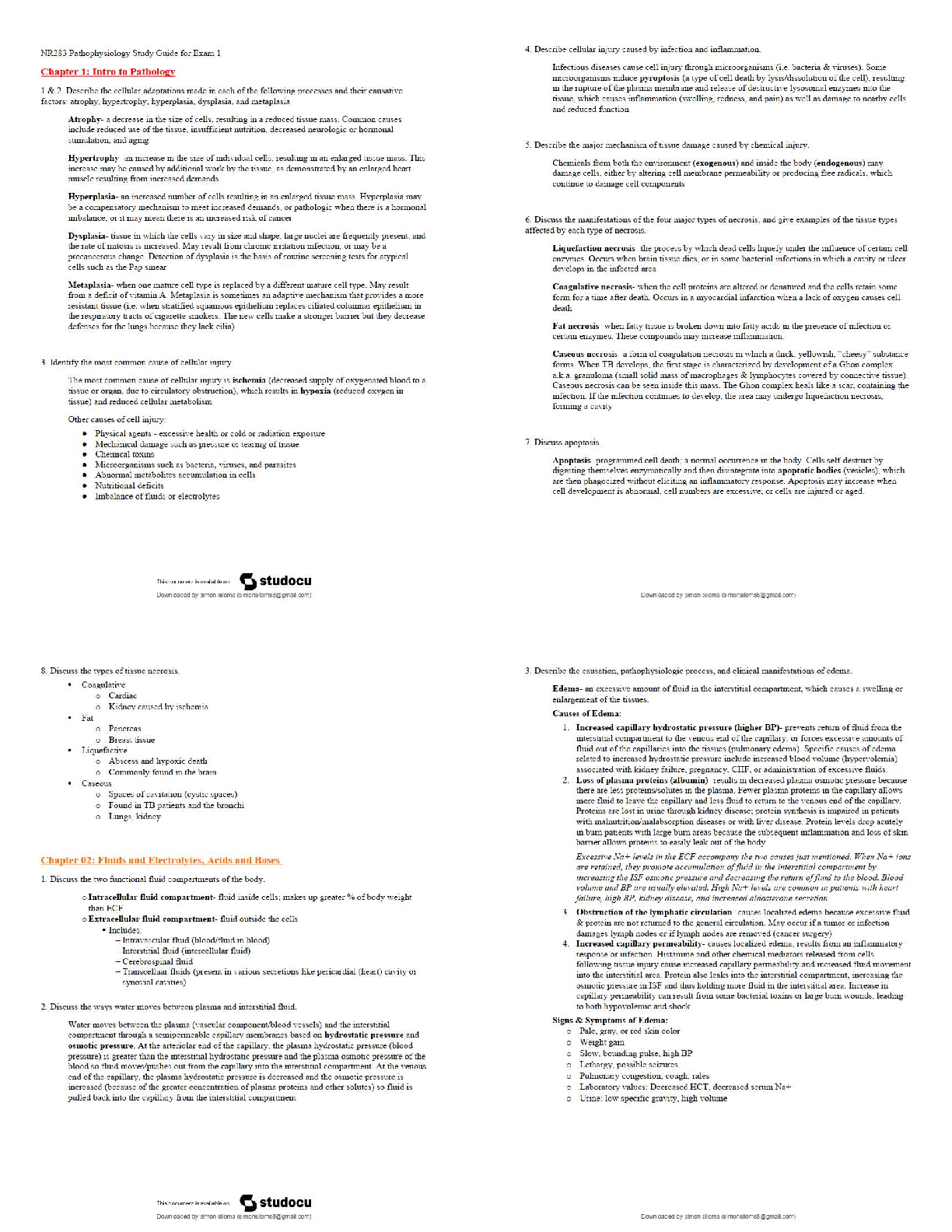
Integumentary system
SKIN- largest organ, 20% of body weight
ACCESSORIES
1. hair 3. Gland
2. nails
1. PROTECTION
2. TEMPERATURE REGULATION
3. PROTECT AGAINST MICROOGRANISM
4. LOSS OF BODY FLUI
...
[Show More]
Last updated: 3 years ago
Preview 1 out of 17 pages
Instant download
.png)
Buy this Document to get the Full Access Instantly
Provided by Students Who Aced it
We Verify Document Content to Gurantee Accuracy
Reviews( 0 )
Document information
Connected school, study & course
About the document
Uploaded On
Oct 04, 2021
Number of pages
17
Written in
All

Additional information
This document has been written for:
Uploaded
Oct 04, 2021
Downloads
0
Views
226
Topic Tags
Recommended For You
Get more on EXAM »
$9
8 Pages
NR283 / NR 283: Pathophysiology Exam 1 Review (Latest, 2020 /...

$16
351 Pages
NR 283 Pathophysiology Test Question Bank / NR283 Test Questio...

$8
8 Pages
NR 283 / NR283: Pathophysiology Exam 1 Latest Update Chamberla...
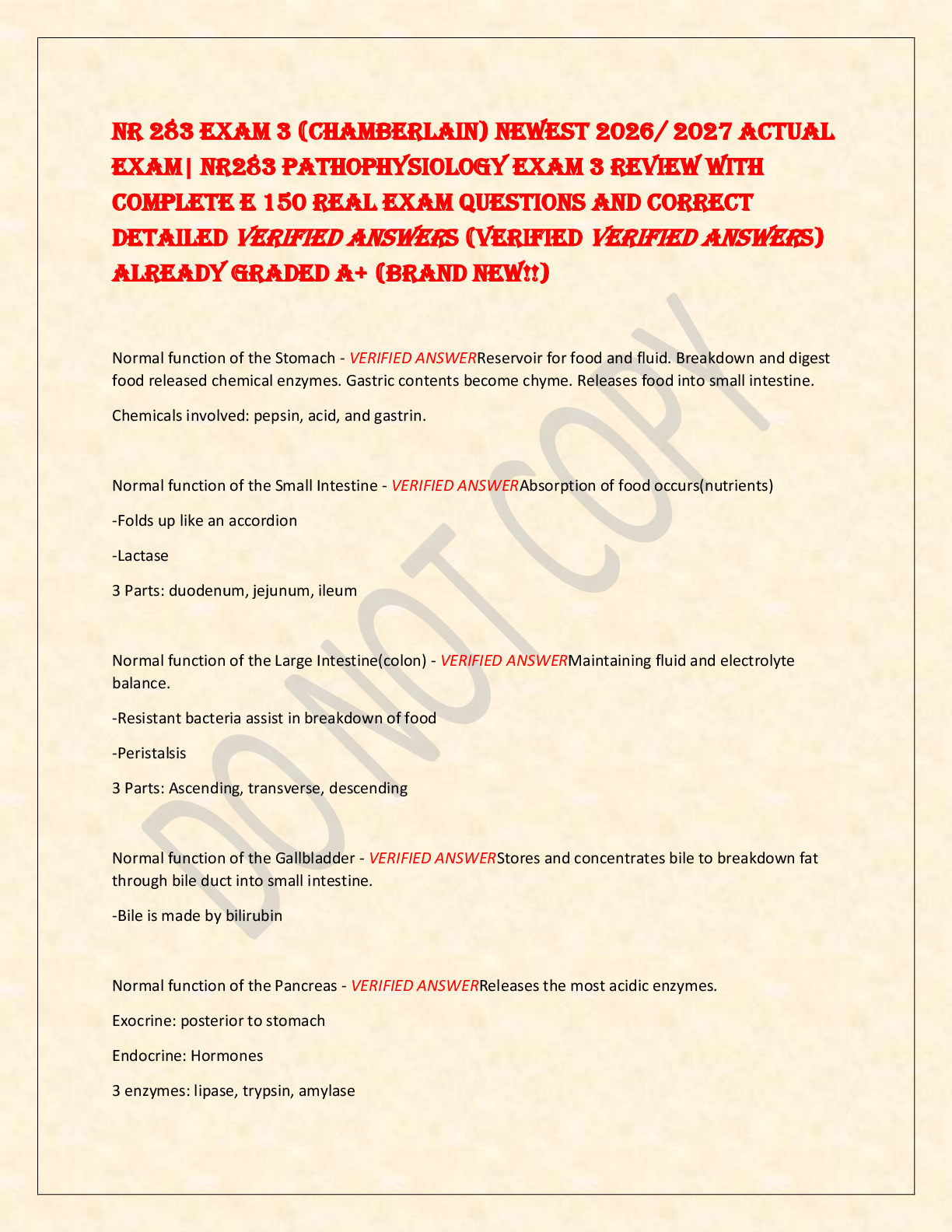
$19.5
298 Pages
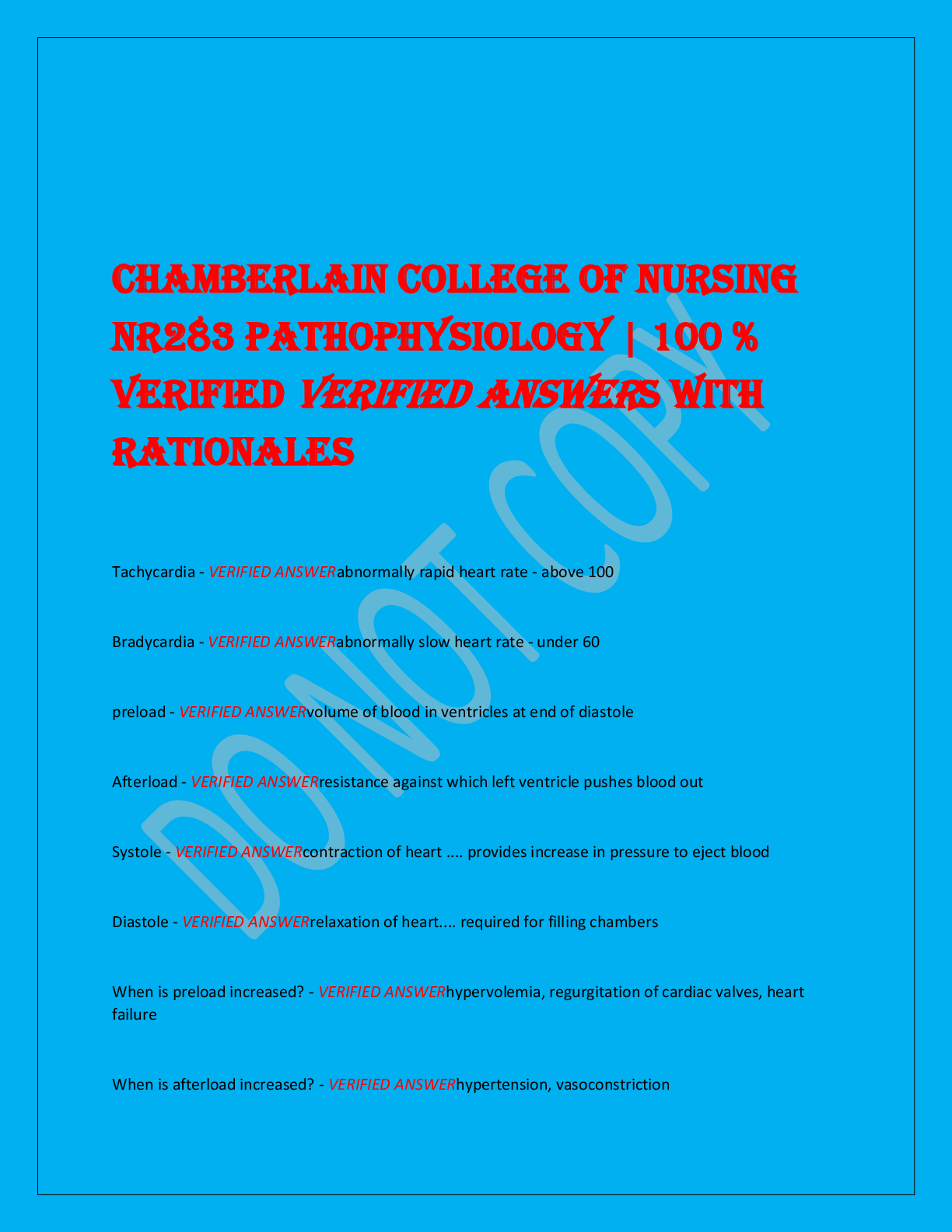
Chamberlain College of Nursing NR283 Pathophysiology 100 % V...
$12.5
7 Pages
NR 283 Pathophysiology Quiz 5 Questions and Answers (Verifi...
$12.5
6 Pages
NR 283 Pathophysiology Quiz 4 Questions and Answers (Verifi...
$12.5
15 Pages
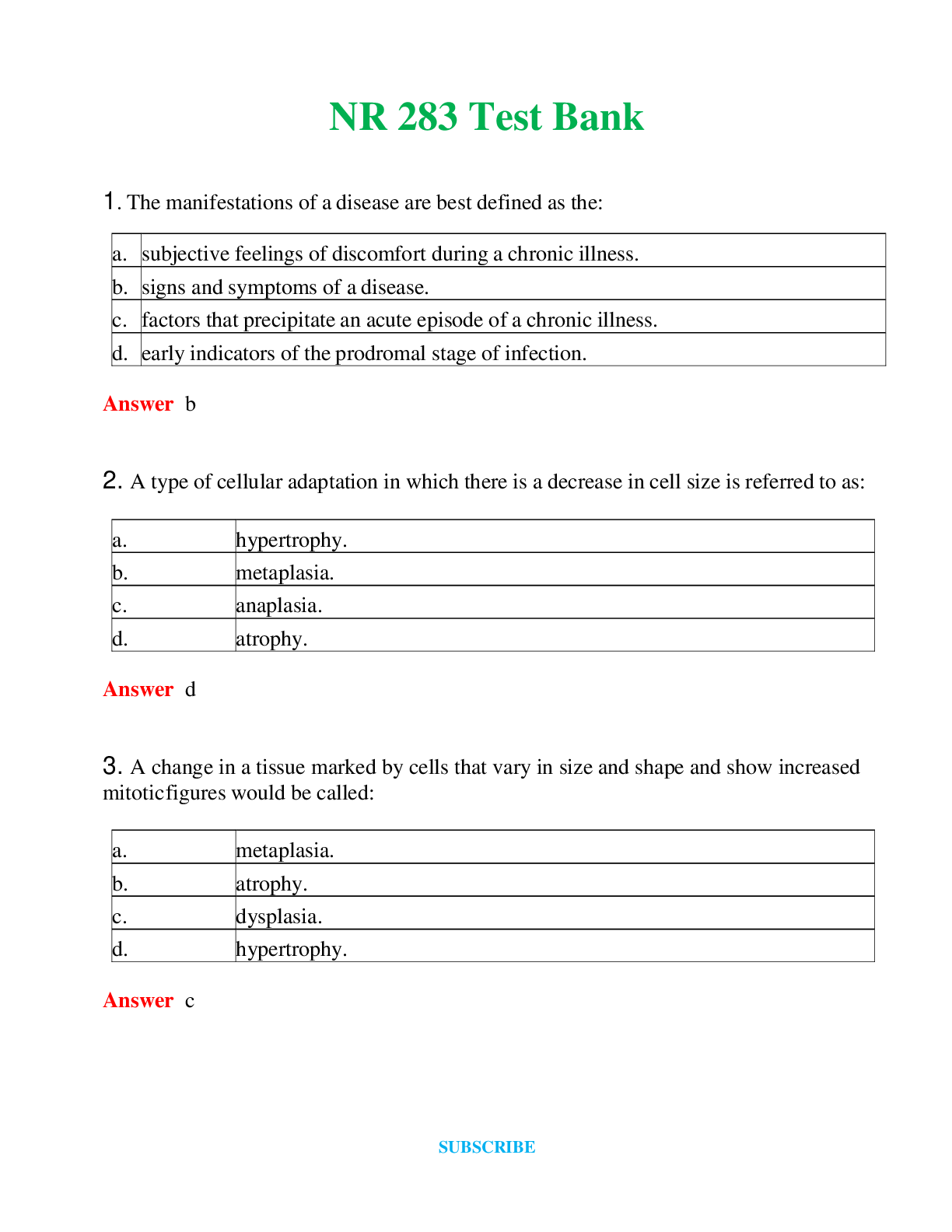
NR 283 Test Bank Questions and Answers (Verified Answers)
 J21.png)
$7.5
19 Pages
NR 283 / NR283: Pathophysiology Final Exam Study Guide (2) (La...
$15
8 Pages
NR 283 Pathophysiology Exam 1 Study Guide | Key Concepts & Det...

$100.5
996 Pages
ATI TEAS 7 | 4 Versions for Reading, Math, Science, English, A...

$12.5
16 Pages
NR283 Pathophysiology Week 1 eDapt Review | | New Version /...
More related documents below
.png)