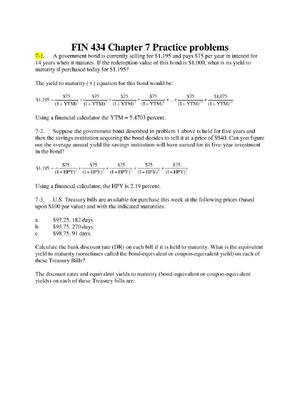
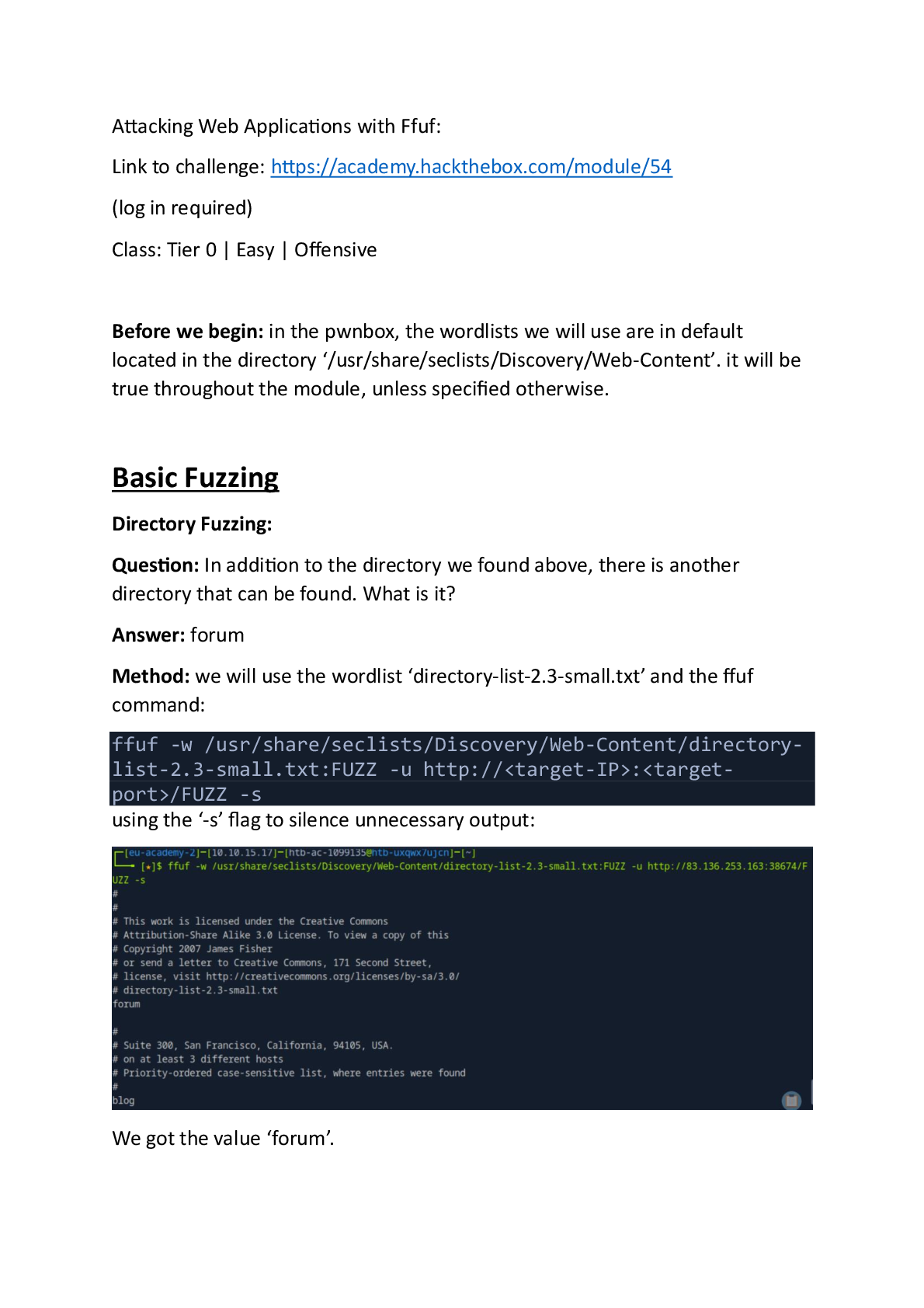
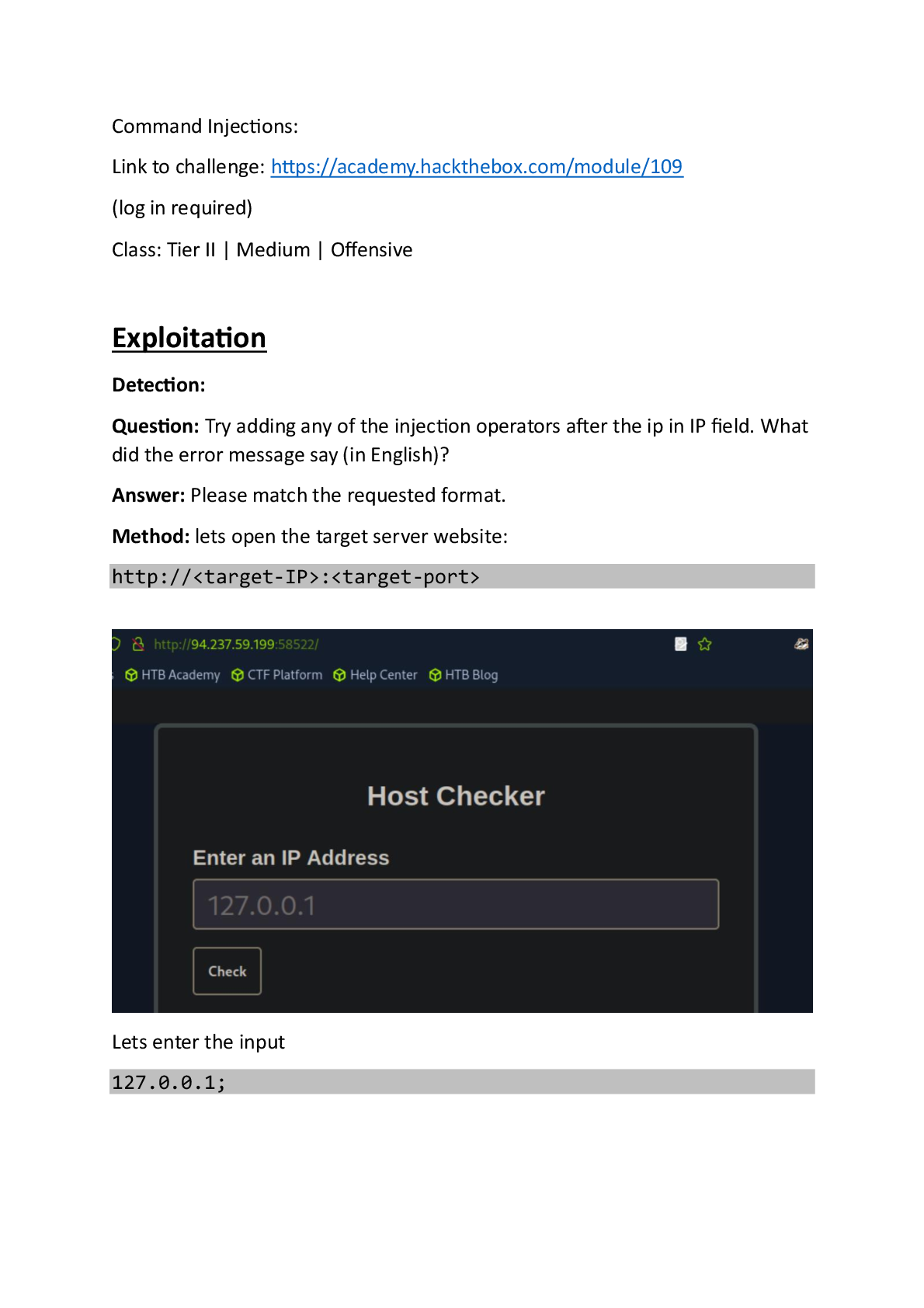
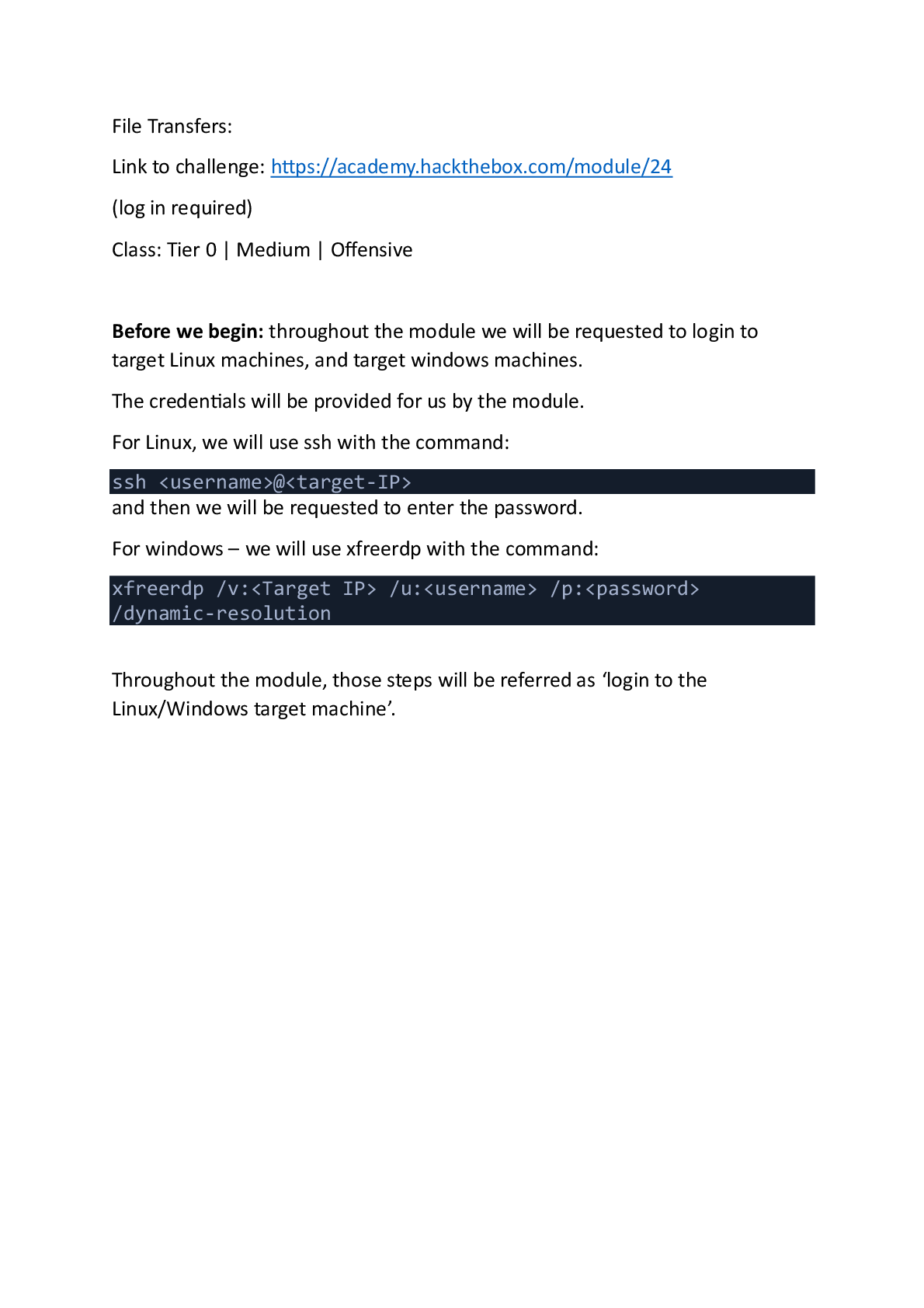
BIOL 3332 Smartwork Answers (Ch. 9)
1.
The transposable element in the image above is an example of a composite transposon
Correct; in this case, the transposon carries an antibiotic resistance gene. Other composite
...
BIOL 3332 Smartwork Answers (Ch. 9)
1.
The transposable element in the image above is an example of a composite transposon
Correct; in this case, the transposon carries an antibiotic resistance gene. Other composite transposons contain genes that confer novel catabolic abilities (e.g., hydrocarbon degradation).
2. Transposable elements differ from plasmids in that only plasmids
Choose one:
A. may exist autonomously, not integrated into host DNA.*
B. consist of double-stranded DNA.
C. may be transmitted horizontally from one bacterium into another.
D. may code for antibiotic resistance.
Transposable elements may “jump” from one DNA molecule to another, but they do not replicate independently as plasmids can. Both plasmids and transposable elements are comprised of dsDNA and both may code for antibiotic resistance. Conjugative transposons may be transmitted horizontally.
3. Consider a cell whose F factor carries a defective TraI gene. How would this most likely affect conjugation?
Choose one:
A. The phosphodiester bonds at the OriT site on the F factor would remain intact.*
B. The recipient cell would be unable to separate from the donor following conjugation.
C. The entire F factor would migrate to the recipient, converting the donor to F–.
D. The donor would retain only a single-stranded circular copy of F factor.
E. The sex pilus could form but not retract.
Correct; because TraI has dual endonuclease and helicase activity, other TraI mutants might retain the ability to nick DNA but be unable to unwind it.
4. An insertion sequence contains a gene for which enzyme?
Choose one:
A. RecA
B. Tetracycline resistance
C. Ligase
D. Transposase*
An insertion sequence (IS) is a simple transposable element that consists of a transposase gene flanked by short, inverted repeats that are the target of transposase.
5. Over time, the genome of a species
Choose one:
A. remains unchanged.
B. rapidly acquires harmful mutations.
C. may change due to mutation or gene exchange.*
D. doubles or triples to produce polyploidy genomes
Over time, genomes change due to a variety of different mechanisms. Harmful mutations will not persist in a population and although whole genomes may double, this is a rare event.
6. A "mosaic" genome refers to one that
Choose one:
A. is decorated with DNA-binding proteins.
B. has sites where double-stranded breaks are constantly being made and rejoined.
C. contains segments of dsRNA interspersed with DNA.
D. contains large segments of DNA from different sources and events.*
E. undergoes crossover during meiosis.
Correct; in prokaryotes, interspersed but discrete DNA fragments (often with particular functions) are known as "islands." For example, a normally harmless E. coli cell may acquire a "pathogenicity island" and thereby become transformed into a disease-causing strain.
7. Which of the following does not function to reshape an organism's genome?
Choose one:
A. gene rearrangements
B. acquisition of genes from other organisms
C. gene loss by deletion events
D. spontaneous DNA mutations
E. lethal mutations*
8. If a bacterial cell is competent, it means that
Choose one:
A. the bacterium can import free DNA fragments and incorporate them into its genome.*
B. the bacterium expresses a sex pilus that mediates membrane fusion between two cells and creates a conjugation bridge.
C. it is able to withstand exposure to several different antibiotics and is difficult to kill.
D. the bacterium is able to replicate its DNA and undergo cell fission.
Competence refers to the ability to perform transformation.
9. Sort each of the following items according to whether it applies to generalized recombination or site-specific recombination.
Features (9 items)
10. Which type of DNA uptake is dependent on transferable plasmids?
Choose one:
A. Conjugation*
B. Recombination
C. Transformation
D. Transduction
A transferable plasmid is needed when one cell directly transfers DNA to another cell as occurs in conjugation. Transformation, the uptake of DNA from the environment, and transduction, the acquisition of a gene from a bacteriophage, do not require a transferable plasmid.
11. One sign of horizontal gene transfer is
Choose one:
A. pathogenicity via gene loss.
B. uniform codon usage throughout the genome.
C. a GC base ratio different from flanking chromosomal DNA.*
D. gene duplication.
Each type of microorganism has particular GC ratios. Regions of the genome with highly different ratios may be examples of genes acquired via horizontal transfer. Uniform codon usage argues against horizontal gene transfer. Gene duplication may occur during replication, but this is not a form of horizontal gene transfer. Gene loss may lead to pathogenicity, but gene loss is not horizontal gene transfer.
12. Which specific feature of replicative transposition distinguishes it from nonreplicative transposition?
Choose one:
A. Only the DNA internal to the inverted repeats of the transposon is replicated.
B. It happens during replication of the chromosome.
C. It induces replication of the host chromosome.
D. The target sequence is replicated as a result.
E. During replicative transposition, the entire transposon is replicated.*
Correct; the process actually involves formation of a cointegrate molecule, which is then resolved into separate donor and recipient molecules by recombination.
13. In bacteria, a partially diploid strain may result from
Choose one or more:
A.acquisition of F factor.
B.acquisition of an F' factor.*
C.generalized transduction.
D.specialized transduction.*
E.natural transformation (not electroporation).
Correct; partial diploids allow microbiologists to study dominance of mutant alleles and aspects of chromosome organization. They also accelerate evolution because the bacteria are able to freely "experiment" with the second allele (while having the security of a backup copy of the gene).
14. The process of importing free DNA from the environment into cells is called
Choose one:
A. transformation.*
B. conjugation.
C. transcription.
D. transduction.
Transformation is the uptake of DNA from the environment. Conjugation requires cell-cell contact, transduction is mediated through a bacteriophage, and transcription is the production of an RNA complementary to a DNA template.
15. Please examine and correctly label this image illustrating the two basic types of transposition.
Correct; the type of transposable element is not specified here, but could be an insertion sequence (IS), transposon, composite transposon, or complex transposon.
16. Which of the following is a laboratory technique for inducing transformation?
Choose one:
A. Sex pilus induction
B. Translocasome production
C. Electroporation*
D. Conjugation
Electroporation makes the membrane temporarily permeable to DNA so researcher-supplied DNA can be taken into bacterial cells. The translocasome is involved in natural transformation. Conjugation via sex pili is not a lab technique.
17. Correctly order the following steps in bacterial conjugation from start to finish
Correct; in addition to mediating its own dissemination through a population, conjugative plasmids such as F factor can mobilize other plasmids that do not contain all the genes necessary for self-transfer.
Upon completion of conjugation, the donor cell is F+ and the recipient cell is F+
Correct; at the completion of conjugation, DNA polymerase III in the donor cell has replaced the strand that was transferred. DNA ligase reseals the nick at the oriT site, which restores the integrity of the molecule, and the cell retains its F+ status.
Correct; this cell can now transfer its F factor to other F– cells in the population.
Why is it incorrect to refer to conjugation as bacterial sex?
Choose one or more:
A.The transferred DNA cannot replicate.
B.It does not require physical contact.
C.The recipient is haploid for the transferred genes.*
D.The transferred DNA is not required for normal cellular function.*
E.It does not involve gametes.*
Correct; it is somewhat ironic, though, that after receiving an F factor, the newly converted F+ cell is in increased danger of viral attack. This is because the MS2 bacteriophage specifically binds to the pilus encoded by F factor. In this way, the F factor acts somewhat like a sexually transmitted disease!
18. Please examine and correctly label the following model of horizontal gene transfer among the gut microbiota.
Correct; the example here shows dissemination of a plasmid-encoded gene. Prophage (i.e., bacteriophage that integrates into the chromosome) may also encode antibiotic and/or virulence genes that can be transduced into other organisms.
19. Sort the following features according to whether they apply to generalized transduction, specialized transduction, or both.
Correct; remember that in both cases, the vast majority of phages are completely normal. In generalized transduction, less than 1% of phages contain host DNA, and an even smaller percentage of lysogenic cells contain incorrectly excised phage. Still, small numbers become significant and meaningful when considering the large numbers of bacteria present in these populations.
20. Suppose you have isolated a strain of E. coli from people who became sick after visiting a restaurant salad bar. You already know that the genome of the non-pathogenic E. coli strain K-12 has a GC content of 50.8%. Which of the following genome features of your new strain represents a good starting point for identifying possible virulence genes acquired by horizontal gene transfer?
Choose one or more:
A.obvious pseudogenes
B.genes with different codon usage from E. coli K-12*
C.stretches containing thymine dimers
D.regions with GC content of 57.6%*
E.regions with GC content of 46.8%*
Correct; regions exhibiting different codon usage and GC content would be suggestive of recently acquried foreign DNA. Many strains of E. coli have acquired pathogenicity islands that make them invasive and/or toxigenic.
21. Consider conjugation in E. coli. In which of the following matings would chromosomal genes most likely be transferred?
Choose one:
A. F– x F–
B. F+ x F–
C. Hfr x F– *
D. F' x F+
E. Hfr x F+
22. What are the basic parts of an insertion sequence?
Choose one or more:
A.random DNA of 100–200 bp
B.coding region for polymerase
C.target sequence
D.ligase gene
E.transposase coding region*
F.two flanking inverted repeats*
Correct; these simple elements catalyze their own movement in and out of host chromosomes, but are incapable of autonomous replication.
Correct; notice also how the transposase functions in multiple ways during each type of transposition.
Transposases are multifunctional enzymes. During nonreplicative transposition, the transposase does all of the following except
Choose one:
A. bind to donor DNA and bring the ends of the insertion element together.
B. excise insertion element creating double-stranded break in donor strand.
C. mediate attack of 3' OH ends of insertion element into new target DNA.
D. nick donor DNA to produce free 3' OH on either side of insertion sequence.
E. fill in single-stranded gaps that occur in the target region of the recipient DNA.*
Correct; gaps produced by transposition are filled in using DNA polymerase.
23. Many Japanese people consume a diet rich in seaweed, including the edible red alga Porphyra, which is used for preparing sushi. Although humans cannot digest the seaweed polysaccharides (porphyran and agarose), certain marine Bacteroidetes do possess the necessary CAZymes. Curiously, Japanese individuals frequently harbor seaweed-digesting Bacteroides plebeius in their gut microbiomes, while individuals from North America do not. Bacteroides plebeius is not a marine bacterium, and its close relatives cannot digest seaweed. What is the mostly likely explanation for how B. plebeius acquired functional porphyranase and agarase genes?
Choose one:
A. point mutations that eventually produced functional genes
B. endosymbiosis with a seaweed-digesting archaeon
C. horizontal transfer of genes from a marine bacterium*
D. random DNA inversions
E. transfer of genes from the gut epithelial cells
Correct; in fact, the CAZyme genes from B. plebeius show high homology with those from the marine Bacteroidetesspecies.
Further analyses revealed that a region downstream of the seaweed-digesting genes in Bacteroides plebeius contained sequences homologous to conserved relaxase/mobilization proteins. These data provide additional evidence that the genes were acquired by conjugation.
Correct; even more intriguing was the finding that marine Bacteroidetes carry their seaweed-digesting genes on conjugative plasmids (which contain relaxase/mobilization proteins).
24. Which of the following does not represent a common outcome following introduction of foreign DNA into a bacterial cell? Choose one:
A. If circular, the DNA may persist as a self-replicating genetic element.
B. Genes may recombine (exchange) with existing host alleles on the chromosome.
C. DNA is exported from the cell by active transport.*
D. DNA gets degraded by restriction enzymes (endonucleases).
E. DNA integrates into the host chromosome.
Correct; if unwanted DNA were simply exported, the bacterium could not take advantage of "recycling" the composite nucleotides for its own use.
25. Identify the form of horizontal gene transfer depicted here. Dennis Kunkel Microscopy, Inc.
Choose one:
A. conjugation*
B. transformation
C. electroporation
D. binary fission
E. transduction
Correct; this image captures the initiation of conjugation, whereby a cell carrying a conjugative plasmid (such as F factor) produces a sex pilus that attaches to receptors on a cell lacking the plasmid.
26. Which of the following events must precede transfer of chromosomal genes by specialized transduction?
Choose one:
A. conjugation
B. site-specific recombination*
C. generalized recombination
D. transformation
E. CRISPR activation
Correct; also, because the recombination events occur at specific (rather than random) sites, only a limited number of genes can be moved.
27. Correctly label the steps in the development of transformation competence in Streptococcus.
Correct; by restricting expression of the transformation machinery to conditions of high population density, Streptococcuspneumoniae may maximize its chances of encountering free DNA.
What would be the likely phenotype of a ComA deletion mutant (in a population of otherwise normal cells of the same species)?
Choose one or more:
A.It could not be transformed by exogenous DNA.
B.It could not export competence factor.*
C.Active competence factor could not be made.
D.It could not respond to an accumulation of competence factor.
E.No SigH would be produced.
Correct; even though the mutant cannot contribute to the competence factor "pool," the cell retains its ability to respond to competence factor, and thus would still be transformable in a population of members of the same species.
28. All of the following are potential mechanisms of horizontal gene transfer except
Choose one:
A. binary fission.*
B. conjugation.
C. specialized transduction.
D. generalized transduction.
E. transformation.
Correct; binary division is a form of vertical gene transfer because the genetic material is passed from parent to progeny.
29. How does a transposon differ from an insertion sequence?
Choose one:
A. It lacks inverted repeats.
B. It is capable of nonreplicative transposition, while an IS sequence is not.
C. It contains one or more genes in addition to transposase.*
D. It carries at least one antibiotic resistance gene.
E. It contains two IS sequences flanking one or more genes.
Correct; and similar to insertion sequences, transposons have inverted repeats at either end of the element.
30. An organism carrying the sequence shown in the top panel would be designated a(n) Hfr strain
Correct; it is so designated because when Hfr strains conjugate with recipient F– cells, there is a high frequency of recombination between donor and recipient DNA.
If a cell carrying an integrated F factor (as shown in the figure above) mates with an F– cell for 10 minutes, which of the following will likely result?
Choose one:
A. Gene A will be transferred into the recipient cell.
B. Gene B will be transferred into the recipient cell.*
C. No chromosomal genes will be transferred.
D. Genes A and B will be transferred into the recipient cell (in that order).
E. Genes B and A will be transferred into the recipient cell (in that order).
Correct; gene A would only be transferred if the mating were allowed to continue uninterrupted for 100 minutes. That is the time required to transfer the entire chromosome from an Hfr cell to a recipient.
The excised circular DNA molecule in the bottom panel of the figure above is known as a(n) F’.
Correct; an F' plasmid may still retain the ability to initiate conjugative transfer (or can be mobilized with a "helper" plasmid). In the illustration shown here, a recipient cell would obtain a copy of gene B that originated from the donor chromosome.
31. Which type of DNA uptake is dependent on viruses?
Choose one:
A. Transformation
B. Transduction*
C. Recombination
D. Conjugation
Transduction requires bacteriophages, viruses that infect bacteria, to transfer DNA. Conjugation, the direct transfer of DNA from one bacterial cell to another, and transformation, the uptake of DNA from the environment, do not rely on viruses.
32. In 1928, a physician named Frederick Griffith was investigating the virulence of Streptococcus pneumoniae. He first determined that mice exposed to an encapsulated strain of S. pneumoniae (which formed smooth colonies) died. Mice infected with a nonencapsulated strain (which formed rough colonies) lived. In a now-famous experiment, he coinjected mice with heat-killed cells of virulent S. pneumoniae and cells from a live nonencapsulated strain. Amazingly, the mice died and a live virulent strain was recovered that formed smooth colonies. It was later discovered that
Choose one:
A. the dead virulent cells were resurrected once inside the living host.
B. the injected cell preparations were contaminated with live virulent S. pneumoniae.
C. the live cells were transformed with DNA from the dead virulent cells.*
D. the live harmless cells mutated into a virulent strain once in the mice.
E. the mice had subclinical infections of S. pneumoniae and became sick during the experiment.
Correct; it was later demonstrated that DNA from the dead cells contained a gene for the protective polysaccharide capsule that transformed the "rough" harmless strain into the "smooth" phenotype characteristic of the pathogenic form.
33. Bacteria may donate DNA to other bacteria of the same
Choose one:
A. or of a different species, some eukaryotic cells, and bacteriophages.*
B. species only.
C. or of a different species, and also some eukaryotic cells.
D. or of a different species.
Bacteria can donate DNA to a wide variety of other cells and also viruses. For example, the bacterium Agrobacterium tumefaciens can transfer DNA into plants and phages can acquire bacterial DNA during infection.
[Show More]