ATI NR293 Pharmacology Final Review
Pharmacology Final Review 1
ATI NR293 Pharmacology Final Review
1. Calcium supplement for osteoporosis--why would they have flank pain
2. A nurse is preparing to administer a dose
...
ATI NR293 Pharmacology Final Review
Pharmacology Final Review 1
ATI NR293 Pharmacology Final Review
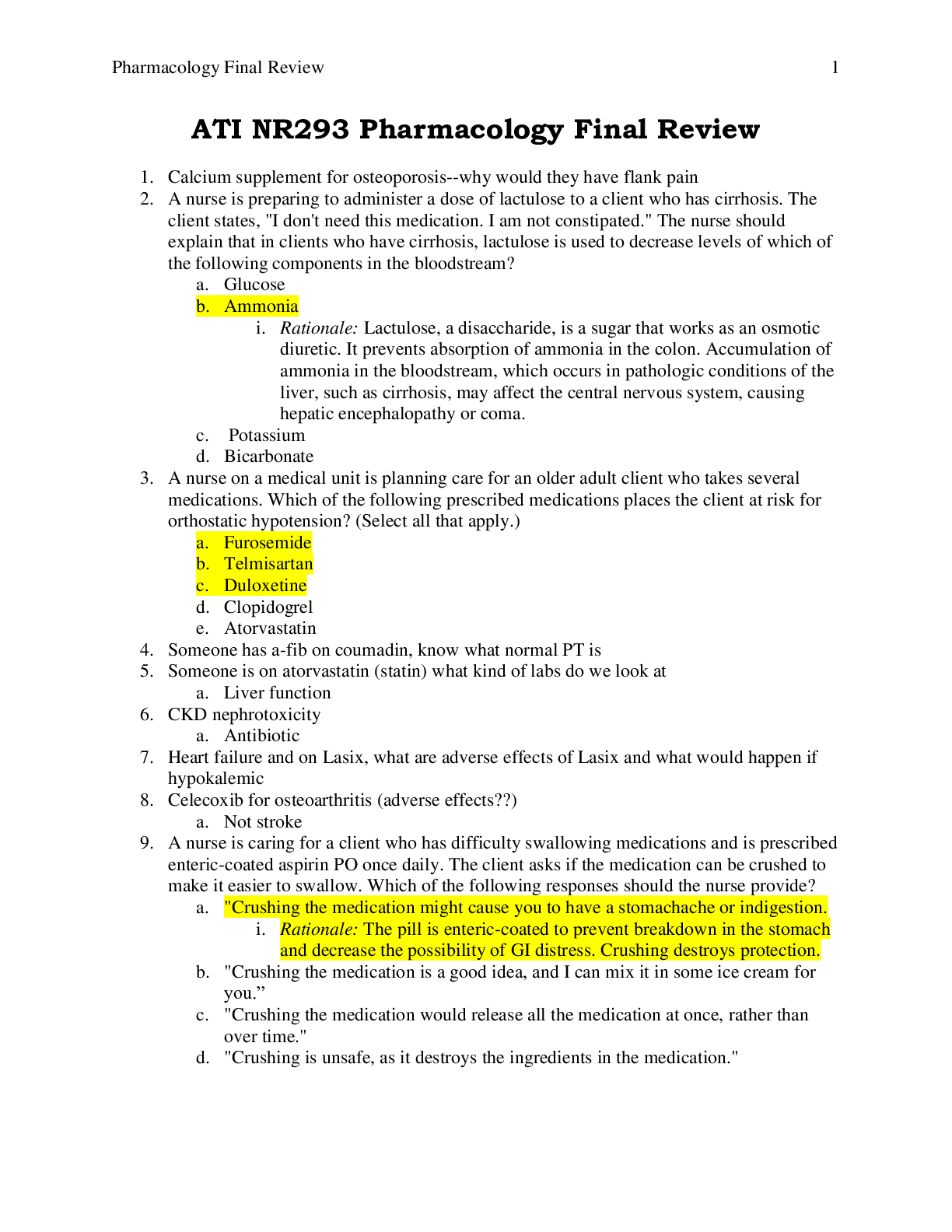
1. Calcium supplement for osteoporosis--why would they have flank pain
2. A nurse is preparing to administer a dose of lactulose to a client who has cirrhosis. The
client states, "I don't need this medication. I am not constipated." The nurse should
explain that in clients who have cirrhosis, lactulose is used to decrease levels of which of
the following components in the bloodstream?
a. Glucose
b. Ammonia
i. Rationale: Lactulose, a disaccharide, is a sugar that works as an osmotic
diuretic. It prevents absorption of ammonia in the colon. Accumulation of
ammonia in the bloodstream, which occurs in pathologic conditions of the
liver, such as cirrhosis, may affect the central nervous system, causing
hepatic encephalopathy or coma.
c. Potassium
d. Bicarbonate
3. A nurse on a medical unit is planning care for an older adult client who takes several
medications. Which of the following prescribed medications places the client at risk for
orthostatic hypotension? (Select all that apply.)
a. Furosemide
b. Telmisartan
c. Duloxetine
d. Clopidogrel
e. Atorvastatin
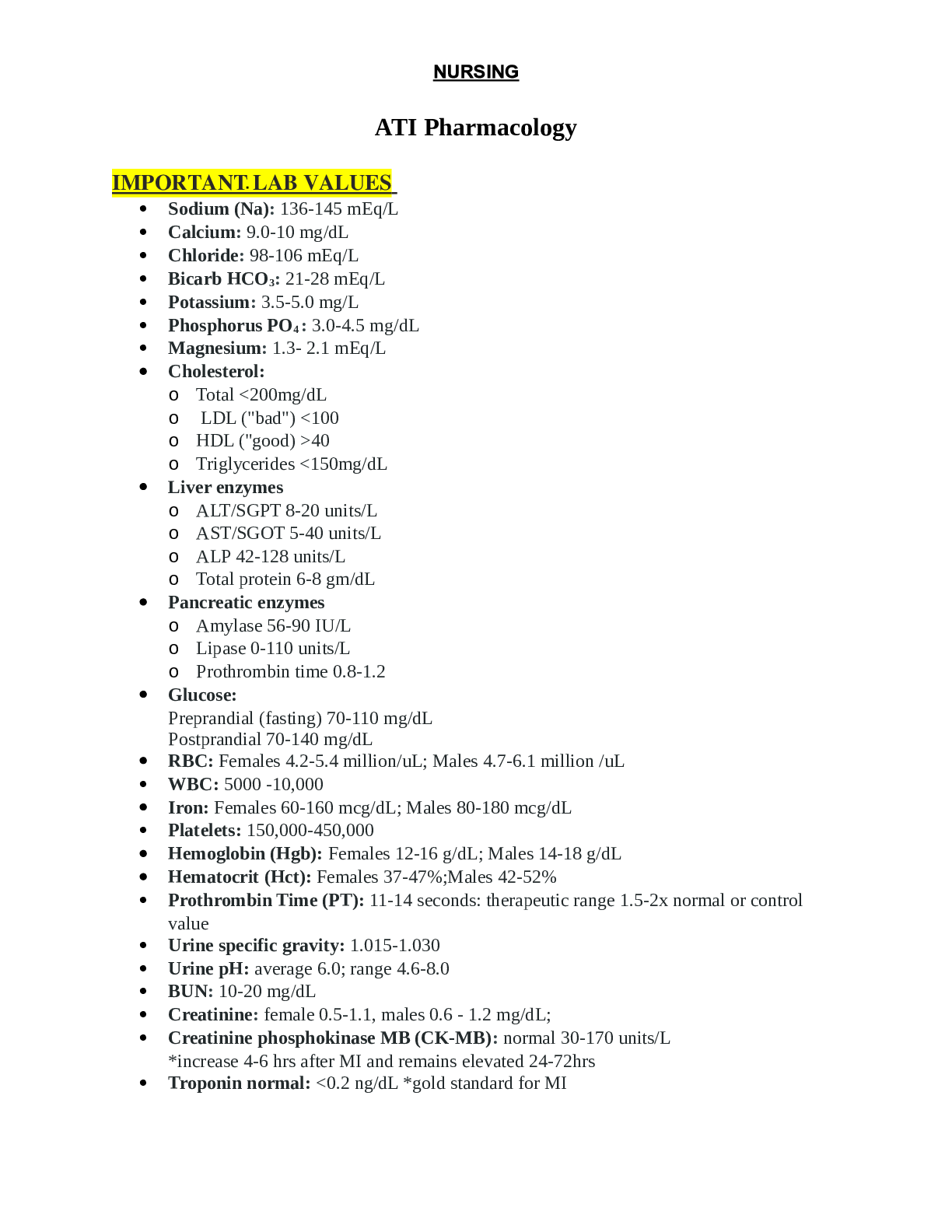
4. Someone has a-fib on coumadin, know what normal PT is
5. Someone is on atorvastatin (statin) what kind of labs do we look at
a. Liver function
6. CKD nephrotoxicity
a. Antibiotic
7. Heart failure and on Lasix, what are adverse effects of Lasix and what would happen if
hypokalemic
8. Celecoxib for osteoarthritis (adverse effects??)
a. Not stroke
9. A nurse is caring for a client who has difficulty swallowing medications and is prescribed
enteric-coated aspirin PO once daily. The client asks if the medication can be crushed to
make it easier to swallow. Which of the following responses should the nurse provide?
a. "Crushing the medication might cause you to have a stomachache or indigestion.
i. Rationale: The pill is enteric-coated to prevent breakdown in the stomach
and decrease the possibility of GI distress. Crushing destroys protection.
b. "Crushing the medication is a good idea, and I can mix it in some ice cream for
you.”
c. "Crushing the medication would release all the medication at once, rather than
over time."
d. "Crushing is unsafe, as it destroys the ingredients in the medication."Pharmacology Final Review 2
10. A nurse is providing teaching for a client who is newly diagnosed with type 2 diabetes
mellitus and has a prescription for glipizide. Which of the following statements by the
nurse best describes the action of glipizide?
a. "Glipizide absorbs the excess carbohydrates in your system."
b. "Glipizide stimulates your pancreas to release insulin."
i. Rationale: Glipizide is an oral antidiabetic medication in the
pharmacological classification of sulfonylurea agents. These medications
help to lower blood glucose levels in clients who have type 2 diabetes
mellitus using several methods, including reducing glucose output by the
liver, increasing peripheral sensitivity to insulin, and stimulating the
release of insulin from the functioning beta cells of the pancreas.
c. "Glipizide replaces insulin that is not being produced by your pancreas."
d. "Glipizide prevents your liver from destroying your insulin."
11. Having transdermal analgesic-- look up emla cream
12. SAA--how to use cream with child ^^^
a. Use visual pain rating scale
13. A nurse is caring for a client who has active pulmonary tuberculosis (TB) and is to be
started on intravenous rifampin therapy. The nurse should instruct the client that this
medication can cause which of the following adverse effects?
a. Constipation
b. Black colored stools
c. Staining of teeth
d. Body secretions turning a red-orange color
i. Rationale: Rifampin is used in combination with other medicines to treat
TB. Rifampin will cause the urine, stool, saliva
14. A nurse is caring for a client who has congestive heart failure and is taking digoxin daily.
The client refused breakfast and is complaining of nausea and weakness. Which of the
following actions should the nurse take first?
a. A. Check the client's vital signs.
i. Rationale: It is possible that the client's nausea is secondary to digoxin
toxicity. Assess for bradycardia, a symptom of digoxin toxicity. The nurse
should withhold the medication and call the provider if the client's heart
rate is less than 60 bpm.
b. Request a dietitian consult.
c. Suggest that the client rests before eating the meal.
d. Request an order for an antiemetic.
15. A nurse is caring for a client who has bipolar disorder and has been taking lithium for 1
year. Before administering the medication, the nurse should check to see that which of
the following tests have been completed?
a. Thyroid hormone assay
i. Rationale: Thyroid testing is important because long-term use of lithium
may lead to thyroid dysfunction.
b. Liver function tests:
i. Rationale: LFTs must be monitored before and during valproic acid
therapy
c. Erythrocyte sedimentation ratePharmacology Final Review 3
i. Rationale: This is not a necessary test related to lithium therapy.
d. Brain natriuretic peptide
16. A nurse is caring for a client who has thrombophlebitis and is receiving heparin by
continuous IV infusion. The client asks the nurse how long it will take for the heparin to
dissolve the clot. Which of the following responses should the nurse give?
a. "It usually takes heparin at least 2 to 3 days to reach a therapeutic blood level."
b. "A pharmacist is the person to answer that question."
c. "Heparin does not dissolve clots. It stops new clots from forming."
i. Rationale: This statement accurately answers the client's question.
d. "The oral medication you will take after this IV will dissolve the clot.
17. Suspension --vigorously shake for 5 minutes , room temp
18. A nurse caring for a client who has hypertension and asks the nurse about a prescription
for propranolol. The nurse should inform the client that this medication is contraindicated
in clients who have a history of which of the following conditions?
a) Asthma
1. Rationale: Propranolol, a beta-blocker, is contraindicated in clients who
have asthma because it can cause bronchospasms. Propranolol blocks the
sympathetic stimulation, which prevents smooth muscle relaxation.
b) Glaucoma
c) Depression
d) Migraines
19. A nurse is teaching a client who has a new prescription for colchicine to treat gout.
Which of the following instructions should the nurse include?
a. "Take this medication with food if nausea develops."
b. B. "Monitor for muscle pain."
i. Rationale: This medication can cause rhabdomyolysis. The client should
monitor and report muscle pain.
c. "Expect to have increased bruising."
d. "Increase your intake of grapefruit juice”
20. A nurse is teaching a client who has a urinary tract infection (UTI) and is taking
ciprofloxacin. Which of the following instructions should the nurse give to the client?
a. "If the medicine causes an upset stomach, take an antacid at the same time."
b. "Limit your daily fluid intake while taking this medication."
c. "This medication can cause photophobia, so be sure to wear sunglasses outdoors."
d. "You should report any tendon discomfort you experience while taking this
medication."
i. Rationale: The nurse should instruct the client to report any tendon
discomfort as well as swelling or inflammation of the tendons due to the
risk of tendon rupture.
21. A nurse is teaching a client who has a urinary tract infection (UTI) and is taking
ciprofloxacin. Which of the following instructions should the nurse give to the client?
a. "If the medicine causes an upset stomach, take an antacid at the same time."
b. "Limit your daily fluid intake while taking this medication."
c. "This medication can cause photophobia, so be sure to wear sunglasses outdoors."Pharmacology Final Review 4
d. "You should report any tendon discomfort you experience while taking this
medication."
i. Rationale: The nurse should instruct the client to report any tendon
discomfort as well as swelling or inflammation of the tendons due to the
risk of tendon rupture.
22. 17. A nurse is caring for a client who has cancer and a new prescription for ondansetron
to treat chemotherapy-induced nausea. For which of the following adverse effects should
the nurse monitor?
a. Headache
Rationale: Headache is a common adverse effect of ondansetron. Analgesic relief
is often required.
b. Dependent edema
c. Polyuria.
d. Photosensitivity
23. A nurse is preparing to administer verapamil by IV bolus to a client who is having
cardiac dysrhythmias. For which of the following adverse effects should the nurse
monitor when giving this medication?
a. Hyperthermia
b. Hypotension
i. Rationale: Verapamil, a calcium channel blocker, can be used to control
supraventricular tachyarrhythmias. It also decreases blood pressure and
acts as a coronary vasodilator and antianginal agent. A major adverse
effect of verapamil is hypotension; therefore, blood pressure and pulse
must be monitored before and during parenteral administration.
c. Ototoxicity
d. Muscle pain
24. A nurse is providing teaching to a client who has renal failure and an elevated
phosphorous level. The provider instructed the client to take aluminum hydroxide 300 mg
PO three times daily. For which of the following adverse effects should the nurse inform
the client?
a. Constipation
i. Rationale: Constipation is a common side effect of aluminum-based
antacids. The nurse should instruct the client to increase fiber intake and
that stool softeners or laxatives may be needed
b. B. Metallic taste
c. Headache
d. Muscle spasms
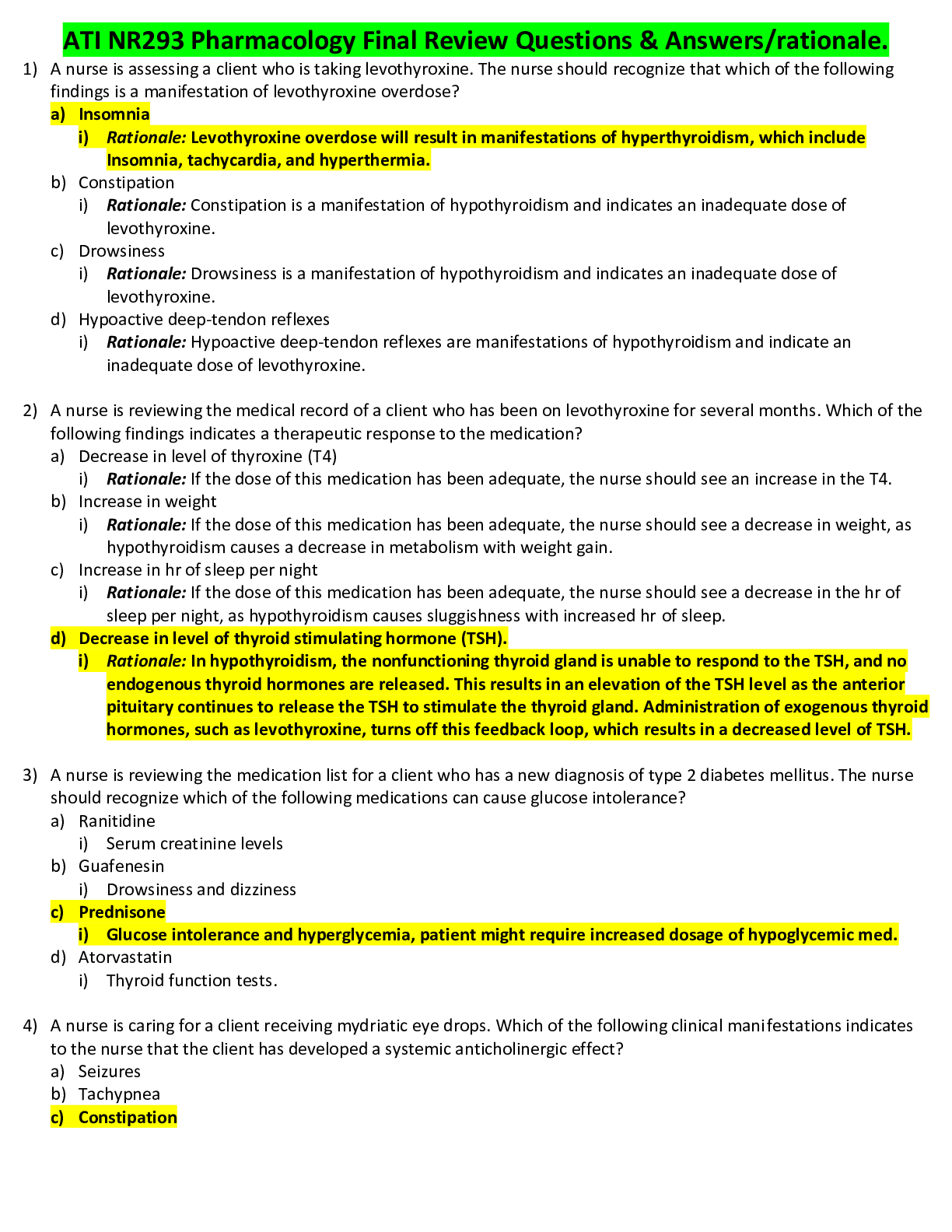
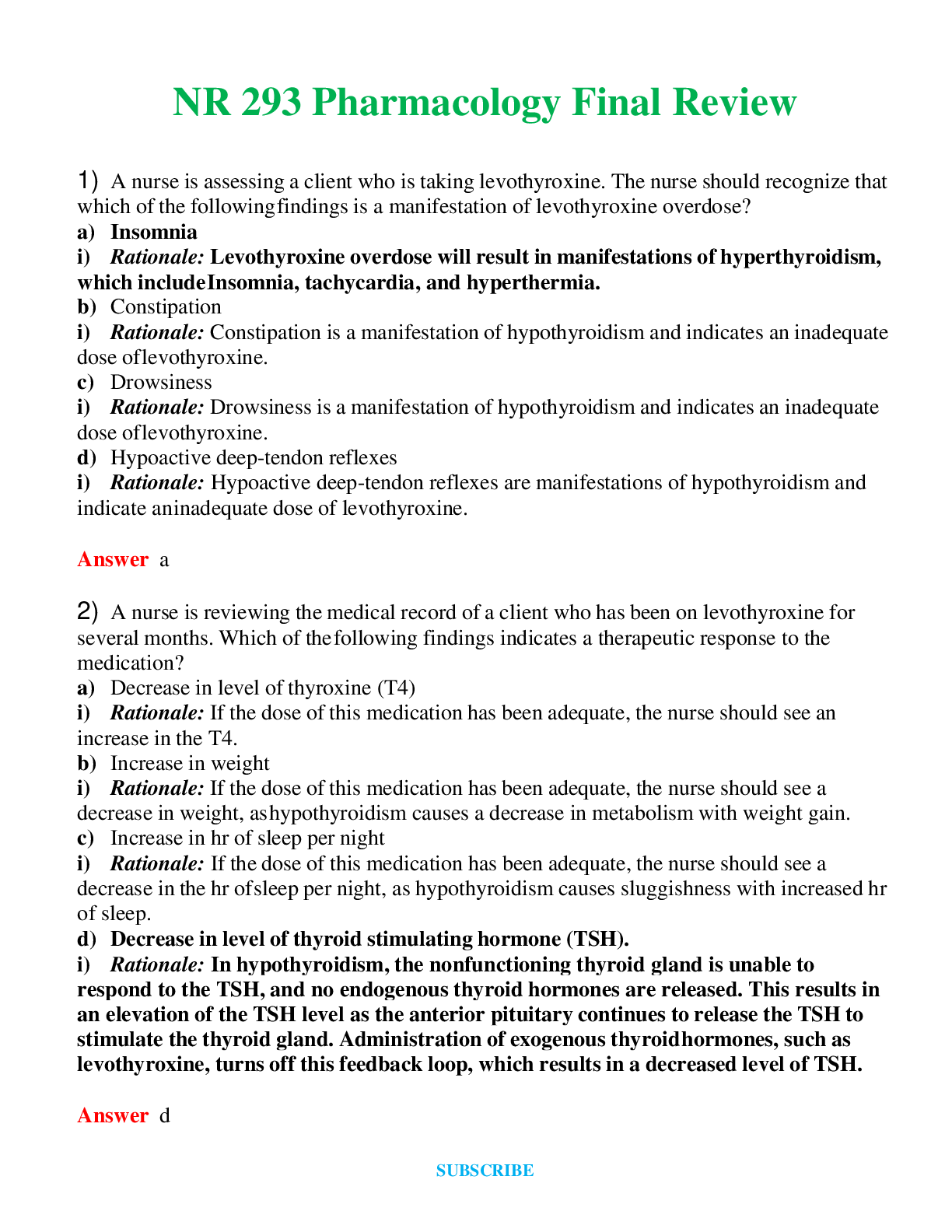
25. A nurse is reviewing the medical record of a client who has been on levothyroxine for
several months. Which of the following findings indicates a therapeutic response to the
medication?
a. Decrease in level of thyroxine (T4)
b. Increase in weight
c. Increase in hr of sleep per night
d. Decrease in level of thyroid stimulating hormone (TSH).
i. Levothyroxine OD = insomniaPharmacology Final Review 5
26. A nurse is teaching a client who has been taking prednisone to treat asthma and has a new
prescription to discontinue the medication. The nurse should explain to the client to
reduce the dose gradually to prevent which of the following adverse effects?
a. Hyperglycemia
b. Adrenocortical insufficiency
Rationale: Prednisone, a corticosteroid, is similar to cortisol, the glucocorticoid
hormone produced by the adrenal glands. It relieves inflammation and is used to
treat certain forms of arthritis, severe allergies, autoimmune disorders, and
asthma. Administration of glucocorticoids can suppress production of
glucocorticoids, and an abrupt withdrawal of the drug can lead to a syndrome of
adrenal insufficiency.
c. Severe dehydration
d. Rebound pulmonary congestion
27. A nurse is teaching a client who has been taking prednisone to treat asthma and has a new
prescription to discontinue the medication. The nurse should explain to the client to
reduce the dose gradually to prevent which of the following adverse effects?
a. Hyperglycemia
b. Adrenocortical insufficiency
Rationale: Prednisone, a corticosteroid, is similar to cortisol, the glucocorticoid
hormone produced by the adrenal glands. It relieves inflammation and is used to
treat certain forms of arthritis, severe allergies, autoimmune disorders, and
asthma. Administration of glucocorticoids can suppress production of
glucocorticoids, and an abrupt withdrawal of the drug can lead to a syndrome of
adrenal insufficiency.
c. Severe dehydration
d. Rebound pulmonary congestion
28. A nurse is preparing a client for surgery. Prior to administering the prescribed
hydroxyzine, the nurse should explain to the client that the medication is for which of the
following indications? (Select all that apply.)
a. Controlling emesis
b. Diminishing anxiety
c. Reducing the amount of narcotics needed for pain relief
d. Preventing thrombus formation
e. Drying secretions
29. A nurse is caring for a client who has acute respiratory distress syndrome (ARDS), and
requires mechanical ventilation. The client receives a prescription for pancuronium. The
nurse recognizes that this medication is for which of the following purposes?
a. Decrease chest wall compliance
b. Suppress respiratory effort
i. Rationale: Neuromuscular blocking agents, such as pancuronium, induce
paralysis and suppress the client's respiratory efforts to the point of apnea,
allowing the mechanical ventilator to take over the work of breathing for
the client. This therapy is especially helpful for a client who has ARDS
and poor lung compliance.
c. Induce sedation
d. Decrease respiratory secretionsPharmacology Final Review 6
30. Lisinopril (ace inhibitor) side effect
31. Poison ivy and give benadryl (side effects of ben) dry mouth?
32. A nurse is reviewing the medical record of a client who has been on levothyroxine for
several months. Which of the following findings indicates a therapeutic response to the
medication?
a. Decrease in level of thyroxine (T4)
b. Increase in weight
c. Increase in hour of sleep per night
d. Decrease in level of thyroid stimulating hormone (TSH).
33. A nurse on an oncology unit is preparing to administer doxorubicin to a client who has
breast cancer. Prior to beginning the infusion, the nurse verifies the client's current
cumulative lifetime dose of the medication. For which of the following reasons is this
verification necessary?
a. An excess amount of doxorubicin can lead to myelosuppression.
b. Exceeding the lifetime cumulative dose limit of doxorubicin might cause
extravasation.
c. An excess amount of doxorubicin can lead to cardiomyopathy.
i. Rationale: Doxorubicin is an antineoplastic antibiotic used in the
treatment of various cancers. Irreversible cardiomyopathy with congestive
heart failure can result from repeated doses of doxorubicin, and prolonged
use can also cause severe heart damage, even years after the client has
stopped taking it. The maximum cumulative dose a client should receive is
550 mg/m or 450
mg/m with a history of radiation to the mediastinum.
d. Exceeding the lifetime cumulative dose limit of doxorubicin might produce red
tinged urine and sweat.
34. A nurse at an ophthalmology clinic is providing teaching to a client who has open angle
glaucoma and a new prescription for timolol eye drops. Which of the following
instructions should the nurse provide?
a. The medication is to be applied when the client is experiencing eye pain.
b. The medication will be used until the client's intraocular pressure returns to
normal.
c. The medication should be applied on a regular schedule for the rest of the client's
life.
d. The medication is to be used for approximately 10 days, followed by a gradual
tapering off.
35. Thympolin (like caffeine)
36. A nurse is caring for a client who is taking naproxen following an exacerbation of
rheumatoid arthritis. Which of the following statements by the client requires further
discussion by the nurse?
a. "I signed up for a swimming class."
b. "I've been taking an antacid to help with indigestion."
i. NSAIDs, like naproxen, can cause serious adverse gastrointestinal
reactions such as ulceration, bleeding, and perforation. Warning
manifestations such as nausea or vomiting, gastrointestinal burning, and
blood in the stool reported by the client require further investigation by thePharmacology Final Review 7
nurse. The client might be taking an antacid because he is experiencing
one or more of these manifestations.
c. "I've lost 2 pounds since my appointment 2 weeks ago."
d. "The naproxen is easier to take when I crush it and put it in applesauce."
37. A nurse is performing discharge teaching for a client who has seizures and a new
prescription for phenytoin. Which of the following statements by the client indicates a
need for further teaching?
a. "I will notify my doctor before taking any other medications."
b. "I have made an appointment to see my dentist next week."
c. "I know that I cannot switch brands of this medication."
d. "I'll be glad when I can stop taking this medicine."
i. Rationale: Phenytoin is an anticonvulsant used to treat various types of
seizures. Clients on anticonvulsant medications commonly require them
for lifetime administration, and phenytoin should not be stopped without
the advice of the client's provider.
38. A nurse is providing discharge teaching to a client who has asthma and new prescriptions
for cromolyn and albuterol, both by nebulizer. Which of the following statements by the
client indicates an understanding of the teaching?
a. “If my breathing begins to feel tight, I will use the cromolyn immediately.”
b. “I will be sure to take the albuterol before taking the cromolyn.”
i. Rationale: The client should always use the bronchodilator (albuterol)
prior to using the leukotriene modifier (cromolyn). Using the
bronchodilator first allows the airways to be opened, ensuring that the
maximum dose of medication will get to the client's lungs.
c. “I will use both medications immediately after exercising.”
d. “I will administer the medications 10 minutes apart.”
Also hold breath for 10 seconds
39. A nurse is caring for a client who has heart failure and a prescription for digoxin. Which
of the following statements by the client indicates an adverse effect of the medication?
a. "I can walk a mile a day."
b. "I've had a backache for several days."
c. "I am urinating more frequently."
d. "I feel nauseated and have no appetite."
Rationale: Anorexia, nausea, vomiting, and abdominal discomfort are early signs
of digoxin toxicity.
40. A nurse is caring for a client who has HIV-1 infection and is prescribed zidovudine as
part of antiretroviral therapy. The nurse should monitor the client for which of the
following adverse effects of this medication?
a. Cardiac dysrhythmia
b. Metabolic alkalosis
c. Renal failure
d. Aplastic anemia
41. A nurse is caring for a client who has chronic renal disease and is receiving therapy with
epoetin alfa. Which of the following laboratory results should the nurse review for an
indication of a therapeutic effect of the medication?Pharmacology Final Review 8
a. The leukocyte count
b. The platelet count
c. The hematocrit (Hct)
i. Rationale: Epoetin alfa is an antianemic medication that is indicated in the
treatment of clients who have anemia due to reduced production of
endogenous erythropoietin, which may occur in clients who have endstage renal disease or myelosuppression from chemotherapy. The
therapeutic effect of epoetin alfa is enhanced red blood cell production,
which is reflected in an increased RBC, Hgb, and Hct.
d. The erythrocyte sedimentation rate (ESR)
42. A nurse is providing teaching for a client who is newly diagnosed with type 2 diabetes
mellitus and has a prescription for glipizide. Which of the following statements by the
nurse best describes the action of glipizide?
a. "Glipizide absorbs the excess carbohydrates in your system."
b. "Glipizide stimulates your pancreas to release insulin."
i. Rationale: Glipizide is an oral antidiabetic medication in the
pharmacological classification of sulfonylurea agents. These medications
help to lower blood glucose levels in clients who have type 2 diabetes
mellitus using several methods, including reducing glucose output by the
liver, increasing peripheral sensitivity to insulin, and stimulating the
release of insulin from the functioning beta cells of the pancreas.
c. "Glipizide replaces insulin that is not being produced by your pancreas."
d. "Glipizide prevents your liver from destroying your insulin.”
43. A nurse is caring for a client who is prescribed warfarin therapy for an artificial heart
valve. Which of the following laboratory values should the nurse monitor for a
therapeutic effect of warfarin?
a. Hemoglobin
b. Prothrombin time (PT)
i. Rationale: This test is used to monitor warfarin therapy. For a client
receiving full anticoagulant therapy,should typically be approximately two
to three times the normal value, depending on the indication for
therapeutic anticoagulation.
c. Bleeding time
d. Activated partial thromboplastin time (aPTT)
44. A nurse in a critical care unit is caring for a client who is postoperative following a right
pneumonectomy. After extubation from the ventilator, in which of the following
positions should the client be placed?
a. Prone
b. On the nonoperative side
c. Sims'
d. Semi-Fowler's
45. A nurse in a coronary care unit is admitting a client who has had CPR following a cardiac
arrest. The client is receiving lidocaine IV at 2 mg/min. When the client asks the nurse
why he is receiving that medication, the nurse should explain that it has which of the
following actions?
a. Prevents dysrhythmiasPharmacology Final Review 9
i. Rationale: Lidocaine is an antidysrhythmic medication that delays the
conduction in the heart and reduces the automaticity of heart tissue.
b. Slows intestinal motility
c. Dissolves blood clots
d. Relieves pain
46. A nurse is providing teaching for a client who has anemia and a new prescription for
ferrous sulfate liquid. Which of the following instructions should the nurse provide?
a. Take the medication on an empty stomach to decrease gastrointestinal irritation.
b. Take the medication with orange juice to enhance absorption.
i. Take between meals for optimal absorption
ii. Rationale: Ascorbic acid (vitamin C), which is found in orange juice, will
enhance the absorption of iron and increase its bioavailability. This will
also help to decrease the gastrointestinal side effects of iron.
c. Take the medication with milk.
d. Rinse the mouth before taking the iron.
47. What instructions does nurse provide when administering mont
48. A nurse in a provider's clinic is assessing a client who has cancer and a prescription for
methotrexate PO. Which of the following actions should the nurse take when the client
reports bleeding gums?
a. Explain to the client that this is an expected adverse effect.
b. Check the value of the client's current platelet count.
c. Instruct the client to use an electric toothbrush.
d. Have the client make an appointment to see the dentist.
49. A nurse is teaching a client who has bipolar disorder and a prescription for lithium to
recognize the manifestations of toxicity. Which of the following statements by the client
indicates an understanding of the teaching?
a. "I will report any loss of appetite."
b. "Increased flatulence is an indication of toxicity."
c. "Vomiting is an indication of toxicity."
d. "I will call my provider if I experience any headaches."
50. Bacterial conjunctivitis, know to apply
a. Thin line into the conjunctival sac
51. A nurse in a public clinic is planning a health fair for older adult clients in the
community. In teaching medication safety, which of the following foods should the nurse
advise the clients to avoid when taking their prescriptions?
a. Carbonated beverage
b. Milk
c. OJ
d. Grapefruit juice
52. Metachloprivide what is it for
53. A nurse is caring for a client who has developed gout. Which of the following
medications should the nurse prepare to administer?
a. Zolpidem
b. Alprazolam
c. Spironolactone
d. AllopurinolPharmacology Final Review 10
54. . A nurse is caring for a client who has diabetes insipidus and is receiving vasopressin.
The nurse should identify which of the following findings as an indication that the
medication is effective?
a. A decrease in blood sugar
b. A decrease in blood pressure
c. A decrease in urine output
i. Rationale: The major manifestations of diabetes insipidus are excessive
urination and extreme thirst. Vasopressin is used to control frequent
urination, increased thirst, and loss of water associated with diabetes
insipidus. A decreased urine output is the desired response.
d. A decrease in specific gravity
55. Schizophrenic on fluphenazine side effects
a. Look up teaching too
56. A nurse on a medical unit is planning care for an older adult client who takes several
medications. Which of the following prescribed medications places the client at risk for
orthostatic hypotension? (Select all that apply.)
a. Furosemide
b. Telmisartan
c. Duloxetine
d. Clopidogrel
e. Atorvastatin
57. A nurse is reviewing the health history for a client who has angina pectoris and a
prescription for propranolol hydrochloride PO 40 mg twice daily. Which of the following
findings in the history should the nurse report to the provider?
a. The client has a history of hypothyroidism.
b. The client has a history of bronchial asthma.
i. Rationale: Beta-adrenergic blockers can cause bronchospasm in clients
who have bronchial asthma; therefore, this is a contraindication to its use
and should be reported to the provider.
c. The client has a history of hypertension.
d. The client has a history of migraine headaches.
58. Ophthalmic ointment for pre-k age child w pink eye, what should nurse include in
instructions
a. Discard first few drops
59. Pt is on coumadin what would make you think they need further instruction
a. Ginseng
60. A nurse is teaching a client about the adverse effects of cisplatin. Which of the following
adverse effects should the nurse include in the teaching?
a. Tinnitus
b. Constipation
c. Hyperkalemia
d. Weight gain
61. nurse is caring for a client who is experiencing severe nausea and vomiting after a course
of chemotherapy. The nurse should monitor the client for which of the following clinical
manifestations?
a. Metabolic acidosisPharmacology Final Review 11
b. Metabolic alkalosis
i. Rationale: Metabolic alkalosis can occur in clients who have excessive
vomiting because of the loss of hydrochloric acid.
c. Respiratory acidosis
d. Respiratory alkalosis
62. A nurse is completing a medical interview with a client who has elevated cholesterol
levels and takes warfarin. The nurse should recognize that which of the following actions
by the client can potentiate the effects of warfarin?
a. The client follows a low-fat diet to reduce cholesterol.
b. The client drinks a glass of grapefruit juice every day.
c. The client sprinkles flax seeds on food 1 hr before taking the anticoagulant.
d. The client uses garlic to lower cholesterol levels.
i. Rationale: The nurse should recognize that garlic can potentiate the action
of the warfarin.
63. A nurse is caring for a client who has a new prescription for ferrous sulfate tablets twice
daily for iron-deficiency anemia. The client asks the nurse why the provider instructed
that she take the ferrous sulfate between meals. Which of the following responses should
the nurse make?
a. "Taking the medication between meals will help you avoid becoming
constipated."
b. "Taking the medication with food increases the risk of esophagitis."
c. "Taking the medication between meals will help you absorb the medication more
efficiently."
i. Ferrous sulfate provides the iron needed by the body to produce red blood
cells. Taking iron supplements between meals helps to increase the
bioavailability of the iron.
d. "The medication can cause nausea if taken with food."
64. Status asmaticus
a. Severe acute asthma attack --give SABA
65. A nurse is providing discharge teaching for a client who has a new prescription for
warfarin. Which of the following instructions should the nurse include in the teaching?
a. Mild nosebleeds are common during initial treatment.
b. Use an electric razor while on this medication.
i. Rationale: Warfarin, an anticoagulant, increases the client’s risk for
bleeding. The nurse should teach the client safety measures, such as using
an electric razor, to decrease the risk for injury and bleeding.
c. If a dose of the medication is missed, double the dose at the next scheduled time.
d. Increase fiber intake to reduce the adverse effect of constipation.
66. A nurse is preparing to initiate a transfusion of packed RBC for a client who has anemia.
Which of the following actions should the plan to nurse take?
a. Leave the client 5 min after beginning the transfusion.
b. Infuse the transfusion at a rate of 200 mL/hr
c. Check the client's vital signs every hour during the transfusion.
d. Flush the blood tubing with dextrose 5% in water.
67. A charge nurse is supervising a newly licensed nurse care for a client who is receiving a
transfusion of packed RBC. The nurse suspects a possible hemolytic reaction. AfterPharmacology Final Review 12
stopping the blood transfusion, which of the following actions by the new nurse requires
intervention by the charge nurse?
a. The nurse initiates an infusion of 0.9% sodium chloride.
b. The nurse collects a urine specimen.
c. The nurse sends a blood specimen to the laboratory.
d. The nurse starts the transfusion of another unit of blood product.
i. When suspecting a hemolytic reaction, the nurse should immediately stop
the transfusion of all blood products. The transfusion of additional
products can increase the client's risk for further complication.
68. A nurse is educating a group of clients about the contraindications of warfarin therapy.
Which of the following statements should the nurse include in the teaching?
a. "Clients who have glaucoma should not take warfarin."
b. "Clients who have rheumatoid arthritis should not take warfarin."
c. "Clients who are pregnant should not take warfarin."
i. Rationale: Warfarin therapy is contraindicated in the pregnant client
because it crosses the placenta and places the fetus at risk for bleeding.
d. "Clients who have hyperthyroidism should not take warfarin."
69. A nurse is caring for a client who is receiving a transfusion of packed red blood cells and
suspects that the client is experiencing a hemolytic reaction. Which of the following
interventions is the priority?
a. Collect a urine specimen.
b. Administer 0.9% sodium chloride through the IV line.
c. Stop the transfusion.
i. Rationale: The greatest risk to the client is injury due to further
hemolysis; therefore, the priority action is to stop the transfusion. When
suspecting a hemolytic reaction, the priority action by the nurse is to
immediately stop the transfusion to prevent further hemolysis.
d. Notify the blood bank.
70. Fentatoyin (dilantin)
a. flush w NS
71. A nurse is planning care for a client who has a detached retina and is preoperative for a
surgical repair. The nurse should prepare to administer which of the following
medications?
a. Phenylephrine
i. Mydriatic medications, such as phenylephrine, are used preoperatively to
dilate pupils to facilitate intraocular surgery.
b. Latanoprost
c. Pilocarpine
d. Timolol
72. A nurse is assessing a client who is receiving a parental lipid infusion. Which of the
following findings is a manifestation of fat overload syndrome?
a. Elevated temperature
i. Rationale: An elevated temperature is an early manifestation of fat
overload syndrome. The client is at risk for coagulopathy and multi-organ
system failure due to fat overload syndrome.
b. HypertensionPharmacology Final Review 13
c. Peripheral edema
d. Erythema at the insertion site
73. A nurse is caring for a female client who has rheumatoid arthritis and asks the nurse if it
is safe for her to take aspirin. The nurse should recognize which of the following findings
in the client's history is a contraindication to this medication?
a. Report of recent migraine headaches
b. History of gastric ulcers
i. Rationale: Aspirin is contraindicated for clients who have a history of
gastrointestinal bleeding and peptic ulcer disease because it impedes
platelet aggregation. An adverse effect of aspirin is gastric bleeding.
c. Current diagnosis of glaucoma
d. Prior reports of amenorrhea
74. A nurse is teaching a client who has a new prescription for colesevelam to lower his lowdensity lipoprotein level. Which of the following instructions should the nurse include?
a. "Take this medication 4 hr after other medications."
i. Rationale: The client should take this medication 4 hours after other
medications to increase absorption of the medication.
b. "Reduce fluid intake."
c. "Take this medication on an empty stomach.”
d. "Chew tablets before swallowing."
75. A nurse is assessing a client who is receiving dopamine IV to treat left ventricular failure.
Which of the following findings should indicate to the nurse that the medication is having
a therapeutic effect?
a. Systolic blood pressure is increased
i. Rationale: When dopamine has a therapeutic effect, it causes
vasoconstriction peripherally and increases systolic blood pressure.
b. Cardiac output is reduced
c. Apical heart rate is increased
d. Urine output is reduced
76. A nurse is teaching a client who has diabetes mellitus and receives 25 units of NPH
insulin every morning if her blood glucose level is above 200 mg/dL. Which of the
following information should the nurse include?
a. Discard the NPH solution if it appears cloudy.
b. Shake the insulin vigorously before loading the syringe.
c. Expect the NPH insulin to peak in 6 to 14 hr.
d. Freeze unopened insulin vials.
77. Butorphanol why do we give to pt in labor, which should nurse have available to reverse
med
78. A nurse is teaching a client who has a new prescription for fluoxetine to treat depression.
Which of the following statements by the client indicates an understanding of the
teaching?
a. "I should expect to feel better after 24 hours of starting this medication."
b. "I should not take this medicine with grapefruit juice."
c. "I'll take this medicine with food."
d. "I'll take this medicine first thing in the morning."Pharmacology Final Review 14
79. A nurse is instructing the parents of a client who has a new prescription for
methylphenidate. Which of the following instructions should the nurse include?
a. Avoid activities that require alertness such as driving.
i. Rationale: The client should avoid driving and other activities that require
alertness until the effects of this medication are known.
b. Increase caffeine intake.
c. Take this medication before bedtime.
d. Reduce calorie intake.
80. A nurse is teaching a client who has a new prescription for aluminum hydroxide to treat
heartburn. The nurse should instruct the client to monitor for and report which of the
following adverse reactions?
a. Constipation
i. Rationale: Aluminum hydroxide can cause constipation. The nurse should
tell the client to increase fluid and fiber intake to reduce the risk for
constipation.
b. Flatulence
c. Palpitations
d. Headache
81. Pancrelipase to aid digestion
a. Makes pancreatic fluid thinner
b. Nurse should inform client about which gastrointestinal changes
82. Drawing NPH and ___ in same syringe, what would you do if regular insulin looked
cloudy
a. Don’t use it
83. Dimenhydrinate side effects
84. A nurse in a substance abuse clinic is assessing a client who recently started taking
disulfiram. The client reports having discontinued the medication after experiencing
severe nausea and vomiting. Which of the following reasons should the nurse suspect to
be a likely cause of the client's distress?
a. The client demonstrated an allergic response to the medication.
b. The client experienced a common side effect to the medication.
c. The client consumed alcohol while taking the medication.
i. Rationale: Disulfiram is given to clients who have a history of alcohol
abuse. It produces a sensitivity to alcohol that results in a highly
unpleasant reaction when the client ingests even small amounts of alcohol.
When combined with alcohol, disulfiram produces nausea and vomiting.
d. The client took an overdose of the medication.
85. A nurse is reviewing the medication list for a client who has a new diagnosis of type 2
diabetes mellitus. The nurse should recognize which of the following medications can
cause glucose intolerance?
a. Ranitidine
b. Guaifenesin
c. Prednisone
i. Rationale: Corticosteroids such as prednisone can cause glucose
intolerance and hyperglycemia. The client might require increased dosage
of a hypoglycemic medication.Pharmacology Final Review 15
d. Atorvastatin
86. Someone taking alprazolam (xanax) for insomnia, which instructions should the nurse
include
a. Take at night?
87. A nurse in the emergency department is caring for a client who took 3 nitroglycerin
tablets sublingually for chest pain. The client reports relief from the chest pain but now
he is experiencing a headache. Which of the following statements should the nurse make?
a. “A headache is is an indication of an allergy to the medication."
b. “A headache is an expected adverse effect of this medication”
c. “A headache indicates tolerance to this medication”
d. “A headache is likely due to the anxiety about the chest pain”
88. Getting unit of packed red blood cells and had mild allergic reaction during previous
transfusion, admin Benadryl to prevent
a. Rash
89. 7.A nurse is preparing to administer nalbuphine to a postoperative client who is
experiencing pain. The nurse should monitor the client for which of the following
potential adverse effects of this medication?
a. Miosis
i. Rationale: Adverse effects of nalbuphine include visual disturbances such
as miosis, blurred vision, and diplopia.
b. Joint pain
c. Diarrhea
d. Oliguria
90. Mydriatic eye drops what makes you think pt has systemic
91. MS has new prescription for diantaline, what makes you think pt gets instructions
92. Duodenal ulcer about new prescription of susmentadine --nurse includes which
instructions
a. Your HC provider might need to take thylopiline dose if on this med
93. A nurse is reviewing the laboratory results of a client who has liver failure with ascites
and is receiving spironolactone. Which of the following findings should the nurse expect?
a. Decreased sodium level
i. Rationale: The nurse should expect a decreased sodium level.
Spironolactone is a potassium-sparing diuretic that inhibits the action of
aldosterone, resulting in an increased excretion of sodium.
b. Decreased phosphate level
c. Decreased potassium level
d. Decreased chloride level
[Show More]