NUR 213:03 Interdisciplinary Teams SG
The Interdisciplinary Team
Members of the interdisciplinary collaborative team can be many or few, depending on the needs of the patient. Definitions, training, and duties are su
...
NUR 213:03 Interdisciplinary Teams SG
The Interdisciplinary Team
Members of the interdisciplinary collaborative team can be many or few, depending on the needs of the patient. Definitions, training, and duties are summarized below for some of these team members.
Community Health Worker: Community Health Workers (CHW) can be broadly defined as individuals who connect health care consumers and providers, promoting health particularly among groups who have traditionally lacked access to care. The CHW is a member of the community and play an important role in identifying a community’s problems and in developing solutions. Examples of successful uses of the CHW include: using ex-addicts to educate intravenous drug users about AIDS risks and increasing breast, cervical, and colon cancer screening in minority communities. CHWs may play critical roles in improving community health status by providing cultural and technical linkages between community members, primary care providers, and the health care delivery system. Training may range from weeks to months and may combine lectures with supervised field experience. There is neither a licensure mechanism nor scope of practice laws specific to CHWs. For more information on community health workers read: "Community Health Workers: Integral Yet Often Overlooked Members of the Health Care Workforce." Pew Health Professions Commission (1995)
Dentist: The general dentist (DMD or DDS) is a primary care professional for patients in all age groups. Dentists take responsibility for the diagnosis, treatment management and overall coordination of services to meet the oral health needs of patients. Most dental schools have a four-year postgraduate program followed by a hands-on state board examination to receive licensure. Specialty practices such as orthodontics, pediatrics or oral surgery etc. require 2-6 years of additional education. The dentist is required to have licensure in the state in which they practice. For more information on dentists visit:
http://www.ada.org
Health Educators: Health educators teach clients, both individually and in groups, about various health topics. Although all members of the healthcare team are charged with client education, health educators are focused on providing adequate information to the client to assure understanding of the medical problem and treatment plan. These individuals may focus their educational efforts in health promotion and disease prevention activities that reduce the burden of disease in the community. Some health educators are utilized to provide in-depth instruction to clients about specific illnesses after being diagnosed. Many health educators have bachelors or masters degrees in health education or health promotion. There are no mandatory education or certification requirements for health educators.
Interpreters: Interpreters are invaluable members of the healthcare team that assist other healthcare professionals in communicating with the patients in their native language. These individuals make the patient comfortable in the medical setting as well as allowing the patient to communicate with the healthcare team. Interpreters also assist the healthcare team members in explaining information about medical conditions and treatments. There is no formal licensing or accreditation process for health care interpreters. Many receive training in medical terminology in order to interpret in a health care setting. Often, untrained native speakers are employed or recruited as volunteer translators for the sake of convenience and cost. For more information on Interpreters read: Putsch Robert W (1985) Cross-cultural communication the special case of interpreters in health care. JAMA, 254 (23) 3334-3348
Mental Health Provider: Professional training for individuals who provide mental health services in community health settings varies widely. They include psychiatrists (a physician who completes a residency in psychiatry); clinical psychologists (doctoral preparation in clinical psychology
followed by a clinical internship); licensed clinical social workers (see above); psychiatric clinical nurse specialists (master’s prepared nurse with clinical training in individual and family counseling); licensed counselors with a master’s degree in counseling, or an individual with no formal training. In the District of Columbia only the psychiatrist and psychiatric clinical nurse specialist have prescriptive authority.
Nurses: Advanced Practice Nurses (APN) today are required to have a Master’s degree.
The term APN is a descriptor that includes nurse practitioner (NP), clinical nurse specialist (CNS), certified nurse-midwife (CNM), or certified registered nurse anesthetist (CRNA). APNs must hold current RN/APN licensure in the state in which they practice. In 29 states, APNs must pass a national certification examination to practice. State Nurse Practice Acts detail legal authority, reimbursement, and prescriptive authority under which APNs practice. In DC, APNs have full prescriptive authority and may practice without any required collaborative agreement with a physician. Specialty areas for NPs include: family, adult, pediatric, gerontologic, women’s health, school/college health, occupational health, mental health, emergency and acute care. The NP serves as a primary care provider for individuals, families, and communities in ambulatory settings. The curriculum includes core content such as research, health care policy, ethics, and health promotion and disease prevention. Advanced practice content considered essential for all advanced practice students includes pharmacology, physiology, pathophysiology, advanced physical assessment and specialty content specific to specialization. Intensive, supervised clinical experiences are part of the educational preparation.
Registered Nurse (RN): Registered nurses (RN) may be educated at the diploma (hospital- based), associate or bachelor’s level. Today, most RNs are prepared through associate and baccalaureate degree programs. Most associate degree programs are at community colleges and can be completed within 2-3 years. Bachelor’s prepared nurses complete a four-year university-based degree program, typically with the first two years of course work devoted to the sciences and the last two years to nursing courses and clinical preparation. Upon graduation, all nurses must pass a national licensing examination, known as the National Council Licensing Examination (NCLEX). Successful passing of this examination is necessary for state licensure as a RN. RNs are prepared as generalists with their educational preparation providing theory and practice in areas such as – medicine, surgery, pediatrics, obstetrics, psychiatry, and public health. RNs play an integral role in community clinics, ranging from providing essential services to the provision of home-based services through the public health department and private agencies. Vocational or practical nurses: These nurses usually receive up to 12 months of basic nursing skills training. They practice under the supervision of a registered nurse or physician. They must practice a national licensing examination to become a licensed vocational nurse (LPN) and must obtain a license in a state to practice. For more information on nurses visit: http://www.nursingworld.org http://www.aanp.org http://www.aana.com http://www.acnm.org
Nutritionist: The Registered Dietitian (R.D.) is a health care professional trained in the single specialty of nutrition science. Their goal is to promote health and fight illness by fostering the practice of proper nutrition to individuals and groups. A RD has both theoretical and practical experience, including a minimum of a bachelor’s degree in food and nutrition from an accredited university plus an extensive professional internship under expert supervision. The RD must pass a comprehensive examination for certification and continuing education is required to maintain certification. Twenty-seven of the 41 states with statutory laws governing the practice of dietetics plus the District of Columbia require licensure. Thirteen states require certification.
Pharmacists: Pharmacists dispense drugs and medications prescribed by physicians, physician assistants, nurse practitioners, and dentists. They also advise healthcare professionals and patients on the use and proper dosage of medications, as well as expected side effects and interactions with other prescription and nonprescription medicines. These professionals also order and maintain supplies of medications and various medical supplies required for use in the clinical setting. Pharmacists usually possess a bachelor’s degree and are required to graduate from an accredited school of pharmacy. Many continue to study to obtain advanced degrees in pharmacy or business. All states and the District of Columbia require a license to practice pharmacy, which may require an internship under the supervision of the registered pharmacist. For more information on pharmacists visit: http://www.aphanet.org
Physician (MD): Physician training begins with a bachelor’s degree from a four-year college or university. Medical school typically consists of two years of course work followed by two years of clinical experience. Course work emphasizes pathophysiology, recognition of signs and symptoms of disease, and application of scientific method to the understanding of disease.
Classes also include training in history taking and in physical examination.
The clinical years include required clerkships in internal medicine, pediatrics, surgery, obstetrics/gynecology, psychiatry, neurology, and family medicine. Elective clerkships are available in other areas of specialization. Clerkships are primarily hospital-based. Today, there is an increasing interest in providing medical students with ambulatory care experience and in the community. After graduation from medical school, physicians enroll in intensive post-graduate residency training in a particular specialty, which lasts at least three years. License to practice medicine in an individual state is regulated by the State Board of Medicine. Licensure is generally available after one year of post-graduate training. Board certification in a specialty is an elective process that requires a minimum number of years of residency in the specialty and successful completion of oral and/or written examinations. For more information on physicians visit: http://www.ama-assn.org
Physician Assistant (PA): Physician Assistants practice medicine with the supervision of a licensed physician. As members of the health care team, PAs provide a broad range of medical services. They are educated in one of the 107 specially designed 2-year programs located at medical colleges and universities, teaching hospitals, and through the Armed Forces. The first year is based on classroom learning of the basic medical sciences, while the second year is spent predominately in clinical rotations. The typical PA student has a bachelor’s degree and over 4 years of health care experience prior to admission to the PA program. After graduation, PA’s must pass a national certifying examination. Physician Assistants must be licensed in the state in which they practice. In the District of Columbia, PA authority is derived from the physician and requires agreement with a physician-collaborator to obtain licensure. PAs have prescriptive authority under this agreement and may be directly reimbursed under Medicaid.
PA’s have limited ability to apply for reimbursement under Medicare. Board Certification examinations are available in Primary Care and/or Surgery. Not all states require board certification for licensure. Recertification requires 100 continuing education hours every two years and by written examination every 6 years. For more information on physician assistants visit: http://www.aapa.org
Social Worker: Training for professional social workers is at minimum a bachelor’s degree in social work (BSW). Most social workers possess a master ’s degree in social work (MSW). They provide counseling, and enable individuals, families, and communities to obtain social services. They work with clients on issues of unemployment, illness, disability, housing, abuse, and financial problems. Social workers specializing in providing mental health services and counseling are called Clinical Social Workers. In the community, they may be active in organizing communities to improve health and social services. Social workers often assist families in crisis situations and
during periods of transitions. Master’s prepared social workers may become licensed clinical social workers (LCSW) after completing 3200 supervised hours of work experience and completion of coursework in the areas of individual and family counseling, child abuse, sexuality, and chemical dependency. LCSW’s may provide individual and family counseling services.
Licensure is at the state level and occurs after completion of a written and oral exam. Licensing permits social workers to bill insurance companies for their services. All states and the District of Columbia have licensing and certification requirements for practice. Clinical social workers require additional education, training, and certification. For more information on social workers visit: http://www.naswdc.org
Volunteers: Volunteers are individuals that that provide services in the clinical setting with no monetary payment. They may be retired healthcare practitioners or citizens with a strong desire to provide public service to the community. Many clinics utilize these volunteers to perform a variety of jobs, such as interpreters, filing, answering telephones, or more patient oriented services, such as taking vital signs, assisting patients in completing forms, and assisting other health care team members. To serve as a volunteer requires no certification or license, just a strong willingness to serve the community and assist in helping provide health services to others.
Other Team Members: Other members of the interdisciplinary health care team may include: Physical therapists, occupational therapists, speech and language therapists, and art or music therapists. The availability of these additional members of the health care team depends on the community served and the health care services offered.
Discipline Practice Roles/Skills Education/Training Licensure/Credentials
Nurse Licensed vocational nurse (LVN)----
basic nursing skills that are dictated by the facility; registered nurse (RN) BA
or higher and has increased scope of practice, including planning for optimal functioning, coordination of care, teaching, and direct and indirect patient
care. LVN---1 year of training; RN with associate degree---2 years of training, usually in a community college; BS, RN 4 years in
college; MS, RN 2 years of
postgraduate specialty study; PhD RN 3-4 yearsof postgraduate
studies LVN--exam required for licensing; CE requirements. RN---can be RN; BS, RN; APN; MS, GNP or other specialty RNs; PhD, RN: all must pass the national licensure exam and are required to have 20 hours of CEUs per year.
Nurse practitioner Health assessment, health promotion skills, histories and physicals in outpatient settings; order, conduct,and interpret some lab and diagnostic tests;
teaching and counseling. Master's degree with a defined specialty area such as gerontology (GNP). In addition to RN licensure, NP must pass a National Certification Exam in the appropriate specialty area (e.g., gerontology or family practice)
Physician Treat diseases and injuries, provide preventive care, do routine checkups
prescribe drugs, and do some surgery. Physicians complete medical school (4 years) plus 3 to 7 years of graduate
medical education. State licensure required for doctor of medicine degree; exam required and possible exams required
for specialty areas. CE requirements.
Geriatrician Physician will special training in the diagnosis, treatment, and prevention of disorders in older people; recognizes aging as a normal process and not a
disease state. Complete a 1- to 3-year postgraduate fellowship training program in geriatric medicine or pass an exam Certificate of Added Qualification (CAQ) in geriatrics. Doctor of medicine state exam required as above.
Physician assistant Practice medicine with the supervision of licensed physicians; exercise autonomy in medical decision making and provide a broad range of diagnostic and therapeutic services; practice is
centered on patient care. Specially designed 2-year PA program located at medical colleges and universities. Mose have bachelor's degree and over 4 years of health care experience before entering a PA
program. NCCPA certifying exam---the credentials PAC will be used if certified; PA will be used if not certified.
This exam is given every fall (October) for first time takers. Every 6 years a PA must take a recertification exam and this is given in the spring. Requires 100
hours of CEUs every 2 years.
Social Worker Assessment of individual and family psychosocial functioning and provision of care to help enhance or restore capacities; this can include locating
services or providing counseling. There is a 4-year college degree (BSW); 2 years of graduate work (MSW), and doctoral degree (Ph.D.); 15 hours of continuing education is
required every year. State certification is required for clinical social workers. The LMSW (for masters level); LSW (BS level); SWA is a social work associate with a combination of education and experience. ACP---
signifies licensure for independent clinical practice.
Psychologist Assessment, treatment and management of mental disorders; psychotherapy with
individuals, groups, and families. Graduate training consists of 5 years beyond undergraduate training; most
course work includes gerontology and Ph.D. or EdD or PsyD are degrees awarded. State licensure; the American Psychological Association
has ethics codes as do most states.
Psychiatrist Medical doctors who treat patients'
mental, emotional, and behavioral Medical school and residency
specializing in psychiatry. Residency State exam to practice medicine; Board of Psychiatry
and Neurology offers exam for diplomat in psychiatry,
Discipline Practice Roles/Skills Education/Training Licensure/Credentials
Psychiatrist (con’t) symptoms. includes both general residency training and 2-3 years in area of specialization
(e.g., geriatrics, pediatrics). though not required for psychiatric practice in Texas.
Pharmacist Devised and revise a patient's medication therapy to achieve the optimal regime that suits the individual's medical and therapeutic needs; information resource for the patient and medical team. Pharmacists can receive a baccalaureate (B.S.) - 5 year program; or doctorate degree (Pharm.D.) Annual CEUs required range from 10 to 15 hours State exam required - Texas uses the national exam (NABPLEX); given every quarter; RPh is the title for a registered pharmacist in Texas; board certifications in specialties available (pharmacotherapy, nuclear pharmacy, nutrition, psychiatric, and oncology in near
future).
Occupational Therapist One who utilizes therapeutic goal- directed activities to evaluate, prevent, or correct physical, mental, or emotional dysfunction or to maximize function in
the life of the individual. BS or MS in OT with a minimum of 6 months of field work; for OT assistant, an associate degree or OT assistant certificate is required with a minimum of
2 months' field work. State exam required for the credential of O.T.R. (occupational therapist registered). Exam also required for COTA (certified occupational therapy assistant). These exams are given at least 2 times/
year.
Physical Therapist The evaluation, examination, and utilization of exercises, rehabilitative procedures, massage, manipulations, and physical agents including, but not limited to, mechanical devices, heat, cold, air, light, water, electricity, and sound
in the aid of diagnosis or treatment. Four-year college degree in physical therapy is required to be eligible for the state exam; master's degree in physical therapy is available; 3 CEUs every 2 years are required. PT is the credential that is used by licensed physical therapists and PTA is the credential for licensed physical therapist assistant. To use either of these titles, one must pass a state exam. CEUs are required for both; titles and licenses must be renewed
bi-annually.
Chaplain Provide visits and ministry to patients and family. Master's degree in theology, plus a minimum of 1 year of clinical supervision. If fully certified, can work in some settings without being fully certified. Certification is through the Chaplaincy Board of Certification credentials for this are BCC;
however, credentials are not normally used. Most
chaplains are ordained ministers, but not all. CEUs required are 50 hours per year.
Dietitian Evaluate the nutritional status of patients; work with family members and medical team to determine appropriate nutrition goals for patient. BS degree in food and nutrition and experience are required to be eligible for exam; CE's are required for both the LD (6 clock hrs/year) and RD (67 clock hrs every 5 years); MS degree is
available also. RD is the credential for a registered dietitian in the state of Texas. For RD, must pass the national exam of the American Dietetic Association; LD is the credential for a licensed dietitian in the state of Texas; same exam is required but processing of paperwork/
fees are different.
Table 2.2 Interdisciplinary Health Care Teams: Leadership Tasks
Organizer/Mover
• initiate team development
• identify team tasks
• identify strength/weaknesses
• call meetings
• provide structure
• review team needs
• identify appropriate patients Finisher
• impose time constraints
• focus on outputs (patients treated, goals achieved)
• seek progress
• show high commitment to task
• manage projects Expert
• have special expertise
• offer professional viewpoint
• identify interdisciplinary patient problems
• use expertise of other disciplines
• understand patient needs
• know team's expertise and limits
Ambassador
• build external relationships
• promote awareness of the team's work
• build bridges
• show concern for external team environment Diplomat
• build understanding between members
• negotiate
• mediate
• facilitate decision making Supporter
• build team morale
• put team members at ease
• ensure job satisfaction
• help patient work with team
Judge/Evaluator
• listen critically
• evaluate clinical process
• evaluate clinical outcomes
• help team reflect
• promote appropriate treatment
• act logically
• seek truth Process Analyzer
• identify team problems
• analyze team problems
• consult with team members
• offer observations
• offers potential solutions to team problems Facilitator
• identify member conflicts
• help team members find ways to resolve conflicts
• help implement solutions
Creator
• generate new ideas
• visualize new programs/projects
• visualize new alliances Innovator
• discover resources
• identify opportunities
• transform ideas to strategy
• propose new methods Challenger
• offer skepticism
• look in new ways
• question accepted order
Reviewer
• observe
• review team performance
• promote review of process
• give feedback
• mirror team's actions Quality Controller
• check output alignment
• act as conscience regarding team goals
• inspire higher standards
• assure team reviews outcomes Conformer/Follower
• seek agreement
• fill gaps in teamwork
• cooperate
• help relationships
• avoid challenges
• maintains continuity
Guard
• protect team from too much output
• protect team from too much input Teacher
• help new members learn the norms and values of the team
• teach shared leadership skills to other members
• recognize members' leadership potential
• teach others when to seek specialty advice Learner
• raise questions to enhance understanding across disciplines or areas
• raise questions regarding need for interdisciplinary input
Source: Drinka, T.J.K., & Clark, P.G. (2000). Health care teamwork: interdisciplinary practice and teaching. Westport CT:Auburn House.
MAKING ETHICAL DECISIONS: K E Y P O I N T S
■ Ethical decision -making is a skill that can be learned and developed through practice.
■ The steps in the ethical decision -making process are to collect and analyze the data; state the dilemma; consider the choices of action; analyze the choices and consider the consequences; and make the decision.
■ Utilitarianism is a system of ethical decision -making based on the principle of the greatest good for the greatest number of people. Deontology is a system of ethical decision -making based on unchanging rules and principles, without consideration of the consequences.
■ The ANA Code for Nurses serves as the ethical guidelines for the profession of nursing. It provides the nurse with general statements about nursing ethics, which the nurse needs to interpret and apply to individual ethical situations.
■ The key ethical issues involved in organ transplant ation revolve around the ethical principles of distributive justice, informed consent, and determination of death.
■ Ethical questions concerning end -of-life decisions often involve a conflict between the client’s right to self-determination and the nurse’ s obligations of beneficence and nonmaleficence.
■ A number of ethical principles are involved in ethical dilemmas created by the HIV and AIDS issue. These include the right to privacy, self -determination, the right to care, and distributive justice in the form of health -care workers’ and society’s right to protection from dangerous diseases.
■ Although advance directives are now a legal part of the health -care system, a number of ethical issues still plague their use. The primary ethical concern is that of informed consent. Many clients have only a limited knowledge about the types of treatments possible for various conditions.
■ A relatively new ethical concern for nurses involves current trends in health care for the increased use of unlicensed assistive personnel. Professional nurses are ethically and legally accountable for the care provided by these individuals.
■ Cloning is a new technology with a promising future, but it also raises a number of disturbing ethical questions that nurses are likely to fa ce in the future.
MAKING ETHICAL DECISIONS:
Step 1: Collect, Analyze, and Interpret the Data
Obtain as much information as possible concerning the particular ethical dilemma you are facing. Among the issues important for you to know are the client’s wishes, the family’s wishes, the extent of the physical or emotional problems causing the dilemma, the physician’s beliefs about health care, and your own orientation to life -and-death issues. For example, many nurses must deal with the question of whether or not to initiate resuscitation efforts when a terminally ill client is admitted to the hospital. Physicians often leave verbal instructions indicating that you really should not resuscitate the client but merely go through the motions to make the family feel better. Your dilemma becomes whether to attempt seriously to revive the client or to let her die quietly.
Important information that would help you make the best decision includes the mental competen cy of the client to make a no -resuscitation decision, the client’s desires, the family’s feelings, and whether the physician sought input from the client and family before leaving the orders. Many institutions have policies concerning no -resuscitation orde rs, and you should consider these in the data collection
stage. After collecting as much information as possible, you need to bring the pieces of information together into a form that will give the dilemma the clearest and sharpest focus.
Step 2: State the Dilemma
After you have collected and analyzed all the available information, you need to state the dilemma as clearly and succinctly as possible. Recognizing the key aspects of the dilemma helps focus your attention on the important ethical principles. Most of the time, the dilemma can be reduced to a
statement or two revolving around key ethical principles. These dilemmas often involve a question of conflicting rights, obligations, or basic ethical principles.
In the question of slow resuscitation versus no resuscitation, the dilemma might be stated as “The client’s right to self -determination and death with dignity versus the nurse’s obligation to preserve life and do no harm.” In general, the principle that the competent client’s wishes must be followed is unequivocal. If the client has become unresponsive before expressing his wishes, then the family members’ input must be given serious consideration. Additional questions can arise if the family’s wishes conflict with those of the client.
Step 3: Consider the Choices of Action
After you have stated the dilemma as clearly as possible, you should attempt to list, without consideration of their consequences, all the possible courses of action that you can take to resolve the dilemma. This brainstorming activity, i n which you consider all possible courses of action, may require input from outside sources such as colleagues, supervisors, and even experts in the ethical
field. The consequences of the different actions are considered later. Some of the possible courses of action to consider in the resuscitation example are:
■ Resuscitating the client to your fullest capabilities, despite what the physician has requested
■ Not resuscitating the client at all, just going through the motions without any real attempt to revive the client
■ Seeking another assignment to avoid dealing with the situation
■ Reporting the problem to a supervisor
■ Attempting to clarify the question wit h the client
■ Attempting to clarify the question with the family
■ Confronting the physician about the question
Step 4: Analyze the Advantages and Disadvantages of Each Course of Action
Some of the courses of actions you developed in the previous step ar e more realistic than others. The unrealistic actions become readily evident during this step in the decision -making process, when you consider the advantages and the disadvantages of each action in detail. Along with each option,
you must consider the con sequences of taking each course of action.
You should evaluate the advantages and disadvantages of the consequences thoroughly. For example, you should consider whether initiating discussion about the order would anger the physician or cause her to distr ust you in the future. Either of these responses might make practicing at that institution difficult. The result might be the same if you successfully resuscitate the client despite orders to the contrary. Not resuscitating the client has the potential to involve you in a lawsuit if no clear order for no resuscitation exists. Presenting the situation to a supervisor may, if the supervisor supports the physician, cause you to be labeled a troublemaker and may have a negative effect on your future
evaluations . The same process can be applied to the other possible courses of action. By thoroughly considering the advantages and disadvantages of each possible action, you should be able to deduce your realistic choices of action. An important factor to include in your deliberations is the ANA’s Code for Nurses (2001).
Step 5: Make the Decision
The most difficult part of the process is actually making the decision and living with the consequences. By their nature, ethical dilemmas produce differences of opinion, a nd not everyone will be pleased with your decision. In the attempt to solve any ethical dilemma, there is always a question of the
correct course of action. The client’s wishes almost always supersede independent decisions you might make. Collaborative dec isionmaking about resuscitation that involves the client, physician, nurses, and family is the ideal solution and tends to produce fewer complications in the long -term resolution of such questions.
APPLYING BASIC CONCEPTS
The basic ethical concepts discussed so far have many applications to the way we live our daily lives and how we interact with others, as well as how we perform as professional nurses. A major application of these concepts is seen in how we view the rights of an individual, a concept tied to the concept of autonomy.
Rights - The discussion of ethical concepts is founded on the belief that people are entitled to certain rights or privileges. Typically, we think of a right as a just claim or entitlement, or as something that is owed to an individual on a legal, moral, or ethical basis. Most rights are based on the concept of autonomy of the individual. In common usage, this is often extended to include privileges, concessions, and freedoms. Rights are associated with many different areas of our lives.
We tend to think of ourselves as having civil and political rights such as the right to assembly, to vote, to own property, and to speak freely. We have economic, social, and cultural rights, such as the right to healthcare, the right to education, and the right to work. Rights form the basis of most professional codes and legal judgments (see Chapter 7 for more discussion of rights as used in the legal sense).
Legal rights include the right to due process and trial. And we have personal rights, such as the right of an individual to self-determination and privacy. Problems occur when one individual’s rights come in conflict with the values of others. For example, if a patient is admitted to a hospital and refuses treatment, and there is a strong indication that with treatment the patient could recover, should the physicians and nurses respect the patient’s right to self-determination? The conflict of rights provides us with many challenges and dilemmas. Although it is not within the confines of this text to discuss all of the circumstances, consider some of the major areas in which you may deal with rights in your role as a nurse.
Right to Self-Determination - Federal legislation has been passed to ensure that individual rights are respected. The Patient Self-Determination Act, also known as the Danforth amendment, is discussed in Chapters 7 and 9. This act was created because of our society’s fundamental belief in the individual’s right to decide. However, this act does little to recognize cultural diversity and sensibility to groups such as Chinese Americans, who have a unique set of values and well-defined role relationships, in which the role of family in making healthcare decisions is strongly valued.
Rights and Cultural Relativism - Although the concept of rights is almost taken for granted in our Western culture, there are some who suggest that the validity of all moral judgments is culturally relative. Cultural relativism is the principle that what an individual believes and does make sense in terms of his or her own culture. Cultural relativism embraces the notion that groups and individuals hold different sets of values that must be respected. The principle was made popular by anthropologists who wanted to compare and contrast a wide range of cultures in a systematic and evenhanded manner. It gained greater popularity when the Commission of Human Rights of the United Nations began preparing the Universal Declaration of Human Rights. The Commission struggled to formulate a statement of human rights that would take into account the individual as a member of a social group of which he or she was a part.
Those of us raised in the Western culture have difficulty imagining the prospect of performing as a suicide bomber, as witnessed in news broadcasts from the Middle East where such behaviors are viewed as heroic by some groups. This is also an interesting concept to consider in relationship to practices such as female circumcision, often referred to in the west as female genital mutilation. Although it is appalling to Western cultures, in some non-Western cultures, concerns about virginity, ability to attract a husband, the husband’s sexual pleasure, and religious beliefs dictate that female children be circumcised. Western countries have acted to make this practice illegal, indicating that it is outside the bounds of what can be accepted as simply a cultural difference.
Rights of the Unborn - There are many times when we grapple with whose rights should be respected. The most obvious example of this situation occurs when we consider the rights of the unborn to life versus the right of the mother to make choices regarding her own body. This issue is one that has continued to divide members of our society and is often an issue brought forth when candidates run for election or when appointments are made to the Supreme Court. The concern becomes even
more contradictory, paradoxical, and convoluted when we consider that some states will permit a late-term abortion; however, in that same state, if an automobile accident occurs in which a pregnant woman is killed (thus also killing the fetus she is carrying), the offending driver can be charged with two cases of manslaughter—both the mother and the unborn child.
Right to Privacy and Right of Confidentiality - An area receiving much attention today is that of the rights of the patient to privacy and the confidentiality of medical information. Privacy may be thought of as the right to be left alone or free from intrusion. It also includes the right to select desired care based on personal values and beliefs and to have control over how sensitive information is shared.
Confidentiality deals with not sharing information. This has surfaced as a major concern, because sensitive health records are now computerized and can be e-mailed, telecommunicated, faxed, or copied to various individuals or groups who may have an interest in the information. This information, which could include individually identifiable health data, might be readily available to anyone who walks by a fax machine or logs on to a computer. People are concerned that exposure to personal health information, especially that related to genetic tests or communicable illnesses such as sexually transmitted diseases or HIV, could result in loss of or denial of health insurance, or could result in embarrassment or discrimination in the work environment.
In 1996, Congress passed legislation in the Health Insurance Portability and Accountability Act. It required that steps be taken or legislation passed to ensure the privacy of individually identifiable health information.
The ANA has been concerned about this issue for some time and continues to work with other national groups on the issue of privacy and confidentiality. Table 8.3 identifies some of the activities in which the ANA has been involved related to this issue. The ANA Code of Ethics for Nurses with Interpretive Statements (2001) and the International Council of Nurses Code of Ethics for Nurses (2006) both address the issue of patient confidentiality. As a student and future nurse, remain ever mindful of your responsibility to maintain patient privacy and confidentiality in all matters.
The Standard of Best Interest - When a decision must be made about a patient’s healthcare and the patient is unable to make an informed decision, the decision may be made based on the standard of best interest. As the name implies, it is based on what the healthcare providers or family believes is best for that individual, taking into account tangible factors such as how the patient may be harmed, how the patient may benefit, and any physical and fiscal risks. This is an application of the concepts of beneficence and nonmaleficence. Such decisions may be based on the individual’s expressed wishes and preferences as noted in verbal statements or by written documents such as living wills if they are available. Healthcare professionals strive to avoid unilateral decisions made by a healthcare provider. Unilateral decisions often imply that the decision maker knows what is best for the patient. This is referred to as paternalism, or the deliberate treatment of people in a fatherly manner, especially by caring for them but not allowing them to have rights or responsibilities. In instances where parents have denied their children lifesaving care, the courts have, on occasion, overturned the parent’s decision on the best-interest standard.
Ethics and Financial Compensation - Another issue receiving attention, discussion, and review is the practice of rewarding physicians (monetarily or not) for limiting care as was first seen in the advent of diagnosis-related groups under Medicare that established limits for payment for services. Recently, health maintenance organizations have come under fire for rewarding physicians who maintain lower costs of care or for penalizing those who do not. The impact this might have on nurses who are involved in the care of clients perceived to be receiving less than adequate treatment and the nurse’s obligation to serve as an advocate for the patient are yet to be determined. It certainly emphasizes the importance of all nurses understanding ethics and ethical principles.
SAFETY CONCERNS IN HEALTHCARE
No one—patient, family, or healthcare provider—enters a healthcare setting anticipating that an error will alter that experience and have potentially life-threatening effects. Despite the best intentions, however, a high rate of largely preventable adverse events and medical errors occur that cause harm to patients. There is no immunity from these mistakes: adverse events and medical errors may occur in any healthcare setting and in any community in this country. In this chapter, we discuss some of the more common errors and the nurse’s role in prevention of those errors. Nurses as managers of patient care must be actively involved in preventing medical errors.
NATIONAL ORGANIZATIONS AND ACTIONS
As providers, as well as the general public, became more and more concerned about the errors occurring in the healthcare environment, organizations whose focus was data collection and advising initiated studies to gain information about the problem. Some of the major organizations involved in this process are described in Table 10.1
The Institute of Medicine Study - In response to the growing concern about medical errors, in November 1999, the Institute of Medicine (IOM) released a groundbreaking report estimating that between 44,000 and 98,000 patients die as the result of preventable medical errors in hospitals each year (IOM, 2000). The data presented in the 1999 IOM study caught the attention of the general public as well as that of healthcare providers. Neither patients, providers, nor payers (insurance companies, Medicare, Medicaid, and health maintenance organizations) were totally aware of the safety concerns or, if aware, had not recognized their responsibility to create change. The study also reported that hospital-acquired infections, many of which can be prevented, take another 100,000 lives, while mistakes involving medication injure 1.3 million patients annually in the United States (Landro, 2010). In addition to the human suffering and/or deaths that result, errors are tremendously costly. The total annual cost of preventable medical errors (including expense of additional care, disability, lost income, and productivity) in the United States is estimated between $17 and 29 billion (John Hopkins Medicine, n.d.). The report did not stop with identifying the problem: it also provided an analysis of the multiple causes underlying the safety problem. The report noted that the healthcare system is not a coordinated system at all but is fragmented. Areas of care have been traditionally isolated from one another with ineffective communication between various specialties and agencies as the patient moves from provider to provider.
In March 2001, the IOM released another report titled Crossing the Quality Chasm, which focused more broadly on how the healthcare system could be reinvented to foster innovation and improve the delivery of care. It defined six aims—care should be safe, effective, patient centered, timely, efficient, and equitable—and 10 rules for care delivery redesign. Toward this goal, the committee presented a comprehensive strategy and action plan for the coming decade (IOM, 2009).
Subsequently, two campaigns were initiated to increase attention to safety in healthcare. The campaigns focused on precise data collection and numerical improvement with the slogan “Some Is Not A Number. Soon Is Not A Time.” The first “Saving 100,000 Lives” campaign was designed to save that many lives in the 2005–2006 time period through eliminating medical errors (Institute for Healthcare Improvement, 2005). After the success of that campaign, the “Protecting 5 Million Lives From Harm” was initiated for the 2006–2008 time period (Institute for Healthcare Improvement, 2006). These two campaigns helped to focus attention and resources on identification of actions that would make a positive difference in patient outcomes and create a safer healthcare environment.
The National Quality Forum - In 2002, The National Quality Forum (NQF) created and endorsed a list of serious reportable events (SRE)—also referred to as adverse or “never events”—to increase public accountability and consumer access to critical information about healthcare performance. Initially, 27 events were identified; in 2006, one additional occurrence was added. The 28 were each classified under one of six categories of events: surgical, product of device, patient protection, care management, environment, or criminal. The SRE list reflects a consensus among representatives of all parts of the healthcare system. A listing of the SREs can be found at http:// www.qualityforum.org/Publications/2008/10/Serious_Reportable_Events.aspx
In 2003, the National Quality Forum, with support from the Agency for Healthcare Research and Quality (AHRQ), identified 30 safe practices that evidence shows can work to reduce or prevent adverse events and medical errors. It was published as Safe Practices for Better Healthcare: A Consensus Report. Safe practices were defined as practices that reduce the risk of harm from the processes, systems, or environments of healthcare (AHRQ, 2003). These practices, which were not prioritized because all were viewed as important, were organized under five major categories (AHRQ, 2005). The original safe practices were updated in 2006 and 2009. The latest manual, published in 2010, listed 34 practices that are organized into seven functional categories for improving patient safety and are listed in Display 10.1.
DISPLAY 10.1 Categories for Improving Patient Safety
• Creating and sustaining a culture of safety
• Informed consent, life-sustaining treatment, disclosure, and care of the caregiver
• Matching healthcare needs with service delivery capability
• Facilitating information transfer and clear communication
• Medication management
• Prevention of healthcare-associated infections
• Condition- and site-specific practices
An executive summary detailing the 34 safe practices can be found at
www.qualityforum.org/Publications/2010/04/Safe_Practices_for_Better_Healthcare_%e2%80%93_2010_Update.aspx and by clicking to download the abridged report (Simmons, 2010).
The Joint Commission - To address concerns about errors in healthcare, the Joint Commission established patient safety goals for each year beginning in 2002 through the present time (Joint Commission, 2010a). Agencies that were accredited by The Joint Commission were required to begin targeting high-incidence preventable safety problems, such as falls, misread physician orders, and communication errors. An example is the Joint Commission requirement that each hospital or surgical center adopts procedures designed to eliminate instances of wrong patient, wrong site surgeries (Joint Commission, 2010b).
The Joint Commission requires that accredited institutions investigate all sentinel events. A sentinel event is an unexpected occurrence involving death or serious physical or psychological injury, or the risk thereof. Serious injury specifically includes loss of limb or function. The phrase “or the risk thereof” includes any process variation for which a recurrence would carry a significant chance of a serious
adverse outcome. Serious adverse outcome is defined as instances of error that have the potential for serious harm or death to the client (The Joint Commission, 2010). Some examples of sentinel events, both errors and near misses, are presented in Display 10.2. As you can see, not all sentinel events are errors; rather, some can be considered a near miss. More information can be obtained on sentinel events by visiting www.jointcommission.org and clicking on Sentinel Events. At this site, the number of specific events can be found along with recommendations for prevention.
As a critical method by which to promote and enforce major changes in patient safety in thousands of participating healthcare organizations, the Joint Commission has established National Patient Safety Goals (NPSG). There is a separate set of safety goals for each type of agency providing care; the goals are structured in the same way for each type of agency and have used a consistent numbering system. Each year, the Joint Commission reexamines the sentinel event data and the safety goals and revises them by deleting those that have been largely achieved and adding new safety goals. When a goal appears to be no longer an area of concern or is not appropriate to that type of agency, the goal and the number are omitted and moved to standards. These patient safety goals are available online at www.jointcommission.org.
In efforts to reduce sentinel events and adverse outcomes, in 2002, accredited hospitals began collecting data on standardized—or “core”—performance measures. In 2004, the Joint Commission and the Centers for Medicare & Medicaid Services (CMS) began working together to align measures common to both organizations. These standardized common measures, called “Hospital Quality Measures,” are integral to improving the quality of care provided to hospital patients and bringing value to stakeholders by focusing on the actual results of care. With these oversight organizations working together, institutions benefit because the same data set can be used to satisfy both CMS and Joint Commission requirements, thus decreasing the cost of collecting and reporting.
Centers for Medicare and Medicaid Services - In October 2008, CMS demonstrated their commitment to safety by announcing that they would not reimburse hospitals for the costs associated with six serious hospital-acquired complications. The initial six conditions include pressure ulcers, two hospital-acquired infections (HAIs) (catheter-associated urinary tract infections [CAUTIs] and Staphylococcus aureus septicemia—methicillin-resistant Staphylococcus aureus [MRSA]) and three “never events” (air embolism, blood incompatibility, and foreign object left behind in a surgical patient). The underlying rationale was a belief that these are preventable complications and denying reimbursement provides a strong incentive for quality improvement actions to avert them. Some have argued that conditions such as pressure ulcers may have begun before admission and that for some debilitated patients it may not be avoidable. However, the plan went into effect, and health insurance plans in several states are considering adopting a similar policy.
Federal Safety Legislation - Almost immediately after the 1999 IOM report was released, federal legislation was introduced in relation to patient safety. Although bills were submitted in the House of Representatives and Senate each year, it was not until 2005 that the Patient Safety and Quality Improvement Act was finally passed by both legislative bodies and signed into law by President Bush (Patient Safety and Quality Improvement Act, 2005). The goal of the Act was to improve patient safety by encouraging voluntary and confidential reporting of events that adversely affect patients. This law provided protection for individually identifiable healthcare data that might be used in assessing safety
concerns and created and provided for the certification of Patient Safety Organizations to collect, aggregate, and analyze confidential information reported by healthcare providers. It also set up a plan for a network of patient safety databases that could be used for research and development without fear of disclosure of data about individual organizations and established mechanisms to provide technical assistance to facilitate work on patient safety data.
ADDRESSING SAFETY CONCERNS
Although it is not possible within the scope of this chapter to discuss each of the categories and guidelines that have been set forth for safe practice, we want to expand on those that most seriously affect nursing practice.
Organizational Culture - One of the areas identified among the 34 safe practices listed by the NQF that affects healthcare organizations is the need to create a “culture of safety.” The culture of an organization is a product of its history, its mission and values, its beliefs and customs, the structure of the organization, and the manner in which providers of healthcare carry out their roles (see Chapter 1). A culture of safety is one in which trust and mutual respect encourage healthcare providers to report errors, near misses, and other adverse events without fear of retribution. Sammer, Lykens, Singh, et al. (2010) identified seven properties within an organization considered important to the development and maintenance of a culture of safety. These include leadership, teamwork, evidence-based practices, communication, a hospital that learns from its mistakes, a system that recognizes errors as system failures rather than individual failures (referred to as a “just culture”), and patient-centered care. We discuss these throughout this chapter but two of the attributes are critical at this point: (1) the organization must actively encourage and support people who report situations that threaten or could threaten the safety of patients or care givers, and providers, and (2) the organization must view errors as opportunities to improve the delivery of care. Organizations embracing these characteristics focus on how and why a problem occurred rather than on the person who may be viewed as responsible for the occurrence. Mistakes that threaten a patient’s safety are often related to faulty systems.
However, in organizations that have a strongly bureaucratic approach to management, a tendency exists to view errors as singular events, place responsibility on a particular individual, and spend little time determining why the event occurred. Therefore, the root cause of the error may never be identified and corrected.
In response to the recommendation regarding a just culture, the Joint Commission requires a root cause analysis, a comprehensive, in-depth process that seeks to identify all the underlying factors that contribute to an error and to identify their role in causing the error. For example, if a nurse were to give the wrong medication to a patient, what were all the aspects surrounding the error? Did the nurse fail to follow the six rights? Was he or she interrupted while preparing the medication? How was the medication stored? How was it labeled? How was it obtained from the pharmacy? How was the order received and transcribed? These are a few of the factors that might affect the outcome. Root causes frequently are interrelated and objective analysis may uncover a deeper root cause (Habel, 2009). In order for error reporting and follow-up to be truly effective, it is critical that nonpunitive actions be taken. Individuals who are worried about job security, embarrassment, and legal ramifications are less likely to report an error.
Most facilities are encouraging individuals to report “near misses” where error could have occurred. An example could be two medications stored side by side in a crash cart that have similar looking labels but very different actions. A nurse may mistakenly pick up the wrong one and prepare to give it but on the third check note the discrepancy and give the correct medication. Noting this as a near miss might result in changes to the crash cart to decrease the likelihood that this error could occur in a stressful situation.
As a new graduate, you may feel that there is little you can do as a newcomer to the scene to influence a culture of safety. That is not the case. You will soon have the responsibility for directing, overseeing, and evaluating the care provided by those with lesser preparation than you have. There will be occasions when you will want and need to advise or correct members of your team. How you go about that is critical. You want to create a pattern of safety, at least with those with whom you work. When you make suggestions and corrections, keep them system oriented rather than person
focused. As mentioned above, use this as an opportunity to improve the quality of care the patient receives rather than a time to let a team member know what he or she is doing wrong. Working with team members is discussed in detail in Chapter 13.
Matching Needs With Delivery Capability - Another practice identified by the NQF was to match healthcare needs with service delivery capability. Research has consistently demonstrated that patients undergoing certain high-risk procedures have lower-than-expected mortality rates in hospitals that perform large numbers of those procedures and, conversely, higher-than-expected mortality in institutions that perform low volumes of those procedures. Some examples of high-risk procedures include coronary artery bypass graft, coronary artery angioplasty, abdominal aortic aneurysm repair, pancreatectomy, and esophageal cancer surgery. Safe practice guidelines require that patients be fully informed of the reduced risk at high-volume institutions and encourage their referral to such facilities.
Communications - The area of communication is discussed in many areas of this text and in detail in Chapter 12. This said, it so significantly affects patient safety that we will discuss some specific areas where communicating effectively is critical to safe practice. Breakdowns in communication have been cited as a root cause in the majority of cases reported to and studied by the Joint Commission’s Sentinel Event Database since 1996. Within the healthcare environment, communication failures can result from a variety of issues including hierarchy differences, conflicting roles, ambiguity in responsibilities, and power struggles (Nadzam, 2009). It has been estimated that communication errors are factors in more than 70% of sentinel events. This has resulted in the inclusion of the need to improve the effectiveness of communication among caregivers in the Joint Commission’s NPSG every year since their inception in 2005 (Federwisch, 2007). Links to the safety goals can be found at http://www.jointcommission.org/PatientSafety/NationalPatientSafetyGoals/
Patient Safety During Handoffs - In our fast-paced and technologically-enhanced healthcare systems, patients are frequently transferred from one area of the hospital to another. An individual admitted through the Emergency Department could easily have received care in at least five different areas of a hospital. Each time that patient is moved, clear and detailed information sharing is required.
This is referred to as a handoff—a process in which information about the patient, client, or resident is communicated from one healthcare provider to another. Handoffs typically occur at change of shifts, which occur two or three times a day, 7 days a week. If team communication skills have been developed, practiced, and maintained, it can mean the difference between an optimal outcome and an adverse event.
In 2006, the Joint Commission included a new patient safety goal requiring facilities to implement a standardized, interactive approach to “handoff” communications, which includes the opportunity to ask and respond to questions. They defined handoff as “a process in which information about patient
/ client / resident care is communicated in a consistent manner” from one healthcare provider to another (Joint Commission, 2006). In response, healthcare institutions are attempting to develop shift- to-shift reports that efficiently and effectively communicate the patient’s condition, needs, and plan of care. Many of these are models that use evidence-based strategies to ensure that information vital to the care of the patient is communicated to those who need to know it.
In an effort to attain better communications, the healthcare industry has taken a lesson from the aviation industry that more than 20 years ago improved teamwork and communication among those who staffed aircraft by using crew resource management (Hohenhaus, Powell, & Hohenhaus, 2006). One strategy that has emerged is referred to as situation-back ground- assessment-recommendation (SBAR). The first two components address objective facts and relate succinct briefings regarding the patient situation. The last two are subjective information that can include opinion and a specific intervention. This system builds in a pattern to the relaying of information that allows the receiver to quickly notice the omission and ask for correction.
Using a structured and repetitive system such as this, the person receiving the information can respond indicating acknowledgment of the data. For example, the nurse receiving the information in the above example might say, “I understand that there have been no indications of swelling or other problems with the cast, is that correct?” to indicate she understood the assessment. These forms of sharing information during handoff can be practiced or rehearsed so that all members of the nursing team become familiar with the process.
Systems such as SBAR are effective because they are easy to understand and follow. The redundancy helps to mitigate failures, makes it difficult for people to work around the system (to be discussed later), and minimizes reliance on human memory (Nadzam, 2009). Another is a mnemonic device called I PASS the BATON, which provides a structure for exchanging important information and acknowledging who is responsible for what. The structure includes an introduction, patient, assessment, situation, safety concerns, background, actions, timing, ownership, and next.
Implementation of any of these programs involves team training programs that include opportunity to practice the interactive process (Guimond, Sole, & Salas, 2009).
Tools to Improve Communication - Nurses and physicians work closely to foster positive outcomes with those for whom they care. Yet they sometimes have difficulty communicating. Nurses have been educated to be narrative and descriptive in their messages. Physicians, on the other hand, may be action oriented and want the main subject matter of the problem so prompt action can be taken. In facilities that lack a structure or procedure for verbal reports, individuals differ in what they see as critical to report. Communications frequently are interrupted or pressured by time. In 2008, a study by Nelson, King, and Brodine (2008) found that ineffective communication between physicians and nurses resulted in job dissatisfaction and safety breaches on the part of nurses. In efforts to better this situation, many healthcare institutions have initiated specific programs to improve communication.
A whole-system approach to communication that is adapted to the unique characteristics of an organization provides the best results because the culture of the organization is a critical component of safe care. Team training must be provided, elements contributing to organizational hierarchy eliminated, roles and responsibilities delineated, and a zero-tolerance policy enforced with regard to disruptive behavior. All healthcare team members are educated about professional behavior and are held accountable to modeling desirable behaviors.
One such program that helps an organization make changes resulting in efficient and respectful exchanges of information that improve patient safety and nurses’ job satisfaction is the TeamSTEPPS (Team Strategies and Tools to Enhance Performance and Patient Safety – see additional resources section of the MyStudyGroup101 study guide). It was developed in 2006 by the U.S. Department of Defense Patient Safety Programs and AHRQ. It is based on the concept of a “just culture” (mentioned above) in which all persons—including the patient—regardless of their place in the hierarchy are expected to monitor and speak out about the care provided. TeamSTEPPS targets four competencies:
• team leadership focusing on a positive environment
• situation monitoring in which the entire team must be aware of the environment and team performance at all times
• mutual support and communication.
Another useful tool is the “Call-Out,” which simultaneously informs team members of important information and assigns responsibility for tasks at times such as cardiac codes or labor and delivery emergencies. For example, at a code, one nurse might call out “I have started the recording: arrest began at 0900.”
A communication tool called the “Check-Back” employs repetition of verbal directives to verify that the information received is correct such as when care is delegated to another provider. For example, “O.K. I will begin the discharge process for Samuel Wilson in Room 202,” provides a check that the charge nurse’s instructions were clearly understood. A simple “Yes” does not give the charge nurse the feedback that instructions were heard accurately. When using a communication tool such as any of those mentioned above, the focus of the exchange of information should be positive, conflict-free, and concise. Consistent use will help keep messages precise and complete.
Adopting Safe Practices in Specific Clinical Care Settings - Certain areas of healthcare facilities experience unique problems by virtue of the service provided in that area. Surgery departments are prime examples. To reduce the incidence of wrong site, wrong procedure, or wrong person surgeries, a Universal Protocol (which is part of the NPSG) has been developed by the Joint Commission that must be followed by accredited hospitals and surgery centers. The protocol involves three steps to be taken prior to the surgery and includes conducting a preprocedure verification process, marking the procedure site, and performing a “time-out” as detailed below. When possible, the patient is involved in the process. Each facility must develop an individualized plan for the steps as they will be used for their facility.
A standardized list is used for the preprocedure verification process, which includes checking for coexisting health problems that might be of consequence and assuring that medications, supplies, blood, and fluids needed before, during, and after the surgery have been obtained. All tests results should be on the record and available.
Sites on which the surgery is to be performed are marked (unless it is on bilateral structures), ideally by the licensed independent practitioner who is ultimately accountable for the procedure and will be present when the procedure is performed although the responsibility for doing the marking may be delegated to a medical resident, physician assistant, or advanced practice nurse.
The standardized “time-out” is conducted immediately before starting any invasive procedure or making the incision. The time-out involves the immediate members of the procedure team: the individual performing the procedure, anesthesia providers, circulating nurse, operating room technician, and other active participants who will be involved in the procedure. All relevant members of the team actively communicate during the time-out and agree, at a minimum, that the patient identity is correct as is the site and the procedure to be done. The surgical procedure is not started until all questions or concerns are resolved. If more than one procedure is to be done or the person performing the procedure changes, another time-out needs to be done. Completion of the time-out must be documented.
Infection Control - It has been estimated that about 5% to 10% of patients admitted to acute care hospitals and long-term care facilities in the United States develop a hospital-acquired, or nosocomial, infection with an annual total of more than 1 million people making it the most common serious hospital complication. One of the reasons these infections are such a concern is that they frequently occur in people whose health is already compromised by disease, age, or injury. Nosocomial infections are usually related to a procedure or treatment used to diagnose or treat the patient’s initial illness or injury. The Centers for Disease Control of the U.S. Department of Health and Human Services has shown that about 36% of these infections are preventable through the adherence to strict guidelines when caring for patients. The importance of good hand hygiene has gained new momentum including the use of hand sanitizers.
The increasing frequency with which hospitals are reporting cases of MRSA has helped to highlight the need to control infections in healthcare institutions. However, the three most frequently reported HAIs are urinary tract infection, wound infection, and pneumonia. There is evidence to suggest that infection rates increase in hospitals or nursing units where the nurse–patient ratios are the highest. A study sponsored by the US AHRQ found that components of working conditions including a hospital’s
organizational climate, staffing, and overtime influenced outcomes in elderly patients hospital intensive care units. Conditions studied included central line–associated bloodstream infection (CLBSI), ventilator-acquired pneumonia, CAUTI, pressure ulcer, and 30-day mortality (Stone, Mooney-Kane, Larson, et al., 2007).
Many hospitals have adopted a series of practices called a “bundle” to address each type of HAI. The use of all the practices in the “bundle” has been shown to decrease the incidence of the target infection even though the evidence for each part of the bundle may be limited. For example, many hospitals are adopting a “bundle” approach to preventing CLBSI. This bundle includes the entire procedure for insertion, the daily cleaning protocols, and the protocols for use of the central line catheter. Failure to use all the measures prescribed in the “bundle” may adversely affect patient outcomes. Although the cost of implementing a bundle is significant, its effectiveness in improving quality of care may offset the cost.
Although issues such as staffing are problems to which the hospital administration must respond, as a new graduate, there are steps you can take to reduce the incidence of infection. First, you will want to practice all the precautions you have been taught during your years as a nursing student. You likely will find the pace of the unit on which you begin your work as a registered nurse to be accelerated from that of your student days. You may be tempted to take short cuts in order to keep up. (Short cuts will be discussed in more detail later.) That is where the breaks in the chains of infection can begin.
Wash and sanitize your hands before and after contact with each patient for whom you care. When a protocol or “bundle” has been adopted by the institution, learn all the steps and practice them consistently. Remember, all of the steps are important to the outcome.
New graduates have the advantage of having the most recent exposure to nursing literature. Perhaps, there are nurses working on your unit who are unfamiliar with evidence-based practice or are uncomfortable seeking information even if the tools for doing so are on the unit. It is no longer acceptable for nurses to carry out a procedure using techniques that reflect a “that’s the way we have always done it” philosophy. Once you are settled in your new position, you can share the information you have with others, some of whom have not had the education from which you have benefited. This sharing can be incidental, as you work together on the unit, or it might be more formal as you present a topic at the time of change of shift report or a team conference. You may choose to share an article with your manager or team as a method of introducing a possible change in practice. You also will have the opportunity once you are settled in your position to serve on hospital committees. Committees provide an excellent opportunity for staff nurses to have input into policy making within the organization. Issues such as nurse–patient ratios may first be introduced at the committee level. Take advantage of this chance to influence change and improvement in your facility.
Failure to Rescue and Nurses’ Time at the Bedside - Failure to Rescue has been defined as “deaths per 1,000 patients having developed specified complications of care during hospitalization” (AHRQ, 2007). It is considered a patient safety indicator by the AHRQ and is 1 of 15 nursing-sensitive performance measure identified by the National Quality Forum in 2004. Beginning in 2010, CMS has indicated that it will require reporting of failure to rescue defined as “death among surgical patients with treatable serious complications” as a quality indicator (CMS, 2009).
Failure to rescue has been tied to the amount of time that the nurse spends at the bedside with incidence of failure to rescue decreasing when nurses spend more time at the bedside and less on other activities. An IOM report in 2004 estimated that RNs working a 12-hour shift are only in patient rooms for 1.5 hours (Hendren, 2010). If life-threatening conditions are to be prevented or immediately treated before irreversible damage is done, they need to be recognized. If early recognition is to happen, the nurse must be with the patient. Studies show a direct correlation between increasing the number of nursing hours spent with patients and the reduction of complications such as urinary tract infections and pneumonia experienced by the patient. VHA, Inc., a national healthcare alliance of more than 1,400 not-for-profit hospitals, identified activities that pulled nurses away from the bedside. Included were actions such as hunting, gathering, and waiting for information. They found that nurses spend a lot of time looking for equipment, going to the pharmacy to get drugs, and waiting for doctors or another department (such as the laboratory or x-ray) to call back results (Fig. 10.2). In some
instances, nurses may pick up any tasks that other departments cannot complete such as going to the other department to get supplies instead of having them delivered if the other department is short staffed. This can imply a devaluation of the work of nurses by expecting that their work with patients is less valuable than the work of others. After identifying how nurses spend their time, they initiated measures to return the nurse to the bedside. Table 10.2 identifies successful strategies discussed by Hendren (2010) and outlines how they can be helpful.
Nurse Staffing - The quality of care provided to patients is dependent on the healthcare workforce. Registered nurses comprise the largest single component of hospital staff and are the primary providers of hospital patient care—nearly 57% of RNs in the United States work in general medical and surgical hospitals (AACN, 2010). Because of the key role nurses play in patient safety and quality of care, the U.S. DHHS and the AHRQ conducted several studies to examine the association between nurse staffing and patient outcomes. The result of the investigation indicated that higher registered nurse staffing was associated with less hospital-related mortality, failure to rescue, cardiac arrest, hospital-acquired pneumonia, and other adverse events. The risk increases quickly as the patients per RN per shift ratio rises above four to five. Increased registered nurse staffing improved patients’ safety especially in intensive care units and with surgical patients. When the registered nurse hours spent on direct patient care were greater, there was a decreased risk of hospital-related death and shorter lengths of stay. More overtime hours were associated with an increase in hospital-related mortality, nosocomial infections, shock, and bloodstream infections (Kane, Shamliyan, Mueller, et al., 2007).
Closely related to staffing patterns and nursing workloads is the relationship between overtime and patient safety. Researchers have found that the incidence of errors increases with fatigue. In the example of a tragic maternal death discussed later in this chapter, the nurse who committed the error had worked two 8-hour shifts the day before. She had ended her shift the previous day at midnight and began her shift the following day at 7 am (Collins Sharp & Clancy, 2008).
Also tied to nurse–patient ratios, staffing, and safety is the matter of patient satisfaction. A study conducted by Aiken, Clarke, Sloane, et al. (2002) found that the nurse–patient ratio was significantly associated with patients’ ratings and recommendation of the hospital to others, and with their satisfaction with the receipt of discharge information. They suggested that improving nurses’ work environments, including nurse staffing, may improve the patient experience and quality of care (Aiken, Clarke, Sloane, et al., 2002).
The American Nurses Association (American Nurses Association [ANA], 2010) has campaigned strongly for safer staffing patterns supporting nurses who rank staffing as their biggest problem. Linking insufficient nurse staffing with poorer patient outcomes, lengthened hospital stays, and increased chance of patient death, the ANA advocates solving the problem by requiring hospitals to set nurse staffing plans for each hospital unit based on changing conditions:
• Patient acuity (severity of illness)
• Patient numbers
• Nurse skills and experience
• Support staff
• Technology
Using this as a foundation, the organization is working with legislators to pass legislation that empowers direct care nurses to contribute to staffing plan development through hospital staffing committees. As of June, 2010, seven states had passed nurse safe staffing laws that mirror ANA’s approach. Some nurses desire a more prescriptive approach in the law. California is an example of a state that has legislated specific nurse–patient ratios for different settings that must be used by all institutions.
Preventing Falls - Falls occur in all types of healthcare institutions and to all patient populations making them a common cause of morbidity and the leading cause of nonfatal injuries and trauma- related hospitalizations in the United States. Patient falls are among the most common occurrences reported in hospitals and are a leading cause of death in people aged 65 or older. Nearly half of all residents in nursing homes fall each year, with many sustaining fractures. Fall-related injuries recently accounted for 6% of all medical expenditures for people aged 65 and older in the United States (Premier, 2010).
Patients fall for several reasons. First, they may fall accidentally. They may trip, slip, or fall because of a failure of equipment or by environmental factors such as spilled water or urine on the floor. Falls may also occur due to physiologic conditions, such as fainting, a seizure, or a pathological fracture of the hip. These types of falls usually cannot be anticipated. Patients can also fall from causes that can be anticipated such as a weak or impaired gait, use of a walking aid, intravenous lines, impaired mental status, or a history of previous falls.
Facilities often have a very specific fall assessment tool. This includes a thorough and sound assessment of patients, their abilities, and their limitations. Knowledge of the effect of the medications they are taking is vital to safe care. Based on the data obtained through this tool, a graduated series of fall prevention measures are instituted. These are termed the “Fall Prevention Protocol.” This might include environmental changes such as bed or chair alarms, placing the bed in a low position and putting foam pads on the floor, or locating the patient next to the nurses’ station. Nursing care modifications might be instituted such as toileting every 2 hours, visual checks at least hourly, or the provision of assistance any time the patient gets out of bed.
Because of the nature of patients’ falls, no single prevention plan is effective for all patients. Although some prevention strategies are obvious and may be used with most patients, other patients present a greater challenge and demand more creative and innovative solutions to ensure patient safety, particularly in long-term care settings. Fall prevention remains a nursing challenge and a nursing responsibility.
Increasing Safe Medication Administration - In 2006, the IOM of the National Academies reported that medication errors were among the most common medical errors, harming at least 1.5 million people every year. The extra medical costs of treating drug-related injuries occurring in hospitals alone were conservatively estimated to amount to $3.5 billion a year, and this estimate did not take into account lost wages and productivity or additional healthcare costs (Stencel, 2006).
In 1995, United States Pharmacopeia (USP) spearheaded the formation of the National Coordinating Council for Medication Error Reporting and Prevention (NCCMERP). The NCCMERP defined a medication error as any preventable event that may cause or leads to inappropriate medication use or patient harm while the medication is in the control of the healthcare professionals, patients, or consumers. The U.S. Food and Drug Administration (FDA) monitors medication error reports that are forwarded to FDA from the USP and the Institute for Safe Medication Practices (ISMP).
In seeking solutions for medication errors, experts in the healthcare field have recommended key areas on which healthcare professionals focus their efforts. These include elimination of ambiguous abbreviations, computerized physician order entry (CPOE), computerized decision support systems (CDSS), computerized adverse drug event monitoring (CADM), barcode point-of-care (BPOC) medication safety systems, and IV administration “smart pumps.”
Eliminating Ambiguous Abbreviations - The FDA and the ISMP have launched a national education campaign to eliminate the use of ambiguous medical abbreviations that are frequently misinterpreted and lead to mistakes that result in harm to the patient. The goal of the campaign is to promote safe practices among those who communicate medical information (USFDA, 2009).
The Joint Commission has established a NPSG that specifies that certain abbreviations must appear on an accredited organization’s “do-not-use” list; ISMP has highlighted those items on their list with a double asterisk (**). You may be aware of some of the abbreviations that are easily confused such as IV and IU. Other issues in writing out dosage abbreviations are included in this list such as errors in dosage from a misreading of decimal points. Thus, there is the requirement that leading zeros before the decimal point always be included and trailing zeros after a decimal point never be used. A listing of the abbreviations identified as problematic by ISMP can be found at http://www.ismp.org/tools/errorproneabbreviations.pdf
Computerized Physician/Provider Order Entry - Computerized physician/provider order entry is defined as the computer system that allows direct entry of medical orders by the person with the licensure and privileges to do so. The computer system accepts the prescriber’s order electronically rather than in writing and checks that order against standards for dosing, interactions and allergies with other medications the patient may be taking, and warns the prescriber about potential problems. Directly entering orders into a computer has the benefit of reducing errors by minimizing the ambiguity of handwritten orders (CPOE, 2010). Use of CPOE is being increasingly encouraged as an important solution to the challenge of reducing medical errors and improving healthcare quality and efficiency. Some of the additional benefits of CPOE include current information that helps physicians keep up with new drugs as they are introduced into the market, drug-specific information that eliminates confusion among drug names that sound alike, improved communication between physicians and pharmacists, and reduced healthcare costs due to improved efficiencies. Despite the considerable benefits, fewer than 5% of U.S. hospitals have fully implemented CPOE systems. The upfront cost of implementing CPOE is one major obstacle with estimated costs as high as $1.9 million and maintenance costs estimated at $500,000. Cultural obstacles also exist with some physicians resisting the use of computerized decision support tools, relying instead on practice experience (The Leap Frog Group, 2010).
Computerized Decision Support Systems - CDSS provides a review of orders as they are written and compares new and existing orders while it scans for possible drug interactions, appropriate dose schedules, and alerts the provider to pertinent lab results. This information will impact the physician’s decisions and the plan of care for the patient. CDSS can enhance clinical performance related to prescribing practices and provide important reminders and alerts. This system can also recommend less expensive alternative medications to decrease patient care costs and has the means to identify and prevent duplications related to medications, testing, and imaging.
Computerized Adverse Drug Monitoring - Adverse drug events continue to be the single most frequent source of healthcare errors that place patients at risk of injury. This can be anticipated because drug treatment is the most common medical intervention, and medication use is a highly complex process. It is also multidisciplinary involving the skills of the provider, the pharmacist, and the nurse and is largely a manual process. Historically, the process for assessing the actual safety of drug use has been difficult, mainly because traditional methods such as chart audits and voluntary reporting of data have been shown to be expensive, insensitive, and largely ineffective for detecting mistakes in drug administration and drug-related adverse clinical events (ADEs). The process has been simplified by using computerized methods for detecting ADEs when computerized patient records are in use. The computerized systems employ sentinel words or “triggers” in a patient’s medical record.
Although these CADMs are effective, they are expensive and require customized software linkage to pharmacy databases. CADM has been a feature in most hospital pharmacy information systems for years although in a limited form. It is now moving beyond pharmacy as a standard offering in CPOE and electronic health record systems.
Barcode Point-of-Care - BPOC systems use a bedside computer, a server with interfaces to the admission-discharge-transfer and pharmacy systems, and medication administration software to cross- check bar codes printed on patient wristbands, nurse identification badges, and medication labels.
The system matches the provider’s orders with the patient identification and verifies the “six rights” of medication safety by comparing the bar code on medications with the prescribed medications.
BPOC software systems have varying levels of sophistication; some systems offer additional clinical alerts regarding sound-alike/look-alike medications or other clinical advisories particular to a specific medication. Following proper dosage administration, some BPOC systems produce an electronic medication administration record, providing legal documentation of the facts of the administration. BPOC is expensive and carries the additional cost of educating employees in its proper use and monitoring that use.
A study reported in the New England Journal of Medicine in 2010 reported that using a bar code on patient’s wristbands cut drug errors by more than half. The study was initiated 6 weeks after the new system was phased in. Concerns that hospital workers might try to bypass the system were mitigated when workers once saw they were catching mistakes (Emery, 2010).
“Smart Pumps” - Smart pumps are becoming more prevalent as older IV pump systems are replaced. For several years, infusion pumps have been manufactured with software that can alert users to potential errors. The pumps with this additional software are often referred to as “Smart Pumps” or “Intelligent Infusion Devices.” The software associated with the pumps allows an organization to create a library of medications that provides medication dosing guidelines, by establishing concentrations, dose limits, and clinical advisories. Because it can be programmed, it can be tailored for the specific needs of an organization and for different patient groups within the facility, based on patient location, acuity, or weight. The smart pumps provide clinical advisories, soft alerts, and hard stops. Clinical advisories contain relevant information about a specific medication that is displayed on the smart pump screen when the drug is selected from the library. Soft stops notify the user that the dose selected is out of the anticipated range for this medication. However, soft stops can be overridden by the user, and the medication can still be infused without changing the smart pump settings. Hard stops notify the user that the dose is out of the institution-determined safe range and will not allow the infusion to be administered unless the pump is reprogrammed within the acceptable range. These alerts are especially critical when medications classified as high-alert medications are being given because the smart pump can reduce administration errors associated with miscalculated doses.
Smart pump technology is not without limitations. If the smart pump drug library is bypassed, and the infusion rate and volume are manually entered, the dose error reduction software will not be in place to prevent a potential error. There is also a risk of choosing the wrong medication from stock or selecting the wrong medication from the smart pump’s drug library. Alerts can be overridden. Hard stops that aren’t set appropriately can create a barrier to care delivery and may result in nurses using work-arounds (to be discussed later) such as programming the infusion device using the rate/volume mode rather than using the drug library.
Failure of users to understand or critically evaluate the information provided by the alert can also result in an error. Organizational resources must also be considered when selecting smart pumps due to the time that must be set aside to develop, maintain, and update drug libraries and reviewing other data (ISMP, 2010).
Nurses’ Role in Medication Safety - Safe medication administration is not a new topic to you. From your first practice laboratory sessions to where you are today, your instructors have emphasized the importance of the six rights (right patient, right drug, right dose, right route, right time, and right documentation) and other techniques that will prevent medication errors from occurring. And it is appropriate that they do so—on an international basis, the administration of medications is primarily the responsibility of nurses with up to 40% of their time spent in this activity. With that, the frequency of
administration error can range from 2.4% to 47.5% depending on the drug distribution system in place (Shane, 2009). However, there are many factors that play a part in that error other than mistakes made by the nurse. Table 10.3 identifies some of the other areas that contribute to medication error.
Because the administering of medications is one of the major responsibilities of the nurse, many of the medication errors are made by nurses. As the healthcare environment has become more complex and demanding, the error rate has increased. In response, various steps have been taken to reduce the opportunity for errors to occur. There are many places in the process of providing a medication to a patient for mistakes to take place. For example, the provider can err in the drug or dosage ordered, the handwritten order may be difficult to read, it may be inaccurately transcribed, or it could be improperly dispensed or labeled by the pharmacist. However, the final step in most healthcare settings is the administration of the medication by the nurse.
The incidence of medication error can be reduced. When administering medications, always be certain you are giving the right medication to the right patient. Rely on at least two pieces of information, such as name and date of birth, which can be verified both on a medication administration document and on the patient’s wristband or from the patient’s verbal statement to ascertain accurate patient identification.
If you offer a patient a medication and that person questions it or says, “I’ve never taken a pill that looks like this before,” stop and listen to what is being said. When a patient objects to or questions whether a particular drug should be administered, the nurse should listen. Answer any questions the patient may have and (if appropriate) double check the medication order and product dispensed before administering it to ensure that no preventable error is made.
If a patient refuses to take a prescribed medication, that decision must be documented in the appropriate patient records. All medications must be labeled, including those in syringes, cups, and basins. The following example chronicles a tragedy that occurred in 2006 that might have been avoided at multiple points by changing the system itself. At several points in the system as it existed, the nurse had an opportunity to recognize the error.
The nurse who administered the medication in the example above was fired and eventually lost her license. Felony charges were brought against her but were later reduced to two misdemeanor counts. The hospital paid $1.9 million to settle a malpractice suit brought by the patient’s family (Landro, 2010).
Assuming that you conscientiously and consistently follow all the information you have acquired while a nursing student regarding safe medication administration, what other factors in the healthcare environment may make you subject to error? One of the occurrences most frequently reported by nurses is that of interruptions while administering medications. One study found that for each interruption, there was a 12.1% increase in procedural failures and a 12.7% increase in clinical errors (Barclay & Lie, 2010). Interruptions require an individual to switch attention from one task to another.
The basis of the interruption must be dealt with and then the context of the original task must be recovered. Redding and Robinson (2009) found that there were six major themes associated with interruptions:
(1) employees asking questions,
(2) distracting peripheral conversations,
(3) supplies not on hand requiring the nurse to go elsewhere to acquire them,
(4) phone calls,
(5) family questions, and
(6) patient call lights.
Because of the seriousness of medication error, much attention has been directed toward reducing its occurrence. One group of researchers noted that nurses who prepare medications for all of their patients and then deliver the medications from room to room experienced fewer interruptions than did those who prepared and delivered the medication individually (Potter, Wolf, Boxerman, et al., 2005).
In some facilities, nurses are addressing this concern by alerting others that they are not to be interrupted during the time they are administering medications. Some hospitals have set aside areas for medication preparation that are not to be entered by those not preparing a medication. Posting “Please do not disturb” signs on the automated medication dispensing machines and medication carts has proved helpful . In still other settings, the nurse wears a vest, a hat, an apron, or some other visual indicator that they are in the midst of medication administration and are not to be disturbed.
Additional Responsibilities of the Nurse for Safety - As an individual working in healthcare, you are greatly affected by the attitudes toward patient safety that exist in the workplace. Part of your role as an RN includes your recognition of responsibility for the safety of all patients. It is not enough to make sure that you are personally careful. You need to look at systems and processes to identify areas that need to be studied and changed to be safer. An example is the storage locations for look-alike or sound-alike drugs, especially in emergency areas. Look-alike drugs may be mistakenly confused and administered. While as an individual nurse you might focus on more careful reading of the label, addressing the system concern toward moving the storage areas would protect all patients.
In light of these concerns, another pitfall for the nurse is the attempt to become faster and more efficient by omitting some of the safeguards that the institution has put in place because they are time-consuming. These short-cuts are sometimes referred to as workarounds because the person is working around rather than within the system. Work-arounds also are used when something else in the system is not functioning well, such as pharmacy deliveries being routinely slow so that needed therapy is delayed. If safety precautions are too burdensome, the issue needs to be addressed
through processes established by the agency to determine quality of care. Omitting safety features or bypassing system safeguards puts the patient in jeopardy.
MAINTAINING CONTINUITY OF CARE
Continuity of care for the individual means that there is an uninterrupted process across settings in which a person seeks care. In an ideal world, there would never be a duplicated test, a failure to account for medications currently prescribed, or a lack of information upon which the care provider could make decisions. However, the current system is far from ideal. When a mother with young children goes to the emergency room and does not have immunization information, this may affect the care provided. When a person leaves the hospital and does not understand the discharge instructions, that person’s health is compromised. When an elderly resident moves from the nursing home to the hospital and information on medications for chronic illnesses does not accompany that person, serious complications may result. The Joint Commission requires that the institutions it accredits study this problem and establish effective policies and procedures to ensure continuity of care.
Transition Planning - Transitions are the movement of the patient from one care environment to another, such as from home care to hospital, from hospital to nursing home, or from one unit in a hospital (such as the intensive care unit [ICU]) to another (such as the general medical unit) as needs for care change.
Transition planning refers to the planning process that takes place to assure that the patient’s well-being is maintained throughout the time of transition. The actual actions of healthcare providers during the transition are often termed the “Handoff.” Many facilities are establishing policies and protocols on exactly what actions must be taken during a handoff. Medication reconciliation, discussed below, is a critical part of the handoff. The transition to a new care environment has been identified as a time in which the potential for error rises. Whether moving from home to an outpatient setting or between units in the same facility, transition planning is critical to effective care. While physicians usually have the authority to prescribe the move, the nurses are the ones who usually serve as the coordinators of transitions.
Discharge Planning - Planning for a transition often begins when a decision is made for the patient’s care to be moved to another setting. Some transitions can be predicted before the decision about timing is made. For most patients, discharge from a hospital is an expected event; therefore, planning for discharge begins immediately upon admission, if possible. Upon admission to a hospital, a projected timeline for care may contain specific outcomes to be met along a care pathway. A discharge coordinator may be charged with following the patient to assure that planning is accomplished in a timely manner. The discharge coordinator may be a nurse or may be a social worker. This person works with the family to arrange the appropriate setting for postdischarge care.
All nurses assume responsibility for ensuring that medical orders and nursing plans move with the patient to the next location. Written materials that document these orders and plans are essential for accuracy.
Teaching is incorporated throughout the process. When discharge is to a nursing home or rehabilitation setting, the goal is that the receiving setting is prepared to provide the care needed. When the person is going home, the nurse is often responsible for ensuring that needed referrals have been arranged and for providing discharge teaching. Patients going home also need written materials to refer to in relationship to self-care. Family members, when available, are integrated into the planning for discharge. The nurse in the institutional setting may follow up with the patient after discharge to ensure that the patient’s healthcare needs are being met in the new environment and that communication has been clear. Appropriate documentation of this process is essential.
Transfers - Whether an individual moves from one unit within an institution to another or from the hospital to a nursing home, a careful plan is still needed. While some transfers occur because of sudden changes in a patient’s condition or because the demand for beds has accelerated transfers out of a particular unit, most are part of the ongoing therapeutic plan. For a patient admitted for surgery, this might include an admitting unit, the surgical suite, the postanesthesia care unit, the surgical unit, before discharge to home or a rehabilitation setting.
Many facilities now have a separate transfer form that is initiated by the nurse in the unit where the patient’s care begins. This form identifies all the key transition information. During the handoff the transferring professional and the receiving professional can quickly review the key information, assess the patient, and enter the receiving assessment and acknowledgment of the information on the form. This same process also might be used for the aid car personnel handing off to the nurse in the emergency department or the nurse handing off to a nurse in a nursing home (although this latter process might occur over the telephone with written documentation by fax). The advantage of this process is that the receiving nurse does not need to
spend a lengthy time trying to find the most important information in a voluminous medical record. Both people are accountable for ensuring that the key information is identified and acted upon.
Medication Reconciliation - One of the major areas of concern for patient safety at the time of any transition is the continuity of medications that the patient has been taking for the successful management of health problems. The recognition of the importance of this with regard to patient safety has resulted in the process called medication reconciliation, which occurs after a person is admitted to a care facility. This process is the result of recommendations by The Joint Commission Patient Safety Goals and the Institute for Safe Medication Practices (The Joint Commission, 2010).
Medication reconciliation at admission involves carefully documenting all the medications and their dosages, including prescribed medications, over-the-counter medications, vitamin/mineral supplements, and herbal products the person was taking before admission to the care setting. These are then compared to what has been ordered for current care. Any differences are brought to the attention of the medical care provider in order for the best care decision to be made.
This same process is used at all times of transition. Medications change when a person leaves an ICU. Nurses on a surgical unit must be aware of the medications a patient received while in the operating room. When a patient is admitted through an emergency room, the medication given there will affect ongoing care. If additional medications are ordered in that setting, the nurses must know whether they were given or must still be given after the patient comes to the care unit. Facilities develop a standardized form on which medication reconciliation is documented. These records become part of the patient record and are also used to document quality improvement in maintaining safe medication administration by ensuring appropriate continuity of medication orders across transitions.
Continuity of Care Documentation - Historically medical records for any individual may be scattered among the various offices of a primary care physician, a number of specialty physicians, one or more pharmacies, a physical therapist’s office, and a hospital. If an individual has geographically moved more than once, these healthcare record sites are multiplied by the number of cities or areas in which the person lived. This may result in discontinuity in care. Clients may not remember exactly what tests were done or their exact results. They may find it difficult to pinpoint whether a particular episode of symptoms occurred 3 or 5 years ago. Although everyone is encouraged to keep a current list of prescription medications and their dosages with them, how many actually carry through with this? When seeking past records is too cumbersome, tests may be redone; there may be no baseline against which to compare results, or significant problems may be overlooked.
The hurricanes of 2005 that saw tens of thousands of individuals displaced from the Gulf Coast region of the United States brought these concerns to the forefront. Cancer patients were evacuated but needed to continue treatment; however, their records remained in flooded hospitals. Individuals with chronic illnesses ran out of prescriptions and were unable to get needed medications. These and many other problems occurred because health records were no longer accessible. While electronic health records (EHR) that encompass the documentation of a particular health system, including both inpatient and outpatient settings, are becoming more common, many people still receive care where these are not available. Even an excellent HER will not be available outside of the system. Two computer programs for solving this problem have emerged. They are the Continuity of Care Record (ASTM International, 2005) and the Continuity of Care Document (Corepoint Health, 2009).
The purpose of these computer programs is the creation of an electronic document that “provides a core data set of the most relevant administrative, demographic, and clinical information facts about a patient’s healthcare, covering one or more healthcare encounters. (It) includes a summary of the patient’s health status (eg, problems, medications, allergies) and basic information about insurance, advance directives, care documentation, and the patient’s care plan” (ASTM International, 2005). The Continuity of Care Document is structured to coordinate with additional healthcare documentation standards and to be more compatible with a wide variety of EHR systems. Either would provide the ability to place the patient’s information on some type of media or transfer it electronically to another system to facilitate continuity of care. While these computer programs are not in widespread use, they have great potential for alleviating the problems involved in patient transitions. As individuals and healthcare agencies become more familiar with these options, the expectation is that there will be increased use of them and nurses will be required to access and use the information contained in this record.
COMMUNICATING EFFECTIVELY
After reading the above material, you have an appreciation for how important effective communication is to your ability to provide leadership. The concept of communication is not new to you. In previous studies, you learned that communication involves the sending and receiving of a message from one person to another. Let’s list some of the other things that you know about the communication process:
• Communication occurs in four settings: intrapersonal, interpersonal, group, and societal. Intrapersonal occurs when you talk to yourself. Interpersonal occurs between two or more individuals. Group communication takes place when a number of persons are involved. Societal communication relates to an entire society or culture.
• Communication takes several forms, notably, verbal, nonverbal, and written. Verbal communication occurs in the use of words. Nonverbal involves one’s body language and dress and includes facial expressions, body positions, eye contact, boundaries, and body movements. Written communication is that which is recorded, as in charts, memos, letters, and the like.
• Verbal and nonverbal communication systems interrelate, and may either complement each other or contradict each other. For example, if you say, “It doesn’t matter to me” and at the same time shrug your shoulders, the messages complement each other. However, if you say, “Please tell me more” but look away, you have given two different messages. Looking away can suggest you don’t really care.
• Certain skills can facilitate the communication process and result in therapeutic communication or communications that are goal directed. Therapeutic communication has a purpose and direction and employs processes to achieve established objectives. It focuses on the needs of the other person and involves active listening and observation.
• The words we use when communicating can mean different things to different individuals. Chief concerns include the use of figures of speech, jargon, slang, and idioms with which not everyone is familiar, such as “She heard it straight from the horse’s mouth” (meaning from a reliable source) or “Up a creek without a paddle” (meaning in a difficult situation without a means of exiting). Another example is abstract messages that use vague terms, such as asking a patient in an urgent care center, “What brings you here?” when inquiring about symptoms and receiving the reply, “I came in a car.”
• Communication involves feedback that allows us to know which messages were received and understood as intended and which messages need correction. Feedback performs a regulatory function and helps us to evaluate the communication process.
• Communication is influenced by a variety of factors, including a person’s perceptions and values. Words represent generalized symbols that may vary from individual to individual. Your perceptions can be altered by crises and anxiety-producing situations.
• Blocks to communication occur when unhelpful responses are made, such as generalizing, labeling feelings, making judgmental statements, or changing the subject. Blocks to communication can involve such things as telling the individual how to do something that he or she has already learned. Belittling others’ feelings, disagreeing, disapproving, refusing to admit that a problem exists, or being defensive are other examples of blocking communication.
• Communication is culturally sensitive and culture-bound as a result of impressions formed at an early age about how the world is structured. This applies to both verbal and nonverbal behavior. For example, not all cultures maintain eye contact during communication in the manner of those in the Western culture. In some cultures, such as Native American, Appalachian, Indochinese, Asian American, some Mexican American, and some African American, it is not acceptable to make eye contact when talking because it is a sign of disrespect (Videbeck, 2007). Touch, which is a nonverbal form of communication, may be viewed differently by different cultures. Although it may be comforting to some, others may see it as an invasion of personal space.
In the past few decades, electronic devices have significantly affected our communication systems. The computer, e-mail, faxes, the Internet, cell phones, and smart phones have greatly increased the ease and speed with which we can communicate with one another. At the same time, it has resulted
in ethical concerns about the sharing of information, how it is stored, and who has access to it. Increasingly, the care provided to clients is recorded electronically. Be careful with these methods of communication, always thinking about patient privacy and recognizing that brief comments are more easily misinterpreted than are more complete interactions. What may be intended to be matter-of- fact may be misunderstood as being rude.
USING COMMUNICATION SKILLS IN THE LEADERSHIP ROLE
The importance of being able to use communication skills effectively in a leadership role cannot be overemphasized. Ustun (2006) points out that communication skills are an essential element of professionalism and are necessary for being able to affect others. To be an effective leader, one must possess an adequate understanding and application of communication techniques. The following are some basic guidelines for skillful communications:
• Communications should be clear. A message being given to others should be free of ambiguities, and the person receiving the message should have no difficulty interpreting what is meant. If messages are not understood, the individual being addressed should ask for clarification. However, in the healthcare environment, we often work with nursing assistants who come from other cultures. They may find it difficult to question a superior, partially because they may not want to offend someone in a position of authority. Sometimes they do not want to acknowledge that they do not understand because they fear it will cost them their job. Instead, they may nod, smile, or give other nonverbal cues that suggest understanding.
In this situation, Alice clarified that the nursing assistants knew what they were to do and also that they understood the importance of getting the resident out of bed and did so without demeaning them.
She also offered her help should it be needed.
• Communications should be concise. This applies to both verbal and written messages. We should work at stating the necessary information as briefly as possible while still providing enough data to be clear. The longer messages become, the more extraneous information is included, and the longer it takes for someone to receive the communication. This is particularly important when using e-mail messaging. Learning to communicate in a concise and clear manner is another learned skill that will improve as we become more proficient.
• Communications should maintain a positive approach or perspective. When problems arise, individuals respond better to communications that give positive direction, and that focus on finding a solution rather than on fault finding or the problem itself. When people become defensive, their energy is diverted to self-protection rather than to problem resolution, and they become stressed. This detracts from accomplishing the goals.
In this instance, John did not focus on the fact that the spill had been overlooked in favor of a coffee break, nor did he overlook the hazard because he did not have time to address it personally. He was courteous in his request and explained why it was important.
• Communication should recognize and accommodate diversity. Any work environment presents a variety of personalities, cultures, educational experience and capabilities, and gender differences. Maintaining an open mind and being willing to listen to others will help in difficult situations. While being sensitive to cultural values, it is equally important not to stereotype. Recognizing and acknowledging that differences often occur in the communication patterns of men and women is also important. For example, male and female brains are structured and process information differently. Men are more likely to process analytically, while women tend to process things abstractly. Men more often view conversation as a means to exchange information and achieve a particular goal. Women talk to build rapport and make connections (Svecz, 2010). Read more about this topic in an article by Lamb-White (2008) at Suite101: Gender Communication: The Impact Gender has on Effective Communication http://trainingpd.suite101.com/article.cfm/gender- communication#ixzz0lraKkF00.
• Communicating effectively involves active listening. Active listening tells others that you value both what they have to say and their membership in the team. Active listening involves hearing the facts in the verbal message but also listening for feelings, values, and opinions and observing the nonverbal cues. A busy work situation may not lend itself to this type of communicating. You may need to assess the situation as to its urgency. When time is available, remember to use the communication skills you have learned earlier: accepting, focusing, reflecting, clarifying, questioning, paraphrasing or restating, and summarizing.
Listen for vocal cues such as pressured speech or slow, hesitant responses. This will assist you to understand the context of the situation. A major deterrent to active listening is the fact that we often begin to formulate a response to the individual with whom we are communicating before that person has finished talking. This prevents us from listening to all the cues in an individual’s message to us.
It is difficult to think of any time in nursing when one would not use communication skills, but certainly some of the situations calling for their effective use include conflict management, negotiations, delegation, assessment, discharge teaching, documentation, and any situation involving interviews. The interview plays a significant role in performance appraisals.
BECOMING A GOOD TEAM MEMBER
All healthcare settings require a variety of workers with differing skills in order to meet patient needs. The role of the nurse among these workers is critical and challenging as it is that individual who carries much of the responsibility for organizing and coordinating the activities of the team. This chapter explores and explains some of the challenges of leadership.
TEAMS AND HEALTHCARE
In general, a team is a group of people working together for a common goal. The very nature of healthcare requires the development of healthcare teams and collaboration among all the variously prepared individuals caring for a particular patient or within a given setting. A patient care team could include a nurse, a physician, a pharmacist, a nutritionist, a social worker, clergy, a physical therapist, a speech therapist, a respiratory therapist, and housekeeping staff members, just to name a few. Sometimes their roles overlap. For example, both the social worker and the registered nurse (RN) may see discharge planning as an important part of their work.
What makes a team different from any other group of people who come together for a purpose? A team is a special kind of group. Teams enable us to capture the skills, abilities, and creativity of all persons who work with the group, a factor that can be used to measure the strength of a team. Teams make things happen and create solutions to problems. What one person may not think of, another person very well might. When a team functions as it should, it generates a kind of synergy that makes the work of all members greater than the sum of the contributions of the individuals comprising the group. Teams may be led by facilitators or coaches; have members who share responsibility for decisions, setting goals, and achieving outcomes; use communication patterns that flow both up and down; and have members who share responsibility for decisions and outcomes. Thus, we can expand our definition to say that a team is a group of people working toward a shared goal in ways that maximize the individual skills of each member and for which they all share responsibility.
Nurses are in a pivotal position to affect how the team functions because they contact all the various individuals who are involved in the team. The nurse, with input from other disciplines, develops the patient’s plan of care. This role requires finely tuned interpersonal and coordinating skills as well as excellent communication proficiency.
Communication Within the Healthcare Team
To be successful in this team environment, the importance and contribution of each person needs to be recognized. Respect should be the hallmark of all relationships within healthcare. Although their education differs significantly, nursing assistants should receive the same respect as a team member as does the physician or the pharmacist. The same characteristics that demonstrate respect toward a patient may demonstrate respect toward coworkers. From using their preferred name when you address individuals, to avoiding intrusion upon privacy, to using language that reflects courtesy and consideration (such as saying “please” when making a request), you have many opportunities to demonstrate respect for others.
Along with respect for all team members, trust in the integrity and purpose of all individuals with whom you work creates the foundation for successful interaction and problem solving, as well as for team building. Others must be able to trust that you will fulfill your obligations and carry through on responsibilities, regardless of the role you play on the team. They need to be able to predict your response to various situations. Conversely, you must be able to trust that they will fulfill their responsibilities. When you find yourself unable to meet commitments, you maintain trust when you are honest with others and address the issue in a straightforward manner. Letting others know that a situation has changed or that you will be unable to complete something promised is the only ethical way to handle the circumstances. Sharing information is central to building trust and responsibility among team members. When we share information, there is an implied element of trust that the information will be handled appropriately. There is also the indirect message to the person to whom
the message is communicated that he or she is valued and is important enough in the scheme of things to have the information.
Relationships Within the Healthcare Team - In healthcare settings, there has been a pervasive tendency for individuals to align relationships into a hierarchical system (see Chapter 1). Thus, some people see themselves as being of higher status or more important than others and develop an expectation of having more power within the system. Those in lesser-paid jobs frequently are assigned lower status and typically have less power. Often, they accept this as the expected way the system will operate. Some are even content with this because they do not want the added responsibility that often accompanies a higher-level position.
The approach to working with teams has changed significantly over the past century, with the quality improvement movement having a major effect. In the early 1950s, interest grew in the area of quality- improvement initiatives. The work of leaders in this movement led to many changes in approaches to management, especially with regard to respect for everyone in the system and trust among various members of the team. Trust and respect, as mentioned earlier, are considered vital factors in creating a work environment that will result in quality products, including quality healthcare.
Nursing Teams - Nursing teams focus on the provision of nursing care. RNs, licensed practical nurses (LPNs) (known as licensed vocational nurses, or LVNs, in Texas and California), nursing assistants (with various titles), as well as nursing students may all be members of a nursing team. In most situations, it is anticipated that the RN will lead the nursing team. However, in some long-term care facilities, LPNs lead nursing teams because there are so few RNs. In that situation, however, an RN must be available for oversight of the nursing care. There are a wide variety of nursing teams in different settings, some small, composed of two or three persons, others quite large.
The Many Roles of the Nurse - Traditionally, the public and even some nurses have thought of the nursing role as being one of providing care. While that certainly remains true in today’s healthcare environment, the role of the nurse has expanded to include many other responsibilities and obligations. Nurses often find themselves simultaneously carrying out several responsibilities, each of which might be viewed as “wearing a different hat” .
The Nurse as Educator - An important role filled by the nurse is that of educator. As a patient educator, the nurse is responsible for ensuring that patients and their families have a clear understanding of managing personal healthcare when returning home from the clinic, the hospital, or the long-term care facility. They must be sure the patient and family understand the proper dosage and know when to take medications, what side effects need to be reported, and a host of information related to recuperation and health maintenance. As a leader of the nursing team, the RN plays a key role in the ongoing education of team members with lesser educational preparation. RNs improve patient care through coaching and teaching staff on a day-to-day basis. As a member of the community, the nurse is an informal educator who can provide important information related to health issues for friends and others within the community. In an era when health promotion and health maintenance are emphasized, this role takes on new dimensions.
The Nurse as Patient Advocate - Another role the nurse fills is that of patient advocate. The healthcare system has become so complex (see Chapter 3) that clients may need assistance in moving through it. It is often the nurse who is keenly concerned with ensuring that patient rights are not violated, that care is of high quality, and that service is provided in a timely manner.
When serving in an advocacy role, the nurse can assist the patient to be involved in informed decisions that affect that individual’s healthcare. Since 1991, advocacy has been included in the ethical standards of clinical practice prepared by the American Nurses Association (ANA). Because nurses spend more time with patients than do other healthcare workers, they are in a prime position to fill this role, may have a keener understanding of the patient’s desires and values, and have an established trust relationship.
The need for advocacy can originate from a number of causes, including patients’ lack of knowledge and understanding of the health problem, confusion about the way the healthcare system operates because of the complexity of the system, ethical and legal concerns, frailty or disabling conditions that will not allow patients to speak for themselves, or perhaps inadequate care.
The Nurse as Counselor/Coach - Tied closely to the role of advocate is that of counselor or coach. In their educational programs, nurses are provided with interpersonal knowledge and skills that allow them to assist others to express their concerns, seek alternative approaches and second opinions, and ask questions. Through such activities, the nurse is able to empower the client and family. Assisting those with less experience to move into effective roles within the organization is an important aspect of the responsibility of more senior individuals (see Chapter 14 on mentoring).
The Nurse as Manager and Leader of Teams - Manager and leader of healthcare teams are other important roles nurses occupy. Often, these involve serving as a change agent within the healthcare environment. Leadership and management were discussed in Chapter 12, and we will discuss the change process later in this chapter.
The Nurse in Nursing Informatics and Research - RNs fill a wide variety of other roles in healthcare. Two roles that we are seeing more frequently relate to nursing informatics and nursing research (see Chapter 16). The need for information management in healthcare has never been greater, and nurses are in a unique position to take a key role in data management for decision making. Similarly, as the profession stretches to enlarge to a body of knowledge that is uniquely nursing and as evidence- based practice moves to the forefront, the demand for nurses who will manage and participate in research increases.
Nurse–Physician Relationships
Nurses work more closely with physicians in the acute care or long-term care setting than any other group. Throughout the 1990’s, much was written about the importance of “good” nurse–physician relationships. The relationships of nurses with physicians may be very positive, but they also result in some of the most stressful encounters for nurses. Because this stress plays a key role in patient care, job satisfaction, and retention of nurses, studies were done focusing on nurse–physician relationships (Baggs, Ryan, Phelps, et al., 1992; Larsen, 1999; Nelson, 2008; Rosenstein, 2002). The studies indicated that when these relationships lack respect and trust, the result is a taxing working environment and potential for ineffective patient care. Rosenstein (2002) identified five key circumstances or events that resulted in disruptive physician behavior. These occurred at the following times:
• After placing calls to physicians
• After questioning or seeking to clarify physicians’ orders
• When physicians were concerned that their orders were not being carried out correctly or in a timely manner
• After perceived delays in the delivery of care
• After sudden changes in patient status
Disruptive behavior is discussed in detail in Chapter 14. As a manager of nursing care, the nurse can reduce the incidence of disruptive behavior by being certain when placing calls to physicians that you have all necessary information available before placing the call. Be certain that assessments are complete and that you have all needed vital signs and other information.
This is doubly important if that call is made in the middle of the night. None of us appreciates being wakened from a sound sleep, especially if we know we have a busy day ahead. A physician might be distressed if the call were made without adequate assessment data to allow a decision to be made. Using a standardized approach to communicating in such situations such as SBAR (Situation, Background, Assessment, Recommendation) will assist you in planning your interaction to facilitate an effective response (see Chapter 10). Some settings require that the nurse consults with a supervisor for verification of the situation and consultation regarding options before making a middle-of-the-night call.
In the communication example above, the nurse carried out the responsibility of alerting the physician to the needs of the patient. Recognizing that the phone call would awaken the physician, she reviewed the situation and provided background status about the patient to assist with orientation.
She provided the physician with assessment data to help understand the patient’s condition. She provided a clear recommendation of the action she was requesting.
Because nurses are held legally accountable if they make medication errors, the nurse must follow through with appropriate communication with the prescriber (most commonly the physician) if there is a lack of clarity about a medication order or if the order does not conform to documented expectations. Communication should be conducted in a collaborative and polite manner. Often it is not what is said, but the manner in which it is said, that will determine the emotional content of the response. Keep in mind that the prescriber also desires that no errors occur and that appropriate care is provided. Provide information such as reference or resource about the medication or assessment data to help substantiate your concern. In some settings, the pharmacist may assist with this process.
When receiving communication from the physician or another leader of the healthcare team, recognize and allow for situations in which the emergency nature of what occurs with the client may affect the nature of communication. Direct orders for action are appropriate in these situations. The tenseness of a crisis may make individuals abrupt, and they may appear somewhat rude. Responding calmly and confidently in your role may relieve tension and help to ensure that care is rendered
quickly and efficiently. A difference exists between meeting the demands of the situation and disruptive behavior.
Nurses can positively influence nurse–physician relationships. Sirota (2007) suggests two strategies that will contribute to improving communications with physicians and empowering nurses. Schmalenberg and Kramer (2009) suggest four factors that contribute to positive relationships: a culture in which concern for the patient comes first; constructive conflict resolution (discussed later in this chapter); interactive, interdisciplinary collaborative patient rounds; and competent performance and self- confidence on the part of the nurse.
The importance of interdisciplinary interactions and collaboration can’t be overemphasized. This can be fostered by regularly scheduled interdisciplinary rounds in which everyone’s participation is encouraged and nurses have the opportunity to share information they have regarding the patient’s response to treatment. Nurses must be mindful that they work and communicate within the scope of practice of nursing and remain in the realm of nursing practice when initiating suggestions for care.
Ensuring competence and possessing excellent nursing skills fosters positive nurse–physician relationships. If procedures are not carried out correctly, if medication errors occur, or if the nurse appears inept in a particular situation, patient care is jeopardized, and it can be anticipated that the physician will be critical of the behavior. Nurses are empowered when they feel secure in their knowledge and expertise. Fortunately, the number of physicians who display inappropriate behavior is small.
TEAM BUILDING
In the late 1980s and 1990s, the concept of team building began to receive a great deal of attention in business environments as well as in healthcare. This can be attributed in part to the changes occurring in management strategies, as managers responded to guidelines that had evolved from recommendations designed to improve quality. In implementing a quality improvement process, managers need to have a concern for the satisfaction of staff and must demonstrate respect for staff and their abilities. Without these attributes, team building will not be successful. Today, we see the concept of team building, especially with interdisciplinary (interprofessional) staff, being added to the curricula of helping professions.
Team building itself sometimes seems rather nebulous. People aren’t quite sure what it is. For purposes of our discussion, we will refer to our earlier definition of a team: a group of people working together toward a shared goal in ways that maximize the individual skills of each member and for which they all share responsibility. The goal of team building is to create a type of synergy, in which the effect of everyone working together toward the shared goal results in a greater total effect than could be achieved by the sum of the efforts of everyone working individually.
One of the most obvious forms of team building that exists in today’s world can be found in the sports arena, where teams and team functions are integral to the activities that take place. Much of the literature about team building comes from the area of athletics. Team building begins with involving all members of the team in identifying the goal and establishing the steps to be taken to achieve that goal. Through the process of goal setting, members of the team recognize their contribution and its importance in the work of the team. All members of the team have an ownership in the process and the product.
Teams are composed of a diverse membership, with a variety of skills and abilities represented. Each has a special role to play on the team. On the interdisciplinary healthcare team, some have special knowledge of pharmacy, some of medicine, some of respiratory therapy, some of nursing, with each member contributing to the patient’s recovery. There are informal roles as well the formal roles. The formal role relates to an individual’s contribution to the team goal or purpose and relates to the individual’s job preparation (eg, physician, therapist, nurse, or pharmacist). The informal roles are defined by natural skills and talents. For example, some have natural abilities to smooth over potentially volatile situations, some individuals are good at detail, others have a bent for creative ideas, and some are able to energize a team. Team members need to recognize both the formal and informal roles of each of the members.
Many of our life experiences have not encouraged team behaviors. Our early schooling may have emphasized individual achievement, recognizing those who excelled over others. Many of our work experiences may have occurred in environments where decisions were made by a few and passed down to others who were expected to follow though without questioning. Work was accomplished by a group directed by a supervisor. Thus, as we move into a work environment that requires greater teamwork, we need to make mental shifts that place more value on working together and less on personal triumphs.
Central to building effective teams is the belief that those who are closest to problems may best be able to provide the sound solutions to address the concern. All share in the problems that occur; all share in the success that is achieved. In bringing together members of the team, the manager needs to establish a working environment that recognizes and values the contribution of each individual on the team. This serves another purpose as well. It helps each team member to feel necessary and included in the team and that the member’s contribution is important. They become engaged, feel valued, and take pride in the activities of the team. Another part of team building relates to celebrating successes. As we look at building healthcare teams, we need to look for opportunities to celebrate the good things that happen. This will help members appreciate one another and the effort that has been made as a group.
Leaders focus on how problems can be corrected rather than on how they occurred. If one approach to treatment does not provide the outcome desired, a conference is held, and other strategies are discussed and decided upon. The focus centers on how things can be made better rather than on what was not working right.
Team building works to eliminate individual faultfinding. Instead of spending valuable time discussing with a nursing assistant why the dinner trays were not promptly delivered for the evening meal, helping that individual develop an organized approach to tray distribution would have more long-lasting and better results. The role of the manager often becomes more one of coach than that of boss.
BECOMING A GOOD TEAM MEMBER
Although you eventually may carry major responsibility for leading a nursing team, when you initially move into a staff nurse position, you will likely be a member of a team rather than its leader. How can you best fulfill that role?
Once again, we suggest a self-assessment. How well do you listen to others’ opinions and ideas? Sometimes we forget that listening is just as important to effective communication, sometimes more important, than talking. People who are good listeners learn things that others may miss. Good listeners communicate a message to others that they are interested in what is being said and value the individual who is speaking.
Do you communicate your ideas clearly in an open and honest manner? It is important to team effort that you contribute ideas and concerns when appropriate. Contributions should be constructive and should be expressed in positive language that does not imply a lack of respect for previous ideas or approaches.
Can you accept constructive criticism? Part of growing and improving involves having one’s actions evaluated. Evaluation should involve feedback and it may not always be glowing. Maintaining a positive approach in such a situation is a mark of emotional maturity. Pouting, clamming up, withdrawing, or having an emotional outburst are not appropriate responses. Feedback and recommendations can be steps toward professional growth. Analyze your performance honestly and make changes where needed.
Do you support others? Just as you want support in the role you play in a group, others need support also. When someone does a task well, let him or her know you noticed. Give credit where credit is due. Statements such as, “I think Warren has a good idea” or “I’d like to try Wendy’s approach” are supportive in nature. And when things are going poorly for another, be helpful and encouraging. Offer your assistance if it is appropriate to do so. Do you ask good questions and contribute? One of the reasons why teams succeed is because they use the collective intelligence of all members. If you fail to share your ideas or ask pertinent questions that will lead to new approaches or prevent poor ones, you are letting down other members of your team.
Are you a team player? Are you willing to give a little to accomplish the goals of the team? This means making team goals your goals and, in some cases, giving up a little of the spotlight. There may be more than one effective path to the goal. Team players are willing to take the path that someone else prefers rather than insisting on their own preference. Can you deal with conflict? Conflict is a natural part of our lives. When we are unable to deal with conflict, we may become frustrated, jealous, or angry or may withdraw from the situation. Conflict must be dealt with in ways that are constructive and positive rather than negative (discussed later in this chapter). In a study conducted by Osterman, Bertram, and Büssing (2010) focusing on the effects of team building, it was found that the most significant changes following a team-building process occurred in the ability of the team to constructively resolve conflict.
Are you self-motivating? Being able to set your own time lines and commitments and meet them are indications of self-motivation. Demonstrating ability and confidence to manage what you do are important behaviors to nurture. Display 13.1 summarizes these questions you can use to assess your competence as a team member.
THE COACHING ROLE
The activities of the team leader often involve one of coaching less experienced members of the team as we strive to involve all team members in decision making and team effort. Whitworth, Kimsey- House, and Sandahl (1998) describe coaching as a collaborative process that is focused on actions that will move the individual forward through the process of learning and result in helping people achieve goals. The learning may be associated with job skills, understanding the operation of the organization, meeting new challenges, increasing efficiency and productivity, or other issues specific to the organization. The goal is to help the individuals who are being coached to fulfill their potential, thus building a stronger team. In a coaching role, a more senior nurse supports and nurtures the learner, providing positive reinforcement as well as information. Rather than telling less experienced nurses what to do, the coach might ask how they plan to approach a problem and then help refine the plan so that success will be realized and the team members learn to handle situations on their own. It involves asking reflective questions and providing feedback. Coaching may be consultative, educational, motivational, or a combination of all three.
An individual who accepts the coaching role must possess certain qualities. This individual must be competent and emotionally stable. He or she must be willing to take risks, be honest and credible, communicate clearly, and possess energy and enthusiasm.
In some ways, the coaching role is as much a style of management as a unique approach in and of itself. The unit manager who can coach teams to efficient and effective performance will have a much happier and more motivated group of workers than the manager who tells them what to do. The coaching role is further discussed in Chapter 14.
MOTIVATING OTHERS
Team building and motivating are closely related. What team building is to a group, motivating is to an individual. Motivating others to perform at their best for the benefit of the organization is a huge task. It requires strong people skills, leadership, clear personal goals, and participatory supervision.
Understanding Motivation - Motivation encompasses the sum of all those individual factors that cause or impel an individual to do something. Individual factors, called motives, are generally referred to as extrinsic or intrinsic.
Extrinsic motives include things such as salary, the work environment, and recognition by others— in other words, factors outside the individual. As far back as we can remember, society has relied on a combination of threats and rewards (considered external motivators) to get people to do what it wants them to do. Much of our early history saw a predominance of the threat or punishment as a motivator. As time went on, rewards were introduced and those who performed well were rewarded for their action. Today, the use of punishment or threat is considered less effective in motivating individuals than are rewards for work well done.
Sometimes, these awards are financial in the form of increased pay, bonuses, or promotions. However, there are times when the organization cannot afford to continue to increase financial rewards.
Managers and leaders must then find other types of rewards to motivate workers. Intrinsic motives are more difficult to work with than extrinsic motives because they arise from within the individual. Some would argue that all motives are intrinsic and that the most we can do is try to foster within the individual the desire to act in a certain way, to perform certain activities, or to strive for certain goals, because the motivation to do so originates from within the person who will be doing the acting. Those who adhere to that approach state that when we talk about motivating others, it is limited to those acts of persuasion that will fire the inner desire within another individual to take the desired action.
When it comes to grades, why do some individuals strive for A’s, while others are satisfied with C’s? Why do some seek leadership roles within organizations, while others prefer positions that may capture a lower salary but be less stressful? Why do some people seek doctorate degrees, while others believe a high school diploma will provide them with all the education they need? A lot of study and a number of theories have been set forth to explain why people make the choices they do from among a variety of possible behaviors.
You may already have learned about human needs as motivation and that needs appear in a hierarchy, with unmet needs creating motivation. People engage in actions that help them to meet their needs (Maslow, 1954). Abraham Maslow, an American psychologist whose work has been popular since the 1950s, established the highest level of functioning as self-actualization. The needs for food, shelter, belonging, esteem, and self-esteem (in approximately that order) provide motivation for behavior. Self-actualization, the highest level, occurs when esteem needs are met and the individual is no longer driven by the need to prove himself or herself.
Herzberg, Mausner, and Synderman (1959) and Herzberg (1966) discussed dissatisfiers or hygiene factors and satisfiers or motivators, which were essentially independent of one another in his Motivation-Hygiene theory. His theory stated that people focused on the environment in which they were working when dissatisfied with the job. His hygiene factors related to conditions under which the job is performed and include such things as organizational policies, working conditions, salaries, status, and job security. These factors could be considered quite applicable today as nurses leave the profession because they are unhappy with work situations (see Chapter 14). When satisfied with working conditions, they focused on the job. Satisfiers referred to feelings regarding the work itself and included such items as achievement, professional growth, recognition, responsibility, and advancement. When workers are satisfied, work performance increases.
Another approach to motivation suggests that some people are motivated by a desire for affiliation, the desire for power, or the desire for achievement (McClelland, 1953, 1961). Affiliation referred to the desire for friendly, close social relationships—to be liked. Power referred to the need to be in control— to manage things. Achievement related to the desire to excel, advance, succeed, and grow.
McGregor (1966) suggested that some managers operate as if people are motivated only by fear of the manager’s displeasure or the potential for a concrete reward, such as pay (extrinsic factors). His Theory X supported the concept that most people would rather be directed than assume responsibility for creative problem solving, found work distasteful, were motivated primarily by physical and security needs, and needed to be managed through close supervision. McGregor recommended another approach to managing people that assumes that people want to do well and welcome opportunities to make contributions and can be self-directed and creative. McGregor labeled this Theory Y.
A central concept for you as a beginning nurse is that different factors motivate different people and that one individual might be motivated by one factor at one point in life but by another factor at a
different time. Keeping a broad view of what might motivate others will enable you to work more effectively to motivate nursing staff. Table 13.1 summarizes the theories mentioned above and describes how they may be used to motivate people.
Developing Your Ability to Motivate Others - As a team leader, how will you motivate others? What behaviors on your part will encourage others to perform at their best? What people skills can you develop that will assist you in working with others? A key aspect of being successful in this area relates to your ability to develop the kind and quality of relationships with others that will positively influence the way they perform. You will want to know your team members well enough to know what things you can do that will bring out the best in them: personal praise may result in outstanding performance in one individual; another may respond best when given new responsibilities or challenging assignments. Some motivating behaviors are discussed below and are summarized in Display 13.2.
Inspire Trust and Confidence - As you examine the personal behaviors that will help you motivate others, give serious consideration to the things that people do to inspire trust and confidence in others. What helps build credibility—the assurance that people can count on you to do what you say you are going to do when you say you will do it? Behaviors that lend credibility to actions include exercising good judgment, and being knowledgeable about procedures, policies, and protocols. Performing in a timely fashion is also critical. You will want to be even-tempered and patient, even in stressful situations. As a result of developing these qualities, others will view you as a person from whom they can seek answers and directions.
Role Model Behaviors - You will want to model the behaviors you want to see in others. In doing so, you set the pace for your team. When you are energized, others also will be energized. When you respond to others in a positive way, it becomes contagious and others respond positively. Avoid any
behaviors that would undermine a team member’s motivation, such as being arrogant, showing favoritism, telling jokes that put down others, making racist statements, or issuing threats.
Treat Others with Respect - Foster all opportunities to take pride in the accomplishments of the team and share ideas for improvement. Find ways to let your team members know you care about them as individuals. Show a genuine interest in things that are important to them. Be sensitive to problems they may encounter away from the workplace as well as within. Learn what their personal goals and aspirations are and encourage activities that will help them to reach those goals. Avoid gossip or humor that makes someone else the object of the joke. Do not talk about one person with another.
When you need to speak to someone about a problem, do so privately.
Recognize Achievements - Receiving recognition for things done well helps motivate many people. Even those who answer, shyly, “No problem” appreciate having their efforts acknowledged. Giving praise for accomplishments also means that you will be working closely with individuals, so that you know when they have done something well. Praise and recognition, even in the form of a thank you, serve as great reinforcers and encourage people to keep trying. Most individuals seek to please others by their performance and need to know when that has been achieved. If you can offer this praise in public, it will reap even greater rewards. You have heard before that we praise publicly and correct privately. This is certainly true when trying to motivate others to do their best.
Another aspect of encouraging individuals to perform at their best focuses on having them know that their opinion is wanted and valued. This means involving them in decision making. We talked earlier in this chapter and in Chapter 12 about involving those closest to the action in the decision-making process. People perform better when they believe they are important and contributing to the team effort—that they are valued. You can provide the opportunity for others to have input into decisions and to articulate their thoughts and opinions. When you initially try this, you may run into resistance.
When encouraging others to participate in decision making, you may get the response, “That’s what they pay you for.” If this occurs, continue to offer opportunities for input. If this is a new experience for the team member, that individual may doubt your sincerity. Developing a genuine approach when working with others creates the basis of trust and respect as mentioned at the beginning of this chapter.
Maintain a Positive Attitude - When working with others, maintaining a positive attitude will help both you and those with whom you work. If you avoid becoming upset and angry, you can respond to problems or errors more effectively. This may require using your sense of humor when things go awry. The discomfort of many situations can be decreased by being able to laugh at things that fail to meet our expectations. In contrast, becoming upset or angry if something is done incorrectly will only cause your team members to avoid you. They will consider you unapproachable, and communication will decrease. The opportunity to build the strength of the team will be missed.
A final word should be said about redirecting the efforts of others. Especially when working with unlicensed assistive personnel, you may identify techniques that are incorrect or approaches to client are that need improvement. When this occurs, always focus your comments on the observed behavior you believe needs to be changed, not on the individual’s personal characteristics. You will find it useful to ask personnel for their own commitment to make the needed change in behavior or performance. This places the responsibility for correct performance on the individual. Then, when you observe the corrected behavior, be certain to positively comment about it. More discussion related to supervising the actions of others follows later in this chapter.
Learning to Delegate
In today’s healthcare environment, the need for all RNs to skillfully delegate, assign, and supervise those who have lesser educational preparation is an essential competency. In response, both the ANA and the National Council of State Boards of Nursing (NCSBN) have developed resources designed to make the delegation process easier to understand and utilize. Two such resources are the “ANA Principles of Delegation” and NCSBN’s “Decision Tree on Delegation” that reflects the four phases of the delegation process (NCSBN, 2006).
Delegation may be defined as “the process for a nurse to direct another person to perform nursing tasks and activities” (NCSBN, 2006). An example would be an RN asking that a nursing assistant help a client ambulate in the hall. The nursing assistant assists the client to walk; the RN is still responsible for seeing that the client ambulates and that it is completed safely and documented in the client’s record.
In today’s healthcare environment, which uses variously prepared caregivers, the importance of being able to effectively delegate responsibilities is critical. Nurses would not be able to complete their duties, tasks, and responsibilities without the ability to delegate some nursing activities. Delegating effectively requires that you have skill in the ability to guide, teach, and direct others. And like other skills you have mastered, it can be learned.
Reasons to Delegate
There are a number of reasons that we delegate certain tasks to others. Primary among these is the current trend in healthcare facilities to allow the RN more time for critical aspects of care by hiring unlicensed assistive personnel (UAP) to perform those tasks that they can perform safely. This also results in cost cuts, as a UAP commands a much lower salary than does an RN. At one time in nursing, a primary care model of care delivery was popular in which the RN performed all nursing care activities for a group of patients (see Chapter 5).
Although this was a desirable approach from a patient care standpoint, it was very costly. In an effort to contain costs, hospitals restructured and redesigned staffing patterns to change the skill mix—the number of RNs was decreased and those with lesser educational preparation were increased. This change was predicated on the assumption that many tasks occurring on a nursing unit do not require the skills of an RN. Individuals with lesser educational preparation can carry out certain aspects of care such as taking vital signs, ambulating, transporting clients, and performing basic procedures. This allows the RN to focus on activities such as client assessment, care coordination, and teaching. In this way, delegating provides for effective time management.
Another reason to delegate relates to the positive effect it can have on building team spirit. As team members are able to effectively perform the tasks delegated to them, a sense of satisfaction is created and self-esteem is increased. Thus, teams function more effectively.
Critical Aspects of Effective Delegation
For delegation to be effective and to ensure that the quality of patient care remains high, a number of factors must be considered. Review these factors before you begin delegating tasks to others.
It is critical to remember that although you have asked someone else to carry out a nursing task, you are still accountable for the care that is given. You need to be able to ensure that the task will be completed in compliance with accepted standards, in a timely fashion, and that the activity, along with the patient’s response, if appropriate, is adequately documented.
Knowing When Not to Delegate - Are there tasks that should not be delegated? When should I not delegate a task? What are the situations in which I should retain responsibility for doing the task? How will I know the difference? These are questions frequently asked by the nurse who is just moving into the role of managing the activities of others.
Certain tasks cannot be delegated. The most obvious of these are activities that are not within the scope of practice of the individual to whom you might delegate the task. Any activity that requires knowledge and judgment that is unique to the function of an RN cannot be delegated to others.
You may not delegate responsibilities that call for professional judgment, skill, or decision-making ability such as asking the UAP to do assessments or evaluations. An RN must complete all assessments of the client and client needs. Information from the assessment that is important to the client’s care then needs to be communicated to any person to whom care is delegated. The ability to do a thorough assessment and to not overlook some critical need is part of the nursing judgment acquired through your education. Someone with lesser preparation might overlook that need. For example, if you admit to your unit a patient with head trauma, the assessment of that patient cannot be delegated.
You may not delegate roles that are limited to licensed individuals under the nursing licensure laws. For example, giving medications cannot be delegated in most settings, because medication administration involves assessment, understanding of appropriate procedural safeguards, knowledge of pharmacology, and the ability to evaluate the effectiveness of the medication. Because of this, the law limits who may administer medications. In some states, routine medication administration can be delegated to specially trained medication aides in long-term care or to home care aides in community settings. In these instances, the task is delegated, but an RN retains accountability for the assessment and decision-making surrounding medication administration and for assuring that the task is carried out correctly. Display 13.3 summarizes information on what should not be delegated and provides the reason why.
Identifying to Whom to Delegate - You can delegate only to a person who is competent to perform the task delegated. The nurse who is delegating tasks must know and understand the level of care that can be performed by the person to whom the task is being delegated. In other words, you need to understand staff members’ competency level or, if they are licensed, their scope of practice—what activities a person with a particular license may legally perform. The scope of practice for RNs and for LPNs is outlined in state practice acts and may vary from state to state (see Chapter 3). You will want to be familiar with the practice acts of the state in which you are employed. When working with someone who is not licensed, you will want to be knowledgeable about that individual’s skill level, job descriptions, specific competencies, and agency policies and protocols.
Determining What to Delegate - The tasks delegated to assistive personnel should not require nursing judgment while being carried out. This implies that the tasks should be routine in nature, ones that can be performed according to certain exact standards, and that the client’s condition be relatively stable.
We have said it before, but it bears repeating—activities that require specialized nursing skill, knowledge, or experience cannot be delegated. It is the use of this specialized nursing judgment that constitutes the heart of professional nursing.
The anticipated outcome of the care that is being delegated should be reasonably predictable. For example, if the responsibility for checking the vital signs of a patient is assigned to an LPN, the result will be the accurate assessment and recording of the patient’s vital signs. Tasks associated with any situation requiring ongoing assessment, complex observations, additional instructions, or critical decisions should not be delegated. Again, these activities require the use of nursing judgment and, therefore, should be completed by the RN. This would apply to any situation in which a client’s condition is unstable, changing, or whose acuity level is high.
Matching the Task to the Person to Whom It Is Delegated - When delegating, you have the responsibility for ensuring that a match exists between what care the client needs to have performed and the level of competence and understanding of the person being asked to provide that care. In this way, you are assured that the tasks that are delegated are not beyond the ability of the individual asked to do them. This requires that you know members of your team and their abilities. It also requires that you understand the legal scope of practice of the various members of your team. This can be an important consideration in situations in which an RN is floated into a special care unit to assist during especially busy times. Aspects of care in that unit that are specialized should not be delegated to someone who has not had the additional training and education required to render safe care, even if that person has the RN license. Rather, the floated nurse should be asked to perform only those aspects of care with which he or she is familiar.
Supervising Delegated Tasks - The supervision of delegated activities is essential. The ANA (1997) defines supervision as “the active process of directing, guiding, and influencing the outcome of an individual’s performance of an activity.” This means that an individual with greater skill and education is available, usually in person, but occasionally through alternate means, such as written or verbal communications, to give directions and ensure that activities are carried out properly. For delegation to be successful, there must be sufficient personnel and adequate time to provide the needed supervision and follow-up. If either of these is missing, problems may result.
The Five Rights of Successful Delegation
If you have followed all these guidelines when delegating responsibilities to others, in all likelihood you will have also followed the five rights of successful delegation. The NCSBN issued these five rights in 1995, when changes in delivery of patient care first included use of UAP and similar care providers (NCSBN, 1995). (Typically, this includes positions with job titles such as nurse aides, certified nurse assistants, nurse technicians, patient care technicians, personal care attendant, or unit assistants.) The five rights as identified by the NCSBN are found in Display 13.4.
Suggestions for Successful Delegation
A number of elements can result in delegation either enhancing or compromising patient care. Following the steps in the nursing process will help ensure the best outcomes.
Assess the Situation - Before you decide which aspects of care you can ask others to do and which you should complete yourself, be certain that a complete assessment of the client has been done. You will want to know what that individual’s needs involve, what priorities have been set, the goals of care, the time you have to accomplish the care, and other factors that impinge on the situation. If you are to make a good match between the skills of the person to whom you delegate responsibilities and the complexity of the task, you must know the abilities of the person to whom you will delegate tasks. This can sometimes be determined through hospital protocols that establish the competencies of
various levels of caregivers or via job descriptions that define what an individual in a certain job category is capable of performing. If the individual is licensed, you can be guided by what that category of worker can legally do. The length of time they have worked in that position or on that unit can also give some guidance. The best way to understand what individuals can and cannot do is to have worked with them for a sufficient period of time. If you are unfamiliar with the skills of a particular worker, you will need to provide greater supervision as you begin working with that person.
Initially, you will want to delegate only those tasks that have the highest level of predictive outcome, that is, those that are routine and standard. In so doing, you also are considering the potential for harm to the client and how difficult a particular task is to perform. You will note that your process of assessment has broadened to include the patient, members of your team, and the work situation.
Plan Your Actions - At this point, you will need to compare in your mind the information you have about the skill level of your team and the nursing care activities to be accomplished. Using the information you have gleaned in your assessment, you will then identify the specific persons to whom you may delegate the various tasks. Plan the time to give them their assignments to ensure that you have adequate opportunity to clearly communicate your expectations. Also plan time for them to ask any questions they may have regarding the assignment.
Think about the situations that may require you to provide teaching and guidance to your team members. You will want to create an environment in which those you direct feel comfortable asking for assistance or instruction regarding procedures and skills with which they are less familiar. This could include the actual skill itself, but do not forget areas such as communication, priority setting, and critical thinking.
Implement Your Plan - As you begin to direct the activities of others, your instructions should be complete, easily understood, and able to be followed correctly. What activities need to be completed immediately?
Which ones can be done later in the shift? What are the expected outcomes? If you are working with an individual whose primary language is not English, this may take more time (see “Communicating Effectively” in Chapter 12). Be certain that the assistants know what to report back to you and when you want to receive that information. What information can be left until the end of the shift? What data should be shared immediately ? Listening carefully to their response to your instructions will help you to know that they have understood what you want accomplished. Watch for both verbal and nonverbal cues to their comprehension of your expectations. Ask them to repeat back to you what they plan to do and when. Ask whether they have any questions before beginning their work. Tell them where you will be if they need assistance.
Supervising care constitutes an essential part of delegation; it means that you know what is occurring with the patients and the staff, what has been accomplished, what remains to be done, and what problems may have occurred in the process. This requires that you check with individuals throughout the day to determine how they are progressing, what problems they may be having, or what assistance or instruction they may need. Asking questions such as, “How are you progressing with your task?” or “Are you having any difficulties with care?” or “Is there anything with which you need help?” will provide opportunity for feedback. If you find that a team member is behind in the tasks you have delegated, plan adjustments that will allow completion of the care. You many need to help the individual set new priorities, or you may need to find another person to assist with the completion of care if you are unable to do so yourself.
Sometimes the individual who is a novice in the supervising role finds it difficult to know when to step in and assist and when to step back. Initially, you may be so concerned about doing a good job that you micromanage the situation. When you delegate responsibilities, provide an appropriate amount of autonomy for the person to decide how to accomplish the work.
Generally speaking, once you delegate a task you should not take it back. This is a good opportunity for you to use your skills as a coach. Ask questions that will help people to whom tasks are delegated find the answer for themselves. Cueing questions such as, “What did you do the last time you had this to do?” or “What do you think will work best?” stimulate individuals to begin to solve problems for
themselves, elevates their self-confidence, and builds stronger teams. If your assistance is required, provide just that—assistance—rather than taking over the situation. You want to develop team members who have confidence in their own abilities and who feel they are valued members of the team.
Evaluate the Results - When you are responsible for the activities of others, evaluating the outcomes of care is more important than ever. Remember, the fact that you have delegated part of it to another person does not absolve you of the responsibility of seeing that it is completed according to established standards and in a timely manner. You will want to evaluate all patients in your care and determine that their needs have been met to the highest degree possible. Be certain that all documentation is complete and done according to standards. Talk with members of your team to obtain needed information about the care they gave and any observations they made in the process of providing that care. Asking questions such as, “Did any problems arise while care was being given?” or “How did Mr. Drummer respond to the range of motion you performed?” or “Did Mrs. Winston seem comfortable when you finished?” or “How much apple juice did Julie drink?” will help elicit responses.
If, in your evaluation, you believe there is some aspect of care that has been done well, comment on it. We all like to know our efforts are appreciated and to receive recognition for a job well done.
Positive feedback is a powerful motivator. A pat on the back along with a few positive words lets people know their work is appreciated. On the other hand, if corrections need to be made in the care, be certain that such conversations occur in a private, supportive manner. Display 13.5 summarizes suggestions for delegating successfully.
Blocks to Effective Delegation
Situations exist in today’s healthcare environment that result in blocks or barriers to effective delegation. If these blocks can be eliminated or reduced, delegation will be more satisfying to all who are involved.
Lack of Job Descriptions - The first serious block to good delegation is the lack of current and complete job descriptions for all employees within the institution. As mentioned earlier, the RN must know the abilities and competency of members of the nursing team. These are most commonly found in the job descriptions of the institution. As new positions are created, management should distribute up-to-date job descriptions. This will help ensure that the individual responsible for delegating tasks has access to the information and can use it for decision making. Similar to this problem is that of job descriptions that are not kept current. Jobs may be changed and tasks redistributed, but job
descriptions reflecting these changes may not be completed. Thus, those needing the information find themselves having to make decisions without being fully informed.
Time Required to Delegate and Supervise - A second concern rests with the time required to effectively delegate and supervise. Many nurses believe they do not have enough time to spend with their patients. Time that is taken to plan, implement, supervise, teach, coach, and evaluate activities delegated to others may be viewed as taking even more time away from that spent at the bedside. This is especially true when working with inexperienced UAPs, who may require a lot of teaching and support. The high rate of turnover in UAP positions heightens the frustration. There are no simple answers to this problem. To some extent, these are system problems that need to be addressed at a level higher than the individual nursing unit. The best action you can take in such situations may be to let your supervisor know that the problem exists. Perhaps longer periods of orientation can be planned for the assistants or better screening in the hiring process.
Inadequate Training - A final block to effective delegation rests with inadequate training both for those who will be involved in patient care and for those who are moving into management positions. Formal orientations to the facility and to on-the-job-type skills for the position the employee will fill help ease new employees into their roles. This is also true for those who will be responsible for supervising the new employees or who are new to the management role. It is one thing to know how to provide quality care to a small group of patients and quite another to oversee the activities of a team that is caring for a large group of patients. As with other situations in nursing, you will develop greater skill with experience.
LEADING CHANGE
When referring to change, we generally think about something that is altered or made to be different, something transformed or modified. As an individual who will have the responsibility for managing others, you need to know how to deal with change yourself and how to help others deal with the change process.
Origins of Change - Typically, change occurs because of driving forces that push individuals and organizations to change and may be internal or external. Internal forces may be twofold; they may come from within the individual organization or the individual. External forces originate outside the entity experiencing the change Internal changes within healthcare organizations can result from new ideas about the system of nursing care delivery, changes in the way pharmacy will dispense medications, the opening of new units, or the implementation of a new computerized system for charting.
All of these might be initiated because of the goal of improving the quality of patient care and/or patient satisfaction. Change might also be required to reduce costs due to economic constraints. Or it could be initiated to improve the work environment, thus creating greater employee satisfaction (eg, the introduction of a shared governance structure).
Internal forces within the individual that create the need for change may include the desire to advance oneself, to retire, to marry, to find a more challenging job, and so forth. Other internal factors, such as a desire for more efficiency, greater competence, and additional education that would give individuals greater knowledge, also create change. External forces abound in the healthcare environment. Some external factors that create the need for change in the healthcare field include technology, healthcare legislation, medical and nursing research, new standards, and changing population demographics. How many specific examples of each of these can you cite? What would you add to the list? Regardless of the reason for the change, you can anticipate that things will not remain the same. And whether the change is internal or external, whether it is within the individual or the organization, you will want to be able to work with the change and, if in the position of providing leadership, be able to assist others in the process.
Planned and Unplanned Change
Planned change has been defined as “the deliberate design and implementation of a structural innovation, a new policy or goal, or an overt change in operating philosophy, climate, and style” (Thomas & Bennis, 1972, p. 289). Thus, planned change has a definite design and structure established to facilitate the process, including time lines, identification of stakeholders, goals, plans for implementation, and processes for evaluation. Thoughtful planning often results in more effective and efficient change processes and is essential for projects that are complex or large in scope and that require greater time, resources, or skills. Change also may be unplanned and occur as a reaction to another issue. This is referred to as reactive change. Reactive change occurs when some problem or event arises that requires a different way of doing things.
Lewin’s Theory of Change
Kurt Lewin’s (1951) force field theory of change is one of the most widely accepted theories and remains in current use today, particularly with planned change. In order for change to occur, an imbalance must exist between the forces that call for change—the driving forces, which push the system toward change and the restraining forces that pull the system away from change. These may include economic factors that make the change too expensive. It might be the lack of staff who have the knowledge and skills to make the change. In some instances, it may be that the change dramatically affects one group more than others and the group strongly resists the change. Systems may maintain equilibrium through the interaction of the two forces. Equilibrium is reached when the sum of the driving forces equals the sum of the restraining forces. For change to occur, the balance between the driving forces and restraining forces must be altered so that the driving forces outweigh the restraining forces.
Lewin’s change theory identified that change has three stages: the unfreezing stage, the moving stage, and the refreezing stage.
The Unfreezing Stage - According to Lewin, the unfreezing stage occurs when an individual is motivated by the need to create a change. This person becomes a change agent, the person who seeks to create the change and is responsible for facilitating the change process with others. Having gathered data, identified the problem, and decided that change is needed, the change agent sets about making others aware of the need for change. The change agent attempts to “unfreeze” or lessen the resistance to change or selects someone else who can help to unfreeze the current position by notifying those who will be affected of the need for change and garnering their support and cooperation.
The Movement Stage - The second phase of Lewin’s theory is called the movement stage. During the movement stage, a knowledgeable and respected person responsible for initiating the change identifies strategies that will facilitate the change and then plans and implements them. The process of facilitating change is described below.
The Refreezing Stage - In the final phase, the refreezing stage, the changes are integrated and stabilized and become part of the value system of the organization. The change agent helps to stabilize the change that has been made in the organization so that it becomes part of everyday operation. This step is necessary to prevent the system from reverting to old patterns of behavior. Refreezing occurs when the new behaviors have occurred frequently enough that people are comfortable with them and feel rewarded because of them. Most changes need between 3 and 6
months before being totally accepted. During this time, the change agent supports those affected by the change and helps them adapt to it.
Other Theories of Change
A number of other individuals have set forth theories related to change. Each of these theories explores a different aspect of change or addresses change from a different framework. Every theory may have value depending on the situation. The theory of Lippitt, Watson, and Westley (1958), which built on the work of Lewin, begins by recognizing and diagnosing the problem; determining the ability to change; selecting the change; planning, implementing, and evaluating the change; and then stabilizing afterward.
This presents a logical method of approaching change and may sound very much like the problem- solving methods with which you already are familiar. Rogers and Shoemaker (1971) identified five factors that determined successful planned change: relative advantage, compatibility, complexity, divisibility, and communicability. Relative advantage refers to the change being thought of as better than the status quo.
Compatibility refers to the change possessing values that are similar or compatible with the existing values held by the individual or group. Complexity suggests that simple techniques are more readily adopted than more complex ones. Divisibility states that changes attempted on a trial basis will have a greater chance of succeeding. Communicability implies that the easier the change is to describe, the more likely it will grow. The proper balance of all factors would result in achieving the desired change.
Asprec (1975) described four behaviors that help one to recognize resistance to change:
1. Active resistance through frustration and aggression
2. Organized passive resistance or resisting change as a group
3. Indifference by ignoring or attempting to divert attention elsewhere
4. Acceptance on the surface or by not openly opposing change
This writer emphasized the importance of decreasing the resistance in order to reach the goal set forth in the change process. In 1990, Perlman and Takacs, focusing on the emotions change evokes and using death and dying literature as a base, listed 10 emotional stages or phases that are experienced throughout the change process. These phases include the following:
• Equilibrium—there is a sense of peace or balance before the change occurs
• Denial—the reality of a change is denied, thus draining energy from the process
• Bargaining—effort and energy go into attempting to eliminate the change
• Chaos—energy is diffused with an accompanying loss of identity and direction
• Depression—no energy remains to produce results
• Resignation—energy is used to passively accept the change
• Openness—renewed energy becomes available
• Readiness—energy is used to explore new events
• Reemergence—energy is rechanneled, resulting in feelings of empowerment
This theory focuses on the strong feelings most people have about the change process. As you work with change, explore some of the ideas described by these authors more fully.
Developing Strategies for Implementing Change
Along with the theories that have been developed to explain and facilitate the change process, strategies for implementing change have also been identified. We will discuss some of the most commonly recognized strategies for change.
Empirical–Rational Strategy - The empirical–rational strategy suggests that individuals will follow their rational self-interest once it is revealed to them (Benne, Bennis, & Chin, 1976). This means that people will accept change when they see it as desirable and when it fits with their personal interests. This strategy is based on reason and knowledge and is often used to implement technologic changes. This strategy might be useful in helping to shift from paper documentation of care at the nurses’ station to one using a computer at the bedside. When individuals understand how much easier and more
accurate computer charting will be, they will be more eager to learn how to use it and will learn the process more quickly.
For this strategy to be effective, it is important that every initiative for change have a clear purpose and goal. Those involved in the change process need to know why the change is necessary and what will be gained by completing it. Sometimes this is not easily accomplished, because there may not be adequate information regarding all details involved. Make efforts to collect and share as many facts and figures as is possible.
Power–Coercive Strategy - A power–coercive strategy is in use when a leader orders change and those with less power or position comply (Benne, Bennis, & Chin, 1976). The use of this strategy requires that the change agent have official authority to mandate the change. The compliance of those affected rests in their desire to please or with their fear of the sanctions that might accompany noncompliance—things such as loss of employment, rewards, advancement, or other benefits. We may see this strategy used when new laws are enforced, such as occurred when the minimum data set was mandated for use in long-term care. The power–coercive strategy was more effective when management styles gave great power to individuals at the top of the organizational chart. As newer approaches to management came into place in which more decisions were made at lower levels in the administration, this strategy lost some of its effectiveness.
Normative–Reeducative Strategy - The normative–reeducative approach states that change will take place only after changes have occurred in values, attitudes, skills, and significant relationships (Benne, Bennis, & Chin, 1976). To accomplish this, those who will be involved in the change must necessarily be included in working out the plans for the change. Mutual trust and collaboration are hallmarks of the process. If conflict occurs, the process of change must be delayed until the conflict is resolved. Table
summarizes these three strategies for change.
Selecting the Change Agent
Once the decision has been made to implement a change, some person or group must be responsible for leading that change. A change agent (see discussion above) may initiate change, assist others in understanding why the change is needed and what it involves, recruit support, manage the change process, and/or assist in resolving conflict (Martin, 2009). This may be an individual within the organization who is particularly knowledgeable about theories of change and skilled in assisting people in the process of change, or it may be someone hired from outside the organization who has the skills needed to bring about the process. On occasion, teams are established to bring about a change. To be effective, the change agent must be able to affect the attitudes of others through interpersonal influence, power, or control. In organizations that have adopted continuous quality improvement, the change agent is often referred to as the champion. Within that system, anyone could have an idea for improvement of the organization.
Facilitating Change
As with many other management and leadership skills, facilitating change can be learned. One of the first aspects that must be recognized and dealt with relates to overcoming the resistance to the change.
Understanding Resistance to Change - Because making a change will require that we alter the way we have been doing things, most people are initially resistant to change. In 1990, Senge stated resistance
to change “arises from threats to traditional norms and ways of doing things” (p. 88). We become comfortable with the way that things have been done and may be apprehensive of new approaches that require us to change established patterns of behavior. The new approaches may take additional time to learn or may be threatening to us if they involve skills with which we are not entirely familiar.
Resistance to change may be the basis of sayings such as, “If it’s not broken, don’t fix it.” In some instances, resistance to change occurs because of fear for job security. People may be concerned that the change will eliminate their position or that they will not be able to handle the demands required by the change. Overcoming resistance to change is a major role of the change agent.
Most authorities on change agree that change is most easily implemented when it is the result of a collaborative process (the normative–reeducative approach). This means involving everyone who is going to be affected by the change or those referred to as stakeholders. All persons involved need a good understanding of the change, why it is necessary, how it is to be accomplished, and what will be the benefits. Suggestions from those affected by the change need to be built into the change model whenever possible. Mutual trust and respect must exist among all persons working with the change.
The Importance of Communication - One of the most valuable tools for facilitating change and overcoming resistance to it is communication. Communication should remain open throughout the entire process. The whys and hows of the change need to be communicated frequently, and regular feedback should be provided. When questions arise, answer them in an honest and straightforward manner. Often during the change process, rumors will begin to circulate. Address these rumors as quickly as possible and supply facts where perceptions are incorrect. Listen to and address the concerns of those affected by the change to the best of your ability. People need the opportunity to express their fears and possible losses they believe will occur when the situation is changed. They need time to grieve those losses. Their feelings need to be accepted, not disputed. Provide opportunity for input and suggestions and implement these when possible. Display 13.6 identifies some of the communication skills to be used in facilitating change.
Assessing the Setting - Before beginning the change process, it is important to have a good understanding of the existing power structure within the setting where the change is to occur. Who within that area gets things done and makes things happen? Where is support typically found?
Where—or with whom—can obstacles be anticipated? Are there values one must be sensitive to? Are there factors present that could prevent the change from taking place?
If you are in a position to decide whether to make a change, or when to make that change, consider when the last change occurred in the area. Because change is stressful to individuals, there needs to be downtime between changes. Abrahamson (2004) identifies a condition he calls repetitive-change syndrome, of which change-related chaos is a part. Change-related chaos refers to the continuous state of upheaval that happens when too many changes are trying to be instituted. People lose track of who’s doing what and why and may become anxious, cynical, frustrated, and/or burned out. If it is possible, delay making a change if those affected by it have recently experienced other changes.
Thinking and Planning - Successful change is well thought out and planned. A process similar to that which you have used in the application of the nursing process provides good guidance. First of all, once a problem that might benefit from change has been identified, data need to be gathered that will assist with the diagnosis of the problem. Is it a problem? Why is it a problem? Who does it affect? How are they affected? Might there be a better way to approach the situation? What would the costs be in terms of time? What would be the personal cost to those affected? What would be the effects of not addressing the problem? Should we move forward with the change or look for other solutions?
Once a reasonable amount of data have been gathered, begin to plan. Who needs to be involved?
Who should be the key players?
How might the change best be implemented? When would be the best timing?
What resources will be needed?
What needs to be done to help those affected to unfreeze?
What needs to be built into the plan that will help to ensure that the changes remain in place? What additional training and education will be necessary?
Display 13.7 highlights these questions.
Early in this process, those who are going to be affected by the change need to be included. They need to be informed of intentions to make changes and be brought into the collaborative process for planning. Mutual objective setting will help motivate others toward change. Smith (1996) includes, as one of his management principles related to change, ensuring that each person always knows why his
or her performance matters to the purpose and results of the whole organization. Providing maximum information about the change is important, as is calming concerns about its personal effects. Those who will be affected need to realize how they can benefit from the change. Positive relationships must be built between the change agent and those experiencing the change.
Implementing the Change - Once plans are well formulated and people who will be affected have full information as well as a role in the process, the change needs to be implemented. Establishing a timetable is often useful. Generally, it is wise to implement change as quickly as possible. The slower the change process, the greater the opportunity for individuals affected by it to ruminate on how things were, to build up anger, and to develop fears and resentment. Once dates have been announced, it is unwise to change them or to postpone actions, because people will become suspicious and/or critical of the process. If delays are necessary, share the full explanation of the reason(s) for the delay. This is a continuation of the open communication process. Recognize and praise positive efforts toward making a change. Celebrating milestones of accomplishment throughout the entire process can generate team spirit. It helps create feelings of well-being about the change and builds a bond among those who are involved in it.
Evaluating the Change Process - Monitor the change process throughout its implementation and evaluate it after it is completed to determine whether the change is accomplishing the desired outcome. Evaluation provides information about how people are adjusting to the change and how satisfied they are with it—data that are crucial to sustaining the change. When implementing and evaluating change, remember that change does not occur instantly but rather over a period of time. Additionally, the pace of change is not regular. It tends to have periods when it slows down and other periods when there are spurts. The slower periods can be viewed as reflective time, when the individuals involved in the change have the opportunity to assimilate new facts, approaches, values, and other items involved in the change.
Standardizing and Refining the Change - For a change to be sustained, it must be standardized and refined. The change agent, if outside the usual staff, needs to transfer responsibility for the continuance of the project to the participants in the change. If the change requires modifications in policies or protocols, those need to be written and incorporated in organizational manuals. People who have made notable contributions need to be recognized for their efforts. It is through careful planning, implementation, and follow-up that successful change occurs. Flexibility in addressing and adjusting problems that arise is important. Interpersonal relationships need to be given high priority during this time.
Responding to Change
As a new graduate, you most likely will be one of the individuals affected by change rather than the one trying to implement change. How will you react if a change must occur on the unit to which you are assigned? Will you drag your feet and be one of the last to accept the change, or will you be one of the first to join the change team? How can you be an effective participant?
Learn About the Change - Take all available opportunities to learn about any anticipated changes. Attend scheduled meetings and read all announcements that are circulated. If there are matters that seem unclear to you, ask questions at the appropriate time. Learn what the benefits will be for you and for others. Discuss your thoughts and findings with others and share any suggestions you have.
Validate any information about which you may not be certain. Rumors often run rampant during the process of change. Be sure you are dealing with facts rather than rumors.
Express Your Concerns - As you learn about the anticipated changes, you may develop concerns about various aspects. If you have concerns, express them. If you are anxious, there are probably others who share your feelings. Remember that most often those who are closest to a situation are the individuals who understand it best. When setting forth your concerns, think a minute before you speak. Organize your thoughts. Be clear, concise, and unemotional. Speak clearly in a well-modulated voice.
Actively Listen - We often are encouraged to actively listen when working with others. Active listening involves focusing entirely on what the other person is saying and refraining from other mental activities. This works well in many situations, including conflict, which we will discuss later in this chapter.
The following behaviors are usually included in active listening:
• Always be respectful and courteous.
• Use constructive language, both in verbal and nonverbal (eg, body language) communication.
• Remain calm and unemotional.
• Maintain eye contact.
• Do not interrupt.
• Be serious but cheerful.
• Use nondirective techniques to encourage the person to share concerns.
• Ask for clarification as needed to facilitate your understanding.
Listen very carefully to the responses that are given to your concerns. If you are not clear about what has just been said, ask the other individual to please repeat it. Too often, people are so busy thinking about what they will say next that they do not hear the explanations that are being provided. You will find that if you actively participate in the change, it will be much easier to move into the new behaviors it may require. Change can be energizing for some individuals. It often opens the door for new opportunities. It can provide empowerment and enjoyment if managed correctly.
MANAGING CONFLICT
Conflict is not a new topic to you. You have dealt with it from the time you were a child. Like change, it is a part of everyday living. The very nature of conflict is what keeps attorneys, marriage counselors, mediators, and arbitrators in business. Our ability to work positively with conflict may determine our success in today’s world, both in the work situation and outside of it. It is critical that you learn to deal with conflict, because progress stops if it is left unresolved.
Conflict and Nursing
Conflict, broadly defined, results when people with differing values, interests, goals, needs, or approaches come together to address a common concern. Because people view things from different perspectives and bring different values to the situation, incompatible ideas, approaches, or resolutions can occur. The settling of a conflict is known as conflict resolution. The process through which the conflict is recognized and resolved is called conflict management. The critical element is not that conflicts come about—but how we deal with them. What are some of the conflicts you may encounter in nursing?
Earlier in this chapter, we discussed the conflict that can occur between physicians and nurses. As nurses command a more independent role in patient care, become involved in evidence-based practice, and accept responsibility and accountability for their actions, they may feel devalued if their suggestions for care are not acted upon, thus leading to anger and a breakdown of communications.
In Chapter 5, we discussed collective bargaining, a major area in which there can be discord. This can occur nurse to nurse and nurse to administration. Unfortunately, conflicts at the bargaining table may spill over into conflicts in the workplace. As nurses exercise professional judgment, differences of opinion may arise regarding the best approach to treatment for a client. There may be disagreements about staffing patterns, particularly during the holidays. Overlapping roles can result in conflict, and not having sufficient resources, either monetary or physical, can cause discord. Often, the utilization of space in the healthcare environment leads to conflict.
These represent just a few of the many situations in nursing in which disagreements can happen. Conflict leads to stress and the disruption of professional relationships. As you will see in Chapter 14, the consequence of all this can be burnout.
The Positive Side of Conflict
Conflict can have positive aspects; not all conflict is serious, ominous, or intimidating. Conflict can result in personal growth and development. We learn by contrasting our values and beliefs with those of others. As we learn about others, we learn about ourselves.
Conflict can provide the impetus for change. It can contribute to innovation and creativity. When conflict is a major part of any operation, reasons for its presence must be sought and alternatives set forth. Thus, new approaches are tried. Conflict also helps employees of an organization to have a better understanding of one another’s jobs and responsibilities. As healthcare becomes more specialized, differences become greater and give rise to conflict. Conflict may result in people from different areas sitting down and talking to resolve the problem. As talk continues, a greater appreciation for others can develop, thus creating unification within the organization.
Conflict can also open new channels of communication. As efforts are made to eliminate sources of conflict, new approaches and avenues may evolve. Similarly, conflict can be a positive source of energy and creativity (Fig. 13.6). It may serve to invigorate people. A good disagreement has the potential to sharpen people’s awareness, to get them thinking, and to put new spark into their work.
Types of Conflict
Conflict can be looked at from a number of perspectives and broken into several categories. Your approach to dealing with the conflict may vary depending on the type of conflict that exists.
Intrapersonal, Interpersonal, and Intergroup Conflict - Intrapersonal conflict occurs within one’s self in circumstances in which a choice must be made between two alternatives. Choosing one alternative means that you cannot have the other. An example would be a situation in which the nurse must decide whether to participate in a committee on nursing practice that will take time away from direct patient care or decline the opportunity in order to spend more time with patients. Either choice carries benefits and drawbacks. The conflict occurs within the nurse who must decide which is more important personally.
Interpersonal conflict occurs between or among individuals. This is where differences in values, ideas, perceptions, and goals play an important role. If nurses disagree on which is the most important aspect of care for a patient, interpersonal conflict results. Ethical issues such as abortion, gene therapy, stem cell research, do-not-resuscitate orders, and decisions to withdraw or withhold treatment can result in conflict among those responsible for delivery of care. Different leadership styles and organizational climates can also result in interpersonal conflict.
Intergroup conflict is seen when two or more groups of people or departments struggle for power, authority, territory, or resources. Each group operates within its own value system, attributing negative stereotypes to the other group. This can be especially true if the group includes racial minorities who feel discriminated against. Today we find conflicts occurring among the four generations of nurses, each with their own orientation to workforce responsibilities, working together on nursing units (Kupperschmidt, 2006). Intergroup conflicts also occur between those who work on different shifts of a nursing unit—the evening shift personnel critical of the day shift and the day shift people believing that their job is harder than that of the evening shift. Intergroup conflicts might also occur between the nursing staff and another department in the hospital, such as housekeeping, over priorities related to work responsibilities. Intergroup conflicts can increase in both number and perception when those in
one group spend time recounting to others within their group all the perceived inadequacies of the other group. As they do this, they may gather additional anecdotes to support their own perceptions. Thus, the conflict is maintained and spread.
Organizational Conflict - Some conflicts originate within the structure and function of an organization. Typically, the policies, procedures, channels of communication, and style of management, and similar factors related to organizational operations generate them. These are termed organizational conflicts. In organizational conflict, the leader’s role and behavior are particularly important to both the origin of the conflict and to the resolution of issues.
Role ambiguity and role conflict are major causes of organizational conflict. Role ambiguity refers to a situation in which the role is not clearly defined. Role conflict occurs when two or more individuals have role descriptions that overlap. This frequently occurs because of the lack of good job descriptions and clear communications regarding what is expected. An example of role conflict might be seen in the provision of discharge planning. Both the RN and the social worker clearly may view this as an important aspect of their professional responsibilities, and the job descriptions of both may include this aspect of patient care.
The structure of the organization may also lead to conflict. The term “turf” refers to the territory that one or one’s group controls. Turf battles are not uncommon in organizations, with various individuals within the system attempting to protect, expand, or advance the area for which they are responsible. Again, good job descriptions, organizational charts, chains of command, channels of communication, and the like will minimize the advent of this type of problem (see Chapter 5).
Conflict within an organization also can arise when a scarcity of resources exists. Scarcity of resources refers not only to money but also to supplies, equipment, space, personnel, and similar necessities.
When the budget for the organization is developed, not all requests are likely to be funded. Competition occurs as various departments vie for the resources that are available. When nursing shortages occur, conflicts related to securing and retaining adequate nurse staffing can be anticipated.
Conflict Outcomes
Filley (1975) identified three positions or outcomes of conflict that have become so well known that they are often included in our everyday language. One type of outcome addressed by Filley (1975) is the lose–lose outcome, in which there are no winners: the resolution of the conflict is unsatisfactory to both parties. An example can be seen in collective bargaining relationships that stalemate and go to arbitration where a decision is made that neither side finds totally acceptable.
A second type of outcome is referred to as win–lose outcomes, in which one person obtains desired goals in the situation and the other individual fails to receive what is desired. The most obvious example of this would be elections for public office, in which decisions are made by majority rule with only one winner possible. An example in a hospital environment might be one unit receiving all the money available for new equipment, while the other areas receive none. Although this may have been the most prudent approach if the budget for new equipment was very small, it remains an example of a win–lose situation with one department actually getting what it needed (winning) and others receiving none (losing).
The most desirable type of outcome is the win–win outcome. In such situations, both parties walk away from the conflict feeling they have achieved most of the things that were important to them. For example, if we are working on a project and everyone feels good about it when it is done and each individual reaps some rewards, it is a win–win situation for all. If both units received an equal amount for equipment from a constrained budget, both might feel they had won in the situation that existed. In collective bargaining, a collaborative approach may result in both employer and employee feeling that they achieved desired goals, and thus there was a “win–win” outcome.
Strategies for Coping with Conflict
The approach that you use to deal with conflict will depend on a number of factors. The nature of the conflict, the individuals who are involved, your ability to influence the outcome, and the possibility of retribution are all elements that will affect the situation. On occasion, conflicts occur that are not
worth the effort of resolving. Thus, a wide variety of approaches to the management of conflict exist. They tend to fall into one of five categories.
Withdrawing From or Avoiding Conflict - You employ the strategy of avoiding or withdrawing from the conflict when you choose not to address the issue at hand. Some would also refer to this as denying the existence of the conflict, sometimes with the hope that if it is ignored it will go away. There are many times when this approach is appropriate. This includes situations in which the conflict clearly is not your problem, when there is little or nothing that you can do about it, when there is more to lose than to be gained by becoming involved, when you lack sufficient information about the conflict and its cause, or when the problem will straighten itself out if given time. It is also a good approach to use if the situation is volatile and individuals need some time to regain composure. For example, one of two staff nurses who are becoming distressed about an issue might say, “You may be right, let’s find a time to talk about it later.” The issue may never be discussed later, or the parties involved in the disagreement may gain new understandings that change their perspectives.
Although appropriate at times, avoiding conflict is often preferred by people who are very uncomfortable with conflict situations, and it may not be the best approach. In a competitive society, individuals who will back away from a conflict can be taken advantage of. It is important to learn to advocate for yourself as well as for your clients. An example might be a situation in which both you and another nurse want to be off duty on Halloween evening so that you can participate in your children’s trick-or-treat activities. Although the other nurse enjoyed that evening off last year, you again concede to her request because you do not want to deal with her comments and criticisms if you are awarded the evening off.
Smoothing or Accommodating - Smoothing or accommodating conflict involves trying to relieve feelings associated with conflict without solving the underlying problem. It may involve apologizing for something that is not one’s fault, stating agreement with a position with which one does not truly agree, or taking action that one does not really support to stop the feelings of conflict from occurring.
Similar to avoidance of the issue, smoothing or accommodating also may be referred to as surrendering to the conflict. In such situations, it is easier not to address the issue and to deal with feelings of anger than it is to deal with the conflict. This approach may be used by individuals with a strong need to be liked, or those who are overly concerned with the welfare of others. They tend to take a self-sacrificing approach that will result in a peaceful environment. An individual who wishes to preserve harmony or build up social credits may employ this technique.
Smoothing or accommodating may be appropriate and the best approach if the conflict and anger that accompanies it disrupts the work situation or interferes with the immediate needs of the patients. In such situations, harmony and constancy are important. If the outcome does not matter to you, or if you obviously are wrong, this is a good approach. If you have little chance to win, or if this represents a situation in which you can lose the battle but win the war, it is appropriate. Consistently using this approach may make one feel “put upon” and as if you don’t count in the organization.
Forcing the Issue or Competing - Competing or forcing the issue in a conflict situation means you are working exclusively for your own solution to the problem. You may have taken this approach because you believe you know more about the issues involved than others or when your values will allow no other compromise.
Typically, individuals who use this approach are accustomed to being the winner and often fail to consider the needs and opinions of others. Thus, it can prevent good problem solving and innovative approaches. This would be considered a win–lose outcome—one person wins, others lose. It is an aggressive approach that could result in retaliation at another time. However, it might be the best approach if you observe a violation of ethical or legal standards.
Negotiating and Compromising - Compromising and negotiating involve give-and-take; one factor is balanced against another. It is the approach to the conflict seen in collective bargaining—one factor in the situation is balanced against another. It serves to minimize the losses for all parties while allowing each to realize some gains. It may be the approach of choice if the opposing goals are so incompatible that no resolution can be reached and discussion has stalled. It also would be
appropriate if an immediate settlement to the issue were needed because of time constraints or other factors.
Problem Solving and Collaborating - Although problem solving or collaborating to achieve a mutually agreed-upon plan of action may be the most difficult to achieve, many believe this to be the best approach to conflict. It encourages participants in the conflict to work toward common goals and to work toward consensus. The process can be time-consuming and requires that all persons involved come to the table willing to examine and discuss issues openly and honestly. If effective in resolving the conflict, it is viewed as a win–win situation for everyone.
Personal Preparation for Conflict
If you find yourself in a conflict situation, try to be as prepared as possible to deal with the conditions at hand. This is often hard to do at the time the conflict occurs. One of the best techniques is to practice for the situation. Rehearse what you will say. Think about the tone of your voice, the speed with which to talk, and your body language. Think positively about yourself. Be confident. Visualize what a successful interaction would be like.
When engaged in the confrontation, do not interrupt others. Give them an opportunity to express their position. When they talk, practice the good listening skills discussed earlier in this chapter. Insist that you are given the same courtesy of uninterrupted explanation. Politely saying, “Please let me finish” usually ensures that you can continue presenting your position. Be clear and concise in presenting your point of view. Long, complicated presentations lose everyone’s interest. Be assertive but considerate of others. If you find that you are involved in conflict situations more frequently than most other individuals, a personal inventory is appropriate. Questions you should ask yourself might include the following:
• Do I have good relationships with most of my coworkers?
• How do I manage stress in other situations?
• Do I have the proper balance between work and relaxation?
• Do I feel competent in this situation?
• Do I hold personal biases that are interfering with my interactions with others?
• What else is going on in my life?
If after completing this inventory you find there are areas that give you concern, they can be addressed in an appropriate manner. If you are experiencing high levels of stress in any area of life, you may find yourself more easily in conflict with others and less able to manage conflict effectively. If there is a lack of opportunity for relaxation in your life, you can adjust your schedule so that you maximize the time you spend on things that result in leisure and rest. If you feel less than competent regarding the expectations of your job, some continuing education, reading, or research may be helpful. Seeking and working with a mentor may also bring positive results. If relationships with other coworkers or in your private life are lacking, seeking the help of a qualified counselor may be the best approach.
CONTINUITY OF CARE: ESSENTIAL CONCEPTS
Two concepts essential to nursing care of patients within and across healthcare settings are continuity of care and community-based care. Planning for and providing individualized nursing interventions that promote health, prevent illness, and support coping with disability are critical in today’s culturally diverse society. It is no longer enough only to consider the patient’s needs within the hospital setting; nurses must also consider how those needs will be met as the patient makes the transition from the acute care setting to some type of long-term care or to care at home with support and services from his or her community.
➤Consider Laura Degas, the sister of the woman with Alzheimer’s disease who had undergone a hip repair. Due to her sister’s increased complexity of care, Ms. Degas is unsure if she can continue to care for her sister at home. The nurse would work with Ms. Degas to determine her needs and possibly enlist the aid of social services for assistance with a referral to home care and appropriate resources and community services. ■
Continuity of care is a process by which healthcare providers give appropriate, uninterrupted care and facilitate the patient’s transition between different settings and levels of care. Continuity of care ensures a smooth transition between ambulatory or acute care and home healthcare or other types of healthcare settings in the patient’s community. Coordination helps ensure a patient-focused and individualized continuum of healthcare so that the patient may attain maximum recovery and health.
Most people are born in a hospital, thus becoming consumers of healthcare from the first day of life. Over their lifetime, most people continue to require services of some type, in a variety of healthcare settings. Although a patient’s healthcare may involve many different providers and settings (discussed in Chapter 8), the nurse is often the primary person responsible for communicating the patient’s needs, teaching self-care, and, in many instances, providing care. As a result, one of the primary responsibilities of the nurse as caregiver is ensuring continuity of care.
Continuity of care is essential in the current healthcare system. The emphasis on promoting health and preventing illness makes teaching individuals of all ages a crucial component of patient care. To provide continuity of care, nurses must consider teaching and referrals in the care of any person admitted to any type of healthcare setting and must also involve the patient and family in a mutual planning process. The nurse must collaborate with other members of the healthcare team in meeting the physical, psychological, sociocultural, and spiritual needs of the patient and family in all settings and at all levels of health or illness.
➤Think back to Jennifer Lenner, the young adult womanwith a seizure disorder who had surgery. The nurse would need to collaborate with the surgeon and primary healthcare provider to ensure that all of the patient’s needs are addressed. Also, since the patient lives with her parents, the nurse would need to include the parents in any discharge teaching. ■
Community-based care is healthcare provided to people who live within a defined geographic area. That geographic area might be a small neighborhood in a large urban area or a large area of rural residents. Each community is unique and is defined by the people, area, social interactions, and common ties within that community. In contrast to community health and public health nursing (which are population based and focus on the health of the community), community-based care is centered on individual and family healthcare needs. It emphasizes the provision of comprehensive, coordinated, and continuous services for patients with acute or chronic health problems (Stanhope & Lancaster, 2008). Within a framework of community-based care, nurses help people wherever they are, including where they live, work, play, worship, and go to school. The nurse practicing community- based care considers the continuity of the care the patient requires when moving from one level or setting of care to another, providing interventions to promote health, manage acute or chronic illnesses, and promote self-care. Community-based care is designed to meet the needs of people as they move into, between, and among different healthcare settings within the overall healthcare system.
TRANSFERRING WITHIN AND BETWEEN HEALTHCARE SETTINGS
It is common for some type of move to be made within settings as well as between settings. Examples of patient transfers within and between settings include the following:
• Within the hospital, such as from the emergency room to a hospital room, from an intensive care unit (ICU) to a hospital room (and vice versa), from one unit to another, or from one room to another room on the same unit.
• To and from acute care settings and long-term settings.
• From acute care settings to their homes.
• From ambulatory care settings to acute care settings.
When a transfer occurs, the patient must readjust to new surroundings, new roommates, new routines, and new people providing care. If the transfer is to a higher level of care, as in a move to the ICU, the patient and family experience unfamiliar sights and sounds. A transfer to a long-term facility may not be desired by the patient or family but may be necessary if family members cannot provide care at home or if no other support people are available. All of these factors cause stress and anxiety.
➤Recall Laura Degas, the woman who is not sure if she will be able to care for her sister at home. If it is determined that Ms. Degas cannot care for her sister at home, she may decide to have her sister transferred to a long-term care facility. In this case, the nurse must provide Ms. Degas with support and guidance to ease the transition and help minimize the stress and anxiety of this move. ■
The nurse may not be responsible for the actual physical move but is responsible for ensuring that the comfort, safety, and teaching needs of the patient and family are met. Although documentation and procedures differ depending on the institution and type of transfer, patient needs are always a priority in ensuring a smooth transition and continuity of care.
Transfer Within the Hospital - When a patient is transferred within the hospital, personal belongings must be moved to the new room. Every effort must be made to ensure that belongings are not misplaced or lost.
The patient’s chart and Kardex card are moved to the new unit. Other hospital departments (e.g., dietary, pharmacy, physical therapy) must be notified of the transfer. If the patient is moved to the ICU, family members may need to take personal belongings home. It is helpful to have completed a personal belongings list and a valuables inventory on admission if family members are not available to take personal belongings. When a patient is transferred to another unit, the nurse in the original area gives a verbal report about the patient to the nurse in the new area. The report should include the patient’s name, age, physicians, admitting diagnosis, surgical procedure (if applicable), current condition and manifestations, allergies, medications and treatments, laboratory data, and any special equipment that will be needed to provide care. Nursing care priorities are identified, and the existence of advance directives is noted. Accurate, concise, and complete verbal communication is essential.
Transfer to a Long-Term Care Facility - When a patient is transferred from the hospital to a long-term care facility, he or she is discharged from the hospital setting, but a copy of the chart may be sent to the long-term care facility (depending on the physician’s preference and the agency’s protocol). The original chart, which is a legal document, remains at the hospital. All of the patient’s belongings are carefully packed and sent to the facility with the patient. Prescriptions and appointment cards for return visits to the physician’s office may also be sent with the patient. In most instances, a detailed assessment and care plan is sent from the hospital to the long-term care facility. In addition, the nurse at the hospital often provides a verbal report to the nurse at the long-term care facility.
□ Remember Jeff Hart, the 9-year-old boy transferred from the state facility to the hospital due to respiratory complications. Once the child’s problems have been resolved, the nurse would prepare Jeff to be transferred back to the state facility. Information about the events of the hospitalization would be documented and reported. In addition, communication between healthcare team members at the hospital and those at the state facility is essential to ensure continuity of care for Jeff. ■
DISCHARGE FROM A HEALTHCARE SETTING
Patients are discharged from a healthcare facility when the expected outcomes of care are met and the patient or caregiver has the necessary knowledge and skills to provide care. In meeting the needs of the patient being discharged from a healthcare setting, nurses consider that the person may be expecting a change from a dependent role to a more independent (self-care) role. Although discharge is almost always a welcome event, it also can be stressful.
Discharge Planning - The purpose of planning for continuity of care, which is more commonly referred to in hospital-based settings as discharge planning, is to ensure that patient and family needs are consistently met as the patient moves from the acute care setting to care at home. Essential components of discharge planning include assessing the strengths and limitations of the patient, the family or support person, and the environment; implementing and coordinating the plan of care; considering individual, family, and community resources; and evaluating the effectiveness of care.
Planning for discharge actually begins on admission, when information about the patient is collected and documented. The key to successful discharge planning is an exchange of information among the patient, the caregivers, and those responsible for care while the patient is in the acute care setting and after the patient returns home. This coordination of care is usually the nurse’s responsibility. With earlier hospital discharges, patients often are still acutely ill when they go home, and many require complicated treatment and care by family members. It is no longer unusual for family members to change sterile dressings, administer tube feedings, monitor intravenous medications, manage high- technology equipment, give complete physical care, and prepare special diets. If they are unprepared or unable to carry out these interventions correctly, the patient may have an exacerbation of the illness or experience complications that could require readmission or additional treatment. The nurse must ensure that family members are taught the necessary knowledge and skills and that referrals are made to agencies such as home healthcare or social services to provide support and assistance during the recovery period. (Home care is discussed in Chapter 10.)
Initiating the process involves identifying which patients will need which level of discharge planning. All patients need discharge planning in general, but certain patients have more comprehensive needs for specific services. The nurse who conducts the initial nursing assessment is in the best position to determine these special needs.
□ Recall Jennifer Lenner, the young woman with a seizure disorder at risk for postoperative complications. Information about Jennifer’s underlying neurologic problem would have been obtained when Jennifer was admitted. From that information, the nurse would develop a discharge plan that addresses the patient’s specific postoperative risks. Since Jennifer lives with her parents, a referral for home care may or may not be appropriate, depending on further assessment of Jennifer’s parents and the home situation. ■
Patients who meet any of the following criteria need a formal discharge plan and referral to another agency:
• Lack of knowledge of the treatment plan
• Social isolation
• Recently diagnosed chronic disease
• Major surgery
• Prolonged recuperation from major surgery or illness
• Emotional or mental instability
• Complex home care regimen
• Financial difficulties
• Lack of available or appropriate referral sources
• Terminal illness
Guidelines for Discharge Planning - For a patient hospitalized with a serious illness or injury, discharge planning may be done over time; for a patient treated in an ambulatory facility, it may be completed relatively quickly. A nursing case manager or discharge planner is often responsible for discharge planning for patients in acute care settings and may follow a plan of care or a critical path established for the patient. No matter what organizing plan is used, the nurse assesses the patient’s needs and identifies problems, develops goals with the patient, carries out teaching, and makes referrals. An example of discharge planning is provided in Box 9-3.
ASSESSING AND IDENTIFYING HEALTHCARE NEEDS
The first step in discharge planning involves collecting and organizing data about the patient. When assessing the patient for discharge, the nurse includes the family, if possible, because both the patient and family must be actively involved if the transition from the healthcare setting to home is to be effective. Factors to assess in discharge planning are listed in the accompanying Focused Assessment Guide 9-1. Other assessment formats may be used, depending on institutional procedures, to evaluate the patient’s ability to carry out activities of daily living (e.g., bathing, dressing, toileting, transferring, continence, feeding) and instrumental activities of daily living (using the telephone, shopping, preparing food, doing housekeeping and laundry, taking medications, accessing transportation). The medical record and physician orders must also be consulted for the exact medication and treatment plan before the nursing care plan is developed.
Nursing diagnoses, developed from the discharge planning assessment, identify the needs of both the patient and the family. Examples of nursing diagnoses for a patient being discharged are listed in the Examples of NANDA Nursing Diagnoses box. It is important to determine whether problems are present now or are potential problems. For example, a patient with chronic respiratory problems may have assistance from a member of the family who has come to stay for 1 month, but after that, the patient will be alone at home. In this case, the problem is not an actual problem now but could become one unless planning is done to meet needs when there is no longer a family caregiver.
SETTING GOALS WITH THE PATIENT - The expected goals of the discharge plan are set mutually and must be realistic if they are to be met. If the patient is involved in establishing goals, it is more likely that the expected outcomes of the plan of care will be met. The patient may fail to follow the plan if the goals are not mutually agreed on or are not based on a complete assessment of the patient’s needs. For example, the nurse or another healthcare provider may do a thorough job of teaching a patient about a special diet, but the patient may not actually follow the diet after discharge because he may not be able to afford the special food, he may not be able to get to the grocery store, or he may not have a refrigerator at home for food storage.
TEACHING - Important teaching topics about self-care at home must be covered before discharge. These topics include medications, procedures and treatments, diet, referrals, and health status.
The patient needs to understand the drug name, dosage, purpose, effects, times to be taken, and possible side effects. Information about medications should be given both verbally and in writing. Copies of the medication administration record are often given to the patient to use as a pattern for times and amounts of medications administered in the hospital. Patients often find it helpful when the nurse draws a clock face and writes the names of the medications in the correct time slots.
All steps of a procedure (e.g., dressing changes) should be demonstrated, practiced, and provided in writing. The patient or caregiver should then perform the procedure or treatment in the presence of the nurse to demonstrate his or her understanding and ability to carry out the procedure. The caregiver should know the purpose of what is being done and how to get supplies.
Teaching should clearly describe the purpose of the diet and its expected outcomes. Patients find examples of written diet plans and meals helpful. If the patient has been in the hospital, it is helpful to save menu or meal forms to use as a reference at home.
have no strong cultural preferences for diet. They have two adult children who live out of state with their own families. Mrs. Smith has a younger sister who lives nearby. The Smiths are both college educated. They live in a suburban area in a two-story home with narrow stairs leading to the second floor’s two baths and three bedrooms. They have adequate plumbing. Their doctor’s office is about 1 mile away, and shopping is nearby.
Mrs. Smith is worried about managing care of the catheter and moving Mr. Smith in and out of bed. She needs instruction in the new medications and diet regimen. She is terrified that she may be unable to handle an emergency in the middle of the night. Financially, this two-income family has abruptly become a one-income family. Mr. Smith is not 65 years old and thus is not yet eligible for Medicare, although he does have disability insurance that will cover a portion of his salary.
Planning - How would the nurse coordinate this discharge plan? The physician must be consulted for diet, medication, other treatments, and home health orders. The dietitian needs to counsel the Smiths on a low-sodium diet and on creative ways to prepare low-salt meals. Physical therapy has already been initiated at the hospital and will continue through home healthcare. An occupational therapist will visit to provide teaching about strengthening exercises and assistive devices, such as a walker. The social worker has been called for financial assessment to determine exactly what services the Smiths can expect to have reimbursed by their insurance plan and how they will manage their out- of-pocket expenses.
The nurse discusses Mr. and Mrs. Smith’s healthcare needs with the home health agency. A teaching plan for medications and care of the urinary catheter is implemented. Mrs. Smith demonstrates how to care for the catheter. The physical therapist teaches Mrs. Smith how to transfer Mr. Smith into and out of the bed and assures her that he will help her practice at home. Written information about high blood pressure, stroke, low-sodium diet, and prescribed medications is given to the Smiths, along with the telephone number of a local support group for people who have had strokes. Although Mrs. Smith still verbalizes concern about providing care at home, she says she feels more in control now. Mr. Smith is beginning to realize that recovery may take longer than he anticipated. At the time of discharge, the nurse tells the Smiths that someone from the hospital will call them the next day and that the home health nurse will visit them that afternoon.
Appointments for the first visit to a physician or agency are often made before discharge. Whether or not this is done, the patient and family members should know how to contact the providers of follow- up care and should know whom to call if they have questions or problems. This referral information takes into account the patient’s economic situation, access to transportation, support systems, and home environment.
All aspects of the illness or effects of treatment should be clearly described, both verbally and in written materials. Many forms of written information are available to give to patients, ranging from printed literature (e.g., from the American Heart Association) to teaching materials developed by the healthcare facility. Written instructions are given to the patient. The patient should be able to talk about the anticipated physical and emotional effects of the illness and also describe what will be done to achieve the highest level of health possible. All teaching should be documented in the patient’s record and the discharge summary.
The patient’s or family member’s demonstrations of care procedures must be satisfactory, and the patient and caregiver must have exposure to and practice with the equipment they will be using at home.
➤Think back to Jennifer Lenner, the young woman who is to be discharged after surgery. The nurse would include teaching about any antiseizure medications ordered, wound care or
dressing changes needed secondary to the surgery, diet and activity level allowed and restricted, and follow-up with the surgeon and her regular physician. ■
MEETING ELIGIBILITY REQUIREMENTS FOR HOME HEALTHCARE
The physician must write an order for all home care services,and the patient must meet eligibility criteria for reimbursement for home healthcare visits. As much information as possible about the patient should be given to the home health agency. Such information includes the kind of surgery or injury, medications, the patient’s physical and mental status, significant social factors (e.g., frail caregiver with health problems, or no caregiver), and the family’s expected needs. Chapter 10 discusses home care in detail.
Evaluating Discharge Planning Effectiveness - Evaluating the discharge plan is crucial to ensure that the discharge planning works. Planning and referrals must be scrutinized to ensure the quality and appropriateness of services. Evaluation is ongoing, and care plans may need to be changed. A few weeks after the patient goes home, further evaluation of the discharge process is usually conducted by a telephone call, a questionnaire, or a home visit.
Leaving the Hospital Against Medical Advice - A patient sometimes decides to leave the hospital against medical advice (AMA). Although the patient is legally free to do so, this choice carries a risk for increased illness or complications. A patient who decides to leave AMA must sign a form that releases the physician and healthcare institution from any legal responsibility for his or her health status. The patient is informed of any possible risk before signing the form. The patient’s signature must be witnessed, and the form becomes part of the patient’s record.
EVALUATING QUALITY CARE
In addition to each nurse’s evaluation of patient outcome achievement and subsequent modifications to the plan of care, many informal and formal mechanisms are used to ensure quality nursing care. See the ANA Standards for Quality of Practice and Professional Practice (Box 16-4).
Performance Improvement in Everyday Clinical Practice
It is not unusual for nurses to discover problems with the delivery of nursing care in their practice setting. The Institute of Medicine’s Committee on Quality of Health Care in America (Kohn, Corrigan, & Donaldson, 2000) suggests 10 new rules to redesign and improve care:
1. Care based on continuous healing relationships
2. Customization based on patient needs and values
3. The patient as the source of control
4. Shared knowledge and the free flow of information
5. Evidence-based decision making
6. Safety as a system property
7. The need for transparency
8. Anticipation of needs
9. Continuous decrease in waste
10. Cooperation among clinicians
Each nurse must decide how to respond when it is perceived that patient care is being compromised. Nurses committed to healthier patients, quality care, reduced costs, and the personal satisfaction of knowing that they are actually making a difference versus merely wishing things were different value performance improvement. The following four steps are crucial in improving performance (Haase & Miller, 1999):
• Discover a problem.
• Plan a strategy using indicators.
• Implement a change.
• Assess the change; if the outcome is not met, plan a new strategy.
See Box 16-5 for an example of a performance-improvement strategy.
An important resource for nurses committed to performance improvement is Quality and Safety Education for Nurses (QSEN). The overall goal of QSEN initiatives is to prepare nurses who have the knowledge, skills, and attitudes (KSAs) necessary to continuously improve the quality and safety of the healthcare systems within which they work. Visit their Web site (www.qsen.org) to view a variety of educational materials.
Peer review, the evaluation of one staff member by another staff member on the same level in the hierarchy of the organization, is an important mechanism nurses can use to improve their professional performance. This can be done formally or informally by inviting a peer you respect to give you feedback on nursing skills you are trying to develop. “How do you think that session went with the patient’s daughter? She’s been so critical of us and I’m trying to understand the situation from her point of view and respond appropriately.”
Establishing and Sustaining Healthy Work Environments
According to the study Silence Kills: The Seven Crucial Conversations for Healthcare (Maxfield, Grenny, Patterson, McMillan, & Switzler, 2005), the prevalent culture of poor communication and collaboration among health professionals relates significantly to continued medical errors and staff turnover.
Additionally, a lack of adequate support systems, skills, and personal accountability results in communication gaps that can cause harm to patients. Results of the national study conducted by the American Association of Critical-Care Nurses and VitalSmarts of more than 1,700 health professionals include:
• 84% of physicians and 62% of nurses and other clinical care providers have seen coworkers taking shortcuts that could be dangerous to patients.
• 88% of physicians and 48% of nurses and other providers work with people who show poor clinical judgment.
• Fewer than 10% of physicians, nurses, and other clinical staff directly confront their colleagues about their concerns, and one in five physicians said they have seen harm come to patients as a result.
• The 10% of healthcare workers who raise these crucial concerns observe better patient outcomes, work harder, and are more satisfied and are more committed to staying in their jobs (Executive Summary).
The study pinpoints seven categories of communication problems that are frequently encountered, yet rarely addressed. See Table 16-3 for examples of the seven crucial conversations in healthcare that nurses and other professionals must learn to master. If you find yourself in one of these situations, be sure to ask an experienced and trusted colleague how best to respond and don’t accept as a
response, “Spare yourself some grief and do nothing.” The American Association of Critical-Care Nurses’ (AACN) commitment to actively promote the creation of healthy work environments that support and foster excellence in patient care is a superb example of nursing leadership. Citing the mounting evidence that unhealthy work environments contribute to medical errors, ineffective delivery of care, and conflict and stress among health professionals, AACN President Kathleen M. McCauley wrote:
“Negative, demoralizing and unsafe conditions in workplaces cannot be allowed to continue. The creation of healthy work environments is imperative to ensure patient safety, enhance staff recruitment and retention, and maintain an organization’s financial viability The public has
repeatedly identified nurses as the profession most trusted to act honestly and ethically. Five times since 1999 nurses have topped Gallup’s annual survey of honest and ethics among professions (Moore, 2004). The public relies on nurses to bring about bold change that assures safe patient care and sets a path toward excellence. (AACN, 2005, p. 4)”
See Box 16-6 for AACN’s six essential standards for establishing and sustaining healthy work environments. The standards represent evidence-based and relationship-centered principles of professional performance. Each standard is considered essential because studies show that effective and sustainable outcomes do not emerge when any standard is considered optional. For copies of the Silence Kills report and the AACN Standards for Establishing and Sustaining Healthy Work Environments, visit http://www.aacn.org.
Evaluative Programs
In the United States, regulatory agencies, such as state boards of nursing, the Joint Commission, the Professional Standards Review Organization, and the National Health Planning and Resources Development Act of 1975, require nurses to document that nursing standards are being implemented and maintained. Each of these agencies is concerned with quality care and quality control. The decreased availability of resources to treat patients in hospitals and the unavailability of sufficient alternative treatment settings pose a strong challenge to the nursing profession to find ways to avoid compromising quality of care. Numerous professional organizations are working to meet this challenge (see Table 16-4: National Quality Initiatives and Table 16-5: Selected Web Resources for Patients &Families).
Quality Assurance - Specially designed programs that promote excellence in nursing are called quality-assurance programs. These range from small programs conducted by nurses on a small nursing unit to those developed for an entire institution, state, province, or country.
Quality-assurance programs enable nursing to be accountable to society for the quality of nursing care. Such programs are also a response to the public mandate for professional accountability. They ensure survival of the profession, encourage nursing’s fidelity to its moral and ethical responsibilities, and assist nursing to comply with other external pressures.
There are two different approaches to ensuring quality. Quality by inspection focuses on finding deficient workers and removing them. Nurses and others working in this type of setting may be afraid to admit a mistake or error and wrongly attempt to hide a problem. Such behavior is never acceptable and may result in serious harm to patients. Quality as opportunity, on the other hand, focuses on finding opportunities for improvement and fosters an environment that thrives on teamwork, with people sharing the skills and lessons they have learned. Mistakes are viewed not as being caused by a lack of motivation or lack of effort by a worker but rather as a result of a problem in the system. In this work environment, nurses respond with openness and a desire to learn because their integrity and self-worth are not threatened.
Our outcome should be to work in an environment in which quality measurements encourage our best efforts. The American Nurses Association (ANA) in 1975 developed a model quality-assurance program consisting of seven steps:
(1) identify values;
(2) identify structure, process, and outcome standards and criteria;
(3) measure the degree of attainment of criteria and standards;
(4) make interpretations about strengths and weaknesses based on such measurements;
(5) identify possible courses of action;
(6) choose a course of action; and
(7) take action. The ANA hoped the model would be used to develop and implement quality assurance programs within institutions.
The ANA model directs attention to three essential components of quality care: structure, process, and outcome. Other types of quality-assurance programs may focus only on one of these components or on a mixture of components.
STRUCTURE - A structure evaluation or audit focuses on the environment in which care is provided. Standards describe physical facilities and equipment; organizational characteristics, policies, and procedures; fiscal resources; and personnel resources.
PROCESS - The focus of the process evaluation is the nature and sequence of activities carried out by nurses implementing the nursing process. Criteria make explicit acceptable levels of performance for nursing actions related to patient assessment, diagnosis, planning, implementation, and evaluation.
OUTCOME - Outcome evaluation focuses on measurable changes in the health status of the patient or the end results of nursing care. Whereas the proper environment for care and the right nursing actions are important aspects of quality care, the critical element in evaluating care is demonstrable changes in patient health status.
From Quality Assurance to Quality Improvement - Concern about the spiraling costs of healthcare, coupled with the success of industrial models for quality improvement, led to a strong commitment to quality improvement in the 1990s. Quality improvement (also known as continuous quality improvement [CQI] or total quality management [TQM]) is “the commitment and approach used to continuously improve every process in every part of an organization, with the intent of meeting and exceeding customer expectations and outcomes” (Schroeder, 1994, p. 3). Unlike quality assurance, quality improvement is internally driven, focuses on patient care rather than organizational structure, focuses on processes rather than individuals, and has no end points. Its outcome is improving quality rather than assuring quality. The major premises of quality improvement are as follows (Schroeder, 1994, pp. 5–8):
• Focus on organizational mission
• Continuous improvement
• Customer orientation
• Leadership commitment
• Empowerment
• Collaboration/crossing boundaries
• Focus on process
• Focus on data and statistical thinking
From the patient’s point of view, one of the most important outcomes of quality improvement is the recognition that patient satisfaction is as important as customer satisfaction in retail business. With increased competition for the healthcare dollar, providers are learning that it is important to offer services that patients value and to offer them in a way that is valued by patients. By reemphasizing the critical nature of nursing’s person versus task orientation, quality improvement underscores the need for nurses to blend cognitive, technical, interpersonal, and ethical/legal skills successfully.
Patient Satisfaction - An evaluative program that focuses on patient satisfaction is a powerful tool for patients and families who want to know what care will be like before choosing a healthcare facility. Hospital Consumer Assessment of Healthcare Providers and Systems (HCAHPS), the Centers for Medicare and Medicaid Services patient satisfaction program, is the first national, standardized, publicly reported survey of patients’ perspectives of hospital care. The program provides consumers with information about a hospital’s performance in key areas of communication, pain control, timeliness of care, discharge instructions, hospital cleanliness, and treatment with courtesy and respect. First, the survey is designed to produce data about patients’ perspectives of care that allow objective and meaningful comparisons of hospitals on topics that are important to consumers.
Second, public reporting of the survey results creates new incentives for hospitals to improve quality of
care. Third, public reporting serves to enhance public accountability in healthcare by increasing the transparency of the quality of hospital care provided in return for the public investment.
Are you helping or hurting your hospital? With your first clinical rotation, you can ask yourself how you think your patients would respond if asked the following questions:
During this hospital stay, how often did nurses
(1) treat you with courtesy and respect?
(2) listen carefully to you?
(3) explain things in a way you could understand? (Never, Sometimes, Usually, or Always?) And
(4) During this hospital stay, after you pressed the call button, how often did you get help as soon as you wanted it? (Never, Sometimes, Usually, Always, or I never pressed the call button?)
You can see how your local hospitals compare by searching the website www.hospitalcompare.hhs.gov. To learn more about HCAHPS visit www.cms.hhs.gov/HospitalQualityInits/.
Nursing Audit - A nursing audit is a method of evaluating nursing care that involves reviewing patient records to assess the outcomes of nursing care or the process by which these outcomes were achieved. Successful nursing audits depend on careful nursing documentation.
Concurrent Versus Retrospective Evaluation - Nursing care and patient outcomes may be evaluated while the patient is receiving care (i.e., a concurrent evaluation) or after the patient has been discharged (i.e., a retrospective evaluation). Concurrent evaluation is conducted by using direct observation of nursing care, patient interviews, and chart review to determine whether the specified evaluative criteria are met.
Retrospective evaluation may use postdischarge questionnaires, patient interviews (by telephone or face to face), or chart review (nursing audit) to collect data. The type of retrospective audit most familiar to nurses working in hospitals is the Joint Commission retrospective chart review. This
accrediting body initially required hospitals to conduct a certain number of audits per year.
SUMMARY - The cultivation of evaluation as a critical component of the nursing process ensures nursing’s continued success in achieving desired changes in patient health status.
Recall Nicholas Soros, the patient described in the Reflective Practice display. The nurse’s commitment to teaching and follow-up demonstrates concern for the patient and his needs. Success would be possible only if the nurse modifies the plan, works with the patient, and realizes the need for the patient to value his own health while respecting his independence and individuality.
Only a firm commitment to evaluation enables nurses to answer the following questions:
• What are the patient’s outcomes?
• What are nursing’s values?
• How can these values be formalized in standards and evaluative criteria?
• What data exist to determine whether the specified evaluative criteria are being met?
• How can these data best be collected, analyzed, and interpreted?
• To what courses of action do the findings lead?
Nursing actions are far too valuable and costly resources to be haphazardly implemented. Evaluation that is carefully planned and executed can direct and redirect these actions to maximize the patient’s benefit. This is the outcome and challenge of nursing evaluation. Criteria that might be helpful in determining the adequacy of the evaluation step of the nursing process include the following:
• Evaluation of the patient’s achievement of desired outcomes
• Review of how the process is used and revision of the plan of care, if necessary
• Participation in quality-assurance programs
Practicing for NCLEX
1. Jeanne is a college student who wants to lose 20 pounds. She meets with the student health nurse and develops a plan to increase her activity level and decrease the consumption of the wrong types of foods and excess calories. The nurse plans to evaluate her weight loss monthly. When Jeanne arrives for her first “weigh-in,” the nurse discovers that instead of the projected weight loss of 5 pounds, Jeanne has only lost 1 pound. Which is the best nursing response?
a. Congratulate Jeanne and continue the plan of care.
b. Terminate the plan of care since it is not working.
c. Try giving Jeanne more time to reach the targeted outcome.
d. Modify the plan of care after discussing possible reasons for Jeanne’s partial success.
2. The following are all classic elements of evaluation. Which item below places them in their correct sequence?
(1) Interpreting and summarizing findings
(2) Collecting data to determine whether evaluative criteria and standards are met
(3) Documenting your judgment
(4) Terminating, continuing, or modifying the plan
(5) Identifying evaluative criteria and standards (what you are looking for when you evaluate, e.g., expected patient outcomes)
a. (1), (2), (3), (4), (5)
b. (3), (2), (1), (4), (5)
c. (5), (2), (1), (3), (4)
d. (2), (3), (1), (4), (5)
3. When a new nurse is oriented to the subacute unit, she is told that each nurse is expected to observe her patients at least every hour, and more if their condition warrants extra monitoring. This expectation is best termed:
a. Standard b. Criteria c. Custom d. Order
4. Remember Jeanne, the college student who wants to lose 20 pounds? When the nurse weighs her during the fifth step of the nursing process, what is she doing?
a. Collecting assessment data to identify health problems
b. Collecting assessment data to identify patient strengths
c. Collecting evaluative data to justify terminating the plan of care
d. Collecting evaluative data to measure outcome achievement
5. One of the outcomes Jeanne and the nurse planned is that Jeanne “appreciates or values a healthy body sufficiently to try to new behaviors.” Which of the following best describes this type of outcome?
a. Cognitive
b. Psychomotor
c. Affective
d. Physical changes
6. Another of the outcomes Jeanne and the nurse planned is that Jeanne “can explain the relationship between weight loss, increased exercise, and decreased calorie intake.” Which of the following best describes this type of outcome?
a. Cognitive
b. Psychomotor
c. Affective
d. Physical changes
7. Which of the following is the correct example of an evaluative statement?
a. “Outcome not met.”
b. “1/21/09—Patient reports no change in tobacco use.”
c. “Outcome not met. Patient reports no change in tobacco use.”
d. “1/21/09—Outcome not met. Patient reports no change in tobacco use.”
8. A quality-assurance program reveals a higher incidence of falls and other safety violations on a particular unit. A nurse manager states, “We’d better find the folks responsible for these errors and see if we can’t replace them.” This is an example of which of the following?
a. Quality by inspection
b. Quality by punishment
c. Quality by surveillance
d. Quality by opportunity
9. One nursing unit with an excellent safety record meets to review the findings of the audit and the nurse manager states, “We’re doing well, but we can do better! Who’s got an idea to foster increased patient well-being and satisfaction?” This is an example of leadership that values which of the following?
a. Quality assurance
b. Quality improvement
c. Process evaluation
d. Outcome evaluation
Answers With Rationale
1. d. Since Jeanne has only partially met her outcome, the nurse should first explore the factors making it difficult for Jeanne to reach her outcome and then modify the plan of care. It would not be appropriate to continue the plan as it is since it is not working (a), and it is premature to terminate the plan of care (b) since Jeanne has not met her targeted outcome. Jeanne may need more than time to reach her outcome, which makes (c) the wrong response.
2. c. This is a sequenced list.
3. a, standard, the levels of performance accepted and expected by the nursing staff or other health team members. Criteria (b) are measurable qualities, attributes, or characteristics that specify skills, knowledge, or health states. Custom (c) sometimes establishes standards. Orders (d) are written to address the special needs of the patient.
4. d, collecting evaluative data to measure outcome achievement. While this may justify terminating the plan of care (c), that is not necessarily so. Assessment data (a, b) are collected during the first step of the nursing process.
5. c. Affective outcomes pertain to changes in patient values, beliefs, and attitudes. Cognitive outcomes (a) involve increases in patient knowledge; psychomotor outcomes (b) describe the
patient’s achievement of new skills; physical changes (d) are actually bodily changes in the patient (e.g., weight loss, increased muscle tone).
6. a. Cognitive outcomes involve increases in patient knowledge; psychomotor outcomes (b) describe the patient’s achievement of new skills; affective outcomes (c) pertain to changes in patient values, beliefs, and attitudes; and physical changes (d) are actually bodily changes in the patient (e.g., weight loss, increased muscle tone).
7. d. The evaluative statement contains a date; the words “outcome met,” “outcome partially met,” or “outcome not met,” and the patient data or behaviors that support this decision. Answers a, b, and c are incomplete statements.
8. a. Quality by inspection focuses on finding deficient workers and removing them. Quality as opportunity (d) focuses on finding opportunities for improvement and fosters an environment that thrives on teamwork, with people sharing the skills and lessons they have learned. Answers b and c are distractors.
9. b. Unlike quality assurance (a), quality improvement is internally driven, focuses on patient care rather than organizational structure, focuses on processes rather than individuals, and has no end points. Its outcome is improving quality rather than assuring quality. Answers c and d are types of quality-assurance programs.
[Show More]



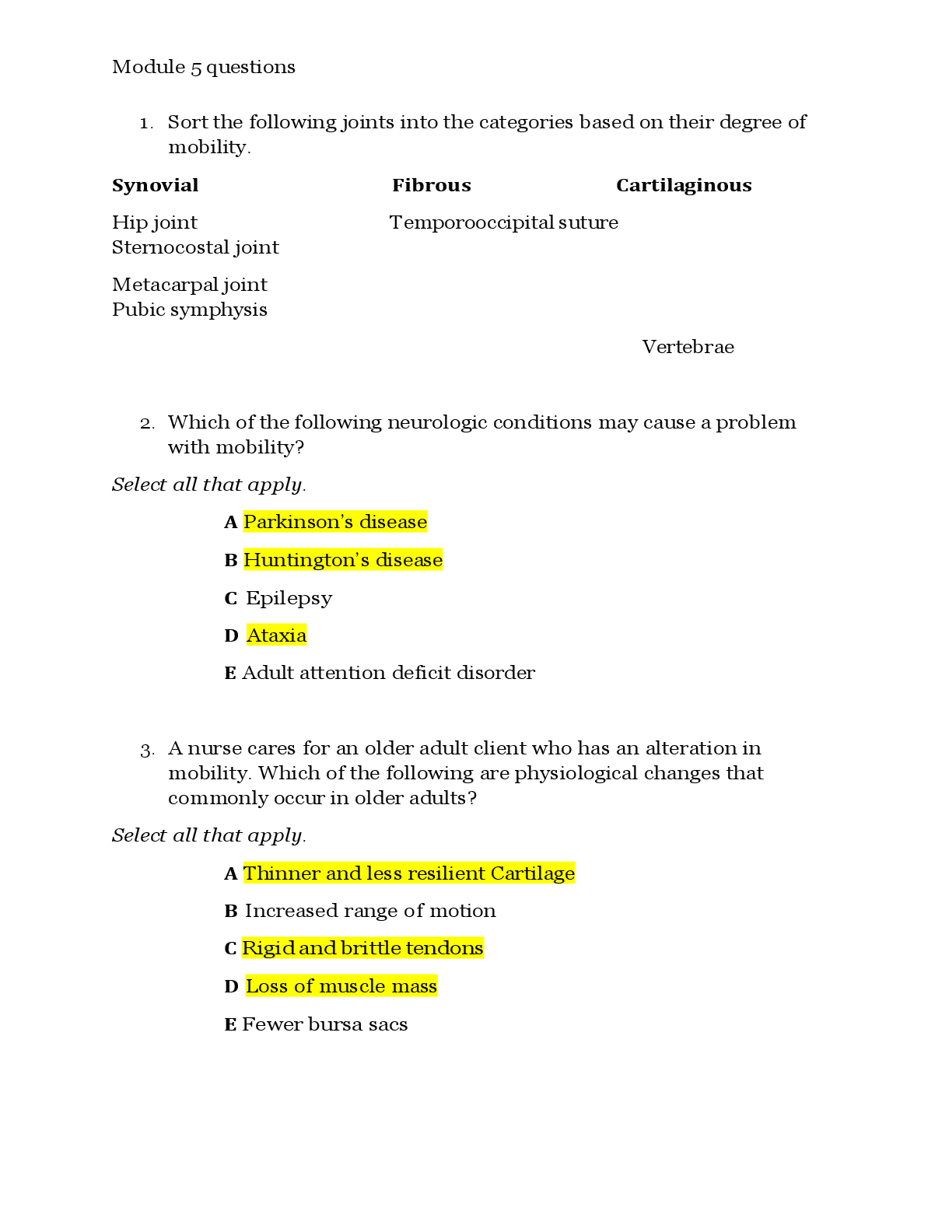
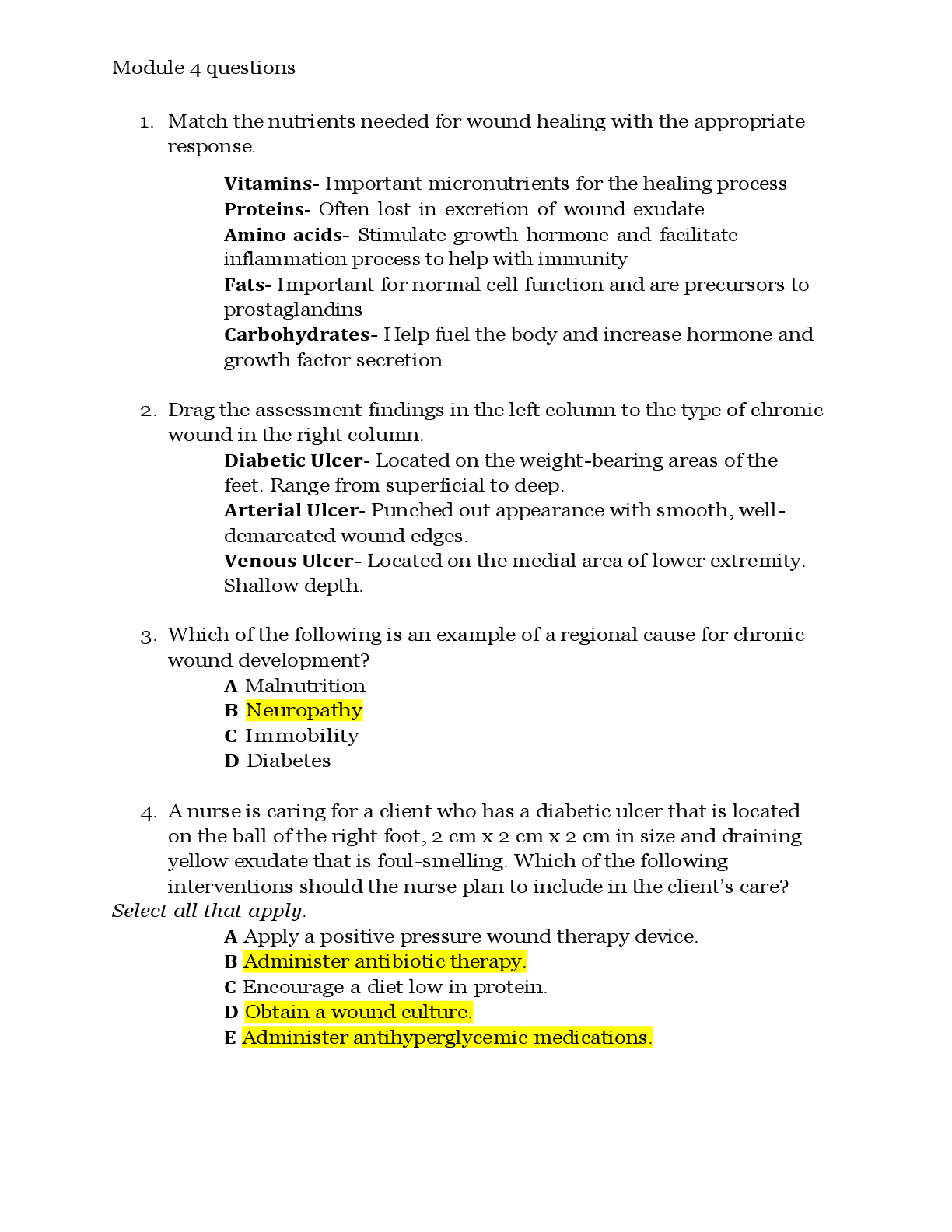
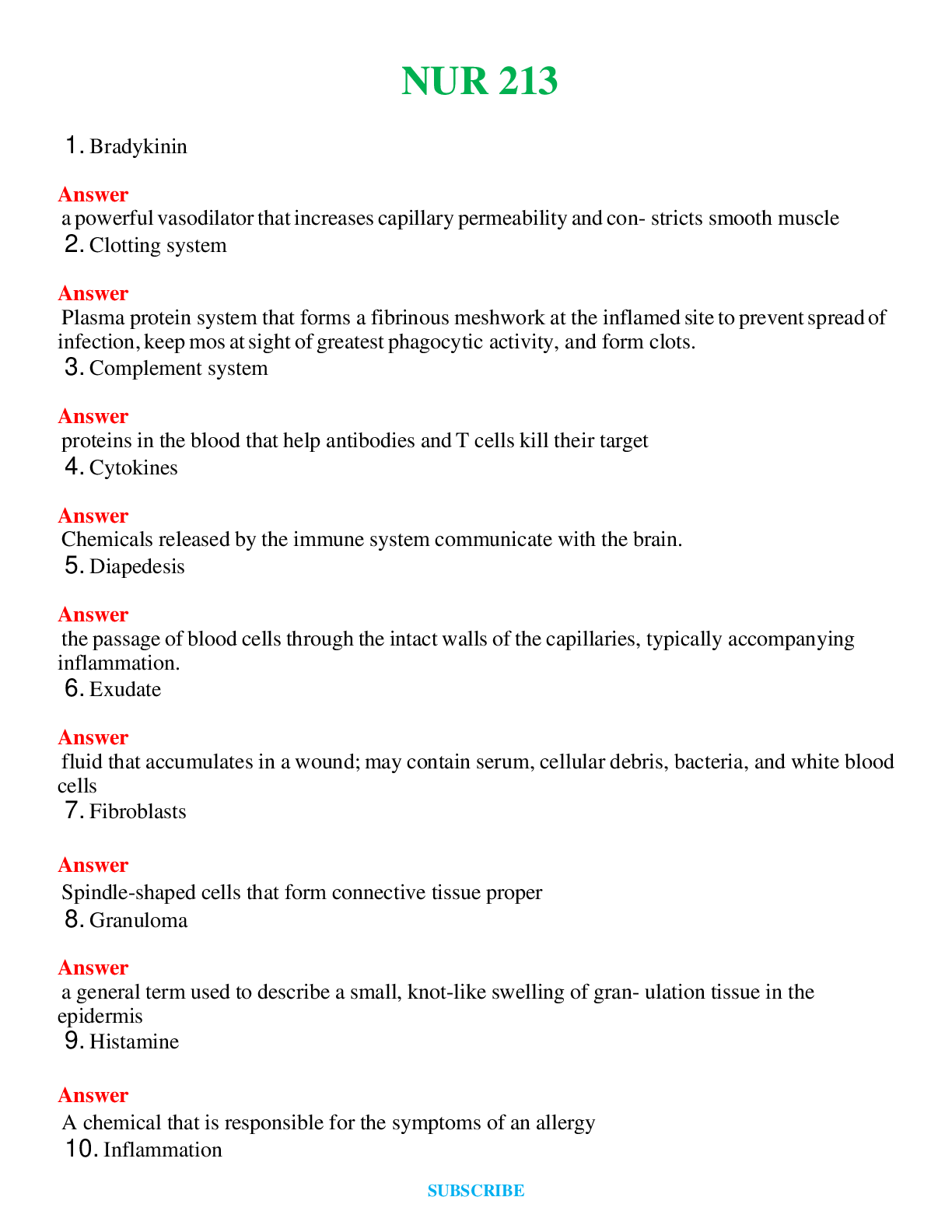
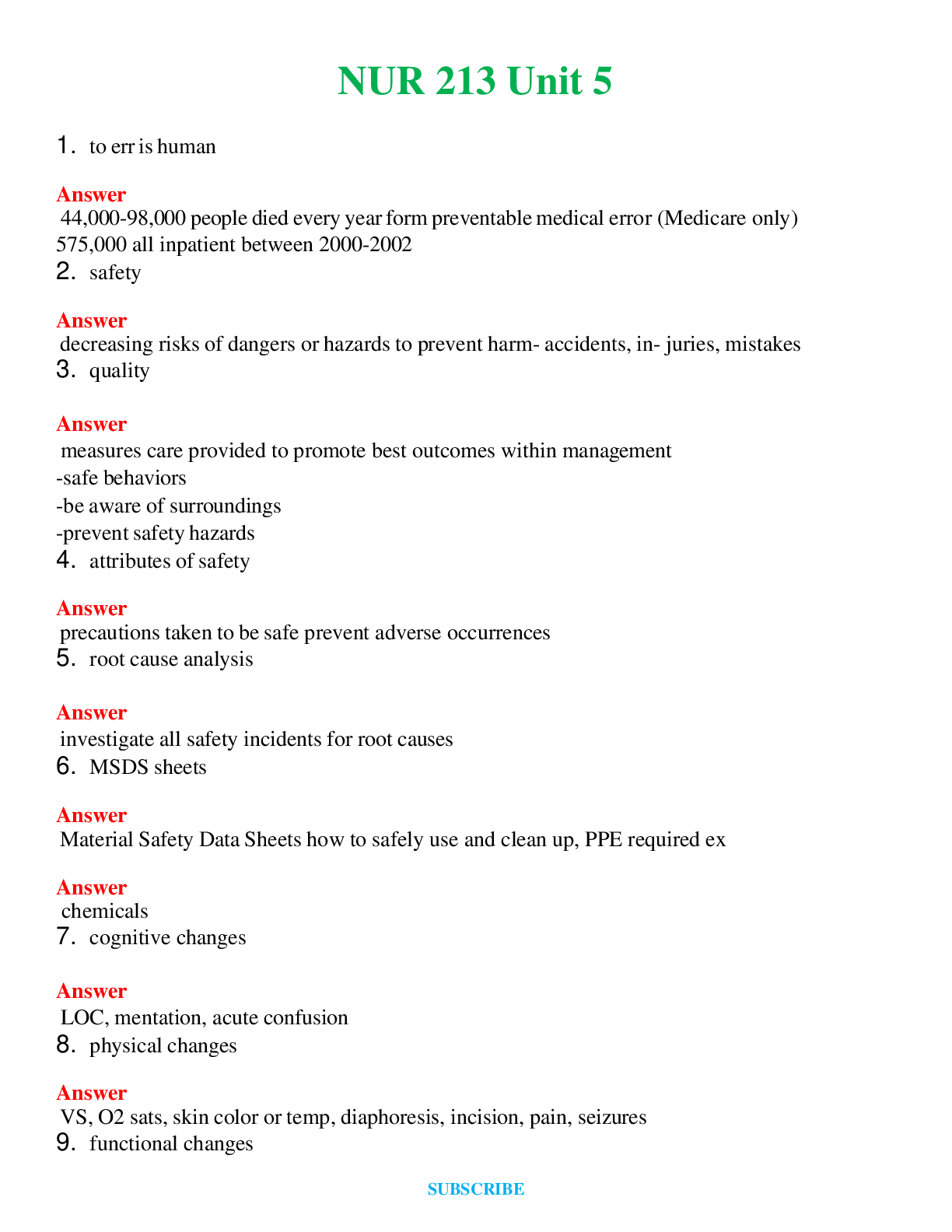







.png)