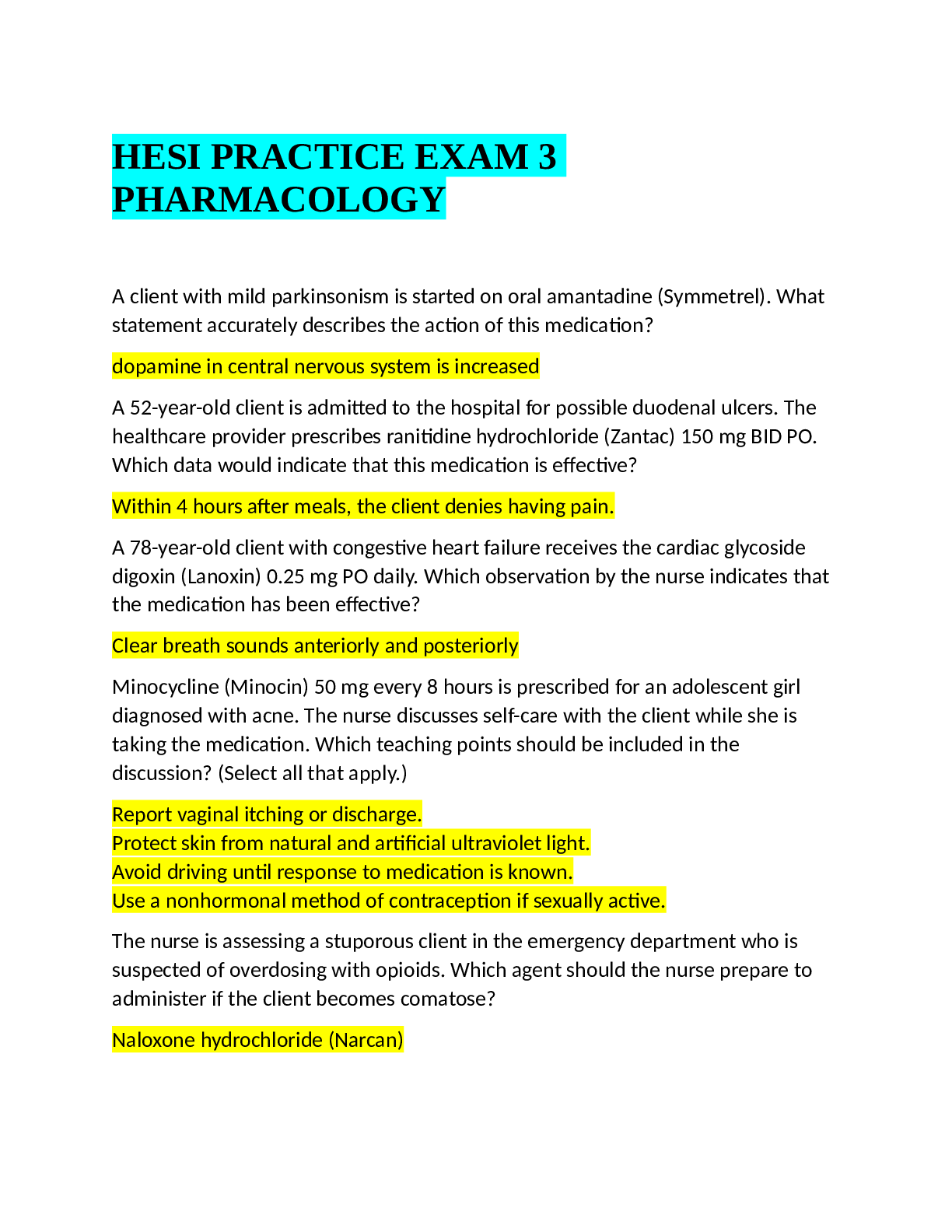
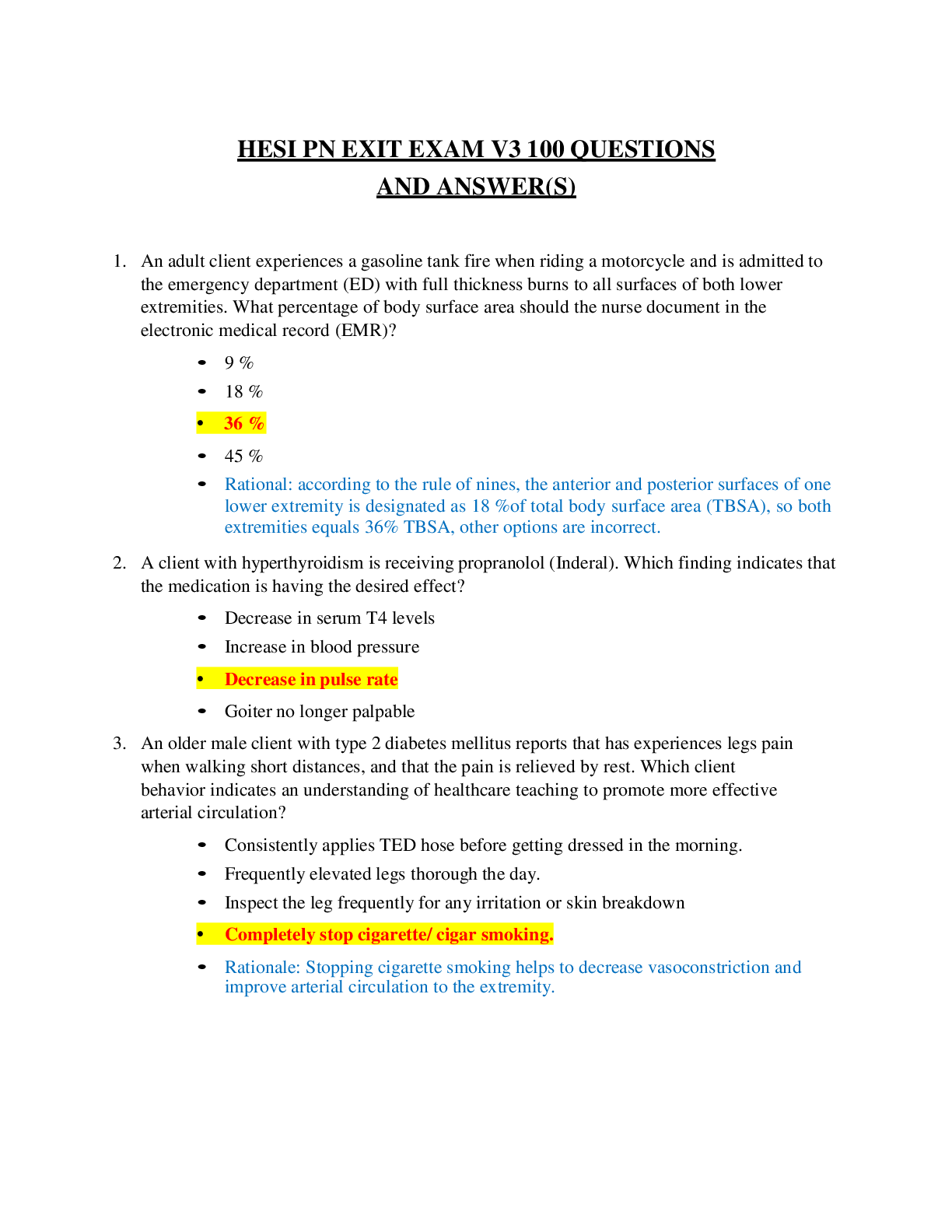
Question 1
1 out of 1 points
Janine, age 29, has numerous transient lesions that come and go, and she is
diagnosed with urticaria. What do you order?
Selected
Answer:
d.
Antihistami
nes
Answers: a.
Aspirin
b
...
Question 1
1 out of 1 points
Janine, age 29, has numerous transient lesions that come and go, and she is
diagnosed with urticaria. What do you order?
Selected
Answer:
d.
Antihistami
nes
Answers: a.
Aspirin
b.
NSAIDs
c.
Opioids
d.
Antihistami
nes
Question 2
1 out of 1 points
Medicare is a federal program administered by the Centers for Medicare and
Medicaid Services (CMS). The CMS has developed guidelines for Evaluation and
Management coding, which all providers are expected to follow when coding
patient visits for reimbursement. Which of the following is an important
consideration regarding billing practices?
Selected
Answer:
c.
Failing to bill for billable services will lead to unnecessarily
low revenues
Answers: a.
It is important to “undercode” so that one does not get
charged with Medicare fraud
b.
The practice of “overcoding” is essential in this age of
decreasing reimbursements
c.
Failing to bill for billable services will lead to unnecessarily
low revenues
d.
Time spent with the patient is a very important determinant
of billing
Question 3
0 out of 1 points
What conditions must be met for you to bill “incident to” the physician, receiving
100% reimbursement from Medicare?
Selected
Answer:
a.
You must initiate the plan of care for the patient
Answers: a.
You must initiate the plan of care for the patient
b.
The physician must be on-site and engaged in
patient care
c.
You must be employed as an independent
contractor
d.
You must be the main health care provider who
sees the patient
Question 4
1 out of 1 points
A 45 year old with diabetes has had itching and burning lesions between her toes
for 2 months. Scrapings of the lesions confirm the diagnosis tinea pedis. What is
the best initial treatment option for this patient?
Selected
Answer: Prescribe an antifungal powder for application between her toes
and in her shoes and a topical prescription strength antifungal
cream for other affected areas. Monitor for a secondary bacterial
infection.
Answers:
Prescribe an antifungal powder for application between her toes
and in her shoes and a topical prescription strength antifungal
cream for other affected areas. Monitor for a secondary bacterial
infection.
Prescribe an oral antifungal for 4 to 12 weeks. Monitor BUN and
creatinine at 1 week, 2 weeks, and every month thereafter.
Prescribe an oral antifungal for 4 to 12 weeks. Monitor liver
enzymes, BUN, and creatnine at 1 week, 2 weeks, and every
month thereafter.
Prescribe a prescription strength antifungal/steroid combination
cream. Monitor for a secondary bacterial infection.
Question 5
1 out of 1 points
The Centor criteria for diagnosis of Group A B-hemolytic streptococcus includes
which of the following?
Selected
Answer: A and B only
Answers: Fever history
Tender, swollen anterior cervical
lymph nodes
Positive rapid antigen detection test
A and B only
A, B, and C
Question 6
1 out of 1 points
A 16 year old basketball player complains of itching in the crural folds, buttocks,
and upper thighs. The lesions are well demarcated and are half-moon shaped.
The area is red, irritated, and there are small breaks in the skin from scratching.
What is this patient’s diagnosis and how should it be treated?
Selected
Answer:
a.
Tinea cruris; treat with a topical
antifungal cream
Answers: a.
Tinea cruris; treat with a topical
antifungal cream
b.
Eczema; treat with a topical steroid
c.
Scabies; treat with permethrin cream
d.
Syphilis; treat with penicillin
Question 7
1 out of 1 points
Stacy, age 27, states that she has painless, white, slightly raised patches in her
mouth. They are probably caused by:
Selected
Answer:
c.
Candidiasis
Answers: a.
Herpes
simplex
b.
Aphthous
ulcers
c.
Candidiasis
d.
Oral cancer
Question 8
1 out of 1 points
Marvin has sudden eye redness that occurred after a strenuous coughing episode.
You diagnose a subconjunctival hemorrhage. Your next step is to
Selected
Answer:
c.
Do nothing other than provide
reassurance
Answers: a.
Refer him to an ophthalmologist
b.
Order antibiotics
c.
Do nothing other than provide
reassurance
d.
Consult with your collaborating
physician
Question 9
1 out of 1 points
Your well-nourished 75-year-old patient has come into the office for a physical
exam and states that she recently had two nosebleeds. She does not take any
anticoagulants, and you have ruled out any coagulopathies. The most likely cause
of these nosebleeds is:
Selected
Answer:
b.
Trauma or
inflammation
Answers: a.
Sex hormones
b.
Trauma or
inflammation
c.
A dietary change
d.
Scurvy
Question 10
1 out of 1 points
Your 31-year-old patient, whose varicella rash just erupted yesterday, asks you
when she can go back to work. What do you tell her?
Selected
Answer:
a.
Once all the vesicles are crusted over
Answers: a.
Once all the vesicles are crusted over
b.
When the rash is entirely gone
c.
Once you have been on medication for at least 48
hours
d.
Now, as long as you stay away from children and
pregnant women
Question 11
1 out of 1 points
A patient comes in complaining of 1 week of pain in the posterior neck with
difficulty turning the head to the right. What additional history is needed?
Selected
Answer: Any recent trauma
Answers:
Any recent trauma
Difficulty swallowing
Stiffness in the right
shoulder
Change in sleeping
habits
Question 12
1 out of 1 points
Which of the following is a predisposing condition for furunculosis?
Selected
Answer:
a.
Diabetes mellitus
Answers: a.
Diabetes mellitus
b.
Hypertension
c.
Peripheral vascular
disease
d.
Chronic fatigue
syndrome
Question 13
1 out of 1 points
Sylvia, age 83, presents with a 3 day history of pain and burning in the left
forehead. This morning she noticed a rash with erythematous papules in that site.
What do you suspect?
Selected
Answer:
b.
Herpes
zoster
Answers: a.
Varicella
b.
Herpes
zoster
c.
Syphilis
d.
Rubella
Question 14
1 out of 1 points
Sarah has allergic rhinitis and is currently being bothered by nasal congestion.
Which of the following meds ordered for allergic rhinitis would be most
appropriate?
Selected
Answer: A decongestant nasal
spray
Answers: An antihistamine
intranasal spray
A decongestant nasal
spray
Ipratropium
Omalizumab
Question 15
1 out of 1 points
Larry, age 66, is a smoker with hyperlipidemia and hypertension. He is 6 months
post-MI. To prevent reinfarction, the most important behavior change that he can
make is to:
Selected
Answer:
a.
Quit smoking
Answers: a.
Quit smoking
b.
Maintain aggressive
hypertension therapy
c.
Stick to a low-fat, low-sodium
diet
d.
Continue with his exercise
program
Question 16
1 out of 1 points
Harvey has had Meniere’s disease for several years. He has some hearing loss
but now has persistent vertigo. What treatment might be instituted to relieve the
vertigo?
Selected
Answer:
c.
A vestibular neurectomy
Answers: a.
Pharmacological therapy
b.
A labyrinthectomy
c.
A vestibular neurectomy
d.
Wearing an earplug in the ear with the most
hearing loss
Question 17
1 out of 1 points
A 55 year old man is diagnosed with basal cell carcinoma. The nurse practitioner
correctly tells him:
Selected
Answer:
b.
“It can be cured with surgical excision or radiation therapy.”
Answers: a.
“It is the most common cause of death in patients with skin
cancer.”
b.
“It can be cured with surgical excision or radiation therapy.”
c.
“It is a slow growing skin cancer that rarely undergoes
malignant changes.”
d.
“It can be cured using 5-flurouracil cream twice daily for 2
to 4 weeks.”
Question 18
1 out of 1 points
If a patient presents with a deep aching, red eye and there is no discharge, you
should suspect:
Selected a.
Answer: Iritis
Answers: a.
Iritis
b.
Allergic
conjunctivitis
c.
Viral conjunctivitis
d.
Bacterial
conjunctivitis
Question 19
1 out of 1 points
Carl, age 78, is brought to the office by his son, who states that his father has
been unable to see clearly since last night. Carl reports that his vision is “like
looking through a veil.” He also sees floaters and flashing lights but is not having
any pain. What do you suspect?
Selected
Answer:
c.
Retinal
detachment
Answers: a.
Cataracts
b.
Glaucoma
c.
Retinal
detachment
d.
Iritis
Question 20
1 out of 1 points
Which of the following statements about malignant melanomas is true?
Selected
Answer:
d.
The prognosis is directly related to the thickness
of the lesion
Answers: a.
They usually occur in older adult males
b.
The patient has no family history of melanoma
c.
They are common in blacks
d.
The prognosis is directly related to the thickness
of the lesion
Question 1
0 out of 1 points
Which drug category contains the drugs that are the first line Gold standard
therapy for COPD?
Selected
Answer:
c.
Inhaled anticholinergic
bronchodilators
Answers: a.
Corticosteroids
b.
Inhaled beta-2 agonist
bronchodilators
c.
Inhaled anticholinergic
bronchodilators
d.
Xanthines
Question 2
1 out of 1 points
What condition is associated with mucus production greater than 3 months per
year for at least 2 consecutive years?
Selected
Answer:
d.
Chronic bronchitis
Answers: a.
Asthma
b.
Emphysema
c.
Chronic obstructive lung
disease
d.
Chronic bronchitis
Question 3
1 out of 1 points
A 57-year-old male presents to urgent care complaining of substernal chest
discomfort for the past hour. The EKG reveals ST elevations in Leads II, III, and
AVF. The nurse practitioner is aware that these changes are consistent with which
myocardial infarction territory?
Selected
Answer:
a.
Inferior
wall
Answers: a.
Inferior
wall
b.
Anterior
wall
c.
Apical wall
d.
Lateral
wall
Question 4
1 out of 1 points
Antibiotic administration has been demonstrated to be of little benefit to the
treatment of which of the following disease processes?
Selected
Answer:
b.
Acute bronchitis
Answers: a.
Chronic sinusitis
b.
Acute bronchitis
c.
Bacterial pneumonia
d.
Acute exacerbation of chronic
bronchitis
Question 5
1 out of 1 points
A patient presents to urgent care complaining of dyspnea, fatigue, and lower
extremity edema. The echocardiogram reveals and ejection fraction of 38%. The
nurse practitioner knows that these findings are consistent with:
Selected
Answer:
b.
Systolic heart
failure
Answers: a.
Mitral
regurgitation
b.
Systolic heart
failure
c.
Cardiac myxoma
d.
Diastolic heart
failure
Question 6
1 out of 1 points
Which of the following best describes hypertrophic cardiomyopathy?
Selected
Answer:
c.
Enlarged left ventricle and septum
Answers: a.
A weakened and enlarged myocardium
b.
Poor ventricular filling and weakened
myocardium
c.
Enlarged left ventricle and septum
d.
None of the above
Question 7
1 out of 1 points
Harriet, a 79-year-old woman, comes to your office every 3 months for follow up
on her hypertension. Her medications include one baby aspirin daily, Lisinopril
5mg daily, and Calcium 1500 mg daily. At today’s visit. Her blood pressure is
170/89. According to JNC VIII guidelines, what should you do next to control
Harriet’s blood pressure?
Selected
Answer:
b.
Add a thiazide diuretic to the Lisinopril 5mg daily
Answers: a.
Increase her Lisinopril to 20mg daily
b.
Add a thiazide diuretic to the Lisinopril 5mg daily
c.
Discontinue the Lisinopril and start a combination of ACE
Inhibitor and calcium channel blocker
d.
Discontinue the Lisinopril and start a diuretic
Question 8
1 out of 1 points
Which type of lung cancer has the poorest prognosis?
Selected
Answer:
c.
Small cell
carcinoma
Answers: a.
Adenocarcinoma
b.
Epidermoid
carcinoma
c.
Small cell
carcinoma
d.
Large cell
carcinoma
Question 9
1 out of 1 points
Which of the following medication classes should be avoided in patients with
acute or chronic bronchitis because it will contribute to ventilation-perfusion
mismatch in the patient?
Selected
Answer:
b.
Antihistimine
s
Answers: a.
Xanthines
b.
Antihistimine
s
c.
Steroids
d.
Anticholinerg
ics
Question 10
1 out of 1 points
The most common correlate(s) with chronic bronchitis and emphysema is(are):
Selected
Answer:
b.
Cigarette smoking
Answers: a.
Familial and genetic
factors
b.
Cigarette smoking
c.
Air pollution
d.
Occupational
environment
Question 11
0 out of 1 points
A patient presents to the office with a blood pressure 142/80. This patient is
classified as having:
Selected d.
Answer: Stage 2
hypertension
Answers: a.
Normal blood
pressure
b.
Prehypertension
c.
Stage 1
hypertension
d.
Stage 2
hypertension
Question 12
1 out of 1 points
Salmeterol (Servent) is prescribed for a patient with asthma. What is the most
important teaching point about this medication?
Selected
Answer:
a.
It is not effective during an acute asthma
attack.
Answers: a.
It is not effective during an acute asthma
attack.
b.
It may take 2 to 3 days to begin working.
c.
This drug works within 10 minutes.
d.
This drug may be used by patients 6
years and older.
Question 13
1 out of 1 points
Other than smoking cessation, which of the following slows the progression of
COPD in smokers?
Selected
Answer:
c.
Engaging in moderate to high levels of physical
activity
Answers: a.
Making sure the environment is free of all
pollutants
b.
Eliminating all pets from the environment
c.
Engaging in moderate to high levels of physical
activity
d.
Remaining indoors with air conditioning as much
as possible
Question 14
1 out of 1 points
In order to decrease deaths from lung cancer:
Selected
Answer:
d.
Patients should be counseled to quit
smoking
Answers: a.
All smokers should be screened annually
b.
All patients should be screened annually
c.
Only high risk patients should be
screened routinely
d.
Patients should be counseled to quit
smoking
Question 15
0 out of 1 points
An 8 year old presents to the health clinic with history of acute onset severe sore
throat and respiratory distress with stridor in the last 2 hours. The child’s history
is positive for fever and pharyngitis for 2 days. What is the most likely diagnosis?
Selected
Answer:
a.
Mononucleosis
Answers: a.
Mononucleosis
b.
Asthma
c.
Respiratory syncytial virus
(RSV)
d.
Epiglottitis
Question 16
1 out of 1 points
A 20 year old is diagnosed with mild persistent asthma. What drug combination
would be most effective in keeping him symptom-free?
Selected
Answer:
d.
A bronchodilator PRN and an inhaled
corticosteroid
Answers: a.
A long-acting bronchodilator
b.
An inhaled corticosteroid and cromolyn
c.
Theophylline and a short acting
bronchodilator
d.
A bronchodilator PRN and an inhaled
corticosteroid
Question 17
1 out of 1 points
Which of the following is not a risk factor for coronary arterial insufficiency?
Selected
Answer:
d.
Alcohol ingestion
Answers: a.
Hyperhomocystein
emia
b.
Smoking
c.
Genetic factors
d.
Alcohol ingestion
Question 18
1 out of 1 points
Which of the following patient characteristics are associated with chronic
bronchitis?
Selected
Answer:
a.
Overweight, cyanosis, and normal or slightly increased
respiratory rate
Answers: a.
Overweight, cyanosis, and normal or slightly increased
respiratory rate
b.
Underweight, pink skin, and increased respiratory rate
c.
Overweight, pink skin, and normal or slightly increased
respiratory rate
d.
Normal weight, cyanosis, and greatly increased
respiratory rate
Question 19
0 out of 1 points
Management of a patient with hypertension and an abdominal aortic aneurysm
would include:
Selected
Answer:
b.
changing the patient’s BP
medications
Answers: a.
computed tomography scan
without contrast
b.
changing the patient’s BP
medications
c.
referral to a cardiologist
d.
immediate cardiac catheterization
Question 20
1 out of 1 points
Which of the following is not a goal of treatment for the patient with cystic
fibrosis?
Selected
Answer:
d.
Replace water-soluble
vitamins
Answers: a.
Prevent intestinal
obstruction
b.
Provide adequate
nutrition
c.
Promote clearance of
secretions
d.
Replace water-soluble
vitamins
Question 1
1 out of 1 points
Which of the following patients most warrants screening for hypothyroidism?
Selected
Answer:
d.
An elderly female with recent onset of mental
dysfunction.
Answers: a.
A young adult female with postpartum depression
lasting 2 weeks.
b.
A patient taking thyroid replacement preparation.
c.
A 40 year old male with unexplained tremors.
d.
An elderly female with recent onset of mental
dysfunction.
Question 2
1 out of 1 points
The nurse practitioner diagnoses epididymitis in a 24 year old sexually active
male patient. The drug of choice for treatment of this patient is:
Selected
Answer:
b.
Oral doxycycline (Virbamycin) plus intramuscular
ceftriaxone
Answers: a.
Oral ciprofloxacin (Cipro)
b.
Oral doxycycline (Virbamycin) plus intramuscular
ceftriaxone
c.
Oral trimethoprim-sulfamethoxazole (Bactrim DS)
d.
Intramuscular penicillin
Question 3
1 out of 1 points
The most commonly recommended method for prostate cancer screening in a 55
year old male is:
Selected
Answer:
a.
Digital rectal examination (DRE) plus prostate specific
antigen (PSA)
Answers: a.
Digital rectal examination (DRE) plus prostate specific
antigen (PSA)
b.
Prostate specific antigen (PSA) alone
c.
Transrectal ultrasound (TRUS) alone
d.
Prostate specific antigen (PSA) and transrectal
ultrasound (TRUS)
Question 4
1 out of 1 points
John, age 33, has a total cholesterol level of 188 mg/dL. How often should he be
screened for hypercholesterolemia?
Selected
Answer:
a.
Every 5 years
Answers: a.
Every 5 years
b.
Every 2 years
c.
Every year
d.
Whenever blood work is
done
Question 5
1 out of 1 points
The National Cholesterol Education Program’s Adult Treatment Panel III
recommends that the goal for low density lipoproteins in high risk patients be less
than:
Selected
Answer:
c.
100
mg/dL
Answers: a.
160
mg/dL
b.
130
mg/dL
c.
100
mg/dL
d.
70
mg/dL
Question 6
1 out of 1 points
A patient presents with classic symptoms of gastroesophageal reflux disease
(GERD). He is instructed on life style modifications and drug therapy for 8 weeks.
Three months later he returns, reporting that he was “fine” as long as he took the
medication. The most appropriate next step is:
Selected
Answer:
d.
Investigation with endoscopy, manometry, and/or pH testing
Answers: a.
Referral for surgical intervention such as a partial or complete
fundoplication
b.
Dependent upon how sever the practitioner believes the
condition
c.
To repeat the 8 week course of drug therapy while continuing
lifestyle modifications
d.
Investigation with endoscopy, manometry, and/or pH testing
Question 7
0 out of 1 points
Which of the following is not appropriate suppression therapy for chronic bacterial
prostatitis?
Selected
Answer:
b.
Nitrofurantoin 100
mg qd
Answers: a.
Doxycycline 100 mg
qd
b.
Nitrofurantoin 100
mg qd
c.
Bactrim DS qd
d.
Erythromycin qd
Question 8
1 out of 1 points
Of the following choices, the least likely cause of cough is:
Selected
Answer:
c.
Acute pharyngitis
Answers: a.
Asthma
b.
Gastroesophageal
reflux
c.
Acute pharyngitis
d.
Allergic rhinitis
Question 9
0 out of 1 points
Which of the following is not a common early sign of benign prostatic hyperplasia
(BPH)?
Selected
Answer:
c.
Urinary retention
Answers: a.
Difficulty initiating a urine
stream
b.
Nocturia
c.
Urinary retention
d.
Increased force of urine
flow
Question 10
0 out of 1 points
A patient has been diagnosed with hypothyroidism and thyroid hormone
replacement therapy is prescribed. How long should the nurse practitioner wait
before checking the patient’s TSH?
Selected
Answer:
d.
8
weeks
Answers: a.
1
week
b.
2
weeks
c.
4
weeks
d.
8
weeks
Question 11
1 out of 1 points
A 20 year old male patient complains of “scrotal swelling.” He states his scrotum
feels heavy, but denies pain. On examination, the nurse practitioner notes
transillumination of the scrotum. What is the most likely diagnosis?
Selected
Answer:
b.
Hydrocele
Answers: a.
Indirect inguinal
hernia
b.
Hydrocele
c.
Orchitis
d.
Testicular torsion
Question 12
1 out of 1 points
Before initiating an HMG CoA-reductase inhibitor for hyperlipidemia, the nurse
practitioner orders liver function studies. The patient’s aminotransferase (ALT) is
elevated. What laboratory test(s) should be ordered?
Selected
Answer:
a.
Serologic markers for hepatitis
Answers: a.
Serologic markers for hepatitis
b.
Serum bilirubin
c.
Serum cholesterol with HDL
and LDL
d.
A liver biopsy
Question 13
0 out of 1 points
What is the most common cause of Cushing’s syndrome?
Selected
Answer:
c.
Pituitary adenoma or a non-pituitary ACTHproducing tumor
Answers: a.
Excessive ACTH production
b.
Administration of a glucocorticoid or ACTH
c.
Pituitary adenoma or a non-pituitary ACTHproducing tumor
d.
Autonomous cortisol production from adrenal
tissue
Question 14
1 out of 1 points
Reed-Sternberg B lymphocytes are associated with which of the following
disorders:
Selected
Answer:
b.
Hodgkin’s lymphoma
Answers: a.
Aplastic anemia
b.
Hodgkin’s lymphoma
c.
Non Hodgkin’s
lymphoma
d.
Myelodysplastic
syndromes
Question 15
1 out of 1 points
Which of the following is not a risk factor associated with the development of
syndrome X and type 2 diabetes mellitus?
Selected
Answer:
d.
Postprandial hypoglycemia
Answers: a.
Hypertriglyceridemia and low high-density lipoprotein (HDL)
b.
Gestational diabetes and polycystic ovarian syndrome
c.
Hispanic, African-American, Native-American, and Pacific
Islander ethnicity
d.
Postprandial hypoglycemia
Question 16
1 out of 1 points
Which of the following are classic features of ulcerative colitis?
Selected
Answer:
d.
Remissions and exacerbations of bloody diarrhea, tenesmus,
fecal incontinence, abdominal pain and weight loss.
Answers: a.
Right lower quadrant pain, frequently accompanied by a
palpable mass, fever, and leukocytosis.
b.
Painful hematemesis, occasionally accompanied by melena.
c.
Rapidly progressive dysphagia with ingestion of solid foods,
anorexia, and weight loss out of proportion to the dysphagia.
d.
Remissions and exacerbations of bloody diarrhea, tenesmus,
fecal incontinence, abdominal pain and weight loss.
Question 17
1 out of 1 points
Diagnostic confirmation of acute leukemia is based on:
Selected
Answer:
a.
Bone marrow aspiration and
biopsy
Answers: a.
Bone marrow aspiration and
biopsy
b.
Pancytopenia
c.
Hyperuricemia
d.
All of the above
Question 18
0 out of 1 points
After thorough history, physical examination, and laboratory tests, a patient is
diagnosed with irritable bowel syndrome (IBS). Which of the following initial
treatment plans is currently considered most effective?
Selected
Answer:
c.
Treatment with a selective serotonin reuptake inhibitor (SSRI)
such as fluoxetine (Prozac) or sertraline (Zoloft).
Answers: a.
A low fat, tyramine-free, caffeine-free, high fiber diet, along
with a daily diary, and attention to psychosocial factors.
b.
Referral to a gastroenterologist for colonoscopy.
c.
Treatment with a selective serotonin reuptake inhibitor (SSRI)
such as fluoxetine (Prozac) or sertraline (Zoloft).
d.
Antibiotics, nutritional support, and high fiber diet.
Question 19
1 out of 1 points
Steve, age 69, has gastroesophageal reflux disease (GERD). When teaching him
how to reduce his lower esophageal sphincter pressure, which substances do you
recommend that he avoid?
Selected
Answer:
b.
Pepperm
int
Answers: a.
Apples
b.
Pepperm
int
c.
Cucumb
ers
d.
Popsicles
Question 20
1 out of 1 points
Microalbuminuria is a measure of:
Selected
Answer:
d.
Protein lost into the urine.
Answers: a.
Total urinary protein.
b.
Late renal compromise in a
diabetic patient.
c.
Early glycemic abnormality.
d.
Protein lost into the urine.
Question 1
1 out of 1 points
A patient taking levothyroxine is being over-replaced. What condition is he at risk
for?
Selected
Answer:
a.
Osteoporo
sis
Answers: a.
Osteoporo
sis
b.
Constipati
on
c.
Depressio
n
d.
Exopthal
mia
Question 2
1 out of 1 points
The most effective treatment of non-infectious bursitis includes:
Selected
Answer:
b.
Rest, an intra-articular corticosteroid injection, and a
concomitant oral NSAID.
Answers: a.
Systemic antibiotic therapy effective against penicillin
resistant Staphylococcus areus.
b.
Rest, an intra-articular corticosteroid injection, and a
concomitant oral NSAID.
c.
A tapering regimen of oral corticosteroid therapy.
d.
Frequent active range of joint motion.
Question 3
1 out of 1 points
A typical description of a tension headache is:
Selected
Answer:
b.
Bilateral, occipital, or frontal tightness or fullness, with waves of
aching pain.
Answers: a.
Periorbital pain, sudden onset, often explosive in quality, and
associated with nasal stuffiness, lacrimation, red eye, and
nausea.
b.
Bilateral, occipital, or frontal tightness or fullness, with waves of
aching pain.
c.
Hemicranial pain that is accompanied by vomiting and
photophobia.
d.
Steadily worsening pain that interrupts sleep, is exacerbated by
orthostatic changes, and may be preceded by nausea and
vomiting.
Question 4
1 out of 1 points
Diagnostic radiological studies are indicated for low back pain:
Selected
Answer:
c.
When there is a suspicion of a space-occupying lesion, fracture,
cauda equina, or infection.
Answers: a.
Routinely after 3 weeks of low back pain symptoms.
b.
To screen for spondylolithiasis in patients less than 20 years of
age with 2 weeks of more of low back pain.
c.
When there is a suspicion of a space-occupying lesion, fracture,
cauda equina, or infection.
d.
As a part of a pre-employment physical when heavy lifting is
included in the job description.
Question 5
1 out of 1 points
A 60 year old female patient complains of sudden onset unilateral, stabbing,
surface pain in the lower part of her face lasting a few minutes, subsiding, and
then returning. The pain is triggered by touch or temperature extremes. Physical
examination is normal. Which of the following is the most likely diagnosis?
Selected
Answer:
a.
Trigeminal
neuralgia
Answers: a.
Trigeminal
neuralgia
b.
Temporal
arteritis
c.
Parotiditis
d.
Bell’s palsy
Question 6
1 out of 1 points
A 72 year old patient exhibits sudden onset of fluctuating restlessness, agitation,
confusion, and impaired attention. This is accompanied by visual hallucinations
and sleep disturbance. What is the most likely cause of this behavior?
Selected
Answer:
b.
Delirium
Answers: a.
Dementia
b.
Delirium
c.
Medication
reaction
d.
Depression
Question 7
1 out of 1 points
Phalen’s test, 90°wrist flexion for 60 seconds, reproduces symptoms of:
Selected
Answer:
b.
Carpal tunnel
syndrome
Answers: a.
Ulnar tunnel
syndrome
b.
Carpal tunnel
syndrome
c.
Tarsal tunnel
syndrome
d.
Myofascial pain
syndrome
Question 8
1 out of 1 points
The most commonly recommended pharmacological treatment regimen for low
back pain (LBP) is:
Selected
Answer:
a.
Acetaminophen or an NSAID
Answers: a.
Acetaminophen or an NSAID
b.
A muscle relaxant as an adjunct to
an NSAID
c.
An oral corticosteroid and diazepam
(Valium)
d.
Colchicine and an opioid analgesic
Question 9
1 out of 1 points
A 26 year old female presents with elbow pain that is described as aching and
burning. There is point tenderness along the lateral aspect of the elbow and
painful passive flexion and extension. She reports she has been playing tennis
almost daily for the past month. The most likely diagnosis is:
Selected
Answer:
d.
Lateral epicondylitis
Answers: a.
Radial tunnel syndrome
b.
Ulnar collateral ligament
sprain
c.
Olecranon bursitis
d.
Lateral epicondylitis
Question 10
1 out of 1 points
A positive drawer sign supports a diagnosis of:
Selected
Answer:
b.
Cruciate ligament
injury
Answers: a.
Sciatica
b.
Cruciate ligament
injury
c.
Meniscal injury
d.
Patellar ligament
injury
Question 11
1 out of 1 points
The most effective intervention(s) to prevent stroke is (are):
Selected
Answer:
d.
Smoking cessation and treatment of hypertension
Answers: a.
81 mg of aspirin daily
b.
Carotid endarterectomy for patients with high-grade
carotid lesions
c.
Routine screening for carotid artery stenosis with
auscultation for bruits
d.
Smoking cessation and treatment of hypertension
Question 12
1 out of 1 points
The diagnosis which must be considered in a patient who presents with a severe
headache of sudden onset, with neck stiffness and fever, is:
Selected
Answer:
d.
Meningitis
Answers: a.
Migraine headache
b.
Subarachnoid
hemorrhage
c.
Glaucoma
d.
Meningitis
Question 13
1 out of 1 points
The correct treatment for ankle sprain during the first 48 hours after injury
includes:
Selected
Answer:
c.
Rest, elevation, compression, ice and pain
relief.
Answers: a.
Alternating heat and ice, and ankle exercises.
b.
Resistive ankle exercises, ankle support, and
pain relief.
c.
Rest, elevation, compression, ice and pain
relief.
d.
Referral to an orthopedist after x-rays to rule
out fracture.
Question 14
1 out of 1 points
Which of the following symptoms suggests a more serious cause of back pain?
Selected
Answer:
c.
Pain associated with lying down at
night
Answers: a.
Pain associated with coughing or
sneezing
b.
Pain associated with muscle spasm
c.
Pain associated with lying down at
night
d.
Pain associated with negative
straight leg raise
Question 15
0 out of 1 points
The most reliable indicator(s) of neurological deficit when assessing a patient with
acute low back pain is(are):
Selected
Answer:
c.
Decreased reflexes, strength, and sensation in the lower
extremities.
Answers: a.
Patient report of bladder dysfunction, saddle anesthesia, and
motor weakness of limbs.
b.
History of significant trauma relative to the patient’s age.
c.
Decreased reflexes, strength, and sensation in the lower
extremities.
d.
Patient report of pain with the crossed straight leg raise.
Question 16
0 out of 1 points
Which of the following set of symptoms should raise suspicion of a brain tumor?
Selected
Answer:
a.
Recurrent, severe headaches that awaken the patient and are
accompanied by visual disturbances.
Answers: a.
Recurrent, severe headaches that awaken the patient and are
accompanied by visual disturbances.
b.
Vague, dull headaches that are accompanied by a reported
sense of impending doom.
c.
Periorbital headaches occurring primarily in the evening and
accompanied by pupillary dilation and photophobia.
d.
Holocranial headaches present in the morning and
accompanied by projective vomiting without nausea.
Question 17
1 out of 1 points
Successful management of a patient with attention deficit hyperactivity disorder
(ADHD) may be achieved with:
Selected
Answer:
a.
Stimulant medication along with behavioral and
family intervention.
Answers: a.
Stimulant medication along with behavioral and
family intervention.
b.
Methylphenidate (Ritalin) in conjunction with diet
changes.
c.
Treatment by a psychiatrist.
d.
Discipline and removal of offending foods from the
diet.
Question 18
1 out of 1 points
Which of the following statements about multiple sclerosis (MS) is correct?
Selected
Answer:
c.
MS is a chronic, treatable illness with unknown cause and a
variable course.
Answers: a.
MS is a chronic, untreatable illness that is almost always fatal.
b.
MS is a disease of steadily progressive and unrelenting
neurologic deterioration.
c.
MS is a chronic, treatable illness with unknown cause and a
variable course.
d.
Patients with MS who take active steps to improve their
health have the best cure rate.
Question 19
1 out of 1 points
The most common symptoms of transient ischemic attack (TIA) include:
Selected
Answer:
b.
Weakness in an extremity, abruptly slurred speech, or partial
loss of vision, and sudden gait changes.
Answers: a.
Nausea, vomiting, syncope, incontinence, dizziness, and
seizure.
b.
Weakness in an extremity, abruptly slurred speech, or partial
loss of vision, and sudden gait changes.
c.
Headache and visual symptoms such as bright spots or
sparkles crossing the visual field.
d.
Gradual onset of ataxia, vertigo, generalized weakness, or
lightheadedness
Question 20
0 out of 1 points
The 4 classic features of Parkinson’s disease are:
Selected
Answer:
b.
Tremor at rest, rigidity, bradykinesia, and postural
disturbances.
Answers: a.
Mask-like facies, dysarthria, excessive salivation, and
dementia.
b.
Tremor at rest, rigidity, bradykinesia, and postural
disturbances.
c.
Depression, cognitive impairment, constipation and shuffling
gait.
d.
Tremor with movement, cogwheeling, repetitive movement,
and multi-system atrophy.
The most common cancer found on the auricle is:
Basal Cell Carcinoma
Which of the following medication classes should be avoided in patients with acute or
chronic bronchitis because it will contribute to ventilation-perfusion mismatch in the
patient?
Xanthines
Antihistimines
Steroids
Anticholinergics
Antihistamines
A 47 year old male patient presents to the clinic with a single episode of a moderate
amount of bright red rectal bleeding. On examination, external hemorrhoids are noted.
How should the nurse practitioner proceed?
Instruct the patient on measures to prevent hemorrhoids such as bowel habits and diet.
Order a topical hemorrhoid cream along with a stool softener.
Refer the patient for a barium enema and sigmoidoscopy.
Refer the patient for a surgical hemorrhoidectomy.
Refer the patient for a barium enema and sigmoidoscopy.
Which of the following patient characteristics are associated with chronic bronchitis?
Overweight, cyanosis, and normal or slightly increased respiratory rate
Underweight, pink skin, and increased respiratory rate
Overweight, pink skin, and normal or slightly increased respiratory rate
Normal weight, cyanosis, and greatly increased respiratory rate
Overweight, cyanosis, and normal or slightly increased respiratory rate
A 65-year-old female with a past medical history of hypertension, hyperlipidemia, and
polymyalgia rheumatica presents to urgent care with new onset left lower quadrant pain.
Her current medications include omeprazole 20 milligrams po daily, lisinopril 20
milligrams po daily, simvastatin 20 milligrams po daily, and prednisone 12 milligrams po
daily. The nurse practitioner suspects acute diverticulitis and possibly an abscess. The
most appropriate diagnostic test for this patient at this time is:
CBC/diff
Erythrocyte sedimentation rate
Abdominal ultrasound
CT scan
CT scan
A patient reports "something flew in my eye" about an hour ago while he was splitting
logs. If there were a foreign body in his eye, the nurse practitioner would expect to find
all except:
Purulent drainage
Tearing
Photophobia
A positive fluorescein stain
Purulent drainage
A 21 year old college student presents to the student health center with copious,
markedly purulent discharge from her left eye. The nurse practitioner student should
suspect:
Viral conjunctivitis
Common pink eye
Gonococcal conjunctivitis
Allergic conjunctivitis
Gonococcal conjunctivitis
A 35 year old man presents with radicular pain followed by the appearance of grouped
vesicles consisting of about 15 lesions across 3 different thoracic dermatomes. He
complains of pain, burning, and itching. The nurse practitioner should suspect:
A common case of shingles and prescribe an analgesic and an antiviral agent
A complicated case of shingles and prescribe acyclovir, an analgesic, and a topical
cortisone cream
Herpes zoster and consider that this patient may be immunocompromised
A recurrence of chickenpox and treat the patient's symptoms
Herpes zoster and consider that this patient may be immunocompromised
Which type of lung cancer has the poorest prognosis?
Adenocarcinoma
Epidermoid carcinoma
Small cell carcinoma
Large cell carcinoma
Small cell carcinoma
An 83-year-old female presents to the office complaining of diarrhea for several days.
She explains she has even had fecal incontinence one time. She describes loose stools
3-4 times a day for several weeks and denies fever, chills, pain, recent antibiotic use.
The history suggests that the patient has:
Acute diarrhea
Chronic diarrhea
Irritable bowel
Functional bowel disease
Chronic diarrhea
Margaret, age 32, comes into the office with painful joints and a distinctive rash in a
butterfly distribution on her face. The rash has red papules and plaques with a fine
scale. What do you suspect?
An allergic reaction
Relapsing polychondritis
Lymphocytoma cutis
Systemic lupus erythematosus
Systemic lupus erythematosus
Antibiotic administration has been demonstrated to be of little benefit to the treatment of
which of the following disease processes?
Chronic sinusitis
Acute bronchitis
Bacterial pneumonia
Acute exacerbation of chronic bronchitis
Acute bronchitis
00:0101:24
Upgrade to remove ads
Only $2.99/month
Lisa, age 49, has daily symptoms of asthma. She uses her inhaled short-acting beta-2
agonist daily. Her exacerbations affect her activities and they occur at least twice weekly
and may last for days. She is affected more than once weekly during the night with an
exacerbation. Which category of asthma severity is Lisa in?
Mild intermittent
Mild persistent
Moderate persistent
Moderate persistent
Which of the following is the most appropriate therapeutic regimen for an adult patient
with no known allergies diagnosed with group A B-hemolytic strep?
Penicillin V 500 milligrams PO every 8 hours for 10 days
Ampicillin 250 milligrams PO twice a day for 10 days
Clarithromycin 500 milligrams po daily for 7 days
None of the above
Penicillin V 500 milligrams PO every 8 hours for 10 days
A cashier complains of dull ache and pressure sensation in her lower legs. It is relieved
by leg elevation. She occasionally has edema in her lower legs at the end of the day.
What is the most likely cause of these problems?
Congestive heart failure
Varicose veins
Deep vein thrombosis
Arterial insufficiency
Varicose veins
Which statement below is correct about pertussis?
It is also called whooping cough
It begins with symptoms like strep throat
It lasts about 3 weeks
It occurs most commonly in toddlers and young children
It is also called whooping cough
Which of the following is the most important diagnosis to rule out in the adult patient
with acute bronchitis?
Pneumonia
Asthma
Sinusitis
Pertussis
Pneumonia
A 70 year old patient presents with left lower quadrant (LLQ) abdominal pain, a
markedly tender palpable abdominal wall, fever, and leukocytosis. Of the following
terms, which correctly describes the suspected condition?
Diverticulosis
Diverticula
Diverticulitis
Diverticulum
Diverticulitis
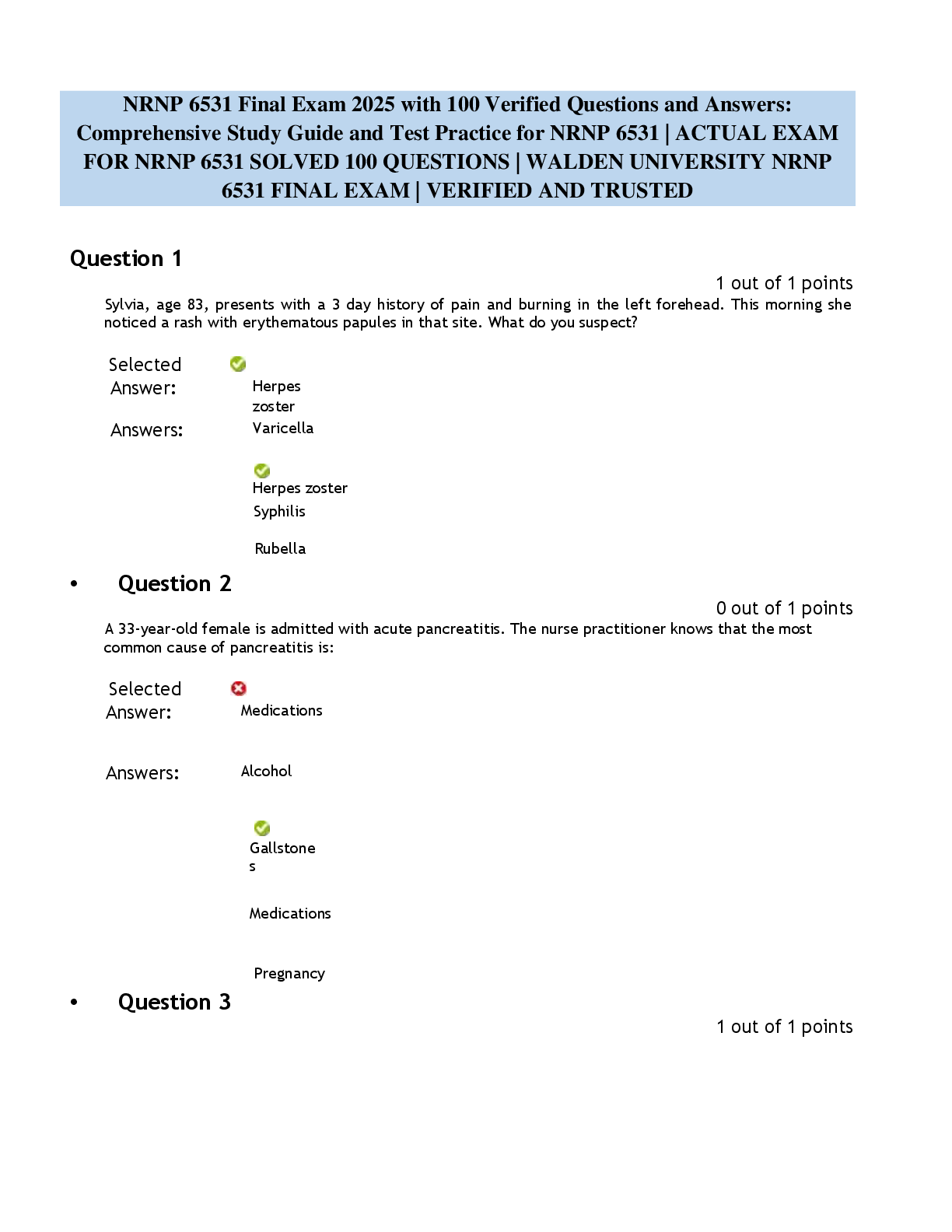
Sylvia, age 83, presents with a 3 day history of pain and burning in the left forehead.
This morning she noticed a rash with erythematous papules in that site. What do you
suspect?
Varicella
Herpes zoster
Syphilis
Rubella
Herpes zoster
A 33-year-old female is admitted with acute pancreatitis. The nurse practitioner knows
that the most common cause of pancreatitis is:
Alcohol
Gallstones
Medications
Pregnancy
Gallstones
When a patient presents with symptoms of acute gallbladder disease, what is the
appropriate nurse practitioner action?
Order abdominal x-rays
Order an abdominal ultrasound
Refer the patient to a surgeon for evaluation
Prescribe pain medication
Order an abdominal ultrasound
A false-positive result with the fecal occult blood test can result from:
ingestion of large amounts of vitamin C
a high dietary intake of rare cooked beef
a colonic neoplasm that is not bleeding
stool that has been stored before testing
a high dietary intake of rare cooked beef
Upgrade to remove ads
Only $2.99/month
A 76-year-old male complains of weight loss, nausea, vomiting, abdominal cramping
and pain. Physical findings include an abdominal mass and stool positive for occult
blood. The nurse practitioner pain suspects a tumor in the small intestine. The best
diagnostic test for this patient is:
Colonoscopy
Small bowel follow-through
Barium enema
CT abdomen
Small bowel follow-through
A patient presents to urgent care complaining of dyspnea, fatigue, and lower extremity
edema. The echocardiogram reveals and ejection fraction of 38%. The nurse
practitioner knows that these findings are consistent with:
Mitral regurgitation
Systolic heart failure
Cardiac myxoma
Diastolic heart failure
Systolic heart failure
Maxine, Age 76, has just been given a diagnosis of pneumonia. Which of the following
is an indication that she should be hospitalized?
Multilobar involvement on chest x-ray with the inability to take oral medications
Alert and oriented, slightly high but stable vital signs, and no one to take care of her at
home
Sputum and gram positive organisms
A complete blood count showing leukocytosis
Multilobar involvement on chest x-ray with the inability to take oral medications
A 55 year old man is diagnosed with basal cell carcinoma. The nurse practitioner
correctly tells him:
"It is the most common cause of death in patients with skin cancer."
"It can be cured with surgical excision or radiation therapy."
"It is a slow growing skin cancer that rarely undergoes malignant changes."
"It can be cured using 5-flurouracil cream twice daily for 2 to 4 weeks."
"It can be cured with surgical excision or radiation therapy."
Expected spirometry readings when the patient has chronic emphysema include:
Decreased residual volume (RV)
Increased vital capacity (VC)
Increased forced expiratory volume (FEV-1)
Increased total lung capacity (TLC)
Increased total lung capacity (TLC)
An 80-year-old male admits to difficulty swallowing during the review of systems. The
nurse practitioner recognizes the differential diagnosis for this patient's dysphagia is:
Esophageal cancer
Chest pain
GERD
A and C
All of the above
A and C
A 40 year old female with history of frequent sun exposure presents with a multicolored
lesion on her back. It has irregular borders and is about 11mm in diameter. What should
the nurse practitioner suspect?
Squamous cell carcinoma
Malignant melanoma
A common nevus
Basal cell carcinoma
Malignant melanoma
Which of the following is not a goal of treatment for the patient with cystic fibrosis?
Prevent intestinal obstruction
Provide adequate nutrition
Promote clearance of secretions
Replace water-soluble vitamins
Replace water-soluble vitamins
The nurse practitioner is performing a physical exam on a middle-aged AfricanAmerican man. Which of the following areas is a common site for melanomas in AfricanAmericans and other dark-skinned individuals?
Scalp
Nails
Feet
B and C
All of the above
B and C
An adult presents with tinea corporis. Which item below is a risk factor for its
development?
Topical steroid use
Topical antibiotic use
A recent laceration
Cold climates
Topical steroid use
A patient has experienced nausea and vomiting, headache, malaise, low grade fever,
abdominal cramps, and watery diarrhea for 72 hours. His white count is elevated with a
shift to the left. He is requesting medication for diarrhea. What is the most appropriate
response?
Prescribe loperamide (Immodium) or atropine-diphenoxylate (Lomotil) and a clear liquid
diet for 24 hours.
Prescribe a broad-spectrum antibiotic such as ciprofloxacin (Cipro), and symptom
management.
Offer an anti-emetic medication such as ondansetron (Zofran) and provide oral fluid and
electrolyte replacement instruction.
Order stool cultures.
Prescribe a broad-spectrum antibiotic such as ciprofloxacin (Cipro), and symptom
management.
Janine, age 29, has numerous transient lesions that come and go, and she is diagnosed
with urticaria. What do you order?
Aspirin
NSAIDs
Opioids
Antihistamines
Antihistamines
Of the following signs and symptoms of congestive heart failure (CHF), the earliest
clinical manifestation is:
Peripheral edema
Weight gain
Shortness of breath
Nocturnal dyspnea
Weight gain
A 16 year old male presents with mild sore throat, fever, fatigue, posterior cervical
adenopathy, and palatine petechiae. Without a definitive diagnosis for this patient, what
drug would be least appropriate to prescribe?
Ibuprofen
Erythromycin
Amoxicillin
Acetaminophen
Amoxicillin
A 70 year old man who walks 2 miles every day complains of pain in his left calf when
he is walking. The problem has gotten gradually worse and now he is unable to
complete his 2 mile walk. What question asked during the history, if answered
affirmatively, would suggest a diagnosis of arteriosclerosis obliterans?
"Are you wearing your usual shoes?"
"Do you also have chest pain when you have leg pain?"
"Is your leg pain relieved by rest?"
"Do you ever have the same pain in the other leg?"
"Is your leg pain relieved by rest?"
Which of the following statements about malignant melanomas is true?
They usually occur in older adult males
The patient has no family history of melanoma
They are common in blacks
The prognosis is directly related to the thickness of the lesion
The prognosis is directly related to the thickness of the lesion
Sheila, age 78, presents with a chief complaint of waking up during the night coughing.
You examine her and find an S3 heart sound, pulmonary crackles that do not clear with
coughing, and peripheral edema. What do you suspect?
Asthma
Nocturnal allergies
Valvular disease
Heart failure
Heart Failure
Which antibiotic would be the most effective in treating community acquired pneumonia
(CAP) in a young adult without any comorbid conditions?
Erythromycin
Clarithromycin (Biaxin)
Doxycycline (Vibramycin)
Penicillin
Clarithromycin (Biaxin)
Which of the following dermatologic vehicles are the most effective in absorbing
moisture and decreasing friction?
Powders
Gels
Creams
Lotion
Powders
A 70 year old patient presents with a slightly raised, scaly, erythematous patch on her
forehead. She admits to having been a "sun worshiper." The nurse practitioner suspects
actinic keratosis. This lesion is a precursor to:
Squamous cell carcinoma
Basal cell carcinoma
Malignant melanoma
Acne vulgaris
Squamous cell carcinoma
Upgrade to remove ads
Only $2.99/month
An elderly patient is being seen in the clinic for complaint of "weak spells" relieved by
sitting or lying down. How should the nurse practitioner proceed with the physical
examination?
Assist the patient to a standing position and take her blood pressure.
Assess the patient's cranial nerves.
Compare the patient's blood pressure lying first, then sitting, and then standing.
Compare the amplitude of the patient's radial and pedal pulses.
Compare the patient's blood pressure lying first, then sitting, and then standing.
What oral medication might be used to treat chronic cholethiasis in a patient who is a
poor candidate for surgery?
Ursodiol
Ibuprofen
Prednisone
Surgery is the only answer
Ursodiol
A 46-year-old female with a past medical history of diabetes presents with a swollen,
erythematous right auricle and is diagnosed with malignant otitis externa. The nurse
practitioner knows that the most likely causative organism for this patient's problem is:
Staphylococcus aureus
Group A beta hemolytic streptococcus
Haemophilus influenza
Pseudomonas aeruginosa
Pseudomonas aeruginosa
Which of the following is not a symptom of irritable bowel syndrome?
Painful diarrhea
Painful constipation
Cramping and abdominal pain
Weight loss
Weight loss
A patient comes in complaining of 1 week of pain in the posterior neck with difficulty
turning the head to the right. What additional history is needed?
Any recent trauma
Difficulty swallowing
Stiffness in the right shoulder
Change in sleeping habits
Any recent trauma
Marvin, age 56, is a smoker with diabetes. He has just been diagnosed as hypertensive.
Which of the following drugs has the potential to cause the development of bronchial
asthma and inhibit gluconeogenesis?
ACE Inhibitor
Beta Blocker
Calcium channel blocker
Diuretic
Beta Blocker
The differential diagnosis for a patient complaining of a sore throat includes which of the
following?
Gonococcal infection
Thrush
Leukoplakia
B only
A, B, and C
A, B, and C
A patient presents to the primary care provider complaining of a rash on his right
forehead that started yesterday and is burning and painful. The physical exam reveals
an erythematous, maculopapular rash that extends over the patient's right eye to his
upper right forehead. Based on the history and examination, the most likely cause of
this patient's symptoms is:
Rhus dermatitis
Ophthalmic zoster
Chemosis
Optic neuritis
Ophthalmic zoster
Before initiating an HMG CoA-reductase inhibitor for hyperlipidemia, the nurse
practitioner orders liver function studies. The patient's aminotransferase (ALT) is
elevated. What laboratory test(s) should be ordered?
Serologic markers for hepatitis
Serum bilirubin
Serum cholesterol with HDL and LDL
A liver biopsy
Serologic markers for hepatitis
A patient with elevated lipids has been started on lovastatin. After 3 weeks of therapy,
he calls to report generalized muscle aches. The nurse practitioner should suspect:
A drug interaction
Hepatic dysfunction
Hypersensitivity to lovastatin
Rhabdomyolysis
Rhabdomyolysis
Upgrade to remove ads
Only $2.99/month
Treatment of acute vertigo includes:
Bedrest and an antihistamine
Fluids and a decongestant
A sedative and decongestant
Rest and a low sodium diet
Bedrest and an antihistamine
Treatment of H.pylori includes which of the following?
Proton pump inhibitor
Antibiotic therapy
Bismuth subsalicylate
A and B
A, B, and C
A, B, and C
Carl, age 78, is brought to the office by his son, who states that his father has been
unable to see clearly since last night. Carl reports that his vision is "like looking through
a veil." He also sees floaters and flashing lights but is not having any pain. What do you
suspect?
Cataracts
Glaucoma
Retinal detachment
Iritis
Retinal detachment
In order to decrease deaths from lung cancer:
All smokers should be screened annually
All patients should be screened annually
Only high risk patients should be screened routinely
Patients should be counseled to quit smoking
Patients should be counseled to quit smoking
John, age 33, has a total cholesterol level of 188 mg/dL. How often should he be
screened for hypercholesterolemia?
Every 5 years
Every 2 years
Every year
Whenever blood work is done
Every 5 years
Mort is hypertensive. Which of the following factors influenced your choice of using an
alpha blocker as the antihypertensive medication?
Mort is black
Mort also has congestive heart failure
Mort has benign prostatic hyperplasia
Mort has frequent migraine headaches
Mort has benign prostatic hyperplasia
John, age 59, presents with recurrent, sharply circumscribed red papules and plaques
with a powdery white scale on the extensor aspect of his elbows and knees. What do
you suspect?
Actinic keratosis
Eczema
Psoriasis
Seborrheic dermatitis
Psoriasis
Harriet, a 79-year-old woman, comes to your office every 3 months for follow up on her
hypertension. Her medications include one baby aspirin daily, Lisinopril 5mg daily, and
Calcium 1500 mg daily. At today's visit. Her blood pressure is 170/89. According to JNC
VIII guidelines, what should you do next to control Harriet's blood pressure?
Increase her Lisinopril to 20mg daily
Add a thiazide diuretic to the Lisinopril 5mg daily
Discontinue the Lisinopril and start a combination of ACE Inhibitor and calcium channel
blocker
Discontinue the Lisinopril and start a diuretic
Add a thiazide diuretic to the Lisinopril 5mg daily
An active 65-year-old man under your care has known acquired valvular aortic stenosis
and mitral regurgitation. He also has a history of infectious endocarditis. He has recently
been told he needs elective replacement of his aortic valve. When he comes into the
office you discover that he has 10 remaining teeth in poor repair. Your recommendation
would be to:
defer any further dental work until his valve replacement is completed
instruct him to have dental extraction done cautiously, having no more than 2 teeth per
visit removed.
suggest he consult with his oral surgeon about having all the teeth removed at once and
receiving appropriate antibiotic prophylaxis
coordinate with his cardiac and oral surgeons to have the tooth extractions and valve
replacement done at the same time to reduce the risk of anesthetic complications.
suggest he consult with his oral surgeon about having all the teeth removed at once and
receiving appropriate antibiotic prophylaxis
Appropriate therapy for peptic ulcer disease (PUD) is:
Primarily by eradication of infection
Based on etiology
Aimed at diminishing prostaglandin synthesis
Dependent on cessation of NSAID use
Based on etiology
Shirley, age 58, has been a diabetic for 7 years. Her blood pressure is normal. Other
than her diabetes medications, what would you prescribe today during her routine office
visit?
A calcium channel blocker
A beta blocker
An ACE Inhibitor
No hypertension medication
An ACE Inhibitor
Medicare is a federal program administered by the Centers for Medicare and Medicaid
Services (CMS). The CMS has developed guidelines for Evaluation and Management
coding, which all providers are expected to follow when coding patient visits for
reimbursement. Which of the following is an important consideration regarding billing
practices?
It is important to "undercode" so that one does not get charged with Medicare fraud
The practice of "overcoding" is essential in this age of decreasing reimbursements
Failing to bill for billable services will lead to unnecessarily low revenues
Time spent with the patient is a very important determinant of billing
Failing to bill for billable services will lead to unnecessarily low revenues
A 2 year old presents with a white pupillary reflex. What is the most likely cause of this
finding?
Viral conjunctivitis
Glaucoma
Corneal abrasion
Retinoblastoma
Retinoblastoma
Harvey has had Meniere's disease for several years. He has some hearing loss but now
has persistent vertigo. What treatment might be instituted to relieve the vertigo?
Pharmacological therapy
A labyrinthectomy
A vestibular neurectomy
Wearing an earplug in the ear with the most hearing loss
A vestibular neurectomy
Which of the following is not a risk factor for coronary arterial insufficiency?
Hyperhomocysteinemia
Smoking
Genetic factors
Alcohol ingestion
Alcohol ingestion
An 18-year-old female presents to the urgent care center complaining of severe pruritus
in both eyes that started 2 days ago. Associated symptoms include a headache and
fatigue. On examination, the nurse practitioner notes some clear discharge from both
eyes and some erythema of the eyelids and surrounding skin. Which of the following is
the most likely cause of this patient's symptoms?
Allergic conjunctivitis
Bacterial conjunctivitis
Gonococcal conjunctivitis
Viral conjunctivitis
Allergic conjunctivitis
A 20 year old is diagnosed with mild persistent asthma. What drug combination would
be most effective in keeping him symptom-free?
A long-acting bronchodilator
An inhaled corticosteroid and cromolyn
Theophylline and a short acting bronchodilator
A bronchodilator PRN and an inhaled corticosteroid
A bronchodilator PRN and an inhaled corticosteroid
Acute rheumatic fever is an inflammatory disease which can follow infection with:
Group A Streptococcus
Staphlococcus areus
B-hemolytic Streptococcus
Streptococcus pyogenes
Group A Streptococcus
A 60 year old male diabetic patient presents with redness, tenderness, and edema of
the left lateral aspect of his face. His left eyelid is grossly edematous. He reports history
of a toothache in the past week which "is better." His temperature is 100°F and pulse is
102 bpm. The most appropriate initial action is to:
Start an oral antibiotic, refer the patient to a dentist immediately, and follow up within 3
days
Order mandibular x-rays and question the patient about physical abuse
Start an oral antibiotic, mouth swishes with an oral anti-infective, and an analgesic
Initiate a parenteral antibiotic and consider hospital admission
Initiate a parenteral antibiotic and consider hospital admission
If a patient presents with a deep aching, red eye and there is no discharge, you should
suspect:
Iritis
Allergic conjunctivitis
Viral conjunctivitis
Bacterial conjunctivitis
Iritis
The National Cholesterol Education Program's Adult Treatment Panel III recommends
that the goal for low density lipoproteins in high risk patients be less than:
160 mg/dL
130 mg/dL
100 mg/dL
70 mg/dL
100 mg/dL
A patient presents with classic symptoms of gastroesophageal reflux disease (GERD).
He is instructed on life style modifications and drug therapy for 8 weeks. Three months
later he returns, reporting that he was "fine" as long as he took the medication. The
most appropriate next step is:
Referral for surgical intervention such as a partial or complete fundoplication
Dependent upon how sever the practitioner believes the condition
To repeat the 8 week course of drug therapy while continuing lifestyle modifications
Investigation with endoscopy, manometry, and/or pH testing
Investigation with endoscopy, manometry, and/or pH testing
Group A β-hemolytic streptococcal (GABHS) pharyngitis is most common in which age
group?
Under 3 years of age
Preschool children
6 to 12 years of age
Adolescents
6 to 12 years of age
The most appropriate treatment for a child with mild croup is:
A bronchodilator
An antibiotic
A decongestant
A cool mist vaporizer
A cool mist vaporizer
A child complains that his "throat hurts" with swallowing. His voice is very "throaty" and
he is hyperextending his neck to talk. Examination reveals asymmetrical swelling of his
tonsils. His uvula is deviated to the left. What is the most likely diagnosis?
Peritonsillar abscess
Thyroiditis
Mononucleosis
Epiglottitis
Peritonsillar abscess
Salmeterol (Servent) is prescribed for a patient with asthma. What is the most important
teaching point about this medication?
It is not effective during an acute asthma attack.
It may take 2 to 3 days to begin working.
This drug works within 10 minutes.
This drug may be used by patients 6 years and older.
It is not effective during an acute asthma attack.
Which intervention listed below is safe for long term use by an adult with constipation?
Bulk-forming agents
Stool softeners
Laxatives
Osmotic agents
Bulk-forming agents
A 40 year old presents with a hordeolum. The nurse practitioner teaches the patient to:
Apply a topical antibiotic and warm compresses.
Apply cool compresses and avoid touching the hordeolum.
Use an oral antibiotic and eye flushes.
Apply light palpation to facilitate drainage.
Apply a topical antibiotic and warm compresses.
Sarah has allergic rhinitis and is currently being bothered by nasal congestion. Which of
the following meds ordered for allergic rhinitis would be most appropriate?
An antihistamine intranasal spray
A decongestant nasal spray
Ipratropium
Omalizumab
A decongestant nasal spray
What is the Gold standard for the diagnosis of asthma?
Patient's perception of clogged airways
Validated quality-of-life questionnaires
Bronchoscopy
Spirometry
Spirometry
A patient complains of "an aggravating cough for the past 6 weeks." There is no
physiological cause for the cough. Which medication is most likely causing the cough?
Methyldopa
Enalapril
Amlodipine
Hydrochlorothiazide
Enalapril
Stacy, age 27, states that she has painless, white, slightly raised patches in her mouth.
They are probably caused by:
Herpes simplex
Aphthous ulcers
Candidiasis
Oral cancer
Candidiasis
Risk factors for acute otitis media (AOM) include all of the following except:
Household cigarette smoke
Group daycare attendance
Sibling history of acute otitis media
African-American ethnicity
African-American ethnicity
Which of the following can result from chronic inflammation of a meibomian gland?
A chalazion
Uveitis
Keratitis
A pterygium
A chalazion
What conditions must be met for you to bill "incident to" the physician, receiving 100%
reimbursement from Medicare?
You must initiate the plan of care for the patient
The physician must be on-site and engaged in patient care
You must be employed as an independent contractor
You must be the main health care provider who sees the patient
The physician must be on-site and engaged in patient care
Of the following choices, the least likely cause of cough is:
Asthma
Gastroesophageal reflux
Acute pharyngitis
Allergic rhinitis
Acute pharyngitis
The most common correlate(s) with chronic bronchitis and emphysema is(are):
Familial and genetic factors
Cigarette smoking
Air pollution
Occupational environment
Cigarette smoking
Which choice below is least effective for alleviating symptoms of the common cold?
Antihistamines
Oral decongestants
Topical decongestants
Antipyretics
Antihistamines
When teaching a patient with hypertension about restricting sodium, you would include
which of the following instructions?
Diets with markedly reduced intakes of sodium may be associated with other beneficial
effects beyond blood pressure control
Sodium restriction can cause serious adverse effects
A goal of 3 g of sodium chloride or 1.2 g of sodium per day is easily achievable
Seventy-five of sodium intake is derived from processed foods
Seventy-five of sodium intake is derived from processed foods
Which of the following heart murmurs warrants the greatest concern?
Systolic murmur
Venous hum murmur
Diastolic murmur
Flow murmur
Diastolic murmur
A patient presents with an inflamed upper eyelid margin. The conjunctiva is red and
there is particulate matter along the upper eyelid. The patient complains of a sensation
that "there is something in my eye." What is the diagnosis and how should it be treated?
Hordeolum; treat with a topical antibiotic and warm compress
Conjunctivitis; treat with topical antibiotic and warm compresses
Blepharitis; treat with warm compresses and gentle debridement with a cotton swab
Chalazion; refer to an ophthalmologist for incision and drainage
Blepharitis; treat with warm compresses and gentle debridement with a cotton swab
A 57-year-old male presents to urgent care complaining of substernal chest discomfort
for the past hour. The EKG reveals ST elevations in Leads II, III, and AVF. The nurse
practitioner is aware that these changes are consistent with which myocardial infarction
territory?
Inferior wall
Anterior wall
Apical wall
Lateral wall
Inferior wall
The nurse practitioner observes a tympanic membrane that is opaque, has decreased
mobility, and is without bulging or inflammation. The least likely diagnosis for this patient
is:
Acute otitis media (AOM)
Otitis media with effusion
Mucoid otitis media
Serous otitis media
Acute otitis media (AOM)
Alan, age 54, notices a bulge in his midline every time he rises from bed in the morning.
You tell him it is a ventral hernia, also known as:
inguinal hernia
epigastric hernia
umbilical hernia
incisional hernia
epigastric hernia
A 58-year-old man is diagnosed with Barrett's esophagus after an endoscopy. He has
no known allergies. Which of the following medications is MOST appropriate to treat this
patient's disorder?
Omeprazole
Ranitidine
An antacid
None of the above
Omeprazole
Larry, age 66, is a smoker with hyperlipidemia and hypertension. He is 6 months postMI. To prevent reinfarction, the most important behavior change that he can make is to:
Quit smoking
Maintain aggressive hypertension therapy
Stick to a low-fat, low-sodium diet
Continue with his exercise program
Quit smoking
Risk factors for acute arterial insufficiency include which of the following?
Recent myocardial infarction
Atrial fibrillation
Atherosclerosis
All of the above
All of the above
Impetigo and folliculitis are usually successfully treated with:
Systemic antibiotics
Topical antibiotics
Topical steroid creams
Cleansing and debridement
Topical antibiotics
[Show More]












.png)