1
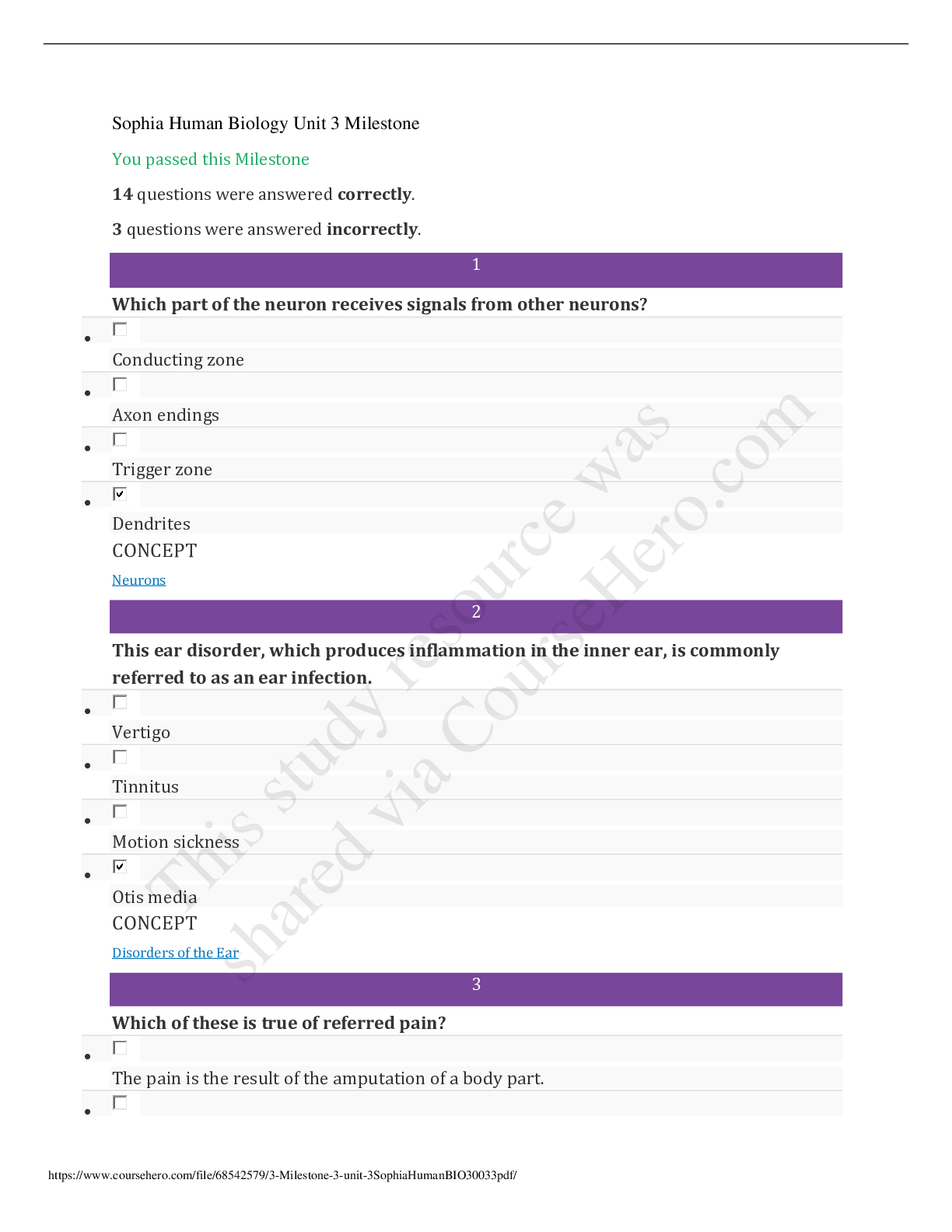
This ear disorder, which produces inflammation in the inner ear, is commonly referred to as an ear infection.
• Vertigo
• Otis media
• Motion sickness
• Tinnitus
CONCEPT
Disorders of the Ear
2
What con
...
1
This ear disorder, which produces inflammation in the inner ear, is commonly referred to as an ear infection.
• Vertigo
• Otis media
• Motion sickness
• Tinnitus
CONCEPT
Disorders of the Ear
2
What condition, also known as "pink eye," occurs when the the clear membrane of the eye becomes inflamed?
• Cataracts
• Conjunctivitis
• Glaucoma
• Astigmatism
CONCEPT
Disorders of the Eye
3
Which of these is true of referred pain?
• The pain is the result of the amputation of a body part.
• The pain signals are sent to the pons.
• The pain's source cannot be detected by the brain.
• The skin can cause this type of pain.
CONCEPT
Somatic Sense
4
Dan is dehydrated.
Which type of receptor alerts his brain of this?
• Osmoreceptor
• Thermoreceptor
• Chemoreceptor
• Mechanoreceptor
CONCEPT
Sensory Receptors
5
What parts of the mouth contain taste receptors?
• Tongue and roof of the mouth
• Tongue and throat
• Throat and roof of the mouth
• Tongue, throat and roof of the mouth
CONCEPT
Smell & Taste
6
Select the FALSE statement about stem cells.
• They are unspecialized cells found in undeveloped embryos and adult bodies.
• They are specialized cells found in the central and peripheral nervous systems.
• Scientists manipulate these cells to produce new types of cells.
• Scientists are researching ways that these cells can repair damaged parts of the nervous system.
CONCEPT
Stem Cells
7
How are signals transmitted using neurotransmitters?
• From the synapse to the presynaptic cell, and then to the postsynaptic cell
• From the postsynaptic cell to the presynaptic cell across a synapse
• From the presynaptic cell to the postsynaptic cell across a synapse
• From the presynaptic cell to the postsynaptic cell, and then to a synapse
CONCEPT
Neurotransmitters
8
Which of the following statements is true?
• The tectorial membrane is a structure in the cochlea that hair cells interact with to produce action potentials.
• Sound is mechanical energy that travels in the form of subatomic particles.
• The otolith organ carries signals from the inner ear to the brain.
• Sound coming into the ear first encounters the cochlea.
CONCEPT
Ear Anatomy and Hearing
9
Which developmental disorder of the brain hinders thinking, language and social skills?
• Schizophrenia
• Autism
• Paralysis
• Seizure
CONCEPT
Nervous System Health and Disorders
10
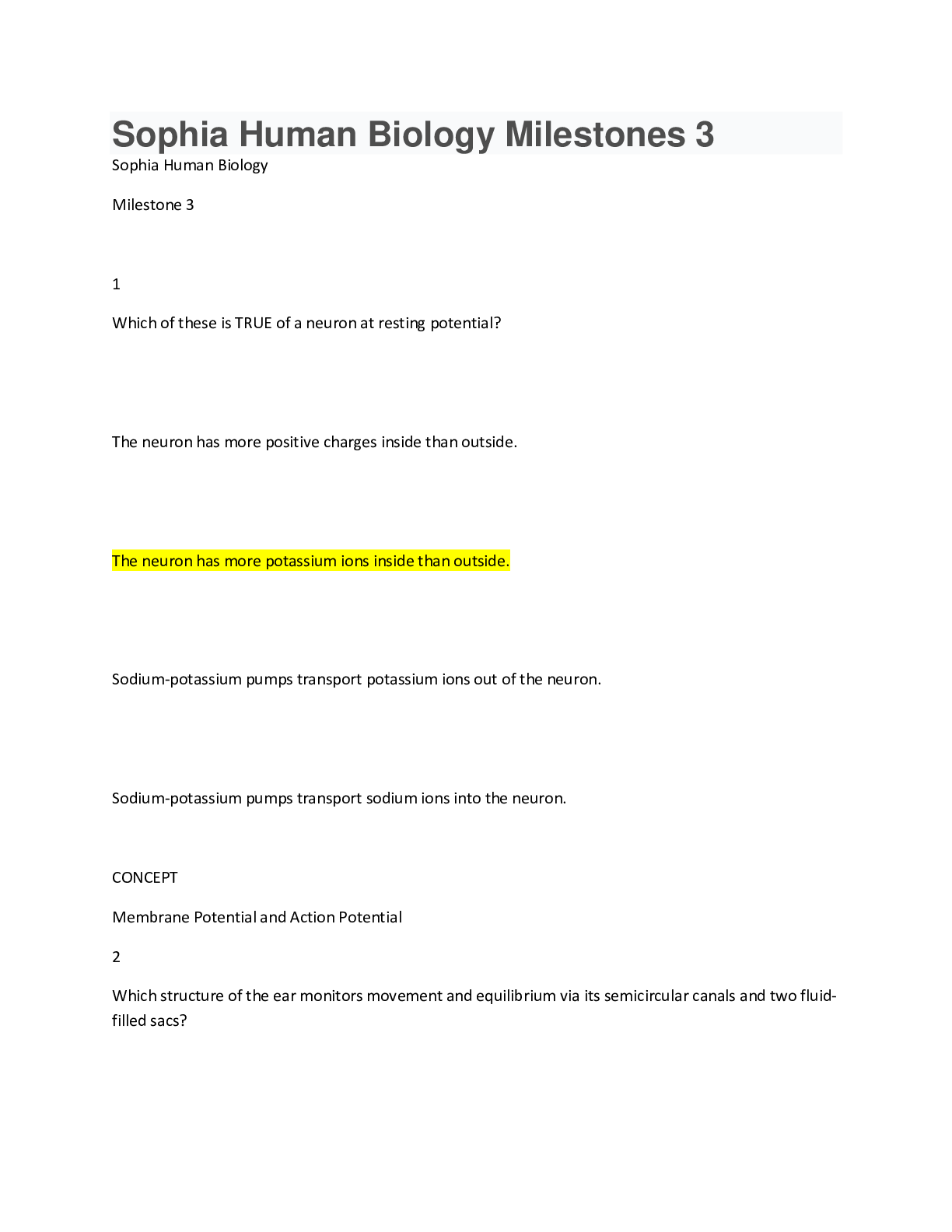
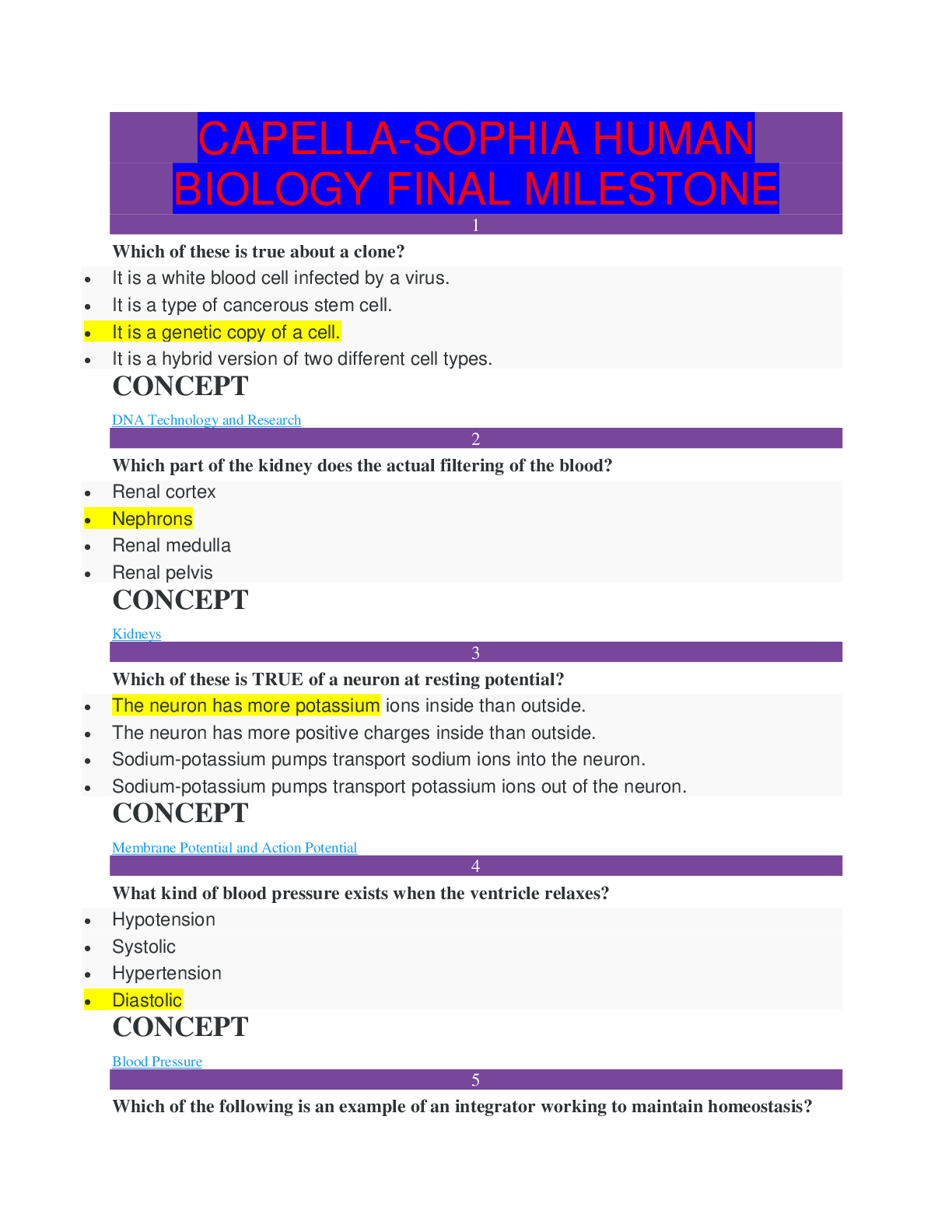
Which of these is TRUE of a neuron at resting potential?
• The neuron has more potassium ions inside than outside.
• Sodium-potassium pumps transport sodium ions into the neuron.
• Sodium-potassium pumps transport potassium ions out of the neuron.
• The neuron has more positive charges inside than outside.
CONCEPT
Membrane Potential and Action Potential
11
What is the cerebral spinal fluid's primary role?
• Washing the brain of metabolic waste
• Connecting the brain to the skull
• Keeping an adequate amount of blood flowing into the brain
• Preventing viruses, toxins and bacteria from entering the brain's blood supply
CONCEPT
The Brain
12
Which of these is determined by the reticular formation?
• Hunger and thirst
• Memory
• Emotions
• Consciousness
CONCEPT
Forebrain and Its Cerebrum
13
Which division of the peripheral nervous system carries signals to the internal organs?
• Parasympathetic
• Somatic
• Sympathetic
• Autonomic
CONCEPT
Central And Peripheral Nervous System
14
Which of the following is a part of the brainstem?
• Frontal lobe
• Dura mater
• Pons
• Corpus callosum
CONCEPT
Hindbrain and Midbrain
15
Which part of the eye does light enter through?
• Iris
• Fovea
• Retina
• Pupil
CONCEPT
Vision
16
What are glial cells?
• A bundle of neuron axons
• Cells found only in the central nervous system
• A group or mass of neuron cells
• Cells that nourish and support neurons
CONCEPT
Nerves as Information Pathways
17
Which of the following statements is true?
• The axon fulfills a structural purpose and does not carry any signals.
• The axon carries signals to and from the cell body.
• The axon conducts signals toward the cell body.
• The axon conducts signals away from the cell body.
CONCEPT
Neurons
[Show More]