Unit 2 Pre-Class Answers
Document Content and Description Below
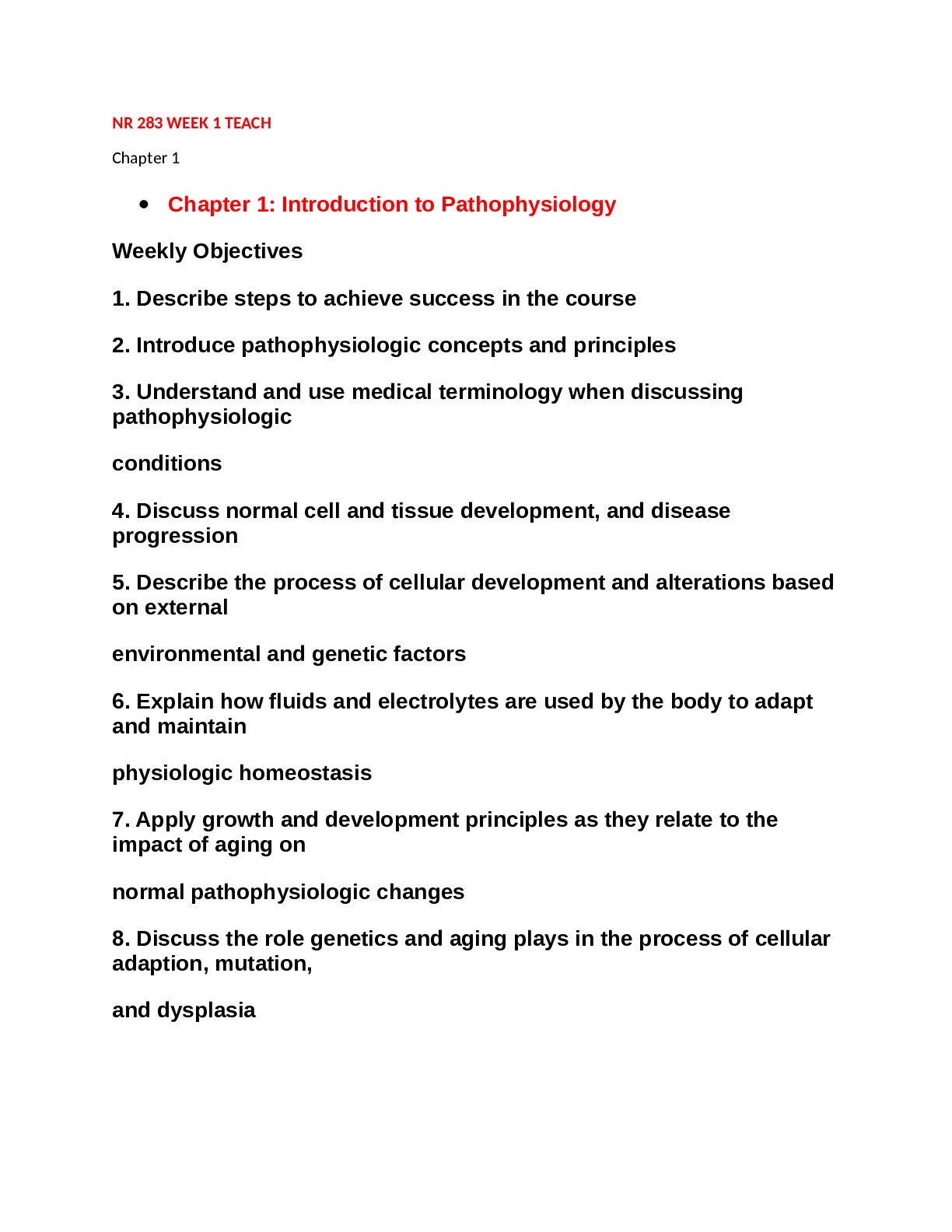
Chapter 5: Inflammation and Healing
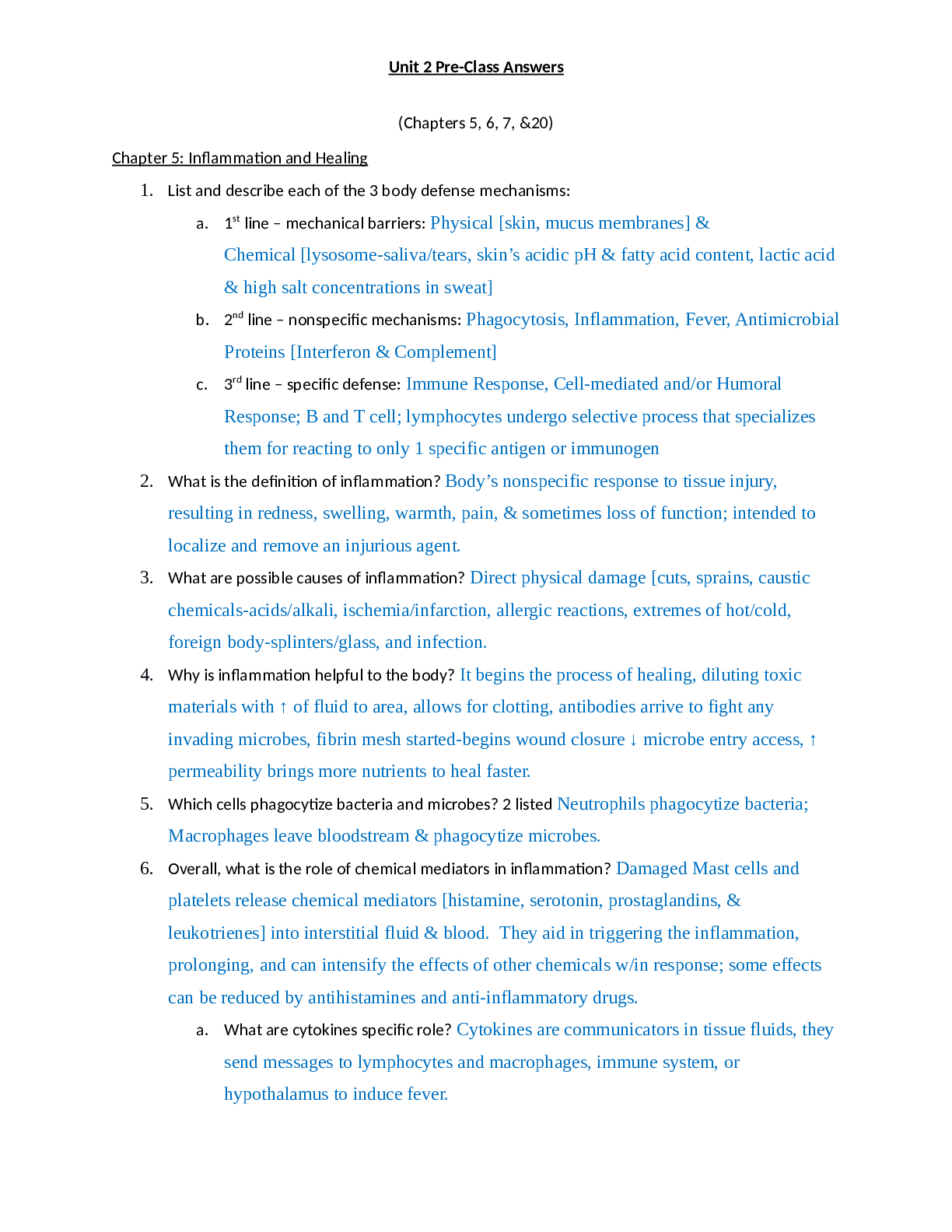
1. List and describe each of the 3 body defense mechanisms:
a. 1
st line – mechanical barriers: Physical [skin, mucus membranes] &
Chemical [lysosome-saliva/tears, skin’s acidic pH
...
[Show More]
Last updated: 3 years ago
Preview 1 out of 19 pages
Instant download
Buy this Document to get the Full Access Instantly
Provided by Students Who Aced it
We Verify Document Content to Gurantee Accuracy
Reviews( 0 )
Document information
Connected school, study & course
About the document
Uploaded On
Oct 30, 2021
Number of pages
19
Written in
All

Additional information
This document has been written for:
Uploaded
Oct 30, 2021
Downloads
0
Views
193
Topic Tags
Recommended For You
Get more on EXAM »
$22.5
307 Pages
TEST BANK for Davis Advantage for Psychiatric Mental Health Nu...
$16
276 Pages
Eat Right Prep Exam 2026/2027 Latest Update | Complete Study...
$17
588 Pages
Test Bank For Fundamentals of Nursing 11th Edition Potter Perr...
$16
496 Pages
TEST BANK for Essentials of Psychiatric Mental Health Nursing:...
$19
553 Pages
Essentials of Psychiatric Nursing 2nd Edition Boyd TEST BANK

$16
554 Pages
TEST BANK for Essentials of Psychiatric Nursing 2nd Edition by...
$15
554 Pages
Test Bank for Essentials of Psychiatric Nursing 2nd Edition by...

More related documents below