ATI COMPREHENSIVE 2016
Document Content and Description Below
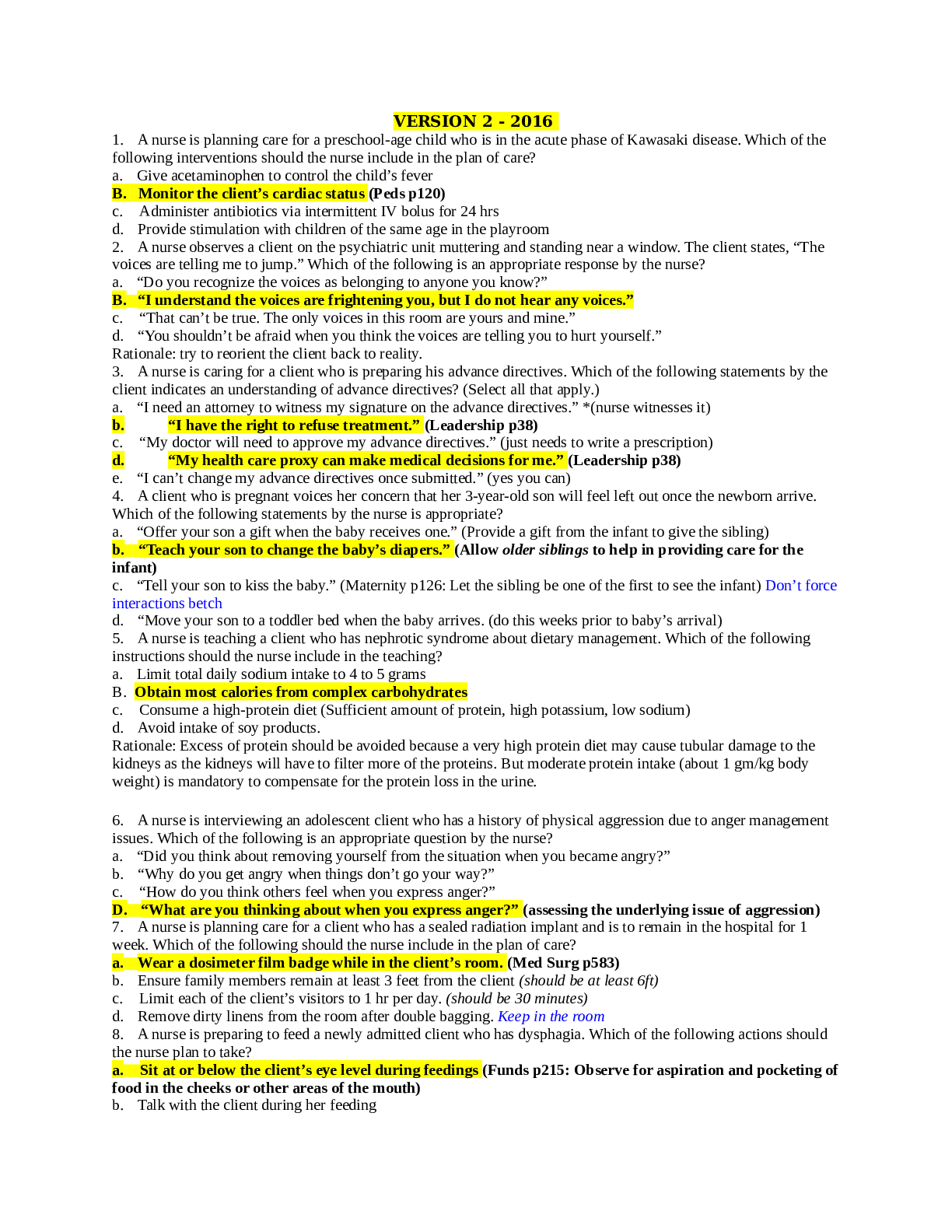
1.A nurse is planning care for a preschool-age child who is in the acute phase of Kawasaki disease. Which of the following interventions should the nurse include in the plan of care?
a.Give acetaminophen to control the
...
[Show More]
Last updated: 3 years ago
Preview 1 out of 20 pages
Instant download
Buy this Document to get the Full Access Instantly
Provided by Students Who Aced it
We Verify Document Content to Gurantee Accuracy
Reviews( 0 )
Document information
Connected school, study & course
About the document
Uploaded On
Nov 18, 2021
Number of pages
20
Written in
All

Additional information
This document has been written for:
Uploaded
Nov 18, 2021
Downloads
0
Views
97
Document Keyword Tags
Recommended For You
Get more on EXAM »
$105.5
996 Pages
ATI TEAS 7 | 4 Versions for Reading, Math, Science, English, A...

More related documents below

 (1).png)
 (1).png)

.png)

 WITH VERIFIED AND CORRECT ANSWERS AND EXPLANATIONS.png)

