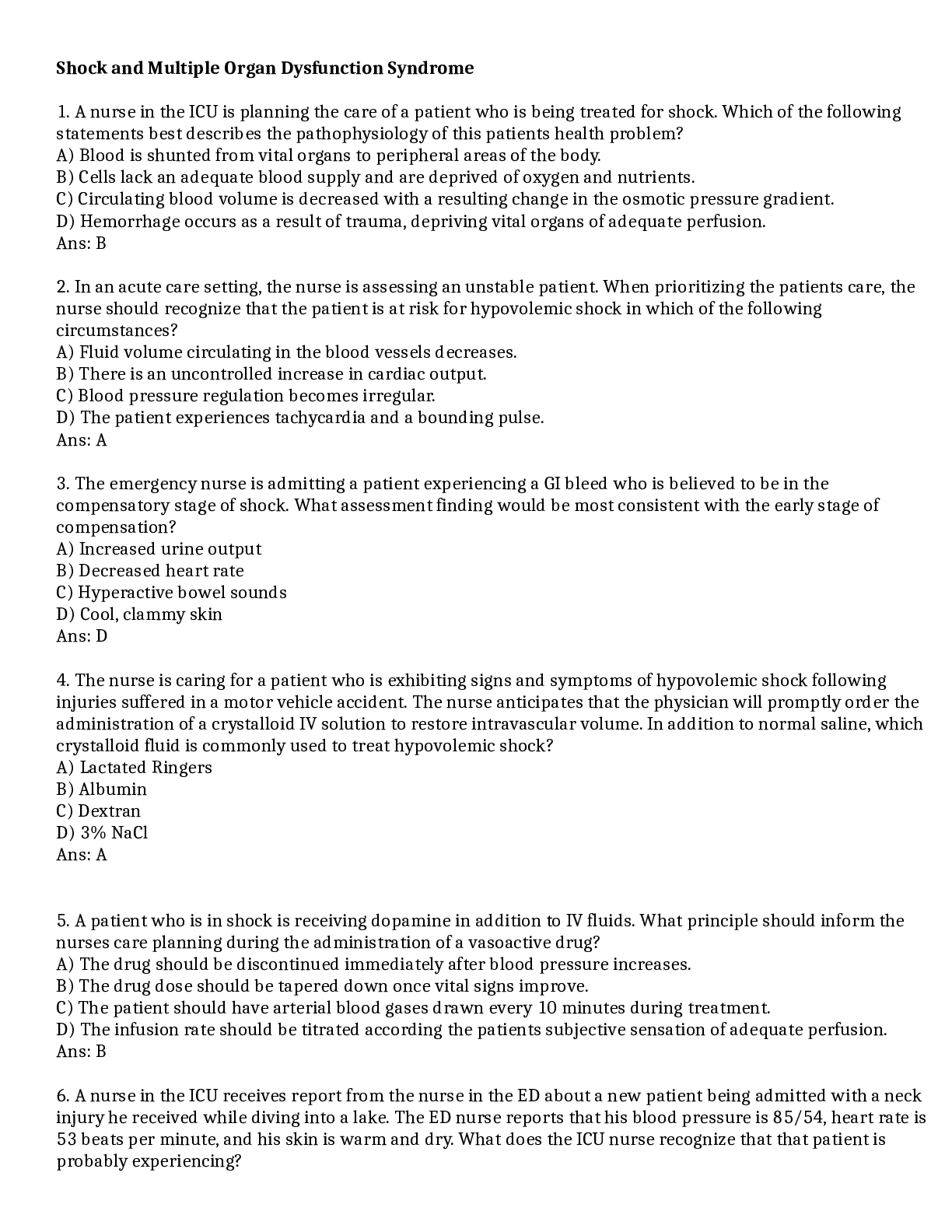
Shock and Multiple Organ Dysfunction Syndrome
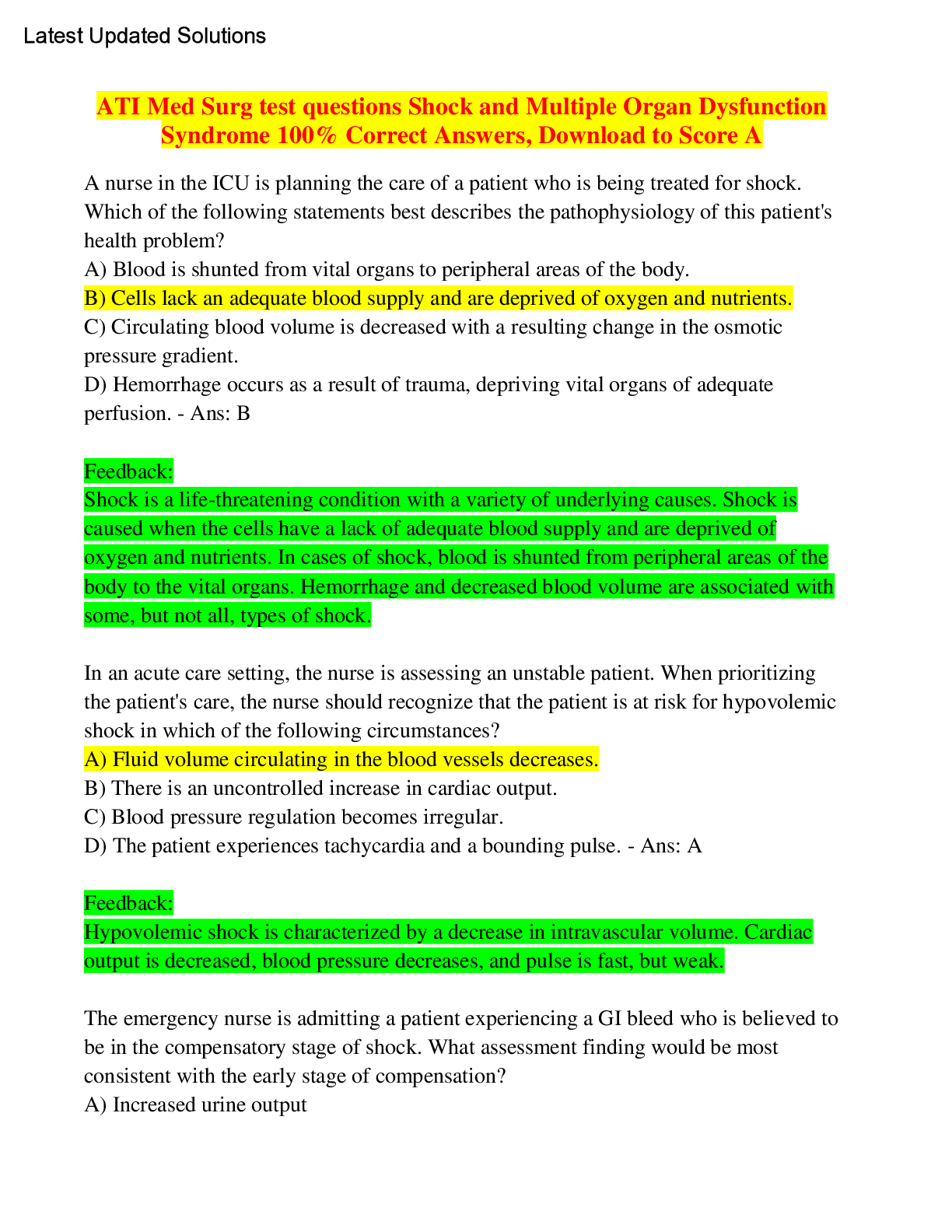
1. A nurse in the ICU is planning the care of a patient who is being treated for shock. Which of the following
statements best describes the pathophysiology of this patient
...
Shock and Multiple Organ Dysfunction Syndrome
1. A nurse in the ICU is planning the care of a patient who is being treated for shock. Which of the following
statements best describes the pathophysiology of this patients health problem?
A) Blood is shunted from vital organs to peripheral areas of the body.
B) Cells lack an adequate blood supply and are deprived of oxygen and nutrients.
C) Circulating blood volume is decreased with a resulting change in the osmotic pressure gradient.
D) Hemorrhage occurs as a result of trauma, depriving vital organs of adequate perfusion.
Ans: B
2. In an acute care setting, the nurse is assessing an unstable patient. When prioritizing the patients care, the
nurse should recognize that the patient is at risk for hypovolemic shock in which of the following
circumstances?
A) Fluid volume circulating in the blood vessels decreases.
B) There is an uncontrolled increase in cardiac output.
C) Blood pressure regulation becomes irregular.
D) The patient experiences tachycardia and a bounding pulse.
Ans: A
3. The emergency nurse is admitting a patient experiencing a GI bleed who is believed to be in the
compensatory stage of shock. What assessment finding would be most consistent with the early stage of
compensation?
A) Increased urine output
B) Decreased heart rate
C) Hyperactive bowel sounds
D) Cool, clammy skin
Ans: D
4. The nurse is caring for a patient who is exhibiting signs and symptoms of hypovolemic shock following
injuries suffered in a motor vehicle accident. The nurse anticipates that the physician will promptly order the
administration of a crystalloid IV solution to restore intravascular volume. In addition to normal saline, which
crystalloid fluid is commonly used to treat hypovolemic shock?
A) Lactated Ringers
B) Albumin
C) Dextran
D) 3% NaCl
Ans: A
5. A patient who is in shock is receiving dopamine in addition to IV fluids. What principle should inform the
nurses care planning during the administration of a vasoactive drug?
A) The drug should be discontinued immediately after blood pressure increases.
B) The drug dose should be tapered down once vital signs improve.
C) The patient should have arterial blood gases drawn every 10 minutes during treatment.
D) The infusion rate should be titrated according the patients subjective sensation of adequate perfusion.
Ans: B
6. A nurse in the ICU receives report from the nurse in the ED about a new patient being admitted with a neck
injury he received while diving into a lake. The ED nurse reports that his blood pressure is 85/54, heart rate is
53 beats per minute, and his skin is warm and dry. What does the ICU nurse recognize that that patient is
probably experiencing?
A) Anaphylactic shock
B) Neurogenic shock
C) Septic shock
D) Hypovolemic shock
Ans: B
7. The intensive care nurse caring for a patient in shock is planning assessments and interventions related to
the patients nutritional needs. What physiologic process contributes to these increased nutritional needs?
A) The use of albumin as an energy source by the body because of the need for increased adenosine
triphosphate (ATP)
B) The loss of fluids due to decreased skin integrity and decreased stomach acids due to increased
parasympathetic activity
C) The release of catecholamines that creates an increase in metabolic rate and caloric requirements
D) The increase in GI peristalsis during shock and the resulting diarrhea
Ans: C
8. The nurse is transferring a patient who is in the progressive stage of shock into ICU from the medical unit.
The medical nurse is aware that shock affects many organ systems and that nursing management of the
patient will focus on what intervention?
A) Reviewing the cause of shock and prioritizing the patients psychosocial needs
B) Assessing and understanding shock and the significant changes in assessment data to guide the plan of
care
C) Giving the prescribed treatment, but shifting focus to providing family time as the patient is unlikely to
survive
D) Promoting the patients coping skills in an effort to better deal with the physiologic changes accompanying
shock
Ans: B
9. When caring for a patient in shock, one of the major nursing goals is to reduce the risk that the patient will
develop complications of shock. How can the nurse best achieve this goal?
A) Provide a detailed diagnosis and plan of care in order to promote the patients and familys coping.
B) Keep the physician updated with the most accurate information because in cases of shock the nurse often
cannot provide relevant interventions.
C) Monitor for significant changes and evaluate patient outcomes on a scheduled basis focusing on blood
pressure and skin temperature.
D) Understand the underlying mechanisms of shock, recognize the subtle and more obvious signs, and then
provide rapid assessment.
Ans: D
10. The nurse is caring for a patient in the ICU who has be
[Show More]