NRSG 3302 TEST 2 Review Questions & Answers
Document Content and Description Below
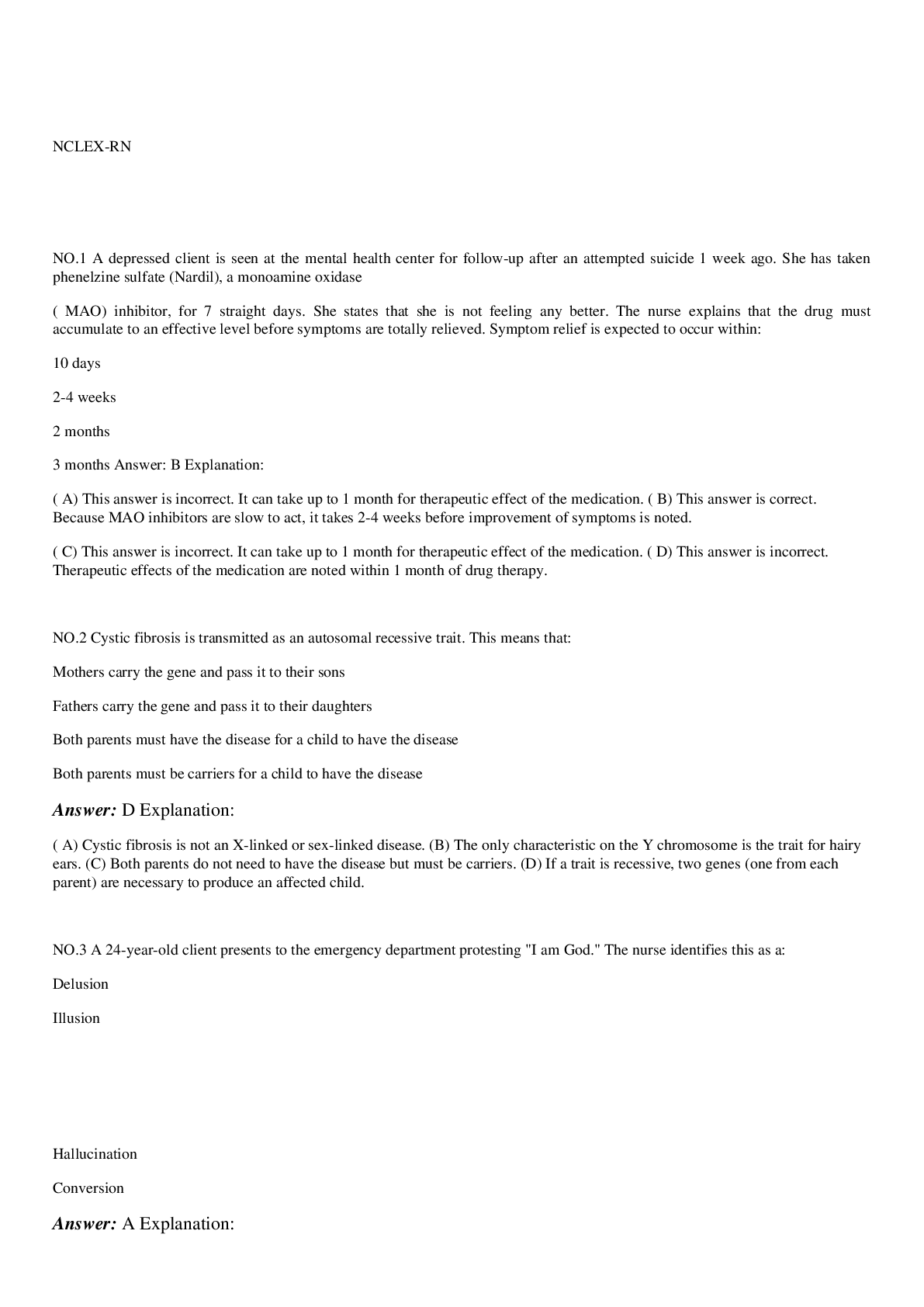
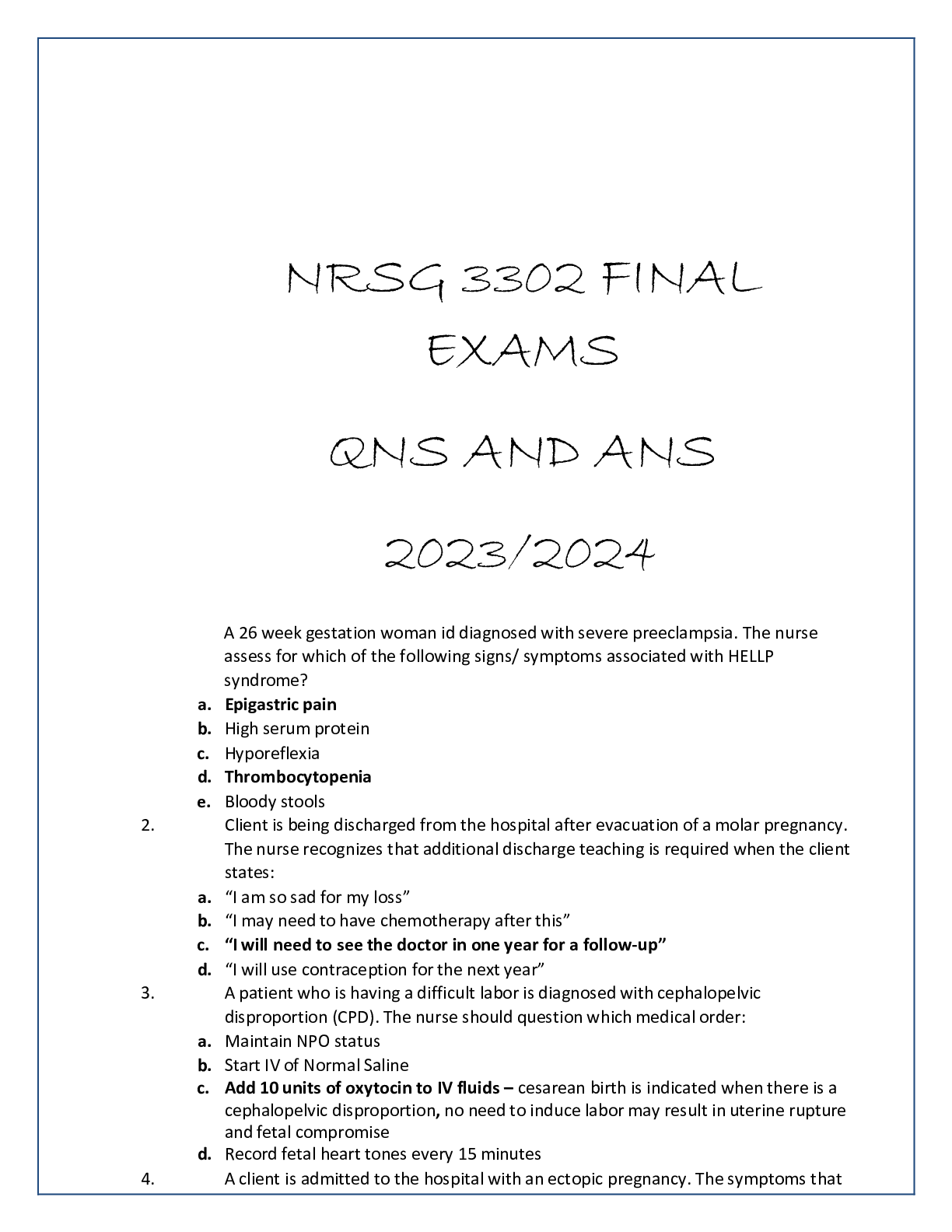
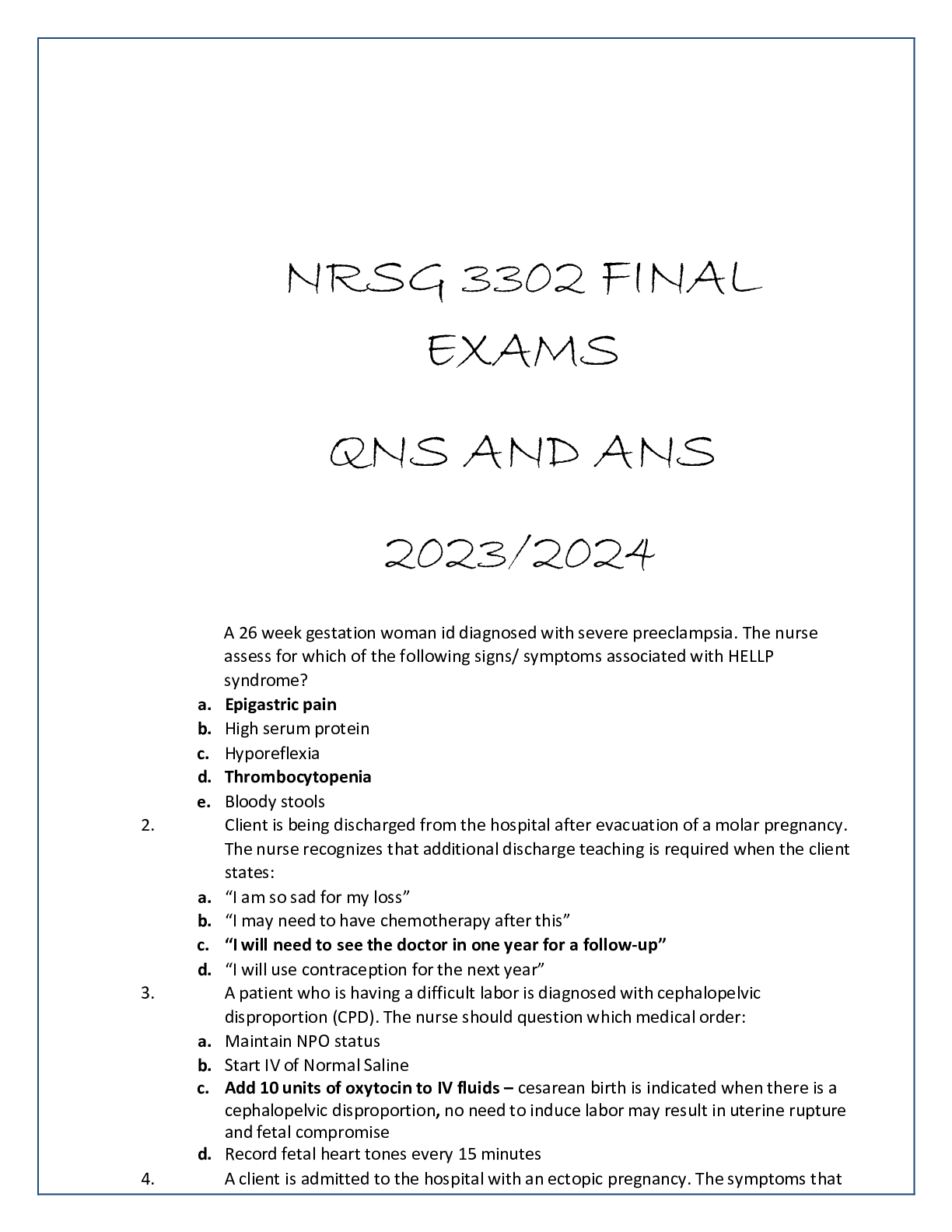
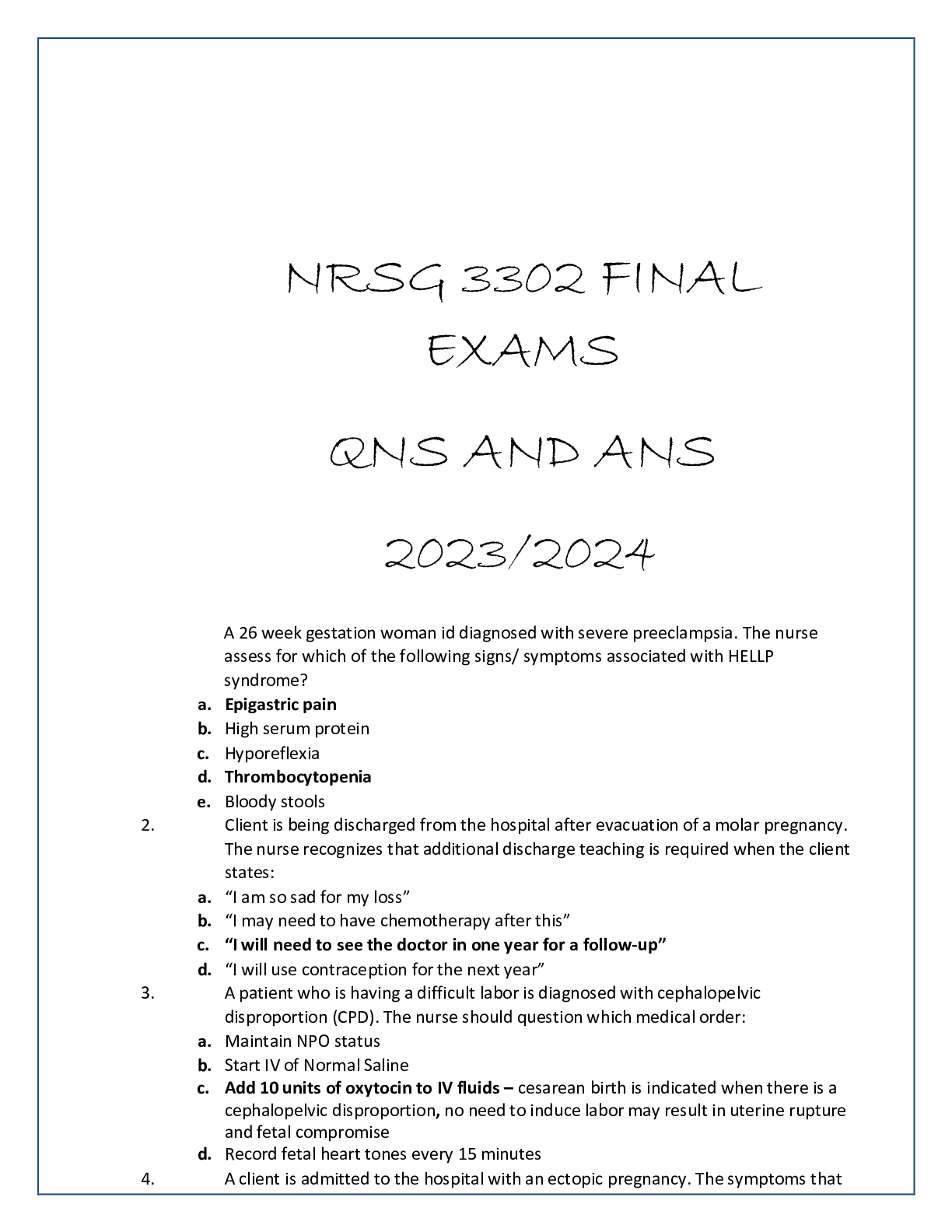
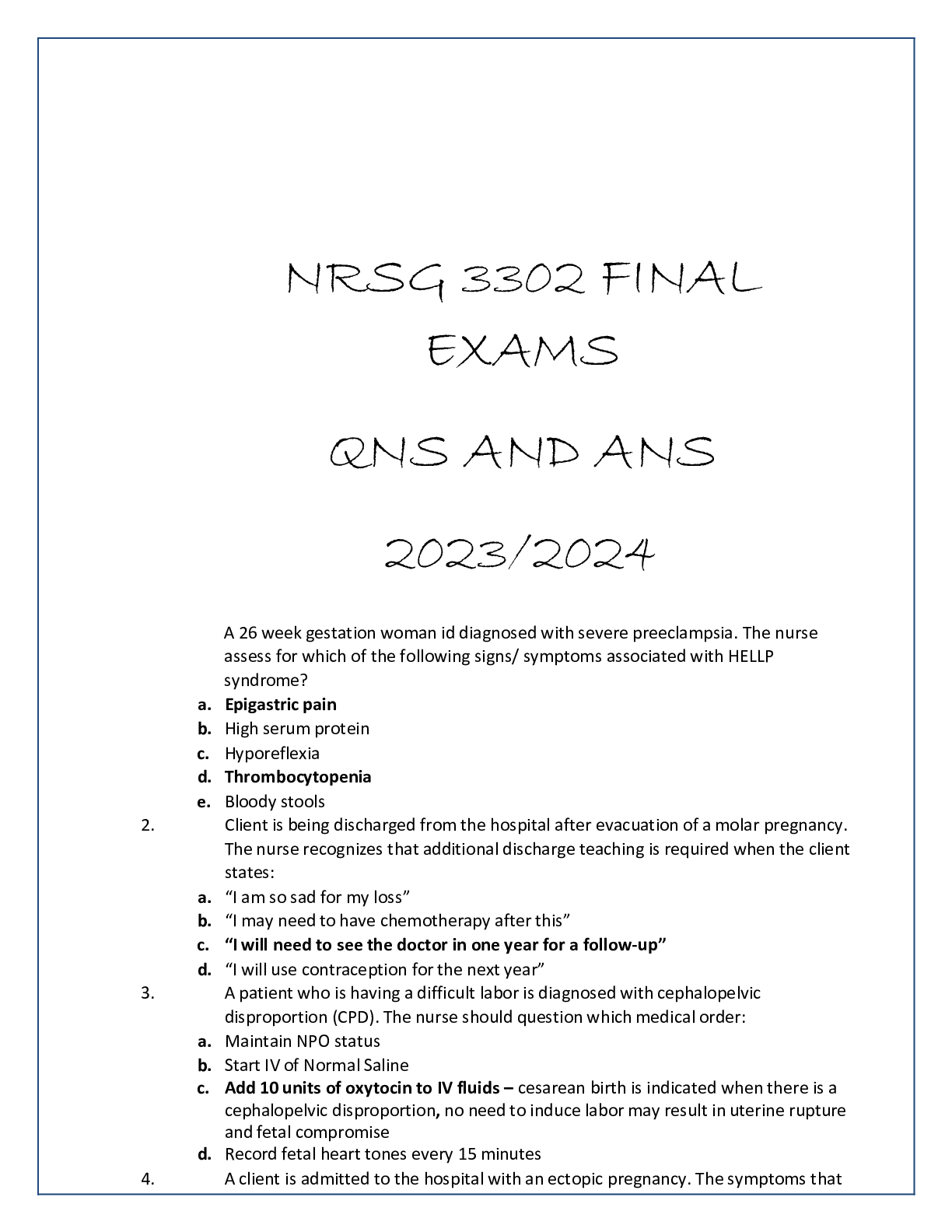
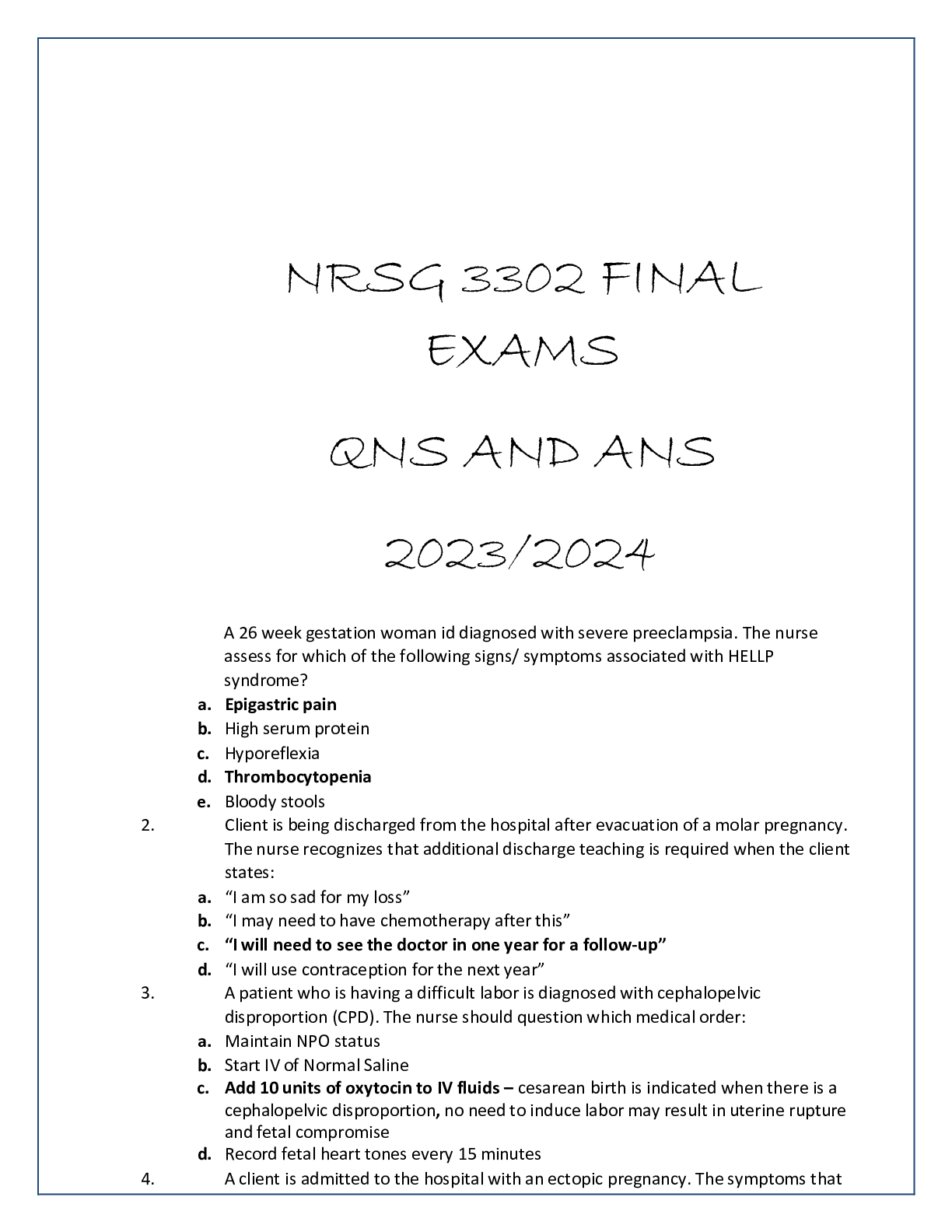
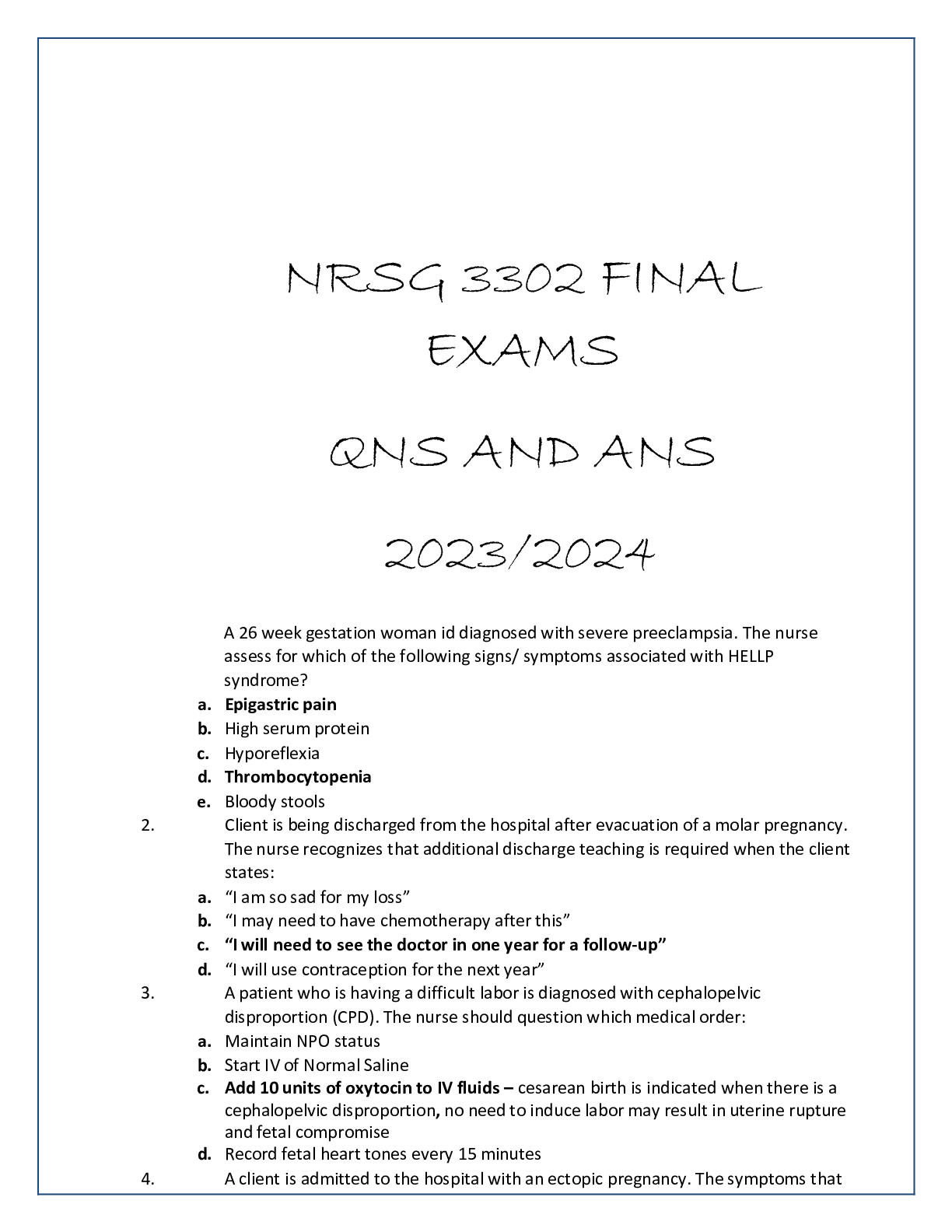
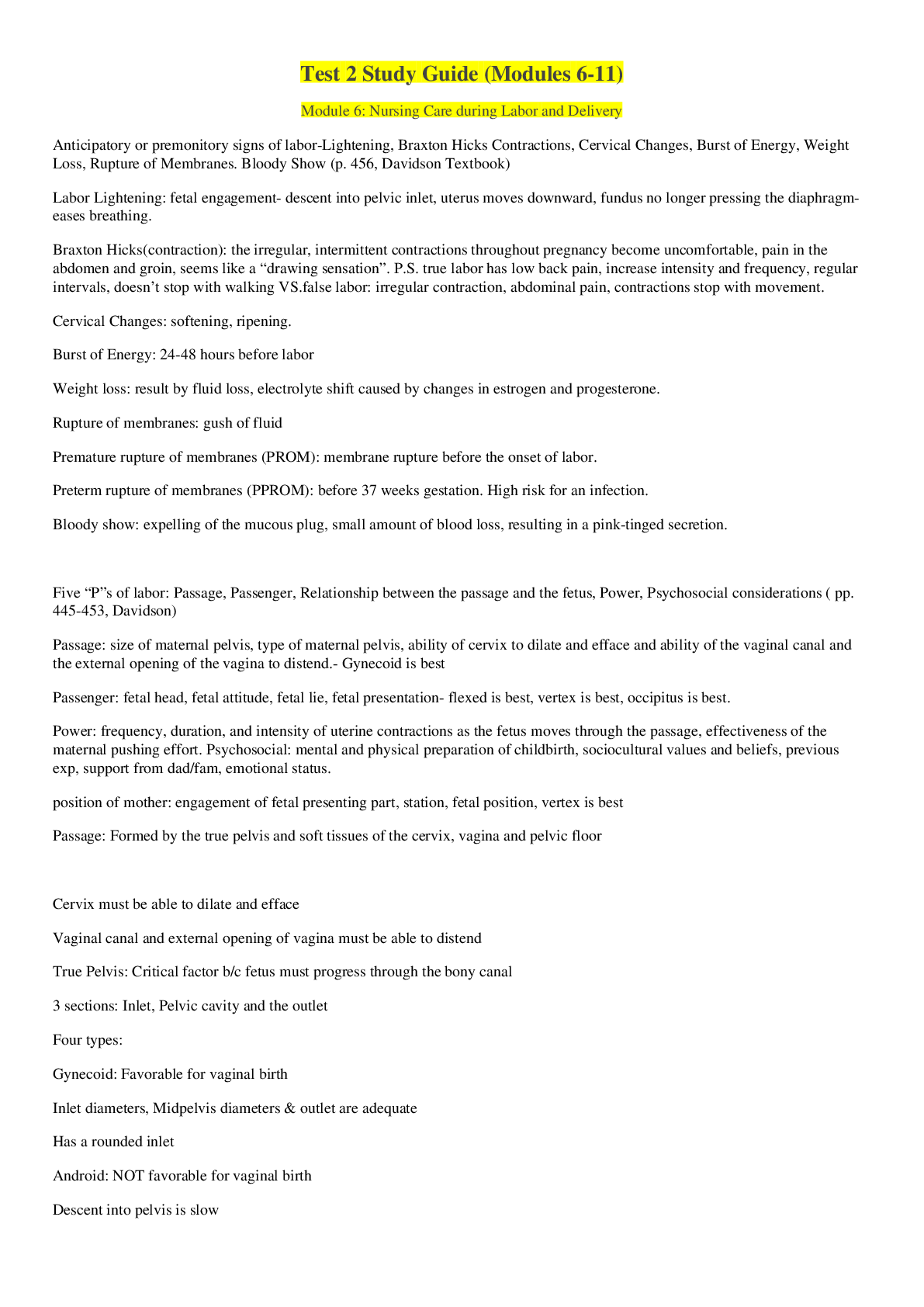
1. A 26-week gestation woman id diagnosed with severe preeclampsia. The nurse
assesses for which of the following signs/ symptoms associated with HELLP
syndrome?
a. Epigastric pain
b. High serum protein
c. Hyporefle
...
[Show More]
Last updated: 3 years ago
Preview 1 out of 15 pages
Instant download

Buy this Document to get the Full Access Instantly
Provided by Students Who Aced it
We Verify Document Content to Gurantee Accuracy
Reviews( 0 )
Document information
Connected school, study & course
About the document
Uploaded On
Dec 26, 2021
Number of pages
15
Written in
All

Additional information
This document has been written for:
Uploaded
Dec 26, 2021
Downloads
0
Views
118
Topic Tags
Recommended For You
Get more on EXAM »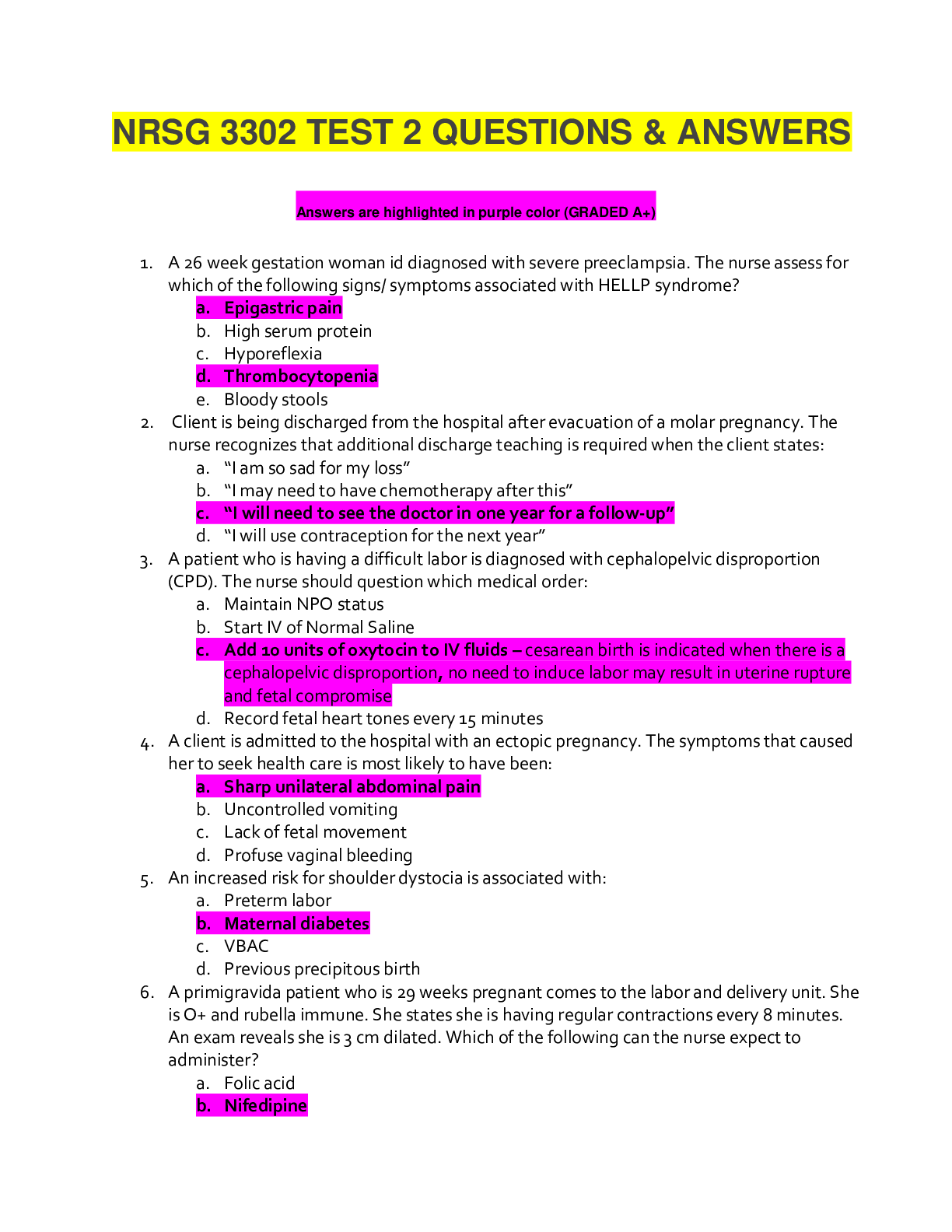
$6
14 Pages
NRSG 3302 TEST 2 QUESTIONS & 100% CORRECT ANSWERS 2021 (GRAD...
$12
12 Pages
NRSG 6115 Labor and Delivery Part 2/NRSG 3302 MATERNITY EXAM 2...
$12
10 Pages
NRSG 6115 Labor and Delivery Part 1/NRSG 3302 MATERNITY EXAM 2...

$16
43 Pages
NRSG 3302 Maternity Final Review. LATEST QUESTIONS AND CORRECT...
$14
15 Pages
NRSG 3302 - Test 2 Review Questions And Answers. Graded A. UPD...
.png)
$15
86 Pages
NRSG 3302 (NRSG3302maternity study guide - LONG.) (NRSG 3302 (...

$20
97 Pages
NRSG 3302 maternity study guide - LONG/DETAILED, Updated 2021.
More related documents below