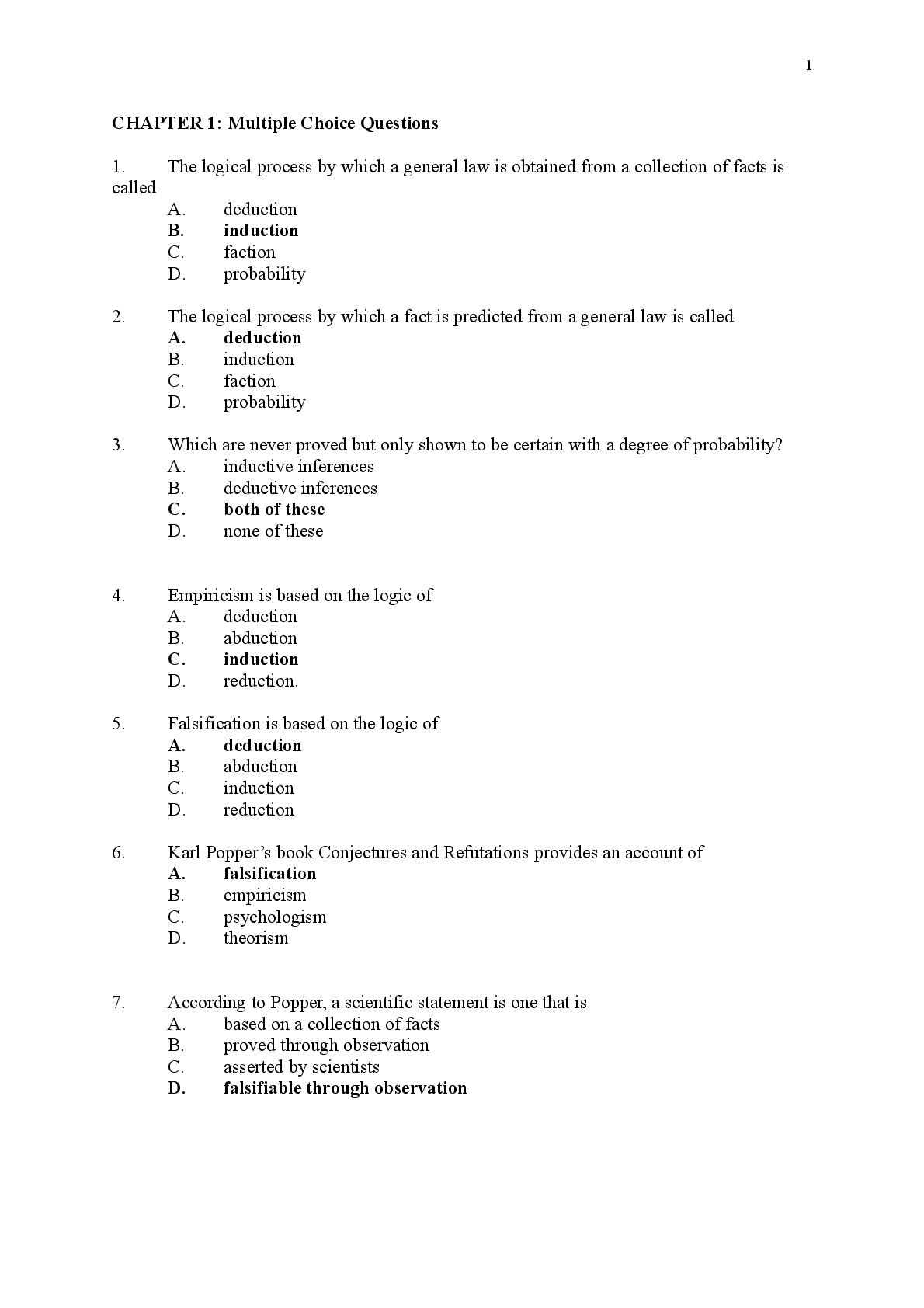
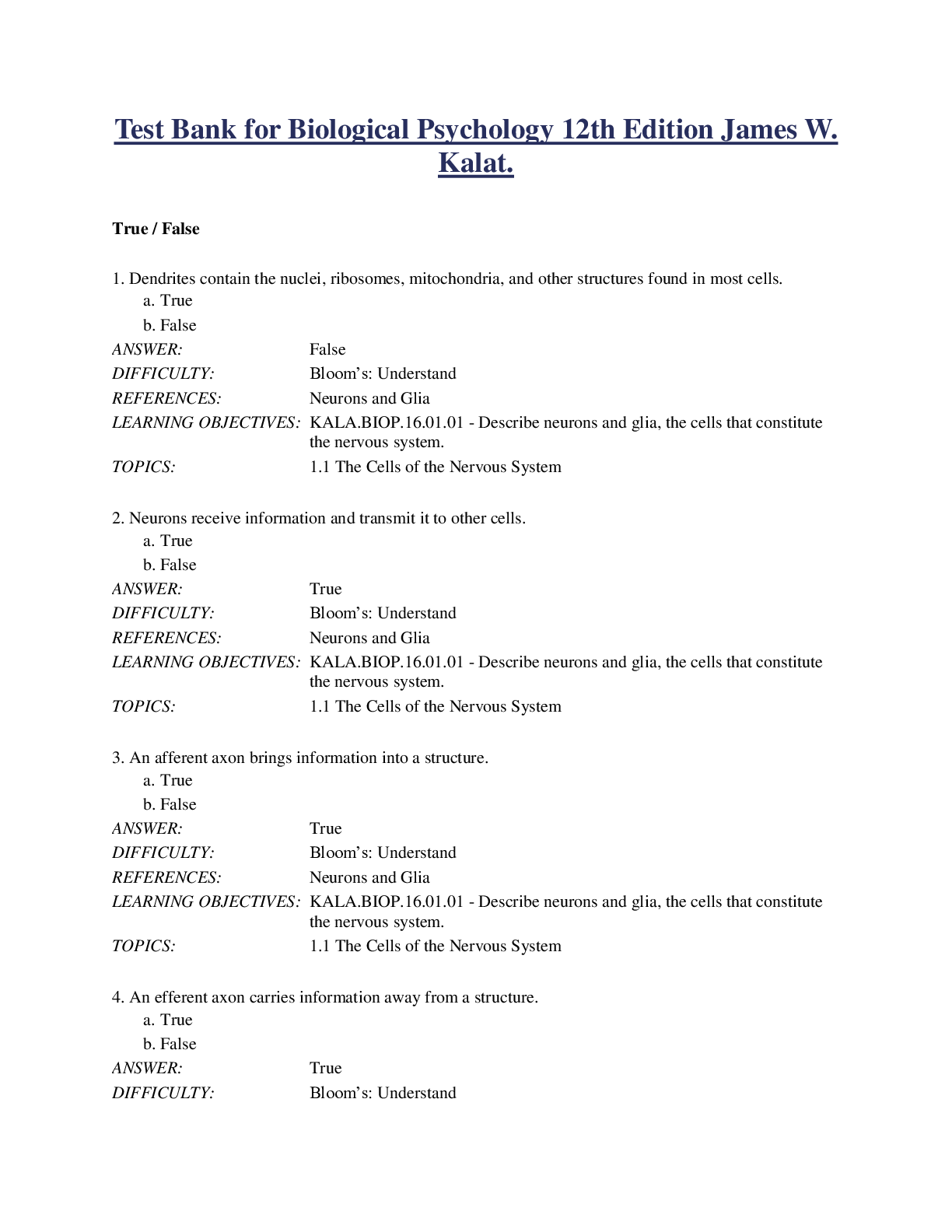
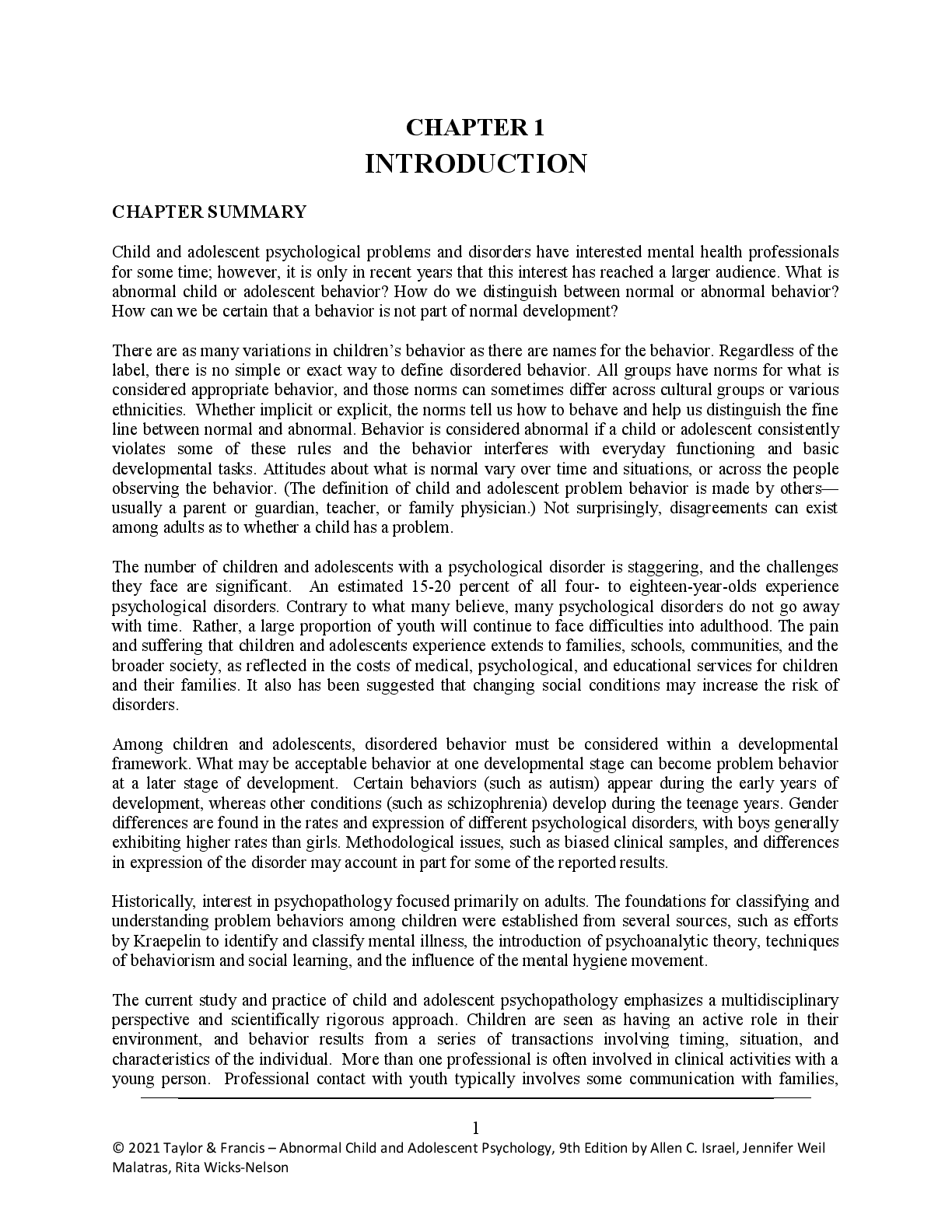
Psychology > QUESTIONS & ANSWERS > PSYC 460 WEEK 3 QUIZ – QUESTION AND ANSWERS (All)
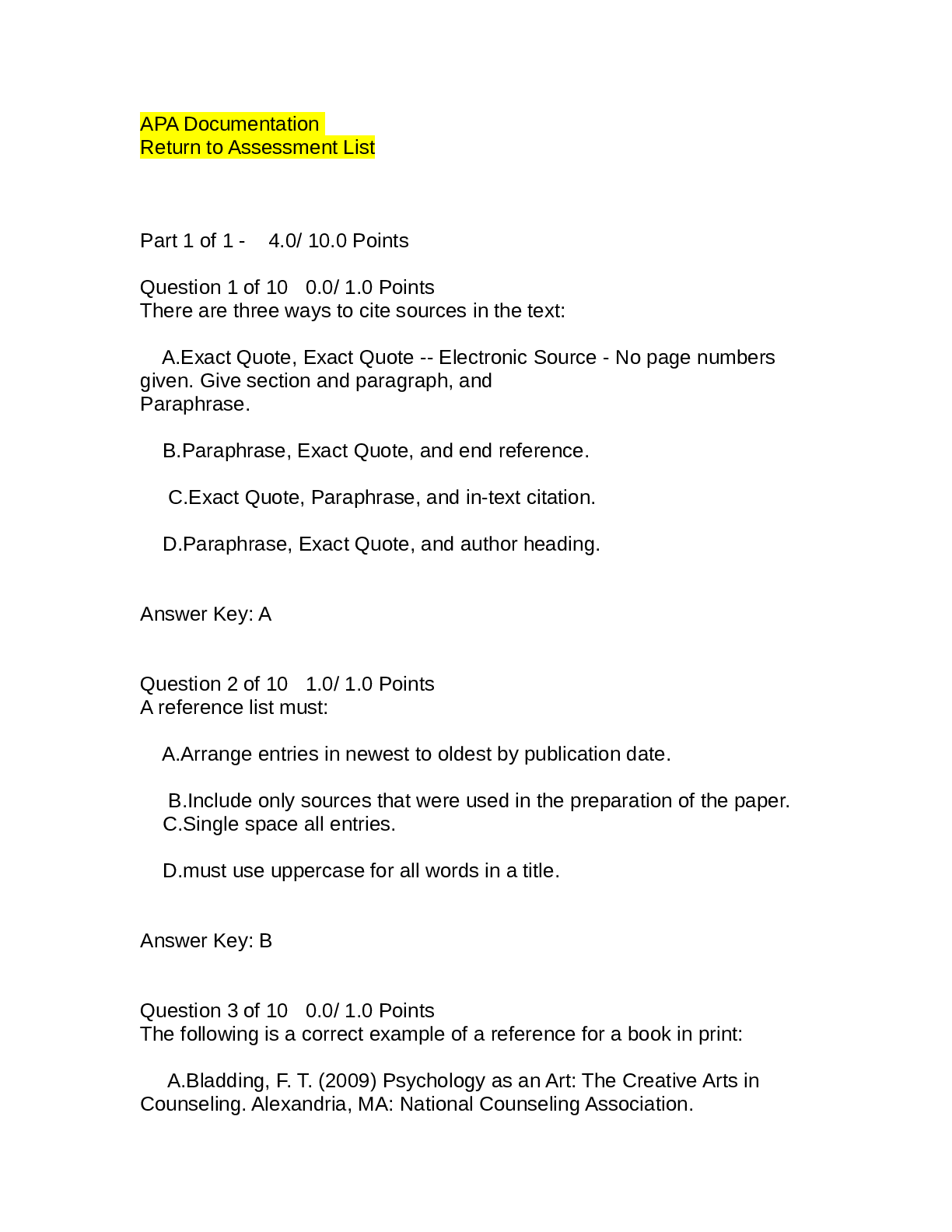
PSYC 460 WEEK 3 QUIZ – QUESTION AND ANSWERS
Document Content and Description Below
Last updated: 3 years ago
Preview 1 out of 6 pages
Instant download

Buy this Document to get the Full Access Instantly
Provided by Students Who Aced it
We Verify Document Content to Gurantee Accuracy
Also available in bundle (1)
Click Below to Access Bundle(s)

PSYC 460 FILES QUESTIONS AND ANSWERS ALREADY GRADED A DOWNLOAD NOW
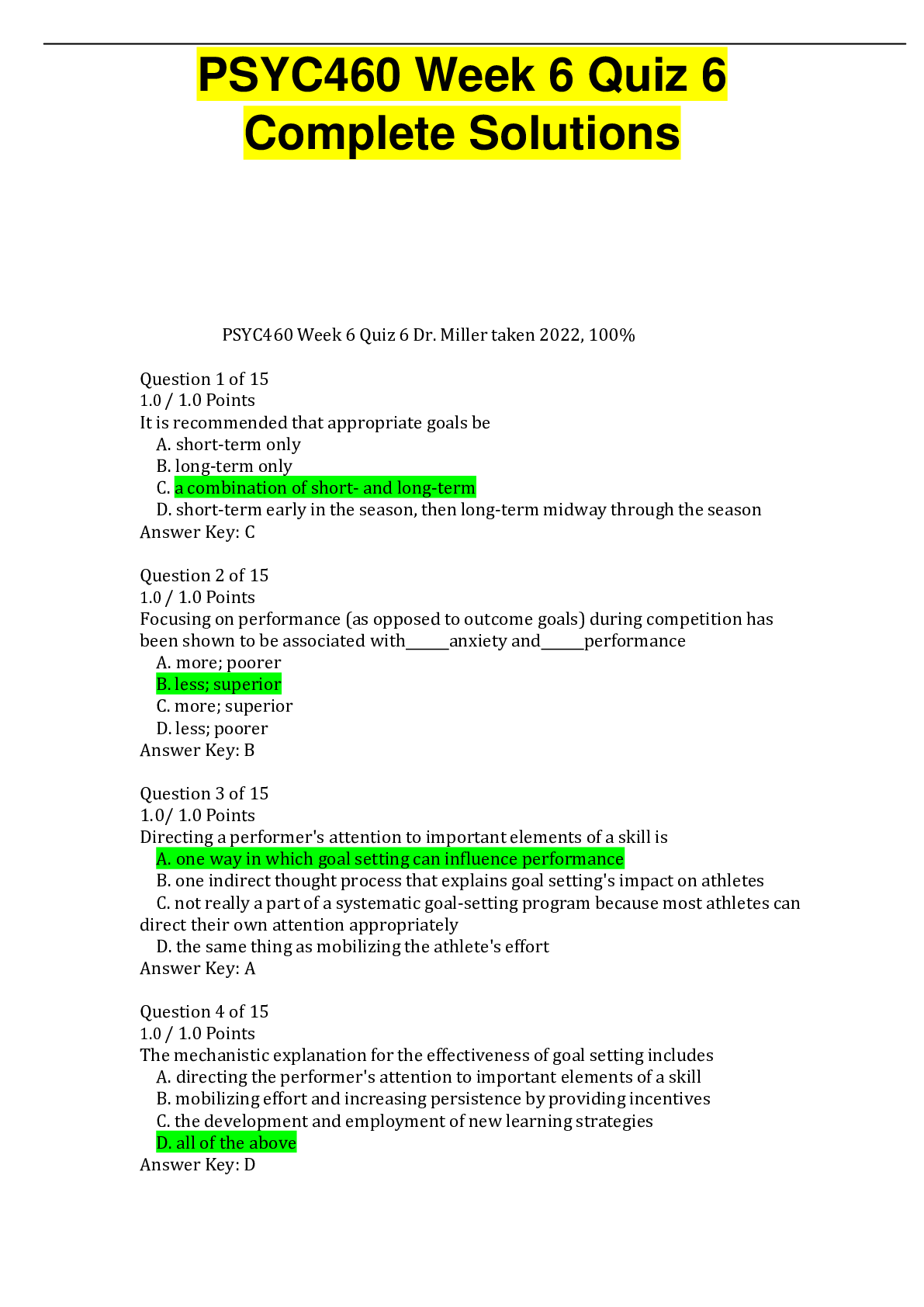
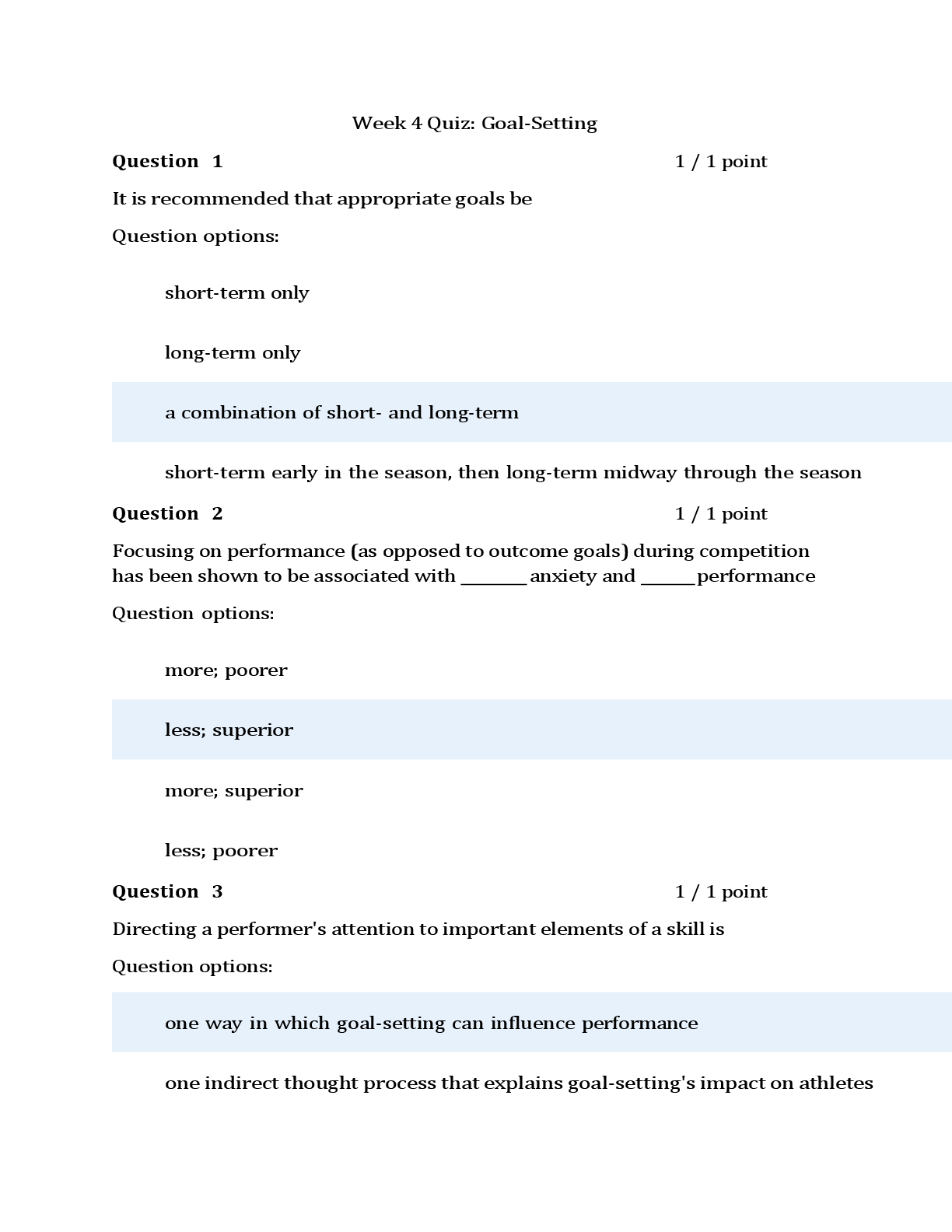
PSYC460 Sports Psychology Week 4 (Quiz 4) Question 1 of 15 1.0/ 1.0 Points Team building is considered part of which stage of team development? A.forming B.storming C.norming D.performing Answ...
By Nutmegs 4 years ago
$14.5
3
Reviews( 0 )
Document information
Connected school, study & course
About the document
Uploaded On
Jan 08, 2022
Number of pages
6
Written in
All

Additional information
This document has been written for:
Uploaded
Jan 08, 2022
Downloads
0
Views
171
Topic Tags
Recommended For You
Get more on QUESTIONS & ANSWERS »



PSYC 460 Quizzes- APA Documentation | American Public Universi...

Achievement Motivation.docx PSYC460 Helping Lucille Regain H...

Achievement Motivation.docx PSYC460 Helping Lucille Regain H...
PSYC 460 Quizzes- APA Documentation | 100% Verified Answers LA...
PSYC 460 Quizzes- APA Documentation | 100% Verified Answers LA...