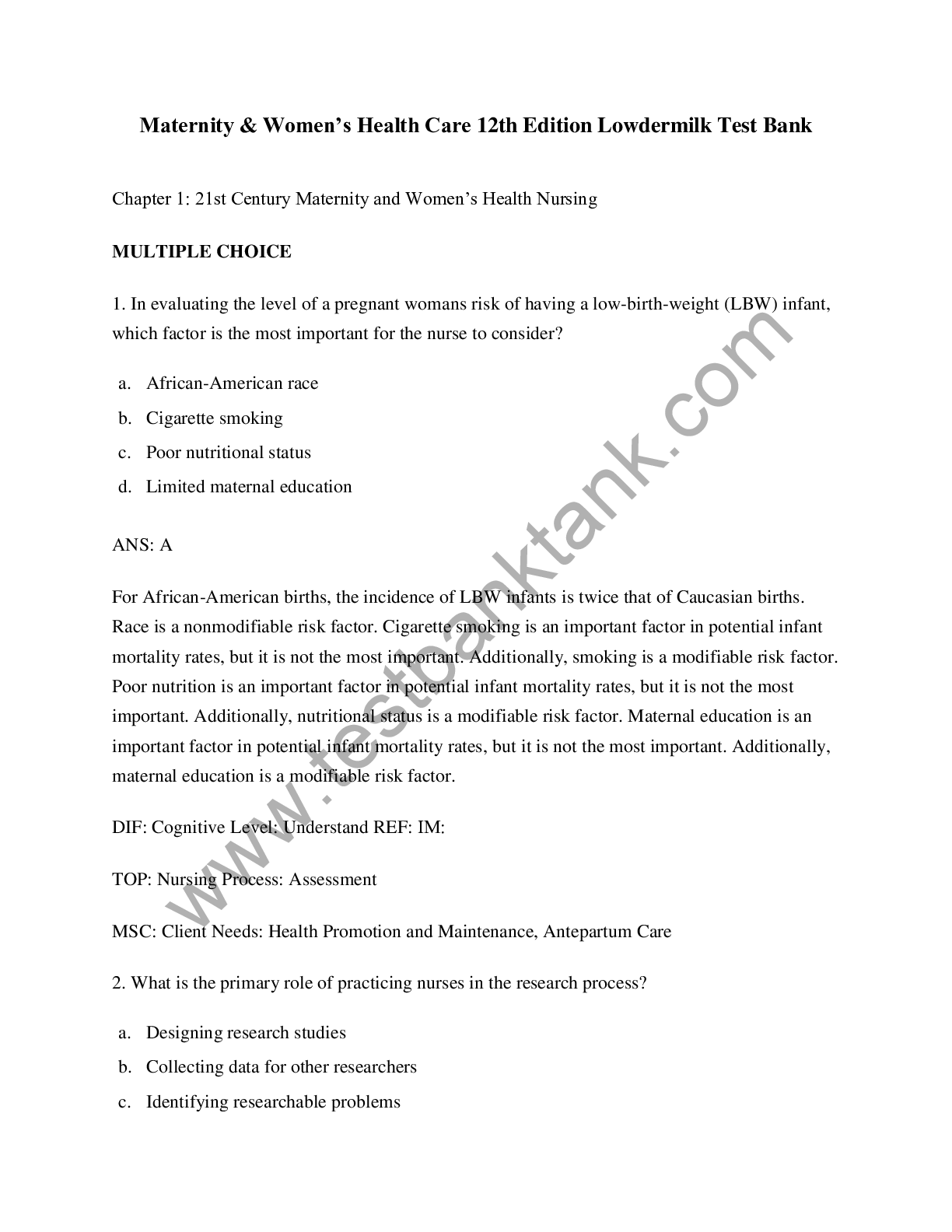
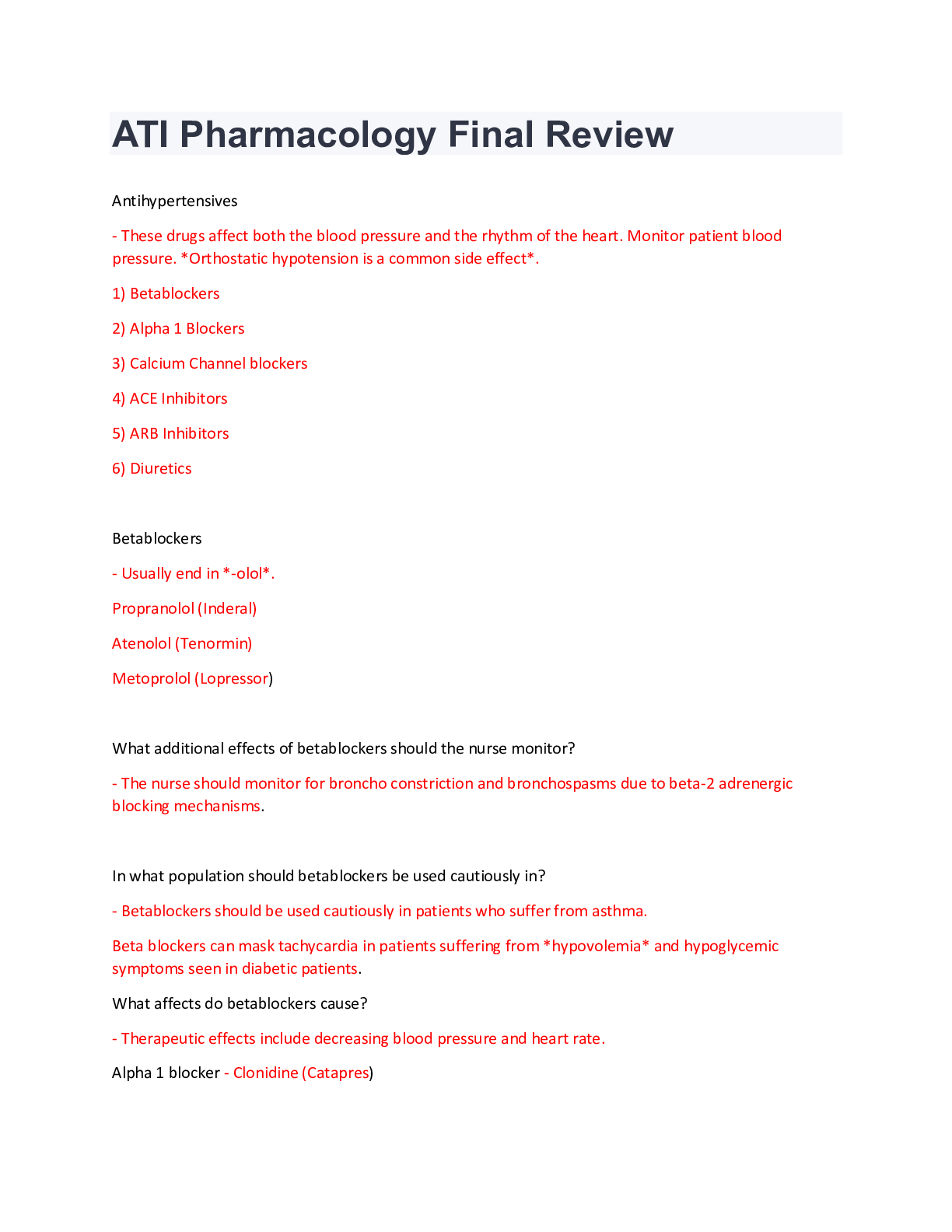
Pharmacology > ATI Study Resources. > ATI Pharmacology Final Review. latest Graded A. (All)
ATI Pharmacology Final Review. latest Graded A.
Document Content and Description Below
Last updated: 3 years ago
Preview 1 out of 19 pages
Instant download
Buy this Document to get the Full Access Instantly
Provided by Students Who Aced it
We Verify Document Content to Gurantee Accuracy
Also available in bundle (2)
Click Below to Access Bundle(s)

ATI pharmacology, med surg, nutrition, fundamentals, mental health, teas; exams compilations. 102 different versions.
This bundle is a library of the aforementioned exam materials. The compilation contains questions with accurate answers. highly rated documents. download to score A+. 100% approved pass rate. deeply...
By bundleHub Solution guider 4 years ago
$55
143
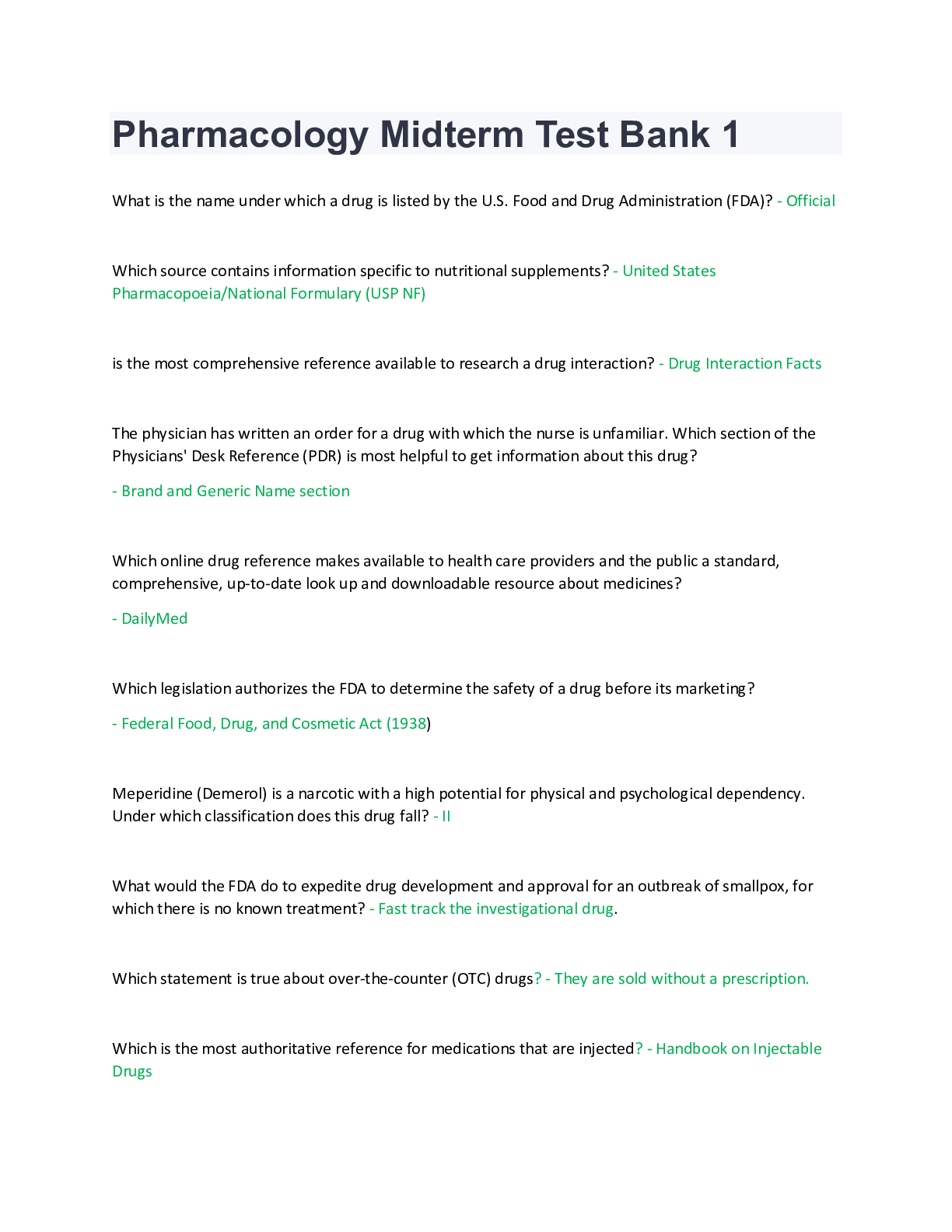
latest ATI pharmacology bundle. contains a compilation final exam reviews. 13 versions. 100% accurate
pharmacology being a wide course, i have compiled these comprehensive versions at a fair price. their contents are approved and with precise and accurate answers. download for better grades.
By bundleHub Solution guider 4 years ago
$50
14
Reviews( 0 )
Document information
Connected school, study & course
About the document
Uploaded On
Jan 29, 2022
Number of pages
19
Written in
All
Seller

Reviews Received
Additional information
This document has been written for:
Uploaded
Jan 29, 2022
Downloads
0
Views
231
Topic Tags
Recommended For You
Get more on ATI Study Resources. »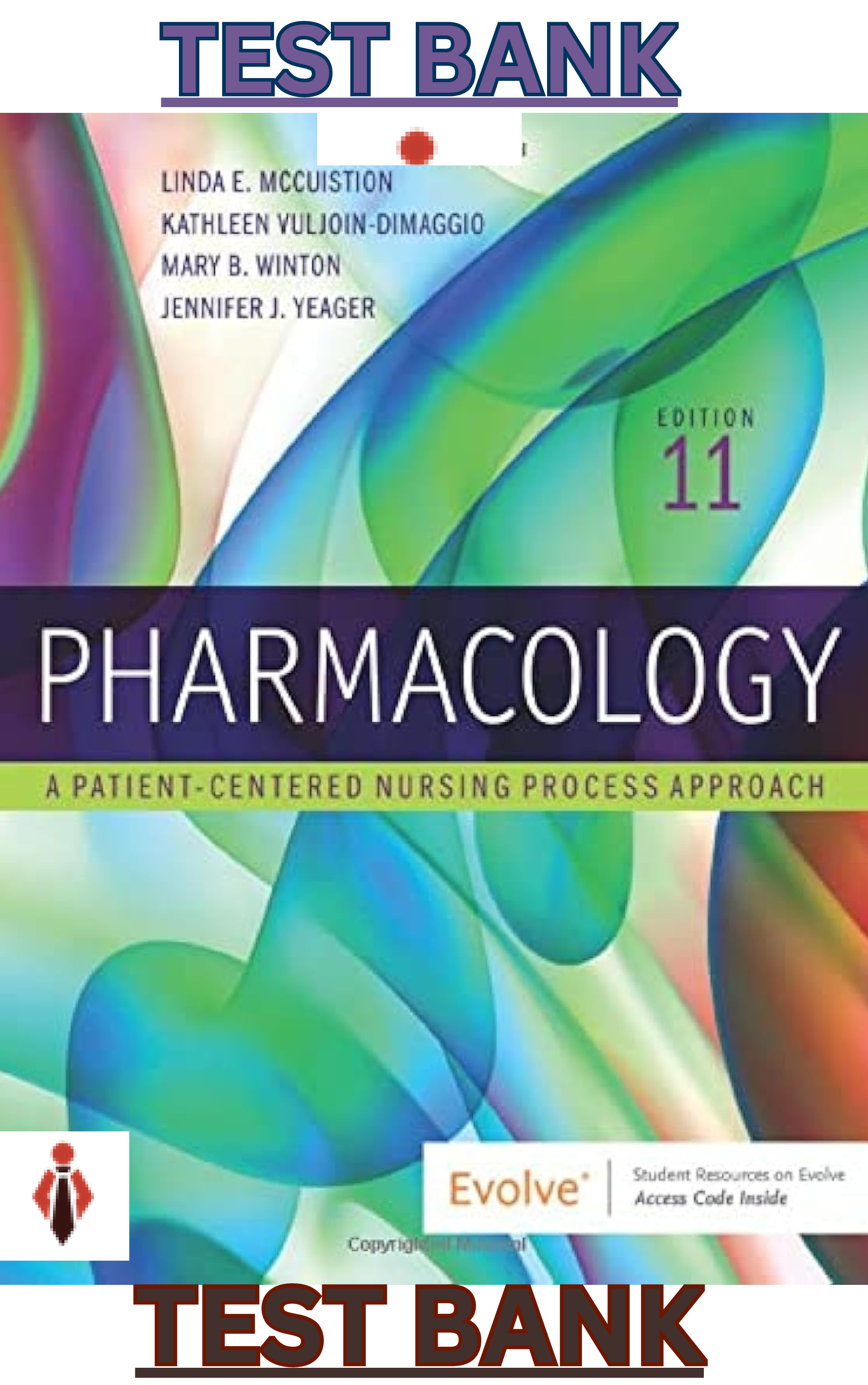
TEST BANK for Pharmacology: A Patient Centered Nursing Approac...
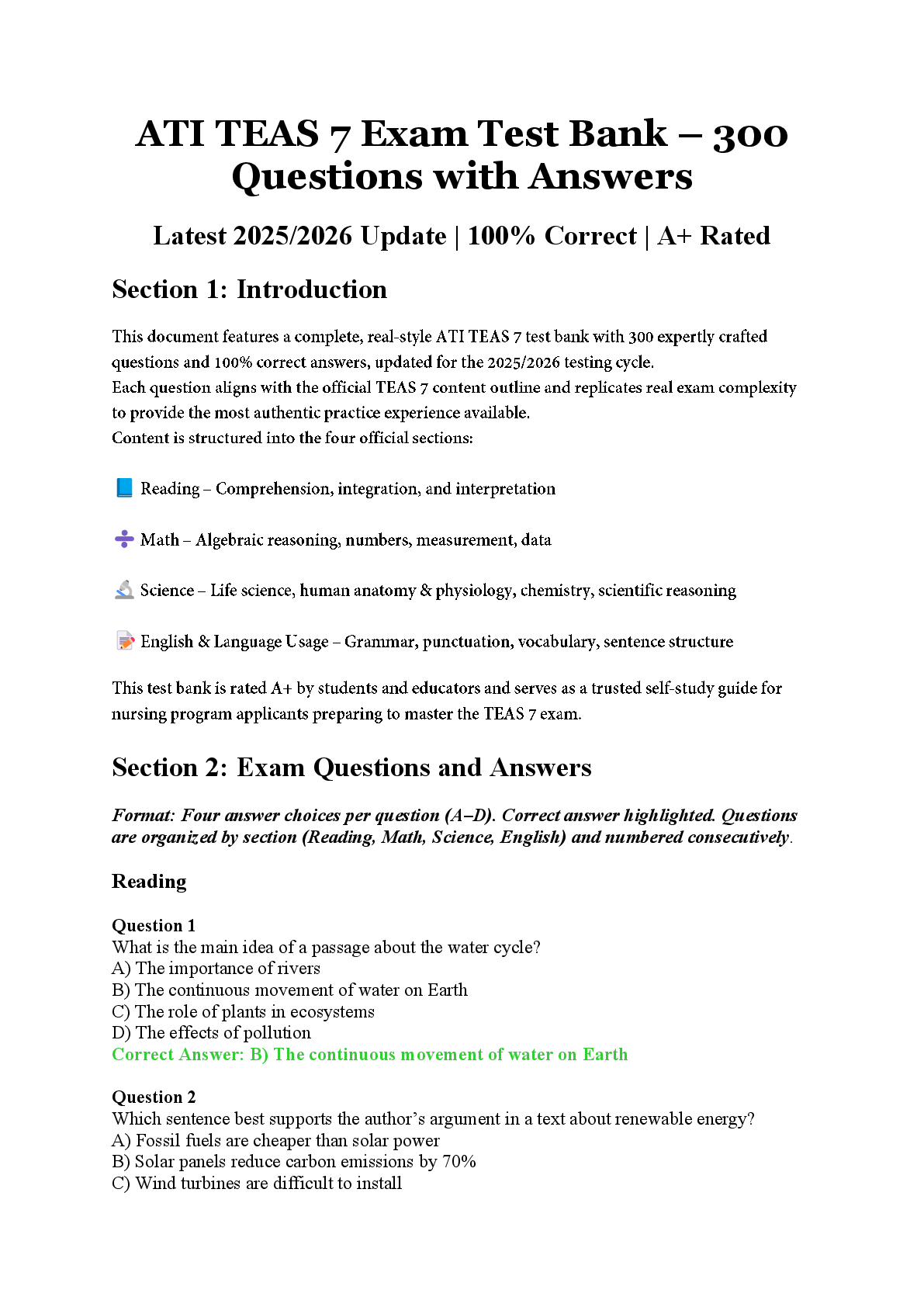
ATI TEAS 7 Exam Test Bank – 300 Questions with Answers Latest...

ATI Fundamentals Proctored Exam Test Bank FULL COMPILATION
ATI Pharmacology made easy 5.0 the Respiratory System Test ||...