Peds ATI and Hockenberry Questions and answers. Graded A+
Document Content and Description Below
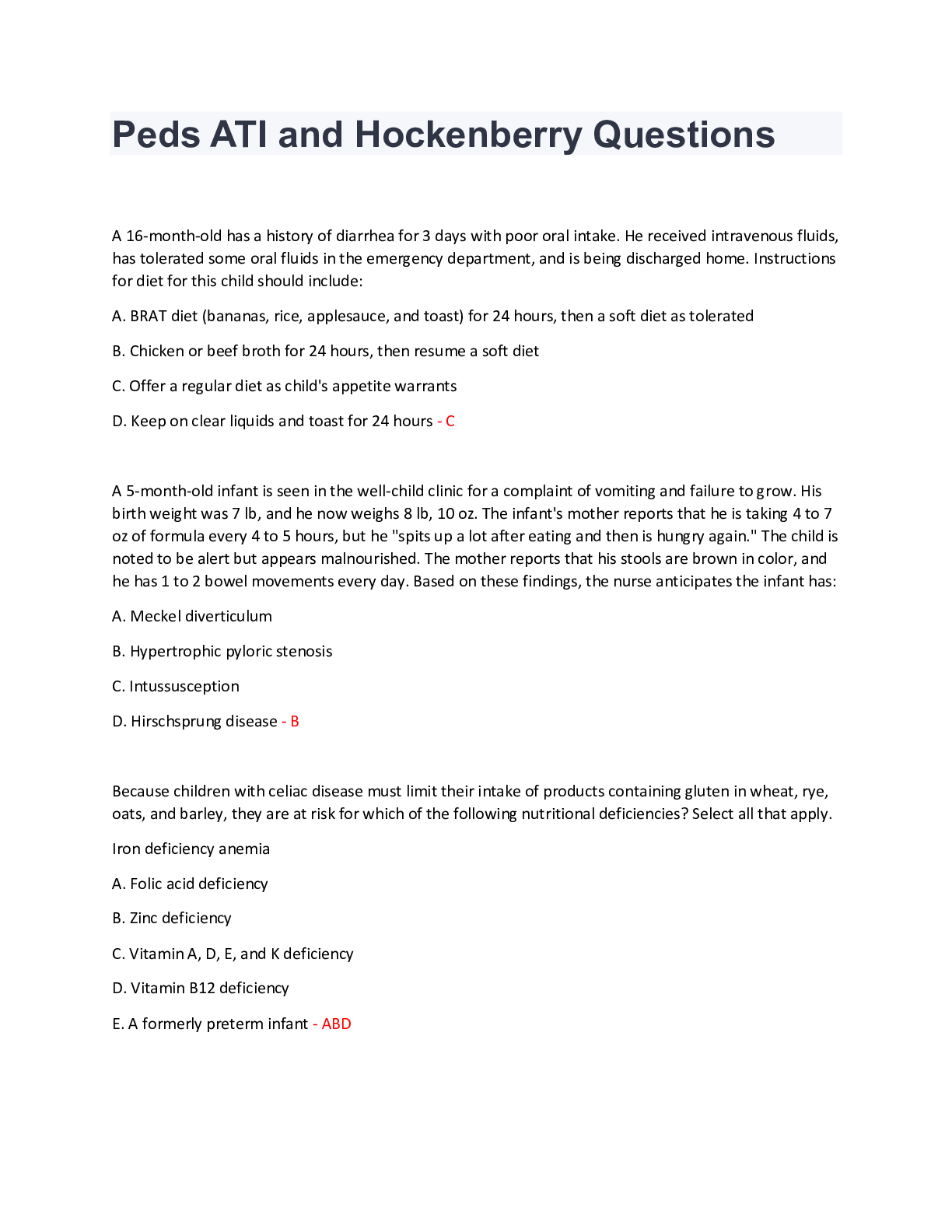
A 16-month-old has a history of diarrhea for 3 days with poor oral intake. He received intravenous fluids, has tolerated some oral fluids in the emergency department, and is being discharged home. Ins
...
tructions for diet for this child should include:
A. BRAT diet (bananas, rice, applesauce, and toast) for 24 hours, then a soft diet as tolerated
B. Chicken or beef broth for 24 hours, then resume a soft diet
C. Offer a regular diet as child's appetite warrants
D. Keep on clear liquids and toast for 24 hours - C
A 5-month-old infant is seen in the well-child clinic for a complaint of vomiting and failure to grow. His birth weight was 7 lb, and he now weighs 8 lb, 10 oz. The infant's mother reports that he is taking 4 to 7 oz of formula every 4 to 5 hours, but he "spits up a lot after eating and then is hungry again." The child is noted to be alert but appears malnourished. The mother reports that his stools are brown in color, and he has 1 to 2 bowel movements every day. Based on these findings, the nurse anticipates the infant has:
A. Meckel diverticulum
B. Hypertrophic pyloric stenosis
C. Intussusception
D. Hirschsprung disease - B
Because children with celiac disease must limit their intake of products containing gluten in wheat, rye, oats, and barley, they are at risk for which of the following nutritional deficiencies? Select all that apply.
Iron deficiency anemia
A. Folic acid deficiency
B. Zinc deficiency
C. Vitamin A, D, E, and K deficiency
D. Vitamin B12 deficiency
E. A formerly preterm infant - ABD
A formerly preterm infant who had surgery for necrotizing enterocolitis is now 6 months old and has short-bowel syndrome. He is unable to absorb most nutrients taken by mouth and is totally dependent on parenteral nutrition, which he receives via a central venous catheter. The clinic nurse following this infant is aware that this infant should be closely observed for the development of:
A. Gastroesophageal reflux
B. Chronic diarrhea
C. Cholestasis
D. Failure to thrive - C
The nurse caring for a 4-month-old infant with biliary atresia and significant urticaria can anticipate administering:
A. Diphenhydramine
B. Ursodiol (ursodeoxycholic acid)
C. Loratadine
D. Zantac - B
Hepatitis A virus is transmitted by which of the following? Select all that apply.
A. Breast milk from mother with HAV
B. Ingestion of contaminated food
C. Fecal-oral route
D. Casual contact with infected person
E. Blood transfusion - BC
A nurse is caring for a child who has had watery diarrhea for the past 3 days.Which of the following is an action for the nurse to take?
Offer chicken broth
Initiate oral rehydration therapy
Start hypertonic IV solution
Keep NPO - B
A nurse is caring for a child who is suspected to have Enterobius vermicularis. Which of the following actions should the nurse take?
Perform a tape test
Collect stool specimen for culture
Test the stool for occult blood
Initiate IV fluids - A
A nurse is assessing a child who has a rotavirus infection. Which of the following are expected findings? (Select all that apply)
[Show More]
Last updated: 2 years ago
Preview 1 out of 23 pages
.png)