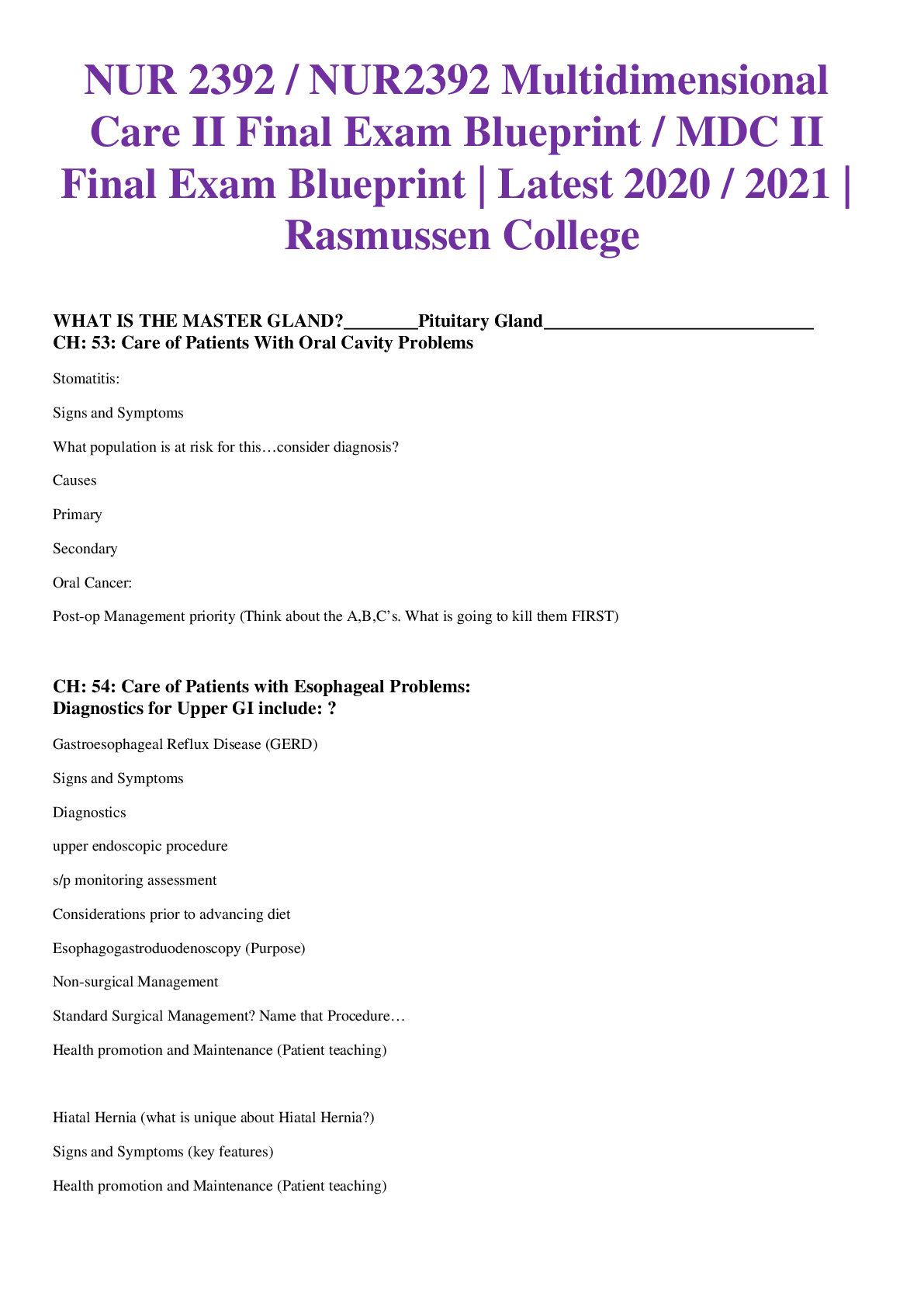
Rasmussen College: NUR 2392 MDC2 Final Exam Blueprint _LATEST 2021
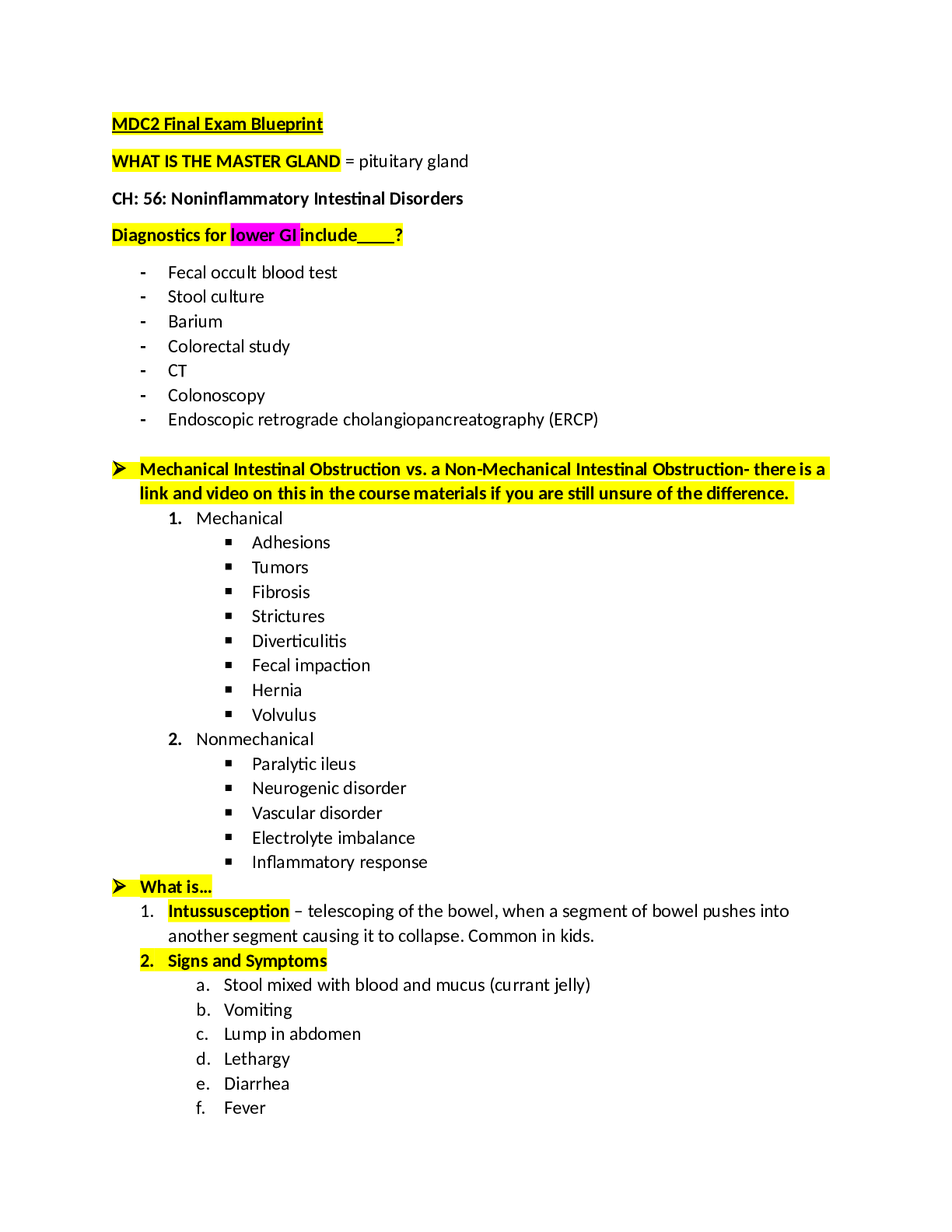
MDC2 Final Exam Blueprint
WHAT IS THE MASTER GLAND = pituitary gland CH: 56: Noninflammatory Intestinal Disorders Diagnostics for
- Fecal occult blo
...
Rasmussen College: NUR 2392 MDC2 Final Exam Blueprint _LATEST 2021
MDC2 Final Exam Blueprint
WHAT IS THE MASTER GLAND = pituitary gland CH: 56: Noninflammatory Intestinal Disorders Diagnostics for
- Fecal occult blood test
- Stool culture
- Barium
- Colorectal study
- CT
- Colonoscopy
- Endoscopic retrograde cholangiopancreatography (ERCP)
➢ Mechanical Intestinal Obstruction vs. a Non-Mechanical Intestinal Obstruction- there is a link and video on this in the course materials if you are still unsure of the difference.
1. Mechanical
▪ Adhesions
▪ Tumors
▪ Fibrosis
▪ Strictures
▪ Diverticulitis
▪ Fecal impaction
▪ Hernia
▪ Volvulus
2. Nonmechanical
▪ Paralytic ileus
▪ Neurogenic disorder
▪ Vascular disorder
▪ Electrolyte imbalance
▪ Inflammatory response
➢ What is…
1. Intussusception – telescoping of the bowel, when a segment of bowel pushes into another segment causing it to collapse. Common in kids.
2. Signs and Symptoms
a. Stool mixed with blood and mucus (currant jelly)
b. Vomiting
c. Lump in abdomen
d. Lethargy
e. Diarrhea
f. Fever
➢ Irritable Bowel Syndrome
1. Signs and Symptoms: what will you see on presentation a. IBS-D = Diarrhea
i. Abdominal cramping
ii. Diarrhea
iii. Change in stool frequency or consistency
iv. Flatulence
v. Passing mucus from rectum
vi. Bloating
vii. Abdominal distension
b. IBS-C - constipation
i. Abdominal pain/discomfort
ii. Changes in bowel function
iii. Bloating/gas
iv. Straining
v. Infrequent stools
vi. Hard/lumpy stools
vii. Feeling that bowel does not empty completely
c. IBS-A (Alternating)
i. Inconsistent bowl habit
ii. All symptoms of typical IBS
iii. Diarrhea and constipation
d. IBS-M (Mixed)
i. Increased belly pain
ii. Both diarrhea and constipation
2. Health Promotion and maintenance (Patient education)
a. Avoid foods that trigger exacerbation
i. Dairy
ii. Wheat
iii. Corn
iv. Fried foods
v. Alcohol
vi. Spicy foods
vii. Aspartame
b. Avoid alcoholic and caffeinated beverages, and other fluids containing fructose and sorbitol
c. Consume 2 to 3 L fluid per day from food and fluid sources
d. Increase fiber intake (approximately 30 to 40 g/day)
➢ Colorectal Cancer
1. What is a common sign of when a patient has cancer?
a. Change in bowl or bladder habits 2. Signs and Symptoms
a. Change in bowel habits
b. Bowel movement that is not relieved by having one
c. Rectal bleeding with bright red blood
d. Blood in stool
e. Cramping/abdominal pain
f. Weakness/fatigue
g. Unintended weight loss
3. Diagnostics (lab)-Which of these would confirm dx. Draw arrows indicating if it the lab value would be high or low.
a. Definitive test is colonoscopy
b. Complete blood count = ↓
c. Liver enzymes = ↑
d. Tumor markers = ↑
4. Complications 2/2 Cellular Regulation
a. Bowel obstruction and perforation
b. Frank bleeding
c. Intestinal obstruction
d. Poor absorption 5. Chemotherapy
a. Complication:
6. Concern related to GI bleed
a. What is the difference between Black Tarry Stool and Bright Red Blood?
i. Black tarry = upper GI bleed
ii. Bright red blood = lower GI bleed
b. If there is suspicion of a GI bleed what will you want to evaluate?
i. CBC
ii. Hematocrit
iii. Hemoglobin
7. Surgical Intervention w/ colon resection a. Post-op management
i. Management of NGT: Assessment
1. NGT is used until peristalsis returns
2. Disconnect NGT for 1 to 2 hours when giving a clear liquid diet to determine if the client can tolerate it.
3. When peristalsis returns, the NGT is clamped for a period of time, and if the client does not have nausea, remove the tube.
ii. Colon Resection w/ colostomy (Include collaborative roles in management) 1. What discipline will you collaborate with to lead care of the
ostomy. What specialty? (Yes these people are nurses, but they are a specific kind with a certification…….)
= = Certified Wound Ostomy and Continence Nurse
iii. Complications of Colon Resection
dehiscence (incision breaking open), infection, incisional hernia, scar tissue forming blockage (stricture), leakage between joined sections
CH: 57: Inflammatory Intestinal Disorders
➢ Appendicitis
1. Signs/Symptoms
a. Nausea
b. Loss of appetite
c. Constipation/diarrhea
d. Fever
e. Right side of lower abdomen
➢ Ulcerative Colitis: Define: What is it? Remember the name of this Chapter
1. Signs and Symptoms
a. Diarrhea with blood or pus
b. Abdominal pain/cramping
c. Rectal pain
d. Rectal bleeding
e. Urgency to defecate
f. Weight loss
g. Fatigue 2. Risk factors
a. Age
b. Race/ethnicity
c. Family history
➢ Anal Fistula/Anorectal abscess
1. Signs and Symptoms
a. Skin irritation around anus
b. Tunnel that develops between skin and anus
c. Constant, throbbing pain that may be worse when you sit or cough
d. Smelly discharge from your anus
e. Passing blood or pus in stool
f. Swelling and redness around your anus
g. Fever
2. Management (Comfort and promote healing)
a. Maintain fluid and electrolytes
b. Control of infection
c. Nutritional support
d. Skin protection and containment
CH: 59: Care of Patients with Problems of the Biliary System and Pancreas
➢ Cholecystitis (Consider the 4 Fs)
1. Forty or over
2. Female
3. Fertile
4. Fat
1. Presentation signs and symptoms (Pain local/abnormal vitals/other symptoms): What is unique about the presentation of this condition?
a. Sharp pain in right upper quadrant, often radiating to the right shoulder
b. Pain with deep inspiration during right subcostal palpation (Murphy sign)
➢ Pancreatitis
1. Signs and symptoms
a. Upper abdominal pain
b. Abdominal pain that radiates to your back
c. Fever
d. Rapid pulse
e. Nausea/vomiting
f. Tenderness 2. Causes
a. Abdominal surgery
b. Alcoholism
c. Medications
d. Cystic fibrosis
e. Gallstones
f. Hypercalcemia/hyperparathyroidism
g. Hypertriglyceridemia
h. Infection
i. Injury to abdomen
j. Obesity
k. Pancreatic cancer
3. Conservative Management (non-surgical)
a. Fasting
b. Pain meds
c. IV fluids
d. Enzymes to improve digestion
e. Diet
4. Surgical intervention with Chronic Pancreatitis?
a. Removal of bile duct obstruction
b. Gallbladder surgery
c. Pancreas surgery
= Laparoscopic cholecystectomy, a minimally invasive surgery (MIS), is the “gold standard” and is performed far more often than the traditional open approach (cholecystectomy).
CH: 64: Care of Patients with Diabetes Mellitus
➢ Diabetes Mellitus
1. Hyperglycemic
a. Sign and symptoms
b. 3 Ps (what is what and what do they mean in layman’s terms)
i. ? polyphagia = hungry
ii. ? polydipsia = thirsty
iii. ? polyuria = pee pee
c. Diagnostic Labs (Indicate the expected values)
i. Blood glucose >200
ii. Fasting blood glucose >126
iii. 2-hr glucose greater than 200 w/ oral glucose tolerance test
iv. A1C > 6.5%
d. What is the significance of the Hgb A1C and what is a normal range? what is abnormal?
i. Normal = below 5.7%
ii. Prediabetes = 5.7 – 6.4%
iii. Diabetes = > 6.5%
e. Complications: How do you prevent complications (what does this mean? It would best to list examples of these)
i. Microvascular 1.
ii. Macrovascular
f. Management (what is the bottom line here in management)
i. .
ii. .
iii. . 2. Hypoglycemia
a. Signs and Symptoms
b. Complication (what system can’t store glucose to function) c. Intervention for hypoglycemia
i. Responsive patient
ii. Not responsive patient/NPO
= Responsive patient: take 15 to 20g of an absorbable carb. This includes 4 to 6oz of juice, glucose tablet/gel, 6 to 10 hard candies, or 1 tbsp of honey. Recheck glucose in 15 minutes
Not responsive patient/NPO: Admin glucose IM or subcut and repeat in 10 minutes if still unconscious. Place in lateral position to reduce aspiration and notify provider
3. Complications of Diabetes/list the terms/who do you monitor for each of these a. ? (feet): Discuss foot care
b. ? (kidneys)
c. ? (eyes)
d. ? (vascular)
feet: Inspect and wash feet daily (mild soap/warm water), pat dry, no lotion between toes, use mild powder, avoid open toe shoes, avoid barefoot, avoid prolonged sitting/standing/crossing feet
Kidneys: Monitor hydration and kidney function (I&O, creatinine), report output of
<30ml/hr, monitor blood pressure
Eyes: have yearly eye exams and manage blood glucose
Vascular: Monitor blood pressure.
4. Patient education and foot care
= Clean & insect feet daily, avoid walking barefoot, report non-healing wounds, wear proper fitting shoes, trim toenails properly, check shoes for foreign objects.
5. Interventions to improve compliance with Multidimensional care
= different members of care team
CH: 63: Care of Patients with Problems of the Thyroid and Parathyroid Glands
➢ Hyperthyroidism
1. What is the HALLMARK sign?
a. Heat intolerance
2. Signs and symptoms
Skin: diaphoresis, fine silky hair, smooth warm moist skin, thinning scalp hair Cardiopulmonary: palpitations, chest pain, increased systolic BP, tachycardia, dysrhythmias, rapid shallow respirations
GI: weight loss, increased appetite, increased stools
Neurologic: blurred doubled vision, eye fatigue, increased tears, red conjunctive, photophobia, exophthalmos, eyelid retractions/lag, globe lag, hyper DTR, insomnia, tremors Metabolic: increased metabolism, heat intolerance, low grade fever, fatigue
Psychosocial: reduced attention, restless, irritable, emotionally unstable, manic
Reproductive: Amenorrhea, reduced libido
Other: goiter, enlarged spleen, muscle weakness/wasting, pretibial myxedema
3. Causes
Autoimmune: Antibodies are developed that attach to TSH receptors which increases thyroid hormones (Graves’/toxic diffuse goiter)
Toxic nodular goiter: Nodules from enlarged tissue or tumor on the thyroid increase thyroid hormone production
Exogenous: Too much thyroid replacement hormone
Secondary: pituitary gland tumor causing excess TSH 4. What gland will you palpate = thyroid gland
5. Abnormal labs (Indicated expected values consistent with diagnosis) Indicate with arrows
a. ? = TSH low
b. ? = T3 high
c. ? = T4 high
6. Complication if left untreated = thyroid storm/thyroid crisis
7. Treatment
a. Non-surgical
b. Surgical
i. Post-op monitoring
ii. Complications
➢ Hypothyroid
1. What is the Hallmark sign of hypothyroidism? 2. Signs and symptoms
Skin: pale/yellowish, cool, dry/coarse/scaly, thick brittle nails, decreased brittle hair, poor wound healing
Pulmonary: hypoventilation, pleural effusion, dyspnea
Cardio: bradycardia, dysrhythmias, enlarged heart, decreased activity tolerance, hypotension
Metabolic: Decreased BMR/body temp, cold intolerance
Psycho: apathy, depression, paranoia
GI: anorexia, weight gain, constipation, GI distension
Neuro: slowing intellectual function, lethargy, confusion, hearing loss, paresthesia, decreased DTR, muscle ache/pain
Reproduc: Amenorrhea/ovulation, decreased libido, impotence
Other: periorbital edema, facial puffiness, nonpitting edema in hands/feet, thick tongue, myxedema coma, goiter
3. Causes = Thyroid surgery, I-131, low iodine, drugs (lithium, propylthiouracil, aminoglutethimide), pituitary trauma/tumor/infection, congenital pituitary defect, hypothalamic trauma/tumor/infection/infarct.
4. How is Thyroid function affected with aging? = decreased 5. What gland will you palpate = thyroid gland
6. Abnormal labs (Indicated expected values consistent with diagnosis)
a. ? = TSH high
b. ? = T3 low
c. ? = T4 low 7. Treatment:
a. Response to therapy is expected by when, when should you expect to see the therapeutic effects of “Levothyroxine” Don’t guess on this.
= in about 2 weeks
8. Complication if left untreated: worst case scenario? = Myxedema Coma
➢ Thyroid Cancer
1. Signs and Symptoms
= Initial painless nodule on thyroid. Papillary carcinoma is slow growing. Follicular carcinoma causes dysphagia, dyspnea, and hoarse voice. Medullary carcinomas secrete various hormones. Aplastic carcinoma is rapid growing causing stridor, dyspnea, dysphagia, and hoarseness
2. Diagnostics (What lab will confirm diagnosis) Draw an arrow indicating if it is high or low.
= Elevated thyroglobulin. Men norm 0.5 to 53.0 ng/ml. Female 0.5 to 43.0 ng/ml
➢ Hypoparathyroidism (Also think back to electrolytes on this one)
1. Causes
= Iatrogenic (surgery), radiation, idiopathic/autoimmune, congenital, hypomagnesaemia
2. Signs and Symptoms
= Numbness, tingling, severe cramps, seizures, irritability/psychosis, Trousseau/Chvostek’s, pitting in teeth
3. Abnormal Labs
= low calcium, phosphorus increased, magnesium decreased, PTH decreased, vit D decreased, cAMP decreased.
4. Diagnostics = EEG, blood tests, CT scan
5. Patient education regarding nutrition (good/bad)
= correct vit D, calcium, and mag deficit, Avoid foods high in phosphorus such as milk, yogurt, and processed cheese. Use supplements (lifelong). Wear a medical alert badge
CH: 62: Care of Patients with Pituitary and Adrenal Gland Problems
➢ Adrenal Hyperfunction/Excess/ Chronic hypercortisolism (Cushing’s): Define
1. Signs and symptoms (Break down systems)
Appearance: moon face, buffalo hump, truncal obesity, weight gain
Cardio: Hypertension, dependent edema, bruising, petechiae
Musculoskeletal: muscle atrophy, osteoporosis/fractures, decreased height, aseptic necrosis of femur head, slow or poor wound healing of fractures
Skin: thin, striae, increased pigmentation, increased r/o pressure ulcers
Immune: risk of infection, decreased inflammatory response, and decreased signs of infection
2. Causes
Endogenous: bilateral adrenal hyperplasia, pituitary adenoma, malignancies (lung, GI tract, pancreas), adrenal adenoma/carcinoma
Exogenous: Use of glucocorticoids (for asthma, autoimmunity, organ transplant, cancer chemo, allergic response, chronic fibrosis).
3. Diagnostics (labs)What are positive findings
a. Blood = increased cortisol. Pituitary increased ACTH, adrenal decreased ACTH
ACTH- elevated Increased glucose Decreased lymphocyte Decreased sodium
b. Urine = levels of free cortisol and androgens, would be elevated in a 24-hour specimen norm 2.0 ng/ml)
c. Salivary = increased cortisol and androgens, cortisol to creatinine ratio
>25nmol/nmol
4. Complications/Risks
= Perforated viscera/ulceration: GI bleed Bone fractures due to hypocalcemia Infection due to immunosuppression
Adrenal crisis (sudden drop in cortisol): due to sudden tumor removal, stress, dehydration, abruptly stopping steroid medication
➢ Adrenal Hypoperfusion/Addison’s/ Adrenocortical insufficiency
1. Assessment (what might the patient present withlook at Assessment noticing (common)
2. Signs and Symptoms (Break down of symptoms)
Neuromuscular: muscle weakness, fatigue, joint/muscle pain
GI: anorexia, nausea, vomit, abdomen pain, constipation or diarrhea, weight loss, salt craving Skin: vitiligo (primary d/t destruction of melanocytes)/hyperpigmentation (primary d/t ACTH=MSH)
Cardiovascular: anemia, hypotension, hyponatremia, hyperkalemia, hypercalcemia
Endocrine: hypoglycemia
3. Causes
Primary: Autoimmunity, TB, metastatic cancer, AIDs, hemorrhage, gram-neg sepsis, adrenalectomy, abdomen radiation, drugs/toxins
Secondary: Cessation of long-term GC therapy, pit tumor, postpartum pit necrosis, hypophysectomy, high dose pit/brain radiation
4. Patient teaching indicated for drug therapy = Taper
5. Prevention of Adrenocortical insufficiency: How do you prevent this? = report illness/stress
6. What is the process for discontinuing corticosteroids? = Taper
7. What will happen with abrupt discontinuation? = = Sodium falls while potassium rises and there is severe hypotension. Also, sudden inflammation
➢ Addisonian Crisis
1. Intervention and expected response
Replace hormones: Start rapid infusion of norm sal or 5% Dex in norm sal. Initiates hydrocortisone sodium or dexamethasone. Initiate H2 histamine antagonist
Manage hyperkalemia: Admin insulin with dextrose. Admin pot binding/excreting resin. Use loop/diuretics. Have pot restriction. Monitor I&O. Monitor HR, rhythm, ECG Manage hypoglycemia: Admin IV glucose. Admin glucagon PRN. Maintain IV access and monitor glucose hourly.
➢ Syndrome of Inappropriate Antidiuretic Hormone
1. Signs and Symptoms
Loss of appetite, nausea, vomit, free water is usually retained (no edema), full bounding pulse, hypothermia
Neurologic: lethargy, headaches, hostility, change in LOC, decreased responsiveness, seizures, coma, decreased DTR
2. Which electrolytes to diagnose (Remember the essence of this disorder)
= decreased serum sodium (from dilution with retained water- there’s a lot more water than there is sodium-hyponatremia
Stool softeners can be used in cases of diverticulitis
If an intervention is working, peristalsis comes back
Surgical procedure adrenalectomy – risk for after surgery = condition of Pheochromocytomatous = rebound HTN can occur = teach patient on blood pressure (No caffeine)
Module 8 – Part 1 – 39, 44, 61, 64 ,65,66
Module 9 – 10 – Slide 5, 66
[Show More]