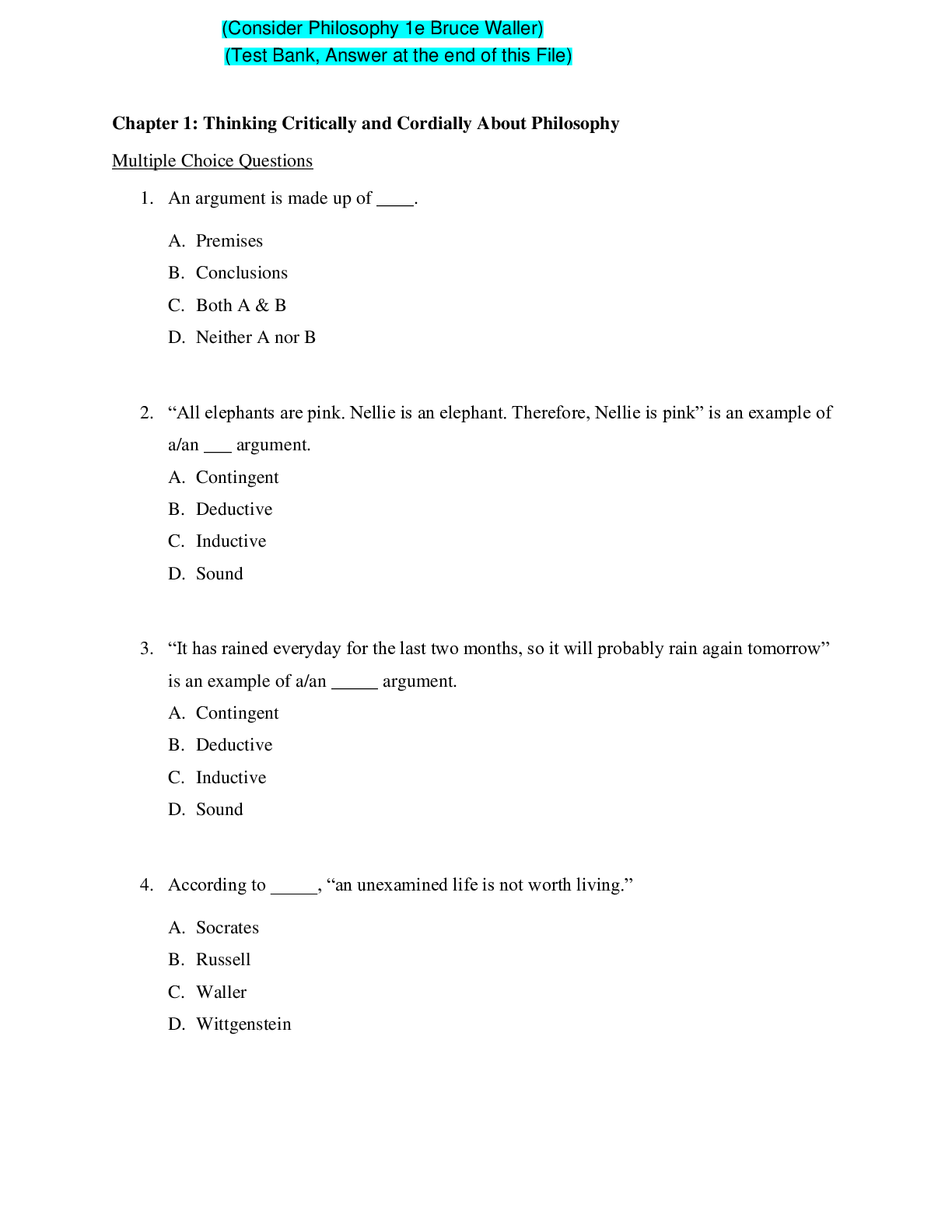
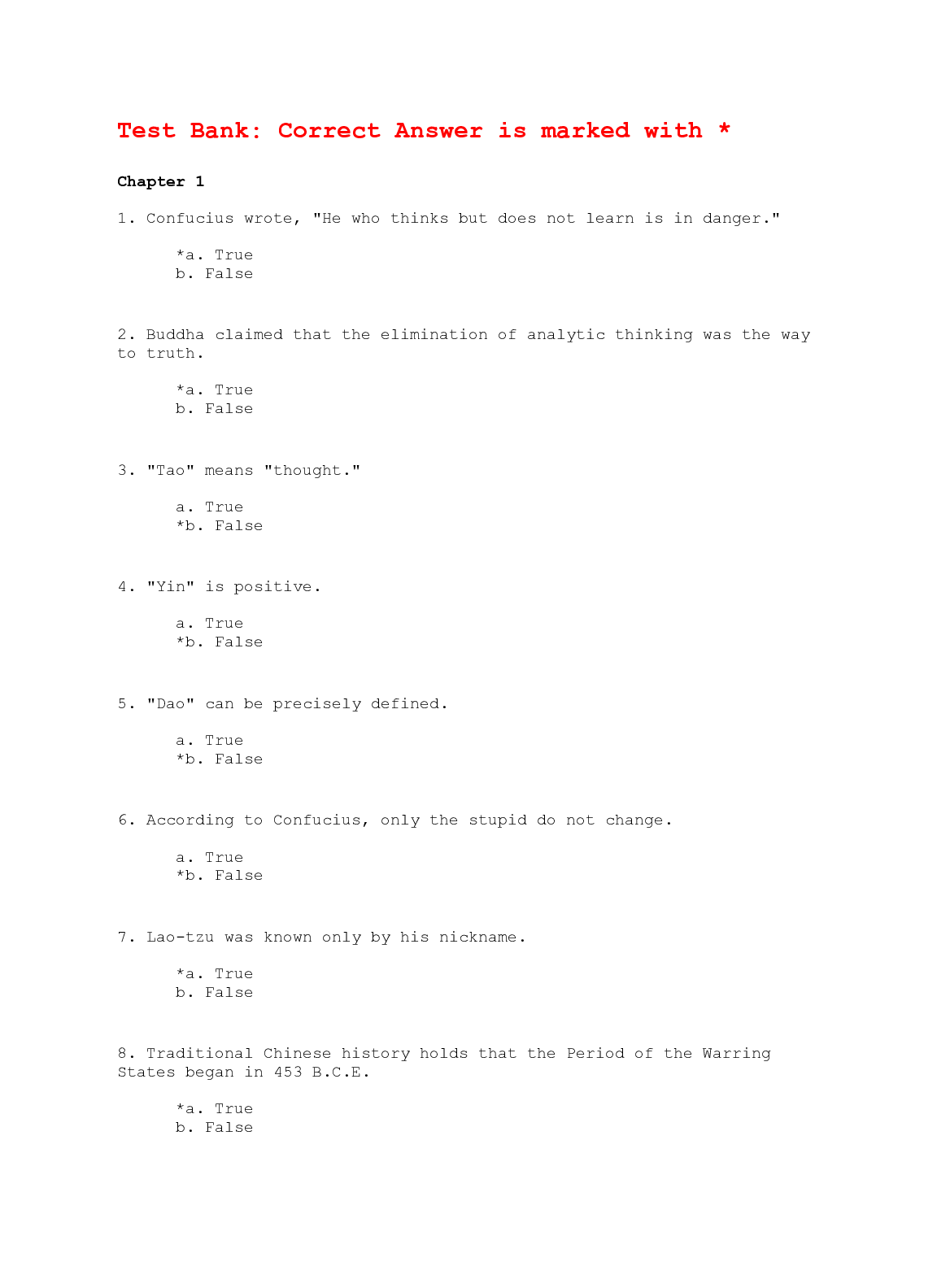
Philosophy > EXAM > West Georgia Technical College - PHILOSOPHY 201 > 2019 Latest Questions & Answers 100% A+ Work. (All)
West Georgia Technical College - PHILOSOPHY 201 > 2019 Latest Questions & Answers 100% A+ Work.
Document Content and Description Below
Last updated: 8 months ago
Preview 1 out of 3 pages
Instant download

Buy this Document to get the Full Access Instantly
Provided by Students Who Aced it
We Verify Document Content to Gurantee Accuracy
Reviews( 0 )
Document information
Connected school, study & course
About the document
Uploaded On
Nov 16, 2019
Number of pages
3
Written in
All

Additional information
This document has been written for:
Uploaded
Nov 16, 2019
Downloads
0
Views
276
Topic Tags
Recommended For You
Get more on EXAM »
PHL1 SOPHIA ANCIENT GREEK PHILOSOPHERS MILESTONE 1 QUESTIONS W...
PHL 103 ANCIENT GREEK PHIL. FINAL MILESTONE EXAM QUESTIONS WIT...
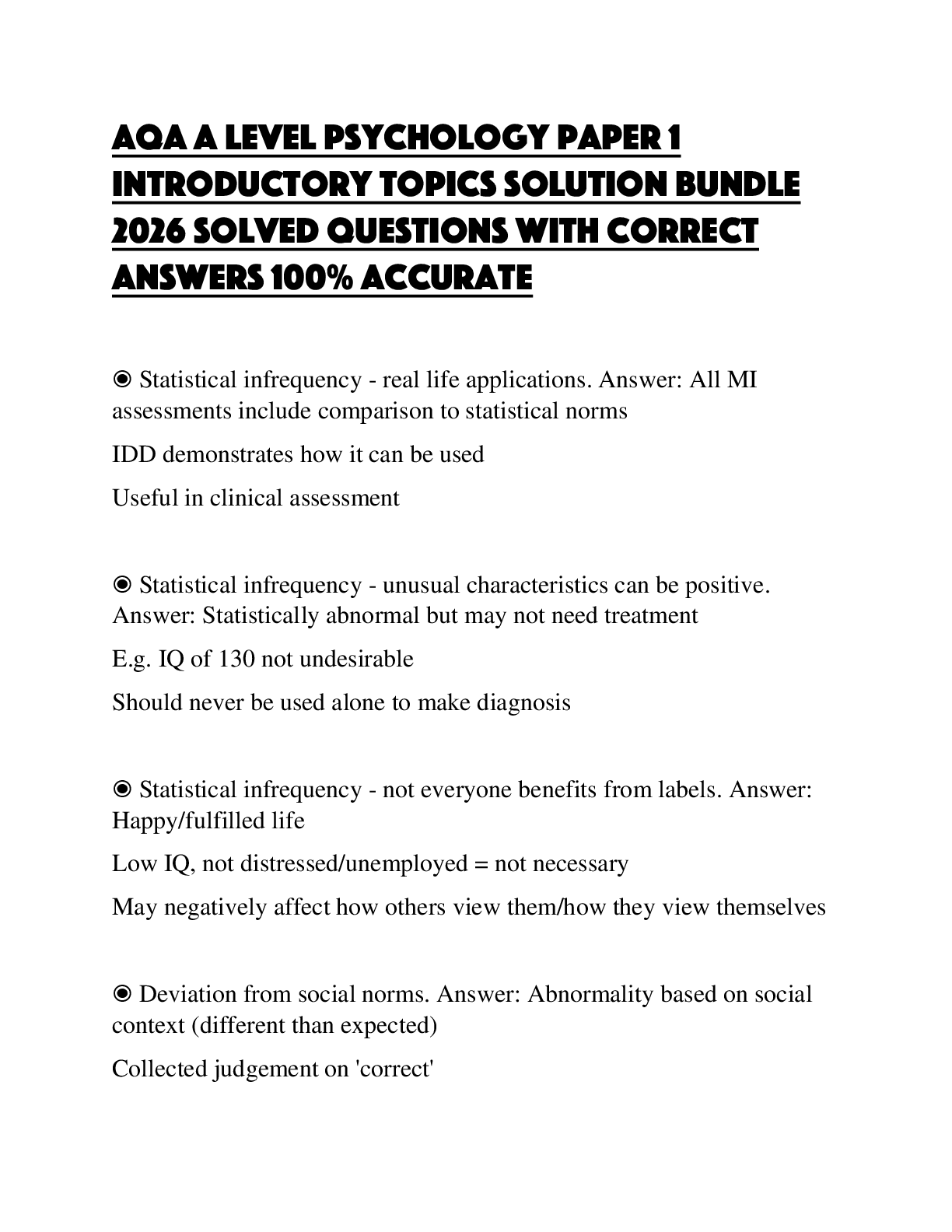
AQA A LEVEL PSYCHOLOGY PAPER 1 INTRODUCTORY TOPICS SOLUTION BU...
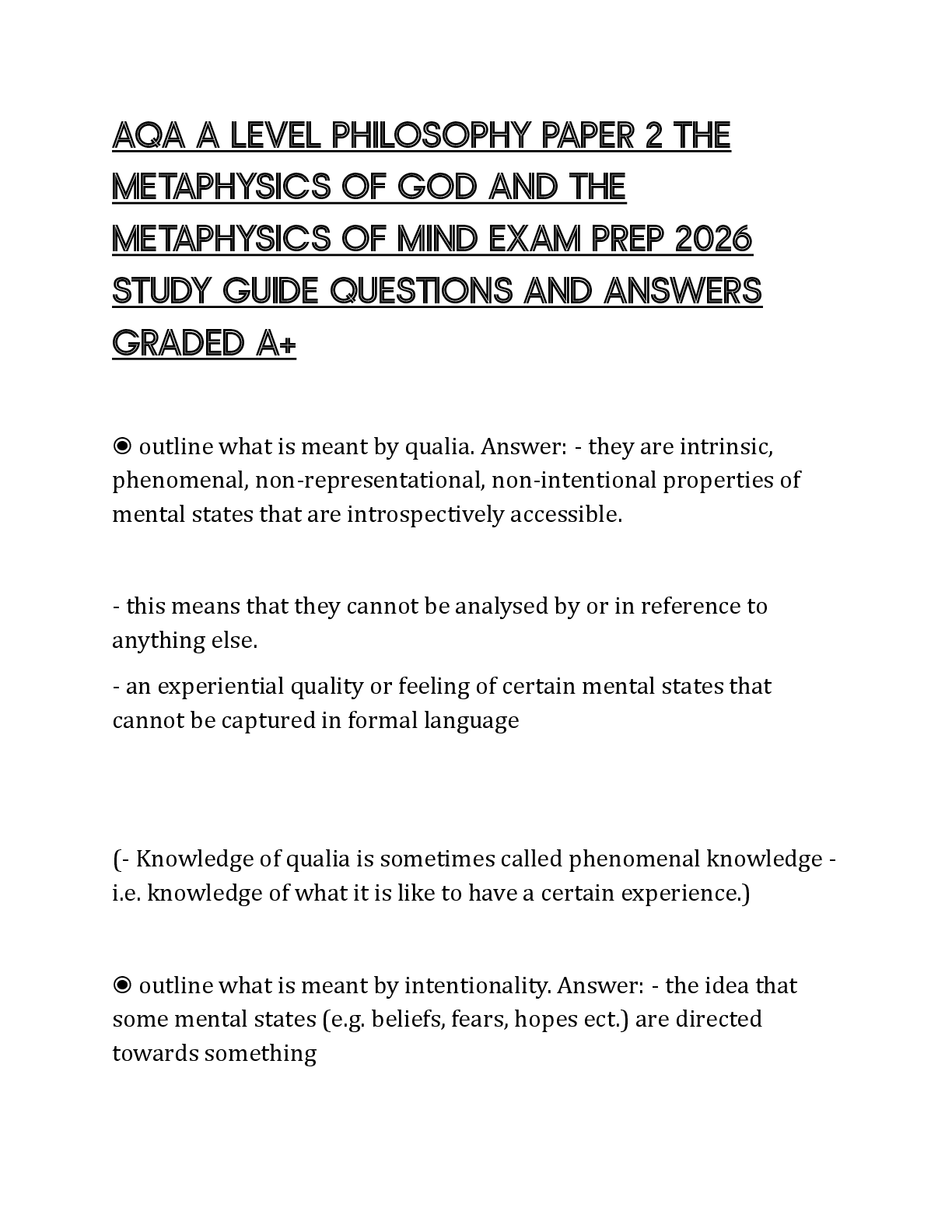
AQA A LEVEL PHILOSOPHY PAPER 2 THE METAPHYSICS OF GOD AND THE...
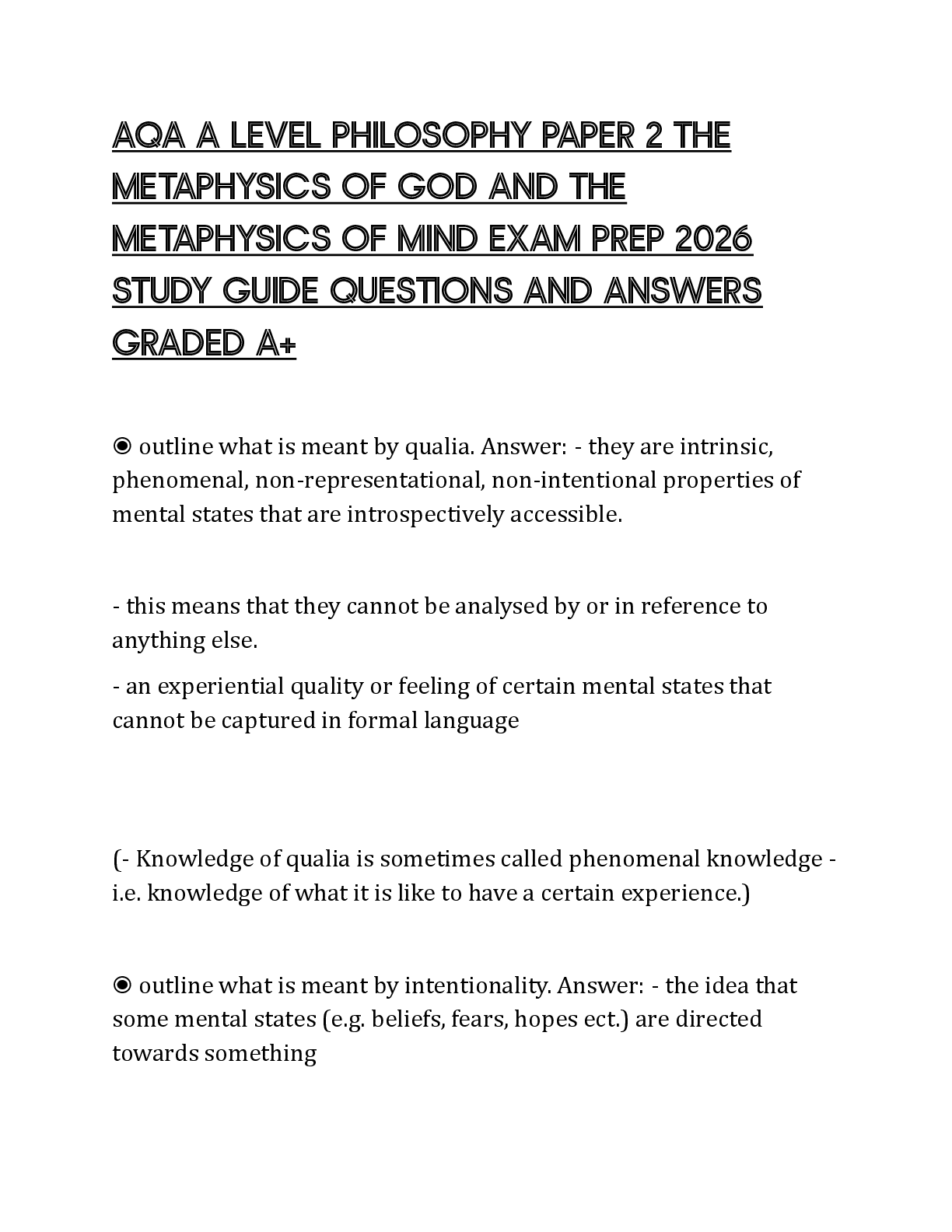
AQA A LEVEL PHILOSOPHY PAPER 2 THE METAPHYSICS OF GOD AND THE...

An Introduction to Political Philosophy 4th Edition By Jonatha...
Critical Theory to Structuralism Philosophy, Politics and the...
Averroes, Kant and the Origins of the Enlightenment: Reason an...
WGU D184 Study Guide Actual Exam Questions And Answers 2026 W...
Test Bank Ethical Legal and Professional Issues in Counseling...
eBook PDF for Cultural Communications Between China and The O...
eBook The Right Thing to Do Readings in Moral Philosophy 8th E...