Political Science > CASE STUDY > POLI 330N Week 5 Assignment: Representation in Congress | (GRADED A) (All)
POLI 330N Week 5 Assignment: Representation in Congress | (GRADED A)
Document Content and Description Below
Last updated: 3 years ago
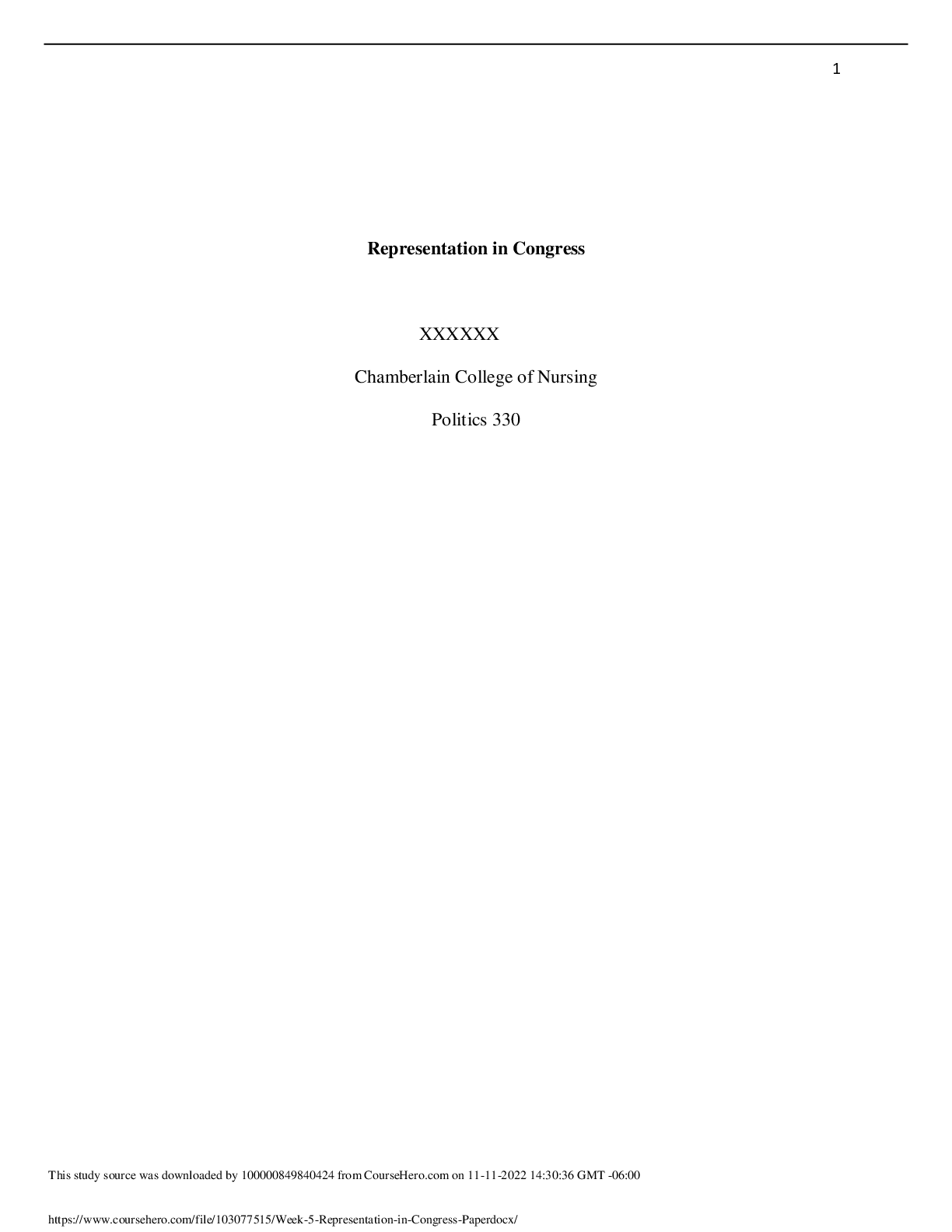
Preview 1 out of 4 pages
Instant download
Buy this Document to get the Full Access Instantly
Provided by Students Who Aced it
We Verify Document Content to Gurantee Accuracy
Also available in bundle (1)
Click Below to Access Bundle(s)

POLI 330N Entire Course Week 1 – 8 BUNDLED (100% Correct Solution) | Guaranteed Pass
POLI 330N Week 1 Assignment: State of Powers: State if Illinois and The United States Bill of Rights POLI-330N Week 1 Assignment: State of Powers: Texas Constitution vs. The United States Bill of Rig...
By EliteStudyDocs 4 years ago
$14.5
12
Reviews( 0 )
Document information
Connected school, study & course
About the document
Uploaded On
Feb 15, 2022
Number of pages
4
Written in
All

Additional information
This document has been written for:
Uploaded
Feb 15, 2022
Downloads
0
Views
339
Topic Tags
Related Subjects & Courses
Explore similar study resources and related concepts.
Recommended For You
Get more on CASE STUDY »
POLI 330N Final Exam - Question and Answers 2019 - TEST BANK:...
POLI-330N Week 6 Assignment: Part I: How the Courts Address or...

POLI 330N Week 3 Assignment: Analyzing Body Language {100% Gua...

POLI-330N Week 1 Assignment: State of Powers: Texas Constituti...


POLI 330N Final Exam Set 2 – Question and Answers (2019) Lates...
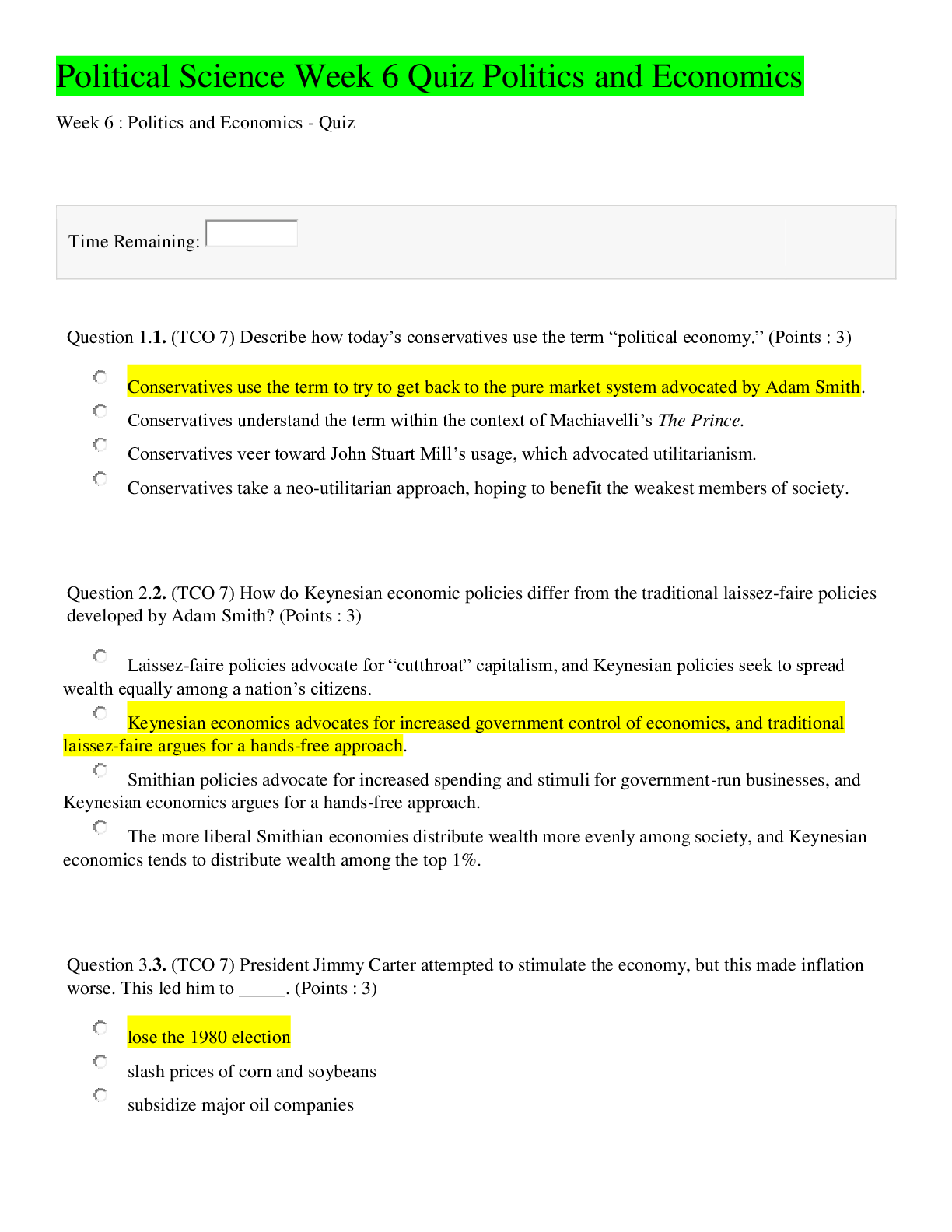
POLI 330N Week 6 Quiz (2) – Question and Answers (latest 2019...
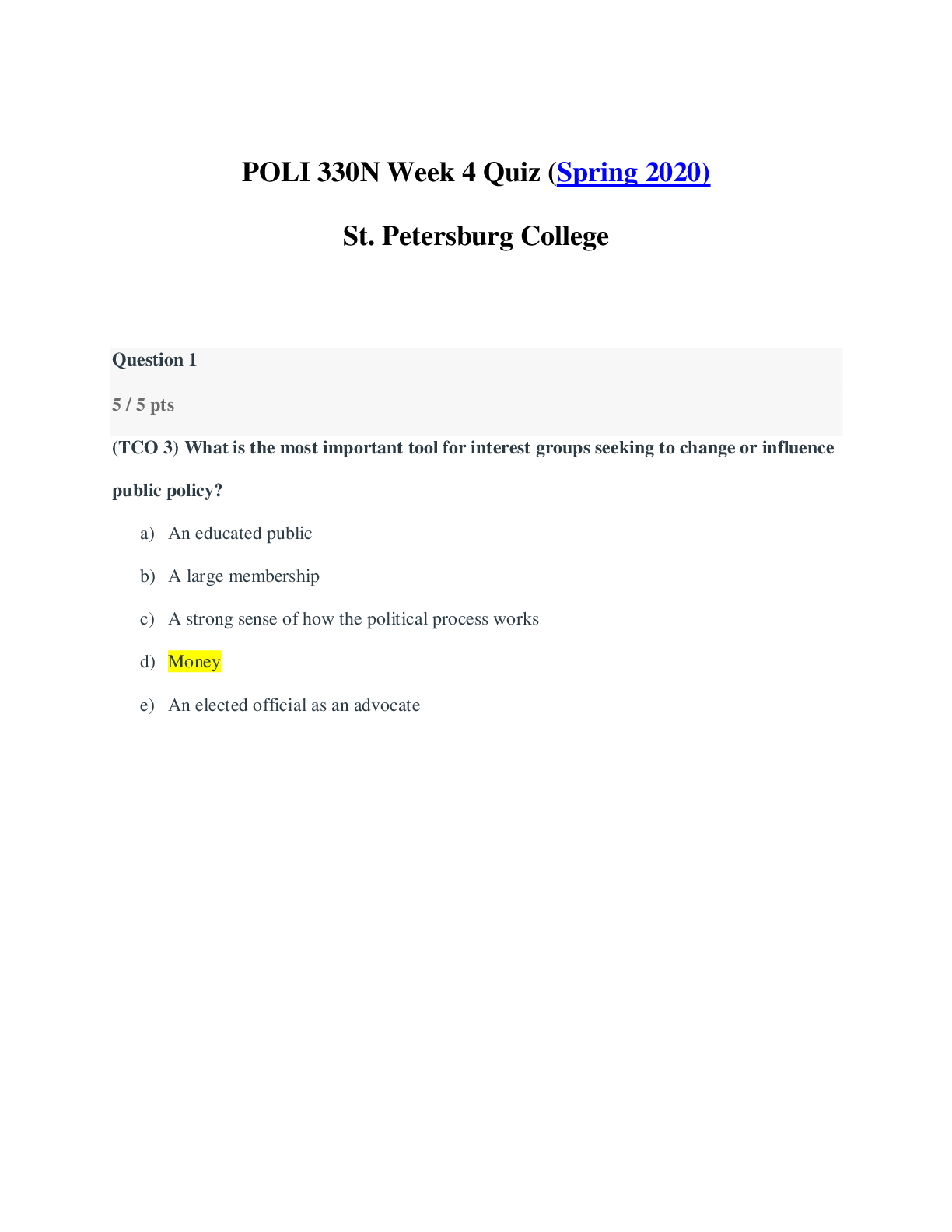
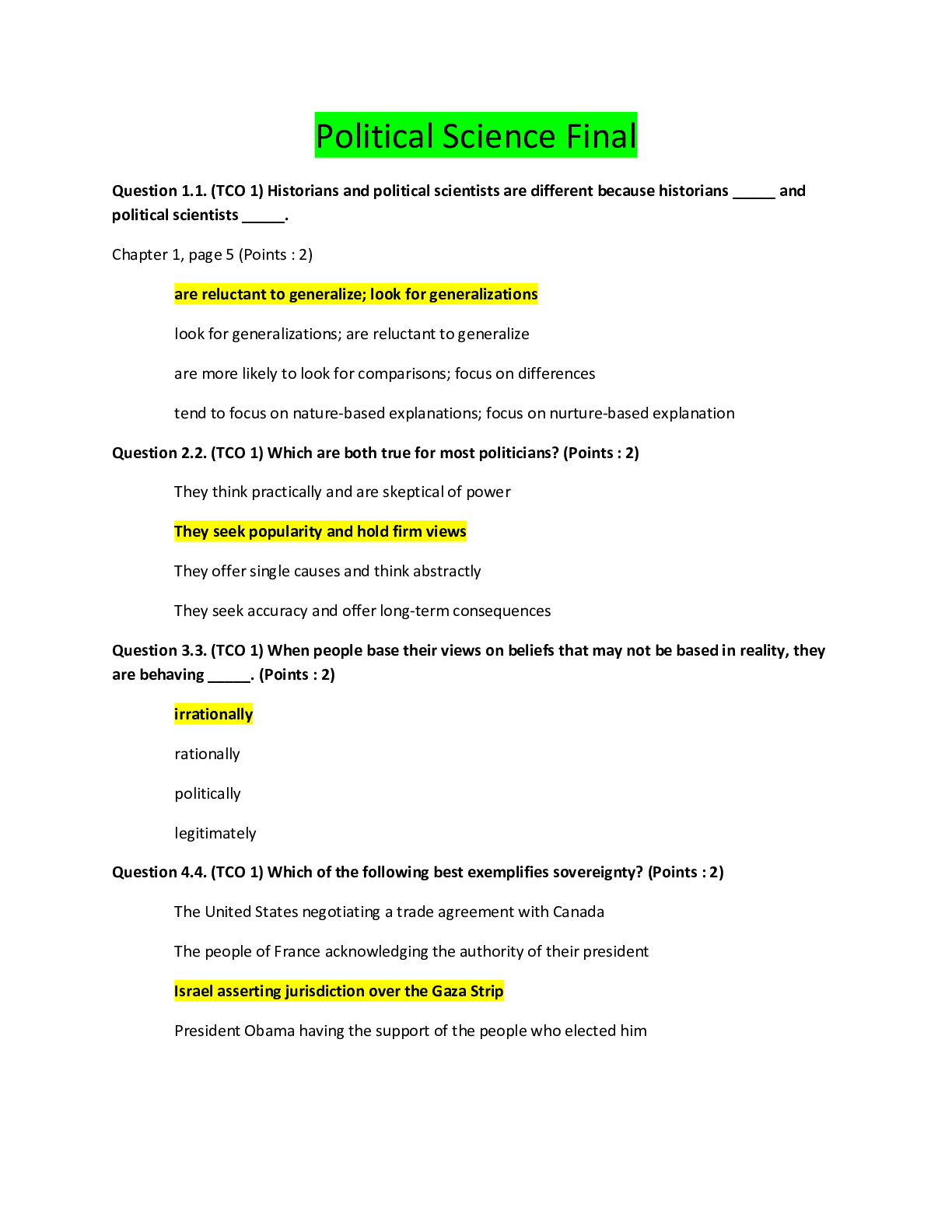
Chamberlain College Of Nursing > POLITICAL SCIENCE > POLI330N...

-Graded 100%.png)
POLI 330N Week 8 Final Exam (Version 1 - Essay & MCQs)-Graded...

Poli 330N Policy Issue Week 7 Assignment: Final Project. Solut...
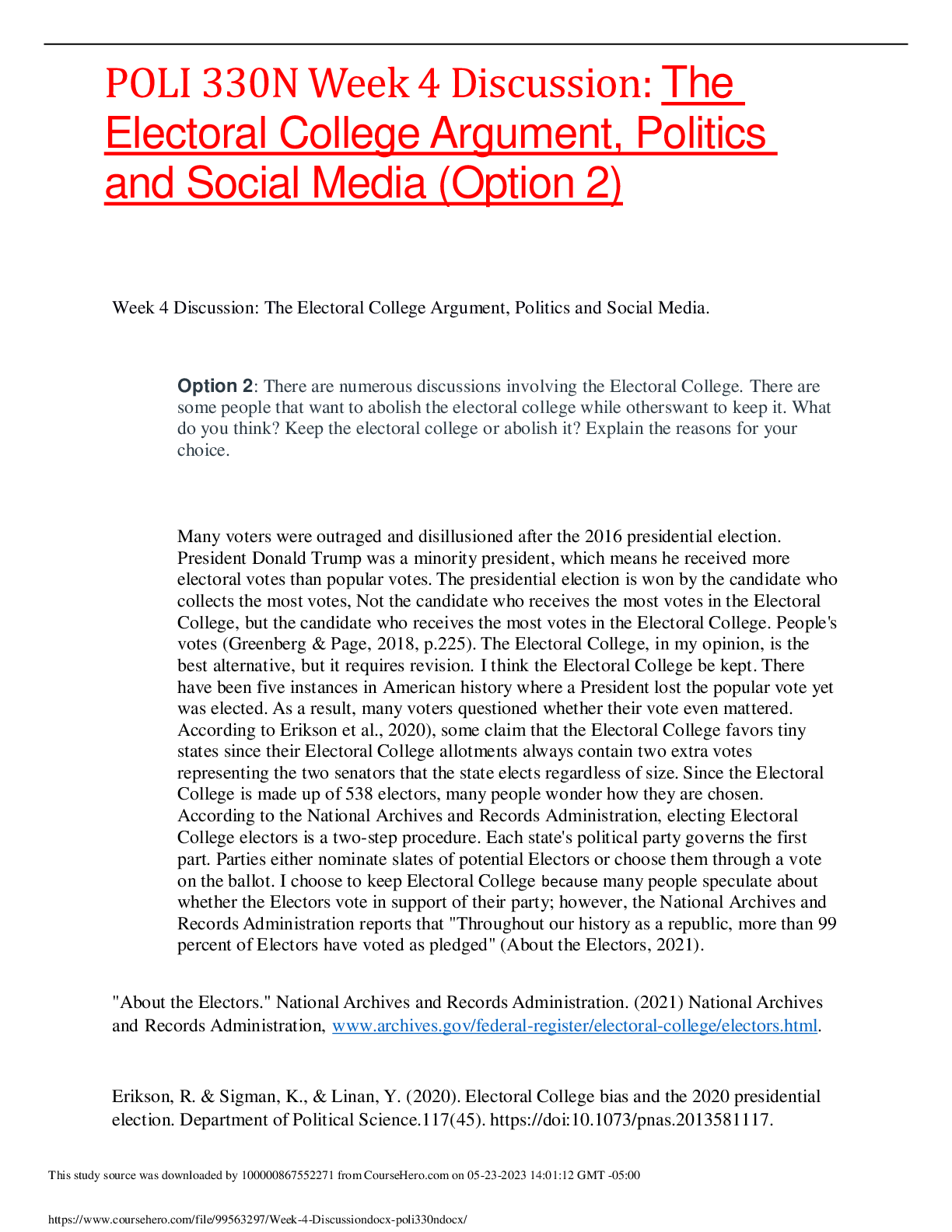
POLI-330N Week 4 Discussion: The Electoral College Argument, P...
POLI 330N Week 1 Assignment: State of Powers: Florida vs. The...

We The People An introduction to American politics 10th Editio...

Analyzing Politics Rationality, Behavior, and Institutions, 2e...
 5e William Bianco David Canon.png)
American Politics Today (Essentials) 5e William Bianco David C...
TEST BANK for Terrorism and Homeland Security 10th Edition by...