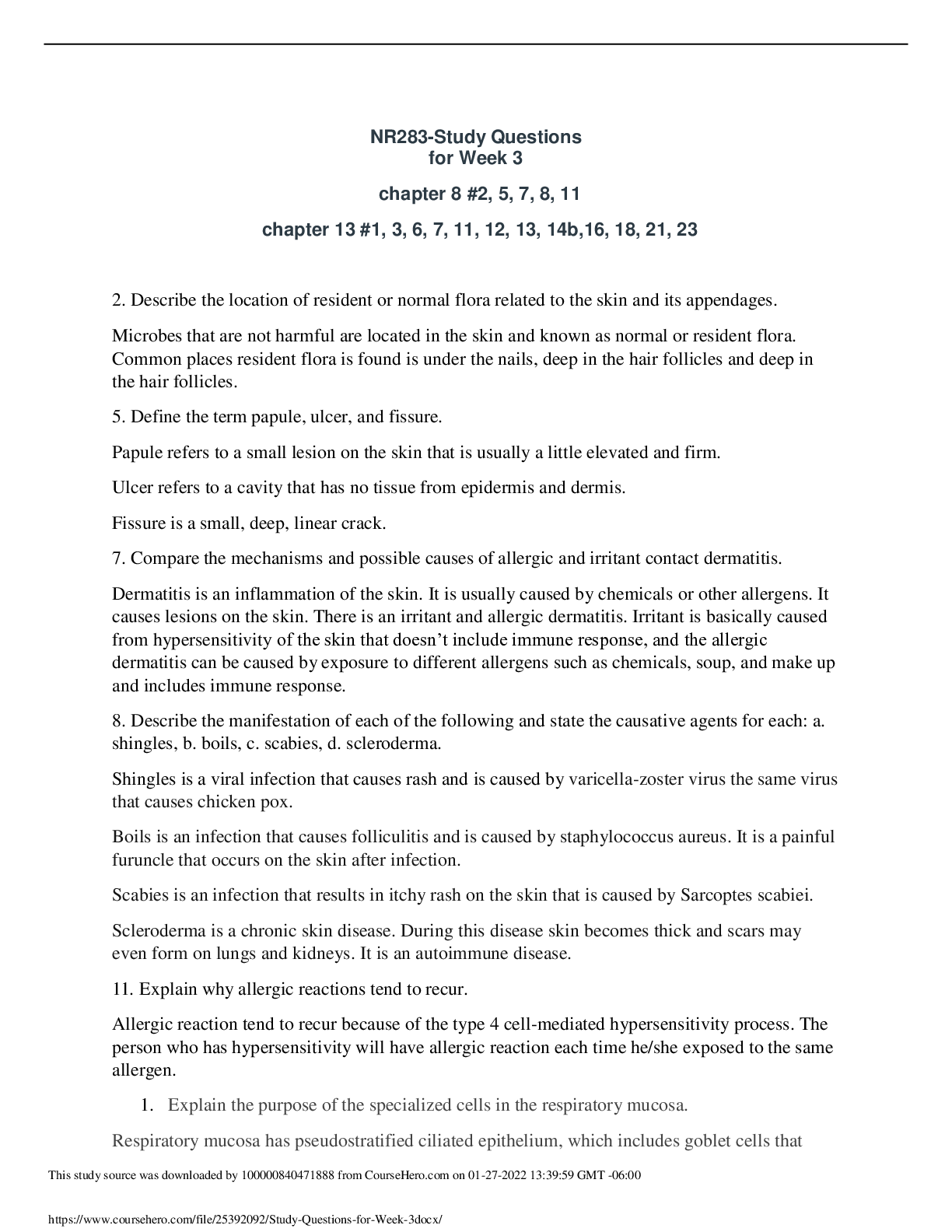
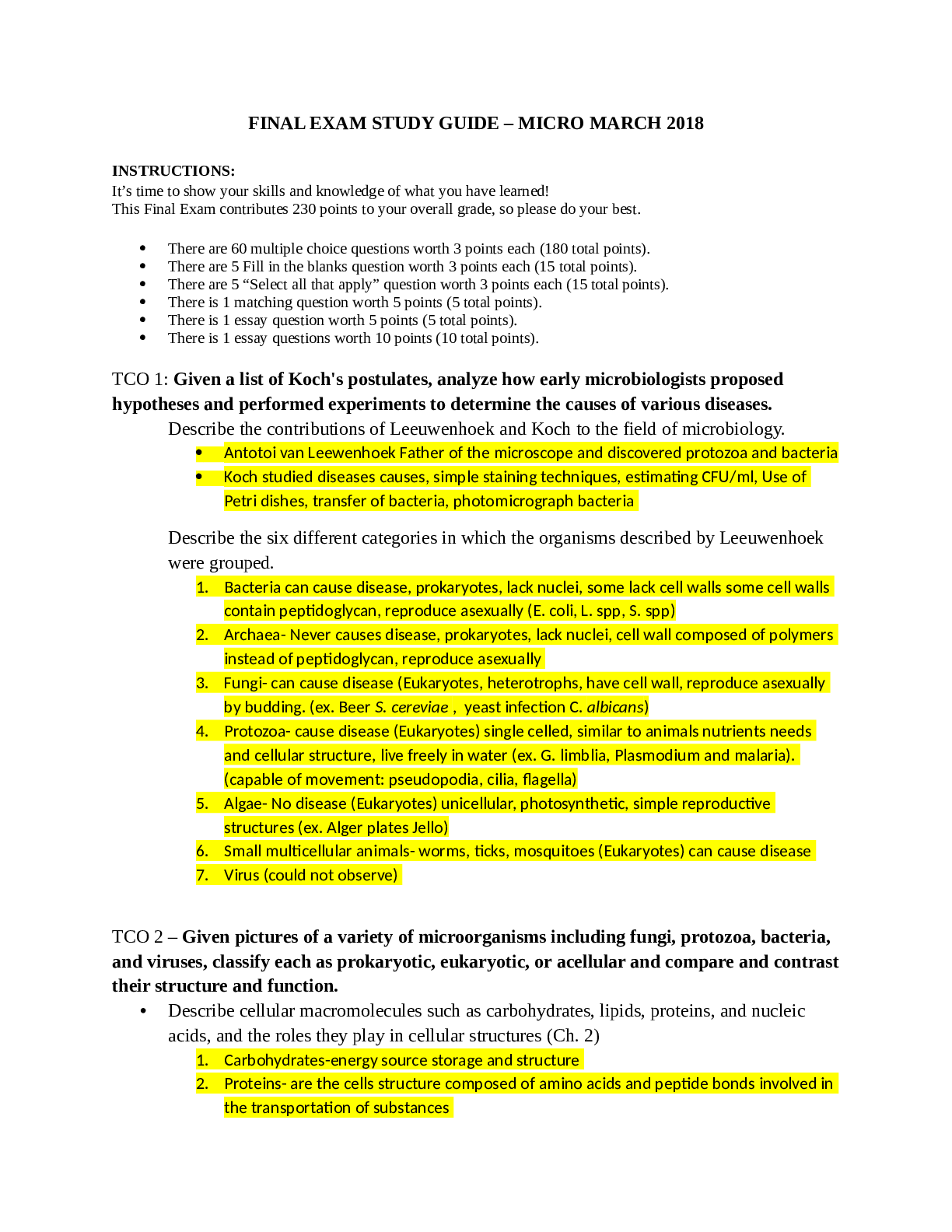
NURSING > STUDY GUIDE > NR 602 Week 6 Grand Rounds – PCOS-study guide (All)
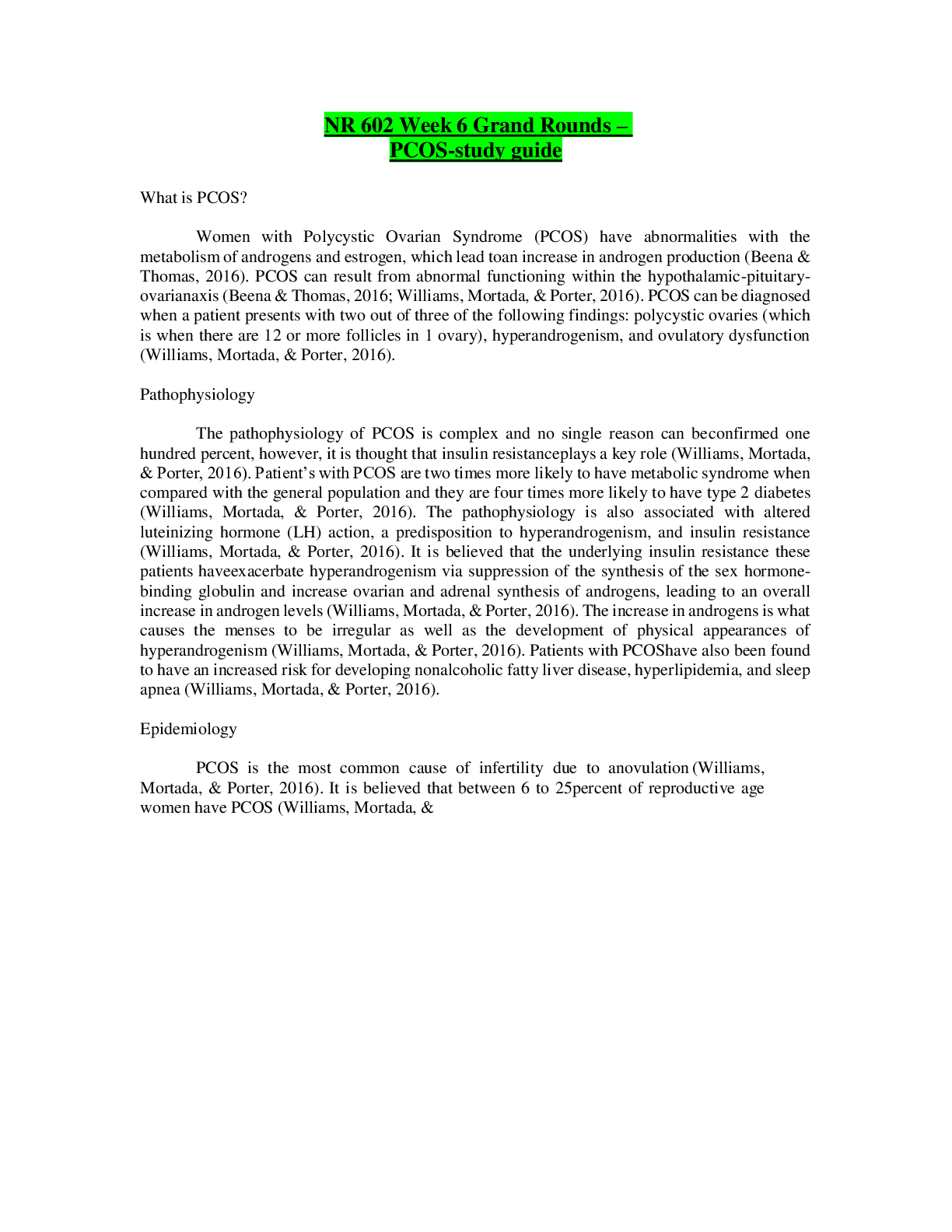
NR 602 Week 6 Grand Rounds – PCOS-study guide
Document Content and Description Below
Last updated: 3 years ago
Preview 1 out of 12 pages
Instant download
Buy this Document to get the Full Access Instantly
Provided by Students Who Aced it
We Verify Document Content to Gurantee Accuracy
Reviews( 0 )
Document information
Connected school, study & course
About the document
Uploaded On
Feb 16, 2022
Number of pages
12
Written in
All

Additional information
This document has been written for:
Uploaded
Feb 16, 2022
Downloads
0
Views
105
Topic Tags
Related Subjects & Courses
Explore similar study resources and related concepts.
Recommended For You
Get more on STUDY GUIDE »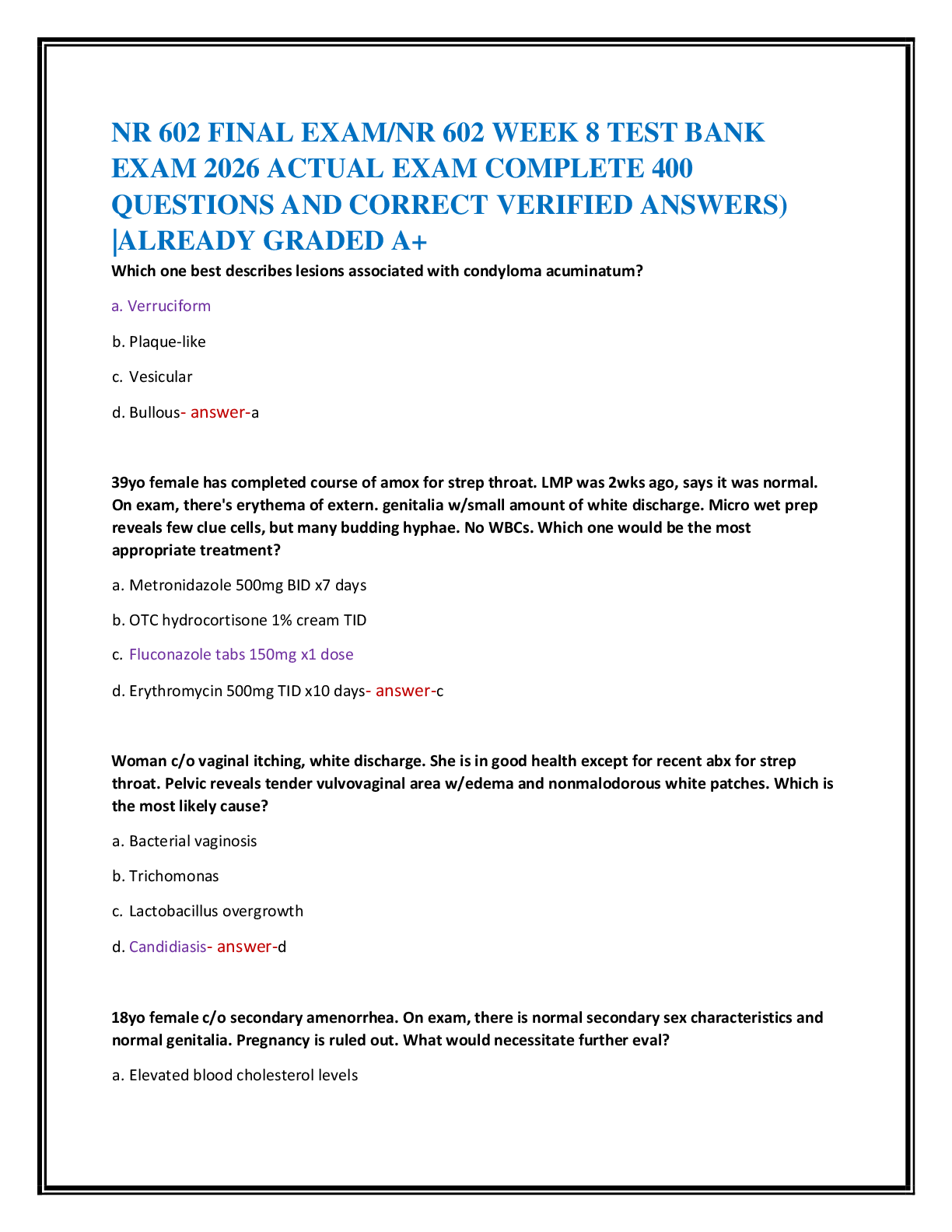
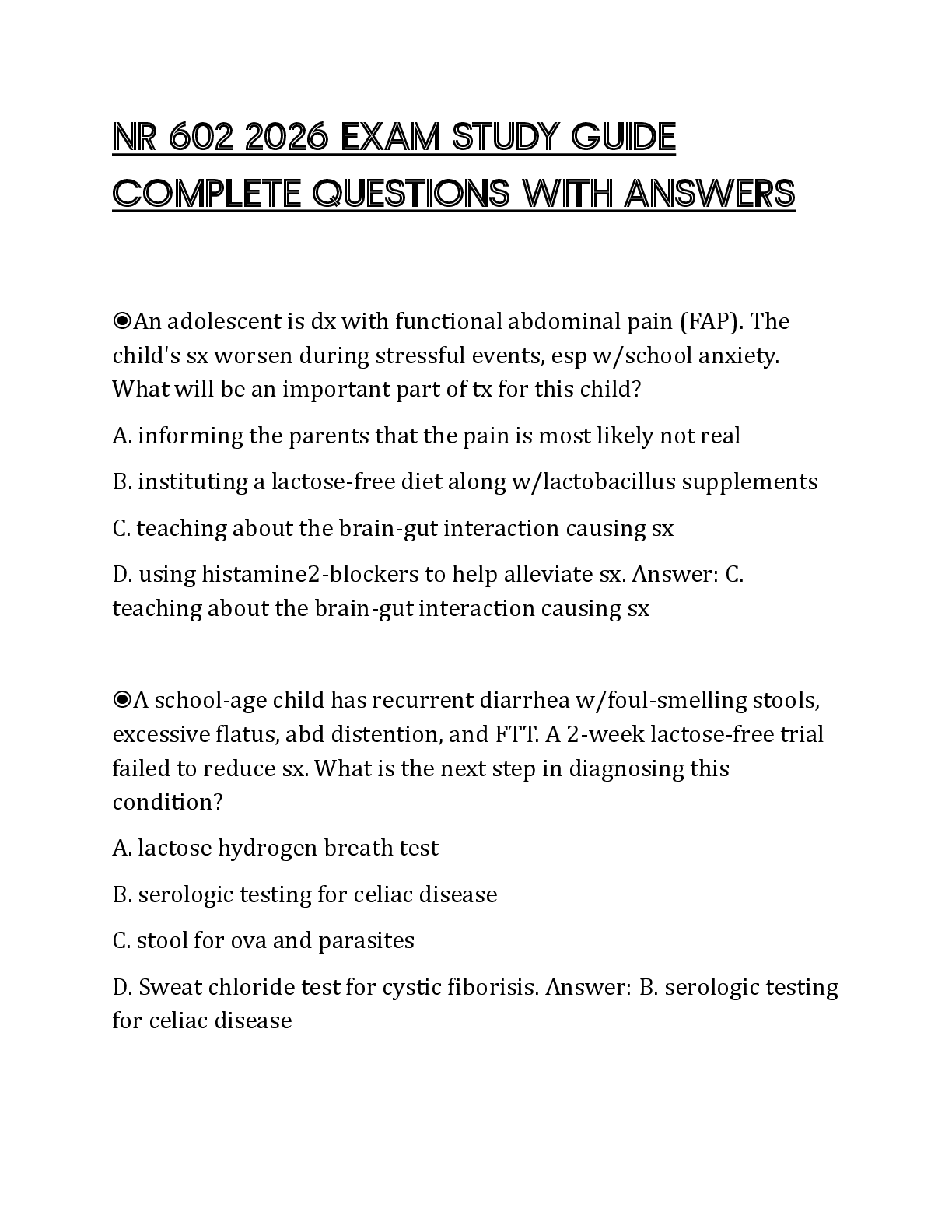
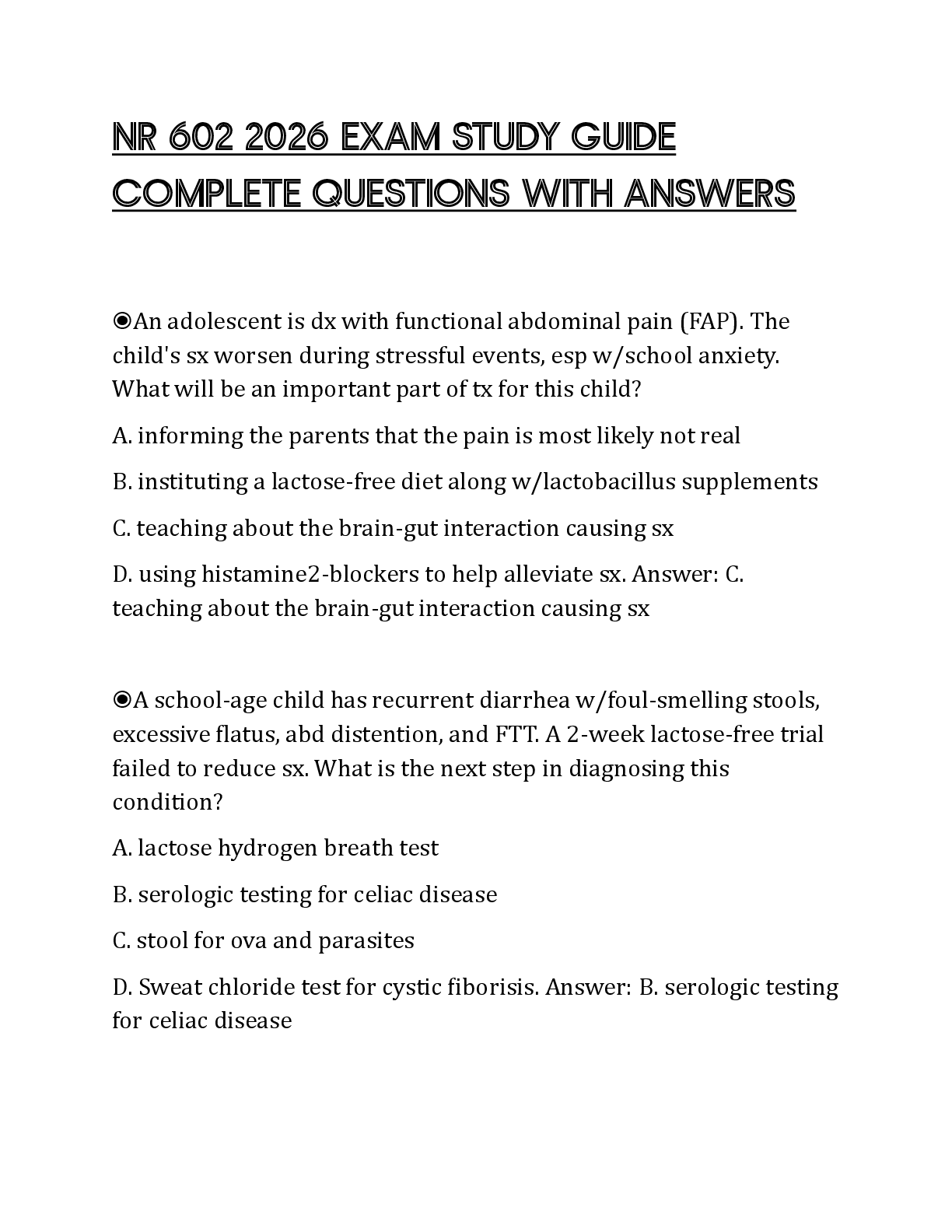
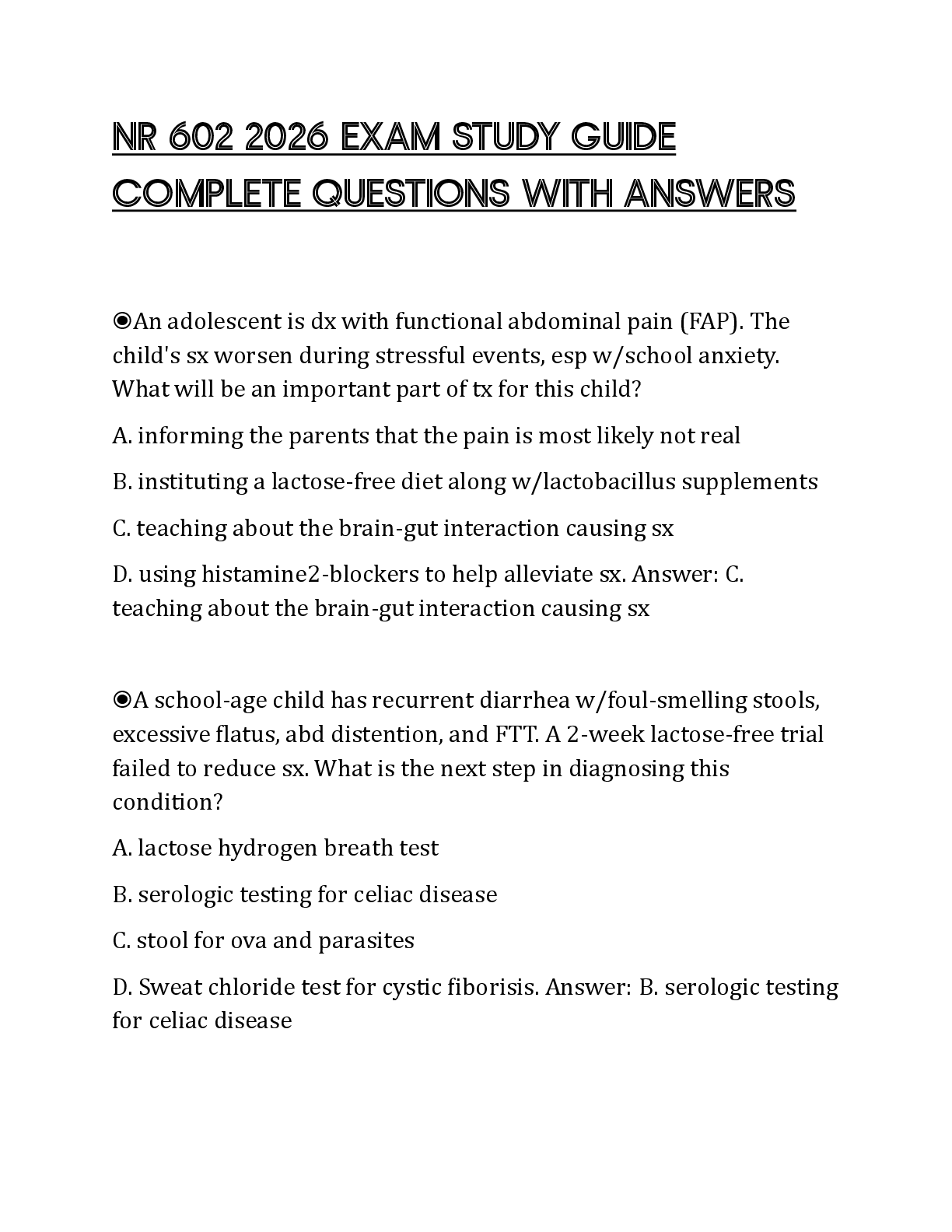
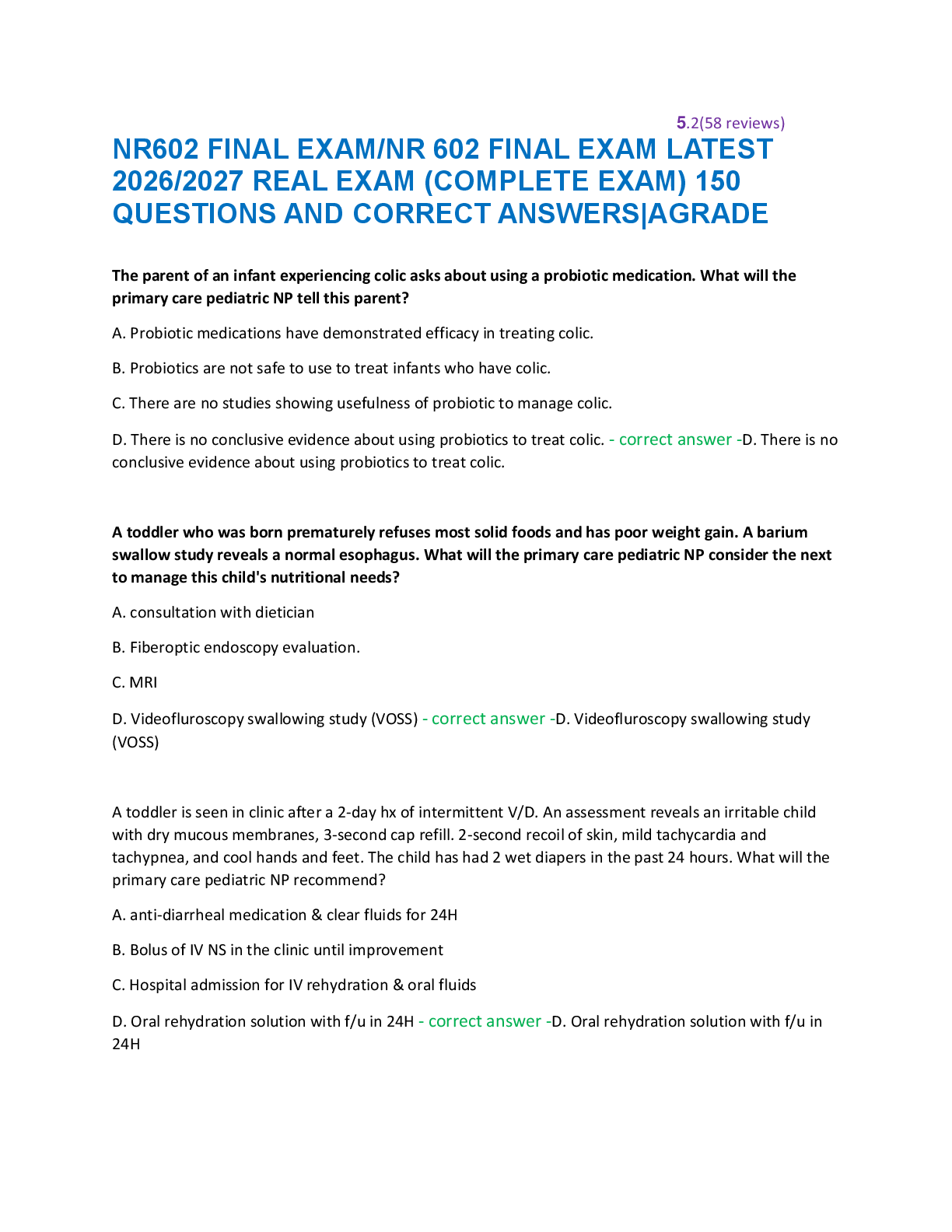
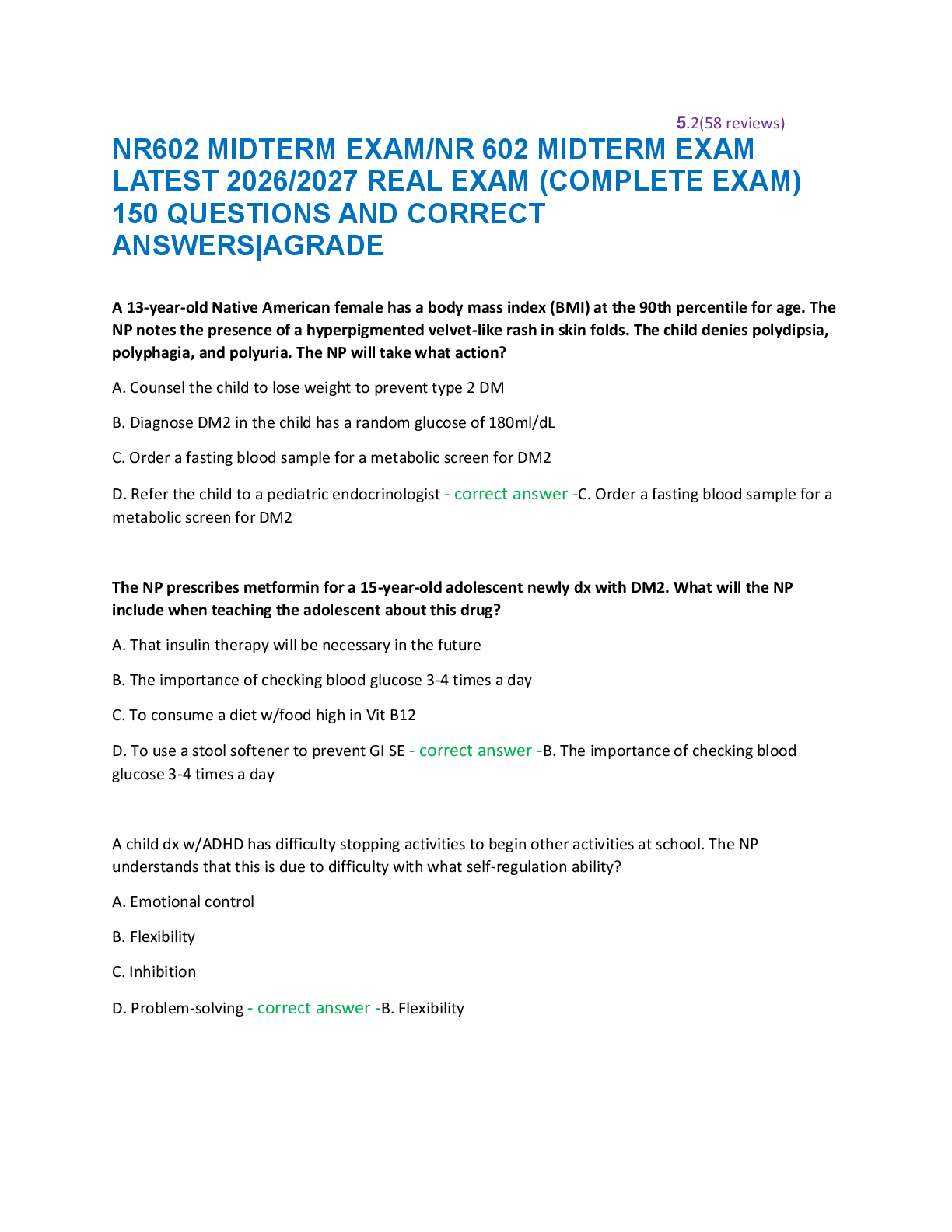
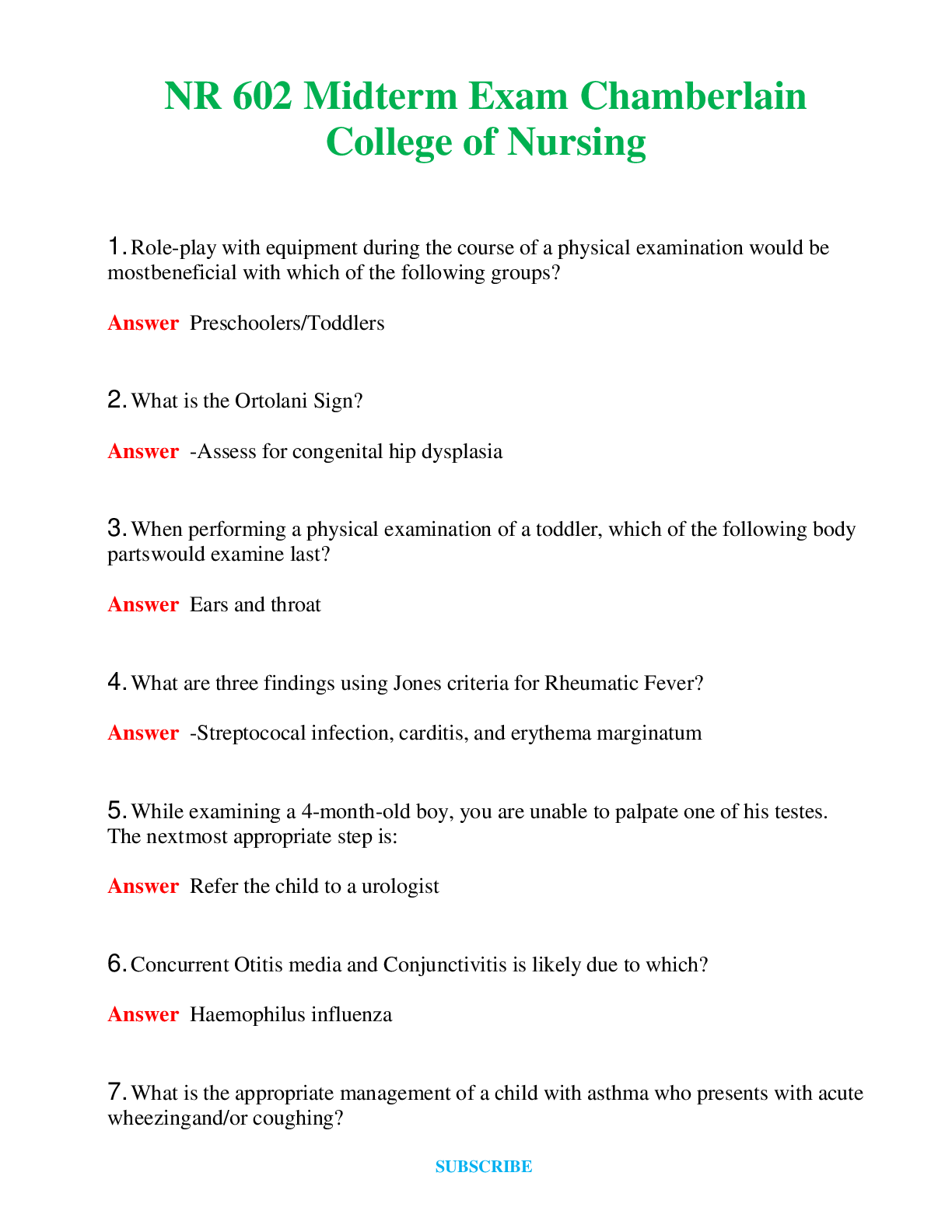
NR 602 Midterm Exam Chamberlain College of Nursing Question...
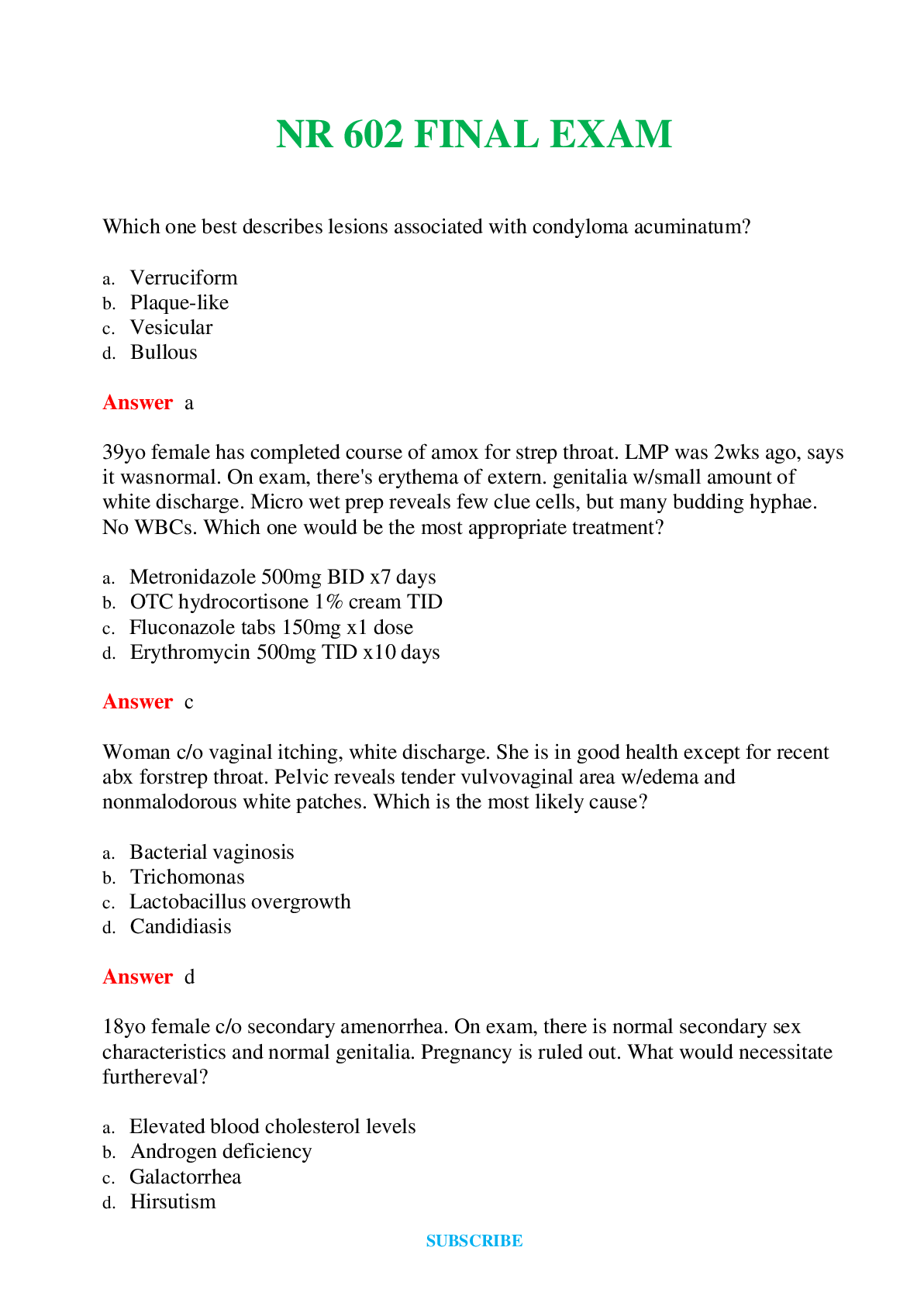
NR 602 FINAL EXAM Questions and Answers (Verified Answers)
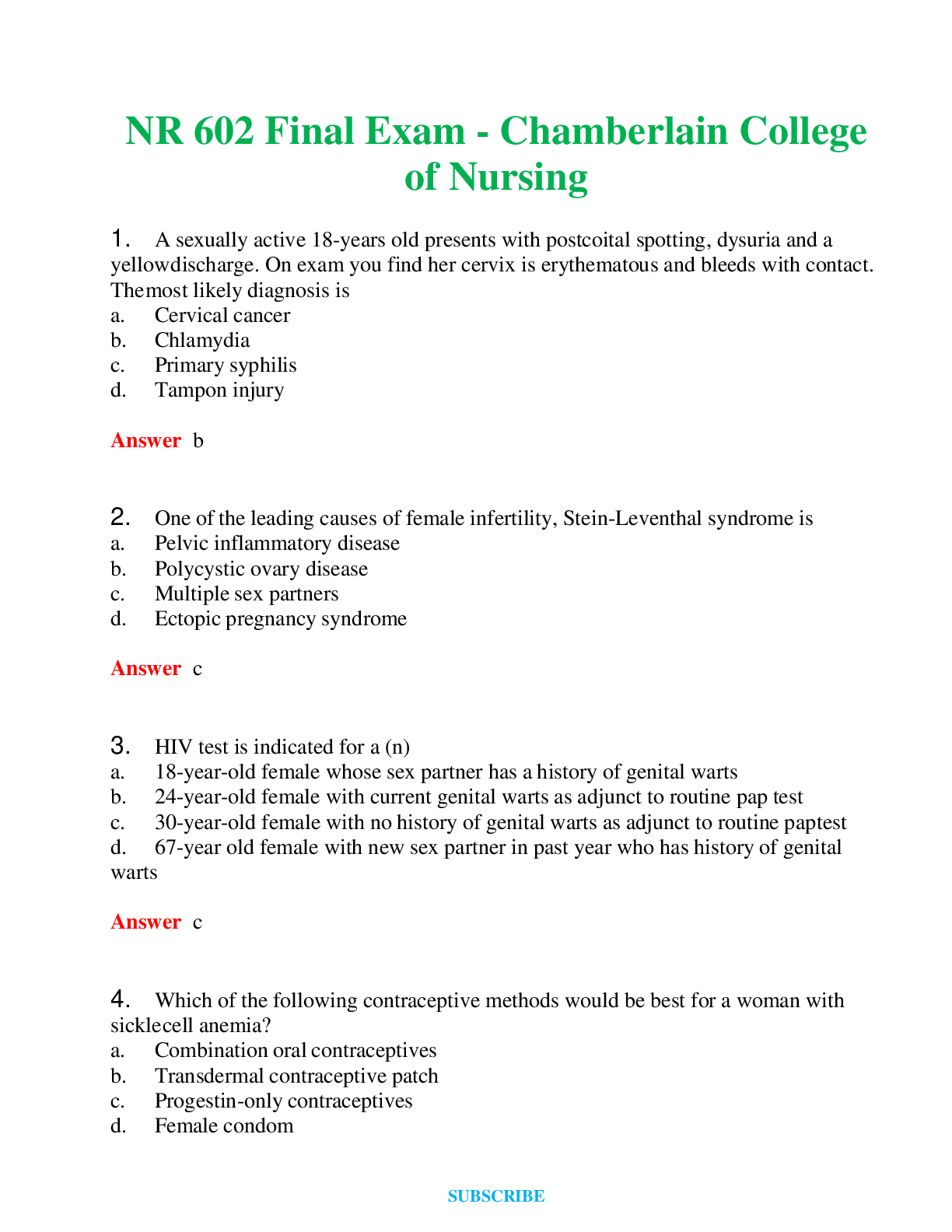
NR 602 Final Exam - Chamberlain College of Nursing Question...
![Preview of WEEK **5 [Chamberlain university]NR 602 IHUMAN Case Week #5 Deborah Arnaudin 54 Year Old](https://browseimages.nyc3.digitaloceanspaces.com/paper-images/2026/03/31/zbQKePwt2026-03-31-11-4669cc328fcad96.png)
NR 602 Week 2 iHuman Case 2 on STI Assignment – Nancy Cambell