NR 511 Week 8 Final Exam
Document Content and Description Below
Question 1. The most cost-effective screening test for determining
HIV status is which of the following?
Student Answer: Western blot
Enzyme-linked immunosorbent assay Venereal Disease Research Laboratory test Viral lo
...
[Show More]
Last updated: 3 years ago
Preview 1 out of 53 pages
Instant download

Buy this Document to get the Full Access Instantly
Provided by Students Who Aced it
We Verify Document Content to Gurantee Accuracy
Reviews( 0 )
Document information
Connected school, study & course
About the document
Uploaded On
Feb 25, 2022
Number of pages
53
Written in
All

Additional information
This document has been written for:
Uploaded
Feb 25, 2022
Downloads
0
Views
73
Topic Tags
Recommended For You
Get more on EXAM »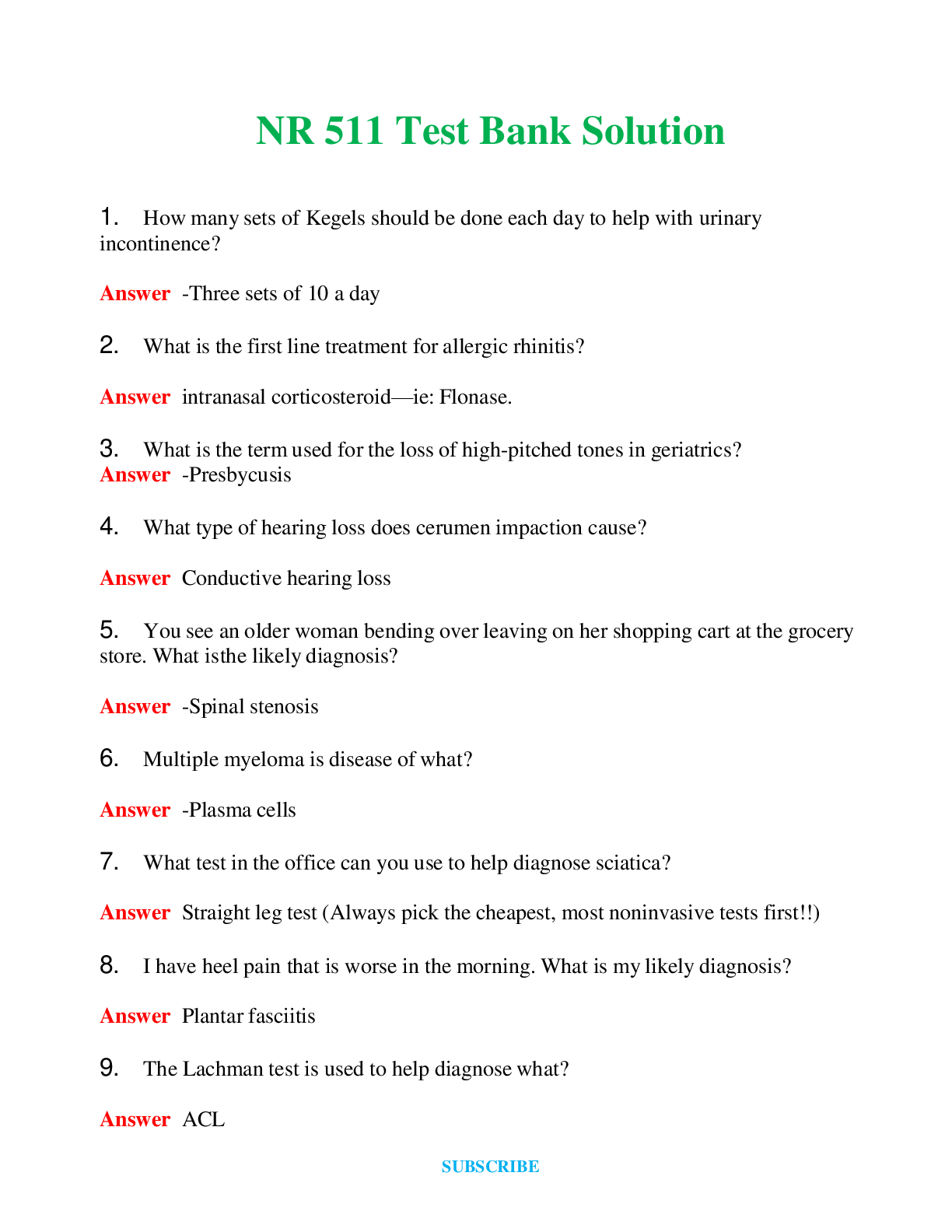
$12.5
136 Pages
NR 511 Test Bank Solution Questions and Answers (Verified A...
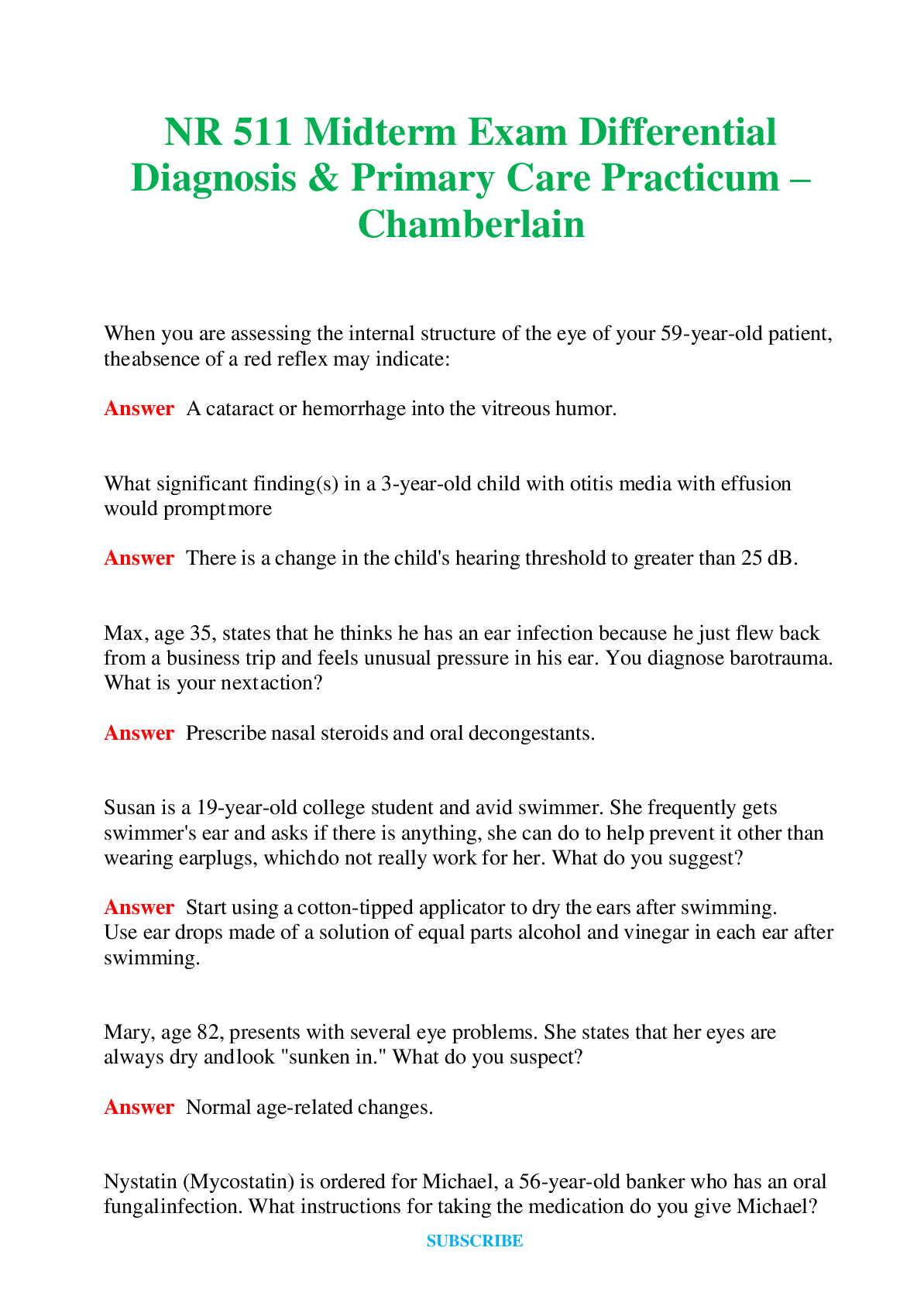
$12.5
39 Pages
NR 511 Midterm Exam Differential Diagnosis & Primary Care Pr...
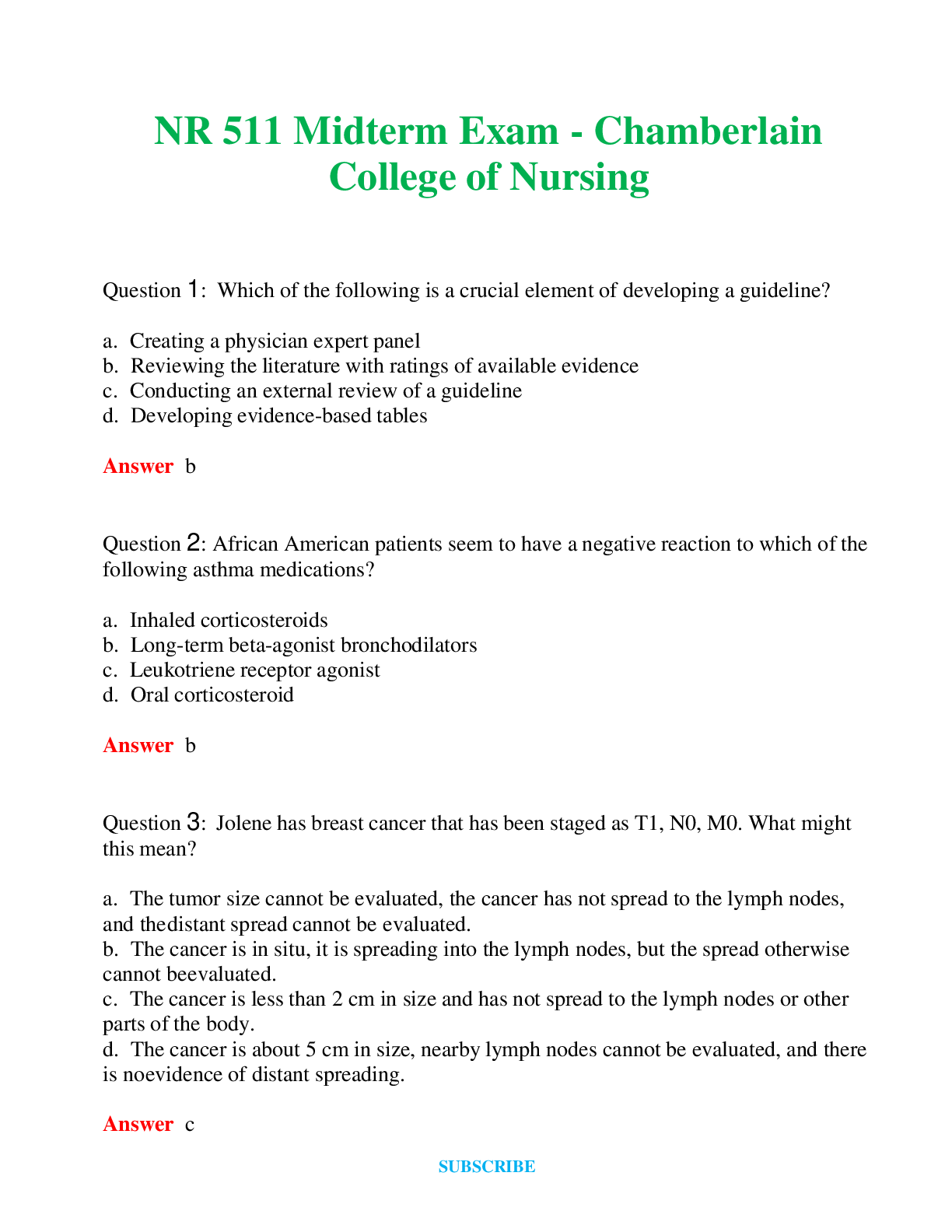
$12.5
67 Pages
NR 511 Midterm Exam - Chamberlain College of Nursing Questi...
$15
48 Pages
NR 511 Final Exam Study Guide (Wk1- Wk 6) -Questions and Answe...






$15
53 Pages