ATI RN COMPREHENSIVE EXIT EXAM
ATI RN COMPREHENSIVE EXIT EXAM
Link to Quizlet: https://quizlet.com/273451894/ati-rn-comprehensive-exit-exam-flash-cards/
diet for chronic renal failure
low protein & potassium
DM p
...
ATI RN COMPREHENSIVE EXIT EXAM
ATI RN COMPREHENSIVE EXIT EXAM
Link to Quizlet: https://quizlet.com/273451894/ati-rn-comprehensive-exit-exam-flash-cards/
diet for chronic renal failure
low protein & potassium
DM pt teaching
change shoes, wash feet w/soap & water
pulse pressure
subtract systolic value from diastolic value
lantus
never mix, long lasting, no peak
rhogam
given @ 28 weeks & 72 hours post delivery
when mom is negative & baby positive
indication of baby dehydration improving
smooth fontanel
pt w/orthostatic hypotension
put near nursing station
cleaning a wound
clean to dirty
use bulb syringe
peripheral arterial disease
cramp in leg while walking
intermittent claudication
seizure precautions
supine position20 weeks gestation, having urinary frequency
u/a & c/s
report to new nurse @ shift change
pt @ xray
s/s of hemolytic blood transfusion
flank pain
ER rape victim priority
acess anxiety
nutrition
carbs 45%, protein 10-15%
latex allergy
tape up cords
first ingredient on a food label
most content
thoracentesis, & painful w/breathing
put pt on UNAFFECTED side for 1 hour or longer
pt w/IV sedation
check LOC if not responsive
help older brother get used to baby
get a gift for big brother
early decelerations
head compressions
methergine contraindication
HTN
delegate to AP
I & OHF monitoring
weights
location for peripheral line
radial
prioritizing care for multiple pt's
low flank pain
ativan
for seizures
med for diabetes insipidus
desmopressin
radiation tatoo
use mild soap & water
uric acid stones
eat low fat yogurt
antigout med decreases uric acid level
allopurinol
non-pharm relation technique for pain management in labor
hypnosis
psychotic disorder assessment finding
flat affect
newborn withdrawal from heroin (opioids)
hypertonicity
mitral valve location
5th intercostal
amniocentesis
go pee before proceduretotal gastrectomy
lack b 12
takes 30-60 meal to eat a meal
stoma color
pink or red is normal
MAOI's diet
no pepperoni, no tyramine, COTTAGE CHEESE OKJ
give iron w/?
OJ
statins contraindication
Grapefruit juice
haldol
lip smacking
mag sulfate
decreased urine output
decreased respirations
decreased pulmonary edema
antidote for mag sulfate
calcium gluconate
clozaril interventions
monitor WBC
valproic acid
liver function
thyroid med effectiveness
weight loss
diuretics
don't skip dosesDIG adverse effects
N/V & HA
prednisone
take with milk
hemo/peritoneal dialysis pt teaching
medical asepsis
cranial nerve 11
shoulder
peripheral catheter insertion
advance catheter when you see flash back of blood return
dispose of insulin needles @ home
in coffee container
confirmation of ng placement
x ray
swallowing difficulty referral
speech therapy
acrabose
skip a meal, skip dose, give w/1st bite of food
sprains & strains
RICE
pt DNR-CC & family asking questions related to. therapeutic communication: THERAPEUTIC
RESPONSE
What did the dr tell you?
delegating to AP about skeletal traction: NEEDS MORE TEACHING
AP places weight on bed
daughter feeling guilty about admitting parent into long-term facility: THERAPEUTIC
RESPONSErephrase what daughter is feeling
how good nurse plans her day
rechecks her priorities half way through her shift
good nurse sets these when she works
GOALS
pt gets bad dx, & asks you not to tell her spouse:YOUR RESPONSE
you have a right to privacy
delegate to AP
CPR
baby in contact precautions in a private room, what would you do to save hospital $?
bring formula prn
how does a nurse properly manage her time mid-shift?
reevaluates goals
which psych pt would you see first?
hallucinations
dementia pt @ ER, w/marks on coccyx & wrist, suspected abuse. what do you do?
ask pt. INTERVIEW HIM
psych pt yelling in front of group. very agitated, what do you do?
isolate pt
charge nurse scheduling resolution between nurses
nurse listens to both sides
respite care
gives family a break
pt in seclusion documentation
what happened prior to seclusion that caused for seclusion
parkinson's : pt teachingnutrition- thicken liquids
pt receiving radiation, what should you wear?
lead apron
pt suffering from hyperthermia
seizure precautions
pt refuses last minute for a procedure he already consented for
okay to stop procedure
s/s of smallpox
rash on tongue
xerostoma
humidifier
vagina procedure, cervical cancer
place catheter
Lyme disease
report it
lice (pediculodis capitis)
can survive on surfaces for up to 48 hours
RSV
keep stethescope in room (droplet)
16 weeks gestation
can get AFP test done
bacterial meningitis
droplet precautions
when can kid return to school for chicken pox
when lesions are crusted over
kicks a ball: developmental stage24 months
baby w/cleft lip
untie arms & perform ROM
wrong ostomy care
changing everyday may lead to skin irritation
after male circumcision
apply petroleum jelly w/every diaper change
breastfeeding w/hep c
don't breast feed if you have cracked nipples
contraindication w/oral contraceptives
HTN
combination contraceptives contraindications
pt w/migraines
when percussing RUQ, what should we feel
dullness
dementia pt
offer finger foods
black males @ great risk for
CVA
med for alcohol withdrawal
disulfiran (antabuse)
better nutririon
canola oil
healthy eating
45 % carbs
to prevent neuro tube defectsfolate
prevnting delays of healing
protein & o2
pt raped & @ ER
assess anxiety
pt reports abuse
assess pt, check for injuries
anorexia
60% refeeding-pre-albumin of 10
telemetry is used for
check for dysrythmia
do not give mmr
to child bearing pt b4 pregnancy test
pt w/hx of blood transfusion
diet for hf
dry spices to flavor food
TURP: closed intrermittment irrigation
let it drain
Cranial nerve XI
(hot spot) shoulder
Proper lifting technique
(picture) bending at knees
24 month old
walk up steps
Food label
greatest weight listed firstIV technique
advance catheter
Refeeding syndrome
60%
Low fat diet
canola oil instead of vegetable oil
Prior to amniocentesis
empty bladder
Radiation implant
limit visitors to 30 minutes
Levothyroxine
take on empty stomach, in am; increases tsh
Metformin contraindication
kidney disease, severe infection, shock, hypoxic conditions
Mastectomy
lay of affected side to promote drainage, support arm on pillow, HOB 30
Circumcision
use petroleum jelly with every diaper change
Check for NG tube placement in the jejunum
X-ray
Colostomy care
cut the bag
Seizure precautions
saline lock IV
Ethical medical error
veracityEarly decelerations
head compressions
Magnesium sulfate interventions
(select all) calcium gluconate, stop infusion, UO less than 30, RR less than 12, decreased
reflexes
Thoracentesis causes pneumothorax expected finding
not friction rub; tracheal deviation
AP's talking in cafeteria
tell them to stop talking
Safety for parkinson's
clear area
Warfarin
vitamin k for toxicity; INR 2-3; PT 11-12.5
Contraindication of MMR
blood transfusion
Diabetic foot care
(select all) change shoes frequently, wash feet with soap and water
Sprains
avoid warm compress
Expected finding of small pox
rash in mouth
16 weeks pregnant
alpha protein
Psych med
lip smacking
Where to start IV first
(picture) handPRBC need further teaching
start IV on other arm
Delegate to AP
CPR compressions
Delegate to LPN
sterile dressing
Postural drainage
give albuterol, trendelenberg; 1 hour before meals or 2 hours after
Dumping syndrome
high protein and fat; avoid milk, sweets, and sugar; small, frequent meals
DASH diet
increase fruit, vegetables, and low fat dairy; k, mg, ca
Baby with reflux
small, frequent meals, thicken formula with rice cereal, HOB 30
Cleft palate repair
periodic restraints
Nephrotic syndrome
vitamin K
Pernicious anemia
schilling's test
Peritoneal dialysis
report cloudy; monitor glucose; warm solution before
Gastric surgery
eat 3 meals
Gastrectomy
small, frequent meals; vitamin B12, D, iron, and folateStatin
grapefruit
Preventing uric acid stones
yogurt
RSV
have own stethoscope in room
Change of shift report
orthostatic hypotension by nurses station
Confused patient
raise 1 side rail
Hypoglycemia
cool and clammy skin
Hyperglycemia
thirst
Glycosylated blood test
HbA1C
Priority for patient in seclusion
document
Buddhist patient
vegetarian
Positive TB
hard raised bump
Heart murmur sound
blowing or swishing
Dehydration
oliguriaNST
PAD
pain/cramping when walking, calf muscle atrophy, shiny cool extremities; elevate legs
Cast with white extremity
compartment syndrome
Alcohol withdrawal expected finding
n&v, tachycardia, diaphoresis, tremors, seizures
Varicella
scabs okay
Hyperthermia
not blanket or ice
Purpose of ice
decrease inflammation
Sexual assault
assess anxiety
THA
avoid flexion greater than 90
Beta blocker teaching
don't stop abruptly; avoid in asthma; take with food
Combination contraceptives
increase BP
Myelosuppression
flu shot
Glucocorticoid
increase dose in DM; take with meals; avoid NSAIDs; Addison's crisis if stopped abruptlyExtreme focus
mild anxiety
Good diet
30% carbs
Family concern
what has the doctor told you
Adolescent
1300 mg of calcium
Lyme disease
report to health department
Organize workload
goals for the day
Intervene
pacing around wife
Renal failure
decrease protein, K, Na, increase carbs, strict I&O
Preeclampsia
proteinuria
Urine frequency in pregnancy
urine sensitivity test
Lice
can live for 48 hours on surfaces
Chest tube complications
bubbling in water seal
Elderly abuse
ask privatelyInformed consent
signed willingly
Sibling bonding
offer gift each time sibling gets one
TURP complication
hematuria
African american over Caucasian
heart disease
Sickle cell priority
hydration
Sickle cell complication
SOB
Respite care
give caretaker break
Acarbuse
take with first bite of each meal
Hallucination
I understand you are scared
Fire extinguisher
PASS
Advanced directive
don't need a lawyer
Breastfeeding and hepatitis c
as long as you don't have cracked nipples
ICP
keep HOB midlineLong term use of proton pump inhibitors
osteoporosis
Diabetes insipidus
polyuria
Difficulty voiding
warm water
ACE inhibitors
cough
What do you hear when you palpate abdomen
resonance
Negotiation strategy
understand both sides
Dying patient wants to be alone
depression or dysfunctional
Wife progressing quickly
can you tell me more
Pregnant non-pharmacological pain management
aromatherapy, breathing techniques, imagery, music, use of focal points, subdued lighting
Hypnosis purpose
alter perception of pain
Complication of conscious sedation with RR 6
stop infusion or give something
Major depression, OCD
give fluoxetine
What causes constipation
ironPatient can't sleep
don't drink caffeine before bed
Collecting urine culture on baby
straight cath
Electrolytes
Na - 136-145
K - 3.5-5
Ca - 9-10.5
Mg - 1.3-2.1
P - 3-4.5
Cl - 98-106
Hypervolemia
bounding, JVD, edema, confusion, increase everything
Anorexia
prealbumin 10
Dehydration improving baby
flat fontanelle
Unsaturated fat
coconut oil
Priority
abdominal pain and went away
Opioid agonist
naloxone (Narcan)
COPD
increase calories and protein
Needle disposal at home
coffee container on top shelfGive RhoGAM in second pregnancy
protect future pregnancy
Swallow problem
refer to speech therapist
Nutrition for heart failure
Decrease Na, increase fluids, increase fiber; increase K with diuretic
Adverse affects of dogoxin
Bleeding gums, bloody urine and stools, arrhythmias, petichiae
NG nutrition
Increase K
Methotrexate adverse affect
High blood pressure
I.M. site for children
VASTUS LATERALIS or antelolateral thigh is the site for IM injections in children < 2 yrs. of
age
Peak Levels
show the highest concentration
Time for drawing Peak levels: Oral Intake
1 to 2 hour after administration
Time for drawing Peak levels: I.M.
1 hour after administration
Time for drawing Peak levels: I.V.
30 minutes after administration
Trough Levels
show the lowest concentration or residual level, usually obtained within 15 minutes before next
dose. Do not administer until confirmed.
Can meds be administered through blood tubing?NO. Never administer meds through tubing being used for blood administration
How long should fluids be infused?
Fluids should be infused within 24 hours, discard unused potion, to prevent infection
Complications associated with IV infusion
infiltration, extravasation, phlebitis, thrombophlebitis, hematoma, venous spasm
Preventing Infiltration
use smallest catheter for prescribed therapy, stabilize port-access, assess blood return
Treatment of Infiltration
stop, remove, cold compress, elevate extremity, insert new cath in opposite extremity
Preventing Extravasation
know vesicant potential before giving medication
Treatment of Extravasation
stop, discontinue, aspirate med if possible, cold compress, document
Preventing Phlebitis & Thrombophlebitis
rotate sites every 72 to 96 hrs, secure catheter, aseptic technique for PICC lines, limit activity
with extremity
Treatment of Phlebitis & Thrombophlebitis
stop, remove, heat compress, insert new cath in opposite extremity
Preventing Hematoma
avoid veins not easily seen or palpated, obtain hemostasis after insertion
Treatment of Hematoma
remove, apply pressure, monitor for signs of phlebitis and treat
Preventing Venous Spasm
allow time for vein diameter to return after tourniquet removed, infuse fluids at room temp
Treatment of Venous Spasm
temporarily slow infusion rate, warm compressTPN
hypertonic solution, contains dextrose, proteins, electrolytes, minerals, trace elements, and
insulin prescribed, administered via central venous device like PICC line, subclavian, or internal
jugular vein
Care for TPN
verify with another nurse, use infusion pump, monitor daily weights, I & O, fluid balance, serum
glucose q4 to 6 hrs, infection, change dressing q48 to 72 hrs, change tubing and fluid q24 hours,
if TPN is unavailable, administer dextrose 10% in water to prevent hypoglycemia
Complications of central venous catheters
pneumothorax during insertion, air embolism, lumen occlusion, bloodstream infection
Pneumothorax during insertion
use ultrasound to locate veins, avoid subclavian insertion when possible, treat with O2, assist
with chest tube insertion
Air Embolism
have client lie flat when changing administration set or needleless connectors, ask client to
perform Valsava maneuver, treat by placing client in left lateral trendelenberg, and O2
Lumen Occlusion
flush promptly with NS between, before, and after each med, treat with 10 cc syringe with
pulsing motion
Bloodstream Infection
maintain sterile technique, treat by changing entire infusion system, notify MD, obtain cultures,
and administer antibiotics
Antidote for Acetaminophen
Acetylcysteine, Mucomyst
Antidote for Benzodiazepine
Flumazenil, romazicon
Antidote for Curare
edrophonium, tensilon
Antidote for Cyanide Poisoningmethylene blue
Antidote for Digitalis
digoxin immune FAB, Digibind
Antidote for ethylene poisioning
fomepizole, antizol
Antidote for Heparin and enoxaparin or Lovenox
Protamine Sulfate
Antidote for Iron
Deferoxamine, desferal
Antidote for Magnesium Sulfate
calcium gluconate 10%, kalcinate
Antidote for Narcotics
naloxone, narcan
Antidote for Warfarin
phytonadione, vitamin K
aminophylline
10 to 20 mcg/ml
carbamazepine
5 to 12 mcg/ml
digoxin
0.8 to 2.0 mcg/ml
gentamicin
0.5 to 0.8 mcg/ml
lidocaine
1.5 to 5.0 mcg/ml
lithium0.4 to 1.4 mcg/ml
magnesium sulfate
4 to 8 mcg/ml
phenobarbital
10 to 30 mcg/ml
phenytoin
10 to 20 mcg/ml
quinidine
2 to 5 mcg/ml
salicylate
100 to 250 mcg/ml
theophylline
10 to 20 mcg/ml
tobramycin
5 to 10 mcg/ml
acetaminophen toxicity
> 250
aminophylline toxicity
> 20
amitriptyline toxicity
> 500
digoxin toxicity
> 2.4
gentamicin toxicity
> 12
lidocaine toxicity> 5
lithium toxicity
> 2.0
magnesium sulfate toxicty
> 9
methotrexate toxicity
> 10 over 24 hours
phenobarbital toxicity
> 40
phenytoin toxicity
> 30
quinidine toxicity
> 10
salicylate toxicity
> 300
theophylline toxicity
> 20
tobramycin toxicity
> 12
PRIL
ace inhibitors, captopril, enalapril
VIR
antivirals, acyclovir, valacylovir
AZOLE
anti fungals, fluconazole, variconazole
STATINantilipidemics, atorvastatin, simvastatin
SARTAN
angiotensin 2 receptor blockers, ARBS, valsartan, losartan
OLOL
beta blockers, metoprolol, nadolol
DIPINE
calcium channel blockers, amlodipine, nifedipine
AFIL
erectile dysfunction meds, sidenafil, tadalafil
DINE
histamine 2 receptor blockers, ranitidine, famotidine
PRAZOLE
proton pump inhibitors, pantoprazole
CAINE
anesthetics
PAM, LAM
benzodiazepine
ASONE, SOLONE
corticosteroid
CILLIN
penecillin
IDE
oral hypoglycemic
ASE
thromolytic
AZINEanti emetic
PHYLLINE
bronchodilator
ARIN
anticoagulant
TIDINE
anti ulcer
ZINE
anti histamine
CYCLINE
antibiotic
MYCIN
aminoglycoside
FLOXACIN
antibiotic
TYLINE
tryciclic antidepressant
PRAM, INE
SSRI
anti hypertensives
assess weight, VS, hydration, ortho BP, renal function, coagulation, educate to take same time
each day, avoid hot tubs and saunas, do not discontinue abruptly
ACE inhibitors (angiotensin converting enzyme)
block the conversion of angiotensin 1 to angiotensin 2
Angiotensin 2 Receptor Blockers
selectively block the binding of angiotensin 2 to angiotensin 1 receptors found in tissuesACE Inhibitors
captopril or capoten, enalapril or vasotec, enalaripat or vasotec IV, fosinopril or monopril,
lisinopril or prinivil
ARBs
losartan or cozaar, valsartan or diovan, irbesartan or avapro
ACE inhibitors and ARBs
for HTN, heart failure, MI, and diabetic nephropathy, monitor potassium, use with caution if
diuretic therapy is in use
ACE inhibitors and ARBs side effects
persistent non productive cough with ACE inhibitors, angio edema, hypotension, contra for 2nd
and 3rd trimester in pregnancy
ACE inhibitors and ARBs nursing interventions
captopril should be taken 1 hr before meals, monitor BP, monitor for angio edema and promptly
administer epinephrine 0.5 ml of 1:1000 solution sub q
Calcium Channel Blockers
slows movement of calcium into smooth muscle cells, resulting in arterial dilation and decreased
BP, examples are nifedipine/adalat/procardia, verapamil/calan, dilitiazem/cardizem,
amlodipine/norvasc
Calcium Channel Blockers Use
for angina, HTN, veripamil and diltiazem may be used for A Fib, A flutter, or SVT
Calcium Channel Blockers Precautions
use cautiously in clients taking digoxin and beta blockers, contra for client who have heart
failure, heart block, or bradycardia, avoid grapefruit juice (toxic)
Calcium Channel Blockers side effects
constipation, reflex tachycardia, peripheral edema, toxicity
Calcium Channel Blockers nursing interventions
do not crush or chew sustained release tablets, administer IV injection over 2 to 3 mins, slowly
taper dose if discontinuing, monitor HR and BP
Alpha Adrenergic Blockers (symphatholytics)selectively inhibit alpha, adrenergic receptors, resulting in peripheral arterial and venous dilation
that lowers BP, esamples are
Alpha Adrenergic Blockers (symphatholytics) Use
for primary HTN, cardura may be used in treatment of BPH
Alpha Adrenergic Blockers (symphatholytics) Precautions
increased risk of hypotension and syncope if given with other anti hypertensives, beta blockers,
or diuretics, NSAIDs may decrease effect of prazosin
Alpha Adrenergic Blockers (symphatholytics) side effects
dizziness, fainting
Alpha Adrenergic Blockers (symphatholytics) nursing interventions
monitor HR and BP, take meds at bed time to minimize effects of hypotension, advise to notify
prescriber immediately about adverse reactions, consult prescriber before taking any OTC meds.
Lorazepam antidote
flumazenil
Fluid overload
dyspnea s/s, back up of fluid in pulm system
Rheumatoid arthritis pain
freq rest during the day
case mgr
arranges for transportation to health care appts w/mental health
Total hip
install raised toilet seat at home
verapamil and grapefruit causes
hypotension, g. increases blood levels of v. by inhibiting metabolism
vaso occlusive crisis in sickle cell
start iv fluids 1st to promote hydration and circulation
Do not increase this if pt has COPD exaserbationO2
hemianopsia
hemi=half, an=without, opsia=seeing
*use scanning tequnique when ambulating
narrow QRS complex, irregular 170 bpm, no p waves
a fib
N/V will cause what lab value to elevate?
urine specific gravity-dehydration
enoxaparin aka
lovenox
blowing bubbles to make the "hurt go away" is an example of what?
nonpharm visualization for pain mgmt w/kids
hypoglycemia
irritability
hyperglycemia
polyuria
One or more surgical drains after?
masectomy, exercise after 24 hrs
TB meds ___ or longer
6 mo
If client is disorientated and combative during the night, what should Rn do?
move client closer to Rn station
Wash clients hand with soap/water prior to?
CBG
Changing this is final step in trach care
trach tiesDiazepam (benzo) should be given for?
status epileptcus
HA is adverse effect of?
fluoxetine, hypotension too
Use ventrogluteal site with these patients for IM
obese
Clonidine side affect
dry mouth
Clozapine side affect
wt gain
Unstable vs are immediate threat to life? t/f
true!
TPN pt's need this monitored frequently
blood glucose, 24 hr TPN at first then 8-12 hrs per day once stable
ECT can cause
short term memory loss
Nurse should use __ with transfusion
0.9% sodium chloride to prevent clotting, **not D5W
Expected finding in cardiac tamponade
pulsus paradoxus-drop in bp during inspiration
Nonmaleficence
duty to do no harm
autonomy
informed consent
pattern paced breathing during this phase of labor
transitionposition client who is at risk for pressure ulcer at this level
30 degree lateral position in bed
Pt with femur fracture highest prioroty
upper chest petechiae-risk for fat embolism syndrome
Tremors can indicate
hyperthyroidism
Cloudiness with blurred vision
cataracts
this med will help reduce icp
mannitol-osmotic
___ lung expansion with age
decreased
__precautions with hsv
contact
Occupational therapy for
difficulty performing personal hygeine
Have pt lie on this side during gastric levage for NG tube
left-prevents aspiration
Celiac diet
gluten free-chicken and wild rice
to decrese icp
put in quiet env
quick notes during
h-t assessment
Diaphram should be removed how long after intercourse?
6 hrs or moreintervention to prevent heat loss with infant
pad scale with paper
Pt admitted with dka, first priority?
vs
If INR is 1.8 and ptt is 98
hold heparin infusion
6-8 wet diapers a day indicates?
effective breastfeeding
Brat diets are contraindicated with
diarrhea
Ask this if pt refuses to ambulate after surgery
pain
Review chest x-ray report prior to
initiating infusion in picc
LPN can insert
NG
pt with this needs private room with negative air pressure
pulm tb
if pt is unconsious and needs er help
proceed without consent
opioid side effect
u. retention
Use 1:100 chlorine solution to clean kitchen surfaces with this illness
hep A
make referral for social services for pt with this
terminal illnessserum magnesium of 2.5
initiate continuous cardiac monitoring
Cold therapy for these patients
Rheumatoid arthritis to relieve inflammed joints
fluoxetine
SSRI antidepressant-watch for tremors since this can cause serotonin syndrome w/in 2-72
stage II pressure ulcer
partial thickness skin loss
stage III pressure ulcer
visible sq tissue
stage IV
muscle damage, tendon exposure
Cyclophosphamide
treats cancer, drink 1-1.5x h2o to prevent hemmoragic cystitis and prevent dehydration
Valporic acid
treats seizures-can cause hepatic toxicity
digoxin toxicity sign
nausea
estradiol (estrace) side effect
HA
Report findings for pt post ruptured appendix 48 hr ago
rigid, board like abdomen
absent bowel sounds
elevated temp
elevated wbc (could be indication of peritonitis)
Chlorpromazine
antipsychotic to decrease hallucinationsTheophylline toxicity
bronchodilator-can cause anorexia
Check this pulse with an infant during cpr
brachial
Client is in active labor and receiving oxytocin. FHR shows variability w/accelerations. What is
correct response?
Document and continue to monitor. This is a reassuring pattern indicating intact fetal CNS and
healthy placental/fetal exchange of oxygen.
Indication of oxygen toxicity
Bradypnea-hypoxic drive is removed
Advance Directives
2 components of an advance directive are the living will, and a durable power of attorney.
Legal documents that allow people to choose what kind of medical care they wish to have if they
cannot make those decisions themselves.
Nsg responsibilities are-providing info regaurding advance dir,documenting status of advance
dir, ensuring they are current, and reflect pt. status. Recognizing they take prioritiy for the pt.
Ensuring that all healthcare team members are aware.
living will
legal document that expresses client's wishes regarding medical treatment in the event the client
becomes incapacitated and is facing end-of-life issues. Ex. cpr, mechanical ventilation, and
feeding by artificial means.
durable power of attorney
enables patient (called the "principal" in the power of attorney document) to appoint an "agent,"
such as a trusted relative or friend, to handle healthcare decisions on behalf of patient.
advocacy
supporting pts. by ensuring that they are properly informed, that their rights are respected, and
that they are receiving the proper level of care. Nurses must act as advocates even when they
disagree with pts. wishes. Nurses are the pts. voice when healthcare system is not acting in pt.
best interest.
Assigningthe process of transferring authority, accountability, responsibility of pt, care to another health
care member.
delegating
The process of transferring authority and responsibility to another team member to complete a
task while retaining accountability.
supervising
Process of directing monitoring and evaluating performance of tasks by another member of the
health care team.
case management
a methodology for moving a patient through the healthcare system while streamlining costs and
maintaining quality, Explore resources available to assist with the pt. in achieving or maintaining
independence.
airway 1st
Identify airway concern( obstruction,stridor)
Establish a patent airway
recognize that 3-5 mins without o2 is irreversible brain damage 2ndary to cerebral anoxia.
Breathing 2nd
Access effectiveness of pt. breathing(apnea,depressed, respiratory rate,
Intervene as appropriate(reposition, administer narcan).
circulation 3rd
Identify circulation concern (hypotension ,dysrhythmia, inadequate cardiac output, compartment
syndrome) identify ways to minimize or reverse circulatory alteration).
disability 4th
Access for current evolving disability (neurological deficits stroke evolution)
Implement actions to slow down disability.
Pt. Rights Nurses role
Be informed about all aspects of care and take an active role in decision making process.
Accept refuse or request a modification to a plan of care.
Receive care that is delivered by a competent individual.
Prioritize systemic before local. (life before limb)prioritize interventions for a pt. in shock over interventions for a pt. with a localized limb injury.
Prioritize acute before chronic
Care of pts. with new injuries/illness( confusion, chest pain) over acute exacerbation of a
previous illness, over the care over a pt. with a long-term chronic illness.
prioritize actual problems before future potential problems.
prioritize administration of medication to a pt. experiencing acute pain over a pt. ambulating and
at risk for thrombophlebitis.
Hypoglycemia risk factors for Newborns, Blood glucose <40 in term newborn, <25 in preterm
newborn
POST TERM, IUGR, ASPHYXIA, COLD STRESS,
Maternal diabetes, Gestational hypertension, Tocolytic therapy, Prematurity, LGA, SGA,
Perinatal hypoxia, Infection, Hypothermia
Prioritizing care in clients with hyperthyroidism
Alternate periods of activity with rest
provide calm environment
access mental status
increased calories and protein
monitor intake and output, wt pt.
eye protection for pt. with exophthalmos
report a degree of 1 or more to MD
prepare for thyroidectomy if meds become unresponsive.
Pt. education r/t hyperthyroidism medications, methimazole (tapazole) and (PTU)
propylthiouracil. These inhibit the production of thyroid hormone.
report fever, sore throat, or bruising to md
report any jaundice or dark urine
follow md instructions about daily intake of iodine.
dysphagia
Latex allergies
must use latex free equipment, gloves and supplies.
Risk Factors of Diabetesbeing African American, Hispanic, or Asian
obesity and fat distribution, inactivity, family history, race, age, pre-diabetes, Overweight, family
hx, ethnicity, HTN, gestational diabetes, age, viruses, lifestyle, disease of pancreas.
Dilantin (phenytoin)
Anticonvulsant
Seizures, therapeutic levels are determined by blood test. Meds should be taken at the same
everyday. Some antieplitic cause overgrowth of the gums, routine oral hygiene.
NO ORAL CONTRACEPTIVES OR COUMADIN.
Seclusion/ restraints
*In emergency situation where there is immediate danger to the pt. or others, the nurse may place
the pt. in restraints, nurse must maintain prescription as soon as possible usually within 1 hour.
Nsg*assess skin integrity, offer food and fluid, provide hygiene and elimination, vss, rom q2hr.
quick release knots to bed frame.
Postpartum hemorrhage/ postpartum disorders appropriate assessment.
Assess fundus for height firmness and position. If boggy massage fundus to increase muscle
contraction.
Assess lochia for color, quantity, and clots.
Assess for signs of bleeding from lacerations, episiotomy site, or hematomas.
Assess for bladder distention, may need to insert urinary catheter to assess kidney function.
Pitocin, methergine, IV fluids.
X1 (spinal accessory) Cranial nerve 11
Motor turning the head, shrugging shoulders. Head and neck.
cultural/spiritual nursing care, use of a interpreter
Facility approved interpreter, don't designate the family, or a non designated employee.
Inform the interpreter the type of questions that will be answered.
Allow time for family and interpreter to be introduced.
Direct the questions toward family/pt. not interpreter.
Following the interview ask the interpreter if they have any thoughts about pt. verbal or non
verbal.
Dietary guidelines for celiac disease
children-s/s diarrhea, steatorrhea, anemia abdominal distention, impaired growth, lack of appetite
and fatigue. Adults- diarrhea, abdominal pain, bloating, anemia, steatorrhea, and osteomalacia.Dietary* Foods that are gluten free-milk, cheese, rice, corn, eggs, potatoes, fruit, veg, fresh
poultry, meats, fish, dried beans. * Gravy mixes sauces,cold cuts, and soups, have gluten.
Parkinson client safety
Encourage exercise (yoga), assistive devices, rom, teach pt. to stop when walking to slow down
and reduce speed. pace activities by providing rest periods. assist with adls.
Nephrotic Syndrome dietary modifications
D/T protein loss, you will need adequate amount of protein and low sodium.
Protein-0.7 to 1.0g/kg/day. Soy based proteins, Low sodium 1000-2000g per day. Carbohydrates,
trans fat and cholesterol is limited, and total fat should be less than 30% per day, provide multi
vitamin supplements.
prevention of uric acid stones
Increase fluid consumption 1500-3000 ml at least preferably h20, at night because that's when
urine is most concentrated.
Foods high in oxlate such as spinach,rhubarb, beets, nuts, chocolate, tea, wheat bran, and
strawberries., Avoid mega doses of vitamin c, and limit foods high in purine lean meats, organ
meats, whole grains and legumes.
Pt. teaching about self blood glucose monitoring
Check the accuracy of the strips with the solution
use the correct code number in the meter to match strip.
store strips in closed container
adequate amount of blood
proper hand hygiene
fresh lancets avoid sharing
keep record of blood sugars the calories and exercise taken in.
food and other events may alter blood glucose metabolism such as activity or illness.
Pt. care following a mastectomy
Assessment findings for increased intracranial pressure.
Severe HA,deteriorating loc, restlessness, irritiability, dilated pinpoint pupils, asymmetric pupils,
slow to react or non reactive, alteration with breathing patterns, cheyne stokes respirations,
hyperventilation, apnea, deteriation in motor function, abnormal posturing, decerebrate,
decorticate, or flaccidity, cushing reflex, htn, widening pulse pressure, and bradycardia, csf
leakage, halo sign, seizures,.Deep Vein thrombosis Interventions
Encourage pt. to rest
Facilitate bed rest and elevation of extremity
donot massage extremity
thigh high compression stockings
monitor APTT, and platelet count.
Delegation the 5 rights
right task
right circumstance
right person
right communication
right evaluation/supervison
providing cost effective care
using all levels of personnel to fullest when making assignments.
providing necessary equipment and charging the pt.
Returning uncontaminated or unused equipment to appropriate dept. for credit.
Using equipment properly to prevent wastage
providing training to staff unfamiliar with equipment,
Returning equipment to proper dept. as soon as its no longer needed.
Heart failure nutrition recommendations
Reduce sodium intake to 2000 mg/day or less
monitor fluid intake restrict to 1.5 liters fluid a day.
Psychotic disorders assessment findings
Hallucinations, deluisons, alterations in speech, bizarre behavior are positive signs of
schizophrenia.
Negative signs-affect or flat facial expression, alogia-poverty of thought of speech, Anergia-lack
of energy, anhedonia- lack of pleasure or joy, avolition-lack of motivation in activities and
hygiene 00
Adolescent nutritional needs
2000 cal for female and 4000 cal for male.
They need a adequate diet in folate, vit a&e, iron, zinc, mag, cal and fiber.
Newborn withdrawl from opioids medicationsopiate withdrawl, can last 2 to 3 weeks
rapid mood changes, hypersensitivity to noise and external stimuli, dehydration, and poor weight
gain.
Alcohol withdrawl
nabdominal cramping, vomiting, tremors, restlessness, inability to sleep, increased heart rate,
hallucinations, illusions, anxiety, increased blood pressure, respiratory rate, temp, and tonic
clonic seizures.
May occur 2-3 days after cessation of alcohol, and may last for 2-3 days, *THIS IS A
MEDICAL EMERGENCY. severe disorientation, severe htn, psychotic symptoms, cardiac
dysthymias, delirium. Meds- valium, Ativan, carbamazepine (tegretrol) seizures, clonidine
(catapres) Librium (chlordiazepoxide)
Contraindications to oral contraceptives
Hx of blood clots, stroke, cardiac problems, breast or estrogen related cancers, pregnancy or
smoking if over 35, are advised not to take oral contraceptives.
Oral contraceptives decreases its effectiveness when taking meds that effect liver enzymes, such
as ATB's, and anticonvulsants.
Antibiotics affecting bacterial cell wall
Penicillin, cillians. amoxicillin etc.
Magnesium signs of toxicity
Access to medical records
Clients have a right to read their on records.
Nurses may not photocopy any part of mar.
Communication should only take place in a private setting.
Shred any printed written pt. info after pt. care or use.
Discharge teaching regarding circumsion
A tub bath should not be given unti healed
Notify md of redness, discharge, swelling, strong odor, tenderness, decrease in urination, or
excessive crying, will heal completely in 2 weeks.
Give Tylenol for first 24 to 48 hours.
Assess for bleeding every 15 min for the first hour, then every hour for at least 12 hour, then the
1st voiding.Stroke priority assess findings
Expressive and receptive aphasia, agnosia, (unable to recognize objects), alexia (difficulty to
reading), a graphic (writing difficulty), hemiplegia,(paralysis), or hemiparesis (weakness), slow
behavior, depression, anger, visual changes(hemianopsia).
Findings of recent cocaine use
Rush of euphoria, pleasure, increased energy.
Stimulant withdrawl (cocaine)
Occurs within1 hour to several days, depression,fatigue,craving,excess sleeping, insomnia,
dramatic unpleasant dreams, psychomotor retardation, possible suicide ideation.
Withdrawl stimulant (tobacco)
Abstinence irritability craving nervousness restlessness anxiety insomnia increased appetite
difficulty concentrating anger depressed mood,
COPD managing nutrition
High calorie foods for energy
Encourage rest periods.
Drink plenty of fluids to liquidfy mucous, and promote hydration.
IV Therapy documenting complications.
Require notification of MD, and documentation, all IV infusions should be restarted with new
tubing and catheters.
Inflitration
Infiltration- pallor and local swelling at site, slowed rate of infusion, treatment-stop and remove
catheter, elevate extremity, encourage active ROM, apply warm or cold compress. Restart
proximal to site or another extremity.
Phlebitis
Edema, throbbing, or burning at site. Increased skin temp, erythema red line up the arm, with a
palpable band at the vein, slowed rate infusion. Treatment- discontinue IV and remove catheter,
elevate extremity, warm compresses 3x daily, restart proximal to site, culture the site and
catheter if drainage is present. Use surgical aseptic technique. Rotate sites q 72 hours.
EcchymosisDon't apply alcohol apply pressure after IV catheter removal. Use warm compress and elevate
after bleeding has subsided. Prevention- minimize tourniquet time, remove tourniquet before
starting IV infusion, maintain pressure after removal of catheter.
Fluid overload
Distended neck veins, increased BP, tachycardia, sob, crackles in lungs, edema. Treatment- stop
infusion, raise hob, assess vs & O2 saturation, adjust the rate as prescribed, and administer
diuretics as prescribed. Prevention- monitor I&O.
Respiration assessing them
Observing the rate, depth and rhythm of chest wall movements.
Post arthroplasty
Use elevated seat, or raised toilet seat.
Use straight chairs with arms
Use abduction pillow, or pillow if prescribed, b/w the pt. legs while in bed, and with turning, if
restless or in a altered mental state.
Externally rotate pt. toes.
Do not do, cross legs, avoid low chairs, avoid flex ion of hips at 90 degrees, do not internally
rotate the toes.
Preventing foot drop
Cane
Keep cane on stronger side of body
Support body weight on both legs, move cane forward 6-10 inches, then move weaker leg
forward, next advance the stronger leg past the cane.
Crutch walking
Do not alter after crutches after fitting
Support body weight at the hand grips, with elbows flexed at 30 degrees, position the crutches on
the unaffected side when sitting or rising from a chair.
Insertion of a urinary catheter
Usually 8-10 French for kids, 12-14 for women, and 16-18 for men. Use silicon or Teflon if pt.
has latex allergies. Explain procedure, a closed intermittent irrigation. if pt. reports fullness in
bladder area, check for kinks in tubing or sediment, may need irrigated, make sure bag is below
bladder.Ototoxic medications
Multiple antibiotics, gentamicin, amikacin, metronidazole(flagyl), lasix, NSAIDs,
chemotherapeutic agents.
Nursing care of a pt. who is pregnant and has gonorrhea
Urethral discharge, yellowish green vaginal discharge, reddened vulva and vaginal walls.
Ceftriaxone (rocephin) and azithromycin (Zithromax) pro for gonorrhea, take entire prescription,
repeat culture, and educate on safe sex practices.
Esophageal prescription for a pt. with esophageal varices
No selective beta blockers, propranolol (inderal), are prescribed to decrease heart rate, and
reduce hepatic pressure. Vasoconstrictors IV terlipressin and somatostatin increase portal inflow.
And vasopressin (desmopressin) and ortreotide ( sandostatin) are avoided d/t multiple adverse
reactions.
Interventions for prolapse cord
Call for assistance ASAP, notify MD, use a sterile gloved hand, insert 2 fingers in vagina, and
apply finger pressure on on either side of the cord, to fetal presenting part to elevate it off cord,
reposition knee chest position, or trendelenburg, or side lying with a rolled towel under the pt.
right or left hip, to relieve pressure on cord. Apply a warm saline soaked sterile towel to cord to
prevent from drying. Provide cont electronic monitoring of FHR for variable decels. O2 at 8-10
liters, IV access, prepare for c-section, educate and inform pt. on interventions.
Interventions for dementia
Provide clocks and memory aids, photographs, memorabilia, seasonal decorations, familiar
objects, orient if necessary. Daily routine, allow for safe pacing and wandering. Assign room
closets to nurses station, well lit environment. Restraints as a last resort, COver or remove
mirrors to reduce anxiety and frustration. Encourage pt. to talk about good times, break
instructions and activities into short timeframes.
Dumping syndrome S/S
Fullness, faintness, diaphoresis, tachycardia, palpitations, hypotension, nausea, abdominal
distinction, cramping, diarrhea, weakness, and syncope.
Psychotic disorders long term adverse reactions
New onset of diabetes, or loss of glucose control in pets. With diabetes, weight gain, increased
cholesterol with HTN, orthostatic hypotension, anticholinergic effects such as urinary hesitancyor retention, and dry mouth. agitation, dizziness, sedation, and sleep disruption, mild eps such as
tremor.
Seizure precautions
Suction equipment at bedside, Valium or Ativan.
Treating xerostomia following radiation
Avoid spicy, salty, acidic foods, hot foods may not be tolerated. Gently wash over irradiated skin
with mild soap and water, pat dry. Dips of h20, and candies to prevent dry mouth.
Post procedure following a throcentesis
Apply dressing and assess for bleeding, or drainage, monitor vs, and resp hourly. Auscultation
lungs for reduced breath sounds, encourage deep breathing to assist with lung expansion.
CHESTXRAY post procedure.
Interventions for icp
Hob 30 degrees, avoid extreme flexion, midline neutral position, keep body aligned. Decrease
stimuli.
Do not delegate
What you can EAT E-evaluate A-assess T-teach
Addison's & Cushings
Addison's = down down down up down
Cushings= up up up down up
hypo/hypernatremia, hypo/hypertension, blood volume, hypo/hyperkalemia, hypo/hyperglycemia
Better peripheral perfusion?
EleVate Veins, DAngle Arteries
APGAR
Appearance (all pink, pink and blue, blue (pale)
Pulse (>100, <100, absent)
Grimace (cough, grimace, no response)
Activity (flexed, flaccid, limp)
Respirations (strong cry, weak cry, absent)
Airborne precautions
MTV or My chicken hez tb measles, chickenpox (varicella) Herpes zoster/shingles TBAirborne precautions protective equip
private room, neg pressure with 6-12 air exchanges/hr mask & respirator N95 for TB
Droplet precautions
spiderman! sepsis, scarlet fever, streptococcal pharyngitis, parvovirus, pneumonia, pertussis,
influenza,
diptheria,
epiglottitis,
rubella,
mumps, meningitis, mycoplasma or meningeal pneumonia, adeNovirus
(Private room and mask)
Contact precaution
MRS WHISE
protect visitors & caregivers when 3 ft of the pt.
Multidrug-resistant organisms
RSV, Shigella, Wound infections, Herpes simplex, Impetigo, Scabies, Enteric diseases caused by
micro-organisms (C diff),
Gloves and gowns worn by the caregivers and visitors
Disposal of infectious dressing material into a single, nonporous bag without touching the
outside of the bag
PMGG= Private room/ share same illness, mask, gown and gloves
Skin infection
VCHIPS
Varicella zoster
Cutaneous diptheria
Herpes simplez
Impetigo
Peduculosis
Scabies
Air or Pulmonary Embolism
S/S chest pain, dyspnea, tachycardia, pale/cyanotic, sense of impending doom. (turn pt to LEFT
side and LOWER the head of bed.)Woman in labor (un-reassuring FHR)
(late decels, decreased variability, fetal bradycardia, etc) Turn pt on Left side, give O2, stop
pitocin, Increase IV fluids!
Tube feeding with decreased LOC
Pt on Right side (promotes emptying of the stomach) Head of bed elevated (prevent aspiration)
After lumbar puncture and oil based myelogram
pt is flat SUPINE (prevent headache and leaking of CSF)
Pt with heat stroke
flat with legs elevated
during Continuous Bladder Irrigation (CBI)
catheter is taped to the thigh. leg must be kept straight.
After Myringotomy
position on the side of AFFECTED ear, allows drainage.
After Cateract surgery
pt sleep on UNAFFECTED side with a night shield for 1-4 weeks
after Thyroidectomy
low or semi-fowler's position, support head, neck and shoulders.
Infant with Spina Bifida
Prone so that sac does not rupture
Buck's Traction (skin)
elevate foot of bed for counter traction
After total hip replacement
don't sleep on side of surgery, don't flex hip more than 45-60 degress, don't elevate Head Of Bed
more than 45 degrees. Maintain hip abduction by separating thighs with pillows.
Prolapsed cord
Knee to chest or Trendelenburg
oxygen 8 to 10 LCleft Lip
position on back or in infant seat to prevent trauma to the suture line. while feeding hold in
upright position.
To prevent dumping syndrome
(post operative ulcer/stomach surgeries) eat in reclining position. Lie down after meals for 20-30
min. also restrict fluids during meals, low CHO and fiber diet. small, frequent meals.
AKA (above knee amputation)
elevate for first 24 hours on pillow. position prone daily to maintain hip extension.
BKA (below knee amputation)
foot of bed elevated for first 24 hours. position prone to provide hip extension.
detached retina
area of detachment should be in the dependent position
administration of enema
pt should be left side lying (Sim's) with knee flexed.
After supratentorial surgery
(incision behind hairline on forhead) elevate HOB 30-40 degrees
After infratentorial surgery
(incision at the nape of neck) position pt flat and lateral on either side.
During internal radiation
on bed rest while implant in place
Autonomic Dysreflexia/Hyperreflexia
S/S pounding headache, profuse sweating, nasal congestion, chills, bradycardia, hypertension.
Place client in sitting position (elevate HOB) FIRST!
Shock
bedrest with extremities elevated 20 degrees. knees straight, head slightly elevated (modified
Trendelenberg)
Head Injury
elevate HOB 30 degrees to decrease ICPPeritoneal Dialysis (when outflow is inadequate)
turn pt from side to side BEFORE checking for kinks in tubing
Lumbar Puncture
After the procedure, the pt should be supine for 4-12 hours as prescribed.
Myesthenia Gravis
worsens with exercise and improves with rest
Myesthenia Gravis
a positive reaction to Tensilon---will improve symptoms
Cholinergic Crisis
Caused by excessive medication ---stop giving Tensilon...will make it worse.
Liver biopsy (prior)
must have lab results for prothrombin time
Myxedema/ hypothyroidism
slowed physical and mental function, sensitivity to cold, dry skin and hair.
Grave's Disease/ hyperthyroidism
accelerated physical and mental function. Sensitivity to heat. Fine/soft hair.
Thyroid storm
increased temp, pulse and HTN
Post-Thyroidectomy
semi-fowler's. Prevent neck flexion/hyperextension. Trach at bedside
Hypo-parathyroid
CATS---Convulsions, Arrhythmias, Tetany, Spasms, Stridor. (decreased calcium) give high
calcium, low phosphorus diet
Hyper-parathyroid
fatigue, muscle weakness, renal calculi, back and joint pain (increased calcium) give a low
calcium high phosphorous dietHypovolemia
increased temp, rapid/weak pulse, increase respiration, hypotension, anxiety. Urine specific
gravity >1.030
Hypervolemia
bounding pulse, SOB, dyspnea, rales/crackles, peripheral edema, HTN, urine specific gravity
<1.010. semi fowler's
Diabetes insipidus (decreased ADH)
excessive urine output and thirst, dehydration, weakness, administer Pitressin
SIADH (increased ADH)
change in LOC, decreased deep tendon reflexes, tachycardia. N/V HA administer Declomycin,
diuretics
hypokalemia
muscle weakness, dysrhythmias, increase K (rasins bananas apricots, oranges, beans, potatoes,
carrots, celery)
Hyperkalemia
MURDER Muscle weakness, Urine (olig, anuria) Resp depression, decreased cardiac
contractility, ECG changes, reflexes
Hyponatremia
nausea, muscle cramps, increased ICP, muscular twitching, convulsions. give osmotic diuretics
(Mannitol) and fluids
Hypernatremia
increased temp, weakness, disorientation, dilusions, hypotension, tachycardia. give hypotonic
solution.
Hypocalcemia
CATS Convulsions, Arrythmias, Tetany, spasms and stridor
Hypercalcemia
muscle weakness, lack of coordination, abdominal pain, confusion, absent tendon reflexes,
shallow respirations, emergency!
Hypo MgTremors, tetany, seizures, dysthythmias, depression, confusion, dysphagia, (dig toxicity)
Hyper Mg
depresses the CNS. Hypotension, facial flushing, muscle weakness, absent deep tendon reflexes,
shallow respirations. EMERGENCY
Addison's
Hypo Na, Hyper K, Hypoglycemia, dark pigmentation, decreased resistance to stress fx,
alopecia, weight loss. GI stress.
Cushings
Hyper Na, Hypo K, hyperglycemia, prone to infection, muscle wasting, weakness, edema, HTN,
hirsutism, moonface/buffalo hump
Addesonian crisis
N/V confusion, abdominal pain, extreme weakness, hypoglycemia, dehydration, decreased BP
Pheochromocytoma
hypersecretion of epi/norepi. persistent HTN, increased HR, hyperglycemia, diaphoresis, tremor,
pounding HA; avoid stress, frequent bathing and rest breaks, avoid cold and stimulating foods
(surgery to remove tumor)
Tetrology of Fallot
DROP (Defect, septal, Right ventricular hypertrophy, Overriding aortas, Pulmonary stenosis)
Autonomic Dysreflexia
(potentially life threatening emergency!) HOB elevate 90 degrees, loosen constrictive clothing,
assess for full bladder or bowel impaction, (trigger) administer antihypertensives (may cause
stroke, MI, seizure)
FHR patterns for OB
Think VEAL CHOP!
V-variable decels; C- cord compression caused
E-early decels; H- head compression caused
A-accels; O-okay, no problem
L- late decels; P- placental insufficiency, can't fill
what to check with pregnancyNever check the monitor or machine as a first action. Always assess the patient first. Ex.. listen
to fetal heart tones with stethoscope.
Position of the baby by fetal heart sounds
Posterior --heard at sides
Anterior---midline by unbilicus and side
Breech- high up in the fundus near umbilicus
Vertex- by the symphysis pubis.
Ventilatory alarms
HOLD
High alarm--Obstruction due to secretions, kink, pt cough etc
Low alarm--Disconnection, leak, etc
ICP and Shock
ICP- Increased BP, decreased pulse, decreased resp
Shock--Decreased BP, increased pulse, increased resp
Cor pumonae
Right sided heart failure caused by left ventricular failure (edema, jugular vein distention)
Heroin withdrawal neonate
irritable, poor sucking
brachial pulse
pulse area on an infant
lead poisoning
test at 12 months of age
Before starting IV antibiotics
obtain cultures!
pt with leukemia may have
epistaxis due to low platelets
when a pt comes in and is in active labor
first action of nurse is to listen to fetal heart tones/ratefor phobias
use systematic desensitization
NCLEX answer tips
choose assessment first! (assess, collect, auscultate, monitor, palpate) only choose intervention in
an emergency or stress situation. If the answer has an absolute, discard it. Give priority to the
answers that deal with the patient's body, not machines, or equipment.
ARDS and DIC
are always secondary to another disease or trauma
In an emergency
patients with a greater chance to live are treated first
Cardinal sign of ARDS
hypoxemia
Edema is located
in the interstitial space, not the cardiovascular space (outside of the circulatory system)
the best indicator of dehydration?
weight---and skin turgor
heat/cold
hot for chronic pain; cold for accute pain (sprain etc)
When pt is in distress....medication administration
is rarely a good choice
pneumonia
fever and chills are usually present. For the elderly confusion is often present.
before IV antibiotics?
check allergies (esp. penicillin) make sure cultures and sensitivity has been done before first
dose.
COPD and O2
with COPD baroreceptors that detect CO2 level are destroyed, therefore, O2 must be low
because high O2 concentration takes away the pt's stimulation to breathe.Prednisone toxicity
Cushings (buffalo hump, moon face, high blood sugar, HTN)
Neutropenic pts
no fresh fruits or flowers
Chest tubes are placed
in the pleural space
Preload/Afterload
Preload affects the amount of blood going into Right ventricle. Afterload is the systemic
resistance after leaving the heart.
CABG
Great Saphenous vein in leg is taken and turned inside out (because of valves inside) . Used for
bypass surgery of the heart.
Unstable Angina
not relieved by nitro
PVC's
can turn into V fib.
1 tsp
5 mL
1 oz
30 mL
1 cup
8 oz
1 quart
2 pints
1 pint
2 cups1 g (gram)
1000 mg
1 kg
2.2 lbs
I lb
16 oz
centigrade to Fahrenheit conversion
F= C+40 multiply 5/9 and subtract 40
C=F+40 multiply 9/5 and subtract 40
Angiotenson II
In the lungs...potent vasodialator, aldosterone attracts sodium.
Iron toxicity reversal
deferoxamine
S3 sound
normal in CHF. Not normal in MI
After endoscopy
check gag reflex
TPN given in
subclavian line
pain with diverticulitis
located in LLQ
appendicitis pain
located in RLQ
Trousseau and Chvostek's signs observed in
Hypocalcemia
never give K+ in
IV pushDKA is rare
in DM II (there is enough insulin to prevent fat breakdown)
Glaucoma patients lose
peripheral vision.
Autonomic dysreflexia
patients with spinal cord injuries are at risk for developing autonomic dyreflexia (T-7 or above)
Spinal shock occurs
immediately after injury
multiple sclerosis
myelin sheath destruction. disruptions in nerve impulse conduction
Myasthenia gravis
decrease in receptor sites for acetylcholine. weakness observed in muscles, eyes mastication and
pharyngeal musles. watch for aspiration.
Gullian -Barre syndrome
ascending paralysis. watch for respiratory problems.
TIA
transient ischemic attack....mini stroke, no dead tissue.
CVA
cerebriovascular accident. brain tissue dies.
Hodgkin's disease
cancer of the lymph. very curable in early stages
burns rule of Nines
head and neck 9%
each upper ext 9%
each lower ext 9%
front trunk 18%
back trunk 18%
genitalia 1%birth weight
doubles by 6 months
triples by 1 year
if HR is <100 (children)
Hold Dig
early sign of cystic fibrosis
meconium in ileus at birth
Meningitis--check for
Kernig's/ brudinski's signs
wilm's tumor
encapsulated above kidneys...causes flank pain
hemophilia is x linked
passed from mother to son
when phenylaline increases
brain problems occur
buck's traction
knee immobility; dont adjust weights
russell traction
femur or lower leg
dunlap traction
skeletal or skin
bryant's traction
children <3 y <35 lbs with femur fx
eclampsia is
a seizure
perform amniocentesisbefore 20 weeks to check for cardiac and pulmonary abnormalities
Rh mothers receive Rhogam
to protect next baby
anterior fontanelle closes by...posterior by..
18 months, 6-8 weeks
caput succedaneum
diffuse edema of the fetal scalp that crosses the suture lines. reabsorbes within 1 to 3 days
pathological jaundice occurs:
physiological jaundice occurs:
before 24 hours (lasts 7 days)
after 24 hours
placenta previa s/s
placental abrution s/s
there is no pain, but there is bleeding
there is pain, but no bleeding (board like abd)
bethamethasone (celestone)
surfactant. premature babies
milieu therapy
taking care of pt and environmental therapy
cognitive therapy
counseling
five interventions for psych patients
safety
setting limits
establish trusting relationship
meds
least restrictive methods/environment
SSRI's
take about 3 weeks to workpatients with hallucinations
patients with delusions
redirect them
distract them
Thorazine and Haldol
can cause EPS
Alzheimer's
60% of all dementias, chronic, progressive degenerative cognitive disorder.
draw up regular and NHP?
Air into NHP, air into Regular. Draw regular, then NHP
Cranial nerves
S=sensory M=motor B=both
Oh (Olfactory I) Some
Oh (Optic II ) Say
Oh (Oculomotor III) Marry
To (trochlear IV) Money
Touch (trigeminal V) But
And (Abducens VI ) My
Feel (facial VII) Brother
A (auditory VIII) Says
Girl's (glossopharyngeal IX) Big
Vagina (vagus X) Bras
And (accessory XI) Matter
Hymen (Hypoglossal XII) More
Hypernatremia
S (Skin flushed)
A (agitation)
L (low grade fever )
T (thirst)
Developmental
2-3 months: turns head side to side
4-5 months: grasps, switch and roll6-7 months: sit at 6 and waves bye bye
8-9 months: stands straight at 8
10-11 months: belly to butt
12-13 months: 12 and up, drink from a cup
Hepatitis A
Ends in a vowel, comes from the bowel
Hepatitis b
B= blood and body fluids (hep c is the same)
Apgar measures
HR RR Muscle tone, reflexes, skin color.
Each 0-2 points. 8-10 ok, 0-3 resuscitate
Glasgow coma scale
eyes, verbal, motor
Max- 15 pts, below 8= coma
Addison's disease:
Cushing's syndrome:
"add" hormone
have extra "cushion" of hormone
Dumping syndrome
increase fat and protein, small frequent meals, lie down after meal to decrease peristalsis. Wait 1
hr after meals to drink
Disseminated herpes zoster
localized herpes zoster
Disseminated herpes=airborne precautions
Localized herpes= contact precautions. A nurse with localized may take care of patients as long
as pts are not immunosuppressed and the lesions must be covered!
Isoniazid
causes peripheral neuritis
Weighted NI (naso intestinal tubes)Must float from stomach to intestine. Don't tape right away after placement. May leave coiled
next to pt on HOB. Position pt on RIGHT to facilitate movement through pyloris
Cushings ulcers
r/t brain injury
Cushing's triad
r/t ICP (HTN, bradycardia, irritability, sleep, widening pulse pressure)
Thyroid storm
HOT (hyperthermia)
Myxedema coma
COLD (hypothermia)
Glaucoma
No atropine
Non Dairy calcium
Rhubarb sardines collard greens
Koplick's spots
prodomal stage of measles. Red spots with blue center, in the mouth--think kopLICK in the
mouth
INH can cause peripheral neuritis
Take vitamin B6 to prevent. Hepatotoxic
pancreatitis pts
put them in fetal position, NPO, gut rest, Prepare anticubital site for PICC, they are probably
going to get TPN/Lipids
Murphy's sign
Pain with palplation of gall bladder (seen with cholecystitis)
Cullen's sign
ecchymosis in umbilical area, seen with pancreatitis
Turner's signFlank--greyish blue. (turn around to see your flanks) Seen with pancreatitis
McBurney's point
Pain in RLQ with appendicitis
LLQ
Diverticulitis
RLQ
appendicitis watch for peritonitis
Guthrie test
Tests for PKU. Baby should have eaten protein first
shilling test
Test for pernicious anemia
Peritoneal dialysis
Its ok to have abd cramps, blood tinged outflow and leaking around site if the cath (tenkoff) was
placed in the last 1-2 weeks. Cloudy outflow is never ok
Hyper reflexes
absent reflexes
upper motor neuron issue (your reflexes are over the top)
Lower motor neuron issue
Latex allergies
assess for allergies to bananas, apricots, cherries, grapes, kiwis, passion fruit, avocados,
chestnuts, tomatoes and peaches
Tensilon
used in myesthenia gravis to confirm diagnosis
ALS
(amyotrophic lateral sclerosis) degeneration of motor neurons in both upper and lower motor
neuron systems
Transesophageal fistulaesophagus doesn't fully develop. This is a surgical emergency (3 signs in newborn: choking,
coughing, cyanosis)
MMR
is given SQ not IM
codes for pt care
Red- unstable, ie.. occluded airway, actively bleeding...see first
Yellow--stable, can wait up to an hour for treatment
Green--stable can wait even longer to be seen---walking wounded
Black--unstable, probably will not make it, need comfort care
DOA--dead on arrival
Contraindication for Hep B vaccine
anaphylactic reaction to baker's yeast
what to ask before flu shot
allergy to eggs
what to ask before MMR
allergy to eggs or neomycin
when on nitroprusside monitor:
cyanide. normal value should be 1.
William's position
semi Fowler's with knees flexed to reduce low back pain
S/S of hip fx
External rotation, shortening adduction
Fat embolism
blood tinged sputum r/t inflammations. Increase ESR, respiratory alkalosis. Hypocalcemia,
increased serum lipids.
complications of mechanical ventilation
pneumothorax, ulcers
Paget's diseasetinnitus, bone pain, elnargement of bone, thick bones
with allopurinol
no vitamin C or warfarin!
IVP requires
bowel prep so bladder can be visualized
acid ash diet
cheese, corn, cranberries, plums, prunes, meat, poultry, pastry, bread
alk ash diet
milk, veggies, rhubarb, salmon
orange tag in psych
is emergent psych
thyroid med side effects
insomnia. body metabolism increases
Tidal volume is
7-10 ml/kg
COPD patients and O2
2LNC or less. They are chronic CO2 retainers expect sats to be 90% or less
Kidney glucose threshold
180
Stranger anxiety is greatest at what age?
7-9 months..separation anxiety peaks in toddlerhood
when drawing an ABG
put in heparinized tube. Ice immediately, be sure there are no bubbles and label if pt was on O2
Munchausen syndrome vs munchausen by proxy
Munchausen will self inflict injury or illness to fabricate symptoms of physical or mental illness
to receive medical care or hospitalization. by proxy mother or other care taker fabricates illness
in childmultiple sclerosis
motor s/s limb weakness, paralysis, slow speech. sensory s/s numbness, tingling, tinnitis cerebral
s/s nystagmus, atazia, dysphagia, dysarthia
hungtington's
50% genetic autosomal dominanat disorder.. s/s uncontrolled muscle movements of face, limbs
and body. no cure
WBC left shift
pt with pyelo. neutrophils kick in to fight infections
pancreatic enzymes are taken
with each meal!
infants IM site
Vastus lateralis
Toddler 18 months+ IM site
Ventrogluteal
IM site for children
deltoid and gluteus maximus
Thoracentesis:
position pt on side or over bed table. no more than 1000 cc removed at a time. Listen for bilateral
breath sounds, V.S, check leakage, sterile dressing
Cardiac cath
NPO 8-12 hours. empty bladder, pulses, tell pt may feel heat, palpitations or desire to cough with
injection of dye. Post: V.S.--keep leg straight. bedrest for 6-8 hr
Cerebral angio prep
well hydrated, lie flat, site shaved, pulses marked. Post--keep flat for 12-14 hr. check site, pulses,
force fluids.
lumbar puncture
fetal position. post-neuro assess q15-30 until stable. flat 2-3 hour. encourage fluids, oral
analgesics for headache.ECG
no sleep the night before, meals allowed, no stimulants/tranquilizers for 24-48 hours before. may
be asked to hyperventilate 3-4 min and watch a bright flashing light. watch for seizures after the
procedure.
Myelogram
NPO for 4-6 hours. allergy hx phenothiazines, cns depressants and stimulants withheld 48 hours
prior. Table moved to various positions during test. Post--neuro assessment q2-4 hours, water
soluble HOB UP. oil soluble HOB down. oralanalgesics for HA. No po fluids. assess for
distended bladder. Inspect site
Liver biopsy
administer Vitamin K, NPO morning of exam 6 hrs. Give sedative. Teach pt to expect to be
asked to hold breath for 5-10 sec. supide position, lateral with upper arms elevated.
Post--position on RIGHT side. frequent VS. report severe ab pain STAT. no heavy lifting 1 wk
Paracentesis
semi fowler's or upright on edge of bed. Empty bladder. post VS--report elevated temp. watch
for hypovolemia
laparoscopy
CO2 used to enhance visual. general anesthesia. foley. post--ambulate to decrease CO2 buildup
PTB
low grade afternoon fever
pneumonia
rusty sputum; when percuss-will hear dull sounds
asthma
wheezing on expiration
emphysema
barrel chest
kawasaki syndrome
strawberry tonguepernicious anemia
red beefy tongue
downs syndrome
protruding tongue
cholera
rice watery stool
malaria
stepladder like fever--with chills
typhoid
rose spots on the abdomen
diptheria
pseudo membrane formation
measles
koplick's spots
sle (systemic lupus)
butterfly rash
pyloric stenosis
olive like mass
Addison's
bronze like skin pigmentation
Cushing's
moon face, buffalo hump
hyperthyroidism/ grave's disease
exophthalmos
myasthenia gravis
descending musle weaknessgullian-barre syndrome
ascending muscle weakness
angina
crushing, stabbing chest pain relieved by nitro
MI
crushing stabbing chest pain unrelieved by nitro
cystic fibrosis
salty skin
DM
polyuria, polydipsia,polyphagia
DKA
kussmal's breathing (deep rapid)
Bladder CA
painless hematuria
BPH
reduced size and force of urine
retinal detachment
floaters and flashes of light. curtain vision
glaucoma
painful vision loss. tunnel vision. halo
retino blastoma
cat's eye reflex
increased ICP
hypertension, bradypnea,, bradycarday (cushing's triad)
shock
Hypotension, tachypnea, tachycardiaLymes disease
bullseye rash
intraosseous infusion
often used in peds when venous access can't be obtained. hand drilled through tibia where
cryatalloids, colloids, blood products and meds are administered into the marrow. one med that
CANNOT be administered IO is isoproterenol, a beta agonist.
sickle cell crisis
two interventions to prioritize: fluids and pain relief.
glomuloneprhitis
the most important assessment is blood pressure
children 5 and up
should have an explanation of what will happen a week before surgery
Kawasaki disease
(inflammation of blood vessles, hence the strawberry tongue) causes coronary artery aneurysms.
ventriculoperitoneal shunt
watch for abdominal distention. watch for s/s of ICP such as high pitch cry, irritability and
bulging fontanels. In a toddler watch for loss of appetite and headache. After shunt is placed bed
position is FLAT so fluid doesn't reduce too rapidly. If presenting s/s of ICP then raise the HOB
15-30 degrees
3-4 cups of milk a day for a child?
NO too much milk can reduce the intake of other nutrients especially iron. Watch for ANEMIA
MMR and varicella immunizaions
after 15 months!
cryptorchidism
undescended testicles! risk factor for testicular cancer later in life. Teach self exam for boys
around age 12--most cases occur in adolescence
CSF meningitis
HIGH protein LOW glucoseHead injury or skull fx
no nasotracheal suctioning
otitis media
feed upright to avoid otitis media!
positioning for pneumonia
lay on affected side, this will splint and reduce pain. However, if you are trying to reduce
congestion, the sick lung goes up! (like when you have a stuffy nose and you lay with that side
up, it clears!)
for neutropenic pts
no fresh flowers, fresh fruits or veggies and no milk
antiplatelet drug hypersensitivity
bronchospasm
bowel obstruction
more important to maintain fluid balance than to establish a normal bowel pattern (they cant take
in oral fluids)
Basophils reliease histamine
during an allergic response
Iatragenic
means it was caused by treatment, procedure or medication
Tamoxifen
watch for visual changes--indicates toxicity
post spelectomy
pneumovax 23 is administered to prevent pneumococcal sepsis
Alkalosis/ Acidosis and K+
ALKalosis=al K= low sis. Acidosis (K+ high)
No phenylalanine
to a kid with PKU. No meat, dairy or aspartamenever give potassium
to a pt who has low urine output!
nephrotic syndrome
characterized by massive proteinuria caused by glomerular damage. corticosteroids are the
mainstay
the first sign of ARDS
increased respirations! followed by dyspnea and tachypnea
normal PCWC (pulmonary capillary wedge pressure)
is 8-13 readings 18-20 are considered high
first sign of PE
sudden chest pain followed by dyspnea and tachypnea
Digitalis
increases ventricular irritability ----could convert a rhythm to v-fib following cardioversion
Cold stress and the newborn
biggest concern resp. distress
Parathyroid relies on
vitamin D to work
Glucagon increases the effects of?
anticoagulants
Sucking stab wound
cover wound and tape on 3 sides to allow air to escape. If you cover and occlude it--it could turn
into a closed pneumo or tension pneumo!
chest tube pulled out?
occlusive dressing
PE
Needs O2!
DKAacetone and keytones increase! once treated expect postassium to drop! have K+ ready
Hirschprung's
diagnosed with rectal biopsy. S/S infant-failure to pass meconium and later the classic
ribbon-like/foul smelling stools
Intussusception
Common in kids with CF. Obstruction may cause fecal emesis, current jelly stools.
enema---resolution=bowel movements
laboring mom's water breaks?
first thing--worry about prolapsed cord!
Toddlers need to express
independence!
Addison's
causes sever hypotension!
pancreatitis
first pain relief, second cough and deep breathe
CF chief concern?
Respiratory problems
a nurse makes a mistake?
take it to him/her first then take up the chain
nitrazine paper
turns blue with alkaline amniotic fluid. turns pink with other fluids
up stairs with crutches?
down stairs with crutches?
good leg first followed by crutches(good girls go to heaven)
crutches with the injured leg followed by the good leg.
dumping syndrome?
use low fowler's to avoid. limit fluidsTB drugs are
hepatotoxic!
clozapine, Clozaril
antipsychotic
anticholinergic
clozapine s/e
weight gain, hypotension, hyperglycemia, agranulocytosis
dehydration
-hypovolemia
- elevated urine specific gravity
flumazenil, Romazicon
benzo overdose
umbilical cord compression
reposition side to side or knee-chest
short cord
discontinue pictocin
TB
A positive Mantoux test indicates pt developed an immune response to TB.
Acid-fast bacilli smear and culture:(+suggests an active infection) the diagnosis is CONFIRM by
a positive culture for M TB
A chest x-ray may be ordered to detect active lesions in the lungs
QuantiFERON-TB Gold: DIAGNOSTIC for infection, whether it is active or latent
Battery
performing procedure without consent
Assault
Threatening to give pt. medication
putting another person in fear of a harmful or an offensive contact.
Imprisonment
Telling the client you cannot leave the hospitalDefamation
is a false communication or careless disregard for the truth that causes damage to someone's
reputation. in writing(Libel) or Verbally(Slander)
Sprain or Strain
RICE
Rest
Ice
Compress
Elevate
quad cane
place of unaffected side of body
place it 6-12 in in front of the body before walking
steps forward with affected leg first
bring the unaffected leg as well, bringing the foot past the cane
hand roll in each hand
maintains functional position
Fluoxetine (Prozac)
report tremors, agitation, confusion, anxiety, hallucinations=serotonin syndrome (risk in the first
2-72 hrs after given first time); client will stop the meds; weight gain/diabetes/ hyperglicemia
asthma kid
should participate in sports, inhaler prior to sports, stay inside when cold, use peak flow meter
every day same time, annual influenta vaccine important
increased ICP in bacterial meningitis sign
memory loss
bacterial meningitis
Kernig sign, nuchal rigidity, are clinical manifestations
fetal heart rate end of first trimester
place the scope midline just above the symphysis pubis and apply firm pressure
thrombocytopeniadont blow your nose=bleeding
delirium
fluctuating level of consciousness; more agitated in the evening; acute memory deficit
pt on seizure precautions
have suction next to bed available, keep siderails up
outcome audit
good to check if infection rates have declined; this audit determine results from a specific
intervention
impaired vision client
color tape stairs-good for safety
Ethambutol (Myambutol)-for tb
loss of color discrimination-discontinue
Nitro patch
effective 20 to 60 min after applied; chest, back, abdomen, anterior tight-best locations; keep
patch on 12 to 14 hrs a day, not more so tolerance is prevented
Celebrex (OA)
contraindicated in pt's allergic to sulfa meds-because it cotains sulfa
Dexamethasone for RA
AE: hyperglycemia, glicosuria, adrenal insufficiency, osteoporosis, infection, myopathy, fluid
and electrolyte imbalance, cataracts, pud
intermittent enteral tube feeding diarrhea after each feeding
intervention: reduce rate of feeding or switch to continuous feeding
intermittent enteral tube feeding
room temperature formula, not cold-if not-cramps, nausea, vomiting; elevate bed to at least 30
degrees while feeding
breast CA signsreport: dumpling of the tissue=tissue is retracted, silver striae-expected, new nipple
inversion-report, if pt had it ever since menarche-ok, visible symmetrical venous pattern-ok, not
symmetrical-not ok
after CVA-possible problems swallowing and risk for aspiration
chin to chest will help
Digoxin levels
report 3.0-toxic
full liquid diet
peanut butter, ice cream, grape juice
vancomyocyn
hearring loss
stage II pressure ulcer
partial thickness skin loss
stage III
vissible subq fat-full thickness skin loss
stage IV
exposed muscle
modified 3 point crutch gait-going upstairs order
stand and bear weight on the unaffected leg
transfer body weight to the crutches
advance the unaffected leg between the crutches
shift leg from the crutches to the unaffected leg
alling crutches on the stairs
enema position
sims-on the side with knees flexed
wrapping culf to loose on the arm
false high BP
culf too widefalse low BP reading
Thorazine
dry mouth, photosensitivity
Heparin
give in the belly
after partial mastectomy
expect drainage tubes, they can start ROM within 25 hrs, no pick up things
delegate to UAP
feeding a alzheimer pt with aphasia
borderline personality disorder
would cut himself/harm self/self mutilation
antisocial
lack of remorse
following total knee arthroplasty
CPM receive-stop during meal times
signs for increased ICP
irritability
dehydration
increased urine specific gravity
hypotonic dehydration
will have low sodium, so normal sodium will show that pt is responding well to oral rehydration
solution
thoracentesis
avoid deep breathing during procedure-will avoid puncture of the pelura
boggy uterus PP
massage to prevent bleedingpreeclampsia
report decreased urine output, edema of hands and face; don decrease fluids-drink 2-3 L a day
failure to thrive
check for mom and baby bonding; develop a structure routine with baby; feed as needed
NG tube verify placement
if new-xray
if not new, just to verify before new feeding-aspirate contents of the tube and verify PH (1-4)
Crohn's disease pt with enteroenteric fistula
low fiber diet, increased K, increased protein, increased calories
eye drops administration
keep eyes closed for 1 min after
Estradiol (Climara)
report headache
Digoxin (Lanoxin) toxicity s/s
nausea, diarrhea
infant pulse check
brachial artery
stoma care
barrier-hold it for 30 secs before putting the bag on
Babinski
stroke outer area of foot moving upwardsickle cell anemia crisis
fluids first, pain after
incidence report
dont mention in a chart
Autism kidlack of responsiveness, less interest in others, impaired social interactions, repetitive movements
?,
Oppositional defiant disorder
disobedience
Theophylline (Theochron) toxicity
anorexia, tachycardia, albuminuria, hypotension
PAD (peripheral arterial disease)
lubricate skin of feet with lotion, don't use heating pads, trim toenails straight, dont elevate feet
above level of heart
AIDS
no exposure to soil=no gardening; dont use pepper; dont eat food that has been sitting out for
more than 1 hr; wash toothbrush in dishwasher weekly
vacuum assisted birth complications for mom
perineal, vaginal and cervical lacerations
good coping
exercising, doing a hobby
crisis interventions
help client find out the cause of his reaction
Cyclophosphomide (Cytoxan) for a toddler for neuroblastoma
increase fluids to prevent hemorrhagic cystitis, give early in the day
Coumadin
first 5 days-blood work q day, don't take acetaminophen
RACE
assess pt first
evisceration
stay with pt and call for help, cover with sterile, put pt supine with bend knees, assess vitals
newborn ascultate pulselisten apical pulse for 1 min
episiotomy
sitz bath 24 hrs after (will increase circulation), sit on hard surface, ice packs (reduce edema and
discomfort)
Cushings
moon face, hypertension, weight gain
Arthroplasty postop
primary thing-prevent bleeding
newborn prevent conduction heat loss
put a paper in between baby and metal table
Post partum client
risk of DVT-unilateral leg pain, calf tenderness, leg swelling
intravenous pylogram
laxative right before procedure, clear liquids or nothing after midnight, check for allergies for
seafood, milk, eggs, chocolate; encourage fluids after to remove dye
immobile client
use trochanter rolls, lots of fluids, no massage
sterile field/ aseptic technique
maintain things within line of vision, 1 in border is contaminated, nothing bellow waist, dont tie
dr's gown in the BACK-thats contaminated, dont turn your back on the field, tight hands together
above waist
Infertility
after trying one year, refer to support group
Respiratory acidosis uncompensated
low ph, high CO2, normal bicarb
Respiratory acidosis compensated
low ph, high CO2, increased bicarbPitocin
post partum bleeding prevention; heavy lochia and boggy fundus
Nubain/Nalbuphine
pain relief during labor
Brethine (Terbutaline) and Mag Sulfate
either one are given to decrease preterm labor contractions-its a muscle relaxant
Suctioning-pt with tracheostomy following a laryngectomy
pass catheter no more than three times, cough is normal-expected, surgical Not medical asepsis
used, resistance-> withdraw catheter 1-2 cm
Amitryptaline (Elavil) for depression-TCA
anticholinergic, watch for dry mouth and constipation; take it with or right after food, urine could
turn blue-green,
MAOI
avoid tyramine foods like: avocado, smoked meats, cheeses,
crutches going up the stairs
advance unaffected leg to the stairs, place the put weight on good leg and cruthes, weight on
unaffected leg and the crutches, advance affected leg and crutches forward up the stairs
nausea alternative method
adjustable band with bead
Cefazolin infusion
piggy bag with 0.9 NaCl-if NaCl is already running
thrombocytopenia
low platelets; risk for bleeding; avoid venipunctures
neutropenia
wbc low; no fresh flower or fruits; limit time with family members when visiting
peritonitis
rigid board like abdomen, absent bowel sounds, wbc 20,000; fever; REPORTRDS
maintain normal body temp-main priority
neuborn-REPORT and immediate attention
grunting, tachypnea, nasal flaring
early decells
continue to observ
estrogen replacement therapy
helps prevent osteoporosis; also exercise does
Evisceration and dehiscence require emergency treatment.
■ Call for help.
■ Stay with the client.
■ Cover the wound and any protruding organs with sterile towels or dressings soaked with sterile
normal saline solution. Do not attempt to reinsert the organs.
■ Position the client supine with the hips and knees bent.
■ Observe for signs of shock.
■ Maintain a calm environment.
■ Keep the client NPO in preparation for returning to surgery.
Ulcers
◯ Stage I - Intact skin with an area of persistent, nonblanchable redness, typically over a bony
prominence, that may feel warmer or cooler than the adjacent tissue. The tissue is swollen and
has congestion, with possible discomfort at the site. With darker skin tones, the ulcer may appear
blue or purple.
◯ Stage II - Partial-thickness skin loss involving the epidermis and the dermis. The ulcer is
visible and superficial and may appear as an abrasion, blister, or shallow crater. Edema persists,
and the ulcer may become infected, possibly with pain and scant drainage.
◯ Stage III - Full-thickness tissue loss with damage to or necrosis of subcutaneous tissue. The
ulcer may extend down to, but not through, underlying fascia. The ulcer appears as a deep crater
with or without undermining of adjacent tissue and without exposed muscle or bone. Drainage
and infection are common.
◯ Stage IV - Full-thickness tissue loss with destruction, tissue necrosis, or damage to muscle,
bone, or supporting structures. There may be sinus tracts, deep pockets of infection, tunneling,
undermining, eschar (black scab-like material), or slough (tan, yellow, or green scab-like
material).
◯ Unstageable - No determination of stage because eschar or slough obscures the wound.Intussusception (peds)
red currant jelly stools, bloody mucus stools, telescoping intestine, resulting sausage shaped
abdominal mass.
hypertrophic pyloric stenosis (peds)
Projectile vomiting, Dry mucus membranes, Constant hunger
Hirschsprung disease (peds)
surgery to remove the affected segment of the intestine, low-fiber, high-protein, high-calorie diet.
Meckel's diverticulum
bed rest to prevent bleeding
postoperative following cleft lip and palate repair
prone position to facilitate drainage
cleft lip and palate
bottle with a one-way valve, wide-based nipple bottle
Meckel's diverticulum
Abdominal pain, Mucus, bloody stools
risk for newborn hypoglicemia
mother has diabetes mellitus
RDS newborn
■ Tachypnea (respiratory rate greater than 60/min)
■ Nasal flaring
■ Expiratory grunting
■ Retractions
■ Labored breathing with prolonged expiration
■ Fine crackles on auscultation
■ Cyanosis
■ Unresponsiveness, flaccidity, and apnea with decreased breath sounds (manifestations of
worsened RDS)
phototherapy for high billirubin
■ Maintain an eye mask over the newborn's eyes for protection of corneas and retinas.■ Keep the newborn undressed with the exception of a male newborn. A surgical mask should be
placed (like a bikini) over the genitalia to prevent possible testicular damage from heat and light
waves. Be sure to remove the metal strip from the mask to prevent burning.
■ Avoid applying lotions or ointments to the skin because they absorb heat and can cause burns.
■ Remove the newborn from phototherapy every 4 hr, and unmask the newborn's eyes, checking
for inflammation or injury.
■ Reposition the newborn every 2 hr to expose all of the body surfaces to the phototherapy lights
and prevent pressure sores.
■ Check the lamp energy with a photometer per facility protocol.
■ Turn off the phototherapy lights before drawing blood for testing.
epiglottitis
Difficulty swallowing, high fever, Drooling, stridor
croup
Dry, barking cough
Authoritative
Makes decisions for the group.
☐
Motivates by coercion.
☐
Communication occurs down the chain of command.
☐
Work output by staff is usually high - good for crisis situations and bureaucratic settings.
☐
Effective for employees with little or no formal education.
Democratic
☐
Includes the group when decisions are made.
☐
Motivates by supporting staff achievements.
☐
Communication occurs up and down the chain of command.
☐
Work output by staff is usually of good quality - good when cooperation and collaboration
are necessaryLaissez-faire
☐
Makes very few decisions, and does little planning.
☐
Motivation is largely the responsibility of individual staff members.
☐
Communication occurs up and down the chain of command and between group members.
☐
Work output is low unless an informal leader evolves from the group.
☐
Effective with professional employees.
Quality Improvement
◯
Outcome, or clinical, indicators reflect desired client outcomes related to the standard
under review.
◯
Structure indicators reflect the setting in which care is being provided and the available human
and material resources.
◯
Process indicators reflect how client care is provided and are established by policies and
procedures
(clinical practice guidelines).
◯
Benchmarks are goals that are set to determine at what level the outcome indicators should
be met
QI eg
While process indicators provide important information about how a procedure is being
carried out, an outcome indicator measures whether that procedure is effective in meeting the
desired benchmark. For example: the use of incentive spirometers in postoperative clients may
be determined to be 92% (process indicator) but the rate of postoperative pneumonia may be
determined to be 8% (outcome indicator). If the benchmark is set at 5%, the benchmark for
that outcome indicator is not being met and the structure and process variables need to be
analyzed to identify potential areas for improvement
Cane, left leg is affectedhold cane on strong side, keep two points support all the time on the ground, place cane 6 to 10
in in front before advancing, advance weak leg first followed by good leg, advance strong lef
past the cane
Cardiac tamponade
muffled heart sounds, pulsus paradoxus,
Pneumothorax
tracheal deviation
Pericarditis
pericardial friction rub
MAOI's
SE-metallic taste
Fluoxetine/Prozac-SSRI
SEROTONIN SYNDROME-headache
hypotension, urinary frequency,
Sodium (Na)
136-145 mEq/L
Calcium
9.0-10 mg/dL
Chloride
98-106 mEq/L
Bicarb HCO
21-28 mEq/L
Potassium
3.5-5.0 mg/L
Phosphorus PO4
3.0-4.5 mg/dL
Magnesium1.3- 2.1 mEq/L
Stomach pH
1.5-2.5
Ammonia
15-110 mg/dL
Bilirubin
• Total 0-1.0
• Unconjugated (indirect) 0.2 -0.8mg/dL
• Conjugated (direct) 0.1 1.0 mg/dL
Cholesterol
• Total <200mg/dL
• LDL ("bad") <100
• HDL ("good) >40
• Triglycerides <150mg/dL
Liver enzymes
• ALT/SGPT 8-20 units/L
• AST/SGOT 5-40 units/L
• ALP 42-128 units/L
• Total protein 6-8 gm/dL
Pancreatic enzymes
• Amylase 56-90 IU/L
• Lipase 0-110 units/L
• Prothrombin time 0.8-1.2
Glucose
• Preprandial (fasting) 70-110 mg/dL
• Postprandial 70-140 mg/dL
• HbA1c (glycosylated hemoglobin) <6%
RBC
• Females 4.2-5.4 million/uL
• Males 4.7-6.1 million /uLWBC
5000 -10,000
MCV
80-90mm3
MCH
27 -31 pg/cell
TIBC
250-460 mcg/dL
Iron
• Females 60-160 mcg/dL
• Males 80-180 mcg/dL
Platelets
150,000-450,000
Hemoglobin (Hgb)
• Females 12-16 g/dL
• Males 14-18 g/dL
Hematocrit (Hct)
• Females 37-47%
• Males 42-52%
Prothrombin Time (PT) (Coumadin)
11-14 seconds: therapeutic range 1.5-2x normal or control value
Partial thromboplastin Time (aPTT) (Heparin)
16-40 range; therapeutic range 1.5-2x normal or control value
INR
0.9 - 1.2 but 2 to 3 on Coumadin therapy (therapeutic)
D-dimer
• 0.43 - 2.33 mcg/mL
• 0 to 250 ng/mLFibrinogen levels
170 - 340mg/dL
Fibrin degradation products
< then 10 mcg/mL
Arterial Blood Gases (ABG)
pH 7.35 -7.45
Pa02 80-100 mm Hg
PaC02 35-45 mm Hg
HCO3 21 - 28 mEq/L
Sa O2 95-100%
Cl 98-106
Urine specific gravity
1.015-1.030
Urine pH
average 6.0; range 4.6-8.0
Urinalysis
Negative for glucose, RBC, WBC, Albumin, bacteria: <1000 colonies/ml
Glomerular filtration rate (GFR)
90-120 ml/min
BUN
10-20 mg/dL
Creatinine
males 0.6 - 1.2 mg/dL; female 0.5-1.1
Creatinine phosphokinase MB (CK-MB)
normal 30-170 units/L
*increase 4-6 hrs after MI and remains elevated 24-72hrs
troponin
normal <0.2 ng/dL *gold standard for MIDescribe the following ECG findings in 1st degree AV block:
rhythm
rate
QRS duration
P wave
P wave rate
P-R interval
Describe the following ECG findings in 2nd degree block - Mobitz Type 1 (Wenckebach):
rhythm
rate
QRS duration
P:QRS ratio
P wave rate
P-R interval
What type of heart block is associated with a QRS drop?
2nd degree heart block
Describe the following ECG findings in 2nd degree block - Mobitz Type 2:
rhythm
rateQRS duration
P:QRS ratio
P wave rate
P-R interval
What causes a 2nd degree block - Mobitz Type 2?
Describe the following ECG findings in 3rd degree block (complete AV block):
rhythm
rate
QRS duration
P wave
P wave rate
P-R interval
List the 3 basic mechanisms for tachyarrhythmias. Which is most common?
increased automaticity of pacemaker
spontaneous depolarizations
re-entrant circuit (most common)
List 3 causes of sinus tachycardia.
Describe the following ECG findings in sinus tachycardia:rhythm
rate
QRS duration
P wave
P-R interval
rate is less than 150 beats per minute
What phase of the ventricular action potential corresponds to the ST segment?
phase 2
During which 2 phases of the ventricular action potential do spontaneous depolarizations occur?
phase 3
phase 4
Reduced function of what channels leads to a prolonged plateau period, leading to a prolonged
QT interval?
potassium channels
A "twisting" polymorphic ventricular tachycardia that is observed in situations where the QT
interval has been prolonged
torsades de pointes
What fatal disorder is associated with torsades de points?
ventricular fibrillation
Describe the mechanism of re-entrant circuit tachyarrhythmia.
List 3 examples of re-entrant arrhythmias.
Atria tachycardia
atrial flutteratrial fibrillation
supraventricular re-entrant tachycardia as in Wolff-Parkinson-White syndrome
ventricular tachycardia
A 17-year-old boy is referred to a cardiologist by a primary care physician for evaluation of
recurrent spells of dizziness. During the episodes, he feels intense anxiety with palpitations and
breathlessness. He is asymptomatic in between episodes; There is no h/o chest pain or syncope.
Physical examination:
No abnormalities detected
Lab:
EKG: Short PR interval; wide QRS with a slurred upstroke.
Blood: Normal; Chest X ray: Normal
Wolff-Parkinson-White syndrome
List 3 ECG findings in Wolff-Parkinson-White syndrome.
short PR interval
wide QRS
delta wave
What is the name of the wide QRS wave with a slurred upstroke seen in Wolff-Parkinson-White
syndrome?
delta wave
- widened QRS signifies pre-excitation
What disorder is caused by an accessory atrioventricular connection leading to re-entrant
supraventricular tachycardia?
Wolff-Parkinson-White syndrome
Compare Wolff-Parkinson-White syndrome to long QT syndrome.
A 46-year-old woman arrived in the ER complaining of sudden onset of palpitations,
lightheadedness, and shortness of breath. These symptoms began approximately 2 hours
previously.PE: BP 95/70 mm Hg
Heart Rate - averages 170 beats/min, regular Rest of her physical examination is unremarkable
EKG: abnormal P waves; P-R intervals are within normal limits; normal QRS complexes
supraventricular tachycardia
How can one use an ECG to differentiate between supraventricular and ventricular tachycardia?
If the QRS complex is narrow (<3 small boxes) - SVT.
If the QRS complex is wide (>3 small boxes) - VT.
Describe the following ECG findings in supraventricular tachycardia:
rhythm
rate
QRS duration
P wave
P-R interval
List 4 types of supraventricular tachycardias.
atrial tachycardia
atrial flutter
atrial fibrillation
AV node reentrant tachycardia
atrioventricular reentrant tachycardia
Describe the following ECG findings in atrial flutter:
rhythmrate
QRS duration
P wave
P wave rate
P-R interval
A 44-year-old male complains of occasional palpitations, shortness of breath, dizziness and chest
discomfort.
Physical examination:
Pulse: Irregularly irregular
JVP: absent "a" waves
Heart sounds: variable intensity S1 with occasional S3
Lab:
EKG: Variable ventricular rate (90-190); Irregular RR intervals.
Blood: CK-MB normal
Chest X ray: Normal
atrial fibrillation
Atrial tachycardia (SVT) atrial rate
150-250/min
Atrial flutter (SVT) atrial rate
250-350/min
Atrial fibrillation (SVT) atrial rate
> 350/min and multifocal
Describe the following ECG findings in atrial fibrillation:
rhythm
rateQRS duration
P wave
P-R interval
Describe the following ECG findings in ventricular tachycardia:
rhythm
rate
QRS duration
P wave
Describe the following ECG findings in ventricular fibrillation:
rhythm
rate
QRS duration
P wave
List 3 possible diagnoses if QRS < 120 ms.
sinus arrhythmia
supraventricular rhythm
junctional tachycardia
List 3 possible diagnoses if QRS > 120 ms.
ventricular tachycardiasupraventricular rhythm with additional bundle branch block
additional accessory AV pathway
A patient asks you about his risk of cardiovascular disease. He is 50-years old and has diabetes,
is overweight and smokes cigarettes. You advise him that:
He can modify his risk for cardiovascular disease by losing weight and not smoking
Which of the following is true of the coronary arteries?
The coronary arteries begin just above the aortic valve
The circumflex artery is a branch of the:
Left coronary artery
In the event of a coronary artery blockage, the muscle of the heart can receive blood from the:
Anastomoses that provide collateral circulation
The right atrium receives blood from the systemic circulation and the:
Coronary veins
The valve between the right atrium and the right ventricle is the:
Tricuspid valve
Relaxation of the heart is referred to as:
Diastole
Stroke volume depends on preload, afterload, and:
Myocardial contractility
The Starling law states that:
Myocardial fibers contract more forcefully when they are stretched
The most important factor in determining stroke volume in a healthy heart is:
Preload
An increase in peripheral vascular resistance:
Decreases stroke volume
To increase cardiac output, you can:Increase both heart rate and stroke volume
The ventricles of the heart are innervated mainly by:
Sympathetic nerve fibers
Parasympathetic control of the heart is provided by the:
Vagus nerve
The resting membrane potential is determined primarily by the difference between the
intracellular potassium ion level and the
Extracellular potassium ion level
Depolarization takes place when:
Sodium ions rush into the cell
The sodium-potassium pump functions to move:
Potassium ions into the cell and sodium ions out of the cell
Phase I of the action potential represents the period of:
Early rapid repolarization
During the period between action potentials:
There is excessive sodium in the cell
The AV junction is formed by the AV node and the:
Bundle of His
The dominant pacemaker of the heart under normal conditions is the:
SA node
You are treating a patient who has a damaged SA node that is no longer pacing the heart. You
would expect the patient's heart to:
Beat more slowly
Which of the following cardiac pacemakers has an intrinsic rate of 40 to 60 beats per minute?
AV junction
Acetylcholine affects the heart by:
Decreasing heart rateThe activation of myocardial tissue more than one time by the same impulse is called:
Reentry
You are treating a 75-year-old woman who has a history of diabetes and atherosclerosis. Her
chief complaint is persistent heartburn. You suspect:
This may be a cardiovascular problem
Jugular vein distention in cardiac patients should be evaluated with the patient positioned:
With the head elevated 45 degrees
While assessing a patient you identify a carotid bruit. This leads you to believe that the patient:
Has atherosclerosis
An ECG can help to determine:
Whether there is ischemic cardiac muscle
Which of the following is a bipolar lead?
Lead II
In lead II ECG placement, the positive lead is located on the:
Left leg
Leads II and III are:
Inferior leads
Lead I looks at the heart from what view?
Lateral
A lead used for routinely monitoring dysrhythmias is:
Lead II
A paramedic places 10 leads: 4 on the limbs and 6 on the chest. The paramedic is preparing for
viewing a:
12-lead ECG
In a 12-lead ECG, leads V1 and V2 are:
Septal leadsWhen preparing for a 12-lead ECG, locate the 4th intercostal space, just to the right of the
sternum and place lead:
V1
Standard ECG paper is divided into 1-mm blocks and moves past the stylus of the ECG at 25
mm per second. Each small block represents:
0.04 second
Each small square of graph paper represents _____ mV.
0.1
The first upward deflection on an ECG tracing is the:
P wave
The PR interval represents the time it takes an electrical impulse to:
Be conducted through the atria and the AV node
The duration of the QRS complex should be _____ second.
0.08 to 0.10
While analyzing an ECG you cannot identify a Q wave. This means:
The Q wave may not be visible in the lead you are viewing
The ST segment reflects the:
Early repolarization of the ventricles
Deep and symmetrically inverted T waves may be indicative of:
Cardiac ischemia
The part of the ECG tracing that is most important for detecting life-threatening arrhythmias is
the:
QRS complex
The triplicate method of determining heart rate is:
Accurate when the heart rate is normal and greater than 50 beats per minute
When analyzing an ECG tracing, you notice that the rhythm is highly irregular. The best method
to calculate the rate is the
Six-second count methodWhile evaluating a 22-year-old female runner who called 911 because she fell and twisted her
ankle, you apply an ECG monitor. Her heart rate is 46, P waves are normal and upright, the PR
interval is 0.16 second, and the QRS complex looks normal. There is a QRS complex following
each P wave. The patient's ECG tracing reflects:
Sinus bradycardia
While evaluating a 22-year-old female runner who called 911 because she fell and twisted her
ankle, you apply an ECG monitor. Her heart rate is 46, P waves are normal and upright, the PR
interval is 0.16 second, and the QRS complex looks normal. There is a QRS complex following
each P wave. Treatment for this patient's heart rate should include:
No treatment at this time
An undesirable side effect of atropine is:
Increased myocardial oxygen demand
Isoproterenol raises the heart rate by functioning as a:
Beta agonist
ECG analysis reveals that each P wave in the tracing has a different shape. The heart rate is 80
beats per minute. This is called:
Wandering pacemaker
Which of the following may cause sinus bradycardia?
Intrinsic sinus node disease
Atropine works by inhibiting:
Parasympathetic response
An ECG strip shows a regular rhythm with a QRS complex of 0.08, a rate of 145, a PR interval
of 0.12, and one upright P wave before each QRS complex. You suspect that this rhythm is:
Sinus tachycardia
You are called to evaluate a 64-year-old woman who complains of palpitations, weakness, and
dizziness. Her heart rate is 160 beats per minute, her blood pressure is 118/ 80 and her
respiratory rate is 28. The ECG tracing shows narrow QRS complexes and no identifiable P
waves. This rhythm is most likely:
SVTYou are called to evaluate a 64-year-old woman who complains of palpitations, weakness, and
dizziness. Her heart rate is 160 beats per minute, her blood pressure is 118/ 80 and her
respiratory rate is 28. The ECG tracing shows narrow QRS complexes and no identifiable P
waves. The first recommended treatment for this patient is:
Valsalva maneuver
Which of the followinYou are called to evaluate a 64-year-old woman who complains of
palpitations, weakness, and dizziness. Her heart rate is 160 beats per minute, her blood pressure
is 118/ 80 and her respiratory rate is 28. The ECG tracing shows narrow QRS complexes and no
identifiable P waves. Which of the following drugs is a class I (recommended) drug for this
patient?
Adenosine
You are called to evaluate a 64-year-old woman who complains of palpitations, weakness, and
dizziness. Her heart rate is 160 beats per minute, her blood pressure is 118/ 80 and her
respiratory rate is 28. The ECG tracing shows narrow QRS complexes and no identifiable P
waves. The patient begins to develop chest pain, and her blood pressure drops to 100/60. The
treatment of choice for this patient is now:
Synchronous cardioversion
first synchronous cardioversion for patients in PSVT should be at:
50 J
You see an irregular rhythm on the monitor with a rate of 66 to 80, a normal PR interval, and a P
wave for every QRS. The rate speeds up and slows down with the patient's respiratory rate. You
suspect that this rhythm is:
Sinus dysrhythmia
Vagal maneuvers for SVT include:
Facial immersion in ice water
Atrial flutter is almost always caused by:
Rapid reentry
You are treating a 70-year-old male patient with atrial fibrillation. The patient's ventricular heart
rate is 180 beats per minute, the blood pressure is 90/60, and the patient complains of chest pain.
The hallmark of atrial fibrillation is:
An irregularly irregular rhythmYou are treating a 70-year-old male patient with atrial fibrillation. The patient's ventricular heart
rate is 180 beats per minute, the blood pressure is 90/60, and the patient complains of chest pain.
You have determined that your atrial fibrillation patient is unstable and requires electrical
therapy. You will perform _____ countershock with _____ joules
Synchronized; 100
You are treating a 70-year-old male patient with atrial fibrillation. The patient's ventricular heart
rate is 180 beats per minute, the blood pressure is 90/60, and the patient complains of chest pain.
If this patient's atrial fibrillation has been present for more than 48 hours, conversion of this
patient's rhythm may lead to:
Release of emboli
Junctional escape rhythms:
Occur when the SA node fails to fire
An ECG strip shows a rhythm with a rate of 45, a QRS of 0.08, and a P wave that appears after
the QRS. You suspect that this dysrhythmia is most likely:
Junctional
The intrinsic rate for a ventricular pacemaker is _____ beats per minute.
20 to 40
Your patient has a regular bradycardic rhythm with a rate of 40, no P waves, and a QRS greater
than 0.12. This is:
Ventricular escape rhythm
Absolute bradycardia means that:
The heart rate is less than 60 beats per minute
Which of the following may be a lethal treatment for a patient with a ventricular escape rhythm?
Lidocaine
You are treating a patient who is complaining that his heart is "skipping beats." On ECG
evaluation, you see frequent PVCs that are occurring in groups. The patient's blood pressure is
100 systolic. Treatment for this patient:
Should include oxygen and lidocaine
The treatment of choice for a symptomatic ventricular escape rhythm is:
PacingWhich of the following is true of ventricular tachycardia?
Ventricular tachycardia is triggered by a PVC
Patients with pulseless ventricular tachycardia should be treated as though they have:
Ventricular fibrillation
Synchronized cardioversion is acceptable for patients with ventricular tachycardia:
In all cases
The most common arrhythmia in sudden cardiac arrest is:
Ventricular fibrillation
Defibrillation of patients in asystole:
Is not recommended
Which of the following is an absolute indication for unsynchronized cardioversion?
Ventricular fibrillation
Demand pacemakers fire:
When the patient's rate drops below a preset number
You are treating a 65-year-old man who is complaining of chest pain and difficulty breathing. On
ECG examination, you note that his ventricular heart rate is 56, and there are more P waves than
QRS complexes. The PR interval is constant when a QRS follows a P wave. The QRS complexes
are normal and narrow.You suspect this patient has what type of heart block?
Second-degree type II
You are treating a 65-year-old man who is complaining of chest pain and difficulty breathing. On
ECG examination, you note that his ventricular heart rate is 56, and there are more P waves than
QRS complexes. The PR interval is constant when a QRS follows a P wave. The QRS complexes
are normal and narrow. This type of heart block is typically considered to be a:
Serious arrhythmia regardless of signs and symptoms
You are treating a 65-year-old man who is complaining of chest pain and difficulty breathing. On
ECG examination, you note that his ventricular heart rate is 56, and there are more P waves than
QRS complexes. The PR interval is constant when a QRS follows a P wave. The QRS complexes
are normal and narrow. The definitive treatment for this patient is:
Transvenous pacemaker insertionYou are treating a 65-year-old man who is complaining of chest pain and difficulty breathing. On
ECG examination, you note that his ventricular heart rate is 56, and there are more P waves than
QRS complexes. The PR interval is constant when a QRS follows a P wave. The QRS complexes
are normal and narrow. Prehospital care for this patient consists of:
Transcutaneous pacing
You are treating a 65-year-old man who is complaining of chest pain and difficulty breathing. On
ECG examination, you note that his ventricular heart rate is 56, and there are more P waves than
QRS complexes. The PR interval is constant when a QRS follows a P wave. The QRS complexes
are normal and narrow. This type of block occurs when the impulse is not conducted through the:
AV node
You are treating a 65-year-old man who is complaining of chest pain and difficulty breathing. On
ECG examination, you note that his ventricular heart rate is 56, and there are more P waves than
QRS complexes. The PR interval is constant when a QRS follows a P wave. The QRS complexes
are normal and narrow. This type of block is usually associated with:
Septal MI
Third-degree heart block tends to have:
Regular but independent atrial and ventricular rhythms
Which of the following is a class I intervention for all symptomatic bradycardias?
Transcutaneous pacing
How does atropine affect the ventricular rate of third-degree heart block?
Has no effect on the rate
Identification of bundle branch blocks is:
Helpful in identifying patients at risk for third-degree heart block
Which of the following is typically found on an ECG with a bundle-branch block?
A notched QRS complex (rabbit ears)
In a left bundle-branch block:
A Q wave is seen instead of an R wave in MCL1
You are evaluating an ECG tracing that shows wide QRS complexes that were produced by
supraventricular activity. On MCL1 you see a QS pattern. You suspect:Left bundle-branch block
A right axis shift of the ECG is noted when the QRS deflection is:
Negative in lead I, negative or positive in lead II, and positive in lead III
Emergency care for a bundle-branch block is:
Aimed at the cause of the block if it is identifiable
On ECG, pulseless electrical activity looks like:
Any electrical activity other than ventricular fibrillation or ventricular tachycardia
Which of the following is a correctable cause of PEA?
Tension pneumothorax
You are treating a patient who is in PEA following home dialysis. Which of the following drugs
may be indicated?
Sodium bicarbonate
Wolff-Parkinson-White syndrome is a:
Preexcitation syndrome
Wolff-Parkinson-White syndrome is of little clinical importance unless the patient:
Is tachycardic
The three characteristics of Wolff-Parkinson-White syndrome are a short PR interval, QRS
widening, and a(n):
Delta wave
Atherosclerosis is a disease characterized by:
Progressive narrowing of the lumen of medium and large arteries
Prinzmetal angina occurs when:
Coronary arteries spasm
The first medication a paramedic should administer to a patient with angina is:
Oxygen
Most myocardial infarctions are caused by:
Acute thrombotic occlusionThe majority of acute myocardial infarctions involve the:
Left ventricle
An inferior-wall MI is usually caused by occlusion of the _____ artery.
Right coronary
Ischemia caused by unstable angina:
Responds well to treatment with antiplatelet agents
If the left ventricle loses 25% of its muscle mass due to myocardial infarction:
The heart can still pump effectively
The most common cause of death following myocardial infarction is:
Fatal dysrhythmia
Chest pain associated with MI:
Is constant
You are transporting a patient to a cardiac center after a suspected myocardial infarction. The
patient's vital signs are stable. ECG shows sinus rhythm with elevated ST segments. The ST
segment is elevated because the damaged muscle is:
Constantly depolarized
You are transporting a patient to a cardiac center after a suspected myocardial infarction. The
patient's vital signs are stable. ECG shows sinus rhythm with elevated ST segments. When you
analyze the ECG, ST segment elevation is determined when the ST segment is elevated:
By more than 1.0 mV in at least two leads
You are transporting a patient to a cardiac center after a suspected myocardial infarction. The
patient's vital signs are stable. ECG shows sinus rhythm with elevated ST segments. The patient's
ST segment elevation is seen in leads II, III, and aVF, leading you to suspect:
Inferior-wall MI
You are transporting a patient to a cardiac center after a suspected myocardial infarction. The
patient's vital signs are stable. ECG shows sinus rhythm with elevated ST segments. Fibrinolytic
therapy for this patient will be most effective if:
Administered within 12 hours after the onset of symptomsYou are transporting a patient to a cardiac center after a suspected myocardial infarction. The
patient's vital signs are stable. ECG shows sinus rhythm with elevated ST segments. Fibrinolytic
therapy is contraindicated for this patient if he:
Had laser eye surgery 3 weeks ago
A patient in left ventricular failure is expected to have:
Activation of the renin-angiotensin-aldosterone system
The position of comfort for a patient with left ventricular failure is usually:
Sitting with legs dependent
Treatment for a patient with left ventricular failure includes medications to:
Reduce afterload
Right ventricular failure most often results from:
Left ventricular failure
Which of the following is most indicative of right ventricular infarct?
Peripheral edema
Cardiogenic shock is defined by shock symptoms after:
Hypovolemia and dysrhythmias have been corrected
A drug that may improve the symptoms of cardiogenic shock patients in the field is:
Dopamine
Signs of cardiac tamponade include:
Muffled heart tones
If a patient with cardiac tamponade becomes hypotensive in the field, you should:
Administer a fluid bolus
Aneurysms are most commonly the result of:
Atherosclerotic disease
Which of the following is true of abdominal aortic aneurysm (AAA)?
AAA may be asymptomatic as long as it is stableWhile assessing a patient, you note a pulsatile mass in the abdomen. Suddenly this mass is no
longer palpable, and the patient's blood pressure begins to drop. You suspect that the:
Patient's aneurysm has ruptured
Dissections of the aorta are typically found:
In the ascending aorta
Patients usually describe the pain of an aortic dissection as:
Ripping or tearing
You are called to the local airport to evaluate a 40-year-old obese woman who is complaining of
pain in her left lower leg. She has just completed a 12-hour flight, and the pain developed as she
got off the plane. Her leg is warm, swollen, and painful. You suspect:
Deep-vein thrombosis
A compensatory mechanism of the heart in the presence of chronic hypertension is to:
Enlarge the muscle mass of the heart
The organ(s) most at risk in a hypertensive crisis include the:
Kidneys
You are treating a patient with blood pressure of 200 over 140. The patient initially complained
of headache and nausea. During your 3-hour transport, the patient began to seize and is now
unresponsive to any stimulus. You suspect the patient has:
Hypertensive encephalopathy
You are treating a patient with blood pressure of 200 over 140. The patient initially complained
of headache and nausea. During your 3-hour transport, the patient began to seize and is now
unresponsive to any stimulus. ment for this condition includes:
Labetalol
Most new AEDs:
Use waveforms that are more effective at lower energy settings
If the paddle positions are switched (if the apex paddle is applied to the sternum and the sternum
paddle to the apex) during defibrillation:
Defibrillation will occur as usual
The initial pediatric defibrillation should occur at:2 J/kg
Second and subsequent defibrillations for pediatric patients should occur at:
.4 J/kg
To help reduce impedance to electrical current:
Apply 25 pounds of pressure with the paddles against the chest wall
If you see the outline of a small box implanted under skin in the left upper abdomen, you would
suspect the patient has a(n):
Implantable cardioverter-defibrillator
After delivering five shocks, an implantable cardioverter-defibrillator will:
Not deliver more shocks until a slower rate is restored for 30 seconds
Synchronous cardioversion delivers energy:
10 ms after the peak of the R wave
Pacemakers are usually set to a rate of _____ beats per minute beginning with _____ amps.
70 to 80; 50
A blood pressure reading in an adult of 180/110 is considered:
Stage 3 hypertension
When performing CPR on an adult, you would compress the chest to a depth of _____ inches.
1 1/2 to 2
The sound heard when the AV valves close during ventricular systole is:
S1
The right coronary artery and the left anterior descending artery supply most of the blood to the:
Right atrium and ventricle
The circumflex branch of the left coronary artery mainly supplies blood to the:
Left atrium
The left anterior descending coronary artery mainly supplies blood to the:
SeptumPreload is defined as:
Ventricular end-diastolic volume
The group of nerves that innervates the atria and ventricles is known as the:
Cardiac plexus
The major neurotransmitter for the parasympathetic system is:
Acetylcholine
Norepinephrine's major effect is:
Vasoconstriction
Parasympathetic stimulation of the heart causes:
A decreased heart rate
_____ seconds is/are measured in each large box on ECG graph paper?
0.20
Each square on ECG paper is _____ mm in height and width.
1
An elevated ST segment suggests:
Injury
A depressed ST segment suggests:
Ischemia
T wave inversion suggests:
Ischemia
Which of the following home medicines would indicate that your patient has a strong risk factor
for heart disease?
Metformin
After you administer nitroglycerine 0.4 mg SL to a patient with chest pain who has ST-segment
elevation in leads II, III and AVF, his blood pressure drops to 78/50 mmHg. You anticipated this
side effect in this patient because his ECG changes indicate damage to the:
Inferior wall which increases the dependence on preloadNormal Sinus Rhythm
Heart Rate: 60-100 bpm
Regularity: Regular
PRI: .12-.20 seconds
QRS: <.12 seconds
Normal Sinus Bradycardia
Heart Rate: <60 bpm
Regularity: Regular
PRI: .12-.20 seconds
QRS: <.12 seconds
Normal Sinus Tachycardia
Heart Rate: >100 bpm
Regularity: Regular
PRI: .12-.20 seconds
QRS: <.12 seconds
Normal Sinus Arrhythmia
Heart Rate: 60-100 bpm; can be <60
Regularity: Irregular
PRI: .12-.20 seconds
QRS: <.12 seconds
Premature Atrial Contraction (PAC)
Heart Rate: Depends on underlying rhythm
Regularity: Interrupts the regularity of underlying rhythm
P-Wave: can be flattened, notched, or unusual. May be hidden within the T wave
PRI: measures between .12-.20 seconds and can be prolonged; can be different from other
complexes
QRS: <.12 seconds
Atrial Tachycardia (SVT)
Regularity: R-R intervals are constant; Regular
Rate: artial/ventricular rates are equal; heart rate is between 150-250 bpm.
P-Wave: One P Wave in front of every QRS; may be flattened or notched; because of the rapid
rate, the P waves can be hidden within the T waves
PRI: .12-.20 seconds and constant
QRS: <.12 secondsAtrial Flutter
Rhythm: Regular atrial rhythm; irregular ventricular rate
Rate: 250-350 bpm
P-Wave: well defined P waves; "sawtooth" appearance
PRI: Usually impossible to determine the PR in this arrhythmia.
QRS: <.12 seconds
Atrial Fibrillation (Uncontrolled)
Regularity: Irregular; no pattern to it's irregularity
Rate: Majority of time is >350 bpm
P Waves: No P Waves Present
PRI: Since no P Waves, no PRI can be determined
QRS: Should be <.12 seconds
Atrial Fibrillation (controlled)
Regularity: Irregular; no pattern to it's irregularity
Rate: <100 bpm
P-Wave: Not present
PRI: Since no P wave is present, PRI is not determined
QRS: <.12 seconds
Junctional Rhythms
-Occurs when the AV node takes over as the primary pacemaker in the heart rather than the SA
node. AV node takes over when is moves faster than SA node.
Rate: 40-60 bpm; Accelerated Junctional: 60-100 bpm; Junctional Tachycardia: 100 bpm or
greater
P Wave: If before QRS, P wave will be inverted. P Wave can also be hidden within the QRS
complex. P Wave is usually <.12 seconds
QRS: <.12 seconds
What are the four Supra-Ventricular Tachycardias (SVT)?
Sinus Tachycardia (100-160 bpm)
Atrial Tachycardia (150-250 bpm)
Atrial Flutter (150-250 bpm)
Junctional Tachycardia (100-180 bpm)
First Degree Heart Block
Regularity: depend on the rhythmRate: Depend on underlying rhythm
P Waves: Upright and Uniform; each P Wave will be followed by a QRS complex
PRI: constant across entire strip, but always > .20 seconds.
QRS: < .12 seconds
Second Degree Heart Block (Wenckebach)
Regularity: R-R Wave is irregular; R-R interval gets progressively shorter as PRI gets
progressively longer
Rate: Ventricular rate is slightly slower than normal; atrial rate is normal
P-Waves: upright and uniform; some p waves are not followed by the QRS complex
PRI: gets progressively longer until one p wave is not followed by a QRS complex; after the
blocked beat, cycle starts over
QRS: < .12 seconds
Second Degree Heart Block (Morbitz)
Regularity: if conduction ratio is consistent, R-R interval will be constant and rhythm, regular. If
conduction ratio varies, the R-R will be irregular
Rate: atrial rate is usually normal; ventricular rate will be in bradycardia
P Waves: upright and uniform; always be more P waves than QRS
PRI: constant; might be longer than normal
QRS: <.12 seconds
Premature Ventricular Contraction (PVC)
Regularity: Regular or Irregular
Rate: Determined by underlying rhythm; but frequently do not produce a pulse
P-Waves: Ectopic is not preceded by a P-Wave
PRI: None
QRS: Wide and Bizarre; measuring at least .12 seconds; T wave is often in opposite direction
from QRS.
Ventricular Tachycardia
Regularity: Usually regular
Rate: Ventricular Rate: 150-250 bpm; if rate is <150 bpm, it's a slow VT; if exceeds 250 bpm,
Ventricular Flutter
P Waves: None of QRS will be preceded by P Waves
PRI: no PRI
QRS: wide and bizarre measuring at least .12 seconds; hard to tell between QRS and T wave
Ventricular FibrillationRegularity: chaotic
Rate: cannot be determined
P Waves: no P waves present
PRI: no PRI
QRS: no discernible QRS complexes
Asystole
No electrical activity; only a straight line
3rd Degree Heart Block
Regularity: Regular
Rate: 40-60 bpm if junctional; 20-40 bpm if focus is ventricular.
P Wave: upright and uniform; more p waves than QRS complexes
PRI: no relationship between p waves and QRS complexes
QRS: < .12 seconds if junctional; > .12 seconds if ventricular
Bundle Branch Block (Left)
Wide QRS (>.12 seconds)
Left Bundle Branch ("M")
Can deteriorate to a 3rd Degree HB
Bundle Branch Block (Right)
Wide QRS (>.12 seconds)
Right Bundle Branch Block ("V")
Can deteriorate to a 3rd Degree HB
Lead Placement
Left: Smoke (Black) over Fire (Red)
Right: Snow (White) over Grass (Green)
Center: Chocolate (place a little off center for possible CPR)
Sinus Tachycardia Etiology/Clinical Signs
Etiology:
-Physiologic demand for oxygen
-Sympathomimetric Drugs
-Fever
-Pain
Clinical Signs:
-increased HR; increased oxygen demandSinus Tachycardia Treatment
-May resolve with treatment of underlying cause
-Digoxin, Beta Blockers (-olol), Verapamil
-Vagal Maneuver
Sinus Bradycardia Etiology/Clinical Signs
Etiology:
-response to myocardial ischemia
-vagal stimulation
-electrolyte imbalance
-drugs
-increased intracranial pressure
-highly trained athlete
Clinical Signs:
-decreased CO if body can't compensate; improved CO due to diastolic filling time
Sinus Bradycardia Treatment
-Atropine
-Avoid Valsalva
-Hold Rate Slowing Drugs (Digoxin, Beta Blockers)
Sinus Bradycardia: Example: Your pt is pale, c/o dizziness and fatigue; pulse 56, BP 86/60. How
would you follow protocol according to ACLS?
1. Airway
2. Oxygen
3. ECG, BP, Oximetry
4. IV Access
5. If s/s of perfusion, altered mental status, CP, hypotension, signs of shock:
a. prepare for transcutaneous placing
b. atropine 0.5mg IV while waiting for pacer (may repeat for total of 3mg IV)
c. epi or dopamine drip while waiting pacer
Atrial Flutter Etiology/ Clinical Signs
Etiology:
-occurs w/ heart disease
-CAD
-Valve Disorders
Clinical Signs:-may cause thrombus
-"saw tooth"
-250-400 bpm
Atrial Flutter Treatment
-Give anticoagulants (faster the HR, more risk for thrombus)
-treat underlying cause
-digoxin (slows rate by enhancing AV block)
-Quinidine (supresses atrial ectopic block)
-Amiodarone
-Calcium Channel Blockers (Cardizem)/Beta Blockers (-olol)
-consider cardioversion
Atrial Fibrillation Etiology/Causes
Etiology:
-Advanced Age
-Valve Disorders
-cardiomyopathy
Causes:
-chocolate (theobromine-stimulant)
-sleep apnea
-athletes
-tall athletes
-aging heart
-men more than women
Atrial Fibrillation Treatment
1. Amiodarone
2. Calcium Channel Blockers, Beta Blockers, digoxin
3. Synchronized cardioversion if unstable
4. radio frequency catheter ablation
5. anti-coagulation therapy
6. Cardizem
Amiodarone
May cause liver, lung damage, and worsening of arrhythmias. Pt to report SOB, wheezing,
jaundice, palpitations, lightheadedness
Rhythms for cardioversion1. A-Fib
2. A-Flutter
3. SVT
Electrical Cardioversion
Tx of choice if pt has a hemodynamically unstable tachydysrhythmia; unstable ventricular
tachycardia w/ a pulse; prevention of life-threatening dysrhythmias; cardioversion can be
planned or emergent; proper cardioversion will correct pt dysrhythmia w/ minimal discomfort
and maximum safety
Post Cardioversion Care
Same as when a pt is in A-Fib
If elective, digoxin is usually withheld for 48hrs prior to cardioversion to prevent dysrhythmias
after procedure
airway patency should be maintained and the patient state of consciousness should be evaluated
Paroxysmal SVT Treatment
1. treat underlying cause
2. adenosine, beta blockers, digoxin, quinidine, MS
3. Carotid/Vagal Maeuver
4. Synchronized cardioversion if unstable
Premature Ventricular Contraction Etiology
1. Hypoxia
2. Digoxin Toxicity
3. Mechanical Stimulation
4. Electrolyte Imbalance (potassium)
5. MI
Premature Ventricular Contraction Clinical Signs
1. Depends on frequency
2. short diastolic filling time, decreased cardiac output
3. sensation of palpitations, skipped beats
4. Bigeminy (pvc every other beat)
5. Trigeminy (pvc every 3rd beat)
Premature Ventricular Contraction Treatment1. treat impaired hemodynamics
2. antiarrythmics
3. oxygen
4. monitor for PVC on T-Wave
Ventricular Arrythmias Etiology
Same as PVC but also cardiomyopathy, myocardial irritability
Ventricular Arrythmias Treatment
1. VT w/ a pulse: cardiovert
2. monitor more closely
3. prepare cardioversion (oxygen, lidocaine, treat cause)
4. VT w/o a pulse: defibrillate (call code)
Torsades De Pointes Treatment
IV Magnesium
Ventricular Fib (Etiology, Clinical Signs)
1. Same as VT, PVC
2. Surgical Manipulation of heart
3. Failed cardioversion
1. Same as cardiac arrest
2. EKG is disorganized rhythm
Ventricular Fib Treatment
1. IMMEDIATE DEFIBRILLATION X3
2. CPR
3. SURVIVAL IS <10% FOR EVERY MINUTE THE PT REMAINS IN V-FIB
SCREAM (acronym) for VFib and VTach
1. Shock Q2min
2. CPR after shock (compressions followed by resp 30:2) for 2min
3. Rhythm check after 2 min of CPR and shock again if indicated
4. Epinephrine or vasopressin
5. Antiarrythmic medications: Amiodarone/Lidocaine
6. Magnesium Sulfate
Cardiac ArrestVentricular Asystole due to VFib
Etiology: trauma, overdose, MI
Clinical Signs: asystole or VFib, no definable waves, absence of VS
Ventricular Asystole
TEA: trans-cutaneous pacemaker, epinephrine, atropine
1st Degree Heart Block Causes
May be normal variant; inferior wall MI; drugs: verapamil or digoxin
1st Degree Heart Block Treatment
Monitor; Observe for symptoms
2nd Degree Heart Block Causes
organic heart disease, MI, Dig Toxicity, Beta and Calcium Blockers
2nd Degree Heart Block Treatment
Monitor HR, Atropine, Temp Pacemaker, Avoid meds that decrease conductivity
3rd Degree Heart Block Causes
Organic Heart Disease, MI, Drugs, Electrolyte Imbalance, Excess Vagal Tone
3rd Degree Heart Block Signs & Symptoms
Extreme Dizziness, Hypotension, Syncope, Decrease CO, Altered Mental Status
3rd Degree Heart Block Treatment
Pacemaker (temporary or permanent)
Loop diuretics: furosemide, ethacrynic acid, bumetande, torsemide
excessive diuresis, monitor for dehydration, output less than 30ml/hr, hypotension, ototoxcity
(irreversible w/ ethacrynic acid), hypokalemia, avoid in pregnancy, digoxin can increase toxicity,
monitor BP, lithium, NSAIDs decrease effect
thiazide diuretics: hydrochlorothiazide, chlorothiazide, methyclothiazide, thiazide-type diuretics,
indapamide, chlorthalidone, metolazone- moderate diuretic
assess for dehydration, report less that 30ml/hr, decrease in K, increase in glucose, avoid in
pregnancy and lactation, no risk of hearing loss- alternate day can increase electrolyte imbalanceK-sparing diuretics: spironolactone, triamterene, amiloride, may take 12-48hr to work- less
strong
hyperkalemia, endocrine effects (impotence and irregular menstrual), no w/ kidney failure
osmotic diuretics: mannitol
acute phase kidney injury, cerebral edema, prevent kidney failure in shock, monitor for heart
failure, kidney failure, lithium excretion is increased
ACE inhibitors: captopril (1hr before meal), enalapril, enalaprilat (only one for IV), fosinopril,
lisinopril, ramipril, moexipril (1hr before meal): vasodilate, excrete water and sodium
used in: heart failure, HTN, MI, nephropathy. stop diuretic 2-3days before ACE, dry cough,
hyperkalmeia, rash and alter taste-report, angiodema, neutropenia, can increase lithium levels,
avoid use of NSAIDs
ARBs: losartan, valsartan, irbesartan, candesartan, olmesartan: dilate and excrete
uses: HTN, prevent mortality following MI, stroke, angiodema, fetal injury, given PO
aldosterone antagonists: eplerenone, spironolactone: used w/ HTN, Heart failure
hyperkalemia, hyponatremia, flulike manifestations-report, dizziness, can cause lithium toxicity
Direct renin inhibitors: aliskiren, HTN
angiodema, hyperkalemia, diarrhea- dose related, decreases levels of furosemide, atorvastatin
can increase levels, monitor for hypotension, avoid high fat meals
calcium channel blockers: nifedipine,verapamil, diltiazem, amlodipine, felodipine, nicardipine
works on arteries, veins not affected
meds used for angina
nefedipine, amlodipine, nicardipine, verapamil, diltiazem
meds used for HTN
nifedipine,verapamil, diltiazem, amlodipine, felodipine, nicardipine
meds used for cardiac dysrhythmias
verapamil, diltiazem
Nifedipeinincreased HR- can give beta blocker to fix, observe for swelling (can give diuretic), acute
toxicity- monitor VS, admin. norepi, calcium, isoproterenol, lidocaine, iv fluids, gastric lavargeslowling HR w/ beta blockers, no grapefruit juice
verapamil, diltiazem
OH and peripheral edema, constipation, cardiac suppression, dysrhtymias, acute toxicity ,
increase digoxin, don't use w/ beta blockers, avoid grapefruit juice
alpha adrenergic blockers: prazosin, doxazosin mesylate, terazosin: HTN, BPH
start with low dose, first dose given at night, change positions slowly, use carefully w/
antihypertensives. take med w/ food.
centrally acting alpha agonists: clonidine, guanfacine HCL, methyldopa: migraine, ADHD,
HTN, withdrawal, severe cancer pain
drowsiness, dry mouth, rebound hypertension so taper. don't use patch w/ scleroderma and lupus,
use cautiously w/ stroke, MI, DM, depression, renal failure. careful w/ prazosin and TCAs,
Beta Blockers:
metoprolol, atenolol, metoprolol succinate, esmolol, propranolol, nadolol, carvedilol, labetalol:
HTN, agnina, migraine, glaucoma
metoprolol and propranolol
bradycardia, cautiously in diabetes, decreased cardiac output- monitor and notify, AV clockbaseline ECG, OH, rebound myocardium excitation: taper off meds: monitor clients taking beta
blocker concurrently
propranolol
avoid w/ asthma, diabetes- monitor blood glucose b/c it masks signs of hypoglycemia
hypertensive crisis: nitroprusside, nitroglycerin, nicardipine, clevidipine, enalaprilat, esmolol
HCl
excessive hypotension, cyanide poisoning- increased for liver issues, reduce by giving less than
5mcg/kg/min or thiosulfate, avoid prolonged use, protect from light, discard after 24 hr
cardiac glycosides: digoxin: treatment of heart failure and dysrhythmias
dysrhythmias, consume high K foods, .5-2 serum levels of digoxin, avoid use of quinidine,
verapamil, thiazide, ACE can increase digoxin levels, antacids decrease
adrenergic agonists:epinephrine, dopamine, dobutamine, isoproterenol, terbutaline
Epinephrine: alpha 1, beta 1 and 2
vacoconstrict, increase HR, heart contraction, rate of conduction, bronchodilation helps w/ slows
absorption of local anesthetics, manages superficial bleeding, decreased congestion of nasal
mucosa, increased BP, treatment of AV block and cardiac arrest, asthma
dopamine: shock and heart failure
low dose: renal blood dilation
moderate: beta 1: renal dilation, increase HR, myocardial contractility, increased rate of
conduction
high: all above and vasoconstriction
dobutamine: beta 1
increased HR, myocardial contraction, rate of conduction: used w/ heart failure
epinephrine complications:
hypertension, dysrhythmias,
dopamine adverse
dysrhythmias, necrosis
dobutamine adverse
increased HR
Interactions of adrenergic agonists
MAOIs with epi, TCAs with epi, general anesthetics w/ epi, alpha and beta adrengergic blockers
and diuretics block dopamine
organic nitrates: nitroglycerin, nitro-time (capsules), nitrostat (subling tablet), nitorlingual
(spray), nitro-bid (topical), nitro-dur (transderm), nitro-bid Iv, isosorbide dinitrate, isosorbide
mononitrate- treat angina
use aspirin or acetaminophen to relive pain, OH, reflex tachy, tolerance, can increase cranial
pressure, avoid alcohol, careful w/ beta blocker, calcium channel, diuretic, NO with viagra etc.
sublingual tablet and translingual spray
rapid onset, short duration
treat acute attack, and prophylaxis of acute
use at first sign, prior to activity known to cause pain, stored in cool, dark placesustained release
slow onset, long duration
long term prophylaxis against anginal attacks
swallow w/o crushing or chewing- empty stomach w/ water
transdermal
slow onset, long duration
long-term prophylaxis against attacks
patches shouldn't be cut, rotate, no hair, remove w/ soap and water, remove at night
topical ointment
slow onset, long duration
long term phrophylaxis
remove prior dose before applying new dose, clean hairless area, cover w/ saran, avoid touching
ointment,
IV
used for angina that doesn't respond to other meds, contorl BP or induce hypotension suring
surgery, heart failure from acute MI
use glass IV bottle, start slow and titrate up,
antianginal agent: ranolazine; lower cardiac O2 demand
monitor ECG for QT prolonging, elevated BP, avoid use grapefruit juice, HIV protease,
macrolide antibiotics, verapamil, quinidine, digoxin, simvastatin
Class 1A-- Procainamide, quinidine gluconate, quinidien sulfast, disopyramide
decrease electrical conduction, automaticity, repolarization rate: used w/ supraventricular
tachycardia, ventricular tachycardia, atrial flutter, atrial fibrilation:
Class 1B-- LIdocaine: mexiletine, tocainide
decrease electrical conduction, automaticity, repolarization rate: short term use only for
ventricular dysrhythmias
Class 1C: propafenone, flecainide
decrease electrical conduction, decrease excitability, increase rate or repolarlization: SVT
HMG COA Reductase inhibitors: the statinsdecrease LDL, increase HDL, hepatotoxic, myopathy, monitor CK, no grapefruit juice,
erythromycin, ketoconazole, ezetimibe, gemfibrozil, fenofibrate
cholesterol absorption inhibitor: ezetimibe- decreases LDL
hepatitis, myopathy, don't take w/ bile acid, , fibrates if taken w/ statin monitor for more liver
issues
bile-acid sequestrants: colesevelam HCL, colestipol- decrease LDL
increase fiber intake, oral fluids, take other meds 4hr before admin
Nicotinic acid, niacin: lower LDL, raise HDL
GI distress- take w/ food, facial flushing- take aspirin 30 minutes before each dose,
hyperglycemia, hepatotoxicity, hyperuricemia,
fibrates: gemfibrozil, fenofibrate: increase HDL
GI distress, gallstones, myopathy, heaptotoxicity, increases risk of bleeding w/ warfarin, use w/
statins increase myopathy
class II medications: propanolol hydrochloride, esmolol hydrochloride, acebutolol hydrochloride
decreases HR, slow rate of conduction, decrease atrial ectopic stimulation: used w/ Atrial
fibrillation, atrial flutter, paroxysmal SVT, hypertension, angina
class III meds: Amiodarone, Dofetilide, Ibutilide, Sotalol
Decrease rate of repolarization,
Decrease electrical conduction, Decrease contractility, Decrease automaticity: used w/
Conversion of atrial fibrillation -oral route, Recurrent ventricular fibrillation, Recurrent
ventricular tachycardia
class IV meds: verapamil, diltiazem
Decrease force of contraction, Decrease heart rate, Slow rate of conduction through the SA and
AV nodes: Atrial fibrillation and flutter, SVT, Hypertension, Angina pectoris
adenosine
Decrease electrical conduction through AV node used w/ Paroxysmal SVT,
Wolff-Parkinson-White syndrome
digoxin
Decrease electrical conduction through AV node, Increase myocardial contraction used w/ H,
atrial fibrillation and flutter, paroxysmal SVTprocainamide: complications
lupus- resolves w/ disconinuation, control systems w/ NSAIDs, neutropenia and
thrombocytopenia, cardiotoxicity, hypotension, pregnancy risk, contraindicated w/
hypersensitivity to procaine and quinidine, myasthenia gravis,
lidocaine complications
CNS effects, give phenytoin to control seizures, respiratory arrest: contraindicated in
stokes-adams, wolf-parkinson syndrome, severe heart block, liver and renal dysfunction, sinus
bradycardia and heart failure
Propafenone: complications
bradycardia, heart failure, dizziness, weakness, monitor HR, chest pain edema. contraindicated in
clients w/ AV block, severe heart failure, severe hypotension, and cardiogenic shock, use
cautiously w/ heart, liver, kidney, failure. respiratory orders, older clients
Propranolol: complications
hypotension, bradycardia, heart failure, fatigue, contraindicated in AV clock, heart failure,
bradycardia, diabetes, liver, thyroid, respiratory, Wolff-parkinson white
amiodarone: complications
pulmonary toxicity, sinus bradycardia and AV block, monitor BP, HF, visual disturbances, liver
and thyroid dysfunction, phlebitis with IV admin, hypotension, bradycardia, contraindicated in
patients w/ AV block, pregnancy risk: av block, bradycardia, newborns and infants, HF, fluid
and electrolyte imbalance
verapamil: complications
bradycardia, hypotension, HF, constipation, pregnancy risk, contraindicated in patients w/ IV
form not used w/ tachycardia,
adenosine: complications
sinus bradycardia, hypotension, dyspnea, flushing of face, monitor ECG- effects last 1min or
less. contraindicated in second and third degree heart block, AV block, atrial flutter, atrial
fibrillation
Digoxin: complications
bradycardia, hypotension (therapeutic level: .5-.8) nausea, vomiting, dyrhythmias, hypokalemia,
contraindicated: tachycardia, fibrillation, not use AV block, bradycardia, renal disease,
hypothyroidism, cardiomyopathyProcainamide: interactions
avoid antidysrhythmics, anticholinergic meds, antihypertneives, advise to take as prescribed,
advise not to crush or chew sustained release preparations
lidocaine interactions
cimetidine, beta blockers, phenytoin, monitor client for CNS depression, IV admin is usually
started w/ loading dose, used for no more than 24hr
propafenone interactions
may slow metabolism and cause an increase in the levels of digoxin, anticoagulants, and
propranolol; quinidine and amiodarone increase toxicity, monitor ECG, bradycardia hypotension
propranolol interactions
verapamil, dilitiazem have additive cardiosuprression effects, careful w/ diabetic patients;
instruct clients to take apical pulse and notify provider of changes
amiodarone interactions
increase plasma levels, cholestyramine decreases levels of amiodarone, use cautiously w/
diuretics, beta blockers, verapamil, no grapefruit juice. may increase digoxinn toxicity- highly
toxic
Verapamil interactions
-lol may increase med, may potentiate carbamazapine and digoxin, may cause heart failure; may
cause OH- report edema or SOB
Adenosine interactions
methyxanthines block receptors, dipridamole uptake in inhibited, short half life- so adverse are
mild and last for less than one minute.
digoxin interactions
antacids and metoclopramide decrease digoxin, amiodarone, quinidine, verapamil, diltiazem,
propafenone, flecainide increase digoxin levers, cortico, diuretics, thiazides, amphotericin B may
decrease K levels- monitor HR- report is less than 60, eat high K diet
Endometiral infection usually occurs
with a prolonged rupture of membranes, not vacuum-assisted births.
Intenstinal gas is a common side effect ofclients following a cesarean birth
Cervical lacerations are common complications from
vacuum-assisted birth are rare but can include perineal, vaginal, or cervical lacerations
When a client is experiencing a wound evisceration...
the nurse should initially stay with the client and call for help. Next, the nurse should place
saline-soaked gauze on the exposed bowels to keep the internal organs moist. The nurse should
then place the client in a supine position with his hips and knees bent to relieve pressure from the
open wound. Last, the nurse should take the client's vital signs to assess for changes in
hemodynamics.
Valproic acid can cause
hepatic toxicity
continuous passive motion (CPM) machine
Turn of the CPM machine during meals to promote comfort and dietary intake.
-The affected extremity should maintain neutral alignment.
Heparin
is an anticoagulant that inhibits the conversation of prothrombin to thrombin. Patients on an
anticoagulant drug such as heparin are at an increased risk of bleeding.
-Signs of bleeding: ecchymoses, tarry stools, mucosal bleeding, and pink/ red-tinged urine.
Correct method for walking upstairs with crutches
1. Hold to rail with one hand and crutches with the other hand.
2. Push down on the stair rail and the crutches and step up with the "unaffected" leg.
3. If not allowed to place weight on the "affected" leg, hop up with the "unaffected" leg.
4. Bring the "affected" leg and the crutches up beside the "unaffected" leg.
5.Remember, the "unaffected" leg goes up first and the crutches move with the "affected" leg.
Droplet precautions
DROPLET: "SPIDERMAn"
-Sepsis
-Scarlet Fever
-Strep
-Pertussis-Pneumonia
-Parvovirus
-Influenza
-Diphtheria
-Epiglottitis
-Rubella
-Mumps
-Adenovirus
Management: Private room/mask
-A private room a rom with other clients with the same infectious disease.
-Masks for providers and visitors
Airborne precautions:
AIRBORNE: "My Chicken Hez TB"
-Measles
-Chicken pox
-Herpes zoster
-TB
Management: neg. pressure room, private room, mask, n-95 for TB.
-A private room
-Masks or respiratory protection devices for caregivers and visitors.
-An N95 or high-efficiency particulate air (HEPA) respirator is used if the client is known or
suspected to have TB.
-Negative pressure airflow exchange in the room of at least six exchanges per hour.
Contact precautions
CONTACT: "MRS WEE"
-MRSA
-RSV
-Skin infections (herpes zoster, cutaneous diphtheria, impetigo, pediculosis, scabies, and staph)
-Wound infections
-Enteric infections (C-Diff)
-Eye infections (conjunctivitis)Management: gown, gloves, goggles, private room
VRSA - contact and airborne precautions (private room, door closed, negative pressure)
-A private room or a room with other clients with the same infection.
-Gloves and gowns worn by the caregivers and visitors.
Stage I pressure ulcer
Intact skin with an area of persistent, nonblanchable redness, typically over a bony prominence,
that may feel warmer or cooler than the adjacent tissue. The tissue is swollen and has congestion,
with possible discomfort at the site. With darker skin tones, the ulcer may appear blue or purple.
Stage II pressure ulcer
Partial-thickness skin loss involving the epidermis and the dermis. The ulcer is visible and
superficial and may appear as an abrasion, blister, or shallow crater. Edema persists, and the
ulcer may become infected, possibly with pain and scant drainage.
Stage III pressure ulcer
Full-thickness tissue loss with damage to or necrosis of subcutaneous tissue. The ulcer may
extend down to, but not through, underlying fascia. The ulcer appears as a deep crater with or
without undermining of adjacent tissue and without exposed muscle or bone. Drainage and
infection are common.
Stage IV pressure ulcer
Full-thickness tissue loss with destruction, tissue necrosis, or damage to muscle, bone, or
supporting structures. There may be sinus tracts, deep pockets of infection, tunneling,
undermining, eschar (black scab-like material), or slough (tan, yellow, or green scab-like
material)
Glasgow Coma Score
is calculated by using appropriate stimuli (a painful stimulus may be necessary) and then
assessing the clients response in three areas.
Eye opening (E) - The best eye response, with responses ranging from 4 to 1
4 = Eye opening occurs spontaneously.
3 = Eye opening occurs secondary to voice.
2 = Eye opening occurs secondary to pain.
1 = Eye opening does not occur.Verbal (V) - The best verbal response, with responses ranging from 5 to 1
5 = Conversation is coherent and oriented.
4 = Conversation is incoherent and disoriented.
3 = Words are spoken, but inappropriately.
2 = Sounds are made, but no words.
1 = Vocalization does not occur.
Motor (M) - The best motor response, with responses ranging from 6 to 1
6 = Commands are followed.
5 = Local reaction to pain occurs.
4 = There is a general withdrawal to pain.
3 = Decorticate posture (adduction of arms, flexion of elbows and wrists) is present.
2 = Decerebrate posture (abduction of arms, extension of elbows and wrists) is present.
1 = Motor response does not occur.
Responses within each subscale are added, with the total score quantitatively describing the
client's level of consciousness. E + V + M = Total GCS
When verifying NG tube placement, the pH of aspirated gastric fluid should
A good indication of appropriate placement is obtaining gastric contents with a pH between 0
and 4.
Sodium
136-145
Potassium
3.5-5
Total Calcium
9.0-10.5
Magnesium
1.3-2.1
Phosphorus
3.0-4.5
BUN10-20
Creatinine males
0.6-1.2
Creatinine females
0.5-1.1
Glucose
70-105
HcbA1c
<6.5%
WBC
5,000-10000
RBC men
4.7-6.1 million/mm3
RBC women
4.2-5.4 millin/mm3
Hemoglobin men
14-18
Hemoglobin women
12-16
Hematocrit men
42-52
Hematocrit women
37-47
Platelet
150,000-400,000
pH7.35-7.45
pC02
35-45
p02
80-100
HC03
21-26
Normal PT=
11-12.5 seconds
Normal INR=
0.7-1.8 (Therapeutic INR 2-3)
Normal PTT=
30-40 seconds (Therapeutic PTT 1.5-2 x normal or control values)
Digoxin
0.5-2.0
Lithium
0.8-1.4
Dilantin
10-20
Theophylline
10-20
Latex Allergies
Note that clients allergic to bananas, apricots, cherries, grapes, kiwis, passion fruit, avocados,
chestnuts, tomatoes, and/or peaches may experience latex allergies as well.
Order of Assessment
I-inspectionP-palpation
P-percussion
A-auscultation
Except with abdomen it is IAPP-inspect, auscultate, percuss and palpate.
Cane Walking
C-cane
O-opposite
A-affected
L-leg
Crutch walking
Remember the phase "step up" when picturing a person going up stairs with crutches. The good
leg goes up first followed by the crutches and the bad leg. The opposite happens going down the
stairs....OR "up to heaven...down to hell"
Delegation
RNs DO NOT delegate what they can EAT--evaluate, assess, teach
Angina Precipitating Factors: 4 E's
Exertion: physical activity and exercise
Eating
Emotional distress
Extreme temperatures: hot or cold weather
Arterial occlusion: 4 P's
Pain
Pulselessness or absent pulsePallor
Paresthesia
Congestive Heart Failure Treatment: MADD DOG
Morphine
Aminophylline
Digoxin
Dopamine
Diuretics
Oxygen
Gasses: Monitor arterial blood gasses
Heart Murmur Causes: SPASM
Stenosis of a valve
Partial obstruction
Aneurysms
Septal defect
Mitral regurgitation
Heart Sounds: All People Enjoy the Movies
Aortic: 2nd right intercostal space
Pulmonic: 2nd left intercostal space
Erb's Point: 3rd left intercostal space
Tricuspid: 4th left intercostal spaceMitral or Apex: 5th left intercostal space
Hypertension Care: DIURETIC
Daily weight
Intake and Output
Urine output
Response of blood pressure
Electrolytes
Take pulse
Ischemic episodes or TIAs
Complications: CVA, CAD, CHR, CRF
Shortness of Breath (SOB) Causes: 4 As+4Ps
Airway obstruction
Angina
Anxiety
Asthma
Pneumonia
Pneumothorax
Pulmonary Edema
Pulmonary Embolus
Stroke Signs: FAST
FaceArms
Speech
Time
Compartment Syndrome Signs and Symptoms: 5 P's
Pain
Pallor
Pulse declined or absent
Pressure increased
Paresthesia
Shock Signs and Symptoms: CHORD ITEM
Cold, clammy skin
Hypotension
Oliguria
Rapid, shallow breathing
Drowsiness, confusion
Irritability
Tachycardia
Elevated or reduced central venous pressure
Multi-organ damage
Hypoglycemia Signs: TIRED
TachycardiaIrritability
Restlessness
Excessive hunger
Depression and diaphoresis
Hypocalcaemia Signs and Symptoms: CATS
Convulsions
Arrhythmias
Tetany
Stridor and spasms
Hypokalemia Signs and Symptoms: 6 L's
Lethargy
Leg cramps
Limp muscles
Low, shallow respirations
Lethal cardiac dysrhythmias
Lots of urine (polyuria)
Hypertension Complications: The 4 C's
Coronary artery disease (CAD)
Congestive heart failure (CHF)
Chronic renal failure (CRF)
Cardiovascular accident (CVA): Brain attack or strokeTraction Patient Care: TRACTION
Temperature of extremity is assessed for signs of infection
Ropes hang freely
Alignment of body and injured area
Circulation check (5 P's)
Type and location of fracture
Increase fluid intake
Overhead trapeze
No weights on bed or floor
Cancer Early Warning Signs: CAUTION UP
Change in bowel or bladder
A lesion that does not heal
Unusual bleeding or discharge
Thickening or lump in breast or elsewhere
Indigestion or difficulty swallowing
Obvious changes in wart or mole
Nagging cough or persistent hoarseness
Unexplained weight loss
Pernicious Anemia
Leukemia Signs and Symptoms: ANT
Anemia and decreased hemoglobinNeutropenia and increased risk of infection
Thrombocytopenia and increased risk of bleeding
Clients Who Require Dialysis: AEIOU (The Vowels)
Acid base imbalance
Electrolyte imbalances
Intoxication
Overload of fluids
Uremic symptoms
Asthma Management: ASTHMA
Adrenergics: Albuterol and other bronchodilators
Steroids
Theophylline
Hydration: intravenous fluids
Mask: oxygen therapy
Antibiotics (for associated respiratory infections)
Hypoxia: RAT (signs of early) BED (signs of late)
Restlessness
Anxiety
Tachycardia and tachypnea
Bradycardia
Extreme restlessnessDyspnea
Pneumothorax Signs: P-THORAX
Pleuretic pain
Trachea deviation
Hyperresonance
Onset sudden
Reduced breath sounds (& dyspnea)
Absent fremitus
X-ray shows collapsed lung
Transient incontinence Causes: DIAPERS
Delirium
Infection
Atrophic urethra
Pharmaceuticals and psychological
Excess urine output
Restricted mobility
Stool impaction
Dealing with Constipation
Constipation is difficult or infrequent passage of stools, which may be hard and dry.
Causes include: irregular bowel habits, psychogenic factors, inactivity, chronic laxative use or
abuse, obstruction, medications, and inadequate consumption of fiber and fluid.Encouraging exercise and a diet high in fiber and promoting adequate fluid intake may help
alleviate symptoms.
Dealing with Dysphagia:
Dysphagia is an alteration in the client's ability to swallow.
Causes include:
Obstruction
Inflammation
Edema
Certain neurological disorders
Modifying the texture of foods and the consistency of liquids may enable the client to achieve
proper nutrition.
Clients with dysphagia are at an increased risk of aspiration. Place the client in an upright or
high-Fowler's position to facilitate swallowing.
Provide oral care prior to eating to enhance the client's sense of taste.
Allow adequate time for eating, utilize adaptive eating devices, and encourage small bites and
thorough chewing.
Avoid thin liquids and sticky foods.
Dumping Syndrome
Dumping Syndrome occurs as a complication of gastric surgeries that inhibit the ability of the
pyloric sphincter to control the movement of food into the small intestine.
This "dumping" results in nausea, distention, cramping pains, and diarrhea within 15 min after
eating.
Weakness, dizziness, a rapid heartbeat, and hypoglycemia may occur.
Small, frequent meals are indicated.Consumption of protein and fat at each meal is indicated.
Avoid concentrated sugars.
Restrict lactose intake.
Consume liquids 1 hr before or after eating instead of with meals (a dry diet)
Gastroesophageal Reflux Disease (GERD)
GERD leads to indigestion and heartburn from the backflow of acidic gastric juices onto the
mucosa of the lower esophagus.
Encourage weight loss for overweight clients.
Avoid large meals and bedtime snacks.
Avoid trigger foods such as citrus fruits and juices, spicy foods, and carbonated beverages.
Avoid items that reduce lower esophageal sphincter (LES) pressure, such as alcohol, caffeine,
chocolate, fatty foods, peppermint and spearmint flavors and cigarette smoking.
Peptic Ulcer Disease (PUD)
PUD is characterized by an erosion of the mucosal layer of the stomach or duodenum.
This may be caused by a bacterial infection with Helicobacter pylori or the chronic use of
non-steroidal anti-inflammatory drugs (NSAIDs), such as aspirin and ibuprofen.
Avoid eating frequent meals and snacks, as they promote increased gastric acid secretion.
Avoid alcohol, cigarette smoking, aspirin and other NSAIDs, coffee, black pepper, spicy foods,
and caffeine.
Lactose intolerance
Lactose intolerance results from an inadequate supply of lactase, the enzyme that digests lactose.
Symptoms include distention, cramps, flatus, and diarrhea.Clients should be encouraged to avoid or limit their intake of foods high in lactose such as: milk,
sour cream, cheese, cream soups, coffee creamer, chocolate, ice cream, and puddings.
Diverticulosis and Diverticulitis:
A high-fiber diet may prevent diverticulosis and diverticulitis by producing stools that are easily
passed and thus decreasing pressure within the colon.
During acute diverticulitis, a low-fiber diet is prescribed in order to reduce bowel stimulation.
Avoid foods with seeds or husks.
Clients require instruction regarding diet adjustment based on the need for an acute intervention
or preventive approach.
Cholecystitis
Cholecystitis is characterized by inflammation of the gallbladder. The gallbladder stores and
releases bile that aids in the digestion of fats.
Fat intake should be limited to reduce stimulation of the gallbladder.
Other foods that may cause problems include coffee, broccoli, cauliflower, Brussels sprouts,
cabbage, onions, legumes, and highly seasoned foods.
Otherwise, the diet is individualized to the client's needs and tolerance.
Acute Renal Failure (ARF):
ARF is an abrupt, rapid decline in renal function. It is usually caused by trauma, sepsis, poor
perfusion, or medications. ARF can cause hyponatremia, hyperkalemia, hypocalcemia, and
hyperphosphatemia. Diet therapy for ARF is dependent upon the phase of ARF and its
underlying cause.
Pre-End Stage Renal Disease (pre-ESRD):
Pre-ESRD, or diminished renal reserve/renal insufficiency, is a predialysis condition
characterized by an increase in serum creatinine.
Goals of nutritional therapy for pre-ESRD are to:
Help preserve remaining renal function by limiting the intake of protein and phosphorus.Control blood glucose levels and hypertension, which are both risk factors.
Protein restriction is key for clients with pre-ESRD.
Slows the progression of renal disease.
Too little protein results in breakdown of body protein, so protein intake must be carefully
determined.
Restricting phosphorus intake slows the progression of renal disease.
High levels of phosphorus contribute to calcium and phosphorus deposits in the kidneys.
Dietary recommendations for pre-ESRD:
Limit meat intake.
Limit dairy products to ½ cup per day.
Limit high-phosphorus foods (peanut butter, dried peas and beans, bran, cola, chocolate, beer,
some whole grains).
Restrict sodium intake to maintain blood pressure.
Caution clients to use vitamin and mineral supplements ONLY when recommended by their
provider.
End Stage Renal Disease (ESRD):
End Stage Renal Disease (ESRD):
ESRD, or chronic renal failure, occurs when the glomerular filtration rate (GFR) is less than 25
mL/min, the serum creatinine level steadily rises, or dialysis or transplantation is required.
The goal of nutritional therapy is to maintain appropriate fluid status, blood pressure, and blood
chemistries.
A high-protein, low-phosphorus, low-potassium, low-sodium, fluid restricted diet is
recommended.
Calcium and vitamin D are nutrients of concern.Protein needs increase once dialysis is begun because protein and amino acids are lost in the
dialysate.
Fifty percent of protein intake should come from biologic sources (eggs, milk, meat, fish,
poultry, soy).
Adequate calories (35 cal/kg of body weight) should be consumed to maintain body protein
stores.
Phosphorus must be restricted.
The high protein requirement leads to an increase in phosphorus intake.
Phosphate binders must be taken with all meals and snacks.
Vitamin D deficiency occurs because the kidneys are unable to convert it to its active form.
This alters the metabolism of calcium, phosphorus, and magnesium and leads to
hyperphosphatemia, hypocalcemia, and hypermagnesemia.
Calcium supplements will likely be required because foods high in phosphorus (which are
restricted) are also high in calcium.
Potassium intake is dependent upon the client's laboratory values, which should be closely
monitored.
Sodium and fluid allowances are determined by blood pressure, weight, serum electrolyte levels,
and urine output.
Achieving a well-balanced diet based on the above guidelines is a difficult task. The National
Renal Diet provides clients with a list of appropriate food choices.
Nephrotic Syndrome
Nephrotic syndrome results in serum proteins leaking into the urine.
The goals of nutritional therapy are to minimize edema, replace lost nutrients, and minimize
permanent renal damage.Dietary recommendations indicate sufficient protein and low-sodium intake.
Nephrolithiasis (Kidney Stones)
Increasing fluid consumption is the primary intervention for the treatment and prevention of the
formation of renal calculi. Excessive intake of protein, sodium, calcium, and oxalates (rhubarb,
spinach, beets) may increase the risk of stone formation.
Prioritization
Prioritization includes clinical care coordination such as clinical decision making, priority
setting, organizational skills, use of resources, time management, and evaluation of care.
Clinical decisions are made by completing a thorough assessment which will help you make
good judgments later when you see a changing clinical condition. A poor initial assessment can
lead to missed findings later on.
Priority setting refers to addressing problems and prioritizing care. It is critical for efficient care.
The RN uses his/her knowledge of pathophysiology when prioritizing interventions with
multiple clients.
Orders of prioritization:
1. Treat first any immediate threats to a patient's survival or safety.
Ex. obstructed airway, loss of consciousness, psychological episode or anxiety attack.
ABC's.
2. Next, treat actual problems. Ex. nausea, full bowel or bladder, comfort measures.
3. Then, treat relatively urgent actual or potential problems that the patient or family does not
recognize. Ex. Monitoring for post-op complications, anticipating teaching needs of a patient that
may be unaware of side effects of meds.
4. Lastly, treat actual or potential problems where help may be needed in the future.
Ex Teaching for self-care in the home.
Here are some great principles to help you as you prioritize:Systemic before local
Acute before chronic
Actual before potential
Listen don't assume
Recognize first then apply clinical knowledge
Maslow's Hierarchy of Needs:
Prioritize according to Maslow with physiological and safety issues before psychological esteem
issues.
Variant angina (Prinzmetal's angina)
Due to a coronary artery spasm, oftening occurring during periods of rest.
Unstable angina
Occurs with exercise or emotional stress, but it increases in occurrence, severity, and duration
over time.
Stable angina
Occurs with exercise or emotional stress and is relieved by rest or nitroglycerin (Nitrostat).
electrolyte imbalance manifestations:
hypocakelmia--> flat T waves on ECG
hypercalcemia--> decreased deep tendon reflexes (DTRs)
hypocalcemia--> tetany
hyperkalemia--> tall peaked T waves on ECG
Addison's disease
Decreased aldosterone and renin
Hypothyroidism
Decreased triiodothyronine (T3) and thyroxineCushing's disease
Elevated cortisol
Diabetes Insipidus (DI)
Decreased urine specific gravity
Diabetes melitus
Elevated glycosylated hemoglobin (HbA1c)
Syndrome of Inappropriate Secretion of Antidiuretic Hormone
Increased urine osmolality
Cataract
Progressive and painless loss of vision
Angle-closure glaucoma
Rapid onset of elevated IOP
macular degeneration
Central loss of vision
Open-angle galucoma
Loss of peripheral vision
Retinal detachment
Sudden loss of vision without pain
Common disease's manifestations
Cholecystitis--> Murphy's sign
Pancreatitis--> Turner's sign
Peptic Ulcer Disease--> Upper epigastric pain 1-2 hours after meals
Appendicits--> Pain at McBurney's point
DecorticateDecerebrate
Hepatitis disease transmissions
Hepatitis A--> Ingestions o contaminated food/water
Hepatitis B--> Unprotected sexual contact
Nonviral Hepatits--> Drug toxicity
Heart Failure
Symptoms: Shortness of breath, fatigue, jugular vein distention, and an S3 are signs/symptoms of
heart failure resulting from the decreased pumping ability of the heart and increased fluid
volume.
Hypovolemic shock
position: Supine with legs elevated (shock position)
Below-the-knee amputation
Position: The client should be placed in the prone position several times a day to prevent hip
flexion contractions.
Chest tube
-Continuous bubling in the water seal champers indicates an air leak. If this is observed, the
nurse should attempt to located the source of the air leak and intervene accordingly (tighten the
connections, replace drainage system)
Compartment syndrome
Symptoms: Pulselessness (late sign), Increased pain unrelieved with elevation or by pain
medication
Left homonymous hemianopsia
has lost the left visual field of both eyes. They are unable to visualize anything to the left of
midline of the body.
dialysis fistula
client teaching: avoid lifting heavy objects with access-site arm, avoid carrying objects that
compress the extremity, avoid sleeping on top of the extremity with the access device, performhand exercises that promote fistula maturation, check the access site at intervals following
dialysis, apply light pressure if bleeding, notify the provider if the site continues to bleed after 30
min following dialysis.
Chronic renal failure
Diet: low-protein, low-potassium, and high-carbohydrate, as well as low-sodium and
low-phosphate
Synchronized cardioversion
is the electrical management of choice for atrial fibrillation, supra ventricular tachycardia (SVT)
and ventricular tachycardia with a pulse.
Myoglobin
is the earliest marker of injury to cardiac or skeletal muscle and levels no longer evident after 24
hr.
Troponin I
A positive Troponin I indicates damage to cardiac tissues and level are no longer evident in the
blood after 7 days.
Hyperglycemia
-Test urines for ketones and report if outside the expected reference range
atropine
blocks the cardiac muscarinic receptors and inhibits the parasympathetic nervous system. The
blockage of parasympathetic activity results in an increased heart rate. When the heart rate
increases, cardiac output will also increase.
Constant bubbling in a water seal chamber (of a chest tube) is an indication of
an air leak
Cleft lip: nursing care plan (postoperative)—"CLEFT LIP"
Crying, minimize
Logan bow
Elbow restraints
Feed with Brecht feederTeach feeding techniques; two months of age (average age at repair)
Liquid (sterile water), rinse after feeding
Impaired feeding (no sucking)
Position—never on abdomen
Complication of severe preeclampsia—"HELLP" syndrome
Hemolysis
Elevated Liver enzymes
Low Platelet count
Dystocia: general aspects (maternal)—"4P's"
Powers
Passageway
Passenger
Psych
Infections during pregnancy—"TORCH"
Toxoplasmosis
Other (hepatitis B, syphilis, group B beta strep)
Rubella
Cytomegalovirus
Herpes simplex virus
IUD: potential problems with use—"PAINS"
Period (menstrual: late, spotting, bleeding)Abdominal pain, dyspareunia
Infection (abnormal vaginal discharge)
Not feeling well, fever or chills
String missing
Newborn assessment components—"APGAR"
Appearance
Pulse
Grimace
Activity
Respiratory effort
Obstetric (maternity) history—"GTPAL"
Gravida
Term
Preterm
Abortions (SAB, TAB)
Living children
Oral contraceptives: Signs of potential problems—"ACHES"
Abdominal pain (possible liver or gallbladder problem)
Chest pain or shortness of breath (possible pulmonary embolus)
Headache (possible hypertension, brain attack)
Eye problems (possible hypertension or vascular accident)Severe leg pain (possible thromboembolic process)
Preterm infant: Anticipated problems—"TRIES"
Temperature regulation (poor)
Resistance to infections (poor)
Immature liver
Elimination problems (necrotizing enterocolitis [NEC])
Sensory-perceptual functions (retinopathy of prematurity [ROP])
VEAL CHOP-which relates to fetal heart rate.
Variable decels => Cord compression (usually a change in mother's position helps)
Early decels => Head compression (decels mirror the contractions; this is not a sign of fetal
problems)
Accelerations => O2 (baby is well oxygenated-this is good)
Late decels => Placental utero insufficiency (this is bad and means there is decreased perfusion
of blood/oxygen/nutrients to the baby).
Nine-point Postpartum Assessment...BUBBLEHER
B- Breasts
U- Uterus
B- Bladder
B- Bowel function
L- Lochia
E- Episiotomy
H- Hemorrhoids
E- Emotional Status
R- Respiratory System
Considerations for the pregnant client
Admittance of a pregnant client to a medical-surgical unit:You may have a pregnant client admitted with a diagnosis unrelated to her pregnancy and,
therefore, she may be admitted to a general medical-surgical floor. A mnemonic to assist you in
performing important assessment elements for these clients is FETUS.
* F: Document fetal heart tones every shift. To assess fetal heart tones, use a handheld Doppler
ultrasound and place it in an area corresponding to uterine height. For example, for a client who's
less than 20 weeks' pregnant, the most likely area to find fetal heart tones is at the pubic hairline
or the symphysis pubis. For a client whose pregnancy is more advanced, such as at 24 weeks, the
fetal heart rate can most probably be heard midline between the symphysis pubis and the
umbilicus. As the pregnancy advances in weeks, fetal heart tones can be heard closer to and
possibly above the umbilicus.
* E: Provide emotional support. Pregnant women who are experiencing unexpected medical
conditions are at a high level of anxiety related to how the current medical problem may affect
the fetus. You should take extra care to alleviate and reduce your client's anxiety by explaining
all medications and treatments. Additionally, be prepared to listen for fetal heart tones anytime
the client requests it to further reduce her worry of the fetus' well being.
* T: Measure maternal temperature. Because your client's core body temperature is higher than
you can detect through oral or tympanic thermometers, be alert to the presence of a fever. A high
maternal temperature can lead to fetal tachycardia and distress. An order for antipyretics on
admission to ensure their quick availability will be a prudent request you should make to the
admitting physician.
* U: Ask about uterine activity or contractions. Make it a normal part of your routine to ask
about any type of uterine pain, tightening, or discomfort throughout your shift. Be aware that
early contractions often present as lower back pain. Don't attribute complaints of lower back pain
to the hospital bed. If your client reports any unusual activity, take care to softly palpate the
lower abdomen for periods of greater than 2 minutes while conversing with her. Watch for subtle
changes of facial expression while simultaneously detecting a change in uterine tone. Ifcontractions are suspected, your client will need to be monitored with continuous fetal
monitoring in the labor and delivery unit.
* S: Assess for the presence of and changes in sensations of fetal movement. After 20 weeks'
gestation, all women should be able to report feeling the fetus move. This is an important
assessment to perform and document at least every shift, easily accomplished by asking "How
often are you feeling the baby move?" By asking this as an open-ended question, you'll receive
more information about the quantity of fetal movement such as, "I haven't felt the baby move as
much as usual today."
Admittance of a postpartum client to a medical-surgical unit
There are times when a woman may be hospitalized during the postpartum period for a medical
condition. When this occurs, she'll most likely be placed on a general medical-surgical unit. Her
admission will cause you to ask: "What's normal during the weeks following the birth of a
baby?"
* Breasts. Within the first 24 hours postpartum, colostrum appears and is followed by breast milk
within the first 72 hours. Breast engorgement is most likely to occur around day 4 postpartum.
The engorged breast will appear full, taut, and even shiny. Although this is normal, it may be
very uncomfortable for your client. In contrast, a woman with mastitis will usually run a fever
higher than 100° F, report feeling "ill," and have one breast that's affected (firm, inflamed,
swollen, and exquisitely tender to touch). If your client is breastfeeding her newborn, she'll
require a breast pump. Depending on the medications ordered, the milk may need to be disposed
of and not used for the baby.
* Lochia. Sometimes women will experience lochia (vaginal discharge) until the time of their
6-week postpartum visit. Immediately after delivery, the lochia is red and heavy enough to
require a pad change every 1 to 2 hours. By 7 days postpartum, the lochia should be lighter in
color (pink to red) and amount, requiring a pad change every 4 hours. Lochia that becomes
heavier, has a foul odor, and is accompanied by pelvic pain isn't a normal finding and requires
immediate intervention.* Perineal care. For the first 2 weeks following delivery, clients will need to perform perineal
hygiene as taught during the immediate postpartum period. This may include perineal water
rinses following elimination using warm water or medicinal rinses, use of sitz baths, and comfort
medications to the perineal and anal area.
* Cesarean section. If your client delivered her baby via cesarean section, continued assessment
of the surgical incision is warranted for the first 2 to 3 weeks postpartum. Redness and warmth
around the incision, excessive bruising around the incision, or incisional drainage requires
immediate intervention. If the surgeon used staples to close the incision, they're usually removed
approximately 5 days post-delivery.
Remember, the hospitalized postpartum client is likely to be very emotional. Not only will she be
experiencing the normal hormonal fluctuations of the postpartum period, she'll may also be
distraught leaving her newborn at home and feeling that she's missing bonding time with her
child. Visitation between the mother and her infant may be very limited to minimize the infant's
risk of infection, but visits should be arranged if at all possible.
Placenta Previa (PP) versus Abruptio Placenta (AP)
Problem:
PP--> Low implantation of the placenta
AP--> Premature separation of the placenta
Incidence:
PP--> It occurs in approximately 5 in every 1000 pregnancies
AP--> It occurs in about 10% of pregnancies and is the most common cause of perinatal death
Risk factors:
PP--> increased parity, advanced maternal age, past cesarean births, past uterine curettage,
multiple gestation,
AP--> high parity, advanced maternal age, a short umbilical cord, chronic hypertensive disease,
pregnancy-induced hypertension, direct trauma, vasoconstriction from cigarette use, thrombic
conditions that lead to thrombosis such as autoimmune antibodies
Bleeding:PP--> Always present
AP--> May or may not be present
Color of blood in bleeding episodes:
PP--> Bright red
AP--> Dark red
Pain during bleeding:
PP--> Painless
AP--> Sharp, stabbing pain
Management:
PP--> Place the woman immediately on bed rest in a side-lyon position. Weight perineal pads.
NEVER attempt a pelvic or rectal examination because it may initiate massive blood loss.
AP--> Fluid replacement. Oxygen by mask. Monitor FHR. Keep the woman in a lateral position.
DO NOT perform any vaginal or pelvic examinations or give enema. Pregnancy must be
terminated because the fetus cannot obtain adequate oxygen and nutrients. If birth does not seem
imminent, cesarean birth is method of choice for delivery.
Common Thyroid Medications
Levo thyro xine (Syn thro id,Levo thro id)
Lio thyro nien (Cytomel)
Liotrix ( Thyro lar)
Thyroid ( Thryoid USP)
Antithyroid Medications (hyperthyroidism)
Antithyroid medications are used to block (anti) the thyroid hormones. Antithyroid medications
block (anti) the conversion of T4 into T3. Used to treat clients with Graves Disease, thyro
toxicosis. Antithryoid medications are prescribed for clients who have an overactive thyroid or
hyperthyroidism.
In hyperthyroidism....everything is HIGHHHHHHH(HYPERRRRRRRRR)
Clients that are prescribed this medication need to take radioactivity precautions.
Common Antithyroid Medications:Propylthiouracil (PTU)
Thyroid-Radioactive Iodine (hyperthyroidism)
At high doses, thyroid radioactive iodine destroys thyroid cells. This drug is used for clients who
have thyroid cancer and an over active thyroid (hyperthyroidism).
Thyroid-NonRadioactive Iodine (hyperthyroidism)
This medication creates a high level of iodine that will reduce iodine uptake by the thyroid gland.
It inhibits the thyroid hormone production and blocks the release of thyroid hormones into the
bloodstream.
This medication tastes nasty; has a metallic taste! Clients are to drink this medication through a
straw to prevent tooth discoloration. Radioactivity precautions are not necessary due to this drug
is nonradioactive.
Oral Hypoglycemic Agents
These medications promote insulin release from the pancreas. Clients who are prescribed oral
hypoglycemic agents do not produce enough insulin to lower their blood glucose (blood sugar)
levels. Prescribed for clients with type 2 Diabetes Mellitus.
Common Oral Hypoglycemic Agents:
glipizide( Gluco trol, Gluco trolXL). See the form of glucose in the drug name?
chlorpropamide ( Diab ines).See the form of Diabetes in the drug name?
glyburide ( Diab inese,Micronase). See the form of Diabetes in the drug name?
metforminHC1 ( Gluco phage). See the form of glucose in the drug name?
For Insuline Overdose
Common medication for insulin overdose: Gluc agon (see the form of glucose in the drug
name?) Glucagon (or glucose) is needed to increase blood glucose or blood sugar.
Anterior Pituitary Hormons/Growth Hormones
These medications stimulate growth. Are used to treat growth hormone deficiencies.Use cautiously in clients who have Diabetes Mellitus since these medications cause
hyperglycemia because of the decreased use of glucose.
Common Anterior Pituitary Hormones/Growth Hormone Agents:
somatropin
somatrem(Protropin)
Posterior Pituitary Hormones/Antidiuretic Hormone
This medication promotes the reabsorption of water within the kidneys; causes vaso constriction
due to the contraction of vascular smooth muscle.
Common Posterior Pituitary Hormones/Antidiruetic Hormones:
desmopressin (DDAVP, stimate)
vaso pressin (Pitressin synthetic) (See the form of vaso in the drug name, for vaso constriction)
Anticonvulsants
The anticonvulsants are medications used for the treatment of epileptic seizures. These meds
suppress the rapid and firing of neurons in the brain that start a seizure.
Drugs for all types of seizures, except petit mal:
CaPhe like cafe in French
CA rbamazepine
PHE nytoin/Phenobarbital
Drugs for petit mal seizures:
ValEt
Val proic Acid
Et hosuximidePhenytoin: adverse effects
P - interactions
H irsutism
E nlarged gums
N ystagmus
Y ellow-browning of skin
T eratogenicity
O steomalacia
I nterference with B metabolism (hence anemia)
N europathies: vertigo, ataxia, headache
All anti-epileptic drugs can be remembered by this mnemonic:
Dr.BHAISAB's New PC.
D ...Deoxy barbiturates
B ...Barbiturates
H ....Hydantoin
A ....Aliphatic carb acids
I ....Iminostilbenes
S ....Succinimides
B ....Benzodiazepines (BZD's)
N ....Newer drugsP ....Phenyltriazines
C ...Cyclic gaba analogues
Antiparkinsonian
An antiparkinson, or antiparkinsonian medications are used for clients diagnosed with
Parkinson's Disease.
These medications increase dopamine activity or reduce acetylcholine activity in the brain. They
do not halt the progression of the disease. These medications offer symptomatic relief.
Anti-Parkinsonian Drugs include: A Cat Does Like Milk!
A nticholinergic Agents
C OMT Inhibitors (catechol-O-methyltransferase); An enzyme involved in degrading
neurotransmitters.
D opamine Agonists
L evodopa
M AO-B Inhibitors
Opthalmic
Ophthalmic medications are drugs used for the eye. These medications are typically prescribed
for clients who have Glaucoma, Macular Degeneration. Other ophthalmic medications are used
to treat allergic conjunctivitis, inflammatory disorders, dyes to visualize the eye, and to treat
infections or viruses.
Beta-Adrenergic Blocking Agents
Prescribed for clients who have open-angle glaucoma. These agents decrease the production of
aqueous humor. Block beta 1and beta 2 receptors.
Common Beta-Adrenergic Ophthalmic Blocking Agents:beta xolos ( Bet optic ) (see the form of beta in the drug names?) See optic in Betoptic?
Opthalmic medication.
levo beta xolol ( Beta xon) (see the form of beta in the drug names?)
levobunolol ( Beta gan) (see the form of beta in the drug name?)
timolol ( Bet imol) (see the form of beta in the drug name?)
Prostaglandin Analogs
First line treatment for glaucoma. Fewer side effects and just as effective as the beta-adrenergic
Ophthalmic blocking agents.
These drugs lower IOP by facilitating aqueous humor outflow by relaxing the ciliary muscle.
Common Prostaglandin Analogs:
latanoprost (Xal atan ) (see the suffix atan in this drug and the drug below, they are the same)
Travoprost (trav atan ) (see the suffix atan in this drug and the drug above; they are the same)
Alpha2-Adrenergic Agonists
These drugs lower IOP by reducing aqueous humor production and by increasing outflow. Also
delays optic nerve degeneration and protects retinal neurons from death.
Common Alpha2-Adrenergic Agonists:
Brimon idine (Alphagan) (see the similarities with idine in the name of the drug)
Apraclon idine (Iop idine ) (see the similarities with idine in both of the names of the drug)
Direct Acting Cholinergic Agonist/Muscarinic Agonist (parasympathomimetic agent)
These drugs stimulate the cholinergic receptors in the eye, constricts the pupil (miosis), and
contraction of the ciliary muscle. IOP is reduced by the tension generated by contracting the
ciliary muscle and promotes widening of the spaces within the trabecular meshwork, thereby
facilitating outflow of aqueous humor.Common Direct Acting Cholinergic Agonist Agents:
Pilocarpine
Key points of ophthalmic medications:
· Cylo plegics are drugs that cause paralysis of the ciliary muscle...plegic-like paraplegic,
paralysis
· Mydriatics are drugs that dilate the pupil.
· Drug therapy for glaucoma is directed at reducing elevated IOP, by increasing aqueous humor
outflow or decreasing aqueous humor production.
· Oculus Dexter: OD (right eye)
· Oculus Sinister: OS (left eye)
· Oculus Uterque: OU (both eyes)
Remember BAD POCC: Ophthalmic Medication Classes for treatment of Glaucoma
B -beta adrenergic blocking agents
A -Alpha-Adrenergic Agonists
D -Direct Acting Cholinergic Agonists
P -Prostaglandin Analogs
O -Osmotic Agents
C -Carbonic Anhydrase Inhibitors
C -Cholinesterase Inhibitor; An indirect acting Cholinergic Agonist
Remember BAD POCC for key points or side effects of Opthalmic Medications:B -Blurred vision
A -Angle closure glaucoma (medications are used for this kind of glaucoma)
D -Dry eyes
P -Photophobia
O -Ocular pressure (used to treat OP from glaucoma)
C -Can Cause systemic effects
C -Ciliary muscle constriction
Gestational diabetes mellitus
Impaired tolerance to glucose with the first onset or recognition during pregnancy
Hyperemesis Gravidarum
Severe morning sickness with unrelenting, excessive nausea or vomiting that prevents adequate
intake of food and fluids
HELLP syndrome
A variant of gestational hypertension where hematologic conditions coexist with severe
preeclampsia and hepatic dysfunction.
Gestational hypertension
Hypertension beginning after the 20th week of pregnancy with no proteinuria.
Mild preeclampsia
Hypertension beginning after the 20th week of pregnancy with 1 to 2+ proteinuria and a weight
gain of more than 2 kg per week in the second and third trimesters.
Eclampsia
Severe preeclampsia symptoms with seizure activity or coma
Taking in phase
24-48 hours after birth: dependent, passive; focuses on own needs; excited, talkative
Taking hold phasefocuses on maternal role and care of the newborn; eager to learn; may develop blues
Letting go phase
Focuses on family and individual roles
Cephalopelvic disproportion
When the fetus has a head size, shape or position that does not allow for passage through the
pelvis.
Presentation
Includes cephalic, breech and shoulder.
Longitudinal lie
The fetal long axis is parallel to the mother's long axis. The fetus is either in a breech or vertex
presentation
Duration
The amount of time elapsed from the beginning of one contraction to the end of the same
contraction.
Intensity
The strength of the uterine contraction.
Transverse lie
The long axis of the fetus is at a right angle to the mother's long axis. This is incompatible with a
vaginal delivery if the fetus remains in this position
Frequency
The amount of time from the beginning of one contraction to the beginning of the next
contraction
Regularity
The amount of consistency in the frequency and intensity of contractions.
Station
The relationship of the presenting part to the maternal ischial spines that measures the degree of
descent of the fetus.
missing birth control pills...In the event of a client missing a dose the nurse should instruct the client that if one pill is missed
to take as soon as possible. If two or three pills are missed the client should follow the
manufacturer's instructions and use an alternative form of contraception.
pediatric acetaminophen levels
>200 mcg/ml
pediatric carbon dioxide
cord--> 14-22
premature 1 week --> 14-27
newborn --> 13-22
infant, child --> 20-28
pediatric chloride level
Cord --> 96-104
Newborn --> 97-110
Child --> 98-106
Conjugated direct Bilirubin level
0.0-0.2 mg/dl
pediatric creatinine level
cord --> 0.6-1.2
newborn --> 0.3-1.0
infant 0.2-0.4
child --> 0.3-0.7
adolescent --> 0.5-1.0
pediatric Digoxin toxic concentration
> 2.5 ng/ml
pediatric Glucose (Serum)
Newborn, 1 day --> 40 to 60
Newborn, > 1 day --> 50 to 90
Child --> 60 to 100
pediatric Hematocrit levels
1 day --> 48-69%
2 day --> 48-75%3 day --> 44-72 %
2 month --> 28-42 %
6- 12 year --> 37-49%
12- 18 year Male --> 37-49%
12-18 year Female --> 36-46%
Antigout Medications - What is gout?
Gout is a type of arthritis. In healthy people the body breaks down dietary purines and produces
uric acid. The uric acid dissolves and is excreted via the kidneys. In individuals affected with
gout the body either produces too much uric acid or is unable to excrete enough uric acid and it
builds up. High uric acid levels results in urate crystals which can now collect in joints or tissues.
This causes severe pain, inflammation and swelling. Treatment is both lifestyle adjustment and
medication.
Medications
First Line: NSAIDs and prednisone (Deltasone)
Purpose: Used as a first line defense to treat the pain and inflammation of gout attacks.
Colchicine (Colgout):
Purpose: Treat the inflammation and pain associated with gout.
Just like NSAIDs, these meds can lead to GI distress and should be taken with foods.
HINT: The word gout is right in the name Colgout.
Allopurinol (Zyloprim):
Purpose:
This is the only medical preventative treatment for gout. Allopurinal prevents uric acid
production. This can be an effective means of preventing gout attacks when diet alone is not
effective.
HINT: Examine the name allopurinol and you can see the word PURINE in the middle of the
name.Note: There are many drug and food interactions associated with allopurinol:
Potential serious interactions with the use of saliscylates, loop diuretics, phenylbutazamines and
alcohol and potential for drug interactions with Warfarin (Coumadin).
Teach client with gout to avoid the following:
· Anchovies, sardine in oil, fish roe, herring
· Yeast
· Organ meat (liver, kidneys, sweetbreads)
· Legumes (dried beans and peas)
· Meathextracts (gravies and consommé)
· Mushrooms, spinach, asparagus, cauliflower
Anti-reabsorptives
What is anati-reabsorptive?
Bone is a living organ which is continually being removed (resorbed) and rebuilt. Osteoporosis
develops when there is more resorption than rebuilding. Antiresorptive medications are designed
to slow bone removal and or improve bone mass.
Treating and preventing osteoporosis can involve lifestyle changes and sometimes medication.
Lifestyle change includes diet and exercise, and fall prevention.
Prevention and treatment of osteoporosis involve medications that work by preventing bone
breakdown or promote new bone formation.
Medications
Bisphosphonates prevent the loss of bone mass
Alendronate (Fosamax)
Monthly used to treat and prevent osteoporosis in menopausal women.Facts: The benefits of Fosamax can even be seen in elderly women over 75 years of age.
Hint: Fosamax has been associated with severe esophagitis and ulcers of the esophagus. Should
be avoided in clients with history of gastric ulcers.
Risedronate (Actonel): This is a newer drug and less likely to cause esophageal irritation
Hint: Teach clients taking either drug to take on an empty stomach with at least 8 ounces (240
ml) of water, while sitting or standing. This minimizes the chances of the pill being lodged in the
esophagus. Clients should also remain upright for at least 30 minutes after taking these pills to
avoid reflux in to the esophagus.
For those clients who cannot tolerate the esophagus side effects of Fosamax, estrogen, etidronate
(Didronel), and calcitonin are possible alternatives.
Teriparatide (Forteo): It acts like parathyroid hormone and stimulates osteoblasts, thus increasing
their activity. Promotes bone formation.
Facts: This drug is associated with a risk of bone tumors so is only used when the benefits
outweigh the risks.
Antirheumatics
What is rheumatoid arthritis?
Rheumatoid arthritis (RA) is a chronic disease that results in inflammation of the joints and
surrounding tissues. RA affects the lining of the joints and the painful swelling can result in bone
erosion and joint deformities. It is the small joints in hands and feet are most often affected.
Treatment is designed to provide symptom relief and some delay in progression of the disorder
but not a cure.
Medications
Disease-modifying Antirheumatic drugs (DMARDs), glucocorticoids, and non-steroidal
anti-inflammatory drugs (NSAIDs) may be used individually or in combination to manage this
chronic disorder.
The major categories of antirhematics are:DMARDs I - Major Nonbiologic DMARDs
· Cytotoxic medications: Methotrexate (Rheumatrex), leflunomide (Arava)
· Antimalarial agents: Hydroxychloroquine (Plaquenil)
· Anti-inflammatory medication: Sulfasalazine (Azulfidine)
· Tetracycline antibiotic: Minocycline (Minocin)
DMARDs II - Major Biologic DMARDs
· Etanercept (Enbrel)
· Infliximab (Remicade)
· Adalimumab (Humira)
· Rituximab (Rituxan)
· Abatacept (Orencia)
DMARDs III - Minor nonbiologic and biologic DMARDs
· Gold salts: Aurothioglucose (Solganal)
· Penicillamine (Cuprimine, Depen)
· Cytotoxic medications: Azathioprine (Imuran), cyclosporine (Sandimmune, Gengraf, Neoral)
· Glucocorticoids:
· Prednisone (Deltasone), prednisolone (Prelone)
● NSAIDs
Hints:DMARDs slow joint degeneration and progression of rheumatoid arthritis.
Glucocorticoids and NSAIDs provide symptom relief from inflammation and pain.
Rheumatrex ( methotrexate ) is the most commonly used DMARD. This is because it has been
shown to work as well or better than any other single medicine. It is also relatively inexpensive
and generally safe.
Methotrexate has many food and drug interactions especially affect digoxin and phenytoin. Very
difficult to absorb and should be taken on an empty stomach.
Taking folic acid helps reduce some of the side effects. Methotrexate's biggest advantage could
be that it has been shown to be safe to take for long periods of time and can even be used in
children.
Antineoplastics
Antineoplastics are used combat cancerous cells.
There are many kinds of anti-cancer drugs with a variety of actions. But in simple terms this
category of drugs attack cells that multiply and divide. This very action which can kill cancer
cells can also do the same to healthy dividing cells. This is especially true of cells that need a
steady supply of new cells such as skin, hair and nails.
There are over 90 different kinds of chemotherapy agents and different drugs cause different side
effects
Chemotherapy is associated with a variety of side effects:
§ Nausea and vomiting
§ Diarrhea and or constipation
§ Alopecia
§ Anorexia
§ Fatigue and exhaustion
§ Mouth sores§ Easy bruising
Medications
Fluorouracil (5-fluorouracil, 5-FU) Warning - Hazardous drug!
5-FUis one of the oldest chemotherapy drugs and is used against a variety of cancers.
Following are some of the most common and important ill effects:
· Soreness of the mouth, difficulty swallowing
· Diarrhea
· Stomach pain
· Low platelets
· Anemia
· Sensitive skin (to sun exposure)
· Excessive tear formation from the eyes
Nursing Hints:
Be aware of the importance of leucovorin rescue with fluorouracil therapy, if prescribed.
· The best treatment for extravasation is prevention.
· Extravasation can cause pain, reddening, or irritation on the arm with the infusion needle. In
severe cases in can lead to tissue necrosis and even loss of an extremity.
· Check infusion site frequently
· Stop infusion immediately if suspected
· Slowly aspirate back blood back from the arm· Elevate arm and rest in elevated position
· Check institution policies on how to remove catheter
Oral hypoglycemics
What is diabetes?
Diabetes is a disorder that affects glucose metabolism.
Type 1 diabetes: The client either makes no insulin or not enough insulin.
Type 2 diabetes: The client makes enough insulin at least early in the disease but is unable to
transport glucose from the blood into the cells.
In both cases, the individual is unable to metabolize glucose. The purpose of oral hypoglycemics
is to assist with glucose metabolism.
Medications
There are four classes of hypoglycemic drugs:
· Sulfonylureas
Tolbutamide (Orin ase); glyburide; Micron ase
Stimulates insulin production
Associated with weight gain
· Biguanide: Metformin
o First line drug in type 2 diabetes
o Reduces the production of glucose within the liver
o Associated with modest weight loss
o Less likely to cause hypoglycemia.o Significant lipid-lowering activity.
· Thiazolidinediones
o Reverses insulin resistance
o Increases glucose uptake and decreased glucose production
o Associated with severe liver damage
· Alpha-glucosidaseinhibitors.
o Acarbose (Precose)
o Reduces the absorption of dietary glucose
o Associated with flatulence and diarrhea
Hints:
No matter which class the client will be taking there is always the risk of hypoglycemia
Be sure to teach client how to recognize early signs and symptoms of hypoglycemia as well as
appropriate interventions.
Mental Status Exam
All clients should have a Mental Status Exam, which includes:
Level of consciousness
Physical appearance
Behavior
Cognitive and intellectual abilities
The nurse conducts the MSE as part of his or her routine and ongoing assessment of the client.
Changes in Mental Status should be investigated further and the provider notified.There are two types of mental health hospitalizations: Voluntary commitment and involuntary or
civil commitment. Involuntary commitment is against the client's will. Despite that, unless
proven otherwise, clients are still considered competent and have the right to refuse treatment.
Use the following communication tips when answering questions on NCLEX:
* If the client is anxious or depressed - use open-ended, supportive statements
* If the client is suicidal - use direct, yes or no questions to assess suicide risk
* If the client is panicked - use gentle guidance and direction
* If the client is confused - provide reality orientation
* If the client has delusions / hallucinations / paranoia - acknowledge these, but don't reinforce
* If the client has obsessive / compulsive behavior - communicate AFTER the compulsive
behavior
* If the client has a personality or cognitive disorder - be calm and matter-of-fact
ECT
The most common type of brain stimulation therapy is electronconvulsive therapy or ECT. ECT
is generally performed for major depressive disorders, schizophrenia or acute manic disorders.
Most clients receive therapy three times a week for two to three weeks. Prior to ECT, carefully
screen the client for any home medication use. Lithium, MAOIs and all seizure threshold
medications should be discontinued two weeks prior to ECT. After therapy, reorient the client as
short term memory loss is common.
Anxiety disorders
Anxiety disorders are common mental health disorders. Generalized Anxiety Disorder, Panic
Disorder, Phobias, Obsessive Compulsive Disorder, and Posttraumatic stress disorder (PTSD)
are all considered types of anxiety disorders. Assess the client for risk factors, triggers and
responses.
Depressive disorders
A classic symptom of depression is change in sleep patterns, indecisiveness, decreased
concentration, or change in body weight. Any client who shows these signs or symptoms should
be asked if they have suicidal ideation. Teach clients to never discontinue anti-depressants
suddenly.
Bipolar disorders
Bipolar disorders are mood disorders with periods of depression and mania. Clients have a high
risk for injury during the manic phase related to decreased sleep, feelings of grandiosity and
impulsivity. Hospitalization is often required and nurses should provide for client safety.abuse
There are several different types of abuse, including physical, sexual, or emotional. Abuse tends
to be cyclic, following a pattern on tension building, battering and honeymoon phase. When test
questions appear related to abuse, look for the phase to determine the correct response.
violent clients
For the aggressive or violent client, setting boundaries and limits on behavior are important. The
nurse should maintain a calm approach and use short, simple sentences.
SSRI's
SSRIs: Selective Serotonin Reuptake Inhibitors. These medications include Citalopram (Celexa),
Fluoxetine (Prozac), or Sertraline (Zoloft). The client should avoid using St. John's Wort with
these medications, and should eat a healthy diet while on these medications.
TCAs
TCAs: Tricyclic Antidepressants. Amitriptyline (Elavil) is an example. Anticholinergic effects
and orthostatic hypotension may occur.
MAOIs
MAOIs: Monoamine Oxidase Inhibitors. Phenelzine (Nardil) is an example. Hypertensive crisis
may occur with tyramine food ingestion, so care must be taken to avoid these substances.
Educate the client to avoid all medications until discussed with provider.
Atypical antidepressants
Atypical antidepressants. Bupropion (Wellbutrin) is the most common example. Appetite
suppression is a common side-effect. Headache and dry mouth may be severe and client should
notify the provider if this occurs. Atypical antidepressants should not be used with clients with
seizure disorders.
SNRI's
Serotonin Norepinephrine Reuptake Inhibitors. Common SNRIs include Venlafaxine (Effexor)
and Duloxetine (Cymbalta). Adverse effects may include nausea, weight gain, and sexual
dysfunction.
Antagonists
In order to understand how antagonist drugs work, you need to understand how agonist drugs
produce therapeutic effects. Agonists are simply drugs that allow the body's neurotransmitters,
hormones, and other regulators to perform the jobs they are supposed to perform. Morphinesulfate, codeine, and meperidine (Demerol) are opioids agonists that act on the mu receptors to
produce analgesia, respiratory depression, euphoria, and sedation. These drugs also work on
kappa receptors, resulting in pain control, sedation and decreased GI motility. Antagonists, on
the other hand, are drugs that prevent the body from performing a function that it would
normally perform. To quote William Shakespeare & the US Army, these drug classes allow the
body's functions "to be or not to be...all that they can be".
Common uses of antagonists:
· Treatment of opioids overdose, reversal of effects of opioids, or reversal of respiratory
depression in an infant
· Example: a post-operative client receiving morphine sulfate for pain control experiences
respiratory depression and is treated with naloxone (Narcan)
Nursing Interventions for antagonists:
· Monitor for side/adverse effects
· Tachycardia and tachypnea
· Abstinence syndrome in clients who are physically dependent on opioids agonists
· Monitor for symptoms to include cramping, hypertension, and vomiting
· Administer naloxone by IV, IM or subcutaneous routes, not orally
· Be prepared to address client's pain because naloxone will immediately stop the analgesia effect
of the opioid the client had taken
· When used for respiratory depression, monitor for return to normal respiratory rate (16-20/min
for adults; 40-60/min for newborns)
Antidotes
Antidotes are agents given to counteract the effects of poisoning related to toxicity of certain
drugs or substances. Antidotes are extremely valuable, however most drugs do not have a
specific antidote.Atropine--> is the antidote for muscarinic agnostic and cholinesterase inhibitors: Bethanechol
(Urecholine), Neostigmine (Prostigmin)
Physostigmine (Antilirium)--> is the antidote for anticholinergic drugs, atropine.
Digoxin immune Fab (Digibind)--> is the antidote for digoxin, digitoxin
Vitamin K--> is the antidote for Warfarin (Coumadin)
Protamine sulfate--> is the antidote for Heparin
Glucagon--> is the antidote for insulin-induced hypoglycemia
Acetylcysteine (Mucomyst)--> is the antidote for acetaminophen (tylenol)
Bronchodilators
Bronchodilators are used to treat the symptoms of asthma that result from inflammation of the
bronchial passages, but they do not treat the inflammation. Therefore, most clients with asthma
take an inhaled glucocorticoid concurrently to provide the best outcomes. The two most common
classes of bronchodilators are beta2-adrenergicagonists and methylxanthines.
Beta2-adrenergic agonists : act upon the beta2-receptors in the bronchial smooth muscle to
provide bronchodilation and relieve spasm of the bronchial tubes, inhibit release of histamines
and increase motility of bronchial cilia. These short-acting preparations provide short-term relief
during an asthma exacerbation, while the long-acting preparations provide long-term control of
asthma symptoms.
The generic names for the inhaled form of these drugs end in"terol" = " T aking E ases R
espiratory distress o r L abored breathing"
· Albu terol (Proventil, Ventolin)
· Formo terol (Foradil Aerolizer)
· Salme terol (Serevent)
The brand names of some drugs in this class provide a hint as well because they contain the
words "vent " or " breth " referring to ventilation or breathing:· Albuterol (Pro vent il, Vent olin)
· Salmeterol (Sere vent )
· Terbutaline ( Breth ine)
Nursing interventions and client education:
· Short-acting inhaled preparations of albuterol (Proventil, Ventolin) can cause systemic effects
of tachycardia, angina, and tremors.
· Monitor client's pulse rate before, during, and after nebulizer or inhaler treatments
· Long-acting inhaled preparations can increase the risk of severe asthma or asthma-related death
if used incorrectly—mainly if used without concurrent inhaled glucocorticoid use
· Oral preparations can cause angina pectoris or tachydysrhythmias with excessive use
· Instruct clients to report chest pain or changes in heart rate/rhythm to primary care provider
· Client should be taught proper procedure when using metered dose inhaler (MDI) and spacer
· If taking beta2-agonist and inhaled glucocorticoid concurrently, take the beta2-agonist first to
promote bronchodilation which will enhance absorption of the glucocorticoid
· Advise client not to exceed prescribed doses
· Advise client to observe for signs of impending asthma attacks and keep log of frequency and
intensity of attacks
· Instruct to notify primary care provider if there is an increase in frequency or intensity of
asthma attacks
Methylxanthines: cause bronchial smooth muscle relaxation resulting in bronchodilation.
Theophylline (Theolair) is the prototype medication and is used for long-term control of chronic
asthmaNursing interventions:
· Monitor serum levels for toxicity at levels >20 mcg/mL
· Mild toxicity can cause GI distress and restlessness
· Moderate to severe toxicity can cause dysrhythmias and seizures
· Educated client regarding potential medication and food interactions that can affect serum
theophylline levels
· Caffeine, cimetidine (Tagamet), and ciprofloxacin (Cipro) can increase levels
· Phenobarbital and phenytoin can decrease levels
ACE inhibitors
ACE inhibitors block the production ofangiotensin II which results in vasodilation, sodium and
water excretion, and potassium retention. Drugs in this class are used for treating heart failure,
hypertension, myocardial infarction, and diabetic or nondiabetic nephropathy. Clients taking
captopril (Capoten) should be instructed to take med at least 1 hour before meals; all other ACE
inhibitors are not affected by food.
The generic names of ACE inhibitors end in "pril":
· Capto pril (Capoten)
· Enala pril (Vasotec)
· Fosino pril (Monopril)
· Lisino pril (Prinivil)
· Rami pril (Altace)
Side/adverse effects include:
· Orthostatic hypotension with first dose
· Instruct client to monitor BP for at least 2 hours after first dose· Cough, rash or altered or distorted taste (dysgeusia)
· Instruct client to notify health care provider
· Angioedema
· Treated with epinephrine and symptoms will resolve once medication is stopped
· Neutropenia is rare but serious with captopril (Capoten)
· Instruct client to report signs of infection
Hyperkalemia can be life-threatening
Monitor potassium levels to maintain normal range of 3.5-5.0 mEq/L
Medication/food interactions:
· Concurrent use with diuretics can lead to first-dose orthostatic hypotension
· Concurrent use with other antihypertensives can lead to increase effect resulting in hypotension
· Concurrent use with potassium supplements or potassium-sparing diuretics increases the risk of
hyperkalemia
· Concurrent use with lithium can increase serum lithium levels, leading to lithium toxicity
· Concurrent use with NSAIDs can decrease the therapeutic effects of the ACE inhibitor
Vasodilators
Blood Transfusion - Types of reactions and onset
Acute hemolytic - immediate
Febrile - 30 min to 6 hr after transfusion
Mild allergic - During or up to 24 hr
after transfusion
Anaphylactic - immediateBlood Transfusion Reaction - Medications
Antipyretics (acetaminophen [Tylenol])
- febrile
Antihistamines (diphenhydramine
[Benadryl]) - mild allergic
Antihistamines, corticosteroids,
vasopressors - anaphylactic
Blood Transfusion - Potential Complications
Circulatory overload:
Administer oxygen.
Monitor vital signs.
Slow the infusion rate.
Administer diuretics as prescribed.
Notify the provider immediately
Blood Transfusion - Sepsis and septic shock
Maintain patent airway.
Administer oxygen.
Administer antibiotics as prescribed.
Obtain blood samples for culture.
Administer vasopressors in late phase.
Elevate client's feet.
Assess for disseminated
intravascular coagulation.
Digoxin - Take apical pulse for 1 min, and monitor laboratory levels for signs of toxicity.
Digoxin - Instruct the client not to take medication within 2 hr of eating, and teach client how
to take an apical pulse for 1 min.
Sodium polystyrene - Instruct the client to take a mild laxative if constipated, and teach how to
take blood pressure
Sodium polystyrene - Monitor for hypokalemia, and restrict sodium intake.
Epoetin alfa - Instruct the client about having blood tests twice a week and how to take
blood pressure.Epoetin alfa - Administer by subcutaneous route, and monitor for hypertension.
Ferrous sulfate - Instruct the client to take medication with food and that stools will be dark
in color.
Ferrous sulfate - Administer following dialysis and with a stool softener
Aluminum hydroxide gel - Avoid administering if client has gastrointestinal disorders;
administer a stool softener with this medication
Aluminum hydroxide gel - Instruct the client to report constipation to the provider and to take
2 hr before or after receiving digoxin.
Furosemide - Monitor intake and output and blood pressure.
Furosemide - Instruct the client to weigh self each morning and to notify provider of
light
-
headedness, excess thirst, and unusual coughing
Asthma - Combination agents (bronchodilator and anti-inflammatory)
Ipratropium and albuterol (Combivent)
Fluticasone and salmeterol (Advair)
If prescribed separately for inhalation administration at the same time, administer the
bronchodilator first in order to increase the absorption of the anti-inflammatory agent
ASTHMA- Encourage the client to drink plenty of fluids to promote hydration.
Encourage the client to take prednisone with food.
Advise client to use this medication to prevent asthma, not for the onset of an attack.
Encourage client to avoid persons with respiratory infections.
Use good mouth care.
Do not stop the use of this type of medication suddenly.
Short-acting beta2
agonists, such as albuterol (Proventil, Ventolin)
Provide rapid relief of acutesymptoms and prevent exercise-induced asthma.
Anticholinergic medications, such as ipratropium (Atrovent), block the parasympathetic nervous
system.
This allows for the sympathetic nervous system effects of increased bronchodilation
and decreased pulmonary secretions.
These medications are long-acting and used to
prevent bronchospasms
Ipratropium - Advise the client to suck on hard candies to help relieve dry mouth; increase
fluid intake; and report headache, blurred vision, or palpitations, which may indicate toxicity
of ipratropium.
Ipratropium - Observe the client for dry mouth.
Monitor the client's heart rate
Methylxanthines, such as theophylline (Theo-24), require close monitoring of serum medication
levels due to a narrow therapeutic range.
Use only when other treatments are ineffective.
Theophylline - Monitor the client's serum levels for toxicity. Side effects will include
tachycardia, nausea, and diarrhea
Short-acting beta2 agonists, such as albuterol (Proventil, Ventolin), provide rapid relief of acute
symptoms and prevent exercise-induced asthma.
Albuterol - Watch the client for tremors and tachycardia.
Salmeterol - Asthma
Salmeterol - Advise client to use to prevent an asthma attack and not at the onset of an attack
Combination agents (bronchodilator and anti-inflammatory)
Ipratropium and albuterol (Combivent)
Fluticasone and salmeterol (Advair)
If prescribed separately for inhalation administration at the same time, administer the
bronchodilator first in order to increase the absorption of the anti-inflammatory agentNursing Interventions/Client Education
Watch the client for decreased immune function.
Monitor for hyperglycemia.
Omalizumab can cause anaphylaxis.
Advise the client to report black, tarry stools.
Observe the client for fluid retention and weight gain. This can be common.
Monitor the client's throat and mouth for aphthous lesions (cold sores).
Nontunneled percutaneous central catheter:
Description - 15 to 20 cm in length with one to three lumens
Length of use - short-term use only
Insertion location - subclavian vein, jugular vein; tip in the distal third of the superior
venacava
Indications - administration of blood, long-term administration of chemotherapeutic
agents, antibiotics, and total parenteral nutrition
Peripherally inserted central catheter
Description - 40 to 65 cm with single or multiple lumens
Length of use - up to 12 months
Insertion location - basilic or cephalic vein at least one finger's breadth below or above the
antecubital fossa; the catheter should be advanced until the tip is positioned in the lower
one-third of the superior vena cava.
Peripherally inserted central catheter - PICC
Indications - administration of blood, long-term administration of chemotherapeutic
agents,
antibiotics, and total parenteral nutritionTunneled percutaneous central catheter
For long-term use.
Indications - Frequent and long-term need for vascular access
Insertion location - A portion of the catheter lies in a subcutaneous tunnel separating the
point where the catheter enters the vein from where it enters the skin with a cuff.
Tissue
granulates into the cuff to provide a mechanical barrier to organisms and an anchoring for
the catheter.
Implanted port :a 1 year or more.
Description - Port is comprised of a small reservoir covered by a thick septum.
Indications - Long-term (a year or more) need for vascular access;
commonly used
for chemotherapy.
Apply local anesthetic to skin if indicated. Palpate skin to locate the port body septum
to ensure proper insertion of the needle
Clean the skin with alcohol for at least 3.
Apply local anesthetic to skin if indicated.
Palpate skin to locate the port body septum
to ensure proper insertion of the needle.
seconds and allow to dry prior to insertion of
the needle.
Access with a noncoring (Huber) needle.
Occlusion is a blockage in the access device that impedes flow.
Nursing Actions
Flush the line at least every 12 hr (3 mL for peripheral, 10 mL for central lines) to
maintain patencyInfiltration and Extravasation
Infiltration is fluid leaking into surrounding subcutaneous tissue, and extravasation is
unintentional infiltration of a vesicant medication that causes tissue damage
A bone marrow
Biopsy is commonly performed to diagnose causes of blood disorders, such as
anemia
or thrombocytopenia, or to
rule-out diseases, such as
leukemia and other cancers, and infection
A bone marrow
Pre
Ensure that the client has signed the informed consent form.
Position the client in a prone or side-lying position.
Intra
Administer sedative medication.
Assist with the procedure.
Apply pressure to the biopsy site.
Place a sterile dressing over the biopsy site.
A bone marrow - Post
Monitor for evidence of infection and bleeding.
Apply ice to the biopsy site.Administer mild analgesics; avoid aspirin or medications that affect clotting
Potential Complications:
Bleeding and infection
Client Education: A bone marrow:
Explain the procedure to be performed: use of local anesthesia, sensation of pressure or
brief pain.
Report excessive bleeding and evidence of infection to the provider.
Check the biopsy site daily. It should be clean, dry and intact.
If there are sutures, return in 7 to 10 days for removal.
Insulin glargine
Insulin glargine, a long-acting insulin, does not have a peak effect time,
but is fairly
stable in effect after metabolized
NPH
NPH insulin has a peak effect around 6 to 14 hr following administration.
Regular insulin
Regular insulin has a peak effect around 1 to 5 hr following administration
Insulin lispro
Insulin lispro has a peak effect around 30 min to 2.5 hr following administration
Repaglinide should not be taken just before bedtime;
Repaglinide is not taken upon awakening in the morning
Repaglinide causes a rapid, short-lived release of insulin. The client should take this
medication within 30 min before each meal so that insulin is available when food is digested
Pramlintide delays oral medication absorption, so oral medications should be taken
1 to 2 hr after pramlintide injection
Pramlintide should not be mixed in a syringe with any type of insulinPramlintide can cause hypoglycemia, especially when the client also takes insulin, so it
is important to eat a meal after injecting this medication.
Unused medication in the open pramlintide vial should be discarded after 28 day'
Unused medication in the open pramlintide vial should be discarded after 28 day
Acarbose can cause liver toxicity when taken long-term.
Liver function tests should be
monitored periodically while the client takes this medication
Exenatide is prescribed along with an oral antidiabetic medication, such as metformin or a
sulfonylurea medication, for clients who have type 2 diabetes mellitus to improve diabetes
control.
Exenatide improves insulin secretion by the pancreas, decreases secretion of glucagon,
and slows gastric emptying
Exenatide A/E:
GI effects, such as nausea and vomiting
Pancreatitis manifested by acute abdominal pain and possibly severe vomiting
Hypoglycemia, especially when taken concurrently with a sulfonylurea medication, such
as glipizide
Exenatide
The nurse should monitor daily blood glucose testing by the client, periodic HbA1c tests, and
periodic kidney function testing. Exenatide should be used cautiously in clients who have any
renal impairment.
Instruct client how to inject exenatide subcutaneously.
Teach client to take exenatide within 60 min before the morning and evening meal but not
following the meal.
Advise client to withhold exenatide and notify the provider for severe abdominal pain.
Teach the client how to recognize and treat hypoglycemia.
Exenatide
Teach the client that exenatide should not be given within 1 hr of oral antibiotics,
acetaminophen, or an oral contraceptive due to its ability to slow gastric emptyingType 1 diabetes mellitus is an autoimmune dysfunction involving the destruction of beta cells,
which
produce insulin in the islets of Langerhans of the pancreas.
Immune system cells and antibodies are
present in circulation and may also be triggered by certain genetic tissue types or viral infections.
Type 1 diabetes mellitus usually occurs at a young age, and there are no successful interventions
to
prevent the disease.
Diabetic Screening:
risk factors - obesity, hypertension, inactivity, hyperlipidemia,
cigarette smoking,
genetic history, elevated C-reactive protein (CRP),
ethnic group, and women who have delivered
infants weighing more than 9 lb
ADA - recommends screening a client who has a BMI greater than
24 and age greater than 45 years, or if a child is overweight and has additional risk factors.
Rapid-acting diuretics, such as furosemide (Lasix) and bumetanide (Bumex), promote fluid
excretion.
Morphine decreases sympathetic nervous system response and anxiety and promotes
mild vasodilation.
Risk Factors:
Obesity, physical inactivity,
high triglycerides (greater than 250 mg/dL), and hypertension may
lead to the development of
insulin resistance and type 2 diabetes.
Pancreatitis and Cushing's syndrome are secondary causes of diabetes.
Vision and hearing deficits may interfere with the understanding of teaching, reading of
materials,
and preparation of medications.
Tissue deterioration secondary to aging may impact the client's ability to prepare food,
care forself, perform ADLs, perform foot/wound care, and perform glucose monitoring.
Vasodilators (nitroglycerin, sodium nitroprusside) decrease preload and afterload.
Inotropic agents, such as digoxin (Lanoxin) and dobutamine (Dobutrex), improve cardiac output.
Older adult clients may not be able to drive to the provider's office, grocery store, or pharmacy.
Assess support systems available for older adult clients.
A fixed income may mean that there are limited funds for buying diabetic supplies, wound care
supplies, insulin, and medications. This may result in complications.
Hyperglycemia - blood glucose level usually greater than 250 mg/dL.
Polyuria (excess urine production and frequency) from osmotic diuresis
olydipsia (excessive thirst) due to dehydration
Loss of skin turgor, skin warm and dry
Dry mucous membranes
Weakness and malaise
Rapid weak pulse and hypotension
Polyphagia (excessive hunger and eating) caused from inability of cells to receive glucose (cells
are starving);
Client may display weight loss.
Metabolic acidosis.
Kussmaul respirations -
Other:
acetone/fruity breath odor ;
headache,
nausea, vomiting,
abdominal pain, inability to concentrate, decreased level of
consciousness,
and seizures leading to coma.
Rapid-acting insulin
Lispro insulin (Humalog), aspart insulin (Novolog), glulisine insulin (Apidra).
Administer before meals to control postprandial rise in blood glucose.
Onset is rapid, 10 to 30 min depending on which insulin is administered.
Administer in conjunction with intermediate- or long-acting insulin to provide glycemic
control between meals and at night.Short-acting insulin
Regular insulin (Humulin R, Novolin R).
Administer 30 to 60 min before meals to control postprandial hyperglycemia.
Available in two concentrations.
U-500 is reserved for the client who has insulin resistance and is never administered IV.
U-100 is prescribed for most clients and may be administered IV
Intermediate-acting insulin
NPH insulin (Humulin N), detemir insulin (Levemir).
Administered for glycemic control between meals and at night.
Administer NPH insulin subcutaneous only and as the only insulin to mix with
short-acting insulin.
Long-acting insulin
Glargine insulin (Lantus)
Administered once daily, anytime during the day but always at the same time each day.
Glargine insulin forms microprecipitates that dissolves slowly over 24 hr and maintains a
steady blood sugar level with no peaks or troughs.
Diabetic neuropathy
Caused from damage to sensory nerve fibers resulting in numbness and pain.
Is progressive, may affect every aspect of the body, and can lead to ischemia and infection.
Monitor blood glucose levels to keep within an acceptable range to slow progression.
■ Provide foot care.
Diabetic nephropathy
Damage to the kidneys from prolonged elevated blood glucose levels and dehydration
Nursing Actions
Monitor hydration and kidney function (I&O, serum creatinine).
Report an hourly output of less than 30 mL/hr.
DKA
Lack of sufficient insulin related to undiagnosed or untreated type 1 diabetes mellitus or
nonadherence to a diabetic regimen
Reduced or missed dose of insulin (insufficient dosing of insulin or error in dosage)
Any condition that increases carbohydrate metabolism, such as physical or emotional stress,
illness,
infection (No. 1 cause of DKA), surgery, or trauma that requires an increased need for insulin☐ Increased hormone production (e.g., cortisol, glucagon, epinephrine) stimulates the liver to
produce glucose and decreases the effect of insulin.
Hypothyroidism
Condition in which there is an inadequate amount of circulating thyroid hormones
triiodothyronine (T3) and thyroxine (T4), causing a decrease in metabolic rate that affects all
body systems.
The older adult is at risk for altered metabolism of medication due to decreased kidney and liver
function because of the aging process.
The older adult may have visional alterations;
yellowing of lens,
decreased depth perception,
cataracts,
which can affect ability to read information and attend to medication administration.
Hypothyroidism is also classified by age of onset.
Cretinism - Cretinism is a state of severe hypothyroidism found in infants. When infants do not
produce normal amounts of thyroid hormones, central nervous system development and skeletal
maturation are altered, resulting in retardation of cognitive development, physical growth, or
both.
Juvenile hypothyroidism - Juvenile hypothyroidism is most often caused by chronic autoimmune
thyroiditis and affects the growth and sexual maturation of the child. Clinical manifestations are
similar to adult hypothyroidism, and the treatment reverses most of the clinical manifestations of
the disease.
Adult hypothyroidism:
Because older adult clients who have hypothyroidism may have manifestations that mimic the
aging
process, hypothyroidism is often undiagnosed in older adult clients, which can lead to potentially
serious adverse effects from medications (sedatives, opiates, anesthetics)
Hypothyroidism - S/S:
Early findings;
Fatigue, lethargy, irritabilily
Intolerance to cold
Constipation ;Weight gain without an increase; in caloric intake;
Pale skin;
Thin, brittle fingernails;
Depression;
Thinning hair;
Joint and/or muscle pain;
Early findings
Fatigue, lethargy, irritabilily
Intolerance to cold
Constipation
Weight gain without an increase in caloric intake
Pale skin
Thin, brittle fingernails
Depression
Thinning hair
Joint and/or muscle pain
Hypothyroidism: - Late findings:
Bradycardia, hypotension, dysrhythmias;
Slow thought process and speech;
Hypoventilation, pleural effusion
Thickening of the skin;
Thinning of hair on the eyebrows;
Dry, flaky skin;
Swelling in face, hands, and feet (myxedema [non-pitting, mucinous edema]);
Decreased acuity of taste and smell;
Hoarse, raspy speech;
Abnormal menstrual periods (menorrhagia/amenorrhea) and decreased libido;
Laboratory Tests -
The expected reference range for
T3 is 70 to 205 ng/dL, and the expected
reference range for T 4 is 4 to 12 mcg/dL.)
Radioactive iodine (131 I) is administered orally 24 hr prior to a thyroid scan.
The thyroid absorbs
the radiation, which results in destruction of cells that produce thyroid hormoneClient Education:
Advise the client that the effects of the therapy may not be evident for 6 to 8 weeks.
Advise the client to take medication as directed.
Advise female clients to avoid becoming pregnant for 6 months.
Do not use same toilet as others for 2 weeks, sit down to urinate, and flush toilet three times.
Take a laxative 2 to 3 days after treatment to rid the body of stool contaminated with
radiation.
Wear clothing that is washable, wash clothing separate from clothing of others, and run the
washing machine for a full cycle after washing contaminated clothing.
Advise the client to avoid infants or small children for 2 to 4 days after the procedure.
Avoid contamination from saliva, do not share a toothbrush, and use disposable food service
items (paper plates).
Teach the client that thyroid replacement therapy is usually lifelong. -
Therapeutic Use
Levothyroxine replaces T4
and is used as thyroid hormone replacement therapy. Replacement of
T4 also raises T3 levels, because some T4 is converted into T3.
Adverse effects are essentially the same as manifestations of hyperthyroidism:
cardiac symptoms,
such as hypertension and angina pectoris; insomnia, anxiety; weight loss; heat intolerance;
increased body temperature; tremors; and menstrual irregularities
Nursing Care:
Adverse effects include cardiac effects, chest pain, hypertension, and palpitations, especially in
older adults
The nurse should monitor thyroid function tests: T3, T4, and TSH
Teach the client to take levothyroxine on an empty stomach, usually 1 hr before breakfast.
Teach the client that thyroid replacement therapy is usually lifelong.
Monitor for adverse effects that indicate that the dosage needs to be reduced.
TPN provides a nutritionally complete solution. It can be used when caloric needs are very high,when the anticipated duration of therapy is greater than 7 days, or when the solution to be
administered is hypertonic (composed of greater than 10% dextrose).
It can only be administered
in a central vein.
PPN can provide a nutritionally complete solution. However, it is administered into a peripheral
vein, resulting in a limited nutritional value. It is indicated for clients who require short-term
nutritional support with fewer calories per day. The solution must be isotonic and contain no
more
than 10% dextrose and 5% amino acids
Identify three complications of TPN
Related Content
1 - Infection and sepsis
Monitor for manifestations of fever,
chills, increased WBCs, and redness
around catheter insertion site.
2 - Hyperglycemia
Administer sliding scale insulin or
plan for insulin to be added to the
TPN solution.
Monitor blood glucose
3 - Hypoglycemia
Inform the provider and plan to give
additional dextrose.
Monitor frequent blood glucose.
Hypoglycemia - S/S
Weight gain greater than 1 kg/day
Inform the provider and anticipate
a decrease in the concentration,rate of administration or volume of
lipid emulsion.
Monitor the client's intake of
oral nutrients
MS is an autoimmune disorder characterized by the
development of plaque in the white matter of the central nervous system.
Plaque damages the
myelin sheath and interferes with impulse transmission between the CNS and the body.
Diagnostic Procedures
Laboratory Tests: Cerebrospinal fluid analysis.
Diagnostic Procedures: MRI of the brain and spine
Medication - MS
Immunosuppressive agents such as azathioprine (Imuran) and cyclosporine (Sandimmune) -
Long-term effects include increased risk for infection, hypertension, and kidney dysfunction.
Corticosteroids such as prednisone - Increased risk for infection, hypervolemia, hypernatremia,
hypokalemia, GI bleeding, and personality changes.
Antispasmodics such as dantrolene (Dantrium), tizanidine (Zanaflex), baclofen (Lioresal) and
diazepam (Valium) are used to treat muscle spasticity.
Corticosteroids such as prednisone
Report increased weakness and jaundice to
provider. Avoid stopping baclofen abruptly.
Immunomodulators such as interferon beta (Betaseron) are used to prevent and treat relapses
Anticonvulsants such as carbamazepine (Tegretol) are used for paresthesia.
Stool softeners such as docusate sodium (Colace) are used for constipation
Anticholinergics such as propantheline are used for bladder dysfunction.
Beta-blockers such as primidone (Mysoline) and clonazepam (Klonopin) are used for tremors
Amyotrophic lateral sclerosis (ALS) is a degenerative neurological disorder of the upper and
lowermotor neurons that results in deterioration and death of the motor neurons.
This results in
progressive paralysis and muscle wasting that eventually causes respiratory paralysis and death.
Cognitive function is not usually affected
Death usually occurs due to respiratory failure within 3 to 5 years of the initial manifestations.
The
cause of ALS is unknown, and there is no cure.
Physical Assessment Findings:
Muscle weakness - usually begins in one part of the body
Muscle atrophy;
Dysphagia ;
Dysarthria;
Hyperreflexia of deep tendon reflexes;
Laboratory Tests - Increased creatine kinase (CK-BB) level
Diagnostic Procedures
Electromyogram (EMG) - Reduction in number of functioning motor units of peripheral nerves
Muscle biopsy - Reduction in number of motor units of peripheral nerves and atrophic muscle
fibers
ALS - Medication :
Riluzole (Rilutek) is a glutamate antagonist that can slow the deterioration of motor neurons by
decreasing the release of glutamic acid
Baclofen (Lioresal), dantrolene sodium (Dantrium), diazepam (Valium)
■
Antispasmodics are used to decrease spasticity.
Nursing Considerations:
Monitor liver function tests - hepatotoxic risk.
Assess for dizziness, vertigo, and somnolence.
Complications: ALS:
Pneumonia can be caused by respiratory muscle weakness and paralysis contributing to
ineffective
airway exchange.
Nursing Actions - Assess respiratory status routinely and administer antimicrobial therapyas indicated.
Complications: ALS:
Respiratory failure may necessitate mechanical ventilation.
Nursing Actions - Assess respiratory status and be prepared to provide ventilatory support as
needed per the client's advance directives.
Myasthenia gravis (MG) is a progressive autoimmune disease that produces severe muscular
weakness.
It is characterized by periods of exacerbation and remission. Muscle weakness improves with
rest and
worsens with increased activity.
Myasthenia gravis (MG)
It is caused by antibodies that interfere with the transmission of acetylcholine at the
neuromuscular junction
Assessment: Myasthenia gravis
Risk factors associated with rheumatoid arthritis, scleroderma, and systemic lupus erythematosus
Subjective Data:
Progressive muscle weakness;
Diplopia;
Difficulty chewing and swallowing;
Respiratory dysfunction;
Bowel and bladder dysfunction;
Poor posture;
Fatigue after exertion
Objective Data:
Physical Assessment Findings;
Impaired respiratory status (difficulty managing secretions, decreased respiratory effort);
Decreased swallowing ability
Decreased muscle strength, especially of the face, eyes, and proximal portion of major muscle
groups
Incontinence
Drooping eyelids - unilateral or bilateralTensilon testing:
Baseline assessment of the cranial muscle strength is done.
Edrophonium (Tensilon) is administered
Medication inhibits the breakdown of acetylcholine, making it available for use at
the neuromuscular junction.
MG - Atropine
Have atropine available, which is the antidote for edrophonium (bradycardia, sweating,
and abdominal cramps).
Therapeutic Procedures
Plasmapheresis removes circulating antibodies from the plasma.
This is usually done several times
over a period of days and may continue on a regular basis for some clients.
Monitor for the possible complications of hypovolemia, hypokalemia, and hypocalcemia.
■ Client Education - Instruct the client that the procedure will typically last 2 to 5 hr.
Electromyography
Shows the neuromuscular transmission characteristics of MG.
Decrease in amplitude of the muscle is demonstrated over a series of consecutive
muscle contractions
Surgical Interventions Thymectomy - removal of the thymus gland is done to attain better control
or complete remission.
May take months to years to see results due to the life of the circulating T cells.
Complications:
● Myasthenic crisis and cholinergic crisis;
Myasthenic crisis occurs when the client is experiencing a stressor that causes an exacerbation of
MG, such as infection, or is taking inadequate amounts of cholinesterase inhibitor.
Cholinergic crisis occurs when the client has taken too much cholinesterase inhibitor.
Complications:
The manifestations of both can be very similar (muscle weakness, respiratory failure).
The client's highest risk for injury is due to respiratory compromise and failure.MYASTHENIC CRISIS
Undermedication:
Respiratory muscle weakness -
mechanical ventilation
Myasthenic findings (weakness,
incontinence, fatigue)
› Hypertension;
› Temporary decrease of findings
with administration of Tensilon;
CHOLINERGIC CRISIS:
Overmedication
Muscle twitching to the point of respiratory muscle weakness -
mechanical ventilation
› Cholinergic manifestations - hypersecretions (nausea, diarrhea,
respiratory secretions) and hypermotility (abdominal cramps)
Cholinergic manifestations - hypersecretions (nausea, diarrhea,
respiratory secretions) and hypermotility (abdominal cramps)
Hypotension
› Tensilon has no positive effect on manifestations, and can actually worsen
findings (more anticholinesterase - more cholinergic manifestations).
› Manifestations decrease with the administration of an anticholinergic
medication, such as atropine.
MIXED CRISIS:
› Clients may experience mixed crisis when myasthenic crisis is overtreated with
anticholinesterase drugs.
› Manifestations include dyspnea, dysphagia, dysarthria, restlessness, apprehension, salivation,
and lacrimation.
Provide small, frequent, high-calorie meals and schedule at times when medication is peaking.
Have the client sit upright when eating, and use thickener in liquids as necessary.
MS - Nursing Care :
Assess and intervene as needed to maintain a patent airway (muscle weakness of diaphragm,
respiratory, and intercostal muscles).Use energy conservation measures. Allow for periods of rest.
Assess swallowing to prevent aspiration. Keep oxygen, endotracheal intubation, suctioning
equipment, and a bag valve mask available at the client's bedside.
Apply a lubricating eye drop during the day and ointment at night if the client is unable to
completely close his eyes. The client may also need to patch or tape his eyes shut at night to
prevent damage to the cornea.
Encourage the client to wear a medical identification wristband or necklace at all times.
Administer medications as prescribed and at specified times
Leukopenia is a total WBC count of less than 4,500/mm3. It may indicate a compromised
inflammatory response or viral infection.
Leukocytosis- WBC count of greater than 10,000/mm3. It may indicate an inflammatory
response to a pathogen or a disease process
Neutropenia is a neutrophil count of less than 2,000/mm3. Neutropenia occurs in clients who
are immunocompromised, are undergoing chemotherapy, or have a process that reduces the
production of neutrophils.
A client who has neutropenia is at an increased risk for infection.
During the test, various radiolabeled allergens are exposed to the client's blood, and the amount
of the client's immunoglobulin E (IgE) that is attracted to each specific allergen is measured
according to standardized values.
If an allergen is not attracted, this is considered a negative
result. If a client's IgE is attracted to an allergen, the amount is measure on a scale of 0 to 5, with
the higher number indicating a higher level from sensitivity.
AIDS - Nursing Care:
Assess risk factors (sexual practices, IV drug use).
◯ Monitor fluid intake/urinary output.
◯ Obtain daily weights to monitor weight loss.
◯ Monitor nutritional intake.
◯ Monitor electrolytes.
◯ Assess skin integrity (rashes, open areas, bruising).
◯ Assess the client's pain status.
◯ Monitor vital signs (especially temperature).
◯ Assess lung sounds/respiratory status (diminished lung sounds).
◯ Assess neurological status (confusion, dementia, visual changes).Systemic lupus erythematosus (SLE) is an autoimmune disorder in which an atypical immune
response results in chronic inflammation and destruction of healthy tissue.
In autoimmune disorders, small antigens may bond with healthy tissue. The body then produces
antibodies that attack the healthy tissue. This may be triggered by toxins, medications, bacteria,
and/or viruses.
Subjective Data: SLE
◯ Fatigue/malaise
◯ Alopecia
◯ Blurred vision
◯ Malaise
◯ Pleuritic pain
◯ Anorexia/weight loss
◯ Depression
◯ Joint pain, swelling, tenderness
Butterfly Rash ›
Raynaud's Syndrome
Objective Data - SLE
■ Fever (also a major symptom of exacerbation)
■ Anemia
■ Lymphadenopathy
■ Pericarditis (presence of a cardiac friction rub or pleural friction rub)
■ Raynaud's phenomenon (arteriolar vasospasm in response to cold/stress)
■ Findings consistent with organ involvement (kidney, heart, lungs, and vasculature)
■ Butterfly rash on face
Systemic manifestations
☐ Hypertension and edema (renal compromise)
☐ Urine output (renal compromise)
☐ Diminished breath sounds (pleural effusion)
☐ Tachycardia and sharp inspiratory chest pain (pericarditis)
☐ Rubor, pallor, and cyanosis of hands/feet (vasculitis/vasospasm, Raynaud's phenomenon)
☐ Arthralgias, myalgias, and polyarthritis (joint and connective tissue involvement)
☐ Changes in mental status that indicate neurologic involvement (psychoses, paresis, seizures)
☐ BUN, serum creatinine, and urinary output for renal involvementObjective Data - SLE
◯ Physical Assessment Findings
Fever (also a major manifestation
of exacerbation)
Pericarditis (cardiac or pleural friction
rub may be present)
Anemia
Lymphadenopathy
Raynaud's phenomenon (arteriolar
vasospasm in response to cold/stress)
Findings consistent with organ
involvement (kidney, heart, lungs
and vasculature)
Butterfly rash on face
Medications:
◯ NSAIDs
◯ Corticosteroids (prednisone [Deltasone])
■ Immunosuppressant agents - methotrexate and azathioprine (Imuran)
■
Nursing Considerations - Monitor for fluid retention, hypertension, and renal dysfunction.
■ Client Education - Do not stop taking steroids or decrease the dose abruptly.
◯ Immunosuppressant agents - methotrexate and azathioprine (Imuran)
◯ Client Education:
■ Avoid UV and sun exposure.
■ Use mild protein shampoo and avoid harsh hair treatments.
■ Use steroid creams for skin rash.
■ Report peripheral and periorbital edema promptly / signs of infection related to
immunosuppression.
Avoid crowds and individuals who are sick, because illness can precipitate an exacerbation.
■ Educate client of childbearing age regarding risks of pregnancy with lupus andtreatment medications.
Rheumatoid arthritis - RA is an autoimmune disease that is precipitated by WBCs attacking
synovial tissue. The WBCs cause
the synovial tissue to become inflamed and thickened.
The inflammation can extend to the cartilage,
bone, tendons, and ligaments that surround the joint. Joint deformity and bone erosion may result
from these changes, decreasing the joint's range of motion and function.
Chemotherapy :
Pathophysiology of the Problem;
Alopecia occurs as an adverse effect of chemotherapy medications.
They interfere with the life
cycle of rapidly proliferating cells, such as those found in hair follicles, resulting in hair loss
S/S Pain at rest and with movement
◯ Morning stiffness
◯ Pleuritic pain (pain upon inspiration)
◯ Xerostomia (dry mouth)
◯ Anorexia/weight loss
◯ Fatigue
◯ Paresthesias
◯ Recent illness/stressor
◯ Joint pain
◯ Lack of function
● Objective Data
◯ Joint swelling and deformity
■ Joint swelling, warmth, and erythema.
■ Finger, hands, wrists, knees, and foot joints are generally affected.
interphalangeal and metacarpophalangeal joints.
■ Joints may become deformed merely by completing ADLs.
■ Ulnar deviation, swan neck, and boutonnière deformities are common in the fingers.
Client Education:
Wear hats, turbans, and wigs.
Avoid the use of damaging hair-care measures, such as electric rollers and curling irons, hair
dye,
and permanent waves.Use a soft hair brush or wide-tooth comb for grooming.
Avoid sun exposure. Use a diaper rash ointment or cream for itching.
Alopecia is temporary, and hair will return when chemotherapy is discontinued
Corticosteroids (prednisone) are strong anti-inflammatory medications that may be given for
acute exacerbations or advanced forms of the disease.
They are not given for long-term therapy
due to significant adverse effects (osteoporosis, hyperglycemia, immunosuppression, cataracts).
Nursing Care:
◯ Apply heat or cold to the affected areas as indicated based on client response.
■ Morning stiffness (hot shower)
■ Pain in hands/fingers (heated paraffin)
■ Edema (cold therapy)
Monitor the client for indications of fatigue.
◯ Teach the client measures to
■ Maximize functional activity
■ Minimize pain
■ Monitor skin closely
■ Conserve energy (space out activities, take rest periods, ask for additional assistance
when needed)
■ Promote coping strategies
■ Encourage routine health screenings
Disease modifying anti-rheumatic drugs (DMARDs)
■ DMARDs work in a variety of ways to slow the progression of RA and suppress the immune
system's reaction to RA that causes pain and inflammation
Relief of symptoms may not occur
for several weeks.
■ Antimalarial agent - hydroxychloroquine (Plaquenil)
■ Antibiotic - minocycline (Minocin)
■ Sulfonamide - sulfasalazine (Azulfidine)
Sjögren's syndrome (triad of symptoms - dry eyes, dry mouth, and dry vagina)
◯ Caused by obstruction of secretory ducts and glands
■NSG CARE:
Provide the client with eye drops and artificial saliva, and recommend vaginal lubricants
as needed.
■ Provide fluids with meals.
Plasmapheresis:
■ Removes circulating antibodies from plasma, decreasing attacks on the client's tissues
◯ May be done for a severe, life-threatening exacerbation
Total joint arthroplasty - RA
■ Surgical repair and replacement of a joint may be done for a severely deformed joint that has
not responded to medication therapy.
Nursing Interventions:
Discuss the impact of alopecia on self-image. Encourage the client to express feelings.
Recommend use of information from the American Cancer Society on managing alopecia.
Provide referral to a cancer support group.
Nausea and vomiting/anorexia
■
Many of the medications used for chemotherapy are emetogenic (induce vomiting) or cause
anorexia as well as an altered taste in the mouth.
■
Serotonin blockers, such as ondansetron (Zofran), have been found to be effective and are often
administered with corticosteroids, phenothiazines, and antihistamines.
■
Nursing Actions
☐
Administer antiemetic medications at times that are appropriate for a chemotherapeutic agent
(prior to treatment, during treatment, after treatment).
☐
Administer antiemetic medications for several days after each treatment as needed.
☐
Remove vomiting cues, such as odor and supplies associated with nausea.
☐
Implement nonpharmacological methods to reduce nausea (visual imagery, relaxation,
acupuncture, distraction).☐
Perform calorie counts to determine intake. Provide liquid nutritional supplements as
needed. Add protein powders to food or tube feedings.
☐
Administer megestrol (Megace) to increase the appetite if prescribed.
☐
Assess for findings of dehydration or fluid and electrolyte imbalance.
☐
Perform mouth care prior to serving meals to enhance the client's appetite
Encourage the use of plastic eating utensils, sucking on hard candy, and avoiding red meats
to prevent or reduce the sensation of metallic taste
Instruct the client to avoid the use of damaging hair-care measures, such as electric rollers
and curling irons, hair dye, and permanent waves. Use of a soft hair brush or wide-tooth
comb for grooming is preferred.
☐
Suggest that the client cut her hair short before treatment to decrease weight on the hair follicle.
☐
After hair loss, the client should protect the scalp from sun exposure and use a diaper rash
ointment/cream for itching.
Alopecia is an adverse effect of certain chemotherapeutic medications related to their
interference
with the life cycle of rapidly proliferating cells.
■
Nursing Actions
☐
Discuss the impact of alopecia on self-image. Discuss options such as hats, turbans, and wigs
to deal with hair loss.
☐
Recommend soliciting information from the American Cancer Society regarding products
for clients experiencing alopecia.
☐
Inform client that hair loss occurs 7 to 10 days after treatment begins (select agents).
Encourage client to select hairpiece before treatment starts.
☐
Reinforce that alopecia is temporary, and hair should return when chemotherapy
is discontinuedMucositis (stomatitis) is inflammation of tissues in the mouth, such as the gums, tongue, roof and
floor of the mouth, and inside the lips and cheeks.
■
Nursing Actions
☐
Examine the client's mouth several times a day, and inquire about the presence of oral lesions.
☐
Document the location and size of lesions that are present. Lesions should be cultured and
reported to the provider.
☐
Avoid using glycerin-based mouthwashes or mouth swabs. Nonalcoholic, anesthetic
mouthwashes are recommended.
☐
Administer a topical anesthetic prior to meals.
☐
Discourage consumption of salty, acidic, or spicy foods.
☐
Offer oral hygiene before and after each meal. Use lubricating or moisturizing agents to
counteract dry mouth.
■
Client Education
☐
Encourage the client to rinse mouth with a solution of half 0.9% sodium chloride and half
peroxide at least twice a day, and to brush teeth using a soft-bristled toothbrush.
☐
Instruct client to take medications to control infection as prescribed (nystatin [Mycostatin],
acyclovir [Zovirax]).
☐
Encourage the client to eat soft, bland foods and supplements that are high in calories
(mashed potatoes, scrambled eggs, cooked cereal, milk shakes, ice cream, frozen yogurt,
bananas, and breakfast mixes)
Anemia and thrombocytopenia occur secondary to bone marrow suppression
(myelosuppression).
■
Nursing Actions for Anemia
☐Monitor for fatigue, pallor, dizziness, and shortness of breath.
☐
Help the client manage anemia-related fatigue by scheduling activities with rest periods in
between and using energy saving measures (sitting during showers and ADLs).
☐
Administer erythropoietic medications such as epoetin alfa (Epogen) and antianemic
medications such as ferrous sulfate (Feosol) as prescribed.
☐
Monitor Hgb values to determine response to medications. Be prepared to administer blood
if prescribed.
Nursing Actions for Thrombocytopenia
☐
Monitor for petechiae, ecchymosis, bleeding of the gums, nosebleeds, and occult or frank
blood in stools, urine, or vomitus.
☐
Institute bleeding precautions (avoid IVs and injections, apply pressure for approximately
10 min after blood is obtained, handle client gently and avoid trauma).
☐
Administer thrombopoietic medications such as oprelvekin (Interleukin 11, Neumega)
to stimulate platelet production. Monitor platelet count, and be prepared to administer
platelets if the count falls below 30,000/mm
3.■
Client Education
☐
Instruct the client and family how to manage active bleeding.
☐
Instruct the client about measures to prevent bleeding (use electric razor and soft-bristled
toothbrush, avoid blowing nose vigorously, ensure that dentures fit appropriately).
☐
Instruct the client to avoid the use of NSAIDs.
☐
Teach the client to prevent injury when ambulating (wear closed-toes shoes, remove
tripping hazards in the home) and apply cold if injury occurs
PacemakerFixed rate (asynchronous) - Fires at a constant rate without regard for the heart's electrical
activity.
Demand mode (synchronous) - Detects the heart's electrical impulses and fires at a preset rate
only
if the heart's intrinsic rate is below a certain level. Pacemaker response modes include the
following:
Pacemaker activity is
**inhibited/does not fire.
Pacemaker activity is
**triggered/fires when intrinsic activity is sensed.
Can overpace a
**tachydysrhythmia and/or deliver an electrical shock.
Permanent pacemaker:
Incision using a local anesthetic and IV sedation.
The pacemaker may be reprogrammed externally after procedure.
The pacemaker battery will last about 10 years.
The pacemaker pulse generator must be
replaced when this occurs.
POST -OP:
Maintain the client's safety.
Ensure that all electrical equipment has grounded connections.
Remove any electrical equipment that is damaged.
Make sure all equipment is grounded with a three-pronged plug.
Wear gloves when handling pacemaker leads.For a temporary pacemaker
Unattached pacemaker wires can cause cardiac arrhythmias or ventricular fibrillation,
even when not attached to pacemaker generator.
Permanent pacemaker discharge teaching
Permanent pacemaker teaching:
Carry a pacemaker identification card at all times.
Secure the pacemaker battery pack. Take care when moving the client, and ensure that
there is enough wire slack.
☐ For a permanent pacemaker
Provide the client with a pacemaker identification card including the manufacturer's
name, model number, mode of function, rate parameters, and expected battery life.
Insulate pacemaker terminals and leads with nonconductive material when not in use
(rubber gloves).
Keep spare generator, leads, and batteries at the client's bedside.
Permanent pacemaker teaching:
Prevent wire dislodgement (wear sling when out of bed, do not raise arm above shoulder for
1 to 2 weeks).
Take pulse daily at the same time.
Notify the provider if heart rate is less than five beats
below the pacemaker rate.
Permanent pacemaker teaching:
Report signs of dizziness, fainting, fatigue, weakness, chest pain, hiccupping, or palpitations.
For clients with pacemaker-defibrillators, when the device delivers a shock, anyone touching
the client will feel a slight electrical impulse, but the impulse will not harm the person.
Permanent pacemaker teaching:Follow activity restrictions as prescribed, including no contact sports or heavy lifting for
2 months.
Avoid direct blows or injury to the generator site.
Resume sexual activity as desired, avoiding positions that put stress on the incision site.
Permanent pacemaker teaching:
Never place items that generate a magnetic field directly over the pacemaker generator.
These items can affect function and settings. This includes garage door openers, burglar
alarms, strong magnets, generators and other power transmitters, and large stereo speakers.
Permanent pacemaker teaching:
Inform other providers and dentists about the pacemaker. Some tests, such as magnetic
resonance imaging and therapeutic diathermy (heat therapy), may be contraindicated.
Pacemakers will set off airport security detectors, and officials should be notified. The airport
security device should not affect pacemaker functioning. Airport security personnel should
not place wand detection devices directly over the pacemaker.
Macular degeneration, often called age-related macular degeneration (AMD), is the central loss
of
vision that affects the macula of the eye.
There is no cure
Risk Factors:
Dry macular degeneration: Female
Short body stature
Diet lacking carotene and vitamin A
Loss of central vision: Blindness:
Consume foods high in antioxidants, carotene, vitamin E, and B12.
Provider may prescribe daily supplement high in carotene + vitamin E.
An ophthalmoscope is used to examine the back part of the eyeball (fundus), including the
retina, optic disc, macula, and blood vessels.
A cataract is an opacity in the lens of an eye that impairs vision.
There are three types of cataracts:
A subcapsular cataract - back of the lens.A nuclear cataract - center (nucleus) of the lens.
A cortical cataract - lens cortex and extends from the outside of the lens to the center.
CataractsTeach clients to wear sunglasses while outside.
Educate clients to wear protective eyewear while performing hazardous activities, such as
welding and
yard work.
Encourage annual eye examinations and good eye health, in adults > 40 yr.
Assessment:
Decreased visual acuity (prescription changes, reduced night vision)
Blurred vision;
Diplopia - double vision
Glare and light sensitivity - photo sensitivity;
Halo around lights
Cycloplegic mydriatic (Atropine 1% ophthalmic solution)
This medication prevents pupil constriction for prolonged periods of time and relaxes
muscles in the eye.
Dilates the eye preoperatively and for visualization of the eye's
internal structures.
Surgical Interventions:
Surgical removal of the lens;
A small incision is made, and the lens is either removed in one piece, or in several pieces,
after being broken up using sound waves.
The posterior capsule is retained. A replacement;
or intraocular lens is inserted.
Replacement lenses can correct refractive errors, resulting in
improved vision.Postoperative - Client Education:
Wear sunglasses while outside or in brightly lit areas.
Report signs of infection:
Client should report include yellow or green drainage, increased
redness or pain,
reduction in visual acuity,
increased tear production,
and photophobia.
Avoid activities that increase IOP.
Bending over at the waist
Sneezing;
Coughing;
Straining;
Head hyperflexion;
Restrictive clothing, such as tight shirt collars;
Sexual intercourse
Limit activities.
Avoid tilting the head back to wash hair.
Limit cooking and housekeeping.
Avoid rapid, jerky movements, such as vacuuming.
Avoid driving and operating machinery.
Avoid sports.
Complications:
Infection;
Bleeding:
Bleeding is a potential risk several days following surgery.
Client Education
Clients should immediately report any sudden change in visual acuity or an increase in pain.
Open-angle glaucoma - most common form of glaucoma. Open-angle refers to the angle between
the iris and sclera.
The aqueous humor outflow is decreased due to blockages in the eye's drainagesystem (Canal of Schlemm and trabecular meshwork), causing a rise in IOP.
Open-angle glaucoma
■ Headache
■ Mild eye pain
■ Loss of peripheral vision
■ Decreased accommodation
■ Elevated IOP (greater than 21 mm Hg)
Angle-closure glaucoma - less common form of glaucoma.
IOP rises suddenly. With angle-closure
glaucoma, the angle between the iris and the sclera suddenly closes, causing a corresponding
increase in IOP.
Angle-closure glaucoma
■ Rapid onset of elevated IOP;
■ Decreased or blurred vision;
■ Seeing halos around lights;
■
Pupils are nonreactive to light
■ Severe pain and nausea;
■ Photophobia;
Medications
The priority intervention for treating glaucoma is drug therapy.
Client teaching should include the following:
Prescribed eye medication is beneficial if used every 12 hr.
Instill one drop in each eye twice daily.
Wait 10 to 15 min in between eye drops if more than one is prescribed by the provider.
Avoid touching the tip of the application bottle to the eye.
■ Always wash hands before and after use.
■ Once eyedrop is instilled, apply pressure using the punctal occlusion technique (placing
pressure on the inner corner of the eye).
Pilocarpine (Isopto Carpine - ophthalmic solution)
Pilocarpine is a miotic, which constricts the pupil and allows for better circulation of the
aqueous humor. Miotics can cause blurred vision.Prednisolone acetate (Pred Forte
ophthalmic solution)
■ Prednisolone acetate is an ocular steroid used to decrease inflammation.
Timolol (Timoptic - ophthalmic solution) and acetazolamide (Diamox - oral medication)
Beta-blockers (timolol) and carbonic anhydrase inhibitors (acetazolamide) decrease IOP by
reducing aqueous humor production.
IV mannitol (Osmitrol)
■ IV mannitol is an osmotic
Diuretic used in the emergency treatment for angle-closure glaucoma
to quickly decrease IOP.
Acetazolamide (Diamox - oral medication)
Acetazolamide is administered preoperatively to reduce IOP, to dilate pupils, and to create eye
paralysis to prevent lens movement.
Gonioscopy
☐ Gonioscopy is used to determine the drainage angle of the anterior chamber of the eyes.
Laser trabeculectomy,
iridotomy, or the placement of a shunt are procedures used to improve
the flow of the aqueous humor by opening a channel out of the anterior chamber of the eye.
Diagnostic Procedures
■ Visual assessments
☐ Decrease in visual acuity and peripheral vision
Tonometry
Toetry is used to measure IOP.
IOP, expected reference range is 10 to 21 mm Hg) is
elevated with glaucoma w/ angle-closure.
Nursing Considerations
☐ Always ask clients whether they are allergic to sulfa. Acetazolamide is a sulfa-based
medication
Laser trabeculectomy - Post OP
Clients should not lie on the operative side and should report severe pain or nausea, possible hemorrhage.
Clients should report if any changes occur, such as lid swelling, decreased vision, bleeding or
discharge, a sharp, sudden pain in the eye and/or flashes of light or floating shapes.
Limit activities.
Avoid tilting head back to wash hair.
Limit cooking and housekeeping.
Avoid rapid, jerky movements, such as vacuuming.
Avoid driving and operating machinery.
Avoid sports.
Report pain with nausea/vomiting - indications of increased IOP or hemorrhage.
☐ Final best vision is not expected until 4 to 6 weeks after surgery
Blindness is a potential consequence of undiagnosed and untreated glaucoma.
Encourage adults 40 or older to have an annual examination, including a measurement of IOP.
Care after Discharge:
Set up services such as community outreach programs, meals on wheels, and services for the
blind.
Retinal Detachment :
Painless change in vision (floaters caused by blood cells in the vitreous and flashes of light as the
vitreous humor pulls on the retina).
Photopsia ( recurrent flashes of light).
Blurred vision worsening as detachment increases.
With progression of detachment, painless vision loss that may be described as veil, curtain or
cobweb that eliminates part of the visual field.
Cervical Tongs
Cervical tongs are applied after drilling holes in the client's skull under local anesthesia.
Weights are attached to the tongs, which exert pulling pressure on the longitudinal axis of the
cervical spine.
Serial x-rays of the cervical spine are taken, with weights being added gradually until the x-ray
reveals that the vertebral column is realigned.
After that, weights may be reduced gradually to a point that maintains alignment.The client with cervical tongs is placed on a Stryker frame or Roto-Rest bed.
The nurse ensures that weights hang freely, and the amount of weight matches the current
prescription.
The nurse also inspects the integrity and position of the ropes and pulleys. The nurse does not
remove the weights to administer care.
Blood donation: universal donor and universal recipient?
-O negative universal donor.
-AB universal recipient.
Profile of the patient with polycythemia Vera: nature of the condition, how the patient appears?
Bone marrow abnormality, excessive production of RBC, WBC and platelets
Looks erythemic.
Characteristics of the patient with agranulocytosis, including primary risk for the patient?
Infection
Risks for the patient with leukemia. Why is there a risk for hemorrhage for some leukemia
patients?
-Risk for infection.
-ineffective coping, related to diagnosis and disease process.
-Thrombocytopenia induced hemorrhage.
Characteristics of DIC (disseminated intravascular coagulation)?
Overstimulation of clotting in anticlotting process.
Characteristics and functions of hemoglobin with reference to oxygen and carbon dioxide?
Carries oxygen from the lungs to the cells and
Carbon Dioxide carries away from the cells to the lungs.
Characteristics of the spleen including its location in the body?
Found in the left upper quadrant. Serves a reservoir for blood (up to 500 cc), forms lymphocytes
monocytes and plasma cells, destroys worn out RBC, removes bacteria from phagocytosis.
Priority nursing a concern for the patient with immuno suppression related to chemotherapy?
Prevent infection, hand-washing.Priority nursing concern for the patient with severely decreased platelet count?
Hemorrhage
Therapeutic communication between the nurse and the spouse of a dying patient?
OPEN ENDED QUESTIONS, LISTEN
The relationship between cancer and heredity?
There can be a predisposition in family for specific types of cancer (ex: other family members
have history of cancer, go get checked out. Do not wait until it hits you)
Characteristics of ultrasound as a diagnostic tool. What does it do and how does it work?
Transducer emits hundreds of thousand sound waves at high frequency wherever there is a
density, it converts the sound waves back and creates an image.
Cancer antigen important in the diagnosis of gynecologic cancer?
CA-125
Nursing diagnosis for the patient who has experienced surgery for cancer involving the removal
of breast, limb, or surgery that results in an ileostomy or a colostomy. How best to address this
concern?
Disturbed body image related to surgical removals
Nursing care for a patient with a radioactive implant?
Keep distance as much as possible, minimize time in room (implant does not make urine or stool
radioactive)
An accessory organ of digestion, the largest glandular organ in the body?
Liver
Therapeutic communication to reassure a patient who is about to undergo surgery?
Educate them about nursing care postoperatively. Monitor closely, give pain medications
Teaching a patient about lifestyle changes to assist the patient with the management of GRED
(Gastroesophageal Reflux Disease).
Do not each 3 hours before bed, sit two hours after meals, small frequent meals, reduce intake of
caffeine and alcohol preferably to zero
Risk for the patient with peptic ulcer disease?
Perforation (peritonitis, death)Treatment for an ulcer caused by Heliobacter Pylori?
Antibiotic therapy
Characteristics of Crohn's Disease?
Inflammation of segments of the GI tract, malabsorption, diarrhea frequently
Characteristics of Jaundice?
Yellow, discoloration of the skin, mucous membranes, and sclerae of the eyes, caused by
bilirubin. Look at liver and bilirubin test
Nursing assessment prior to the administration of contrast medium?
Allergies to iodine, shellfish
Characteristics of the 4 major types of cirrhosis?
Alcoholic, postnecrotic, biliary, lanex
Medications that are contraindicated for the patient with Cirrhosis?
Tylenol
Most common types of hepatitis in the united states?
Hepatitis A
Appropriate foods for the patient newly recovered from acute pancreatitis?
Low fat, high complex carbs
Characteristics of the electromyogram?
Needle electrode into the skeletal muscles so that electrical activity can be heard
Teaching a patient about her newly diagnosed rheumatoid arthritis?
Rest and exercise, autoimmune disease for the rest of your life
Teaching a patient about her newly diagnosed osteoarthritis?
Degenerative disorder, exercise must be joint sparing (swimming)
Favored alternative supplement for patient with a chronic musculoskeletal disorder?
Glucosamine
Characteristics of pain?Subjective (whatever and wherever the patient says it is), pain often occurs when there is tissue
damage. Chronic: long last pain over six months acute: less than six months
What are the five vital signs?
BP, Temp, Resp., Pulse, Pain
pain scale to be used with children?
Wong baker faces scale
Appropriate nursing measures to prevent/treat constipation?
Fluids, high fiber, DSS (Colace), stool softeners
Appropriate nursing response to the patient's complaint of pain?
Believe what the patient says
Describe the process of withdrawal form an opiate agonist?
Pain medications (opioid direct), takes about 2 days for symptoms to peak and about 5-7 days to
disappear
Restrictions on the use of digoxin?
Hold if the apical pulse is less than 60 bpm
Medication to reverse the effects of an opiate?
Narcan
Compare and contrast the use of acetaminophen and aspirin for the patient with arthritis?
Aspirin-upsides:anti inflammatory downside: GI upset
Tylenol- upside: analgesic downside: non anti inflammatory, less irritating to the stomach but in
high doses is hepatotoxic
If it is a autoimmune, think about NSAIDS because there is no inflammation process
Patient teaching about how a patient who has been receiving opioids for a few months should
discontinue the medication.
Gradually drop the dose so the patient does not go through withdrawals
Characteristics of patient controlled analgesia?
Allows patient to control, inject whenever pain comes, it locks you outwhat is the difference between objective symptoms and subjective symptoms?
-Objective is what you observe
-Subjective is what the patient tells you
Characteristics of Transcutaneous Electric Nerve Stimulation?
Electrical current that is attached to your body that stimulates a nerve locally that blocks
transmission of pain sensation using gate theory
Possible effects of unrelieved pain?
Anxiety, slows recovery, reduces trust
Preferred route of administration of different types of pain relievers for different types of pain?
IV (opioid agonist), PO
Characteristics of orthopnea?
Sit or stand to breath deeply (place on chair facing back or lean over table)
Characteristics of tuberculosis including it mode of transmission and infective potential?
Droplet nuclei, isolation, negative pressure, spores forming phase, not highly contagious but you
should take appropriate precautions
Characteristics of empyema?
Pus in the pleural space of the thoracic cavity
Signs and symptoms of the sudden development of a pneumothorax?
Decreased breath sounds, air hunger (gasping), unequal rise and fall of the chest
Characteristics of informed consent?
The physician informs the patient about the procedure being done
Best time to teach the patient about the use of a PCA (Patient Controlled Analgesia.)
Prior to surgery (this is when you informs hat there will be additional medication if needed)
Uses and characteristics of conscious sedation?
It decompressed the central nervous system. Sedated sufficiently so that there is no anxiety, no
apprehension of fear, and little or no pain
Teaching for a patient who will do daily dressing changes at home?Clean from least sterile to most sterile, hand hygiene, keep sterile technique, teach signs of
infection (pus, dead skin cells, erythema, inflammation, heat
Frequency of nursing assessments for new post-operative patients?
Every 15 minutes x4
Every 30 minutes x4
Every hour x4
who has the authority to sign the informed consent for surgery?
Patient, advanced directive (designated person), if no one is available and is emergent to do
surgery the physicians can sign
Counseling the patient who is afraid of pain associated with an upcoming surgery?
Talk to them preoperatively and explain that we're going to observe you and do our utmost to
keep you safe and make sure that any pain is treated quickly, do not be afraid to ask
Patient teaching about the use of the incentive spirometer?
Prior to surgery, inhale slowly and keep it between the parameters to inflate your lungs fully to
prevent complications especially pneumonia
Why does the nurse take a complete medication history, including the use of supplements, when
admitting a patient for surgery?
To know what can cause adverse reactions and what may interfere with postoperative
medications
First priority for the nurse in admitting the patient to a med-surg bed after transfer from the
PACU?
ABC's
Circumstances that could prevent from validly signing his informed consent document?
If the patient is sedated, major tranquilizers, major pain medication
The four types of anesthesia. When and how are they administered?
General(IV immediately before surgery), regional(epidural or spinal) conscious sedation(30
minutes prior to procedure) local(immediately before procedure)
Measures to encouraging peristalsis in a post-operative patient?
Early ambulationFirst signs and symptoms of hemorrhage?
Increase pulse, increase respiration, decrease BP, pallor to ashy grey skin, decreased urine
output, bright red blood, upper GI coffee ground emesis, lower GI black tarry stool
Nursing intervention after a wound evisceration?
Wound opens and intestines come out, cover with warm normal saline
Routine of offering post-operative analgesia to a patient in her second post-op day?
Continue with every 4 hours around the clock
Administration of IM analgesia to a patient before controlled deep breathing and coughing?
Must correctly demonstrate it back to you, give analgesia attest 30 minutes before exercises
postoperatively
Abnormal early post-operative signs?
Respiratory distress, urinary retention, bright red bleeding or emesis, signs of shock
Signs of a pulmonary embolus?
Sense of impending dume, extremely restless, sudden sharp pain in chest, respiratory distress,
petechiae in upper part of chest
How to splint a patient for deep breathing and coughing who has an incision in his lower left
abdomen?
Hug a pillow over the whole low abdomen
Teaching of controlled beep breathing and coughing?
2-3 deep breaths then cough from as deep down as possible
Ideal time to do pre-op teaching if possible?
1-2 days before surgery
Priority nursing problems for a patient with a new ileostomy?
Excoriation of skin (impaired skin integrity) , disturbed body image
Patient teaching for a patient who is about to undergo an esophagogastroduedenoscopy?
NPO after midnight, down the esophagus into stomach and into duodenum. No pain during
procedure. Will carefully monitor before food or drinks. Make sure gag reflexes are active
Special assessment required for a patient after a gastrectom?Concerned about pernicious anemia (vitamin B12 taken in form of ability to metabolize which is
injection or sublingual) and dumping syndrome (rapid gastric emptying)
A nursing measure to prevent or minimized dumping syndrome?
Six small meals
First priority for the patient after completing barium swallow examination?
Immediate access to restroom
Nursing education for a patient who is undergoing a stool test for ova and parasites?
Once a day for three consecutive days
The most serious complication of a hernia?
Strangulation it occluded blood supply and obstructs intestinal flow
Therapeutic communication between a nurse and a patient who is expressing that he does not
think he will ever adjust to his new colostomy?
Listen, open needed questions, encourage to express feelings
What is the importance of bowel sound assessment for a patient who has had an abdominal
surgery?
Peristalsis has returned in ALL four quadrants
Signs of an anaphylactic reaction?
Respiratory distress, hives, swelling around eyes, swelling of lips, swelling of tongue
Primary nursing goal for a patient with an immunodeficiency disease?
Prevent infection
A critical nursing goal for a post-operative liver transplant patient who is receiving Imuran?
Prevent infection
Nursing procedure after giving a clinic patient an injection of penicillin?
Wait 20-30 minutes to see if there is an allergic reaction
The purpose of giving cyclosporine to a patient after a kidney transplant?
To prevent tissue rejection
Emergency medication for a patient experiencing an anaphylactic reaction?Epinephrine
The first evidence in a patient's history of a possible immunodeficiency disease?
Recent history of repeated infections
Priority nursing action before administering a blood transfusion to a patient?
Two lisenced nurses check the blood and the chart, then check once entered the room
What is the average length of time between infection with HIV (the Human Immunodeficiency
Virus) and the onset of AIDS (Acquired Immune Deficiency Syndrome)?
10-14 years
Contaminated blood transfusion or dirty needle 1-2 years
Laboratory finding that indicates progression for HIV infection to the onset of AIDS?
CD4 count less than or equal to 200
Patient education regarding the use of condoms in the prevention of sexually acquired diseases?
Demonstrate how to use and give them information
Signs of a Kaposi's sarcoma lesion?
Purple, irregular borders, not ulcerated lesions, all over the body
Is the HIV positive patient contagious before acquiring full-blown AIDS?
Yes
Nursing measures to assist the patient with comfort and pain control?
Lift patient, reposition patient, use other methods for pain before medication
Nursing measures to assist a patient to prevent post-operative pulmonary complications?
Deep breathing, coughing, incentive spirometer
Fontella Closing on Newborn (Anterior and Posterior)
Anterior: 12-18 months
Posterior: 1-2 months
Best time to perform bladder scan.
Immediate after void
Cholecystitis (inflammation of gallbladder) Diet-Increase fruits, vegetables, whole grains.
Ex: Melon
-Avoid greasy/fatty foods
Moro Reflex (one of many reflexes present at birth)
-Startled (arms out sideways, palms up, thumb flexed).
Ex: strike surface next to newborn.
Position for suppository or enema administration.
-Sim's/left lateral/Rt. knee to chest
Varicella contraindication
Corticosteroids
DTAP contraindication
Hx of inconsolable crying
Newborn Car Seat Safety
Snug harness across axillary. Not across abdomen or neck.
Ileostomy what pt expect on appearance.
-Initial drainage: dark green, odorless.
-Some initial bleeding normal
-Pink or red stoma color normal
-Initial swelling; decreases 2-3 weeks later
Ileostomy care and education
*-Empty pouch: 1/3 to 1/2 full.
-Clean pouch 1-2 times daily.
-Pouch change every 4-6 weeks.
-Wafer size 1/8 to 1/4 larger than stoma
-Avoid high fiber foods to prevent blockage.
Delirium (occurs quickly)
Simple orientation and low stimuli environment
Hep B contraindication
Baker's yeastMMR contraindication
-Pregnancy, recent blood transfusion....
Anorexia Nervosa
Electrolytes increasing: Sodium, Potassium, Chloride, BUN, Liver function, Cholesterol.
Bulimia Therapeutic Nursing Care
offer small and frequent meals
89% oxygen postoperative: what to do...
Change oxygen to another finger
Non-Rebreather Mask
Ensure two "flaps" open during exhalation/close during inhalation.
Venturi Mask
Ensure reservoir bag 2/3 full during inspiration and expiration.
Thoracentesis position
sitting position, arms raised and resting overbed table.
Chlorpromazine (med for psychoses)
-Adverse Effects and given treatment
-Severe Spasms/Tremors
Tx: benzotropine (Cogentin), diphenhydramine (Benadryl).
Contraction Stress Test (CST).
Description, Purpose, normal range.
-Brush palm across nipple for 2-3min to release natural oxytocin that produce contractions.
-Determine how fetus will tolerate stress of labor.
-3 contractions, 10 min period, duration 40-60 secs.
What is most likely to happen during variable deceleration?
Cord compression
What is most likely to happen during early deceleration?
Fetal Head Compression
Cystic Fibrosis (Respiratory Disorder)-Diagnostic Test
-Possible Medication Administration
-DNA mutant gene identification.
-Open capsule sprinkle on food (Enzyme: Pancrease).
Levothyroxine (Synthroid)
-What is it?
-What patients should use this medication with caution?
-Best way to take?
-Thyroid hormone; treats hypothyroidism.
-Cardiac pts; aggrevates tachy and anxiety
-Take in the morning, on empty stomach
Levothyroxine (Synthroid)
-Signs of Toxicity
*Cardiac: anxiety, chest pain, tachy, htn.
Buck's Traction
-Goal
-Following conservative measurements
-Skin integrity/Neuro
-Immobilization
-Follow RX orders: type of traction, weights, whether it can be removed.
-Reposition every 2 hrs, provide pin care, neuro checks
Amputation
-Patient education
Apply prosthetic before ambulating.
Ferrous Sulfate (Feosol)
-Purpose
-Reporting symptoms
-Administration
-How to monitor effectiveness
-Treats iron deficiency
-GI distress: nausea, constipation, heartburn.
-Take on empty stomach, drink with straw and rinse to prevent staining.
- Increase Hgb of 2g/dL, HctOrientation Phase
Introduce, Discuss confidentiality, Set goals
Working Phase
Problem Solve
Terminal Phase
Evaluation (evaluate goals, experience, feelings)
Chadwick's Sign
Purplish vulva during pregnancy
Patient is having a hysterectomy and states, "I can possibly plan a pregnancy". What needs to be
reinforced?
Outcome
Vaginal Flush Complications
Preterm Labor: Ruptured membranes, signs of infection
Sucralfate for PUD
coats stomach to prevent formation of ulcer and aids with healing existing ulcers
17 year old having an emergency surgery. What type of consent is best to intervene?
Verbal
Insulins not to mix
garglarine and determis
Malfunctioning IV machine
mark as defected and get new one
What is the best recommendation for a newly diagnosed diabetic 2 patients that lives
independently?
Refer to support group
Circumcision post op care: cleaning
-Change diaper every 4 hrs.
-Clean penis with each change.
-Apply petroleum jelly for at least 24 hrs after circumcision (prevent adhering).-Fan fold diaper (prevent pressure).
-Avoid wrapping penis (impairs circulation)
-Washing: trickle warm water over penis.
-Do not clean yellowish mucus that appears by day 2.
-Do not use moistened towelettes.
-Healing: a couple of weeks.
TB precautions and care
-private room/negative pressure
-N95 masks
-pt wear mask when transported out of room or in any public place.
-Medications: may be taking up to 4 meds at a time; up to 6-12 months
-Test exposed family members
-Sputum culture every 2-3 weeks; 3 negatives results in noninfectious.
Vaginal discharge during early pregnancy
Leukorrhea
MRSA Contact Precautions
-keep distance within 3 ft of client
-Private room or share with someone with similar infection (wound infection, herpes simplex)
-double bag dressing gauze.
-PPE: Gloves and Gowns.
Metformin most common side effect
Renal (kidney) failure
Drawing up Insulin? Regular vs. NPH
First Regular (clear), then NPH (cloudy)
Interaction between SSRI (e.g. fluoxetine) and St. John's Worts
Hypertension and Increased HR; may be life-threatening.
Diabetic Foot Care
-Nailcare: Podiatrist, cut nail straight across.
-Wear Clean Cotton Socks/Closed Shoes
-Do not soak feet or wear ointments
Used Opioid overdoseNaloxone (Narcan)
Contraindication During Alcohol Withdrawal
Delirium, accompanied by hallucinations.
Patient education for Amniocentesis.
-Position: supine or rolled towel under right hip
-Continue breathing normally when inserting needle
-Rest 30 mins after procedure.
-Increase fluids for next 24 hrs.
Indications of Fluid Volume Depletion (Hypovolemia)
-Thready pulse/Hypotensive
-Tachy
-Increased Respiration
-Cool, Clammy, Diaphoretic
-Decreased Urine Output
-Thirst
Type Stomas: Appearance
-Single
-Loop
-Divided
-Double-Barrel
-Single (one stoma); brought through onto anterior abd wall.
-Loop (two openings); proximal (active) and distal (inactive).
-Divided (two separate stomas); proximal (digestive) and distal (secretes mucus).
-Double-Barrel (distal and proximal sutured together are both brought up onto abd wall).
Documentation for Ostomy Care (Stool)
Amount
Consistency
Color
Priority for Panic Disorder
Breathing Technique
Education on meds for Kidney Disease
1.Digoxin (Lanoxin)2.Sodium plystyrene (Kayexalate)
3.Epoetin alfa (Epogen)
4.Ferrous sulfate (Feosol)
5.Aluminum hydroxide gel (Amphojel)
6.Furosemide (Lasix)
1. Take within 2 hrs of meal, monitor signs of toxicity, apical pulse for 1 min.
2. Monitor hypokalemia, restrict sodium intake.
3. blood twice a week, monitor HTN.
4. administer following dialysis with stool softner, take with food.
5. avoid pts with GI disorders, take 2 hrs before or after Digoxin.
6. Monitor I&O, bp, weight. Report thirst, cough.
Newborn Water and Room Temp
Water: 120F or lower
Room: 97.9-99 F
Bathing Newborn technique
Bathe from cleanest to dirtiest
-Eyes
-Face
-Head
-Chest
-Arms
-Legs
-Groin (last)
Newborn reflex shown on day 1
hear voice
Immunization is recommended for postexposure protection
Hep A (fecal route)
Arthroplasty pt education
-How to avoid contractures, dislocations; prevent DVT's.-Non-pharmalogical treatment
-Do not bend at waist.
-Use abductor pillow in between legs.
-Perform Continuous Passive Motion
-Ice pack
COPD
-conservative measurements
-Rapid relief med
-High Fowler position
-Increase fluids to liquify mucous
-Albuterol
Dementia Living Coordination
Home health Agency>Assisted Living>Nursing Home
Need for Sterile Gloves
Inserting Catheter
Discomforts During Pregnancy
-Nausea
-Fatigue
-Backache
-Constipation
-Varicose Veins
-Hemoroids
-Heartburn
-Nasal stuffiness
-Dyspnea
-Leg Cramps
-Edema lower extremities
Acute Mania Interventions
-Decrease stimuli and one to one observation if necessary.
Bulimia Plan of Care when meal planning
closely monitor the client during and after meals to prevent purging
Reinforcing Teaching About Oppositional Defiant DisorderSet clear limits on unacceptable behaviors and be consistent. Reward system for acceptable
behavior.
Osteoarthritis
Alternate: Heat Therapy for Pain and Cold Therapy for Inflammation
-Use assistive devices (raised toilet to help not straining)
What to do before bolus feeding or administration of medication
Check for residuals (60 mL syringe)
What to do when pt complains of cramping during tube feeding?
Decrease infusion rate
Ideal location for drainage bag of catheters
Hang on bedframe below level of the bladder.
Ventilator Alarms
-Low Pressure
-High Pressure
-Low: disconnection
-High: suction for possible secretions, kinks.
Glasgow Coma Scale (head injuries)
(eyes, verbal, motor)
highest number 15, good.
lowest number 3, severe.
Pressure Ulcer Strategies
-Reposition time (bed/chair)
-Incontinent Pt.
-Bed every 2hr, chair every hour.
-Apply barrier cream and moisture absorbing pad.
Immunization: booster every 10 years
DTP
HPV vaccination doses
3 dosesHow to measure Fundal Height
top of symphysis pubis to top of fundus
How to calculate due date: LMP 8/2/15
-subtract 8-3=5
-add 7 + 2= 9
May 9, 2016
Contraindicated Immunizations During Pregnancy
-Varicella
-Zoster
-MMR
True Labor vs False Labor Abdominal Discomfort
true: low back and abdominal
false: abd and groin
Types of Decelerations: <120 fhr
-early
-late
-variable
-early: head compression
-late: uteroplacental insufficiency
-variable: cord compression
Nursing Interventions during late or variable deceleration
left lateral position, oxygen, c-section
Normal Fetal HR
120-160
Nursing Care for Boggy Uterus
Ask pt to void; if still boggy massage top of fundus with fingers and reassess every 15 mins.
Nursing Care for Engorgement
Apply moist heat for 5 min before breastfeeding.
Ice compresses after feeding to reduce discomfort and swelling.Nursing Care for Mastitis
Continue breastfeeding and take antibiotics as prescribed.
Narcotic antidote
Naloxone (narcan)
What is wrong with the script?
gentamicin 50 mg po every 4 hours #30
Drug name: Gentamicin (capital G)
Anemia lab
RBC 4.20-4.87
BUN/Creatinine normal values
(for kidney function)
7-20/0.8-1.4
WBC normal values
(for infection)
4,000-10,000
Sodium
136-144
Potassium
3.5-5.5
Chloride
96-106
Be ready to administer ____ for Magnesium sulfate toxicity
Calcium gluconate
Sign of mag sulfate toxicity (4)
1. Absent deep tendon reflexes
2.Resp rate < 12
3. Urine output < 30
4.Mag levels above 8Understanding Rh.
Administration of antibody and time.
Mother Rh negative.
Fetus Rh positive.
Rhogam at 28 weeks, then 72 hrs after birth.
Stroke eating precautions
[Show More]



.png)








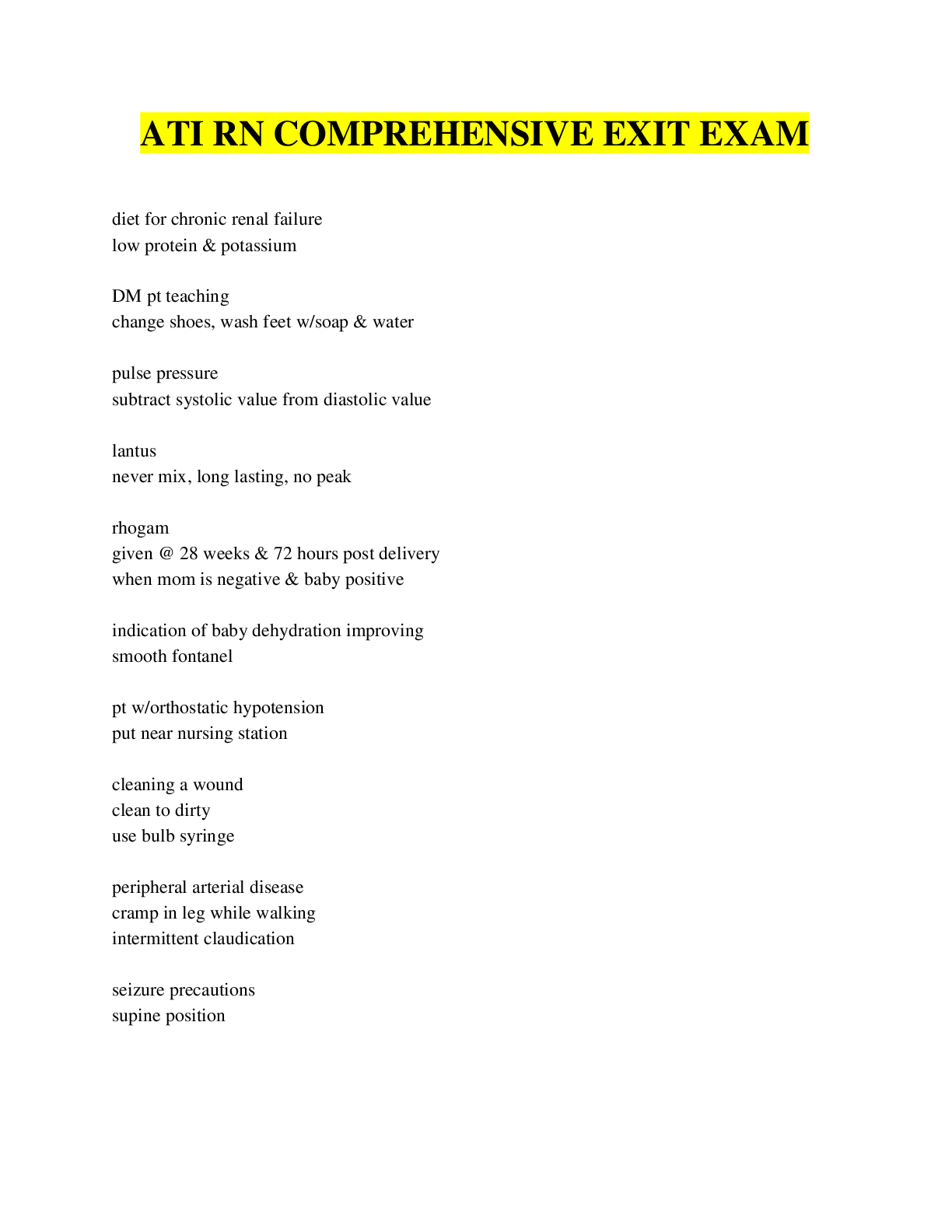


![Preview of ATI MED SURG 2 EXAM | MED SURG 2 ACTUAL EXAM QUESTIONS AND ANSWERS [RATED A 2024 UPDATED]](https://scholarfriends.com/storage/88QwpFN32024-07-16-11-176696d571c0d42.png)
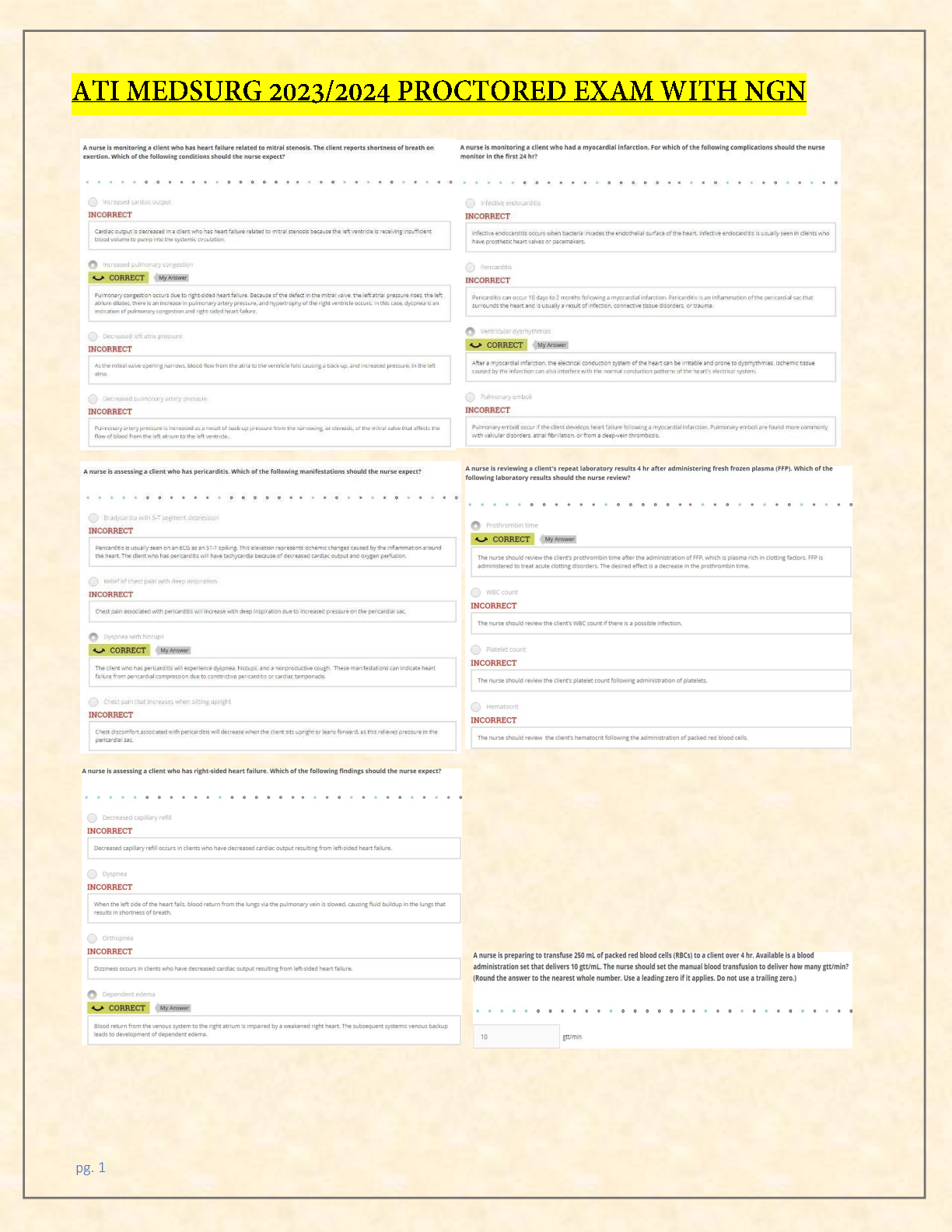

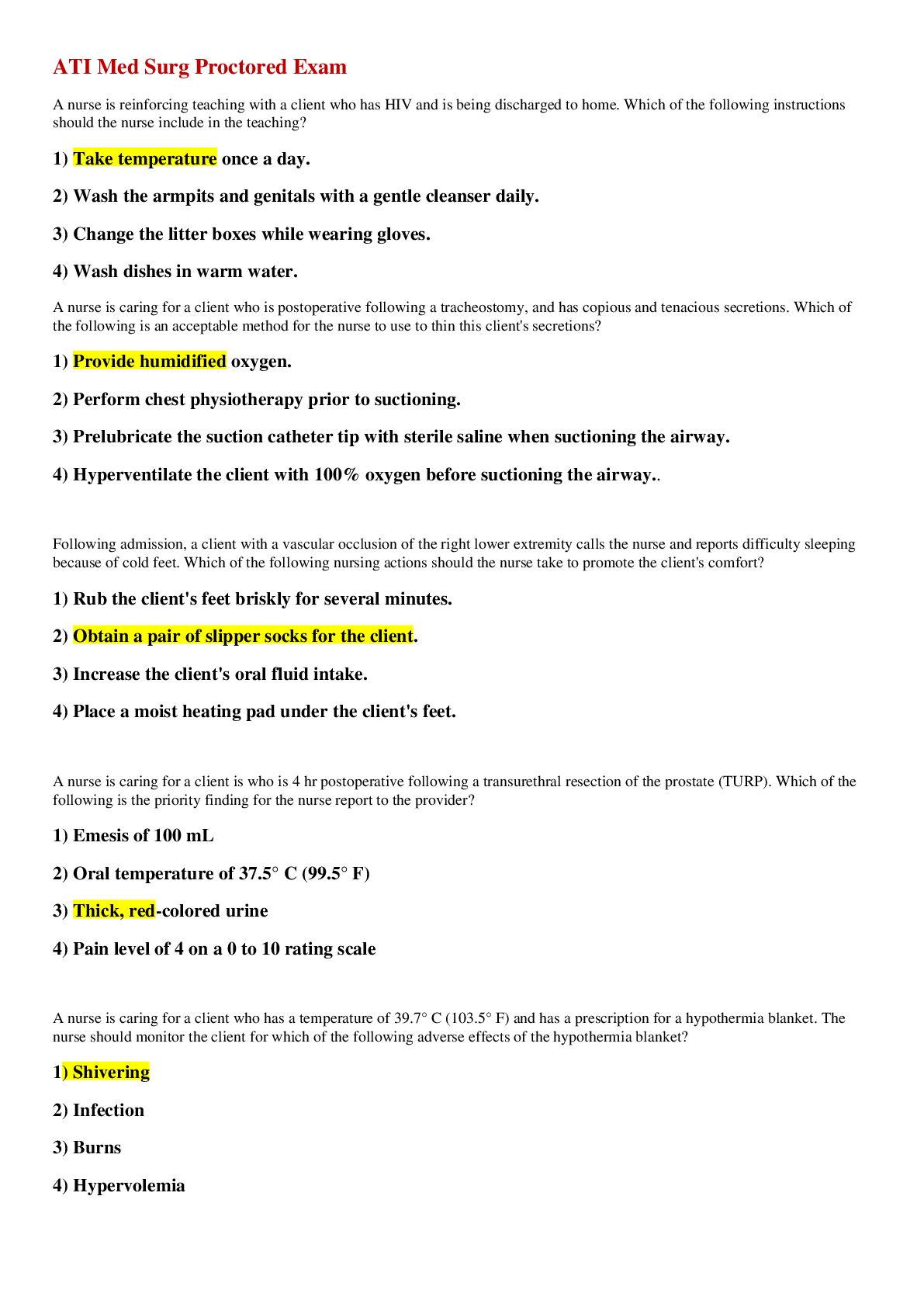
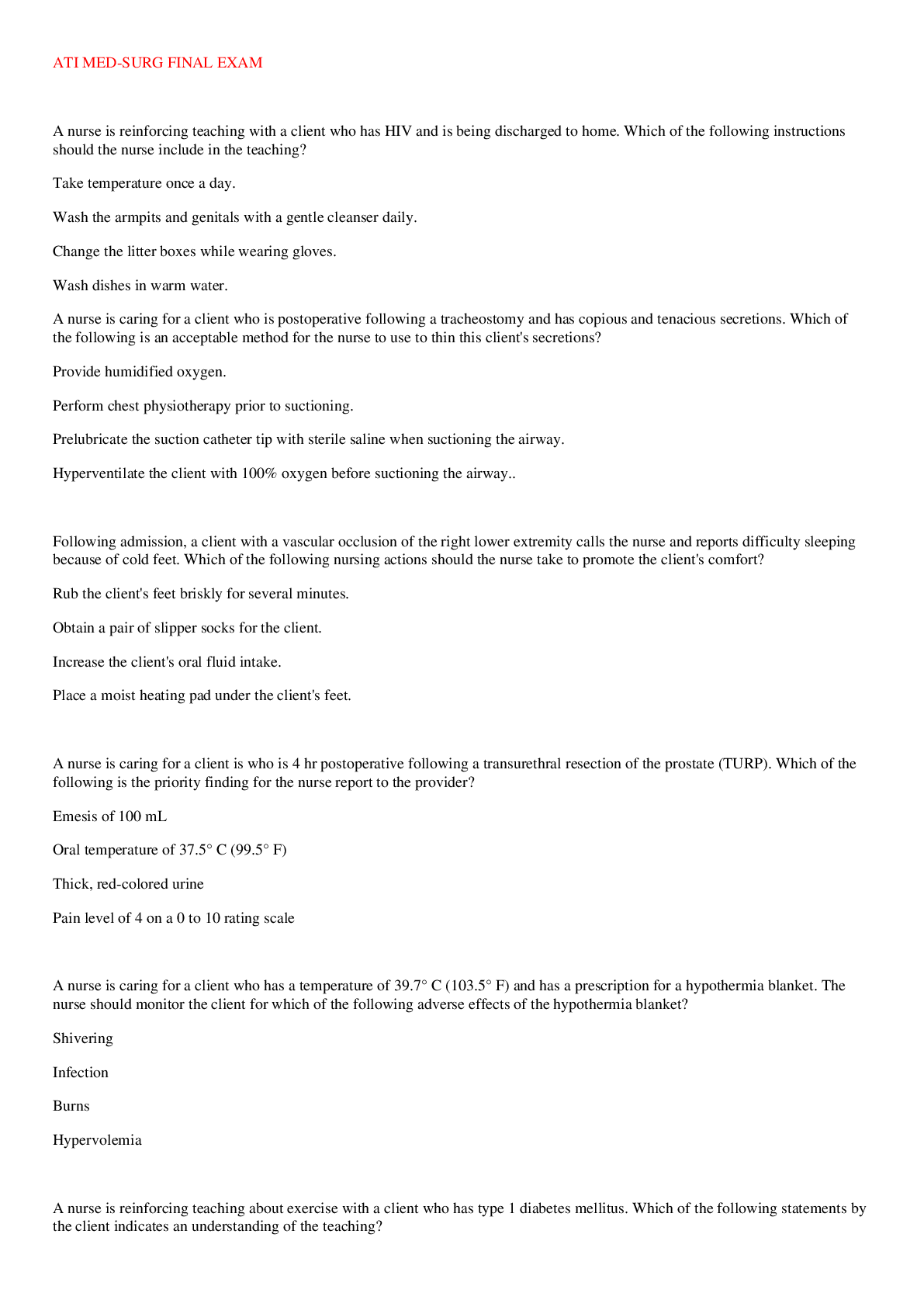
 Adult Medical Surgical.png)